How Does a Ceramic Brake Pad Work Step by Step
When you’re choosing brake pads, it’s normal to worry about noisy stops, excessive dust, or fading performance. You’re not alone—many drivers want reliable braking without constant maintenance. Understanding how ceramic brake pads work can help you choose with confidence.
When you press the brake pedal, the booster amplifies your effort and the master cylinder pressurizes the brake fluid. That pressure moves the caliper pistons, which push the ceramic pads against the spinning rotor.
The pads’ ceramic fibers and friction materials grip the rotor, converting your vehicle’s motion into heat and slowing the wheels. Their dense, stable design helps reduce noise, dust, wear, and brake fade.
You’ll find out how each component contributes to smooth, reliable stopping.
Key Takeaways
- Pressing the brake pedal activates the booster and master cylinder, which generates hydraulic pressure in the brake lines.
- Hydraulic pressure pushes caliper pistons outward, forcing the ceramic brake pads against the spinning rotor.
- Ceramic fibers and friction materials grip the rotor, converting the vehicle’s kinetic energy into heat and slowing the wheel.
- The pad, rotor, caliper, and airflow distribute heat, helping maintain consistent friction and reduce brake fade.
- Dense ceramic construction wears slowly and quietly, producing less dust while providing smooth, predictable braking performance.
What Are Ceramic Brake Pads Made Of?
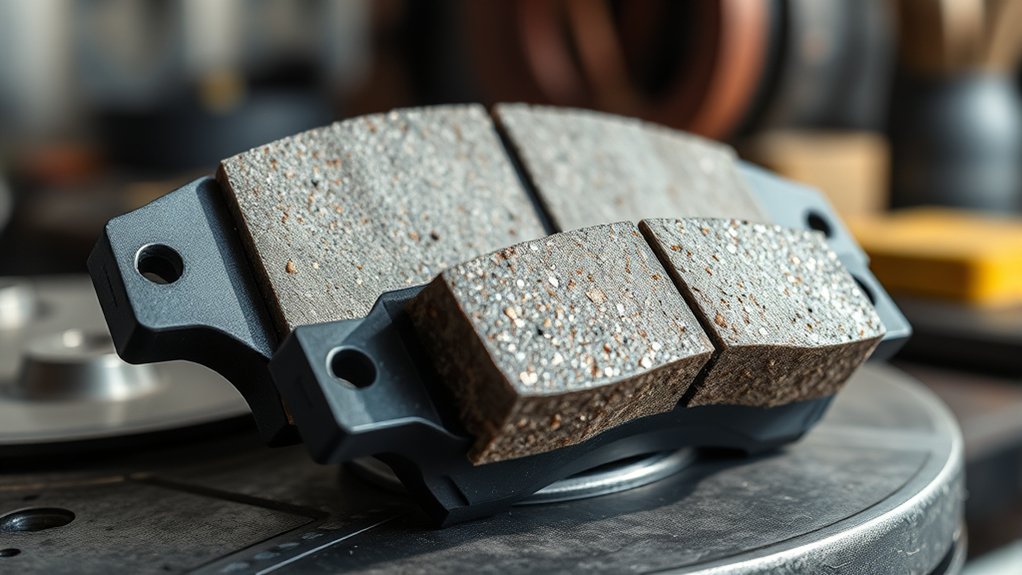
Ceramic brake pads are made from dense ceramic fibers blended with reinforcing materials, binding agents, and small amounts of metal or other friction modifiers. This ceramic composition gives you a carefully balanced friction material designed for consistent performance across everyday driving conditions.
Manufacturers combine the fibers with fillers that control heat transfer, noise, weight, and wear. They then mold and cure the mixture under controlled pressure and temperature, creating a dense pad that fits inside a steel backing plate.
Some formulas include copper or other metals, while others minimize metallic content to reduce dust and corrosion.
When you choose ceramic pads, you’re choosing material durability as well as clean operation. Their structure resists crumbling and maintains its shape through repeated temperature changes.
You’ll typically see less visible wheel dust and quieter contact than with many semimetallic alternatives. However, the exact blend varies by brand, vehicle, and intended use, so you should check the manufacturer’s specifications before buying.
How Pressing the Pedal Starts Braking
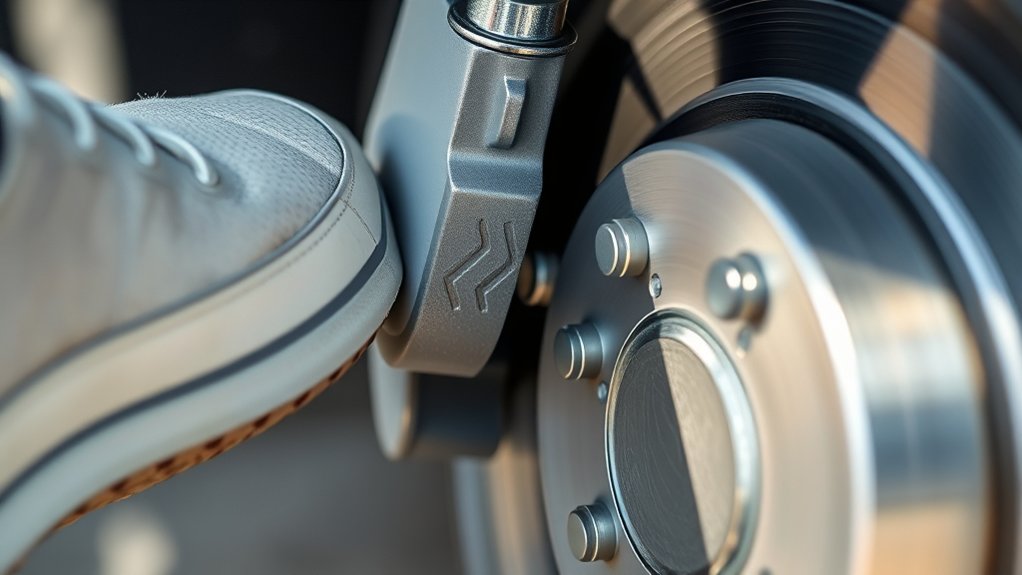
When you press the brake pedal, you send force through the braking system. The master cylinder converts that force into hydraulic pressure, which builds as brake fluid moves through the lines. That pressure then pushes the caliper pistons against the ceramic brake pads.
Pedal Force Transfer
Pressing the brake pedal transfers your foot’s force through the pedal arm to the brake booster and master cylinder. As you press farther, the pedal linkage moves the booster’s input rod.
The booster amplifies your effort, so you don’t need to push with extreme strength during normal stops. Its output rod then moves the master cylinder piston, beginning the coordinated action that ultimately operates each wheel’s brake assembly.
Your pedal speed and pressure influence how quickly and firmly the system responds, while the pedal’s ratio gives you useful control. Although the ceramic brake pad hasn’t created friction yet, its design matters once the caliper receives the system’s command.
The brake pad material, rotor condition, and pedal force transfer together affect braking feel, but the pedal remains your direct mechanical input.
Hydraulic Pressure Builds
As the master cylinder piston moves, it forces brake fluid through the sealed brake lines, creating hydraulic pressure throughout the system. When you press the pedal, your force compresses the fluid rather than the fluid itself.
Because brake fluid barely compresses, pressure travels quickly to each caliper. The caliper pistons then push your ceramic brake pads against the rotor, converting your foot’s effort into friction and heat.
| Action | Pressure path | Result |
|---|---|---|
| You press | Master cylinder | Fluid moves |
| Fluid flows | Sealed lines | Pressure rises |
| Pistons extend | Calipers | Pads clamp |
| Pads contact | Rotor surface | Wheel slows |
You’ll feel this process as a firming pedal. A soft or sinking pedal can signal air, a leak, or worn components, reducing hydraulic pressure and delaying braking.
Never ignore those warning signs. Prompt inspection protects stopping performance.
How Brake Fluid Pressurizes the System
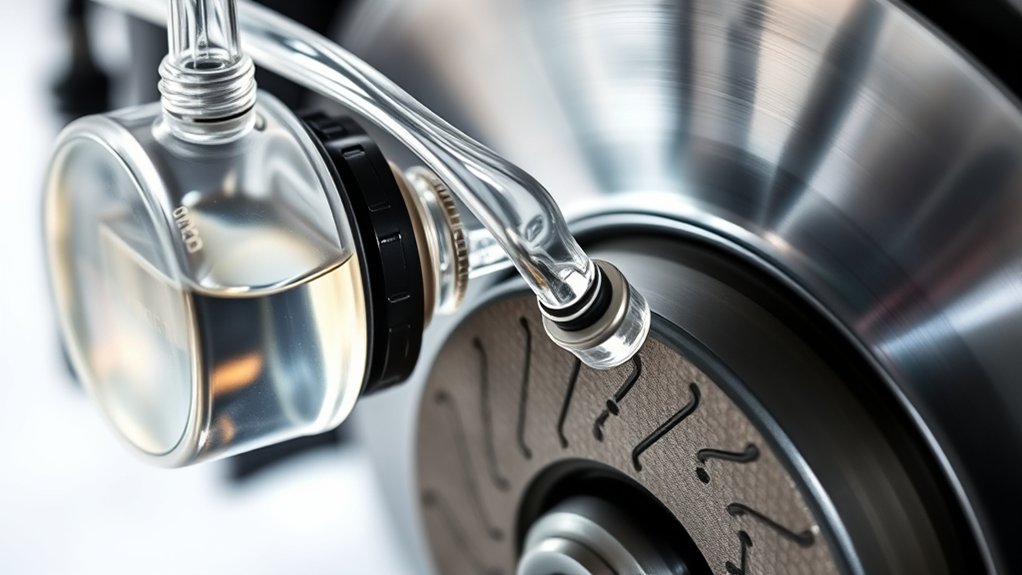
Brake fluid pressurizes the system when you press the brake pedal, which moves a piston inside the master cylinder. That piston reduces the volume in a sealed chamber, forcing Brake fluid into the connected brake lines. Because the fluid doesn’t compress under normal conditions, it transfers your pedal force efficiently through the hydraulic circuit.
Pressure transmission occurs evenly throughout the fluid, so pressure reaches each wheel through its dedicated line. As you press harder, the master cylinder creates greater pressure, giving you stronger braking control.
Seals around the piston prevent fluid from escaping while keeping air outside the circuit. The reservoir supplies additional fluid as needed and allows for expansion when temperatures change.
If air enters the system, it compresses instead of transferring force, making the pedal feel soft or spongy. That’s why you need clean, properly filled fluid and secure connections.
You control braking response through pedal force, while the sealed hydraulic system carries that force consistently.
How the Caliper Presses Ceramic Pads
When you press the brake pedal, hydraulic pressure activates the caliper. The caliper’s pistons then push the ceramic pads against the rotor, creating an even clamping force. As the pads grip the rotor, friction slows your vehicle smoothly and safely.
Hydraulic Pressure Activates Caliper
Once you press the brake pedal, the master cylinder sends pressurized brake fluid through the brake lines to the caliper. This hydraulic activation delivers force to the caliper’s internal chamber, raising pressure evenly around its mechanism.
As pressure builds, the caliper responds by shifting or flexing into position around the brake rotor. You create caliper engagement when this movement brings the braking assembly into proper alignment with the rotating disc.
The caliper’s design controls this response, ensuring force travels smoothly and consistently rather than abruptly. Seals help contain the fluid and maintain pressure, while the caliper housing resists distortion under load.
You’ll notice this process happens almost instantly, giving your brake system a firm, predictable response. The next stage occurs when the caliper’s pistons transfer that hydraulic force to the ceramic pads.
Pistons Push Ceramic Pads
As hydraulic pressure rises inside the caliper, its pistons move outward and press the ceramic pads against both sides of the brake rotor. You create this pressure when pedal mechanics transfer your foot’s force through the master cylinder and brake fluid.
The pistons then convert fluid pressure into controlled movement, sliding the pads from their resting positions.
Picture the sequence:
- Your foot depresses the pedal, beginning the hydraulic command.
- Fluid pressure drives each piston toward its ceramic pad.
- The pad backing plates carry that force into the friction material.
Among brake pad materials, ceramic compounds provide a firm, stable surface for this piston-driven contact. Shims and clips help guide each pad while allowing slight movement within the caliper bracket.
At this stage, the pistons only position and load the pads. The resulting friction and vehicle deceleration occur next.
Even Clamping Creates Friction
The caliper keeps both ceramic pads clamped evenly against the rotor, so friction develops across the contact surfaces instead of at a single point. As you press the brake pedal, hydraulic pressure moves the pistons, which force the pads inward.
The caliper body reacts by pulling the outer pad against the opposite rotor face. This balanced squeeze creates consistent friction and helps your vehicle slow smoothly without uneven contact.
Even pressure also limits hot spots, vibration, and irregular wear. Your ceramic pads convert the rotor’s motion into heat, while their material composition helps manage temperature and noise.
Dense ceramic fibers, bonding agents, and reinforcing materials support stable performance during repeated stops. Because the load spreads across each pad, you protect the rotor and improve brake pad durability.
Proper caliper alignment keeps this action efficient, predictable, and safe.
How Ceramic Pads Create Friction
Ceramic brake pads create friction when their textured surface presses against the spinning rotor, converting your vehicle’s motion into heat. As you press the brake pedal, hydraulic pressure pushes each pad toward the rotor.
Microscopic ceramic fibers and abrasive particles grip the metal, while the pad’s molded surface maintains consistent contact. You’ll notice this process through predictable stopping and firm pedal response.
Picture what happens at the contact point:
- Rough pad material meets the rotor like fine sandpaper, creating controlled resistance.
- Embedded fibers support the friction surface, helping it stay stable during repeated stops.
- Tiny contact points spread pressure across the pad instead of concentrating it in one spot.
Proper Brake pad maintenance keeps the friction surface clean, evenly worn, and ready to work. Inspect thickness, watch for cracks, and replace pads before the backing plate contacts the rotor.
Noise reduction techniques, including correctly fitted shims and clean hardware, can also quiet harmless vibration without reducing grip.
How Friction Converts Motion Into Heat
Once the ceramic pad grips the spinning rotor, friction changes your vehicle’s kinetic energy into heat. As the pad and rotor surfaces press together, microscopic high points collide and resist sliding. This resistance makes molecules vibrate faster, raising the temperature within both components.
Friction between ceramic pads and rotors transforms kinetic energy into heat as microscopic surface points resist sliding.
Your brake system’s friction coefficient affects how much resistance develops. A higher coefficient creates more friction for the same clamping force, producing heat more quickly. Ceramic compounds manage this process with consistent friction across a broad temperature range, helping the pad respond predictably during repeated use.
Heat transfer then spreads the generated energy through the pad, rotor, caliper, and surrounding air. The rotor absorbs much of the heat because its mass and design provide thermal capacity, while vents and airflow carry energy away.
You’ll notice this process through rising brake temperatures, not visible motion. The heat represents energy conversion at the contact surface, where mechanical movement becomes thermal energy during each friction event.
How Ceramic Pads Bring the Car to a Stop
When you press the brake pedal, ceramic pads press against the rotor and create friction, turning your car’s motion into heat. Because they’re made with heat-resistant materials, they can help manage and disperse that heat, keeping braking performance steady.
Friction Converts Motion
As you press the brake pedal, ceramic pads clamp the spinning rotor and create friction that converts the car’s kinetic energy into heat. Hydraulic pressure pushes each pad inward, while the rotor’s rotation meets the pad’s engineered friction surface. You’ll feel this interaction as controlled deceleration rather than an abrupt stop.
Picture the process:
- The pedal moves, sending pressure through the brake system.
- The caliper squeezes both ceramic pads against the rotor.
- Friction resists rotation until your car slows and stops.
Ceramic compounds provide consistent grip without relying on excessive force, so you can brake smoothly in daily traffic or during sudden stops.
Proper Brake pad installation guarantees even contact and predictable response. Material durability also helps the friction surface maintain its shape through repeated braking, preserving pedal feel and stopping performance.
Heat Disperses Safely
During braking, ceramic pads absorb and spread much of the heat generated at the rotor, helping it escape through the pad material, rotor, and surrounding air. This controlled heat transfer reduces hot spots, protects the rotor, and keeps friction consistent, so you can stop smoothly and confidently.
Ceramic compounds also resist brake fade during repeated stops, although extreme loads still demand cooling time.
| Heat source | Ceramic response | Your benefit |
|---|---|---|
| Rotor contact | Spreads heat | Consistent stopping |
| Repeated braking | Resists fade | Better control |
| Airflow | Carries heat away | Cooler components |
To support Brake pad lifespan, avoid riding the pedal downhill and leave space for gradual stops. Follow these Maintenance tips: inspect pad thickness, check rotor condition, and keep wheels free of debris.
If you notice vibration, burning smells, or reduced braking power, have the system inspected promptly. Proper heat management helps every component last longer.
Why Ceramic Brake Pads Produce Less Dust
Ceramic brake pads produce less dust because their dense, stable material wears more slowly and evenly than traditional semi-metallic compounds. When you brake, their material composition creates fewer loose particles, so you’ll see less dark residue on your wheels. This dust reduction keeps your rims cleaner and reduces the frequency of washing.
Picture what happens during everyday stops:
- Your pad presses against the rotor and sheds minimal, tightly bound material instead of a cloud of gritty debris.
- The fine particles that do form remain lighter in color, making them less noticeable on bright wheels.
- Your wheels collect less buildup during commuting, downhill driving, and repeated city braking.
Ceramic compounds also resist crumbling as temperatures and pressure change. That consistency helps the pad maintain an even contact surface, limiting uneven wear that could create extra debris.
You’ll still notice some dust, since every friction brake wears over time, but the amount is typically much lower. Regular inspections and proper cleaning help preserve this cleaner appearance.
Why Ceramic Brake Pads Make Less Noise
Ceramic brake pads make less noise because their dense, consistent material reduces vibration as it grips the rotor. As you brake, the pad meets the rotor with steady contact instead of creating sharp, uneven movements. That stability limits the high-pitched squeal you might hear during light stops.
Their Material composition also supports effective Noise reduction. Ceramic fibers and other fine ingredients form a firm, uniform surface, while carefully selected binders help control vibration under changing temperatures.
Because the pad maintains consistent friction, you’re less likely to experience chatter, judder, or sudden squeaks caused by unstable contact.
Proper installation matters, too. You’ll get quieter operation when the pad fits correctly, the hardware moves freely, and the rotor surface remains smooth.
A clean, properly lubricated contact system prevents unnecessary movement and keeps braking sounds controlled. Although occasional noise can still occur in cold, wet, or dusty conditions, ceramic pads generally give you a calmer, more comfortable braking experience during everyday driving.
How Ceramic Pads Compare With Other Materials
When you compare brake pad materials, you’ll find that ceramic pads balance quiet operation, clean wheels, consistent braking, and long service life better than many alternatives. This Material comparison helps you choose based on driving conditions, budget, and priorities.
- Ceramic pads: You’ll get low dust, minimal noise, smooth pedal feel, and strong performance during everyday commuting. Their Ceramic durability supports long service intervals, though premium pricing and reduced cold-weather bite may matter.
- Semi-metallic pads: You’ll usually pay less and gain strong heat resistance, making them suitable for towing or spirited driving. However, they can create more dust, transmit vibration, and wear rotors faster.
- Organic pads: You’ll experience quiet, soft engagement and affordable replacement costs. Yet they typically wear sooner, fade under heavy heat, and produce more material dust.
When you match the pad to your vehicle and driving habits, you’ll avoid overbuying or sacrificing safety. Ceramic pads suit drivers who value cleanliness, comfort, and predictable braking above maximum performance in extreme conditions.
Frequently Asked Questions
How Long Do Ceramic Brake Pads Typically Last?
Ceramic brake pads typically last 30,000 to 70,000 miles, though your results can vary. Brake pad materials, driving habits, traffic, vehicle weight, climate, and rotor condition all affect service life.
You’ll usually get longer mileage with gentle braking and highway driving, while frequent stops, towing, or aggressive driving shorten it. Durability factors also include proper installation and regular inspections.
Replace your pads when they reach the manufacturer’s minimum thickness or produce warning sounds.
Are Ceramic Brake Pads Suitable for Every Vehicle?
No, ceramic brake pads aren’t suitable for every vehicle. You should check your vehicle’s specifications, driving habits, and manufacturer recommendations before choosing them.
Material composition affects braking performance, noise, heat tolerance, and rotor wear. Compatibility also depends on your car’s weight, brake system, climate, and towing demands.
Ceramic pads work well for many daily drivers, but you might need semi-metallic or other pads for heavy-duty, high-performance, or severe-service applications.
How Much Do Ceramic Brake Pads Cost to Replace?
You’ll typically pay $150–$300 per axle to replace ceramic brake pads, including parts and labor, though luxury vehicles or performance models can cost $300–$600.
Brake pad materials, vehicle size, labor rates, and rotor condition affect the final bill. If you replace damaged rotors too, expect another $300–$700 per axle.
Replacement costs may rise at dealerships, so compare reputable independent shops and request an itemized estimate before approving the work.
Do Ceramic Brake Pads Require Special Maintenance?
No, you don’t need special maintenance for ceramic brake pads. You should inspect them during routine brake service, monitor thickness, and replace them when they approach the manufacturer’s limit.
Their abrasion resistance helps reduce dust and rotor wear, while built-in noise reduction keeps braking quieter. You’ll still need clean, properly lubricated hardware and periodic rotor inspections.
Follow your vehicle’s service schedule, avoid harsh cleaners, and address vibrations, pulling, or unusual sounds promptly.
When Should Ceramic Brake Pads Be Replaced?
You should replace ceramic brake pads when their friction material reaches about 3–4 millimeters, or sooner if you notice squealing, grinding, vibration, reduced braking power, or a warning light.
Inspect them during tire rotations and follow your vehicle manufacturer’s replacement intervals, since driving habits and conditions vary. Check the brake pad material for uneven wear, cracks, or contamination.
Don’t wait for metal-to-metal contact. Prompt replacement protects your rotors, safety, and braking performance.
Conclusion
Ceramic brake pads turn your pedal pressure into controlled stopping power through hydraulic force, caliper movement, and friction. You’ll also enjoy quieter braking and noticeably less dust than with many traditional pads.
In fact, ceramic pads can produce up to 90% less visible brake dust, helping your wheels stay cleaner. While they may cost more upfront, their smooth, consistent performance makes them a worthwhile choice when you want cleaner wheels, reduced noise, and confident everyday braking.
Understanding how a ceramic brake pad works step by step can help you choose the right option for your vehicle.