How Does a Spark Plug Work Step by Step
If your engine is hard to start, misfiring, or using more fuel than usual, worn spark plugs could be the problem. You’re not alone—many drivers struggle to know which plugs deliver reliable ignition and smooth performance.
A spark plug works by igniting the compressed air-fuel mixture in your engine. First, the battery powers the ignition coil, which transforms 12 volts into thousands of volts.
The coil sends that pulse through the center electrode, and electricity jumps the gap to the ground electrode. The resulting spark creates a flame kernel that spreads, burns the mixture, and pushes the piston downward.
The plug also transfers excess heat away. You’ll soon see how its parts, timing, and maintenance affect performance.
Key Takeaways
- The battery supplies power, and the ignition coil transforms it into thousands of volts.
- The ignition system sends high voltage to the correct spark plug at the precise time.
- Voltage jumps the gap between the center and ground electrodes, creating a spark.
- The spark ignites the compressed air-fuel mixture, forming a flame that expands and pushes the piston downward.
- The plug transfers excess heat to the cylinder head, while proper maintenance prevents fouling and misfires.
What Does a Spark Plug Do?
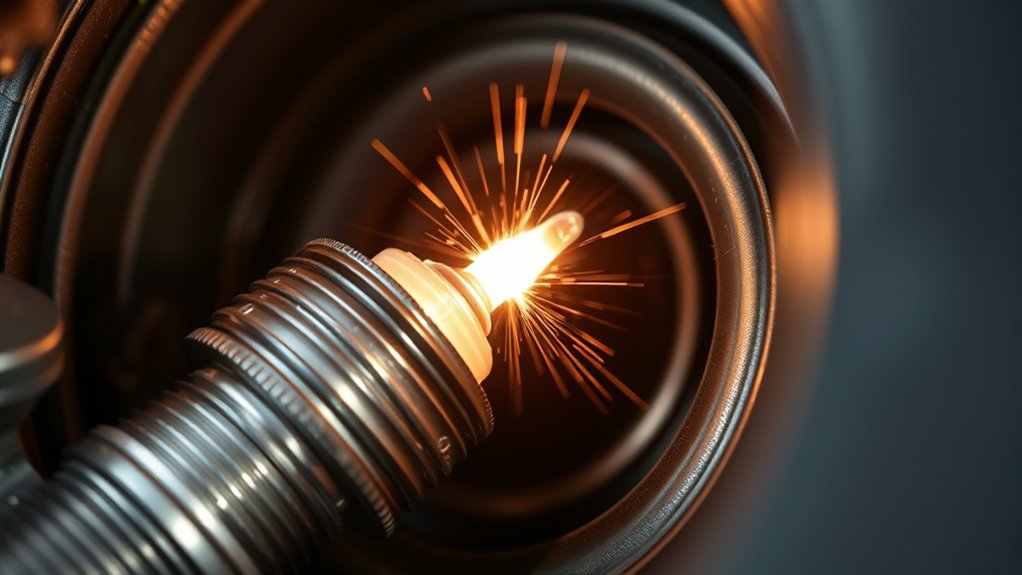
A spark plug ignites the air-fuel mixture inside an engine’s cylinder. When your engine’s control system sends an electrical pulse, the plug creates a small, powerful spark across its spark gap. That spark starts combustion at the precise moment required for the piston’s position.
Correct ignition timing helps the expanding gases push the piston downward efficiently, producing power for the crankshaft. If the spark occurs too early, combustion can cause knocking and stress the engine.
Correct ignition timing maximizes engine power, while early sparks can cause knocking and harmful stress.
If it occurs too late, your engine may lose power, waste fuel, and produce more emissions.
Your spark plug must deliver a consistent spark under high pressure and extreme heat. A worn or fouled plug may misfire, causing rough idling, hard starting, poor acceleration, or reduced fuel economy.
What Are the Main Spark Plug Parts?
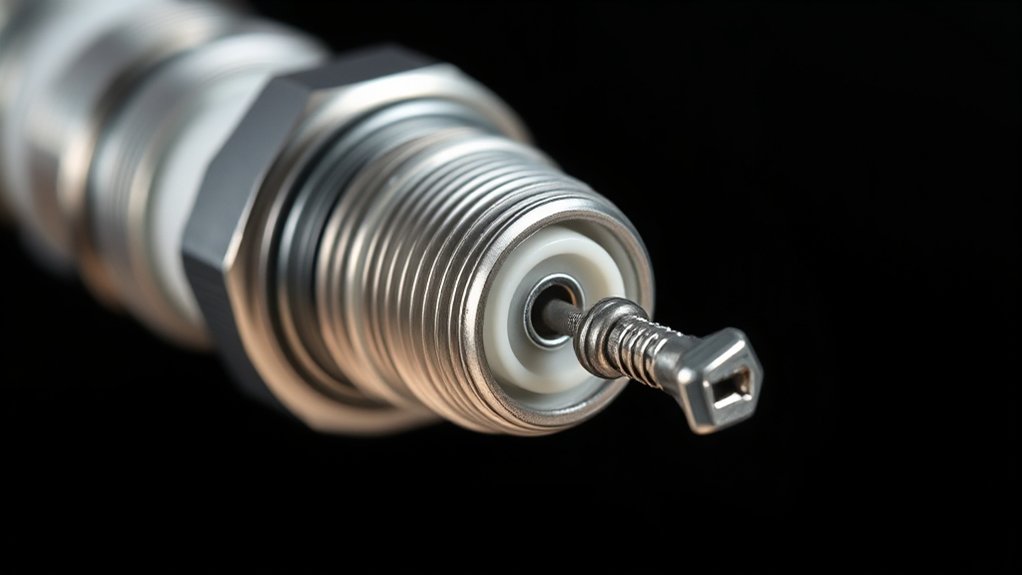
Each spark plug part plays a role in reliable ignition. The center electrode creates the spark, while the insulator and shell protect the plug and direct electrical energy. The ground electrode also helps form the spark gap, and its design can affect engine performance.
Center Electrode Function
The center electrode carries high-voltage current from the ignition coil to the spark gap, where it creates the spark that ignites the air-fuel mixture.
As you turn the key or press the start button, the ignition system sends a powerful electrical pulse through this metal conductor. The center electrode directs that energy toward the terminal tip, building enough voltage to overcome the gap between the electrodes.
Once the charge crosses the spark gap, it produces a hot, controlled arc. That arc starts combustion inside the cylinder, allowing the engine to generate power.
The electrode’s material and tip design affect conductivity, spark strength, service life, and resistance to wear.
When you choose or inspect a plug, match its electrode design to your engine’s requirements for reliable ignition and consistent performance.
Insulator And Shell
Surrounding the center electrode, the ceramic insulator keeps high voltage from escaping while directing it toward the spark gap. You’ll find that its Insulator material, usually alumina ceramic, resists heat, pressure, and electrical breakdown. Its ribbed exterior also helps prevent flashover by increasing the path electricity must travel.
The metal shell supports the plug and secures it in the cylinder head. You can rely on its threads and hex section for proper installation, while its Shell durability helps withstand vibration, corrosion, and repeated heat cycles.
- Ceramic body: Insulates the electrode and tolerates extreme temperatures.
- Ribs: Reduce the chance of voltage leaking across the surface.
- Metal shell: Provides structural support and installation threads.
- Sealing areas: Help contain combustion pressure and prevent gas leakage.
Together, these parts protect the plug’s electrical path and maintain a dependable seal during engine operation.
Ground Electrode Design
Once the spark reaches the gap, the ground electrode provides the return path to the metal shell and engine block. You’ll find this curved or angled metal arm positioned beside the center electrode, creating the precise gap the spark must cross.
Its shape controls flame growth, while its length and profile influence ignition speed, heat transfer, and durability. Electrode materials such as nickel alloy, platinum, or iridium help the ground electrode resist erosion and high combustion temperatures.
Some plugs use a tapered, cutback, or multiple-ground design to expose more mixture and improve ignition. The electrode must maintain a reliable Ground connection through the shell, so corrosion, loose fittings, or excessive wear can weaken the spark.
When you inspect a plug, check the electrode’s shape, color, and gap for signs of damage.
How the Ignition Coil Creates High Voltage
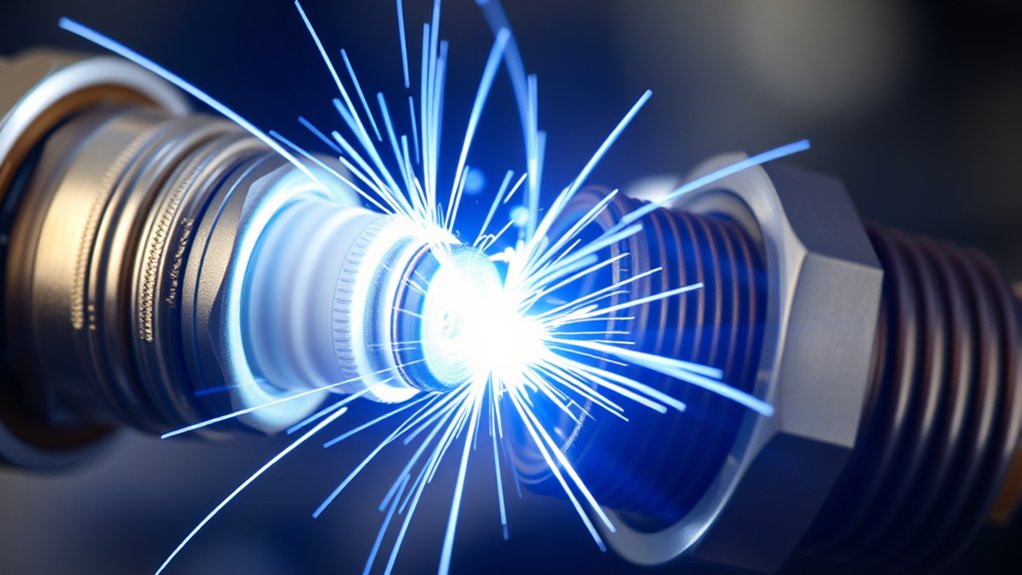
An ignition coil converts your vehicle’s 12-volt electrical supply into the thousands of volts needed to fire the spark plug. Inside, two wire windings surround an iron core. Your vehicle’s control system sends current through the primary winding, creating a magnetic field. When it suddenly interrupts that current, the field collapses and induces a much larger voltage in the secondary winding.
- Primary winding: It builds the magnetic field efficiently.
- Iron core: It concentrates magnetic energy for stronger induction.
- Secondary winding: Its many wire turns multiply the voltage dramatically.
- Coil output: It delivers a brief, powerful pulse toward the plug.
The coil’s voltage must overcome the gap between the center and ground electrodes. That electrical pressure creates the spark that ignites the air-fuel mixture.
Although electrode durability affects how long the gap remains effective, the coil supplies the energy needed to bridge it. Insulator materials around the plug keep voltage from escaping prematurely.
How the Ignition System Powers the Plug
Your battery provides the initial power for the ignition system. The ignition coil then boosts that power to the high voltage the spark plug needs, while the distributor controls when the spark occurs. Together, these components help the plug fire at the right moment.
Battery Supplies Initial Power
The battery supplies the ignition system with the initial electrical energy needed to create a spark. When you turn the key or press the start button, battery current travels through ignition wiring toward the control components.
This low-voltage supply gives the system a dependable starting point, while the engine computer or switch controls when electricity should move onward.
- You depend on a healthy battery to maintain steady electrical flow.
- Clean terminals help prevent resistance and weak connections.
- Proper wiring carries current efficiently through the ignition circuit.
- The spark plug receives this prepared electrical supply at its terminal.
Electrode materials and spark plug coatings don’t create battery power, but they influence how effectively the plug uses the delivered energy.
A weak battery may cause slow cranking and unreliable ignition. At this stage, the battery only provides the foundation. Another component must prepare that energy for the plug’s firing gap.
Ignition Coil Boosts Voltage
Once the battery supplies low-voltage current, the ignition coil raises it to the much higher voltage needed to jump the spark plug’s gap.
Inside the coil, current flows through a primary winding and creates a magnetic field. When the system interrupts that current, the field collapses rapidly, inducing a much stronger voltage in the secondary winding.
You can think of the coil as an electrical transformer that delivers thousands of volts through the ignition wire or coil boot. That voltage pushes electricity across the plug’s gap, creating the spark that ignites the compressed air-fuel mixture.
Spark plug materials must withstand intense heat and electrical stress, while electrode erosion gradually enlarges the gap. As erosion increases, your ignition coil must work harder to produce a reliable spark.
Distributor Times the Spark
In older ignition systems, a distributor sends the coil’s high-voltage pulse to the correct spark plug at precisely the right moment. As the distributor shaft turns, its rotor aligns with each terminal, directing electricity through the plug wire.
This distributor timing matches the engine’s firing order and crankshaft position, so combustion begins when the piston reaches the ideal point.
- The ignition switch powers the coil.
- The coil raises battery voltage dramatically.
- The distributor routes that pulse to one plug.
- The plug’s electrode jumps the gap, creating a spark.
You’ll notice that accurate timing supports smooth acceleration, efficient fuel use, and easier starting. Worn distributor caps, rotors, or wires can misroute voltage and cause misfires.
Although electronic ignition has replaced many distributors, the goal remains identical: deliver a strong spark on schedule. Proper timing also protects spark plug lifespan by preventing overheating and fouling.
How a Spark Plug Creates a Spark
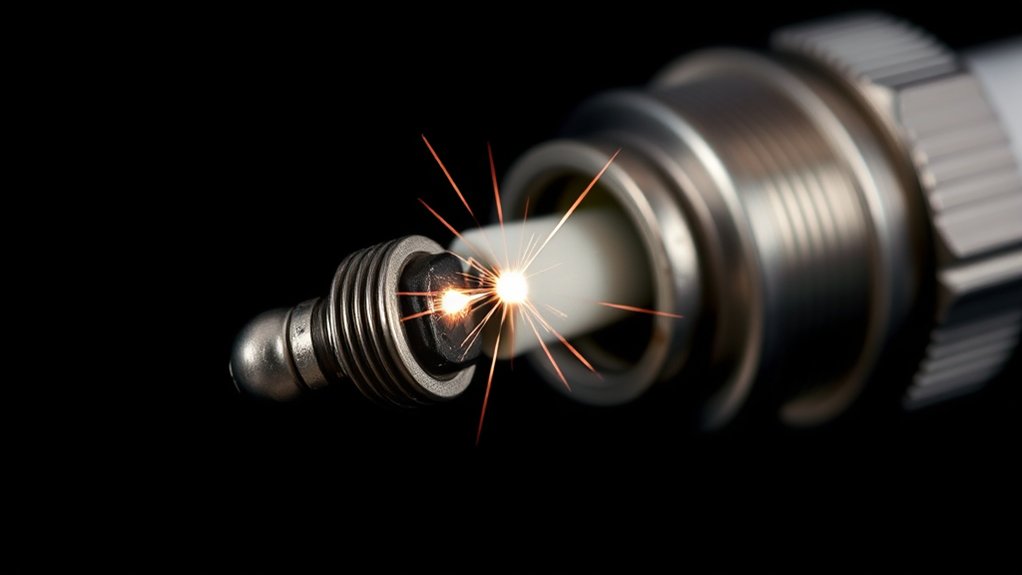
A spark plug creates a spark by channeling high-voltage electricity across a small gap between its center and ground electrodes. When your ignition system sends voltage through the terminal, it travels down the center electrode.
The voltage builds until it overcomes the air’s electrical resistance inside the gap. Electrons then jump between the electrodes, creating a brief, intense electrical arc.
Electrode design controls how easily and consistently this arc forms. A narrower gap needs less voltage, while a wider gap can produce a stronger arc but demands more electrical pressure.
A narrower gap sparks more easily, while a wider gap delivers a stronger arc but requires higher voltage.
The electrode shape and metal also affect durability and conductivity.
Insulator materials surround the center electrode and prevent electricity from escaping through the plug body. Ceramic insulation withstands high temperatures and keeps the voltage directed toward the gap.
A sealed shell and precise internal construction maintain the required electrical path, allowing you to get a reliable spark whenever the ignition system triggers the plug.
How the Spark Ignites the Air-Fuel Mixture
Once the spark forms between the electrodes, it ignites the compressed air-fuel mixture. The flame then spreads through the mixture, creating rapidly expanding gases. As the pressure builds, it pushes the piston down and produces engine power.
Electrical Spark Formation
When the ignition system applies high voltage across the spark plug’s center and ground electrodes, the electric field ionizes the small air gap between them. As resistance drops, electrons surge through the ionized path, creating a bright electrical arc.
That spark supplies the heat needed to ignite the compressed air-fuel mixture at the correct moment.
- Voltage rise: The ignition coil boosts battery voltage to thousands of volts.
- Gap breakdown: Ionized gas forms a conductive channel between the electrodes.
- Arc discharge: Current crosses the gap, producing the visible spark.
- Reliable ignition: Electrode materials and spark plug design control spark energy, duration, and location.
You’ll get consistent ignition when the gap remains properly set and the plug stays clean. Deposits, worn electrodes, or excess gap width can weaken the arc, causing misfires.
The spark starts combustion. Expanding gases belong to the next step.
Combustion Pressure Expansion
Inside the cylinder, the spark ignites the compressed air-fuel mixture at the electrode gap, creating a small flame kernel. You’ll see this kernel spread rapidly across the combustion chamber as it consumes nearby fuel and air.
The burning gases expand, raising cylinder pressure and pushing the piston downward. This pressure dynamics process converts chemical energy into mechanical force that ultimately turns the crankshaft.
Flame speed depends on mixture strength, turbulence, compression ratio, and combustion-chamber shape. Engineers position the spark plug carefully so the flame travels efficiently and burns the mixture before the piston moves too far.
If ignition occurs too early, excessive pressure can cause knocking. If it happens too late, expansion produces less useful work.
Your engine control system adjusts timing to maintain smooth, powerful combustion under changing operating conditions.
How the Spark Starts the Power Stroke
As the piston nears the top of its compression stroke, the spark plug releases a high-voltage spark across the gap between its electrodes. That spark ignites the compressed air-fuel mixture, creating a rapidly expanding flame.
You can understand the power stroke in four steps:
- Spark formation: Your ignition coil sends voltage through the plug, and the electric arc jumps the gap.
- Flame growth: The initial flame kernel spreads outward through the mixture.
- Pressure rise: Burning gases expand quickly, raising pressure inside the cylinder.
- Piston movement: That pressure pushes the piston downward, beginning the power stroke.
Spark plug design affects how reliably the spark forms and how efficiently the flame develops. Electrode shape, gap width, and insulation all support consistent ignition.
Ignition timing determines when the spark appears. Your engine usually fires slightly before the piston reaches top dead center, giving combustion time to build peak pressure just after the piston starts descending.
This controlled sequence converts chemical energy into useful mechanical motion and keeps each cylinder contributing smoothly to engine operation.
How a Spark Plug Manages Engine Heat
A spark plug helps manage engine heat by transferring excess heat from its firing tip into the cylinder head, where the engine’s cooling system can carry it away. You rely on the plug’s metal shell, insulator, and internal design to control this transfer.
Thermal conductivity determines how quickly heat moves through each component, while the plug’s heat range indicates how efficiently it sheds heat.
During combustion, the firing tip faces intense temperatures. If it retains too much heat, the tip can become excessively hot; if it releases heat too quickly, it may stay too cool for effective self-cleaning.
A spark plug must balance heat retention and dissipation to stay hot enough for self-cleaning without overheating.
Engineers select materials and dimensions to maintain a balanced operating temperature for your engine.
The cylinder head then passes heat into the coolant passages. Engine cooling carries that energy through the radiator and releases it into the air.
Proper installation, correct tightening, and the manufacturer’s specified plug help preserve this carefully managed heat path during every power stroke.
What Causes Spark Plug Misfires?
Even with proper heat control, a spark plug can misfire when it can’t create or deliver a strong spark at the right time. You’ll often trace the problem to several misfire causes, including:
- Fouling: Oil, fuel, or carbon can coat the electrodes and weaken the spark.
- Spark plug corrosion: Moisture or chemical residue can damage the terminals, increasing electrical resistance.
- Incorrect gap: A gap that’s too wide demands excessive voltage; a narrow gap produces a weaker ignition.
- Ignition or fuel faults: A damaged wire, failing coil, clogged injector, or lean mixture can prevent reliable combustion.
You might notice rough idling, hesitation during acceleration, reduced power, or an illuminated check-engine light. Faulty sensors can also disrupt ignition timing, causing the spark to arrive too early or late.
To pinpoint the source, inspect the plug, test ignition components, and scan for diagnostic trouble codes. Addressing the underlying fault helps your engine restore smooth, consistent combustion without confusing a misfire with normal operating behavior.
When Does a Spark Plug Need Replacement?
You should replace a spark plug when its electrodes are worn, its insulator is cracked, or deposits continue to foul it after cleaning. These problems weaken the spark and can cause hard starting, rough idling, poor acceleration, or reduced fuel economy.
Other replacement indicators include repeated misfires, a damaged terminal, corrosion, or a gap that exceeds your vehicle manufacturer’s specification.
Repeated misfires, damaged terminals, corrosion, or excessive electrode gaps are clear signs your spark plugs may need replacement.
Check your owner’s manual for the recommended service interval, because spark plug longevity varies by plug material, engine design, driving conditions, and maintenance.
Iridium and platinum plugs typically last longer than conventional copper plugs, but you shouldn’t wait for the interval if symptoms appear.
Remove and inspect the plugs during routine service, looking for burned electrodes, oil fouling, or unusual deposits. Replace the complete set when appropriate, using the correct type and gap.
After installation, tighten each plug to the specified torque to prevent loose connections, thread damage, or overheating. Proper replacement helps restore reliable ignition and protects engine performance.
Frequently Asked Questions
How Do Spark Plug Types Differ Between Gasoline and Diesel Engines?
Gasoline engines use spark plugs to ignite an air-fuel mixture, so you’ll find electrodes designed for repeated electrical sparks and precise ignition timing. Diesel engines typically don’t use spark plugs; they rely on compression ignition.
Instead, you’ll find glow plugs that heat the combustion chamber during cold starts. Differences in spark plug materials, heat ranges, electrode designs, and durability reflect each engine’s demands.
Using the wrong type can cause poor starting, misfires, or damage.
Can Spark Plugs Improve Fuel Economy or Engine Performance?
Yes, spark plugs can improve fuel economy and engine performance, but they won’t create power beyond your engine’s design. Worn, fouled, or incorrectly gapped plugs cause misfires, sluggish acceleration, and wasted fuel.
Replacing them with the manufacturer-recommended type restores efficient combustion and smoother operation. Don’t expect dramatic gains if your plugs already work properly.
Regular spark plug maintenance, including correct gaps and timely replacement, keeps your ignition system reliable and responsive.
What Tools Are Needed to Safely Replace a Spark Plug?
You’ll need a spark-plug socket, ratchet, extension, and torque wrench for safe replacement. Add a spark-plug gap gauge, compressed air, dielectric grease, gloves, safety glasses, and a small flashlight.
For spark plug removal, use the correct socket size and avoid forcing a stuck plug. Replacement safety means working on a cool engine, disconnecting ignition power, keeping debris out, and tightening each new plug to the manufacturer’s specified torque.
How Should Spark Plug Gaps Be Measured and Adjusted?
You don’t need expensive equipment to set a spark plug gap correctly. First, check your engine manufacturer’s specification, then use a wire-style or tapered feeler gauge to measure the electrode spacing.
Slide the correct gauge between the electrodes; it should pass with slight drag. Adjust gap calibration by gently bending the ground electrode with a proper tool. Never strike the center electrode or insulator.
Recheck the measurement, install the plug, and tighten it to specification.
Can Faulty Spark Plugs Damage Ignition Coils or Catalytic Converters?
Yes, faulty spark plugs can damage ignition coils or your catalytic converter. When a plug misfires, your ignition system forces the coil to work harder, increasing heat and potentially causing premature failure.
Unburned fuel can also enter the exhaust, where it overheats and damages the catalytic converter. You should replace worn or fouled plugs promptly, inspect coil condition, and address misfires immediately.
Proper gap measurements help prevent repeated ignition problems and costly repairs.
Conclusion
Your spark plug may be small, but it’s the engine’s matchstick. Each time you turn the key, it receives a powerful jolt, leaps a spark across its gap, and ignites the compressed fuel-air mixture inside the cylinder.
That tiny flash drives the piston downward and keeps your vehicle moving. When deposits, wear, or heat weaken the spark, performance suffers.
Replace worn plugs on schedule to help your engine start smoothly, run efficiently, and deliver dependable power. Understanding how a spark plug works step by step can help you recognize problems early and keep your engine running reliably.
For a deeper look at Spark plug basics, see the Spark plug page on Wikipedia.