How Does a Tire Pressure Monitoring System Work Step by Step
Struggling to understand how your vehicle knows when a tire is losing air? You’re not alone—many drivers find tire pressure monitoring systems confusing, especially when a warning light appears unexpectedly. Learning how a tire pressure monitoring system works step by step can help you respond quickly and choose the right maintenance tools.
Your tire pressure monitoring system checks each tire’s pressure, and direct sensors near the valve stems also measure temperature and battery status. They transmit coded radio signals to your vehicle’s receiver, which verifies the data and compares it with programmed safety limits.
If pressure drops too low, the dashboard warning light alerts you. Indirect systems instead use ABS wheel-speed differences to identify possible pressure loss.
Check your tires promptly, and keep going to learn how maintenance keeps the system reliable.
Key Takeaways
- Sensors measure each tire’s pressure and temperature, then transmit the readings and sensor identification wirelessly.
- The vehicle’s receiver captures, filters, and decodes signals from the tire-mounted sensors.
- The control module matches each sensor to its wheel position and compares readings with recommended pressure thresholds.
- If pressure becomes significantly low, the system activates the dashboard TPMS warning light or displays an alert.
- The driver should check pressures with a reliable gauge, inflate tires properly, and seek service if warnings persist.
What Does a TPMS System Monitor?
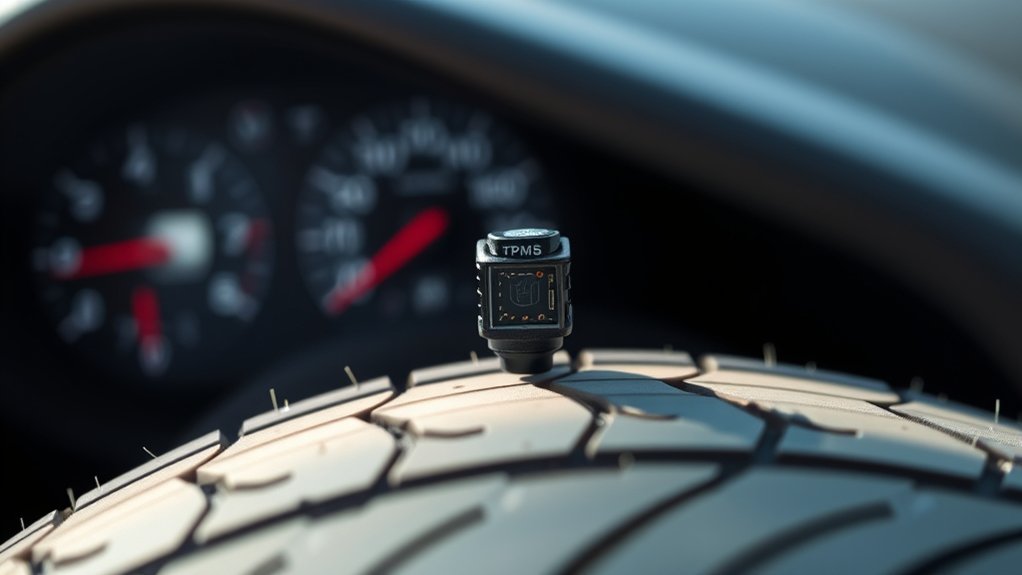
A TPMS monitors each tire’s air pressure, helping you spot underinflation before it affects handling, fuel economy, or tire wear. It compares measured pressure with the vehicle manufacturer’s recommended level, then alerts you when pressure falls considerably below that target.
This warning gives you time to inspect the tire, add air, and check for a puncture. Depending on your vehicle, the system may monitor pressure changes continuously or only while you drive.
It typically detects pressure loss rather than identifying the exact cause, so you’ll still need to examine the tire manually. Some systems display individual pressure readings, while others provide only a warning light.
Accurate readings support tire safety, but temperature changes can alter pressure and trigger alerts. Sensor calibration ensures the system interprets measurements correctly, especially after tire service, rotation, or replacement.
Treat the warning as an immediate prompt to verify pressure with a reliable gauge and follow your owner’s recommended specifications.
Where Are TPMS Sensors Installed?
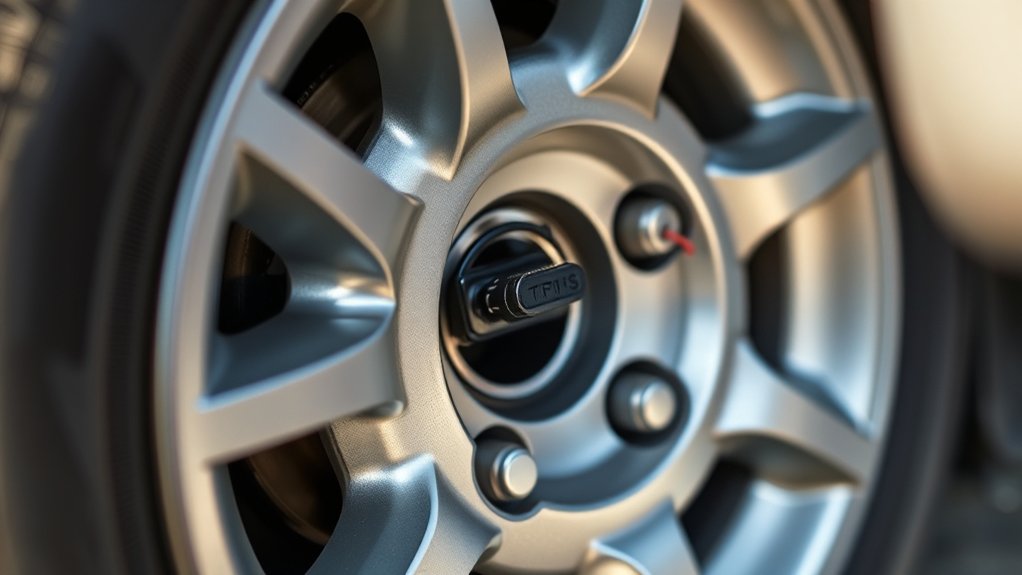
TPMS sensors are usually installed inside each tire, attached to the wheel near the valve stem. You’ll find each sensor mounted to the rim, beneath the tire, where it stays protected from road debris and weather.
TPMS sensors mount inside the tire near the valve stem, securely attached to the rim for protection and accurate readings.
In many vehicles, the sensor and valve stem form one integrated assembly, so replacing a valve stem may require sensor replacement too.
Some vehicles use band-mounted sensors secured around the wheel’s interior instead of valve-stem units. Your vehicle’s design determines the sensor type and installation method.
During tire service, tell the technician that your vehicle has TPMS sensors before removing or mounting a tire. Careless handling can damage the components and create an unnecessary repair.
Proper installation supports accurate tire maintenance and helps prevent warning lights caused by loose, damaged, or incorrectly fitted parts.
After installation, your vehicle may need sensor calibration or a relearn procedure so the system recognizes each sensor’s assigned wheel position. Check your owner’s manual for the correct reset process.
How Do TPMS Sensors Measure Pressure?
Your TPMS sensor uses a pressure-sensitive component to measure the air pressure inside each tire. It then converts that measurement into electronic data and sends it to your vehicle’s control module. Next, you’ll learn how these components measure pressure and provide accurate updates.
Pressure Sensor Components
Inside each tire-pressure sensor, a pressure-sensitive diaphragm flexes as air pressure changes. Its movement alters an electrical signal, allowing the sensor’s circuit to estimate pressure accurately.
A temperature-compensation element helps correct readings when heat changes air density. The sensor also contains a small battery, housing, and valve-mounted connection that protect these components from moisture, vibration, and road debris.
Together, they help you monitor tire inflation and receive timely safety alerts when pressure moves outside the recommended range.
Key components include:
- Diaphragm: Responds to pressure changes.
- Sensing element: Converts movement into an electrical measurement.
- Temperature sensor: Helps maintain accuracy across temperature changes.
- Battery and housing: Power the circuit and protect it.
You’ll find these parts packaged compactly inside the valve stem or mounted within the tire. Their design supports consistent measurements without requiring you to inspect the tire internally.
Pressure Data Transmission
Once the sensor converts pressure into an electrical reading, it sends that data to the vehicle’s TPMS receiver through a short-range radio signal. Your sensor transmits pressure, temperature, battery status, and a unique identification code.
The receiver matches that code to each wheel, then compares readings with programmed limits. If pressure drops, you’ll see a warning light or message on the dashboard.
| Data | Purpose | Result |
|---|---|---|
| Pressure | Detects inflation loss | Warning |
| Temperature | Adjusts pressure interpretation | Accurate reading |
| ID code | Identifies wheel location | Correct display |
| Battery status | Reports sensor power | Service notice |
Road conditions, temperature changes, and tire wear can affect pressure readings or signal timing.
Sensors repeat transmissions at intervals and may send immediate updates after detecting significant changes. Your vehicle’s control module filters these signals, preventing brief interference from triggering unnecessary alerts.
How Do Direct and Indirect TPMS Differ?
Direct TPMS sensors measure the air pressure inside each tire. Indirect TPMS, on the other hand, detects pressure changes by monitoring wheel speed through the ABS system. The main differences come down to how each system detects pressure loss, responds to changes, and alerts you.
Direct TPMS Sensors
Direct TPMS sensors measure the actual air pressure inside each tire and transmit that data to the vehicle’s monitoring system. You’ll typically find each sensor attached to a valve stem inside the tire.
It measures pressure, and often temperature, then sends readings wirelessly to a receiver. If pressure drops below the programmed threshold, your dashboard warning light alerts you.
Direct sensors support tire safety by showing pressure changes before you notice handling problems. However, you’ll need proper Sensor calibration after installation, tire replacement, or sensor replacement.
A technician registers each sensor with your vehicle so the system identifies its location and displays accurate readings.
- Measures pressure directly inside each tire
- Sends readings through radio signals
- Detects gradual or sudden pressure loss
- Requires periodic battery and sensor checks
Indirect TPMS Detection
Indirect TPMS detects pressure loss without measuring air pressure inside the tire. Instead, it uses your vehicle’s existing wheel-speed sensors and compares how quickly each tire rotates.
A tire with less air has a smaller rolling circumference, so it turns faster than properly inflated tires. When the system notices this difference, it alerts you through the dashboard warning light.
You’ll need to maintain consistent tire sizes, tread conditions, and inflation pressures for accurate operation. After you adjust pressure, rotate tires, or replace a tire, follow your vehicle’s reset procedure.
This sensor calibration, often called system relearning, establishes a new reference for comparison. Indirect detection supports tire maintenance, but it can’t identify pressure values or always recognize equal pressure loss across all four tires.
Check your pressures manually with a gauge regularly.
Key System Differences
Direct and indirect TPMS differ mainly in how they detect pressure loss: direct systems measure air pressure with sensors inside each wheel, while indirect systems infer changes from wheel-speed data.
Direct TPMS usually provides a precise pressure reading and can identify a specific tire. You’ll need sensor calibration after replacing a sensor, installing wheels, or servicing the system.
Indirect TPMS typically costs less because it uses existing ABS sensors, but you must reset it after adjusting pressures. Neither system replaces regular inspections for Tire safety.
Keep these differences in mind:
- Direct systems may require battery-powered sensor replacement.
- Indirect systems can miss gradual, equal pressure loss across tires.
- Direct alerts often appear faster and show individual pressures.
- Indirect systems need accurate baseline learning after inflation.
You’ll get the best protection by checking pressures monthly and responding promptly to every warning.
How Do Sensors Send Tire Data?
Once a tire sensor measures pressure and temperature, it converts that information into a radio signal and transmits it to the vehicle’s TPMS control module. Before transmission, the sensor packages readings with an identification code, battery status, and sometimes acceleration data. That code helps the system associate each measurement with a specific wheel.
You’ll find sensors mounted inside the tire, usually as part of the valve stem. They measure conditions at regular intervals, then send short wireless messages. Many sensors also transmit when they detect a rapid pressure change, allowing the system to highlight developing problems sooner. Their internal battery supplies power, while a programmed sleep mode helps preserve it.
Accurate sensor calibration matters because incorrect measurements could trigger warnings too early or too late. When the sensors report reliably, you gain better tire safety and can respond before underinflation affects handling, braking, tread wear, or fuel economy. Regular inspections and proper replacement help maintain dependable readings throughout the sensor’s service life.
How Does the TPMS Receiver Get Signals?
Your TPMS sensors send tire data to the vehicle’s receiver using radio signals. The receiver picks up these radio-frequency transmissions and processes them to determine the tire pressure and temperature readings. Once the data is processed, it’s sent to the vehicle’s warning system, which alerts you if there’s a problem.
Sensor Signal Transmission
When a tire-mounted sensor detects a pressure or temperature change, it converts that data into a coded radio-frequency signal and broadcasts it to the vehicle’s TPMS receiver.
You won’t see this transmission because the sensor sends brief wireless messages at programmed intervals or after detecting a significant change. Each message can include the sensor’s identification number, pressure reading, temperature, and battery status.
The signal’s strength and timing help support reliable communication while your vehicle moves.
The sensor must transmit accurate information for effective tire maintenance, so sensor calibration matters after installation, replacement, or servicing.
Key transmission features include:
- A unique identification code links each sensor to its wheel.
- Short data packets conserve the sensor battery.
- Scheduled broadcasts provide routine updates.
- Change-triggered messages report sudden pressure shifts.
The receiver processes these incoming messages in the next step.
Radio Frequency Reception
How does the TPMS receiver get those wireless messages? It listens for low-power radio-frequency transmissions from each tire-mounted sensor. An antenna, usually installed inside the vehicle, picks up these brief signals as you drive.
The receiver monitors the sensor system’s designated frequency band and remains ready for repeated broadcasts. Because metal wheels, body panels, and nearby electronics can weaken radio waves, manufacturers position the antenna carefully for dependable coverage.
Each sensor sends within its expected range, so proper sensor calibration helps maintain reliable communication and supports Tire safety. Temperature, distance, and interference can affect reception, but the receiver’s placement and sensitivity account for normal driving conditions.
At this stage, it only captures incoming wireless data. The vehicle processes that information afterward to determine what each message means.
Receiver Signal Processing
After the antenna captures a tire sensor’s radio message, the TPMS receiver filters and decodes the signal. It removes electrical noise, confirms the correct transmission format, and checks the sensor identification code.
Next, the receiver interprets pressure, temperature, and battery data, then compares each reading with programmed limits. You receive a warning when pressure falls too low or communication stops.
The receiver may also reject corrupted messages to prevent false alerts. During service, you should understand these processing steps because they support accurate Tire maintenance and reliable sensor calibration.
Key processing stages include:
- Filtering interference from nearby electronics
- Verifying the sensor’s identification code
- Decoding pressure and temperature values
- Sending validated data to the vehicle computer
If the receiver detects inconsistent information, it may request another transmission or store a fault code. A technician can then scan the system, inspect wiring, and relearn sensors when necessary.
How Does TPMS Detect Low Pressure?
A TPMS detects low pressure by monitoring each tire’s air pressure and comparing it with a programmed safety threshold. Each wheel-mounted sensor measures pressure, temperature, and sometimes movement.
It then sends those readings to the vehicle’s receiver, which evaluates changes and identifies pressure below the manufacturer’s specified level.
| Detection step | What the system measures | Why it matters |
|---|---|---|
| Sampling | Pressure and temperature | Establishes current conditions |
| Comparison | Reading versus threshold | Identifies underinflation |
| Confirmation | Repeated or significant loss | Reduces inaccurate detection |
Your vehicle may use direct or indirect monitoring. A direct system reads pressure inside each tire, while an indirect system estimates pressure by comparing wheel-speed differences through the antilock braking sensors.
Correct tire inflation improves accuracy, so you should set pressures when tires are cold. Sensor calibration also helps the system recognize normal tire sizes and operating conditions after service or rotation.
Temperature changes can alter readings, so the system accounts for them before judging pressure. This process detects underinflation without measuring tread wear or predicting tire damage.
How Does the TPMS Warning Light Work?
When the TPMS detects pressure below its programmed threshold, it activates the warning light on your dashboard. The symbol typically resembles a yellow, horseshoe-shaped tire with an exclamation mark.
Your vehicle’s computer receives readings from wheel sensors and illuminates this indicator when a tire’s pressure falls beyond the acceptable range. The light communicates a pressure-related condition; it doesn’t measure or display the exact pressure itself.
During tire inflation, the system continues comparing sensor data with stored limits. Sensor calibration helps guarantee those readings remain accurate after installation, tire changes, or wheel replacement.
A flashing light often signals a system fault rather than ordinary low pressure, while a steady light generally reflects a detected pressure difference.
The warning light’s behavior can emphasize these points:
- A steady light indicates a pressure alert.
- A flashing light suggests a TPMS malfunction.
- The symbol may appear briefly during startup.
- Stored thresholds guide when illumination occurs.
Your dashboard may also show a text message or individual tire readings, depending on your vehicle’s equipment and display settings.
What Should You Do When It Comes On?
If the TPMS warning light comes on, check your tire pressures as soon as it’s safe and add air to any underinflated tire. Use the pressure listed on the driver’s doorjamb label, not the maximum pressure printed on the tire.
Inspect each tire for visible damage, then drive cautiously to a service station if you need air.
| Light behavior | What you should do |
|---|---|
| Steady light | Check and adjust all tire pressures. |
| Light turns off | Continue monitoring pressure regularly. |
| Light stays on | Recheck pressures and seek professional help. |
| Light flashes, then stays on | Have the system checked promptly. |
Don’t ignore the warning, especially before highway driving or carrying heavy loads. Correct pressure supports tire safety, improves handling, and helps your tires wear evenly.
If a tire loses air repeatedly, stop driving and have it inspected for a puncture. Include pressure checks in your vehicle maintenance routine, and verify readings when the tires are cold.
Keep a reliable gauge in your vehicle for quick checks between service visits.
Why Do TPMS Sensors Need Service?
TPMS sensors need service because their batteries, seals, and electronic components can wear out over time. Although you can’t usually replace a sensor battery, you can have a technician inspect or replace the entire unit when necessary.
TPMS sensors require service as batteries, seals, and electronic components wear out over time.
Service helps you maintain accurate pressure warnings and supports safer driving.
During routine tire maintenance, ask for a sensor inspection, especially when replacing tires, repairing a puncture, or installing new wheels. Your technician can check for damage, corrosion, and air leaks around the valve stem.
Sensor calibration may also be necessary after installation, rotation, or replacement so the system recognizes each sensor correctly.
Watch for these service needs:
- A warning light stays on after you inflate the tires.
- The system displays an incorrect pressure reading.
- A sensor fails during a tire change.
- A valve stem leaks or shows corrosion.
Most sensors last several years, but harsh weather, road impacts, and low battery power can shorten their life.
Prompt service prevents unreliable warnings and helps protect your tires, fuel economy, and control.
Frequently Asked Questions
How Often Should TPMS Sensors Be Replaced?
You should replace TPMS sensors when their batteries fail, typically every five to ten years, rather than on a fixed schedule. Replace them sooner if you notice warning lights, inaccurate readings, damaged valves, or corrosion.
During tire service, ask a technician to inspect each sensor and perform Sensor calibration afterward. Tire durability, driving conditions, temperature changes, and road hazards affect sensor life.
If one sensor fails, consider replacing the complete set for consistent performance.
Can Tire Pressure Changes Affect Fuel Economy?
Yes, tire pressure changes can affect fuel economy. Imagine your horse-drawn wagon dragging through mud: underinflated tires create extra rolling resistance, so your engine works harder and uses more fuel.
Proper Tire inflation helps maintain Fuel efficiency, handling, and tire life. Overinflation may reduce resistance slightly but can compromise grip and ride comfort.
Check pressures when tires are cold, and follow your vehicle manufacturer’s recommended settings rather than the maximum printed on the sidewall.
How Much Does TPMS Sensor Replacement Typically Cost?
You’ll typically pay $50–$150 per TPMS sensor replacement, including parts and labor, though luxury vehicles or dealer service can cost more. You may also pay an additional fee for sensor calibration, programming, or tire removal.
Ask whether the quoted price includes installation and relearning. Because each sensor has a limited battery lifespan, usually five to ten years, replacing all aging sensors together can save labor costs and prevent repeated visits.
Can Winter Tires Work With the Vehicle’s Existing TPMS?
Yes, winter tires can work with your vehicle’s existing TPMS, but sensor compatibility determines whether everything functions properly. Like changing shoes for snow, you’ll need wheels fitted with compatible sensors, or you can transfer your current sensors if the tire shop confirms they fit.
Some vehicles require sensor relearning after installation, while others learn automatically. Ask your technician to verify frequency, valve-stem style, and programming requirements before mounting winter tires, so warnings remain accurate.
Is It Safe to Drive With a Faulty TPMS Sensor?
No, you shouldn’t depend on driving with a faulty TPMS sensor, though the vehicle may remain controllable. Check each tire’s pressure manually with a gauge, inflate them to the manufacturer’s recommended levels, and inspect for damage before driving.
Schedule sensor diagnosis and replacement promptly. Proper sensor calibration ensures accurate readings, while battery lifespan affects reliability.
If a tire loses pressure, feels unstable, or shows damage, stop safely and call for roadside assistance immediately rather than continuing.
Conclusion
Your TPMS watches your tires, measures their pressure, and warns you when something’s wrong. When the light comes on, don’t ignore it: check the pressure, inspect for damage, and service the system if needed.
By responding promptly, you protect your tires; by maintaining them regularly, you protect your vehicle; and by driving on properly inflated tires, you protect yourself. A small warning can prevent a larger problem, so let your tire pressure monitoring system guide safer, more confident driving.