
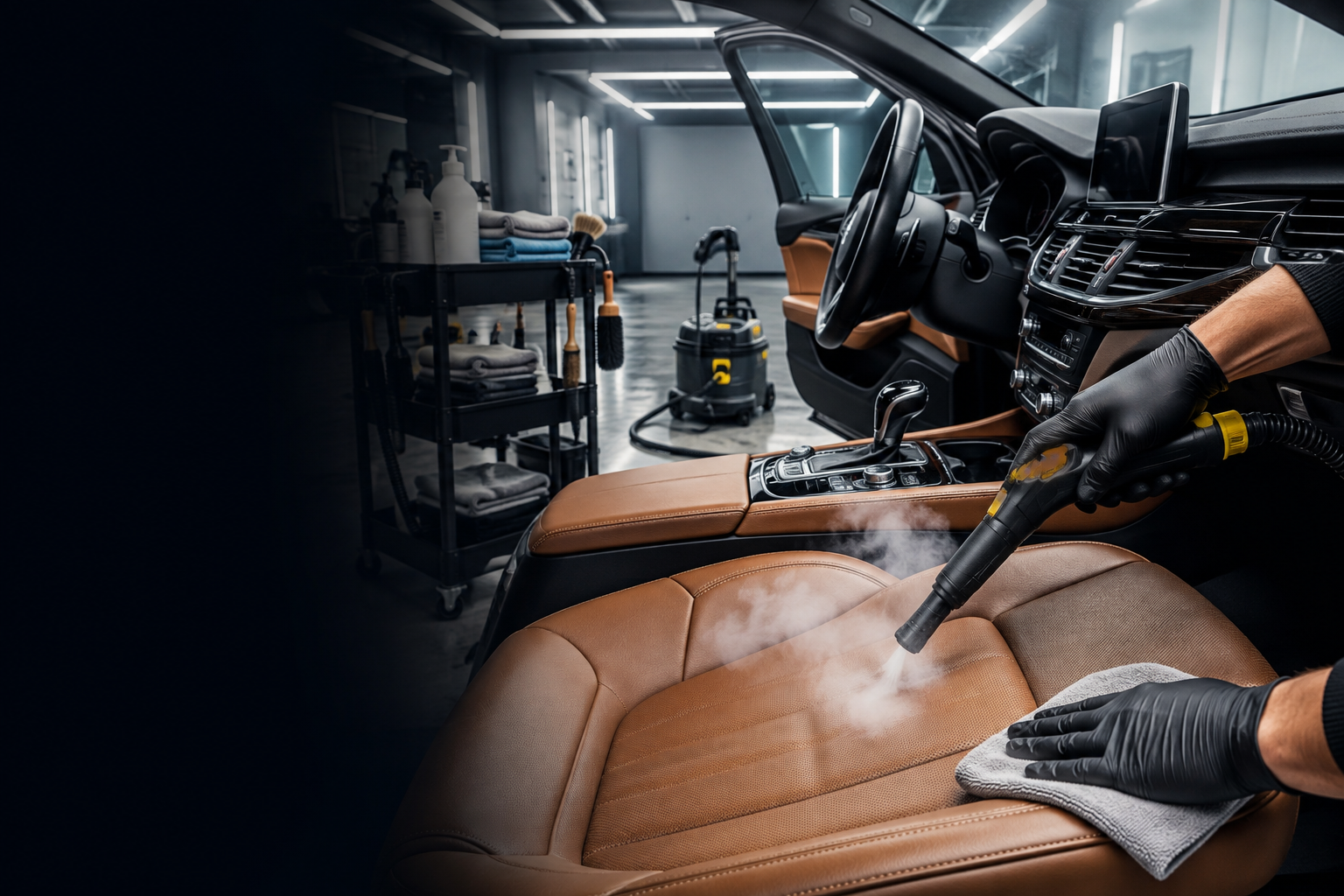
Leather Seat Cleaning, Stain Removal, and Steam Cleaning Car Interior: The Best Guide 2026
Introduction
Leather Seat Cleaning, Stain Removal, and Steam Cleaning Car Interior: Your car’s interior takes a beating every single day. Spilled coffee, muddy shoes, food crumbs, pet hair, and everyday grime all build up over time, and without a proper cleaning routine, that wear becomes permanent. Whether you’re dealing with worn leather seats, stubborn stains on fabric upholstery, or simply want a deeper clean than a quick vacuum can provide, understanding leather seat cleaning, stain removal car interior techniques, and steam cleaning car interior methods is essential for keeping your vehicle looking and feeling fresh.
Interior detailing isn’t one-size-fits-all. Leather requires different products and techniques than cloth upholstery, stains vary widely depending on what caused them, and steam cleaning offers a chemical-light alternative that works well across multiple surfaces but comes with its own set of considerations. Choosing the wrong method for the wrong material can lead to discoloration, cracking, or even permanent damage.
This guide breaks down everything you need to know: why proper interior cleaning matters, the different types of cleaning methods and products available, how their maintenance needs compare, the pros and cons of each approach, repair tips, general cleaning and maintenance best practices, common mistakes to avoid, and answers to the most frequently asked questions. By the end, you’ll have a clear framework for keeping your car’s interior looking as good as the day you bought it.
Why Leather Seat Cleaning Matters
Leather seats are often one of the most expensive interior upgrades a vehicle can have, and neglecting proper care can shorten their lifespan significantly. Unlike fabric, leather is a natural material that requires conditioning, not just cleaning, to stay supple and crack-free.
Here’s why leather seat cleaning and proper interior maintenance matter:
- Prevents cracking and premature aging – Leather that isn’t regularly cleaned and conditioned dries out faster, leading to visible cracks and a worn appearance.
- Protects resale value – Well-maintained leather interiors significantly boost a vehicle’s perceived value compared to cracked, stained, or discolored seats.
- Improves comfort and hygiene – Regular cleaning removes body oils, sweat, and bacteria that build up on frequently used surfaces.
- Addresses stains before they set – Stain removal car interior techniques are far more effective when applied quickly, before spills have time to penetrate deep into leather or fabric fibers.
- Extends the life of steam-cleaned surfaces – Steam cleaning car interior methods can sanitize and lift embedded dirt without the residue left behind by some chemical cleaners, helping surfaces stay cleaner for longer.
Taking interior care seriously isn’t just about looks — it directly affects comfort, hygiene, and how much your vehicle is worth when it’s time to sell or trade it in.
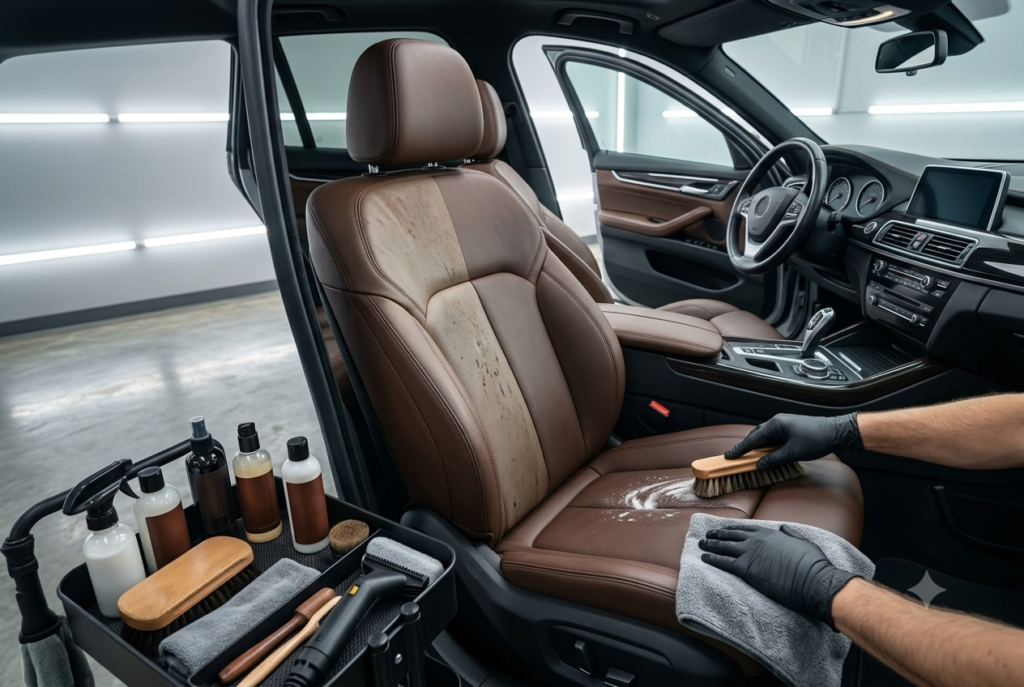
Different Types of Interior Cleaning Methods (10+ Types)
There isn’t a single universal approach to interior cleaning. Depending on the material, the type of stain, and the tools available, several distinct methods and products come into play.
- Leather Cleaner and Conditioner – A two-step product system designed to clean dirt from leather surfaces while replenishing natural oils to prevent cracking.
- pH-Balanced Leather Wipes – Pre-moistened wipes formulated specifically for leather, offering quick spot cleaning without oversaturating the material.
- Fabric Upholstery Shampoo – A specialized cleaner designed to lift dirt and stains from cloth seats without leaving a soapy residue.
- Enzyme-Based Stain Removers – Cleaners that break down organic stains like food, urine, or blood at a molecular level, making them especially effective for tough interior stains.
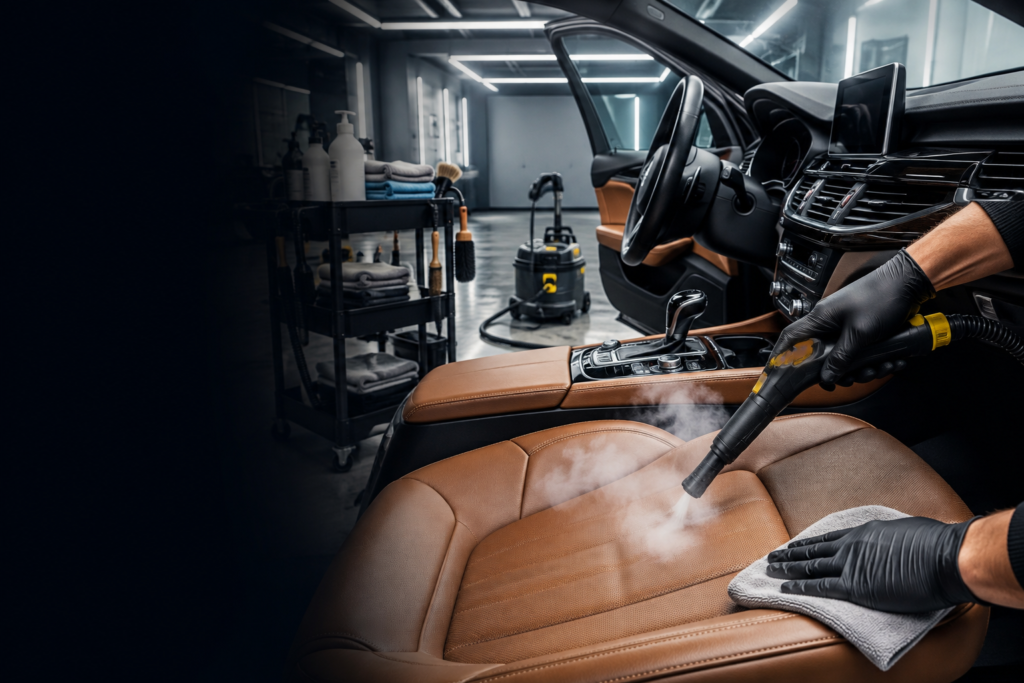
- Steam Cleaning (Dry Vapor Steam) – A chemical-free method that uses high-temperature steam to loosen dirt and sanitize surfaces across leather, fabric, and hard plastic trim.
- Wet Steam Extraction Cleaning – Combines steam with a vacuum extraction process to lift dissolved dirt and moisture from fabric upholstery and carpets.
- All-Purpose Interior Cleaner – A general-use spray cleaner suitable for dashboards, door panels, and hard plastic surfaces, though not ideal for leather or deep fabric stains.
- Foam-Based Upholstery Cleaner – A foaming spray that expands into fabric fibers to lift embedded dirt before being wiped or vacuumed away.
- Leather Protectant Spray – Applied after cleaning to add a UV-resistant barrier that helps prevent fading and sun damage on leather seats.
- Carpet and Floor Mat Extractor Cleaner – A specialized deep-cleaning solution designed for heavily soiled carpets and floor mats, often used alongside steam extraction.
- Odor-Neutralizing Interior Spray – Designed to eliminate smoke, pet, or mildew odors rather than just masking them, often used after steam cleaning treatments.
- DIY Vinegar and Water Solution – A budget-friendly, natural cleaning option for light stains and general surface cleaning, though less effective on set-in or oily stains.
Each of these methods serves a different purpose, and many professional interior detailing services combine several — for example, steam cleaning fabric seats while using a dedicated leather cleaner and conditioner on leather-trimmed surfaces in the same vehicle.
Maintenance Comparison
Here’s a general comparison of how these interior cleaning methods differ in terms of maintenance frequency and effort:
| Type | Best Suited For | Recommended Frequency | Effort Level |
|---|---|---|---|
| Leather Cleaner & Conditioner | Leather seats | Every 1–2 months | Moderate |
| pH-Balanced Leather Wipes | Quick leather spot cleaning | Weekly (as needed) | Low |
| Fabric Upholstery Shampoo | Cloth seats | Every 2–3 months | Moderate |
| Enzyme-Based Stain Removers | Organic stains | As needed | Low-Moderate |
| Dry Vapor Steam Cleaning | Leather, fabric, plastic trim | Every 3–6 months | Moderate-High |
| Wet Steam Extraction | Fabric, carpets | Every 3–6 months | High |
| All-Purpose Interior Cleaner | Dash, plastic trim | Weekly to biweekly | Low |
| Foam-Based Upholstery Cleaner | Fabric seats | Every 2–3 months | Moderate |
| Leather Protectant Spray | Leather seats | Every 1–2 months | Low |
| Carpet & Floor Mat Extractor | Carpets, floor mats | Every 3–6 months | Moderate-High |
| Odor-Neutralizing Spray | All interior surfaces | As needed | Low |
| DIY Vinegar & Water Solution | Light general cleaning | Weekly to biweekly | Low |
Generally speaking, leather requires more frequent, gentler maintenance to prevent drying and cracking, while fabric and carpet benefit more from periodic deep cleaning through steam or extraction methods.
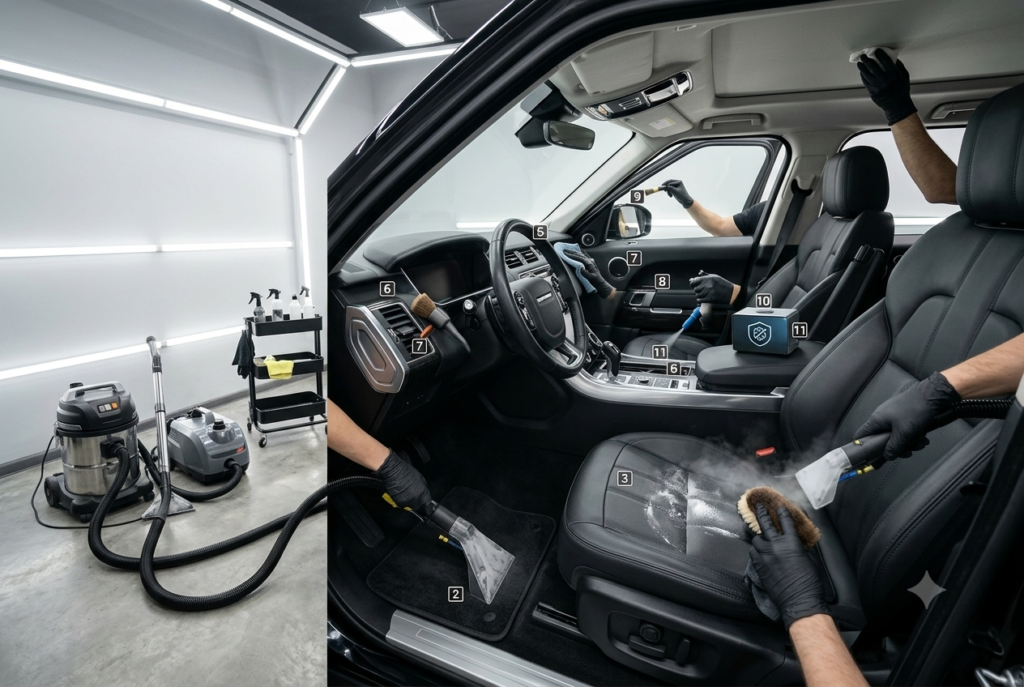
Maintenance Explained
Maintenance for a vehicle’s interior isn’t just about wiping down visible dirt — it’s about preserving the material’s condition over the long term and preventing small issues from becoming permanent damage.
For leather seats, maintenance means regular cleaning followed by conditioning, since leather naturally loses moisture over time, especially with sun exposure. Skipping conditioning after cleaning can actually accelerate drying and cracking, even if the seats look clean.
For fabric upholstery, maintenance typically involves a combination of routine vacuuming, spot treatment for spills, and periodic deep cleaning through shampooing or steam extraction to remove embedded dirt that regular vacuuming can’t reach.
For stain removal car interior needs specifically, timing matters more than product choice in many cases. Fresh stains are significantly easier to remove than set-in ones, which is why blotting a spill immediately — rather than waiting until the next cleaning session — makes a major difference in the final result.
For steam cleaning car interior maintenance, the process typically involves less frequent but more thorough sessions, since steam cleaning penetrates deeper into fabric and crevices than routine surface cleaning. This makes it a valuable periodic addition to a regular maintenance routine rather than a weekly task.
Pros & Cons of Each Type
Leather Cleaner & Conditioner
- Pros: Cleans and moisturizes in one process, prevents cracking
- Cons: Requires more time than a quick wipe-down
pH-Balanced Leather Wipes
- Pros: Fast, convenient for spot cleaning
- Cons: Not a substitute for deeper conditioning treatments
Fabric Upholstery Shampoo
- Pros: Effective at lifting embedded dirt from cloth seats
- Cons: Requires drying time and proper ventilation
Enzyme-Based Stain Removers
- Pros: Highly effective on organic stains like food and biological spills
- Cons: Less effective on non-organic stains like ink or grease
Dry Vapor Steam Cleaning
- Pros: Chemical-free, sanitizes as it cleans, safe for most surfaces
- Cons: Requires specialized equipment and careful technique on leather
Wet Steam Extraction
- Pros: Deep cleans fabric and removes dissolved dirt effectively
- Cons: Longer drying time, risk of moisture buildup if not extracted properly
All-Purpose Interior Cleaner
- Pros: Versatile for quick surface cleaning
- Cons: Not suitable for deep stains or leather conditioning
Foam-Based Upholstery Cleaner
- Pros: Penetrates fabric fibers effectively
- Cons: Can leave residue if not fully wiped or vacuumed away
Leather Protectant Spray
- Pros: Adds UV protection, extends time between conditioning treatments
- Cons: Doesn’t replace the need for periodic deep conditioning
Carpet & Floor Mat Extractor
- Pros: Removes heavy dirt and stains from high-traffic areas
- Cons: Can require significant drying time in enclosed vehicle interiors
Odor-Neutralizing Spray
- Pros: Addresses odor at the source rather than masking it
- Cons: May require repeated applications for persistent odors
DIY Vinegar & Water Solution
- Pros: Inexpensive, safe for light general cleaning
- Cons: Not strong enough for set-in stains or heavy grime
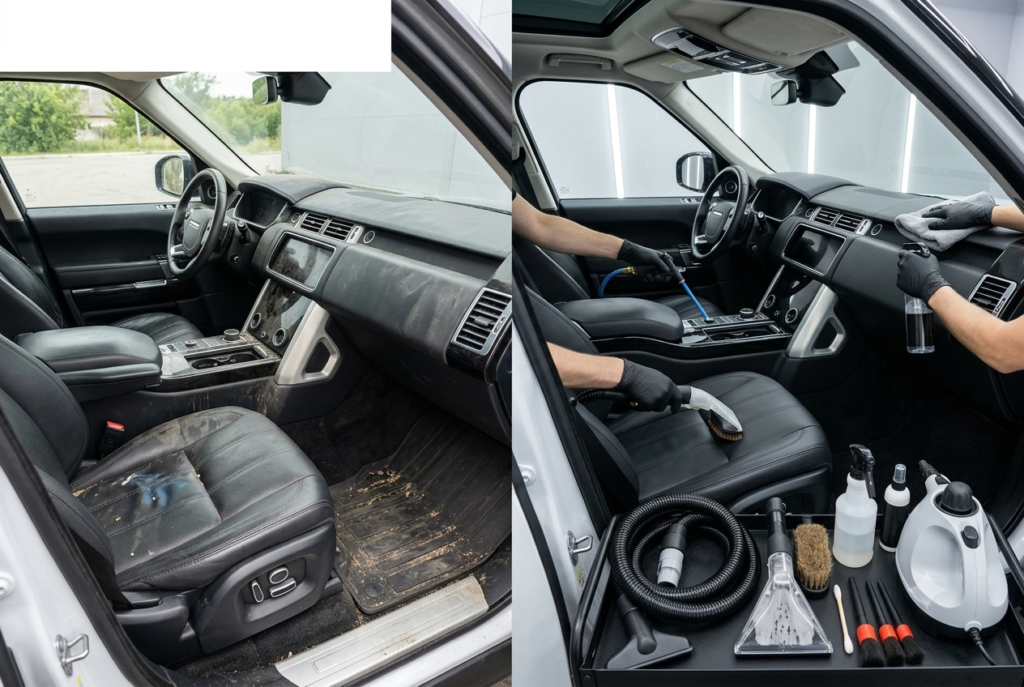
Repair Tips for Each Type
- Leather Cleaner & Conditioner: If leather feels stiff after cleaning, apply an additional light coat of conditioner and allow it to absorb fully before use.
- pH-Balanced Leather Wipes: For stubborn spots, follow up with a dedicated leather cleaner rather than repeatedly scrubbing with wipes.
- Fabric Upholstery Shampoo: Blot rather than rub when treating stains to avoid spreading them further into the fabric.
- Enzyme-Based Stain Removers: Allow the product to sit for the recommended time before blotting, since enzymes need time to break down organic material.
- Dry Vapor Steam Cleaning: Keep the steam nozzle moving continuously on leather to avoid concentrated heat damage in one spot.
- Wet Steam Extraction: Ensure thorough extraction to avoid leaving excess moisture, which can lead to mildew odors in carpets and seats.
- All-Purpose Interior Cleaner: Use a microfiber cloth rather than paper towels to avoid leaving lint on plastic and vinyl surfaces.
- Foam-Based Upholstery Cleaner: Vacuum thoroughly after use to remove all foam residue and prevent a sticky feel once dry.
- Leather Protectant Spray: Reapply after every deep cleaning session to maintain consistent UV protection.
- Carpet & Floor Mat Extractor: Use fans or leave windows cracked afterward to speed up drying and prevent odor buildup.
- Odor-Neutralizing Spray: Combine with a steam cleaning session for odors caused by deep-set moisture or organic residue.
- DIY Vinegar & Water Solution: Test on a small hidden area first, as vinegar’s acidity can affect certain fabric dyes over time.
Cleaning & Maintenance Best Practices
To keep your car’s interior in top condition, follow these best practices:
- Vacuum weekly to prevent dirt and debris from becoming embedded in fabric fibers or leather seams.
- Address spills immediately rather than waiting, since fresh stains are significantly easier to remove than set-in ones.
- Condition leather seats every 1–2 months, especially in vehicles frequently exposed to direct sunlight.
- Schedule a deep steam cleaning session every 3–6 months to reach embedded dirt that regular cleaning methods miss.
- Use products designed for your specific material, since leather, fabric, and hard plastic all require different formulations.
- Test new cleaning products in a hidden area first to avoid discoloration or damage to visible surfaces.
- Allow adequate drying time after wet cleaning methods to prevent moisture-related odors or mildew growth.
Common Mistakes to Avoid
- Using the wrong cleaner on leather – Harsh all-purpose cleaners can strip natural oils from leather, leading to premature cracking.
- Scrubbing stains instead of blotting – Aggressive scrubbing can push stains deeper into fabric fibers or damage the material’s surface.
- Skipping conditioner after cleaning leather – Cleaning alone removes both dirt and some natural oils, making conditioning a necessary follow-up step.
- Over-saturating fabric during steam cleaning car interior sessions – Excess moisture that isn’t properly extracted can lead to mildew and lingering odors.
- Waiting too long to treat stains – The longer a stain sits, the more difficult it becomes to fully remove, especially on porous fabric surfaces.
- Using DIY solutions on delicate or dyed leather – Homemade cleaning mixtures can sometimes cause discoloration on certain leather finishes.
- Ignoring UV protection for leather seats – Skipping protectant sprays accelerates fading and drying, especially in vehicles parked outdoors regularly.
Frequently Asked Questions (FAQs)
1. What is the best method for leather seat cleaning? A dedicated leather cleaner followed by a conditioner is generally considered the most effective method, as it removes dirt while replenishing the leather’s natural oils.
2. How often should leather seats be cleaned and conditioned? Most experts recommend cleaning leather seats every 1–2 months, with more frequent conditioning in hot or sunny climates.
3. What’s the best approach for stain removal car interior situations? Blotting the stain immediately with a clean cloth, followed by an appropriate cleaner based on the stain type (organic, oil-based, or general dirt), typically produces the best results.
4. Is steam cleaning car interior safe for leather seats? Yes, when done carefully with a dry vapor steamer and continuous nozzle movement, steam cleaning can be safe and effective for leather, though excessive heat in one spot should be avoided.
5. Can I use regular soap to clean leather seats? It’s not recommended, as regular soap can be too harsh and strip natural oils, leading to dryness and cracking over time.
6. How do I remove a set-in stain from fabric car seats? Set-in stains often require an enzyme-based cleaner or upholstery shampoo, applied and allowed to sit before blotting, sometimes requiring multiple treatments.
7. Does steam cleaning remove odors from car interiors? Yes, steam cleaning can help eliminate odors caused by bacteria, mold, or organic residue, though persistent odors may require an additional odor-neutralizing treatment.
8. What household items can I use for interior stain removal? A diluted vinegar and water solution can work for light stains, though dedicated cleaning products are generally more effective for tougher or set-in stains.
9. How long does it take for a car interior to dry after steam cleaning? Drying time varies but typically ranges from a few hours to a full day, depending on humidity, ventilation, and whether wet extraction was used.
10. Can steam cleaning damage car electronics or trim? If used carelessly near switches, screens, or vents, steam can cause damage, so it’s important to avoid direct exposure to sensitive electronic components.
11. Is it better to hire a professional for leather seat cleaning? For heavily soiled or aged leather, professional cleaning and conditioning often produce better, longer-lasting results than DIY methods.
12. How do I prevent future stains on car upholstery? Applying a fabric or leather protectant, along with addressing spills immediately, helps minimize the risk of permanent staining.
13. What’s the difference between dry steam and wet steam extraction cleaning? Dry vapor steam uses minimal moisture and is safer for a wider range of surfaces, while wet steam extraction uses more moisture combined with vacuum suction for deeper fabric cleaning.
14. Can leather conditioner prevent future cracking? Yes, regular conditioning helps maintain the leather’s natural oils and flexibility, significantly reducing the risk of cracking over time.
15. How often should car carpets and floor mats be deep cleaned? Every 3–6 months is typical for most vehicles, though heavier use or exposure to mud and moisture may require more frequent attention.
Conclusion
Keeping your car’s interior looking and feeling fresh requires more than an occasional vacuum session — it takes a thoughtful combination of leather seat cleaning, targeted stain removal car interior techniques, and periodic steam cleaning car interior sessions tailored to your vehicle’s specific materials. Leather needs consistent cleaning and conditioning to avoid cracking, fabric benefits from both routine care and deeper periodic cleaning, and steam cleaning offers a versatile, chemical-light option for tackling embedded dirt and odors across multiple surfaces.
By understanding the different cleaning methods available, following a consistent maintenance routine, and avoiding common mistakes like using the wrong products or letting stains set in, you can protect your vehicle’s interior for years to come. A well-maintained cabin doesn’t just look better — it improves comfort, hygiene, and long-term resale value, making the time and effort you invest in interior care well worth it.


2 Comments