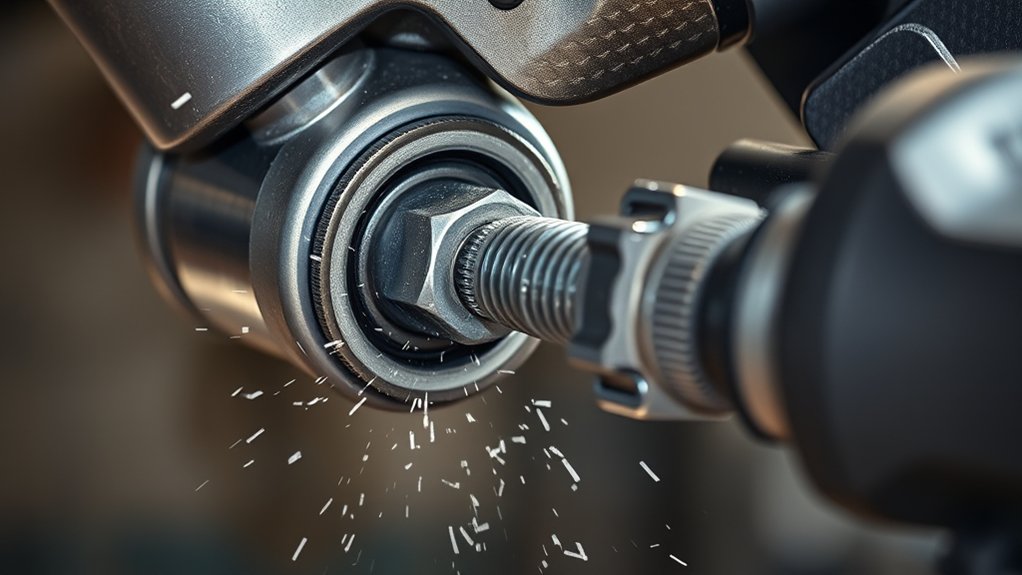
How Does an Impact Wrench Work Step by Step
Struggling to loosen stubborn bolts or wondering how an impact wrench works step by step? You’re not alone—many DIYers and professionals want powerful results without exhausting their hands or risking stripped fasteners. The right impact wrench can make tough jobs faster and easier.
When you pull the trigger, you power the wrench’s motor with electricity or compressed air. The motor spins internal gears, which trade speed for greater torque.
A rotating hammer then accelerates and stores energy before striking the anvil connected to your socket. These repeated impacts send powerful torque pulses to loosen or tighten fasteners.
Variable-speed controls help you manage force, while impact-rated sockets withstand the shock.
Keep your eyes and hands protected, and you’ll soon understand each stage in greater detail.
Key Takeaways
- Pulling the trigger powers the motor, which spins the tool’s internal shaft and hammer mechanism.
- Gears reduce rotational speed while increasing torque, transferring power efficiently to the output drive.
- As resistance builds, the rotating hammer accelerates and stores energy like a flywheel.
- The hammer repeatedly strikes the anvil, delivering powerful torque pulses through the square drive and socket.
- Use impact-rated sockets, safety gear, and appropriate speed or torque settings to prevent damage and injury.
How Does an Impact Wrench Work?
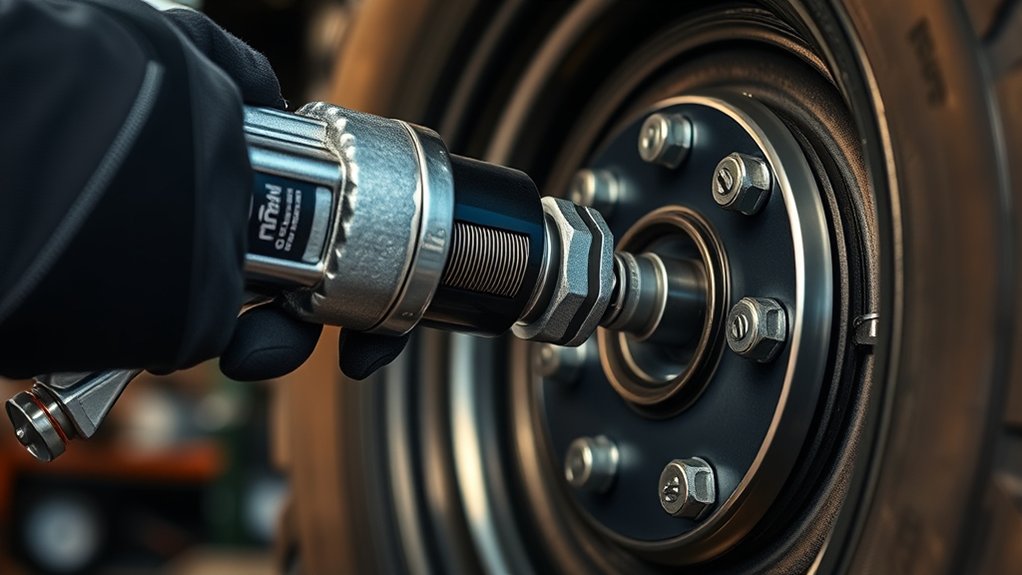
An impact wrench uses a motor to spin a rotating hammer inside the tool. As you use it, the hammer builds rotational energy, then strikes an anvil connected to the socket. Each impact delivers a brief, powerful burst of torque rather than relying on continuous turning alone.
An impact wrench delivers powerful bursts of torque by using a rotating hammer to strike the socket-connected anvil.
This design helps you loosen stubborn fasteners or tighten hardware efficiently while reducing strain on your hands and wrists.
Inside the housing, gears manage the motor’s speed and increase usable torque. The hammer-and-anvil mechanism also absorbs some resistance, helping protect the motor from sudden load changes.
You’ll find impact wrenches in cordless, pneumatic, and electric versions, each using the same basic principle with different power sources.
Historical development transformed bulky workshop tools into compact, battery-powered equipment. Today, industry applications include automotive repair, construction, manufacturing, and heavy-equipment maintenance.
Select the correct socket and torque setting for your fastener, because excessive force can damage threads or components.
What Happens When You Pull the Trigger?
When you pull the trigger, electricity or compressed air immediately powers the motor, which spins the tool’s internal gears and hammer mechanism. A variable-speed trigger lets you control how quickly the tool responds, so you can start gently and increase force as needed.
In a cordless model, Battery technology delivers current from the pack through electronic controls. In a pneumatic model, the trigger opens an air valve, directing compressed air into the tool.
You’ll notice several immediate responses:
- The motor starts with a brief, controlled surge.
- Internal controls regulate speed and power.
- The anvil prepares to transfer torque to your socket.
- Releasing the trigger stops the drive cycle.
Modern tools use an Ergonomic design to position the trigger comfortably and reduce hand strain. Safety features may also limit accidental starts or cut power when the tool overheats.
At this stage, the wrench has received your command and activated its working components. The next step explains how the motor creates rotational power.
How the Motor Creates Rotational Power
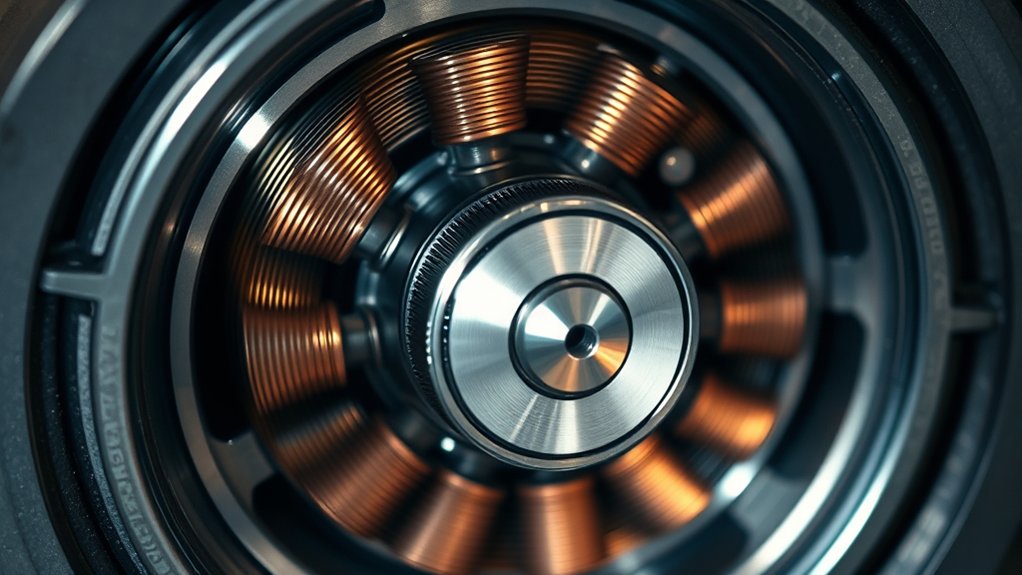
Once the trigger activates the tool, the motor converts electrical energy or compressed air into rotational motion. In a cordless impact wrench, electricity flows from the battery through the motor’s windings.
The resulting magnetic fields attract and repel the rotor, making it spin rapidly. With a pneumatic model, compressed air enters the motor and pushes internal vanes around a chamber, producing the same basic rotary movement.
You control speed by how far you press the trigger. A lighter squeeze supplies less power, while a deeper press increases motor speed.
Battery efficiency affects how consistently a cordless motor maintains that output, especially as the charge drops or the battery gets cold.
The motor also generates heat during operation, so motor cooling helps protect its windings and bearings. Vents, airflow, and brief pauses help release heat.
At this stage, the motor only creates rotation. The next internal components handle how that motion becomes usable fastening force.
How Gears Increase Torque
The gearbox increases torque by trading some motor speed for greater turning force. Inside your impact wrench, small motor gears drive larger output gears. This ratio reduces rotation speed while multiplying torque, giving you the strength to loosen stubborn fasteners or tighten them securely.
As you use the tool, each gear transfers force through carefully matched teeth. The design balances power, speed, durability, and control:
- Smaller input gears spin quickly.
- Larger output gears turn more slowly.
- Gear ratios multiply twisting force.
- Hardened teeth withstand heavy loads.
Gear lubrication reduces friction, limits heat, and protects the teeth from premature wear. You should keep the gearbox properly lubricated according to the manufacturer’s instructions.
Efficient gearing also helps the motor work within its useful range, improving battery life in cordless models and reducing strain during demanding jobs. An ergonomic design complements this mechanical advantage by keeping the tool balanced and comfortable in your hands.
As a result, you can apply powerful torque with less effort while maintaining better control around each fastener.
How the Hammer Stores Rotational Energy
As the motor spins the hammer assembly, an internal mass accelerates and stores energy through its rotation. You can think of this mass as a flywheel inside the tool.
While the motor keeps turning, the hammer gains speed, and its inertia preserves the work supplied by the motor. The faster it rotates, the more impact energy it can hold.
This process, called rotational storage, lets the wrench build power without requiring the motor to produce all its force at once. Springs, cams, or shaped contact surfaces help control the hammer’s movement and keep it aligned with the drive mechanism.
The hammer continues rotating freely during the buildup phase, while the anvil and socket remain ready for the next cycle. As resistance increases at the fastener, the stored energy remains available for timed release.
You’ll hear the motor labor, but the rotating hammer quietly accumulates mechanical energy inside the housing.
How the Hammer Delivers Impact Torque
When resistance slows the anvil, the hammer’s stored rotational energy drives it into the anvil’s striking surface, creating a brief, high-torque impact. As you squeeze the trigger, the impact mechanism lets the hammer rotate freely until its lugs align with the anvil.
> When resistance slows the anvil, stored rotational energy drives the hammer into it, creating a brief, high-torque impact.
The hammer then strikes sharply, momentarily concentrating force instead of applying steady pressure. After contact, it rebounds and spins forward for another strike.
This rapid cycle helps your impact wrench break loose stubborn fasteners while limiting continuous twisting through the motor.
You can think of each impact as a controlled energy release:
- The hammer accelerates before contact.
- The lugs meet the anvil abruptly.
- Stored energy becomes impact force.
- The hammer resets for another blow.
You’ll hear the familiar rattling sound as these repeated collisions occur. Higher speed produces more impacts per minute, while greater hammer mass or rotation increases each blow’s intensity.
The mechanism keeps cycling whenever resistance remains, delivering pulses that overcome static friction without requiring one prolonged burst of motor torque.
How Torque Reaches the Anvil
Once the motor drives the hammer, the hammer strikes the anvil and transfers its force. As the anvil receives each impact, it rotates and sends torque through the socket to the fastener.
Motor Drives Hammer
The motor spins the hammer mechanism, converting electrical power into rotational force that reaches the anvil. When you squeeze the trigger, the battery sends current through the motor, creating magnetic force that turns its shaft.
Gears may reduce speed while multiplying torque, helping the compact tool deliver powerful impacts. Battery technology influences runtime, power delivery, and consistent performance, while ergonomic design helps you control the wrench comfortably.
- The trigger regulates motor speed.
- Magnets drive the rotating shaft.
- Gears balance speed and torque.
- Lubrication reduces internal friction.
As the motor accelerates, the hammer mechanism stores rotational energy and prepares each impact cycle. You’ll hear the motor work harder as resistance increases, but electronic controls can limit overheating and protect the battery.
This stage focuses on transferring energy through the drive system. The hammer’s interaction with the anvil occurs next.
Hammer Turns Anvil
As the hammer rotates, its drive lugs engage the anvil and transfer stored energy in a sudden burst of torque. Inside your impact wrench, this contact happens repeatedly rather than continuously.
The hammer spins freely for part of each rotation, then its lugs strike the anvil’s matching surfaces. That collision delivers a powerful torque pulse through the square drive and into your socket.
The anvil mechanism also absorbs and redirects some shock, helping protect the motor and gears from constant strain. As resistance increases at the fastener, the hammer keeps accelerating between impacts.
Each strike adds force without requiring a larger motor. You’ll hear this action as the tool’s characteristic rattling sound.
The anvil then turns your socket, which transfers each torque burst directly to the fastener.
How Speed and Torque Are Controlled
You control an impact wrench’s speed with the trigger or electronic settings, adjusting the power to match the task. Torque controls let you limit the force and protect fasteners from damage. Together, these settings help you apply the right amount of power for each job. Next, you’ll see how they work together.
Variable Speed Control
Variable speed control lets you adjust an impact wrench’s motor speed and, consequently, its torque output to match the fastener and material. Press the trigger lightly for controlled starts, then squeeze farther to increase speed as the socket seats securely.
This control helps you prevent cross-threading, protect delicate workpieces, and finish repetitive fastening efficiently. Your tool may respond through a trigger, paddle, or electronic switch, depending on its design.
- Start slowly to align the socket and fastener.
- Increase speed when threads engage smoothly.
- Ease off before the fastener reaches its stopping point.
- Release the trigger to stop rotation immediately.
Battery technology can maintain consistent power while you vary trigger pressure, though charge level still affects performance. An ergonomic design improves comfort and grip, helping you hold steady during precise speed changes.
Practice on scrap material so you’ll recognize how quickly your wrench responds.
Torque Adjustment Mechanisms
Torque adjustment mechanisms control how much twisting force an impact wrench delivers, helping you match the tool to the fastener and material. You’ll usually select a low, medium, or high setting with a button, dial, or electronic control.
Lower torque helps prevent stripped threads, damaged surfaces, and overtightened small bolts. Higher torque handles stubborn fasteners and heavy-duty assembly.
Many cordless models combine speed settings with torque control. As you press the trigger, you can regulate rotation, while the selected mode limits impact intensity.
Brushless motors and electronic controllers maintain consistent output, improving battery efficiency by preventing unnecessary power use. Some tools detect resistance and automatically adjust torque, giving you smoother control.
Choose an ergonomic design so you can change settings comfortably and hold the wrench securely during extended work. Always finish critical tightening with a calibrated torque wrench.
Cordless vs. Pneumatic Impact Wrenches
A pneumatic wrench delivers consistent power for demanding shop environments, but you’ll need an air compressor, hose, and adequate airflow.
Compare these practical differences:
Compare portability, runtime, maintenance, and noise when choosing between cordless and pneumatic tools.
- Portability: Cordless tools travel easily; pneumatic tools stay near air equipment.
- Runtime: Batteries limit continuous use; compressed air supports sustained operation.
- Maintenance: Cordless models need battery care; pneumatic models need air-system upkeep.
- Noise: Cordless tools generally run more quietly; compressors add sound.
Choose cordless for field repairs, overhead work, or occasional tasks. Choose pneumatic when you have reliable compressed air and need frequent, high-volume operation.
Either option can match your needs when you weigh access, endurance, tool weight, and workspace demands before purchasing.
Why Impact Sockets and Safe Use Matter
You’ll need impact sockets because their added strength allows them to handle the wrench’s high torque safely. Make sure the socket fits the fastener properly to prevent slipping or damage. For added protection, follow safe operating practices, such as wearing eye protection and securing your workpiece.
Impact Socket Strength
When an impact wrench delivers rapid bursts of torque, impact sockets absorb and withstand that shock without cracking like standard chrome sockets can. Their durability comes from heat-treated steel, thicker walls, and designs that flex slightly under load.
You protect yourself and your tool by choosing sockets labeled specifically for impact use, never ordinary hand-tool sockets.
- Check for heat-treated chrome-molybdenum or chrome-vanadium steel.
- Replace sockets showing cracks, distortion, or excessive wear.
- Wear safety glasses and keep your hands clear of moving parts.
- Use the wrench’s lowest effective power setting.
Your socket material selection matters because brittle materials can shatter under repeated impacts, sending fragments outward.
Inspect accessories regularly, especially after heavy fastening or exposure to corrosion. Follow the manufacturer’s torque limits and maintenance guidance.
Stop immediately if you hear unusual sounds or notice visible damage.
Proper Socket Fit
Proper socket fit matters just as much as socket strength. Choose an impact-rated socket that matches your fastener’s exact size and shape.
Socket compatibility prevents slipping, rounding, and uneven force, helping the wrench transfer torque efficiently. Avoid using standard chrome sockets, which can crack under repeated impacts.
Inspect the socket and anvil for wear, distortion, or debris before installation. Push the socket fully onto the drive and confirm that its detent pin or retaining ring engages securely.
A loose connection can damage the tool, socket, or fastener. Match the drive size as well; don’t force an adapter to compensate for an incompatible socket.
Keep your wrench ready with proper Battery maintenance, since weak power can reduce impact performance and encourage repeated, excessive attempts.
Replace damaged sockets immediately, even if they still appear usable.
Safe Operating Practices
Safe operation starts with using impact sockets and handling the wrench deliberately. Impact sockets withstand sudden torque, while standard sockets can crack or shatter. Before each job, inspect the tool, socket, anvil, and fastener for damage, then seat the socket fully.
- Wear safety glasses, gloves, and hearing protection.
- Keep your hands clear of rotating parts and pinch points.
- Set the correct torque level and use a torque wrench for final tightening.
- Disconnect the battery before changing sockets or servicing the tool.
Maintain a firm stance and let the wrench’s ergonomic design reduce strain without forcing it. Don’t extend the tool with pipes or use damaged accessories.
Practice battery maintenance by checking terminals, charging correctly, and storing packs away from heat and moisture. Stop immediately if you notice unusual vibration, noise, smoke, or overheating, and follow the manufacturer’s instructions.
Frequently Asked Questions
How Do You Choose the Right Impact Wrench Size for a Specific Job?
Choose your impact wrench size by matching its torque range to the fastener’s requirements, then consider access and workload. For automotive lug nuts, a 1/2-inch model usually offers the best balance; choose 3/8-inch for lighter repairs and 3/4-inch for heavy equipment.
Compare impact wrench types, including compact, mid-torque, and high-torque models. Evaluate power source options: cordless models provide mobility, while air-powered tools suit garages with compressors.
Always verify manufacturer specifications.
What Maintenance Does an Impact Wrench Require to Stay Reliable?
To keep your impact wrench reliable, treat maintenance like its life depends on it—because neglect can destroy performance overnight. Clean the housing, anvil, and ventilation openings after every job, and inspect sockets, fasteners, cords, and seals for damage.
Follow lubrication tips: oil pneumatic tools regularly and use only manufacturer-approved grease for the mechanism. For battery models, practice Battery care by storing packs cool, charging correctly, and removing them before long-term storage.
Overhaul worn parts promptly.
Can an Impact Wrench Remove Rusted or Seized Fasteners Effectively?
Yes, you can use an impact wrench to remove many rusted or seized fasteners effectively. Its repeated torque pulses often break corrosion bonds more successfully than steady force.
For severe Fastener seizure, apply penetrating oil, let it soak, and use the correct socket to prevent rounding. Moderate heat may help, but avoid damaging nearby components.
Rust removal improves results, so clean exposed threads and reverse gradually instead of forcing maximum power immediately.
How Loud Are Impact Wrenches, and Should Hearing Protection Be Worn?
Impact wrench noise can roar like a thunderclap, often reaching 90–110 decibels during operation. You should wear hearing protection every time you use one, especially indoors or for extended periods.
Choose properly fitted earmuffs or earplugs, and consider double protection in enclosed spaces. You’ll also protect nearby people by warning them before starting.
Keep the tool maintained, since damaged parts can create sharper, louder sounds and increase your risk of hearing damage.
What Common Mistakes Can Damage an Impact Wrench or Fastener?
You can damage an impact wrench or fastener by using the wrong socket, applying excessive force, or running the tool continuously until it overheats.
Avoid Fastener stripping by keeping the socket straight, matching its size precisely, and replacing worn hardware. Prevent Impact wrench overload by using the correct torque setting, allowing cooling breaks, and avoiding seized bolts without penetrating oil.
Don’t use extensions or adapters carelessly, and always follow the manufacturer’s specifications.
Conclusion
An impact wrench turns your trigger press into powerful, controlled bursts of torque. Its motor spins, gears multiply force, and the hammer strikes the anvil to loosen or tighten fasteners.
You’ll get the best results by matching speed, torque, and socket type to the job. Whether you choose cordless or pneumatic power, use impact-rated sockets and safety gear.
Don’t treat this tool like a medieval catapult; respect its force, and you’ll work faster, safer, and smarter. Understanding how an impact wrench works helps you use it with greater control and confidence.