
Ceramic Coating vs PPF: Which Protection Is Best for Your Car?
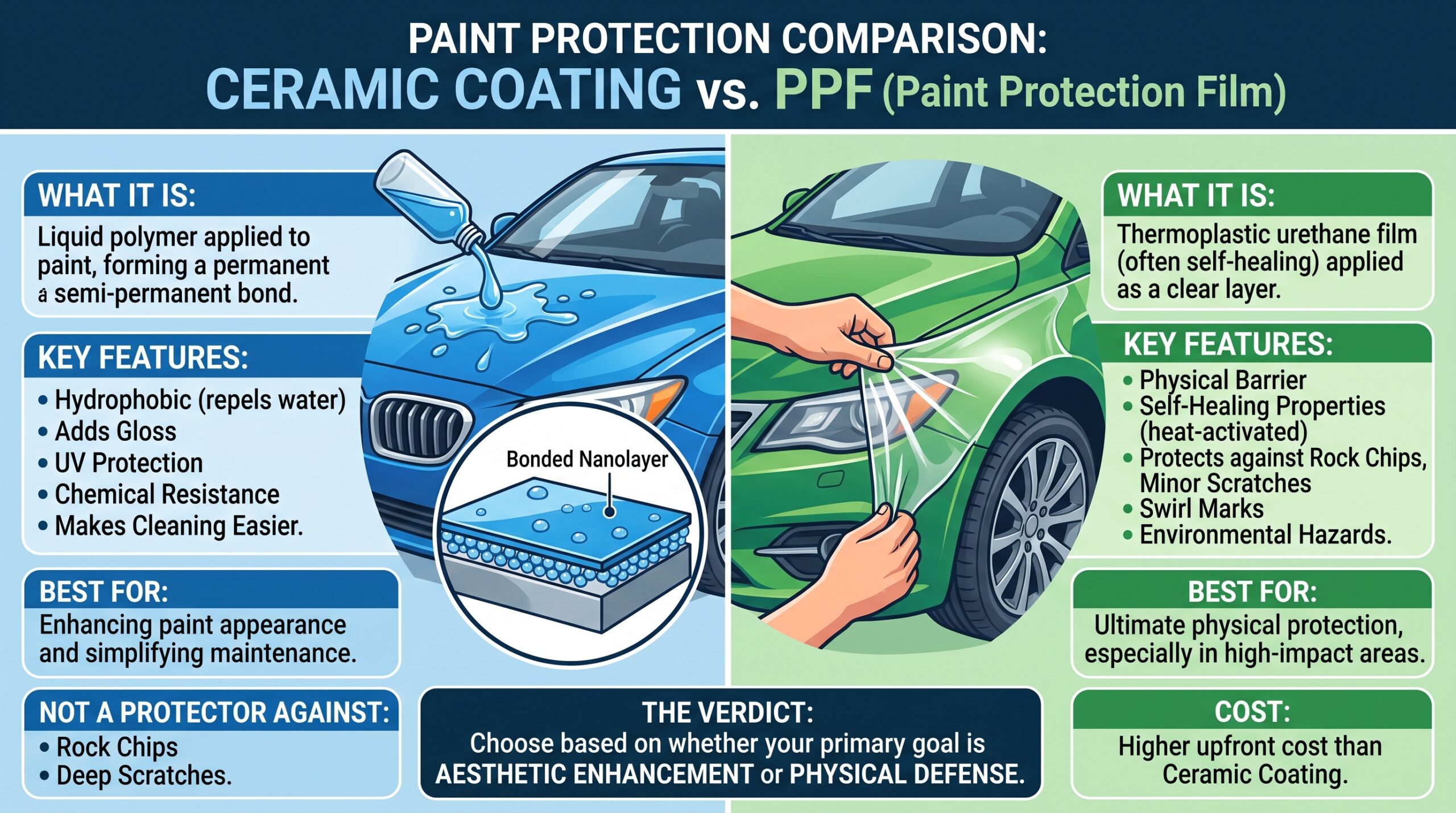
Quick Answer (Ceramic Coating vs PPF): Paint Protection Film (PPF) is a physical, self-healing shield best for stone chips and road debris, while ceramic coating is a chemical bond that delivers hydrophobic gloss and chemical resistance. For maximum protection, most detailing professionals recommend applying PPF to high-impact zones and covering the entire vehicle in a ceramic coating.
When it comes to protecting your vehicle’s exterior, two names dominate the modern auto detailing conversation: Paint Protection Film (PPF) and ceramic coating. Both promise to keep your car looking showroom-fresh for years, but they accomplish that goal in completely different ways, and choosing the wrong one for your driving habits can be an expensive mistake.
If you’re weighing ceramic coating vs PPF for your daily driver, weekend sports car, or brand-new purchase, this guide breaks down exactly how each technology works, where each one excels, where each one falls short, and why so many Atlanta drivers are now combining both for total peace of mind.
Because the ceramic coating vs PPF question comes up so often in our consultations, we’ve built this guide around the real-world questions Atlanta drivers ask us most: which one stops rock chips, which one keeps the car cleaner, and which one is worth the investment for your specific situation.
Ceramic Coating vs PPF: What Is Paint Protection Film (PPF)?
Paint Protection Film, often called a clear bra, is a thick, transparent, thermoplastic urethane film that’s applied directly to your vehicle’s high-impact areas, or in some cases the entire body. Unlike a coating, PPF is a physical layer of material bonded to the paint using a strong adhesive, not a chemical treatment that soaks into the clear coat. Understanding this distinction is the foundation of the entire ceramic coating vs PPF conversation.
How PPF Works
Think of PPF as a sacrificial skin for your paint. When a rock kicks up off the highway or a shopping cart rolls into your bumper, the film absorbs the impact instead of your factory clear coat. Premium films, such as SunTek Paint Protection Film, use a polyurethane top layer engineered to flex and rebound rather than crack.
Key Features of PPF
- Self-healing top coat: Heat from the sun or warm water causes light swirl marks and fine scratches in the film to disappear on their own.
- Impact absorption: Genuinely resistant to rock chips, gravel, road debris, and minor scrapes that would otherwise chip factory paint.
- Stain and yellowing resistance: Modern films resist UV yellowing far better than the films of a decade ago.
- Removability: A professionally installed film can be removed without damaging the factory clear coat underneath.
Best Suited For
PPF is the right call for highway commuters, sports cars, exotic vehicles, and brand-new cars fresh off the lot that are still vulnerable to front-end road debris damage. If rock chips on your hood and bumper are your biggest concern, PPF solves that problem directly, which is the first thing to weigh in any ceramic coating vs PPF decision.
Ceramic Coating vs PPF: What Is a Ceramic Coating?
A ceramic coating is a liquid nanopolymer, typically silica-dioxide (SiO2) based, that chemically bonds with your vehicle’s factory clear coat at the molecular level. Once cured, it forms an invisible, sacrificial layer on top of the paint that repels water, dirt, and contaminants rather than absorbing physical impacts, which is the core mechanical difference behind ceramic coating vs PPF.
How Ceramic Coating Works
Where PPF sits on the paint as a film, ceramic coating becomes part of the paint’s surface chemistry. The cured coating fills in microscopic pores in the clear coat, creating an ultra-smooth, slick surface. That slickness is what produces the dramatic water-beading effect ceramic coatings are known for.
CQuartz Ceramic Coating: A Professional-Grade Option
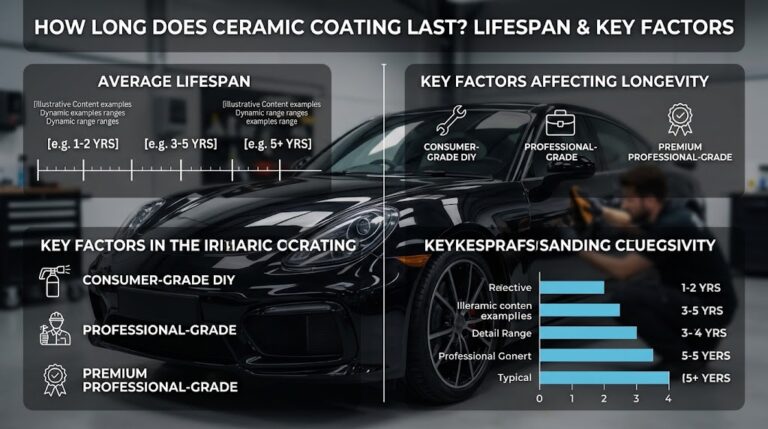
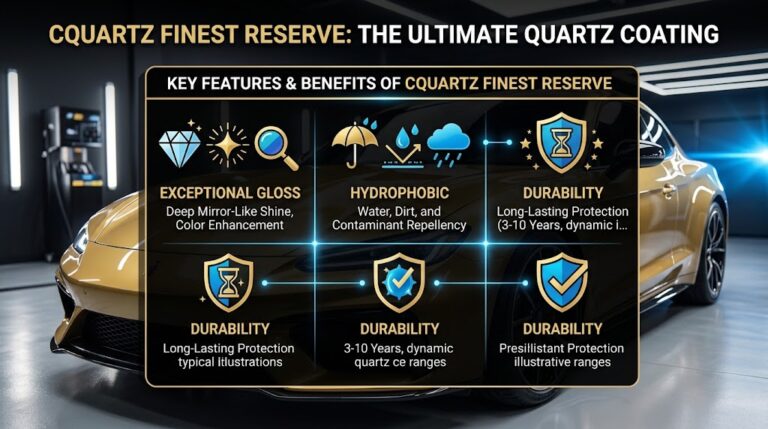
Among professional detailers, CQuartz ceramic coating is one of the most trusted names in the industry. CQuartz formulas are engineered for high solids content and a durable cross-linked structure, which translates to a harder, glossier, and longer-lasting finish compared to consumer-grade spray coatings sold at auto parts stores. A properly prepped and professionally applied CQuartz system can last several years with the right maintenance routine, far outperforming a wax or sealant.
Key Features of Ceramic Coating
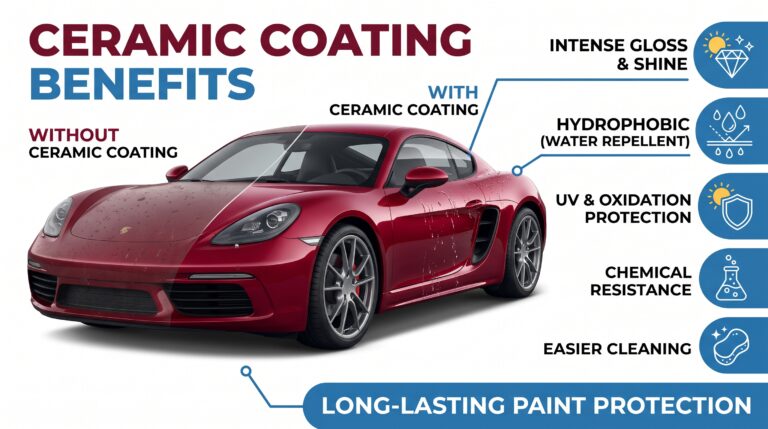
- Hydrophobic slickness: Water, mud, bird droppings, and tree sap bead up and slide off the surface, making regular washing dramatically easier.
- Enhanced gloss: Most owners notice a deeper, wetter-looking shine immediately after application.
- UV and chemical resistance: The coating acts as a barrier against oxidation, fading, and etching from acidic contaminants like bird droppings or bug splatter.
- Reduced maintenance: Less dirt and grime adhesion means fewer trips through the wash bay and less swirl-inducing friction during cleaning.
Best Suited For
Ceramic coating is ideal for drivers who want a low-maintenance, high-gloss finish and strong protection against environmental contaminants and UV fading, but who are less concerned with physical rock chip damage. This is the second half of the ceramic coating vs PPF equation, and knowing which side matters more for your driving habits makes the choice much easier.
Ceramic Coating vs PPF: Clear Bra vs Ceramic Coating Explained
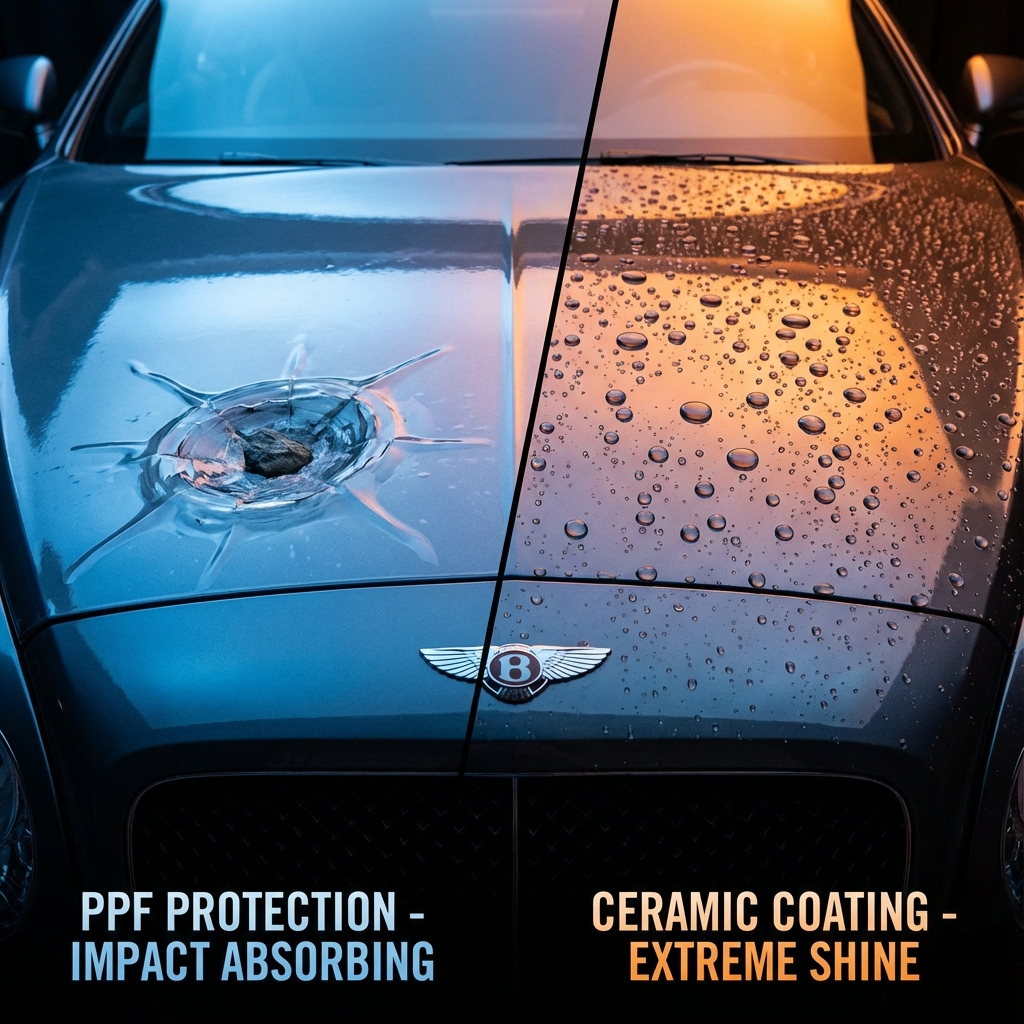
This is where confusion often sets in, since both are marketed as “protection.” The clearest way to separate clear bra vs ceramic coating is to think in terms of physical versus chemical defense.
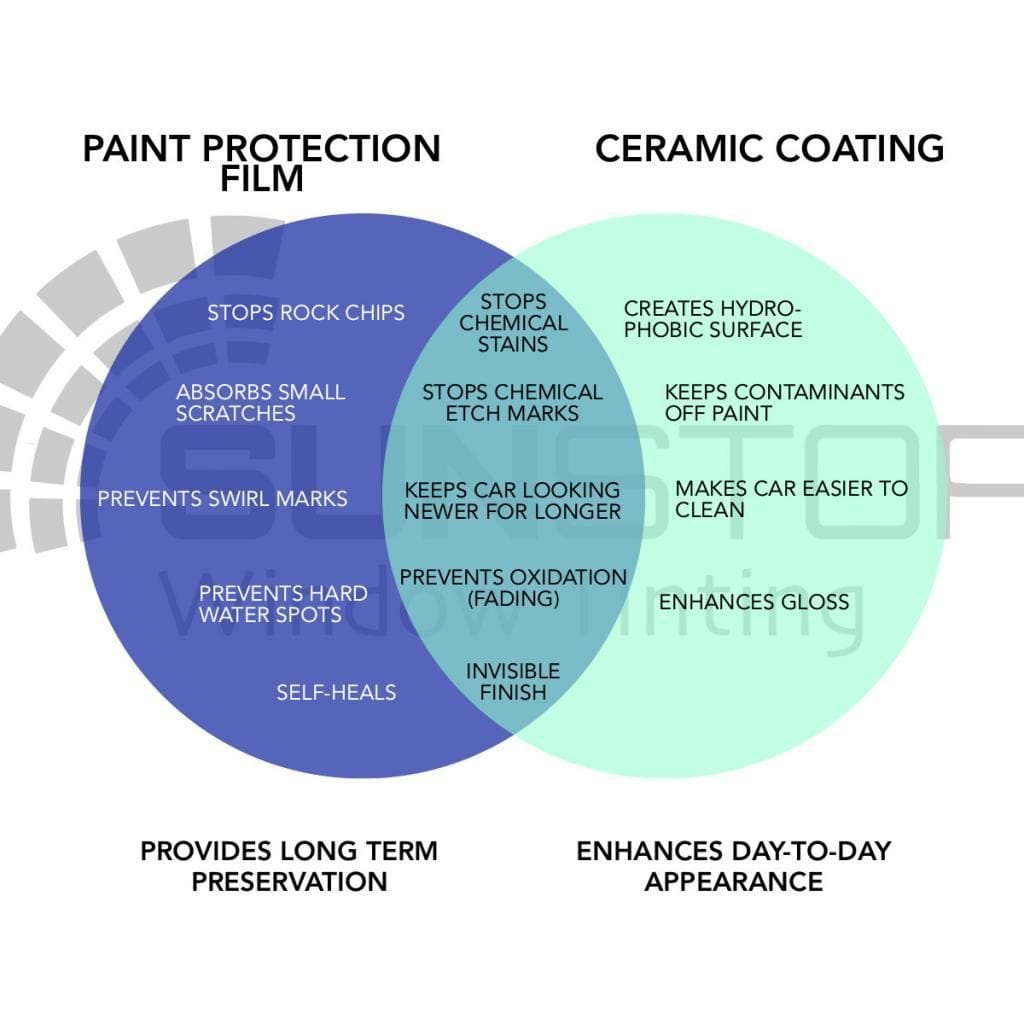
PPF is a physical barrier. It has thickness and mass, which is exactly what allows it to absorb the energy of a flying rock or gravel chip. Ceramic coating, on the other hand, is a chemical bond measured in microns. It’s essentially undetectable to the touch and offers virtually no cushioning against a hard impact.
In short: PPF stops the chip. Ceramic coating stops the grime, the fading, and the water spots. Neither technology fully replaces the other, which is why understanding both sides of the ceramic coating vs PPF equation is essential before you invest in either one.
Ceramic Coating vs PPF: Direct Comparison Table at a Glance
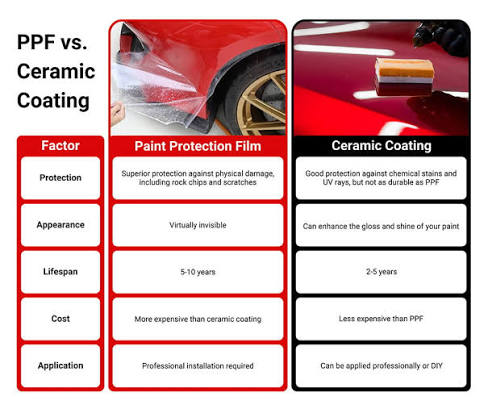
| Feature | Paint Protection Film (PPF) | Ceramic Coating |
|---|---|---|
| Primary Benefit | Physical impact protection (rock chips) | Gloss, slickness, and chemical defense |
| Scratch Protection | High (absorbs impact and self-heals) | Low (resists only light micro-marring) |
| Hydrophobic Properties | Moderate (improves with a ceramic topcoat) | Exceptional (dramatic water beading) |
| UV and Chemical Resistance | High | Maximum |
| Longevity | 7-10 years | 2-10 years (depending on product grade) |
| Appearance | Nearly invisible protection | Deep, wet, reflective gloss |
| Maintenance | Standard washing routine | Significantly easier washing |
| Ideal Use Case | Rock chip and abrasion protection | Long-term gloss and easy upkeep |
This ceramic coating vs PPF table is a useful quick reference, but the right choice still depends on how and where you drive, which is why we cover specific scenarios in the decision guide below.
Ceramic Coating vs PPF: Paint Protection Film Benefits Beyond the Basics
While rock chip protection gets most of the attention, the paint protection film benefits extend further than most owners expect.
- Preserves resale value. A car with intact factory paint and no chip repairs typically commands a higher resale price, since buyers and appraisers notice unrepaired chips immediately.
- Protects vulnerable zones proactively. Bumpers, hoods, fenders, mirrors, and rocker panels take the brunt of road debris, and film covers exactly those zones without altering the vehicle’s factory appearance.
- Reduces the need for paint correction. Fewer chips and scratches mean fewer trips to a body shop or paint correction bay down the road.
- Works underneath a ceramic coating. Many professional installers now apply a ceramic topcoat directly over the film itself, which boosts the film’s hydrophobic properties and gloss while adding UV resistance.
- Long service life. Quality films from established manufacturers are rated for roughly seven to ten years before yellowing or edge lifting becomes a concern.
These paint protection film benefits are the strongest argument on the PPF side of the ceramic coating vs PPF conversation, particularly for anyone driving on interstates or gravel-heavy roads.
Ceramic Coating vs PPF: Ceramic Coating Benefits That Matter Daily
Ceramic coating benefits tend to show up in the day-to-day ownership experience rather than in a single dramatic moment.
- Faster, easier washes. Because dirt and grime have a harder time bonding to the slick surface, a simple rinse often removes the bulk of road film before you even reach for a wash mitt.
- Better protection against etching. Bird droppings, bug splatter, and tree sap are acidic and can etch into unprotected clear coat within hours in hot weather. A cured coating buys you time before permanent damage sets in.
- Consistent, showroom-level gloss. Instead of applying wax every few months, a professionally applied coating maintains its shine for years with minimal upkeep.
- UV fade resistance. Constant sun exposure, which is a real concern for Atlanta drivers given the region’s long, hot summers, accelerates clear coat oxidation. A ceramic layer slows that process considerably.
- Improved water spot resistance. The hydrophobic surface sheds water quickly, reducing the mineral deposits that cause hard water spotting after a rainstorm or sprinkler exposure.
These ceramic coating benefits round out the other side of the ceramic coating vs PPF picture, and they’re the reasons most owners notice on a weekly basis rather than only after a highway drive.
Ceramic Coating vs PPF: The Ultimate Solution Is Combining Both
Here’s the part many car owners miss when researching ceramic coating vs PPF: you don’t have to choose only one of these technologies. The gold standard in modern vehicle protection is a hybrid approach that pairs PPF on high-impact zones, such as the front bumper, hood, mirrors, and fenders, with a professional-grade ceramic coating applied across the entire vehicle, including directly over the installed film.
This combination delivers rock-solid physical defense against road hazards in exactly the areas that need it most, while the ceramic layer adds unmatched hydrophobic slickness, gloss enhancement, and easier cleaning to the entire car. In practice, this means:
- The hood and bumper get a physical shield against rock chips and gravel.
- The entire vehicle, film included, gets a hydrophobic, UV-resistant, high-gloss finish.
- Washing becomes faster and less abrasive across every panel, not just the coated ones.
- You get the longevity of PPF’s multi-year film life alongside the visual depth of a cured ceramic layer.
For owners who want both peace of mind on the highway and a showroom finish in the driveway, this pairing is difficult to beat. Explore our ceramic coating packages and paint protection film installation services to see how we build a combined protection plan around your specific vehicle.
Ceramic Coating vs PPF: Cost Considerations and What to Budget
Pricing for both services varies based on vehicle size, existing paint condition, and coverage area, but a few general patterns hold true across the industry:
- Partial PPF packages (hood, fenders, mirrors, and front bumper) are typically less expensive than full-vehicle film coverage but leave the rest of the car exposed to rock chips.
- Full-vehicle PPF costs more upfront but offers complete coverage and the highest resale-value protection.
- Ceramic coating packages vary based on the number of coating layers applied and the length of the manufacturer’s warranty, with multi-year professional-grade systems like CQuartz costing more than entry-level, shorter-lived coatings.
- Combination packages (PPF plus ceramic coating) often cost less than purchasing each service separately at different times, since prep work and labor overlap.
Because pricing depends heavily on your specific vehicle and desired coverage, the most accurate way to budget for either side of the ceramic coating vs PPF decision is a personalized quote rather than a flat, generic number.
It’s worth noting that the ceramic coating vs PPF price comparison isn’t always a fair one-to-one match, since the two products protect against entirely different threats. Paying more for PPF buys you protection against physical damage that a ceramic coating simply cannot provide, while paying for a ceramic coating buys you gloss and chemical resistance that a bare film cannot replicate on its own. Framing the decision purely around price, without factoring in what each product actually defends against, is one of the most common mistakes new customers make.
Ceramic Coating vs PPF: Common Mistakes Car Owners Make
Before booking an appointment, it helps to know where owners typically go wrong when comparing these two services.
Assuming ceramic coating replaces PPF entirely. This is the single most common misconception in the ceramic coating vs PPF debate, and it’s the one we correct most often during consultations. A ceramic coating will make your car easier to clean and give it a deeper shine, but it will not stop a highway rock chip. Owners who skip PPF expecting the coating to handle everything are often disappointed the first time gravel kicks up on the interstate.
Choosing the cheapest coating product available. Not all ceramic coatings are created equal. Entry-level, single-stage products sold as quick add-ons at general auto shops rarely match the durability, hardness, or gloss retention of a properly prepped, multi-layer professional system like CQuartz.
Skipping paint correction before coating. A ceramic coating locks in whatever condition your paint is in at the time of application. Swirl marks, light scratches, and oxidation get sealed underneath the coating rather than removed. Proper paint correction before application is essential for the finish to look its best.
Installing PPF over unprepped or contaminated paint. Film applied over dirt, wax residue, or old adhesive from a previous installation is far more likely to develop bubbling or lifting at the edges. Professional decontamination and surface prep before installation extends the life of the film significantly.
Underestimating installation quality. Both technologies are only as good as the technician applying them. A poorly cut film with visible edges, or a coating applied without proper leveling and cure time, will underperform regardless of how good the product itself is. Avoiding these mistakes matters more for your final result than the ceramic coating vs PPF choice itself.
Ceramic Coating vs PPF: Which Is Right for Your Car?
If you’re still torn on ceramic coating vs PPF, ask yourself the following questions:
Do you drive on highways or gravel roads frequently?
If your daily commute involves interstate driving, especially following trucks or trailers, PPF on the front end should be a priority in your ceramic coating vs PPF plan. Rock chips accumulate quickly under these conditions.
Is your car brand new or a high-value vehicle?
Newer vehicles and high-value sports cars benefit the most from full-vehicle PPF, since preserving factory paint condition has the biggest long-term payoff for resale and collector value.
Do you park outdoors under trees or in direct sun for long periods?
If tree sap, bird droppings, or intense UV exposure are a daily reality, ceramic coating’s chemical resistance and easier maintenance become especially valuable.
Do you want the lowest-maintenance washing routine possible?
Ceramic coating is the clear winner here, since its hydrophobic properties dramatically reduce how much dirt clings to the surface between washes.
Do you want both maximum impact protection and maximum gloss?
Then the combination approach, PPF on impact zones plus a full ceramic coating over the entire car, is the recommendation most professional detailers make without hesitation.
Running through this checklist is usually the fastest way to settle a ceramic coating vs PPF decision, since most owners find their driving habits already point clearly toward one option, or toward combining both.
Ceramic Coating vs PPF: Frequently Asked Questions
Is ceramic coating better than PPF?
Neither is universally “better” in the ceramic coating vs PPF debate, since they solve different problems. Ceramic coating is better for gloss, chemical resistance, and easy maintenance. PPF is better for physical impact protection against rock chips and road debris. Many owners get the best results using both together.
Does ceramic coating stop rock chips?
No. Ceramic coating is a thin chemical layer measured in microns and does not have the thickness or flexibility needed to absorb the impact of a rock chip. Only PPF is designed for that purpose.
Can you put ceramic coating over PPF?
Yes. Applying a ceramic topcoat directly over installed PPF is a common professional practice, and it’s often the best answer to the ceramic coating vs PPF question rather than picking only one. It boosts the film’s gloss and hydrophobic performance while adding an extra layer of UV protection.
How long does PPF last compared to ceramic coating?
This is one of the most searched ceramic coating vs PPF questions we get. Quality PPF is generally rated for seven to ten years before yellowing or edge lifting becomes noticeable. Ceramic coatings vary more widely, from roughly two years for entry-level products up to a decade for premium, professionally applied, multi-layer systems.
Is a clear bra the same thing as ceramic coating?
No. “Clear bra” is simply another name for Paint Protection Film. It refers to the physical film itself, not to a ceramic coating, which is a liquid chemical treatment rather than a film.
Do I need both PPF and ceramic coating?
You don’t strictly need both, but combining them gives you the most complete protection available. PPF handles physical impacts on vulnerable panels, while ceramic coating handles gloss, chemical resistance, and daily maintenance across the whole vehicle. This is the same conclusion most detailers reach after walking a customer through the full ceramic coating vs PPF comparison.
Which costs more, ceramic coating or PPF?
Full-vehicle PPF is typically the larger investment upfront because of the material and labor required for a full wrap, while ceramic coating packages scale more with the number of layers and warranty length chosen. In the ceramic coating vs PPF cost comparison, combination packages often work out more efficient than buying each service separately over time.
Ceramic Coating vs PPF: Final Verdict
Whether you need the physical impact resistance of PPF, the brilliant hydrophobic shine of a ceramic coating, or both working together, precision installation is what determines how long that protection actually lasts. A rushed or improperly prepped application, regardless of which side of the ceramic coating vs PPF decision you land on, will underperform and fail to deliver the years of protection these technologies are capable of providing.
Ready to protect your vehicle with industry-leading products like SunTek PPF and CQuartz ceramic coatings? Contact Red’s Detail Co. today to schedule a consultation and get a customized vehicle protection quote for your car in Atlanta.
6 Comments