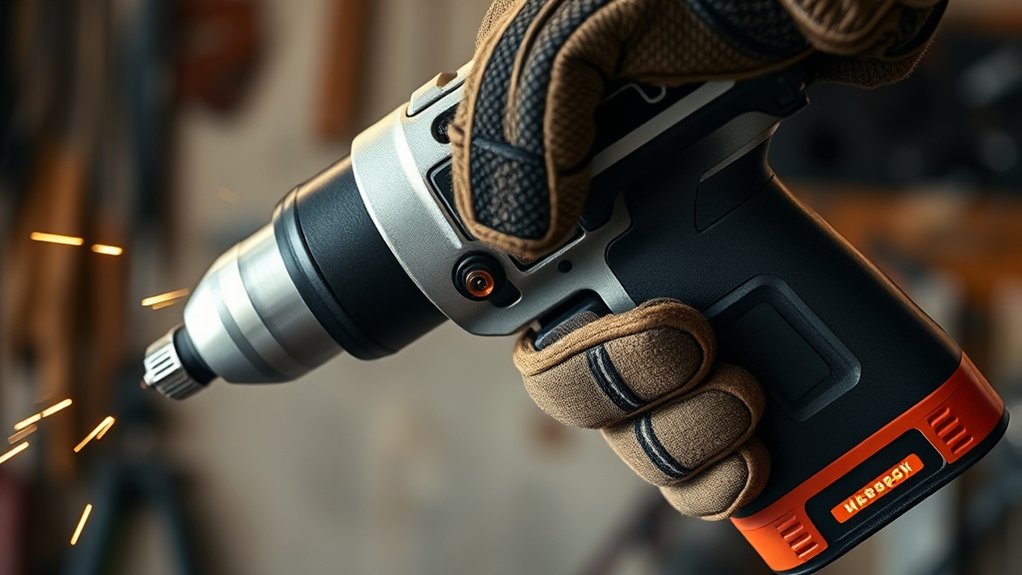
How Does a Cordless Impact Wrench Work in Simple Steps
Struggling with stubborn lug nuts or rusted bolts can turn a simple repair into a tiring chore. You’re not alone—many DIYers and mechanics want a faster, easier way to handle tough fasteners. Understanding how a cordless impact wrench works can help you choose the right tool and use it safely.
A cordless impact wrench uses a rechargeable battery to power an electric motor. When you press the trigger, electronic controls adjust the motor’s speed.
Gears reduce rotation and multiply torque, turning the internal hammer assembly.
As the hammer spins, it repeatedly strikes the anvil, creating powerful torque pulses that rotate the attached socket. These impacts help loosen stubborn fasteners while reducing strain on your hands.
Use impact-rated sockets and proper settings, and you’ll find more ways to operate it safely and effectively.
Key Takeaways
- The rechargeable battery supplies electricity to the motor through electronic speed controls activated by the trigger.
- The motor spins gears that reduce speed while multiplying torque for stronger fastening and loosening.
- A hammer mechanism stores rotational energy and releases it as rapid, powerful impact pulses.
- Each impact strikes the anvil, which transfers torque through the square drive to an impact-rated socket.
- Use the correct setting and socket, then finish precise tightening with a calibrated torque wrench.
What Parts Make a Cordless Impact Wrench Work?
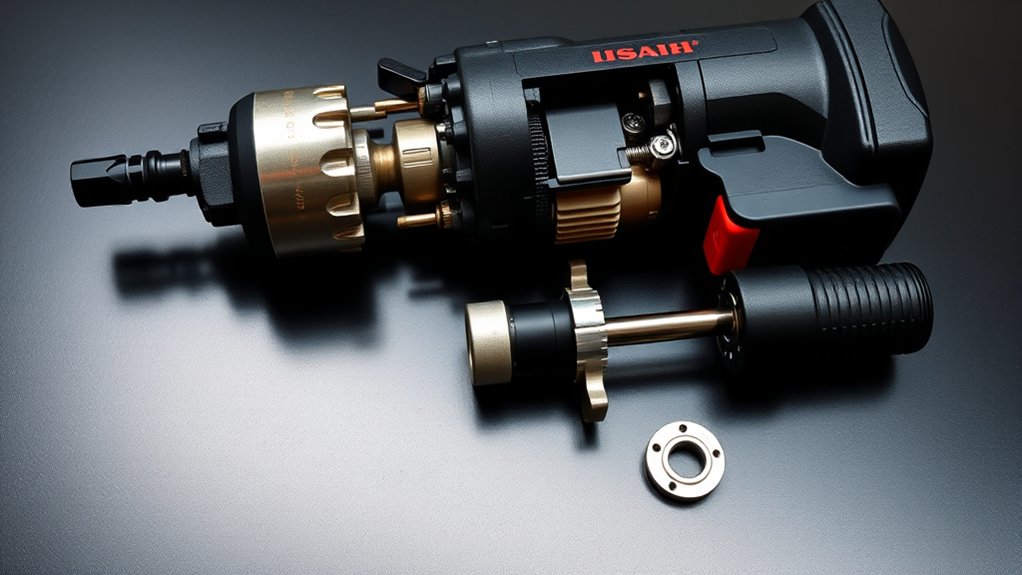
A cordless impact wrench works through several key parts: the battery supplies power, the motor converts it into rotation, and the gearbox adjusts speed and torque. You’ll also find an impact mechanism, anvil, trigger, direction switch, housing, and handle.
The motor spins the gearbox, while the impact mechanism delivers short, powerful blows through the anvil. This action helps you loosen stubborn fasteners or tighten bolts efficiently.
The trigger controls operation, and the direction switch lets you choose forward or reverse. A sturdy housing protects internal components from dust and jobsite impacts.
Battery efficiency affects how long you can work between charges, while the tool’s electronic controls may help regulate output and prevent overheating.
Ergonomic design matters, too. A balanced body, comfortable grip, and well-placed controls reduce hand strain during extended use.
When you understand each part’s role, you can select the right wrench and handle it more confidently for automotive, construction, or maintenance tasks.
How Does the Battery Power the Tool?
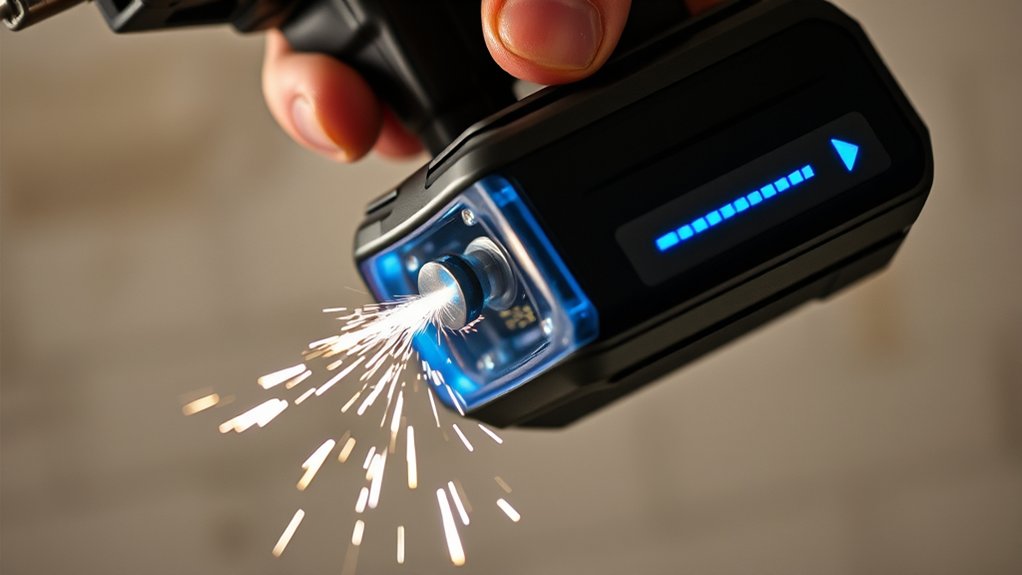
When you pull the trigger, the battery sends direct current to the tool’s electronic controls, which regulate power before delivering it to the motor. The battery pack stores energy in several rechargeable cells, usually lithium-ion, connected to provide the voltage your cordless impact wrench needs.
A protection circuit monitors temperature, current, and charge levels, helping prevent overheating, deep discharge, and damage.
As the cells release energy, electrical current travels through the tool’s wiring to the motor. The pack’s voltage and capacity affect how strongly and how long you can work.
A higher-capacity battery generally extends runtime, while a higher-voltage pack can support greater output when the tool’s design allows it.
You’ll get better performance by practicing proper Battery maintenance: charge the pack with its approved charger, keep contacts clean, and store it somewhere cool and dry.
Understanding this power system also gives you useful context for impact wrench history, which progressed from corded and pneumatic designs to today’s portable battery platforms.
How Does the Trigger Control the Motor?
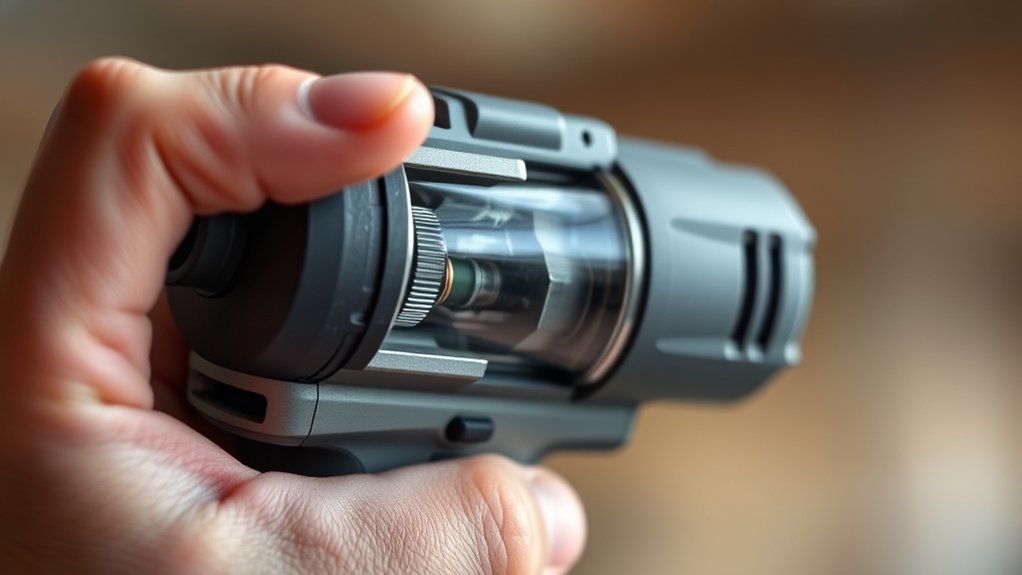
Pressing the trigger sends a signal to the electronic speed controller, which adjusts the current flowing to the motor. When you squeeze lightly, the controller delivers a smaller amount of power, helping you work slowly and maintain precise control.
As you pull farther, it increases current, raising the tool’s operating speed. Releasing the trigger immediately reduces or stops power, so you can respond quickly when you finish fastening or need to reposition the wrench.
This variable-speed control supports safer, more accurate work than a simple on-or-off switch. Many models include a comfortable, ergonomic design that places the trigger naturally beneath your finger, reducing hand strain during extended use.
Before operating the tool, check battery compatibility. The correct battery must match the wrench’s voltage and connection system so the controller receives suitable power.
Some models also offer forward and reverse controls or a lock setting near the trigger. These features allow you to select the direction and prevent accidental activation while carrying or storing the wrench.
How Does the Motor Create Rotation?
Once the controller supplies power, the motor converts electrical energy into mechanical rotation. In your cordless impact wrench, current flows through coils surrounding permanent magnets.
The magnetic fields push and pull against each other, making the motor’s internal rotor spin. As you press the trigger harder, the controller typically increases power, allowing the rotor to turn faster and respond to your demand.
This process supports modern Impact technology by delivering quick, controlled movement without a power cord. The motor’s design also affects torque efficiency, because reduced friction and efficient electrical conversion help more battery energy become useful rotation.
- Coils create changing magnetic fields.
- Magnets interact to move the rotor.
- The rotor transfers rotation to the tool’s drive.
- Electronic controls adjust speed smoothly.
You’ll notice the motor starts almost instantly, which gives you precise control when positioning the socket. It also produces a consistent spinning force before the impact mechanism engages.
At this stage, the motor only creates rotation. The following components determine how that motion becomes increased fastening force.
How Do the Gears Multiply Torque?
You’ll see how the gear ratio transfers the motor’s rotation into greater torque at the drive. As the gears multiply torque, they reduce rotational speed, giving you more fastening power. This trade-off helps your cordless impact wrench loosen stubborn bolts more efficiently.
Gear Ratio Basics
The gear train multiplies torque by trading speed for turning force: the motor spins a small gear, which drives larger gears at a slower rate but with greater twisting power. You can think of the ratio as a comparison between input and output gear sizes.
A higher ratio generally delivers more torque, while a lower ratio favors faster rotation. The tool’s designers balance both goals so you get useful power without excessive size or weight.
Key points include:
- Small driving gears increase mechanical advantage.
- Larger driven gears turn more slowly.
- Higher ratios demand less motor speed.
- Gear teeth must mesh accurately.
This arrangement supports battery efficiency because the motor can work within a practical speed range. It also contributes to ergonomic design, keeping the wrench compact and manageable.
The ratio sets the foundation for torque delivery, before impact action adds brief force pulses.
Torque Multiplication Process
As the motor turns the small input gear, its teeth push against a larger gear and transfer force through the gear train. Because the larger gear has more teeth, it receives greater turning force than the motor applies at its shaft.
Additional gears repeat this process, combining their effects and increasing torque at the output spindle. You can think of each gear pair as trading rotational movement for mechanical advantage.
In an Impact wrench, this multiplied torque helps loosen stubborn fasteners and drive bolts firmly. The planetary gear assembly distributes the load across several gears, improving durability while keeping the tool compact.
Your battery compatibility affects whether the motor can deliver consistent power to this assembly. Check the manufacturer’s specifications before pairing a battery and tool.
Rotational Speed Tradeoffs
That increase in torque comes with a tradeoff: the output spindle turns more slowly than the motor shaft. Inside cordless impact wrenches, reduction gears trade rotational speed for twisting force.
As the motor spins quickly, smaller input gears drive larger output gears, multiplying torque at the socket. You’ll notice several practical effects:
- Lower speed gives you better control when starting a fastener.
- Higher torque helps loosen stubborn bolts.
- Reduced speed limits how quickly you can run long screws.
- Electronic settings balance speed, torque, and battery use.
This gear ratio lets the tool deliver substantial force without requiring an oversized motor. You’ll get efficient performance, but you may need a drill or driver for faster repetitive fastening.
Manufacturers also pair these mechanics with ergonomic design, so you can manage the tool’s increased force comfortably and accurately during demanding tasks.
How Does the Hammer Mechanism Work?
You’ll see the motor transfer rotational energy to the hammer mechanism. As the hammer spins, it engages with the anvil and delivers powerful torque pulses. These repeated impacts make it easier to loosen or tighten stubborn fasteners.
Motor Transfers Rotational Energy
The motor spins the drive shaft, which carries rotational energy into the hammer mechanism. As you squeeze the trigger, the battery powers the motor, and gears adjust speed and direction.
The shaft then turns the hammer assembly inside the tool’s housing, preparing its moving parts for controlled cycling. You won’t feel the final torque pulse yet; this stage only transfers motion efficiently.
- A brushless motor reduces friction and maintenance.
- Gears synchronize the shaft and hammer assembly.
- Lubrication helps moving parts rotate smoothly.
- Sealed housing protects the mechanism from debris.
This design reflects the tool’s historical evolution from bulky pneumatic equipment to compact cordless machines. You also benefit from a lower environmental impact when you use rechargeable batteries and maintain the wrench properly.
Keep the vents clear, because overheating can reduce motor efficiency and shorten component life during demanding jobs.
Hammer Delivers Torque Pulses
Once the shaft spins the hammer assembly, the hammer mechanism converts that rotation into short, powerful torque pulses.
As the hammer rotates, it rides up internal ramps and briefly disengages from the anvil. A spring or cam action then drives it forward, striking the anvil and transferring a burst of torque to the socket.
This impact repeats several times per second, helping you loosen stubborn fasteners without requiring constant hand pressure.
Between strikes, the hammer spins freely, allowing the motor to maintain speed while limiting reaction force through the handle.
Your power source, usually a battery, feeds the motor that keeps this cycle moving.
Follow safety precautions: wear eye protection, secure the workpiece, use the correct socket, and keep your fingers clear of the rotating assembly during operation.
How Does the Anvil Turn the Socket?
When the impact mechanism drives the anvil, its square drive transfers that force directly to the socket. You slide the socket over this square post, and a detent pin or friction ring helps hold it securely. As the anvil rotates, the socket follows at the same speed, carrying torque to the fastener. The socket’s matching drive size keeps the connection aligned and reduces unwanted movement.
You’ll get the best transfer when you:
- Match the socket size to the anvil and fastener.
- Push the socket fully onto the drive.
- Use impact-rated sockets for safer operation.
- Inspect the detent and socket for wear.
A worn drive, damaged retaining ring, or loose socket can reduce control and waste power. During Impact wrench maintenance, clean the anvil, check its retaining parts, and replace damaged components.
Keep the drive free of packed debris so the socket seats correctly. For Battery safety, remove the battery before inspecting or servicing the anvil.
Don’t use adapters unless necessary, because they can add play and weaken the connection during operation.
Why Does an Impact Wrench Pulse?
An impact wrench pulses because its rotating hammer mechanism stores and releases energy in quick bursts.
You feel this intermittent torque as each strike transfers force to the socket. That pulsing action helps loosen stubborn fasteners without relying on one continuous twist.
Rotating Hammer Mechanism
A cordless impact wrench pulses because its motor briefly stores energy in a rotating hammer, then releases it through the anvil. Inside the tool, the motor spins a spring-loaded hammer around the drive shaft.
As resistance rises, the hammer moves back, compressing its spring and building rotational energy. It then snaps forward, striking the anvil and creating the familiar impact sound.
You can picture the mechanism as a compact energy-release system:
- The battery powers the motor.
- Gears increase usable torque.
- The hammer rotates and loads its spring.
- The anvil transfers the blow to your socket.
This impact wrench design lets you loosen stubborn fasteners without forcing the motor to deliver every demand continuously. A cordless design also keeps the assembly portable, so you can work freely without an air hose or power cord.
Intermittent Torque Delivery
Why does an impact wrench pulse instead of applying steady torque? As you use the tool, its motor spins a hammer mechanism that stores rotational energy. The hammer briefly disengages, accelerates, and strikes the anvil, delivering a short, powerful torque burst.
Then it resets and repeats this cycle many times per second. These impacts create the familiar pulsing feel while limiting continuous reaction force through your hands and wrists.
You’ll notice the motor can keep spinning between strikes, so the tool maintains speed without applying maximum torque constantly. In Impact wrench history, this pulsing design improved control and reduced stress on compact motors.
Today, cordless tool advancements, including brushless motors and electronic controls, help regulate impact frequency, battery use, and torque consistency for smoother operation.
Loosening Stubborn Fasteners
When a fastener won’t budge, an impact wrench pulses to deliver short torque bursts that break loose rust, thread friction, and dried threadlocker. Each pulse lets the motor spin up, then transfers rotational energy through the hammer mechanism.
This repeated impact creates high peak torque without forcing you to hold constant pressure.
- Seat the socket fully to prevent slipping or rounding.
- Start at a low speed, then increase power gradually.
- Use penetrating oil and allow time for it to work.
- Check Cordless tool compatibility before installing a battery.
Keep the tool straight and apply firm, controlled pressure. Don’t use a cracked socket or exceed the fastener’s rating.
Regular Impact wrench maintenance, including cleaning the anvil, inspecting the battery, and lubricating approved components, keeps impacts strong.
If pulses don’t release the fastener, stop before causing damage and switch to heat or manual methods.
How Do You Use One Safely?
Before you pull the trigger, inspect the wrench, choose the correct socket, and wear safety glasses and gloves. Check the battery, housing, anvil, and socket for damage, and verify the battery locks firmly in place.
Keep your hands, clothing, hair, and cords away from moving parts. Secure the workpiece so it can’t shift, and maintain stable footing while you work.
Use the wrench with both hands when necessary, keeping a firm grip without forcing the tool. Apply the trigger gradually, and stop immediately if you notice unusual noise, vibration, smoke, or overheating.
Follow the manufacturer’s Safety precautions, and never use the tool in wet conditions unless it’s specifically rated for them.
Remove the battery before changing accessories, clearing jams, or performing proper maintenance. After use, let the wrench cool, wipe away debris, and store it in a dry place.
Don’t leave the battery connected during storage or transport.
How Do You Choose Settings and Sockets?
Choose the socket and setting based on the fastener, material, and task. Use impact-rated sockets, not standard chrome sockets, because they can crack under repeated hammering. Match the socket size exactly to the fastener to prevent rounding.
Then select a speed or torque level that gives you control without over-tightening.
- Choose low speed for small bolts, delicate materials, or starting threads.
- Use medium power for routine assembly and moderate fasteners.
- Select high power only for stubborn, heavily tightened bolts.
- Test the setting on scrap material or a similar fastener first.
Keep the wrench straight and let its hammer mechanism do the work. Stop tightening when the fastener reaches the manufacturer’s torque specification, then use a calibrated torque wrench for final accuracy.
An ergonomic design helps you maintain a steady grip and reduces fatigue during longer jobs. Before work, check battery maintenance basics: charge the pack, inspect contacts, and store it in a cool, dry place. Replace worn sockets promptly.
Frequently Asked Questions
How Do You Maintain and Clean a Cordless Impact Wrench?
Maintain your cordless impact wrench by removing the battery first, then brushing dust from its vents, housing, and anvil. Follow safe Cleaning procedures: wipe surfaces with a slightly damp cloth, avoid water or solvents, and use compressed air gently.
Lubricate the anvil and inspect sockets, screws, and seals for damage. Store the tool somewhere dry, and charge the battery according to its instructions to protect Battery lifespan. Never operate it while wet.
How Long Does a Cordless Impact Wrench Typically Last?
You can expect a cordless impact wrench to last five to ten years, like a trusted workhorse carrying you through countless jobs. Its battery lifespan typically reaches two to five years, depending on charging habits, workload, storage, and battery quality.
Tool durability improves when you clean it, protect it from moisture, avoid overloading, and follow maintenance instructions. With replacement batteries and occasional servicing, you can extend your wrench’s useful life considerably.
Can You Use an Impact Wrench to Tighten Lug Nuts?
Yes, you can use an impact wrench to tighten lug nuts, especially during wheel removal and installation. Use the lowest practical power setting, then finish with a calibrated torque wrench.
Check your vehicle’s specified lug nut torque in the owner’s manual, because excessive force can damage studs, rotors, or wheels. Avoid relying on the impact wrench alone for final tightening.
Recheck each lug nut after driving a short distance.
What Causes a Cordless Impact Wrench to Overheat?
A cordless impact wrench overheats when you push it beyond its duty cycle, especially under heavy loads or with a seized fastener. Battery overheating can occur when you use a damaged, incompatible, or poorly charged pack.
Blocked vents and excessive dust restrict cooling, while worn bearings increase resistance. Motor insulation may deteriorate from sustained current and heat.
Remarkably, some tools can draw several hundred amps momentarily, rapidly raising internal temperatures.
How Loud Are Cordless Impact Wrenches During Operation?
Cordless impact wrenches typically produce 90–110 decibels during operation, depending on the model, torque setting, and workload. You’ll hear sharp hammering bursts rather than a steady motor sound.
For sound comparison, they’re much louder than a vacuum cleaner and may approach a motorcycle or chainsaw. Check your tool’s specifications for exact noise levels.
You should wear hearing protection, especially during extended use, and avoid operating one near other people without warning them first.
Conclusion
A cordless impact wrench turns battery power into fast, powerful socket rotation through a motor, gears, and pulsing hammer mechanism. You’ll get the best results by choosing the right speed, torque setting, and impact-rated socket, then wearing eye protection and keeping your hands clear.
Don’t use it like a medieval battering ram: let the tool do the work. With safe handling and proper settings, a cordless impact wrench can remove stubborn fasteners efficiently without wrestling every bolt by hand.