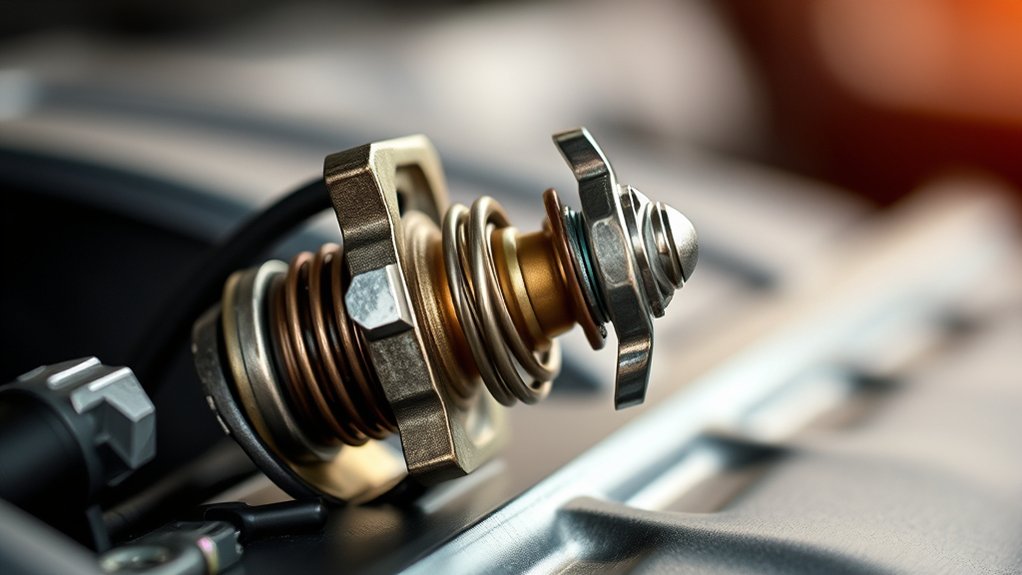
How Does a Car Thermostat Work Step by Step
Overheating, slow warm-ups, or a heater that barely works can make driving frustrating. You’re not alone—many drivers struggle to understand what’s happening under the hood. Learning how a car thermostat works can help you choose the right replacement and spot problems sooner.
Your car’s thermostat starts closed when you turn on the engine, keeping coolant inside the engine and heater core so it warms quickly.
As coolant reaches the thermostat’s rated temperature, usually 180–195°F, its wax pellet expands and pushes the valve open.
Hot coolant then flows to the radiator, where air removes heat before the water pump returns the cooled fluid.
The thermostat continually adjusts flow to maintain temperature.
You’ll learn how to spot and test failures next.
Key Takeaways
- During a cold start, the thermostat stays closed, keeping coolant circulating within the engine to promote rapid, even warming.
- As coolant temperature rises, a wax-filled capsule expands and pushes a piston against the thermostat valve.
- At its rated temperature, typically 180–195°F (82–91°C), the valve gradually opens.
- Hot coolant then flows into the radiator, where air passing through the fins removes heat.
- Cooled coolant returns to the engine, while the thermostat continually adjusts flow to maintain stable operating temperature.
What Does a Car Thermostat Do?
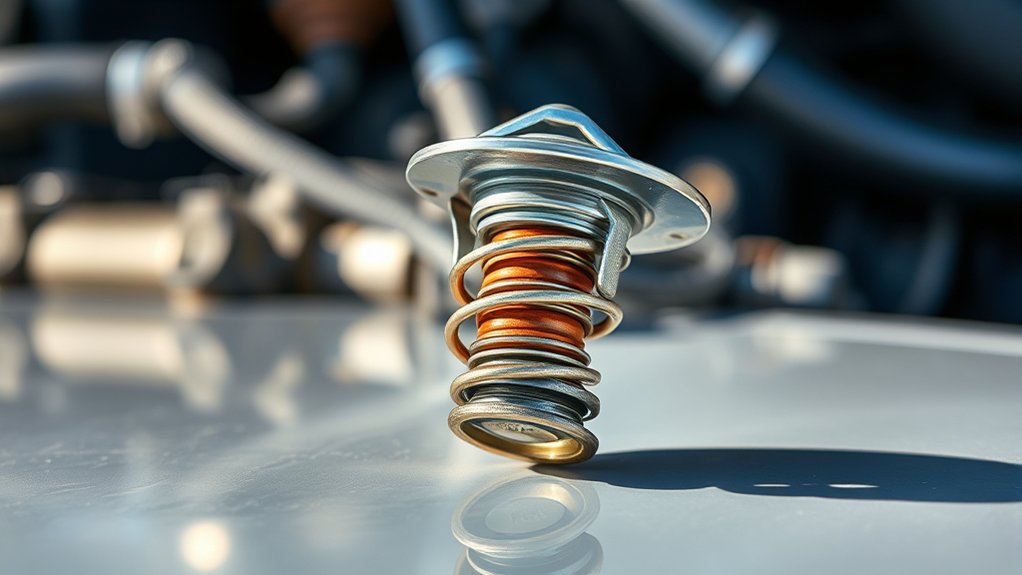
A car thermostat controls the flow of coolant between the engine and radiator to keep the engine at its ideal operating temperature. When you start your vehicle, the thermostat stays closed, allowing the engine to warm quickly.
Once the engine reaches its normal operating range, the thermostat opens and lets coolant move through the radiator, where heat leaves the system. This cycle helps you avoid excessive heat and supports consistent performance during city driving, highway travel, and heavy loads.
How Does a Car Thermostat Sense Heat?
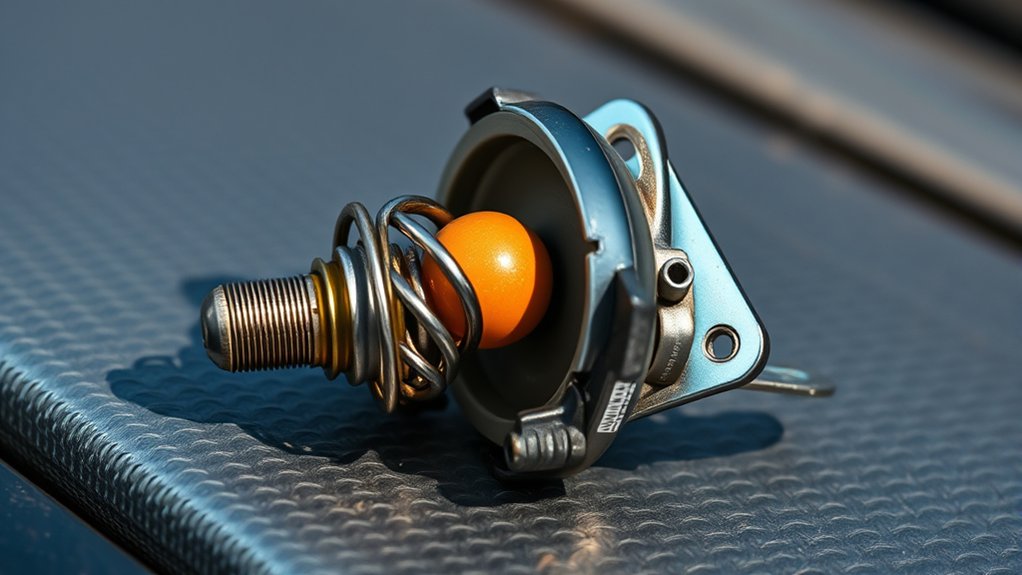
Inside the thermostat, a temperature-sensitive wax pellet expands as the engine coolant heats up. This expansion pushes against a small piston, which moves the thermostat valve. As the coolant reaches the thermostat’s calibrated temperature, the valve opens progressively.
A wax pellet expands with rising coolant temperature, pushing a piston that progressively opens the thermostat valve.
You can think of the pellet as a mechanical sensor: it responds directly to heat without electronics, wiring, or a computer command.
A spring holds the valve closed when the wax contracts, while the pellet’s expansion overcomes that spring force as temperature rises. The valve’s position controls how much coolant flows toward the radiator, helping maintain a stable operating temperature.
Because the thermostat reacts continuously, it can adjust coolant flow as conditions change rather than simply switching on or off.
This precise temperature control supports fuel efficiency by helping the engine operate near its ideal range. It also promotes engine longevity by limiting excessive heat and reducing temperature-related stress on internal components.
A properly functioning thermostat thus senses heat mechanically and regulates cooling automatically.
What Happens During a Cold Start?
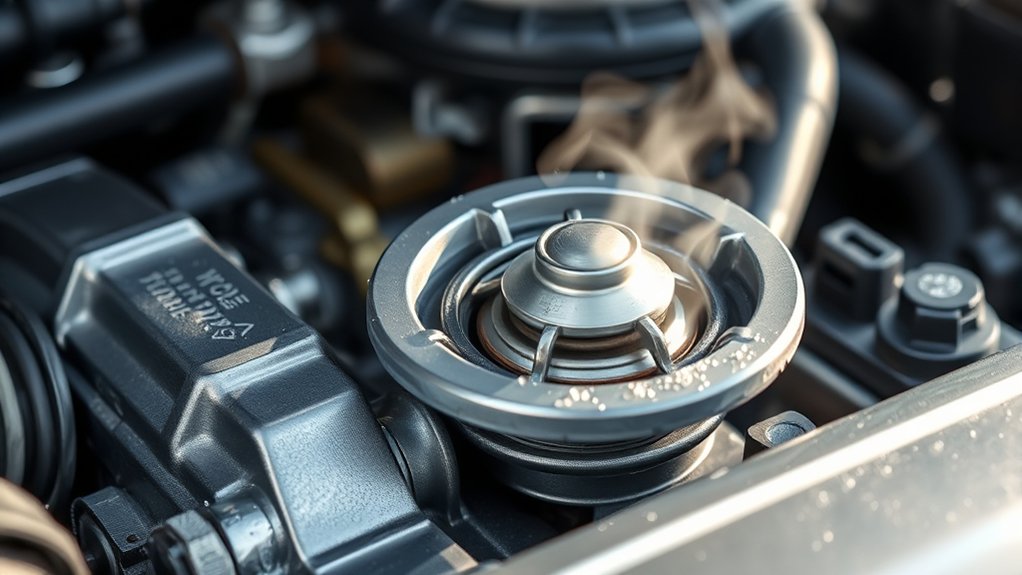
When you start the engine cold, the coolant begins circulating through it. The thermostat stays closed, so the coolant flows through the engine instead of the radiator. This helps the engine reach its operating temperature more quickly.
Coolant Circulation Starts
During a cold start, the engine’s water pump begins pushing coolant through the engine’s internal passages, where it absorbs heat from the cylinder head and block. This steady movement lets engine coolant collect heat evenly as your engine starts running.
It travels around the combustion chambers, cylinder walls, and other heated components, carrying thermal energy away from metal surfaces. The coolant then flows toward the thermostat housing, where the system directs it through the appropriate passages.
As circulation continues, sensors and the engine control system can monitor temperature changes and adjust fuel delivery for efficient warm-up. You may notice the temperature gauge gradually rising as the engine reaches operating temperature.
This initial flow also helps prevent localized hot spots and distributes heat throughout the cooling system during startup.
Thermostat Stays Closed
As the engine warms from a cold start, the thermostat stays closed to block coolant from entering the radiator. This directs coolant through the engine and heater core instead, helping your engine reach its operating temperature faster.
During this phase, the Cooling system focuses heat where it’s needed rather than releasing it through the radiator. You’ll notice the temperature gauge gradually moving upward as combustion warms the coolant and engine components.
The thermostat’s valve remains shut because its temperature-sensitive wax hasn’t expanded enough to open it. This controlled delay supports efficient fuel combustion, reduces emissions, and provides cabin heat sooner.
For effective Temperature regulation, the thermostat must seal properly. If it stays closed after the engine reaches operating temperature, coolant can’t shed heat, causing overheating and possible engine damage.
Why Does the Thermostat Stay Closed?
When you start the engine cold, the thermostat stays closed so the engine can warm up quickly. This keeps coolant from flowing through the radiator too soon and cooling the engine prematurely.
Once the engine reaches its normal operating temperature, the thermostat opens and allows coolant to flow through the radiator, helping regulate the engine’s heat.
Engine Starts Cold
When you start a cold engine, the thermostat stays closed to keep coolant from flowing through the radiator. This directs heat toward the engine, helping oil circulate and components reach their operating temperature sooner.
As you drive, you’ll notice smoother performance, better fuel efficiency, and stronger emission control once the engine warms up. The thermostat responds automatically, so you don’t need to adjust anything.
| What you notice | Why it matters |
|---|---|
| Quick warm-up | Easier starts |
| Steady idle | Calmer driving |
| Warm cabin air | Greater comfort |
| Cleaner exhaust | Less worry |
During this initial phase, your engine works toward its designed temperature. You can simply drive gently and watch for normal gauge movement.
If the gauge stays cold unusually long, or the engine overheats, have the cooling system inspected. Those signs may point to a thermostat or related problem.
Prevents Premature Cooling
A closed thermostat prevents premature cooling by keeping coolant inside the engine until it reaches its proper operating temperature. As you start driving, the coolant circulates through the engine rather than the radiator, allowing the metal components and oil to warm quickly.
This controlled warming helps your engine reach the temperature needed for efficient combustion and smooth operation. If coolant entered the radiator immediately, airflow could remove heat too soon, especially in cold weather or during highway driving.
By delaying that flow, the thermostat supports fuel efficiency, reduces emissions, and protects your engine from excessive wear caused by thick, cold oil.
Once the coolant reaches the thermostat’s rated temperature, the valve opens gradually and sends coolant through the radiator. This balance helps maintain consistent heat and promotes engine longevity.
When Does a Car Thermostat Open?
As the engine warms, the thermostat opens at its preset temperature, typically around 180–195°F (82–91°C), to let coolant flow from the engine to the radiator. This timing supports precise temperature regulation and helps your cooling system operate efficiently.
The thermostat doesn’t open immediately after you start the engine. Instead, it stays closed while combustion heat raises the coolant temperature.
Once the coolant reaches the specified threshold, the thermostat’s wax-filled capsule expands and moves a valve. The exact opening point depends on your vehicle’s design, engine, and thermostat rating, so you should check the owner’s manual for the correct specification.
In heavy traffic, hot weather, or during demanding driving, the thermostat may reach its opening temperature sooner. In cold conditions, it may take longer.
A properly rated thermostat opens at the right point for your engine, while an incorrect rating can affect operating temperature and fuel efficiency. Don’t confuse the opening temperature with complete opening; the valve moves progressively as heat increases.
What Happens When the Thermostat Opens?
Once the thermostat opens, hot coolant flows from the engine to the radiator, where moving air and the radiator fan remove excess heat. This movement lowers the coolant’s temperature before the fluid returns to the engine through the lower hose.
As you drive, the thermostat adjusts its opening to help maintain a stable operating temperature. When the engine needs more heat, it closes partially; when temperatures rise, it opens farther to increase coolant circulation.
You’ll notice the engine temperature gauge settle near its normal range when this process works correctly. If the thermostat sticks closed, hot coolant can’t leave the engine, causing Engine overheating.
If it sticks open, the engine may run too cool, reducing fuel efficiency and cabin-heater performance. You should also inspect for coolant leaks around the thermostat housing, hoses, and connections.
Low coolant can interrupt circulation and produce similar symptoms, so address leaks promptly. Never open the cooling system while it’s hot.
How Does the Radiator Cool the Engine?
As the thermostat opens, hot coolant flows through the radiator’s narrow tubes. Air moves across the radiator fins, carrying heat away from the coolant and lowering its temperature. The cooled fluid then returns to the engine, where it absorbs more heat.
Coolant Flow Through Radiator
When the thermostat opens, hot coolant flows from the engine into the radiator, where thin tubes and cooling fins transfer its heat to the surrounding air. The coolant enters the upper tank, travels through the radiator tubes, and gradually releases heat as it moves downward.
Once it reaches the lower tank, the cooled fluid exits through the outlet and returns to the water pump. The pump then sends it through the engine passages, where it absorbs more heat before repeating the cycle.
You’ll see this continuous circulation maintain a stable operating temperature. Proper radiator maintenance keeps passages clear and prevents leaks that interrupt flow.
You should also use compatible coolant types, because the wrong formula can promote corrosion, damage seals, or reduce the thermostat’s effectiveness. This cycle continues while driving.
Heat Transfer And Airflow
The radiator cools engine coolant by exposing it to airflow across its metal tubes and fins. As hot coolant enters, its heat passes through tube walls into the fins. Moving air then carries that heat away, lowering the coolant’s temperature before it returns to the engine.
- Coolant properties: Your coolant’s mixture, pressure, and additives affect boiling resistance, heat capacity, and efficient heat transfer.
- Airflow dynamics: Air speed, fin design, and the radiator’s surface area determine how quickly heat leaves the system.
- Cooling assistance: At low speeds, your electric or belt-driven fan pulls air through the core, maintaining airflow when natural movement isn’t enough.
A thermostat regulates this process by controlling coolant entry into the radiator. When the engine reaches operating temperature, it opens gradually, balancing heat removal with efficient combustion and cabin heating.
How Does the Thermostat Control Temperature?
A thermostat controls engine temperature by regulating coolant flow between the engine and radiator. When you start your car, the thermostat stays closed, keeping coolant inside the engine so it warms quickly.
As the coolant reaches its designed operating temperature, a wax-filled capsule expands and pushes a valve open. This action lets hot coolant travel to the radiator, where airflow removes heat before the coolant returns to the engine.
If engine temperature drops below the target range, the wax contracts and the valve partially closes. This reduces radiator flow and helps the engine retain heat.
The thermostat continually adjusts its opening according to coolant temperature, maintaining a stable range rather than switching simply on or off. By keeping combustion at the proper temperature, it supports Fuel efficiency and Emission control.
You’ll also get consistent heater performance and reduced mechanical stress because the engine avoids prolonged cold operation and excessive heat during normal driving conditions.
What Are the Signs of Thermostat Failure?
Thermostat failure can disrupt coolant flow and cause noticeable temperature problems. You’ll often notice warning signs before serious engine damage occurs. Watch for these three symptoms:
Thermostat failure can trigger noticeable temperature problems, often providing warning signs before serious engine damage occurs.
- Overheating: If the thermostat stays closed, coolant can’t reach the radiator. Your temperature gauge may climb into the red, especially in traffic or during climbs. You might also see steam or smell hot coolant.
- Engine running cold: A thermostat stuck open keeps coolant circulating continuously. The gauge may remain below normal, your heater may blow lukewarm air, and fuel efficiency can drop because the engine never reaches its ideal operating temperature.
- Temperature fluctuations: A thermostat that opens or closes inconsistently can make the gauge swing unexpectedly. You may experience poor performance, rough operation, or repeated coolant warnings.
Don’t ignore these clues. Continued overheating can damage head gaskets, pistons, and other components.
Although thermostat trouble doesn’t directly control the Brake system, engine overheating can leave you stranded, creating a serious safety concern. Have a qualified technician diagnose the cause promptly.
How Can You Test a Car Thermostat?
Before replacing parts, you can test the thermostat to confirm whether it’s causing the temperature problem. Start with a cold engine and check the coolant level. Don’t open the radiator cap when the engine is hot, because pressurized coolant can cause severe burns.
With the cap removed only when cold, start the engine and watch the coolant if your vehicle’s design allows this view. The coolant should remain still while the engine warms.
When the thermostat opens, you’ll see flow and feel the upper radiator hose become hot. If flow starts immediately, the thermostat may be stuck open.
If the engine overheats and the hose stays cool, it may be stuck closed. However, air pockets or water-pump problems can produce similar symptoms.
For a more precise test, remove the thermostat and place it in heated water with a thermometer. It should open near its rated temperature and close as it cools.
Include testing in your Maintenance schedules to protect Fuel efficiency.
Frequently Asked Questions
How Often Should a Car Thermostat Be Replaced?
You should replace your car thermostat when it fails, not on a fixed schedule. Most thermostats last about 10 years or 100,000 miles, but heat, corrosion, and poor coolant can shorten their life.
Watch for overheating, an engine that runs too cool, fluctuating temperature readings, or weak cabin heat. Have a technician inspect the Cooling system and confirm the Thermostat function before replacement.
Preventive maintenance helps protect your engine and fuel economy.
Can I Drive With a Faulty Thermostat?
You can drive only briefly with a faulty thermostat, but you shouldn’t risk it. Your cooling system is a traffic gate: if it stays closed, restricted coolant flow can quickly cause engine overheating; if it stays open, your engine may run too cool, reducing efficiency and increasing wear.
Watch the temperature gauge, stop immediately if it rises, and arrange a repair or tow. Don’t open the radiator cap while hot.
How Much Does Thermostat Replacement Typically Cost?
You’ll typically pay $150–$400 for thermostat replacement, including parts and labor. Your vehicle’s make, model, engine access, thermostat housing, and local labor rates can change the price.
A basic thermostat may cost $20–$80, while labor often adds $100–$300. If your mechanic finds coolant leaks, damaged hoses, or a faulty sensor, expect additional charges.
Replacing it restores proper cooling system temperature regulation and helps prevent overheating or poor fuel economy.
Where Is the Thermostat Located in an Engine?
You’ll usually find the thermostat where the upper radiator hose connects to the engine, inside a small housing. On many vehicles, it sits near the cylinder head or intake manifold, though the exact position varies by engine design.
Follow the upper hose from the radiator to locate it. Your cooling system relies on this component for temperature regulation, controlling coolant flow as the engine warms. Check your vehicle’s service manual for confirmation.
Can a Bad Thermostat Cause Poor Fuel Economy?
Yes, a bad thermostat can hurt your fuel economy, making your wallet run on empty. If it sticks open, your engine may stay too cool, delaying efficient operation and causing the computer to add extra fuel.
If it sticks closed, restricted coolant circulation can trigger engine overheating and serious damage. You might notice poor mileage, temperature changes, or warning lights.
Have your thermostat tested and replaced promptly to restore efficiency.
Conclusion
Understanding how your car’s thermostat works helps you recognize cooling-system problems before they become expensive. It stays closed during warm-up, opens at operating temperature, and continuously regulates coolant flow through the radiator.
In fact, many thermostats begin opening around 195°F, helping your engine reach its efficient temperature quickly. If you notice overheating, fluctuating temperature readings, or poor cabin heat, don’t ignore them.
Test the thermostat and address the issue promptly to protect your engine and keep every drive reliable. Knowing how a car thermostat works step by step can help you maintain a dependable cooling system.