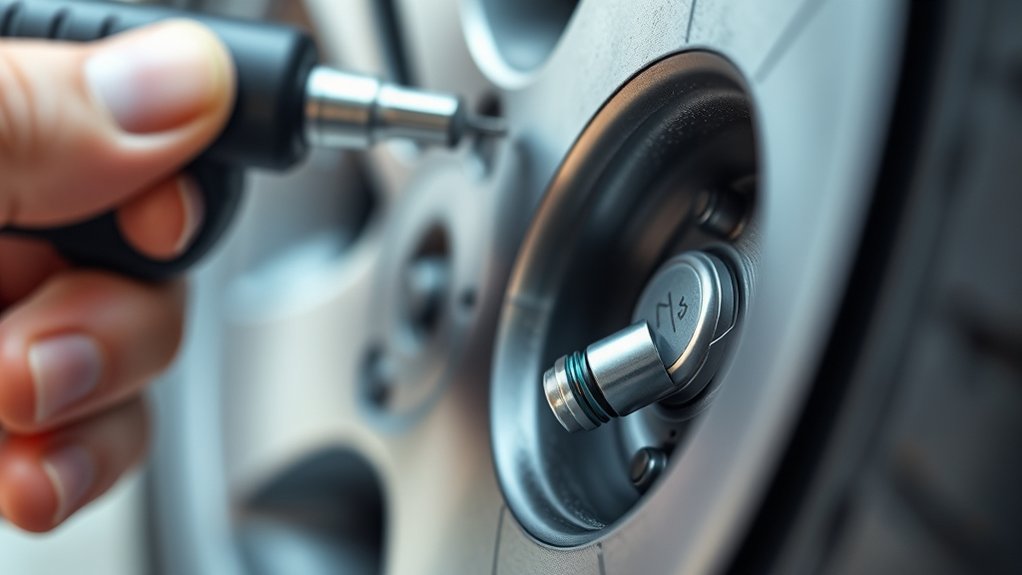
How Does a TPMS Sensor Work Step by Step
Keeping track of tire pressure can be frustrating, especially when you’re unsure whether a warning light signals a minor issue or a potential safety problem. You’re not alone—many drivers struggle to understand how TPMS sensors work and what happens after a tire service.
A TPMS sensor measures your tire’s air pressure and temperature with built-in sensing elements, then converts those conditions into electrical data. It automatically adds its unique ID and battery status before transmitting the information wirelessly to your vehicle’s control module.
The module matches each sensor to its wheel, filters unreliable signals, compares readings with safe limits, and activates the warning light when needed. After tire service, you may need to reset or relearn the system to maintain accurate monitoring.
Key Takeaways
- The sensor measures tire pressure using a diaphragm or piezoresistive element and monitors temperature with an integrated sensor.
- Its circuitry converts pressure and temperature measurements into digital data, including sensor identification and battery status.
- The sensor wirelessly transmits this information periodically, transmitting more frequently when pressure changes rapidly.
- The vehicle’s control module matches the sensor ID to a wheel and compares readings with programmed safety limits.
- If pressure, temperature, or sensor operation is abnormal, the system displays a warning. Replacement sensors may require relearning.
What Is a TPMS Sensor?

A TPMS (Tire Pressure Monitoring System) sensor is a small device that measures the air pressure inside your vehicle’s tires. It sends pressure data to your vehicle’s monitoring system, which compares readings with the manufacturer’s recommended levels.
If pressure drops too low or rises too high, the system alerts you through a warning light or message on the dashboard.
You rely on this device for tire safety because correct pressure supports handling, braking, fuel efficiency, and even tread life.
A sensor may measure pressure directly, or the vehicle may estimate pressure by analyzing wheel-speed changes through its anti-lock braking system.
Direct sensors typically include a pressure gauge, temperature sensor, battery, and transmitter.
Sensor calibration helps the system interpret readings accurately. During service, you might need to reset or relearn the sensors so the vehicle recognizes their signals.
A malfunctioning sensor can trigger a warning even when your tire pressure remains correct, so you should address alerts promptly.
Where Is a TPMS Sensor Located?
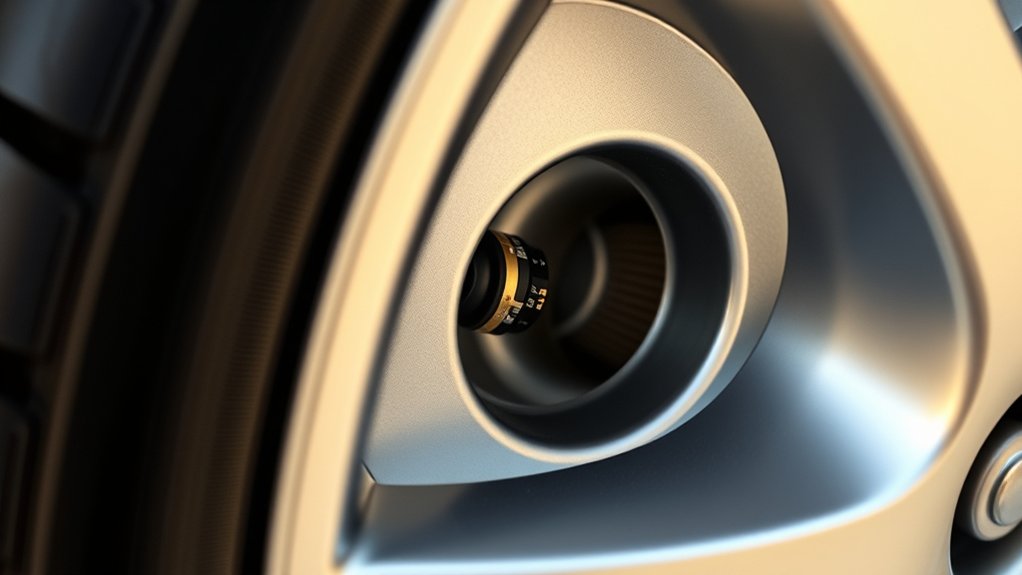
You’ll usually find a direct TPMS sensor attached to the valve stem inside each wheel, where it measures the tire’s internal air pressure. From outside, you’ll see only the valve stem and cap; the sensor sits behind the rim, within the sealed tire cavity.
Direct TPMS sensors attach to the valve stem inside the wheel, measuring tire pressure within the sealed cavity.
A mounting strap or integrated valve-stem design holds it securely against the wheel.
When you remove a tire, you must avoid the sensor near the rim’s bead. Tire-changing equipment can strike the module and cause damage, especially if you don’t identify its position first.
The sensor doesn’t sit in the tire tread because tread blocks contact the road and flex constantly. Instead, it remains protected inside the wheel assembly.
You’ll typically find one sensor per wheel, including the spare only if your vehicle supports monitoring it. Wheel alignment doesn’t determine the sensor’s location, although suspension or wheel service may require care around the valve area.
Check your owner’s manual for the exact design.
How Do Direct and Indirect TPMS Differ?
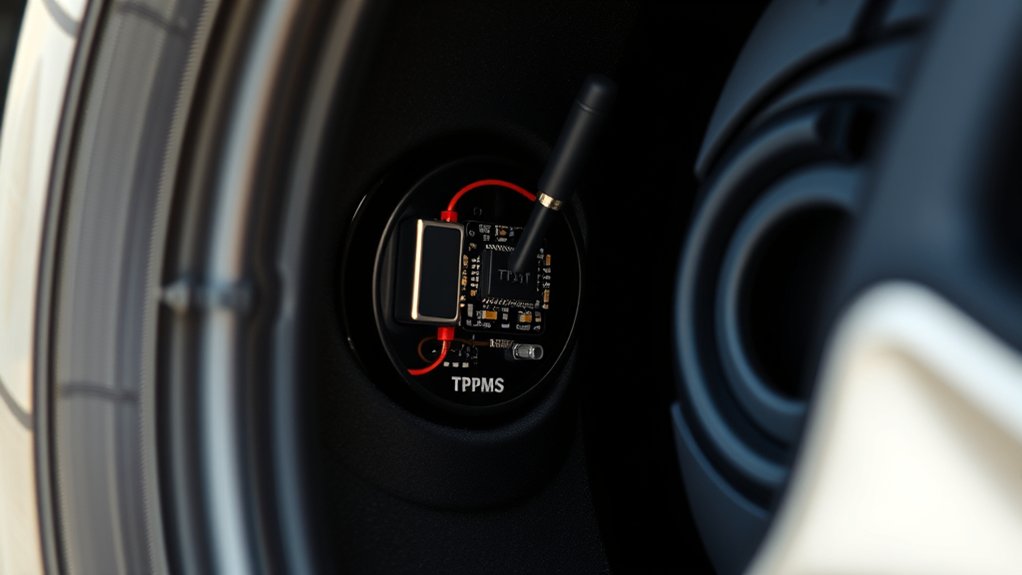
The sensor inside each wheel is part of a direct TPMS, which measures tire pressure with dedicated hardware. You’ll typically receive a reading for each tire, so you can identify a specific tire that needs attention. Direct systems generally provide strong sensor accuracy, though a sensor battery may eventually need replacement.
An indirect TPMS doesn’t use pressure sensors in the wheels. Instead, it relies on the vehicle’s anti-lock braking system to compare wheel rotation speeds. A tire with lower tire pressure has a smaller rolling circumference and rotates slightly faster.
This approach costs less and avoids sensor batteries, but it may provide less precise information and require calibration after tire service.
- Direct systems report individual tire pressure values.
- Indirect systems estimate pressure changes through wheel-speed differences.
- Both systems can warn you before underinflation affects handling, braking, or tire wear.
Your vehicle’s design determines which system you have, so check the owner’s manual when a warning appears. Neither method replaces regular pressure checks.
How Does a TPMS Sensor Measure Pressure?
Inside a direct TPMS sensor, a pressure-sensitive element detects the air pressure inside the tire and converts it into an electrical signal. As you drive, air pressure bends a tiny diaphragm or changes a piezoresistive element.
The sensor’s circuit measures that change, calculates tire pressure, and compares it with programmed limits. It then sends the reading wirelessly to your vehicle’s receiver.
Sensor calibration guarantees the measurement matches actual pressure. During manufacturing, technicians compare the sensor against known pressure values and store correction data.
Your vehicle may also learn each sensor’s identification and location after installation.
| Stage | What happens |
|---|---|
| Pressure acts | Air pushes the sensing element |
| Signal changes | The element produces a measurable electrical response |
| Circuit calculates | Electronics convert the response into pressure |
| Reading transmits | A radio signal reaches the receiver |
When pressure falls below the warning threshold, the system alerts you. Check pressure with a reliable gauge, because the TPMS reading supports maintenance but doesn’t replace a manual inspection.
How Does a TPMS Sensor Measure Temperature?
Your TPMS sensor has a built-in temperature sensor that measures the air temperature inside your tire. It tracks changes in heat in real time and sends updates to your vehicle’s monitoring system. This information can alert you to overheating and help you maintain safer tire performance.
Embedded Temperature Sensor
An embedded temperature sensor measures the air and casing temperature within the tire-pressure monitoring system (TPMS) sensor. As you drive, a tiny thermistor detects temperature changes and converts them into electrical signals.
The sensor’s processor combines this reading with measured tire pressure to improve accuracy because temperature affects air pressure. It then applies sensor calibration values before transmitting corrected data to your vehicle’s receiver.
- You get more dependable pressure readings across changing weather conditions.
- The sensor accounts for heat conducted through the valve stem and housing.
- Proper calibration helps prevent misleading warnings caused by normal temperature variation.
The temperature element operates inside the sensor’s sealed housing, so it doesn’t require direct exposure to the road or outside air. Instead, it estimates the tire’s internal conditions through the surrounding casing and air space.
When the sensor detects a stable temperature, it supports a more accurate pressure report for your dashboard display.
Real-Time Heat Monitoring
How does a TPMS sensor measure temperature in real time? A built-in thermistor detects heat inside the tire and converts it into an electrical signal. The sensor’s processor combines temperature data with pressure readings, then transmits both to your vehicle’s receiver.
Because air pressure rises as tires heat during driving, this correction helps you distinguish normal heat buildup from a genuine leak.
| Condition | TPMS response |
|---|---|
| Cold start | Establishes baseline |
| Normal driving | Tracks rising heat |
| Excessive temperature | Warns you |
| Cooling tire | Updates readings |
You’ll receive a warning when temperature reaches a potentially unsafe level, giving you time to slow down and inspect the tire.
Tire rotation helps maintain even heat distribution, while proper Wheel alignment reduces friction and overheating.
Check the system after service, since sensor placement and calibration affect temperature accuracy. Never ignore repeated alerts, even if pressure appears normal.
How Does the Sensor Transmit Tire Data?
Once the sensor measures tire pressure and temperature, it sends the data wirelessly to the vehicle’s receiver. You’ll find the sensor’s transmitter inside the valve-mounted unit, where it converts measurements into a coded radio signal.
Each transmission includes the tire’s pressure, temperature, sensor identification, and battery status.
The sensor usually sends readings at set intervals, then transmits more frequently when pressure changes quickly. This approach conserves battery power while keeping you informed.
During tire inflation, the sensor can detect changing pressure and report updated readings without a physical connection.
- A unique identification code helps your vehicle associate each signal with the correct wheel.
- Sensor calibration guarantees measurements remain accurate as conditions and components change.
- Radio-frequency transmission lets data travel through the tire, wheel, and surrounding vehicle parts.
The sensor also adds error-checking information to each message, helping the receiver recognize incomplete or corrupted signals.
You won’t need to activate the sensor manually. It wakes, measures, and broadcasts automatically whenever operating conditions require an update.
How Does Your Car Process TPMS Data?
Once the sensor sends the tire data, your car’s control module receives and evaluates the signal. It compares the pressure readings with preset safety limits to spot potential problems. If it detects an issue, a warning appears on your dashboard.
Sensor Signal Transmission
After a TPMS sensor measures tire pressure and temperature, it sends the data wirelessly to your vehicle’s receiver or body control module. The sensor uses a radio-frequency signal, typically transmitting at set intervals or when pressure changes considerably.
Each sensor includes a unique identification code, so your car can associate the reading with the correct wheel. Signal strength and timing help the receiver capture accurate information while you drive.
Physical conditions can influence transmission, including metal components, distance, and interference from other devices. Proper tire tread and wheel balance don’t control the wireless signal, but they support stable wheel operation and reliable readings.
- The sensor sends pressure, temperature, and identification data.
- The receiver listens for scheduled or change-triggered messages.
- A weak signal may delay or prevent a tire-pressure warning.
This wireless exchange happens before your vehicle interprets the information.
Control Module Processing
The control module receives each TPMS message, matches its identification code to a specific wheel, and checks the pressure and temperature readings against programmed limits. It filters out corrupted signals and compares current measurements with stored data, helping you receive reliable pressure information.
The module also accounts for normal changes caused by temperature, tire loading, and driving conditions. During a Tire rotation, the system may need updated wheel positions so each sensor remains associated with the correct location.
Some vehicles learn these positions automatically, while others require a relearn procedure. Wheel alignment doesn’t directly change pressure, but it can affect tire wear and prompt you to investigate uneven readings.
The module continually evaluates incoming data, stores relevant measurements, and prepares accurate information for the vehicle’s warning logic.
Dashboard Warning Display
When the control module confirms a pressure problem, it sends a warning command to the instrument cluster, which illuminates the TPMS light on your dashboard. You’ll typically see a horseshoe-shaped symbol with an exclamation point.
If it flashes at startup and then stays on, the system may detect a fault rather than low pressure. Check each tire with a gauge, inflate it to the door-jamb specification, and inspect for damage.
After tire rotation, the warning may appear if the vehicle hasn’t learned each sensor’s new position. Sensor calibration or a relearn procedure can restore accurate readings.
- A steady light usually signals low tire pressure.
- A flashing light often indicates a system fault.
- The display may not identify which tire needs attention.
Don’t ignore the warning. Correct the issue promptly and verify that the light turns off after driving.
How Does TPMS Trigger the Warning Light?
As a tire’s pressure drops below the programmed safety threshold, its TPMS sensor detects the change and sends data to the vehicle’s control module. The module compares that information with its programmed limits.
If the pressure remains too low, it commands the instrument cluster to illuminate the TPMS warning light. You’ll usually see a horseshoe-shaped symbol with an exclamation point.
The light may stay on while the system detects an underinflated tire, reminding you to check and inflate it promptly. After you correct the pressure, the light might turn off automatically after driving, or you may need to reset the system according to your vehicle’s instructions.
Tire rotation can change each sensor’s position, so your vehicle may require a relearn procedure afterward. Conversely, wheel alignment doesn’t trigger the warning directly, but service technicians may inspect TPMS operation during alignment work.
A flashing light often signals a system fault rather than low tire pressure, and it requires professional diagnosis.
Why Are TPMS Readings Sometimes Inaccurate?
Your TPMS readings can change as temperature fluctuations affect tire pressure. A weak sensor battery or a worn sensor can also produce unreliable data. Calibration issues and signal interference may affect the readings as well.
Temperature-Related Pressure Changes
Temperature changes can make your TPMS readings seem inaccurate because tire pressure rises as the air inside the tire warms and falls as it cools. A cold morning may trigger a warning, while driving can increase pressure as friction heats the tires.
Your TPMS measures current pressure, not a temperature-adjusted estimate, so readings may differ from the recommended value until conditions stabilize. Check tire pressure when the tires are cold, ideally before driving, and inflate them to the vehicle manufacturer’s specification.
Don’t release air from warm tires simply because the reading looks high.
- Compare all four tires under the same temperature conditions.
- Recheck pressure after the vehicle sits for several hours.
- Ask for sensor calibration if readings remain inconsistent after temperature changes.
Correct maintenance helps you distinguish normal temperature effects from a genuine problem and keeps your TPMS useful.
Sensor Battery And Wear
A TPMS sensor with a weak or aging battery may transmit pressure data intermittently, causing delayed, missing, or inaccurate readings. Because most batteries are sealed inside the sensor, you’ll usually replace the entire unit when its battery reaches the end of its service life.
Physical wear can also affect accuracy. Road impacts, corrosion, moisture, and damaged pressure-sensing components may prevent the sensor from measuring inflation correctly.
During a Tire rotation, ask a technician to inspect each sensor for cracks, corrosion, or loose hardware. Proper Valve maintenance helps, too: replace worn valve cores, seals, and caps to reduce leaks and protect the sensor from contamination.
If one tire repeatedly reports an implausible pressure while a manual gauge disagrees, have that sensor tested and replaced if necessary. Keep records so you’ll know when sensors need renewal.
Calibration And Signal Issues
Why can TPMS readings seem inaccurate even when the tires are properly inflated? Sensor calibration may drift after tire installation, wheel changes, or rotations.
If you skip the vehicle’s relearn procedure, the system might display an old sensor’s pressure or identify each wheel incorrectly.
Temperature changes also alter pressure, so readings can differ between a cold tire and one warmed by driving.
Signal interference from nearby electronics, metal structures, or damaged wiring can interrupt communication between sensors and the receiver. A weak sensor battery may create similar symptoms.
Watch for these clues:
- One tire reports an implausible value while others look normal.
- The warning light flashes before staying illuminated.
- Readings change or disappear while you drive.
Check pressures with a reliable gauge, then follow your owner’s calibration instructions.
If the warning persists, have a technician scan the sensors, receiver, and wiring.
How Do You Reset or Replace a TPMS Sensor?
When the TPMS warning light stays on, you can often reset the system by inflating each tire to the recommended pressure and driving for a few minutes. You may also need to use the vehicle’s reset procedure.
Check your owner’s manual for the exact steps, since some vehicles require a scan tool or a dedicated reset button. Complete this process after tire maintenance, including rotations, pressure adjustments, or seasonal wheel changes.
If the warning returns, inspect every tire for leaks and confirm the pressures with a reliable gauge. A damaged, depleted, or missing sensor requires replacement.
A technician can remove the tire safely, install a compatible sensor, and program its identification code to your vehicle. Some sensors relearn automatically during a short drive, while others need diagnostic equipment.
Don’t ignore persistent safety alerts. Driving with inaccurate pressure information can increase wear, reduce fuel economy, and affect handling.
After replacement, verify that the warning light turns off and monitor pressures regularly.
Frequently Asked Questions
How Long Does a TPMS Sensor Battery Typically Last?
Your TPMS sensor battery typically lasts five to ten years, depending on driving conditions, temperature changes, mileage, and sensor design. Battery lifespan usually matches the sensor’s service life because most batteries are sealed inside the unit and can’t be replaced separately.
When the battery weakens, you’ll notice a warning light or intermittent readings. Sensor durability varies, but proper tire maintenance, avoiding impact damage, and checking pressure regularly can help you maximize its useful life.
Can a TPMS Sensor Be Damaged During Tire Installation?
Yes, tire installation can damage a TPMS sensor if a technician strikes it with the mounting tool, pinches it against the rim, or over-tightens its valve stem.
You can reduce the risk by using a trained installer and requesting careful handling near the sensor. After installation, confirm proper sensor calibration and sensor compatibility with your vehicle.
If the warning light remains on, have the system scanned for damage, programming errors, or leaks.
Are TPMS Sensors Compatible With Every Vehicle?
No, TPMS sensors aren’t compatible with every vehicle. You’ll need to match the sensor’s frequency, valve-stem design, communication protocol, and model-year requirements to your car.
Some aftermarket sensors offer broad coverage, but they still require proper programming and sensor calibration before installation. Compatibility issues can trigger warning lights, inaccurate readings, or failed relearns.
Check your owner’s manual, consult a tire professional, or verify fitment using your vehicle identification number before buying replacement sensors.
How Much Does TPMS Sensor Replacement Usually Cost?
You’ll usually pay $50–$250 per TPMS sensor replacement, including parts and labor. As the saying goes, you get what you pay for: premium sensors cost more, while aftermarket options may reduce your bill.
Ask whether the quote includes sensor calibration, installation, and programming. Battery replacement generally isn’t practical because most sensors use sealed batteries, so you’ll replace the entire unit.
Your vehicle’s make, model, and shop rates determine the final price.
Can Aftermarket Wheels Affect TPMS Sensor Performance?
Yes, aftermarket wheels can affect TPMS sensor performance if they use incompatible sensors, incorrect mounting points, or materials that interfere with signal transmission.
You should verify sensor compatibility, install each sensor securely, and complete sensor calibration after fitting the wheels.
Check tire pressure manually to confirm accuracy, especially after installation. Some vehicles require relearning procedures, while others need programmable sensors matched to your vehicle’s TPMS system and frequency.
Conclusion
TPMS works like a quiet watchman inside each wheel, checking pressure and temperature, sending data to your car, and warning you when something’s wrong.
Don’t ignore that small dashboard light: a 2023 NHTSA estimate found underinflated tires contribute to thousands of crashes annually.
If readings seem off, check your tire pressure manually, then reset or replace the sensor as needed. With quick attention, you’ll protect your tires, improve fuel economy, and understand how a TPMS sensor works step by step for greater driving confidence.