How Does a Serpentine Belt Work Step by Step
Not sure how your car’s serpentine belt works—or which replacement is right for your vehicle? You’re not alone. Many drivers struggle to spot belt problems before they lead to costly accessory failures or an overheated engine.
Understanding how a serpentine belt works step by step can help you recognize warning signs, compare replacement options, and keep your vehicle running reliably.
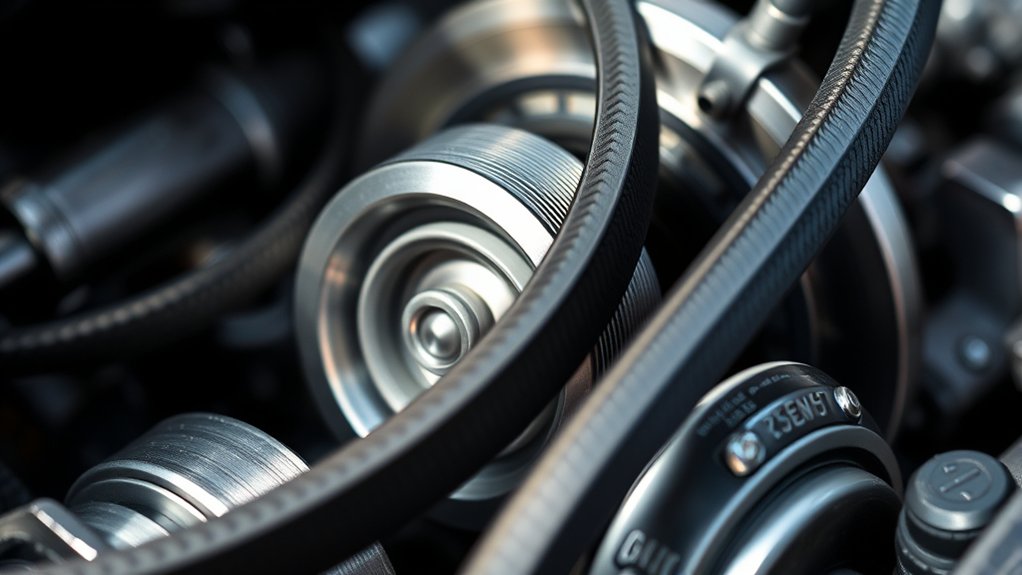
A serpentine belt starts when your engine turns the crankshaft pulley. Friction moves the ribbed belt around the routed path, driving the alternator, water pump, power-steering pump, and air-conditioning compressor.
A spring-loaded tensioner keeps it tight, while idlers guide its smooth side and maintain contact. Proper tension prevents slipping, noise, and uneven wear.
If the belt cracks, squeals, or breaks, accessories can fail and the engine may overheat. Continue for inspection and replacement essentials.
Key Takeaways
- The crankshaft pulley starts the serpentine belt moving as the engine runs.
- The ribbed belt grips grooved pulleys and follows a specific route around accessories and idlers.
- A spring-loaded tensioner maintains proper tension, preventing slipping, squealing, and misalignment.
- The belt transfers rotational power to the alternator, water pump, power-steering pump, and air-conditioning compressor.
- Regular inspections detect wear or damage before belt failure causes overheating, charging problems, or vehicle breakdown.
What Does a Serpentine Belt Do?
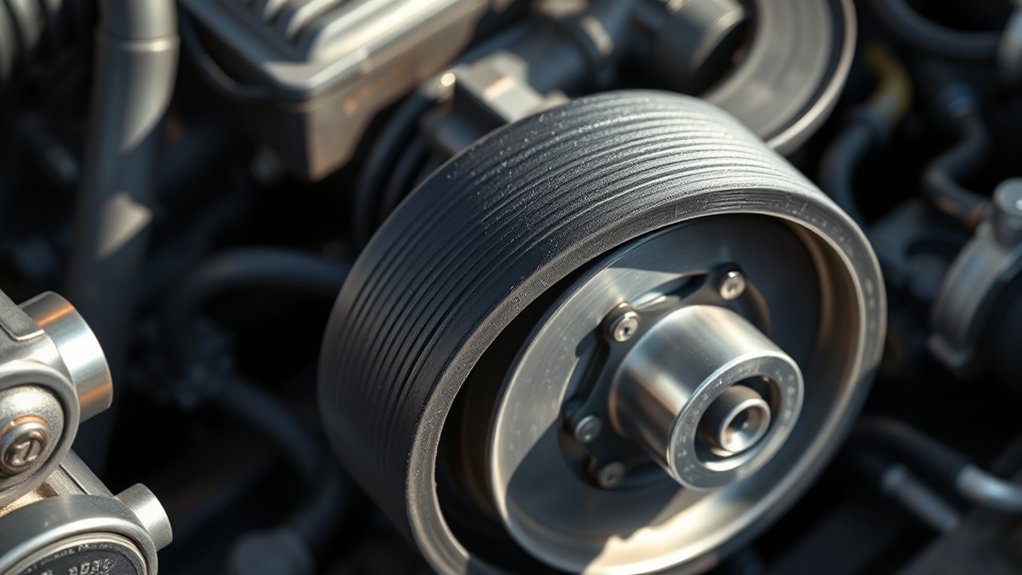
A serpentine belt transfers power from the engine’s crankshaft to accessories such as the alternator, power steering pump, water pump, and air-conditioning compressor. You rely on this single, continuous belt to support several essential systems while your engine runs.
If it wears out or breaks, multiple accessories can stop working at once, potentially causing overheating, battery discharge, or difficult steering.
Serpentine belt material typically combines durable synthetic rubber with embedded polyester, aramid, or other reinforcing cords. This construction helps the belt withstand heat, oil exposure, tension, and repeated flexing.
The ribbed inner surface also fits the accessory pulleys and maintains dependable contact during operation.
During the Belt manufacturing process, manufacturers shape the rubber around tension-resistant cords, form precisely spaced ribs, cure the belt under controlled heat, and inspect it for dimensional accuracy and defects.
You should replace the belt according to your vehicle maker’s schedule and inspect it for cracks, fraying, glazing, missing ribs, or unusual noise.
How a Serpentine Belt Transfers Power
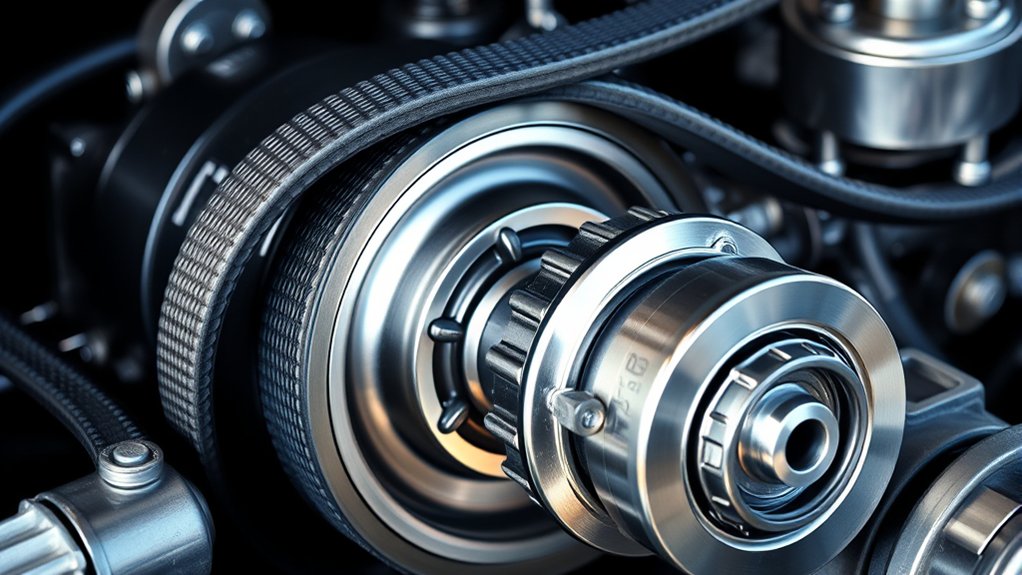
Your engine’s crankshaft pulley starts turning the serpentine belt as soon as the engine runs. From there, the belt follows a specific path and stays under tension as it transfers power to each accessory pulley. This keeps important systems—such as the alternator, water pump, and air-conditioning compressor—running properly.
Crankshaft Pulley Rotation
Once the engine starts, the crankshaft turns the crankshaft pulley, which drives the serpentine belt around its path. The pulley’s grooved rim grips the belt’s ribs, converting crankshaft rotation into steady belt movement.
As you watch this transfer, keep in mind that the pulley supplies the mechanical force every accessory needs. The belt carries that force to components such as the alternator, power-steering pump, water pump, and air-conditioning compressor, allowing them to operate while the engine runs.
Proper serpentine belt installation ensures the belt engages the pulley correctly and transfers power efficiently. Belt material durability also matters because constant bending, friction, and heat can weaken an inferior belt.
If the pulley surface becomes worn or damaged, it can reduce grip and cause slipping, noise, or accessory performance problems during operation.
Belt Path And Tension
From the crankshaft pulley, the serpentine belt follows a specific route around each driven accessory and idler pulley. You’ll see its ribbed side grip grooved pulley surfaces, while its smooth back wraps around smooth idlers.
This planned path creates the contact angle each pulley needs to maintain traction as the belt moves.
A spring-loaded tensioner keeps steady pressure on the belt, compensating for normal stretch, temperature changes, and small variations in pulley movement.
Proper tension prevents slipping without placing excessive load on bearings. The belt material must remain flexible, durable, and resistant to heat, oil, and repeated bending.
You should also check pulley alignment, because a tilted or offset pulley can force the belt sideways, causing noise, edge wear, or premature failure.
Correct routing and tension let the belt run smoothly and reliably.
Accessory Power Distribution
As the crankshaft turns, the serpentine belt carries that rotational power to each accessory pulley, driving components such as the alternator, water pump, power-steering pump, and air-conditioning compressor.
As you drive, the belt’s ribs grip each pulley and keep these systems operating in sync. The alternator generates electricity for your battery and vehicle electronics, while the water pump circulates coolant to control engine temperature.
The power-steering pump supports easier turning, and the air-conditioning compressor pressurizes refrigerant for cabin comfort.
Because one belt powers several accessories, proper alignment and tension matter. A slipping, cracked, or glazed belt can reduce performance and create noise.
Modern belt manufacturing may use Eco friendly materials, helping reduce environmental impact while maintaining strength, heat resistance, and long service life under demanding conditions.
How the Crankshaft Starts the Belt
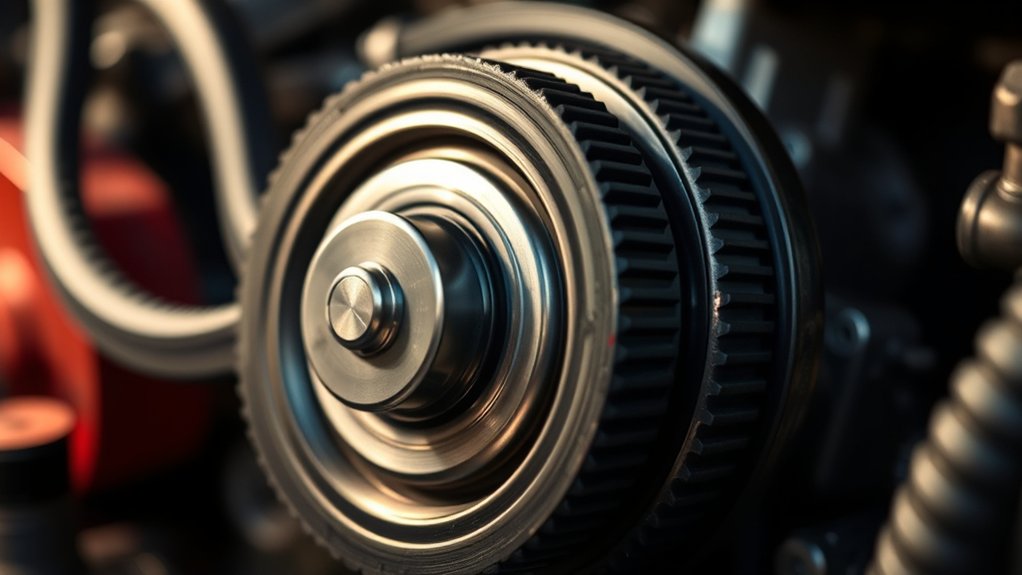
How does the serpentine belt begin moving? Your engine’s crankshaft starts the process as combustion pushes the pistons downward. The pistons turn connecting rods, which rotate the crankshaft inside the engine block. A pulley fixed to the crankshaft spins with it, creating the driving force for the belt.
As the crankshaft pulley turns, its grooved surface grips the belt’s ribs. Friction transfers rotational energy from the pulley to the flexible loop. The Serpentine belt material must withstand constant tension, heat, and bending without stretching excessively.
If the belt loses strength or grip, it can slip, squeal, or stop driving engine accessories.
You can confirm the crankshaft pulley’s role by observing it while the engine runs, but never place your hands or clothing near moving parts. Manufacturers provide Belt routing diagrams to identify the correct belt length and installation position.
At this stage, focus only on how crankshaft rotation initiates belt motion. The belt’s path around individual pulleys comes next.
How the Belt Routes Around Pulleys
Once the crankshaft starts the serpentine belt, the belt follows a specific route around several pulleys. You’ll see it wrap around the alternator, water pump, power-steering pump, air-conditioning compressor, and other accessories. Each pulley transfers the belt’s motion to its connected component, allowing multiple systems to operate from one continuous loop.
The belt’s ribbed inner surface fits into matching grooves on the driven pulleys. Smooth-backed sections may contact idler surfaces, while the belt material bends around each curve without slipping or cracking.
Correct routing depends on the pulley design, accessory positions, and the manufacturer’s diagram. You’ll usually find this diagram under the hood or in the owner’s manual.
As you trace the path, the belt may cross over, pass beneath, or circle each pulley in a precise sequence. This arrangement maximizes contact and keeps the belt moving in the intended direction.
If you install it on the wrong side of any pulley, an accessory may rotate incorrectly or stop working.
How the Tensioner Keeps the Belt Tight
A spring-loaded tensioner presses against the belt to maintain steady tension as it travels around the pulleys. Its arm pivots automatically to compensate for normal belt stretch, temperature changes, and minor variations in pulley movement.
By holding the belt firmly, the tensioner prevents slack that could cause slipping, noise, vibration, or uneven wear. It also limits excessive tension, which can overload bearings and shorten component life.
You can inspect the tensioner during serpentine belt maintenance. Look for a cracked housing, a weak spring, rust, or an arm that moves roughly.
A worn tensioner may flutter while the engine runs, so listen for rattling or squealing and check the belt’s tracking. Replace the tensioner when its bearing feels rough or its indicator reaches the service limit.
During a belt material comparison, keep in mind that rubber compounds respond differently to heat and aging. Even a durable belt still needs correct tension.
The tensioner keeps the belt seated consistently without affecting alternator operation.
How the Belt Powers the Alternator
Your engine’s crankshaft transfers power to the serpentine belt, which then turns the alternator pulley. As the alternator spins, it generates electricity to power your vehicle’s electrical systems.
Crankshaft Transfers Power
As the engine runs, the crankshaft pulley drives the serpentine belt, sending rotational power to the alternator through its pulley. This continuous transfer begins at the crankshaft, which converts the engine’s combustion force into rotation.
You rely on the belt to carry that rotation smoothly, allowing the alternator to generate electricity for your vehicle’s battery and electrical systems. The belt’s ribbed design grips its contact surfaces while maintaining steady movement around the engine.
Serpentine belt material typically combines durable rubber with reinforcing fibers, helping it resist heat, stretching, and repeated flexing. During the belt manufacturing process, manufacturers shape these layers for strength, flexibility, and long service life.
When the crankshaft turns consistently, the belt receives dependable power, keeping the alternator operating whenever your engine runs without interruption or unnecessary strain.
Belt Drives Pulley
Once the crankshaft sets the serpentine belt in motion, its ribs grip the alternator pulley and turn it at the speed needed to produce electrical power. As you follow the belt’s path, you’ll see it wrap firmly around the pulley, maintaining contact as the engine runs.
The belt’s tension keeps it from slipping, while its ribbed surface transfers rotational force smoothly. Proper pulley alignment matters because even a slight angle can make the belt wander, squeal, or wear unevenly.
The belt material also affects performance; durable rubber compounds resist heat, friction, and repeated flexing under the hood. You’ll find the tensioner continually compensating for minor slack, helping the belt stay tight against the pulley.
This steady mechanical connection lets the alternator rotate reliably without interruption.
Alternator Generates Electricity
The alternator converts the belt’s rotation into electrical energy that recharges the battery and powers the vehicle’s electrical systems. As you drive, the serpentine belt turns the alternator pulley, spinning its internal rotor.
This motion creates an electromagnetic field, while the stator produces alternating current. A rectifier changes that current into usable direct current for the battery and accessories.
- The belt maintains steady pulley speed as engine rpm changes.
- Proper Belt tension adjustment prevents slipping, squealing, and weak charging.
- Durable Serpentine belt materials resist heat, oil, and repeated flexing.
- A worn belt can reduce alternator output and trigger a battery warning light.
You’ll get reliable charging when the belt remains correctly routed, tight, and undamaged. The alternator’s voltage regulator also controls output, protecting sensitive electronics from excessive voltage.
During inspection, look for glazing, cracks, fraying, or unusual noise around the pulley.
How the Belt Powers the Water Pump
A serpentine belt powers the water pump by transferring rotation from the engine’s crankshaft pulley to the pump pulley. As you start the engine, the crankshaft turns the belt, and the belt spins the water pump continuously.
The pump’s impeller then circulates coolant through the engine and radiator, carrying heat away from combustion areas. Proper tension keeps the belt from slipping, while the correct Serpentine belt material withstands heat, friction, and constant flexing.
You can confirm the belt’s path with Belt routing diagrams before installation.
| Component | Function |
|---|---|
| Crankshaft pulley | Starts belt movement |
| Water pump pulley | Spins the impeller |
If you hear squealing, see cracks, or notice overheating, inspect the belt and tensioner promptly. A loose, glazed, or broken belt can stop coolant circulation and cause severe engine damage.
You should never remove the belt while the engine runs. Let everything cool, compare the routing with the diagram, and check that each rib sits fully inside its pulley grooves.
This ensures reliable water-pump operation.
How the Belt Drives Steering and AC
Your serpentine belt powers the steering pump, making it easier to turn the wheel. It also drives the AC compressor, which cools the cabin.
Keeping the belt properly tensioned helps both systems run smoothly and prevents slipping.
Powering the Steering Pump
When the engine runs, the serpentine belt transfers crankshaft power to the power-steering pump and, on many vehicles, the air-conditioning compressor. The pump uses that rotation to pressurize hydraulic fluid, helping you turn the wheel with less effort, especially at low speeds.
A properly tensioned belt keeps steering assistance smooth and predictable.
- Inspect the belt for cracks, glazing, fraying, or missing ribs.
- Listen for squealing, chirping, or grinding near the pump pulley.
- Check fluid levels and leaks. A slipping belt can worsen steering effort.
- Replace a worn belt promptly to avoid sudden loss of assistance.
If steering suddenly feels heavy, pull over safely and switch off the engine. Don’t ignore unusual resistance, because continued driving can strain the pump and affect control.
Although it doesn’t directly cause tire wear or engine lubrication problems, belt failure can disable essential accessories.
Driving the AC Compressor
The serpentine belt drives the AC compressor by wrapping around its pulley and transferring rotational force from the crankshaft. As you switch on the air conditioner, the compressor clutch engages, allowing the belt to spin the compressor.
The compressor then pressurizes refrigerant, which carries heat away from your cabin and produces cool air through the vents. This process adds resistance to the belt system, so your engine works slightly harder while the AC runs.
The same belt may also power the water pump, supporting engine cooling as coolant circulates through the engine and radiator. If the belt breaks, you could lose air conditioning and other essential accessories, depending on your vehicle’s design.
Regular visual checks support Vehicle safety, but never reach near moving components while the engine operates or diagnose belt tension here.
Maintaining Belt Tension
A spring-loaded tensioner keeps the serpentine belt tight as it spins the steering and AC pulleys, preventing slip and maintaining consistent accessory performance. As you turn the wheel or switch on cooling, the belt transfers crankshaft power without sudden slack.
You’ll rely on the tensioner to compensate for belt stretch, temperature changes, and normal wear.
- Inspect the belt material for cracks, glazing, frayed edges, or missing ribs.
- Listen for squealing, chirping, or grinding that may indicate slipping or a failing tensioner.
- Check pulley alignment because even slight misalignment can accelerate wear and noise.
- Follow the manufacturer’s tension adjustment specifications. Many modern systems use automatic tensioners.
Never pry against the belt to increase tension. Replace a weak tensioner and worn belt together when necessary.
Proper tension helps steering assistance remain predictable and lets the AC compressor engage smoothly.
What Happens When the Belt Slips or Breaks?
If the serpentine belt slips, the accessories it drives may rotate slowly or stop, causing symptoms such as squealing, dimming lights, weak air conditioning, or an overheating engine. You may also notice a burning rubber smell as friction heats the belt.
Slipping often results from insufficient tension, worn belt material, contamination, or poor pulley alignment. When the belt loses grip, the alternator may not charge the battery, so your vehicle could stall after electrical power fades.
If the belt drives the water pump, coolant circulation can stop, and engine temperature may rise quickly. A broken belt produces an abrupt loss of several accessories at once.
Your steering may become heavy if the power-steering pump depends on that belt, while the air conditioner and charging system stop working immediately. Continuing to drive can cause severe overheating or leave you stranded.
Shut the engine off safely when warning signs appear, because damage can escalate within minutes.
How to Inspect and Replace the Belt
Before removing anything, inspect the serpentine belt with the engine off and cool. Look for cracks, fraying, glazing, missing ribs, or oil contamination. Check the tensioner and pulleys for wobbling, noise, or rough rotation. Compare the belt’s condition with the manufacturer’s replacement interval, considering Serpentine belt materials and driving conditions.
Inspect the serpentine belt while cool, checking for damage, contamination, pulley problems, and material-related wear.
- Photograph the existing path, then locate Belt routing diagrams under the hood, in the owner’s manual, or online.
- Release the tensioner with the correct wrench or tool. Keep your fingers clear, and slide the belt off one pulley at a time.
- Route the new belt around every pulley, matching the diagram exactly. Ensure each rib sits fully inside its pulley grooves.
- Slowly release the tensioner, then rotate the crankshaft by hand, if specified, to seat the belt. Start the engine briefly and watch for tracking, vibration, or noise.
Stop immediately if the belt wanders or squeals. Recheck routing and tension, and replace damaged pulleys before driving.
Frequently Asked Questions
How Long Does a Serpentine Belt Typically Last?
You can typically expect a serpentine belt to last 60,000–100,000 miles, or about five to seven years, depending on driving conditions and vehicle design. Your belt may wear sooner if you face extreme heat, oil leaks, heavy loads, or frequent stop-and-go traffic.
Check the Serpentine belt material for cracking, fraying, glazing, or missing ribs during maintenance. Confirm proper Belt tension adjustment, and replace the belt immediately if you notice squealing or visible damage.
Can Extreme Weather Affect Serpentine Belt Durability?
Yes, extreme weather can shorten your serpentine belt’s life. Picture it like a rubber band left on a car dashboard: heat makes it brittle, while freezing temperatures stiffen and crack it.
Weather impact matters because heat, cold, moisture, salt, and rapid temperature changes stress the belt. Material durability varies by design, but regular inspections help you catch glazing, fraying, or cracks.
Replace it sooner if you drive through harsh conditions or notice squealing.
What Tools Are Needed to Replace a Serpentine Belt?
You’ll need a ratchet or breaker bar, the correct serpentine-belt tensioner socket, and possibly extensions for access. Keep a flashlight handy so you can inspect pulleys and routing marks.
A belt-routing diagram helps you reinstall everything correctly. For safety, wear gloves and eye protection, then disconnect the battery if necessary.
Tools required also include a torque wrench for final checks. Belt removal becomes easier when you release tension slowly and carefully.
How Much Does Professional Serpentine Belt Replacement Cost?
You’ll usually pay $100–$250 for professional serpentine belt replacement, though luxury vehicles or difficult access can push costs toward $400. The estimate typically includes labor, a new belt, and inspection of pulleys and tensioners.
Ask whether the shop checks Serpentine belt material for cracking or glazing and performs proper Belt tension adjustment. Getting several quotes helps you avoid paying through the nose. A warranty on parts and labor adds valuable peace of mind.
Are Serpentine Belts Interchangeable Between Different Vehicle Models?
No, you can’t assume serpentine belts interchange between different vehicle models. You need the correct length, rib count, width, routing, and belt material for your engine’s pulleys and tensioner.
Check your owner’s manual or match the manufacturer’s part number before buying a replacement. Even belts with similar dimensions may fit incorrectly or wear quickly.
Follow your vehicle’s recommended replacement intervals, and inspect the belt sooner if you notice cracking, squealing, glazing, or fraying.
Conclusion
Understanding how a serpentine belt works helps you recognize its importance. It transfers crankshaft power to essential accessories, including the water pump, steering system, and air-conditioning compressor. The tensioner keeps everything moving smoothly, but wear, slipping, or breakage can quickly cause serious problems.
Inspect the belt regularly and replace it when necessary. A stitch in time saves nine. Learning how a serpentine belt works can help prevent an overheated engine, unsafe steering, and expensive repairs tomorrow.