How Does a Belt Tensioner Work Step by Step
A noisy or slipping serpentine belt can make you worry about unexpected repairs, especially when you’re unsure what’s causing the problem. You’re not alone—many drivers struggle to understand how a belt tensioner works and which replacement is right for their vehicle.
A belt tensioner uses a spring-loaded arm and pulley to press against the serpentine belt. As the engine runs, the belt transfers power to accessories while the tensioner follows its movement, compensating for heat, vibration, stretching, and wear.
This steady pressure prevents slack, slipping, flutter, and misalignment. If tension becomes too loose or tight, you may hear squealing or notice uneven wear.
You’ll find more guidance on inspection, failure symptoms, and replacement below.
Key Takeaways
- The tensioner’s spring, hydraulic mechanism, or adjustable arm applies force against the belt through its pulley.
- As the engine runs, the belt transfers power while the tensioner pivots to maintain continuous pulley contact.
- The arm automatically compensates for belt stretching, temperature changes, vibration, and minor engine movement.
- Proper tension prevents slipping, fluttering, misalignment, excessive noise, and premature wear of belts and accessories.
- Inspect or replace the tensioner when noises, wobbling, cracks, corrosion, uneven belt wear, or excessive arm movement appear.
What Does a Belt Tensioner Do?
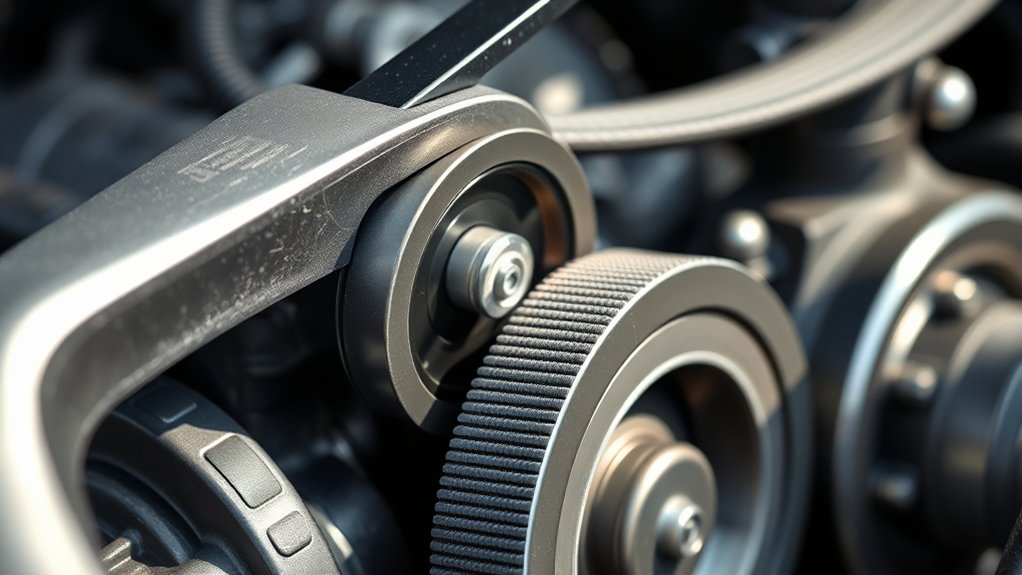
A belt tensioner keeps the drive belt tight as it moves around the pulleys. It applies controlled pressure to maintain contact between the belt and each pulley while the engine runs.
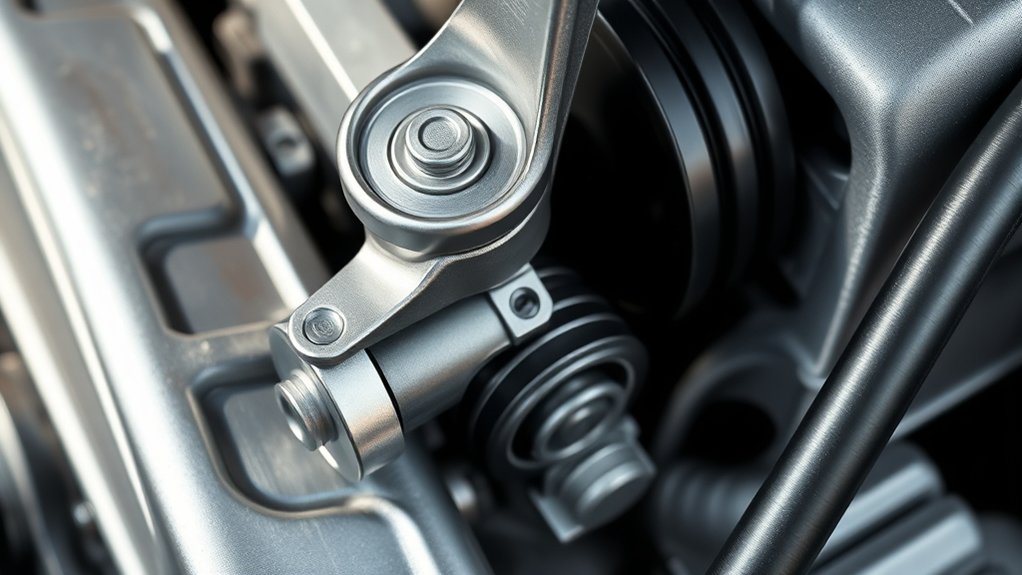
As you examine the assembly, you’ll typically find a spring-loaded arm, a pulley, and a mounting point attached to the engine. The arm moves slightly to accommodate normal belt movement and minor changes in belt length.
The tensioner works with the belt material and the pulley layout. Rubber or composite belts flex as they travel through the system, while the tensioner responds to that movement without interrupting rotation.
A suitable tensioner design guides the belt smoothly and helps prevent slack, flutter, or misalignment. You’ll also see the tensioner absorb small vibrations and movement caused by engine operation.
Its main job is to manage belt position and contact, allowing connected accessories to operate through one continuous belt path.
Why Does Belt Tension Matter?
Proper belt tension matters because it keeps the belt firmly engaged with each pulley as the engine runs. When tension stays correct, you get reliable power transfer, smooth accessory operation, and consistent performance.
The belt won’t slip, chatter, or wear unevenly, so your engine can drive systems such as the alternator, water pump, and air-conditioning compressor efficiently.
Too little tension allows movement between the belt and pulleys. That friction creates heat, noise, glazing, and premature failure.
Too much tension increases stress on the belt, pulley bearings, and accessory shafts, potentially causing expensive damage. Correct tension also helps maintain timing accuracy on systems that depend on synchronized belt movement.
Historical context shows why this balance became increasingly important as engines gained more accessories and compact layouts. Material advancements have produced belts that tolerate greater heat, speed, and load, but they still require the specified tension.
How a Tensioner Creates Belt Pressure
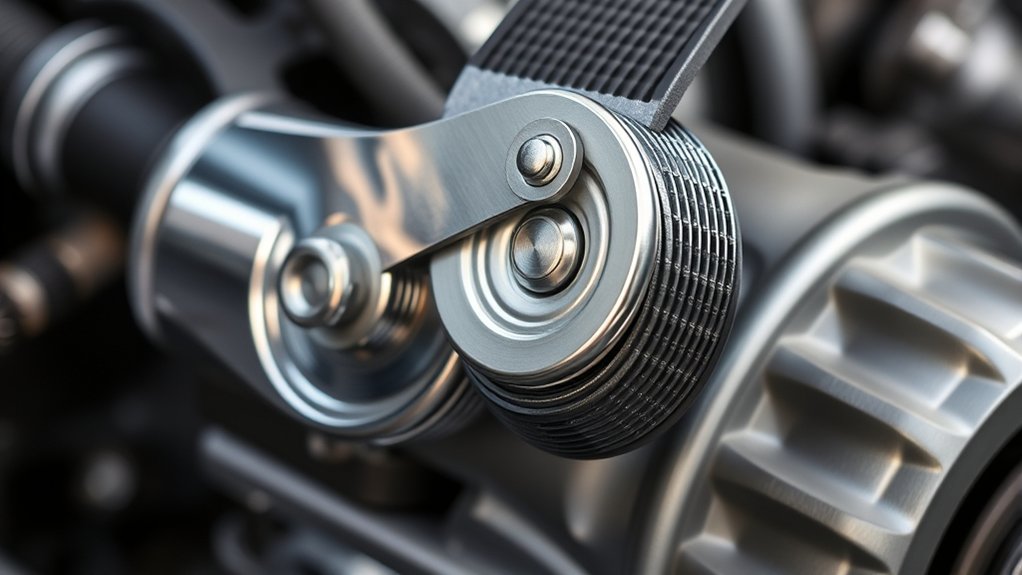
As the belt moves around the pulleys, the tensioner applies steady pressure to keep it tight and properly aligned. Inside the tensioner, a spring, hydraulic mechanism, or adjustable arm pushes a pulley against the belt’s slack side.
As you inspect the assembly, you’ll see that this force changes slightly as the belt flexes, stretches, and encounters temperature changes. The tensioner’s pivot lets the pulley follow that movement while maintaining consistent contact.
Belt material affects the required pressure. A newer, flexible belt may need less force, while a hardened or stretched belt can demand more adjustment.
Tensioner design also determines how smoothly the assembly responds. Spring-loaded units provide continuous automatic force, whereas manual types rely on accurate initial adjustment.
If pressure is too low, the belt can vibrate or slip. If it’s too high, you can overload bearings and accelerate wear. Correct tension keeps the belt seated without excessive strain during operation.
How the Serpentine Belt Transfers Power
The serpentine belt transfers power from the crankshaft pulley to accessories such as the alternator, water pump, and air-conditioning compressor. As the engine runs, the crankshaft turns the belt, and its ribs grip each pulley’s matching grooves.
The serpentine belt drives essential accessories, transferring crankshaft power through its ribbed, continuous loop.
You’ll see this continuous loop route motion around every accessory, allowing each component to operate from one power source.
The tensioner maintains firm contact between the belt and pulleys, so the belt can transmit torque without excessive slipping. Proper belt alignment keeps the ribs seated evenly and prevents the belt from walking off a pulley.
The tensioner also supports accurate tension adjustment during installation, helping you achieve reliable power transfer without overloading bearings. Each accessory creates resistance as it works, but the moving belt carries that load around the loop.
You’ll notice that pulley size affects accessory speed: smaller pulleys spin faster, while larger pulleys turn more slowly. This coordinated drive keeps charging, cooling, and climate-control systems operating together.
How It Compensates for Belt Wear
As the belt wears and stretches, the tensioner helps maintain the proper tension. Its spring-loaded design automatically compensates for the extra length, keeping the belt secure and power transfer consistent.
Maintains Proper Belt Tension
When the belt begins to stretch or wear, the tensioner automatically adjusts its position to maintain the correct tension. This steady pressure keeps the belt seated against each pulley without creating excessive drag.
You’ll see this function working through four key actions:
- The spring or hydraulic mechanisms apply controlled force to the tensioner arm.
- The arm holds the belt firmly as engine vibrations and load changes occur.
- Durable tensioner materials resist heat, friction, and repeated movement.
- The pulley guides the belt smoothly, preventing slip, chatter, and uneven contact.
Because the tensioner continuously balances force, you won’t need to adjust belt tension manually during normal operation. Proper tension also helps accessories run consistently and reduces stress on bearings.
If the tensioner weakens, you’ll notice squealing, belt flutter, or visible wear. These signs indicate that inspection and replacement may be necessary soon.
Adjusts For Belt Stretch
Over time, belt material naturally stretches from heat, friction, and repeated movement, and the tensioner compensates by shifting its arm to take up the extra slack.
As the belt lengthens, the spring-loaded arm rotates, pushing the pulley against the belt and restoring the required tension. This automatic movement helps you avoid manual adjustments during normal service.
A well-engineered Tensioner design also maintains steady contact as temperatures change and components wear. You’ll notice fewer symptoms of looseness, such as squealing, slipping, or inconsistent accessory operation.
However, the tensioner can only compensate within its designed range. Excessive stretch, cracking, glazing, or contamination means you should replace the belt.
During inspection, check the arm’s position, pulley condition, and movement. If the arm sits near its limit, install a new belt and inspect related components.
How It Absorbs Vibration and Movement
A belt tensioner absorbs vibration by allowing its spring-loaded arm to adjust slightly as the belt moves. As you drive, the belt encounters pulleys, changing speeds, and minor engine movement.
The tensioner follows these changes, keeping the belt engaged without transmitting every shock through the system. This action provides effective vibration damping and movement absorption.
- The spring responds: When the belt vibrates, the spring compresses or extends to match its motion.
- The arm pivots: The tensioner arm moves around its mounting point, giving the belt controlled flexibility.
- The pulley stays aligned: Its pulley tracks the belt, helping prevent sudden lateral movement or flutter.
- Energy gets controlled: Internal friction and spring resistance reduce oscillations before they travel through connected components.
You’ll notice smoother operation because the tensioner continuously manages small changes rather than holding the belt completely rigid.
It also helps limit rattling, slapping, and uneven motion during acceleration or deceleration. This controlled response protects the belt drive’s smoothness and reduces stress on nearby pulleys and bearings during normal operation.
What Happens When Tension Is Incorrect?
When the tension is incorrect, you may notice belt slippage, which reduces system performance. Incorrect tension can also lead to excessive component wear and shorten the belt’s service life. If the system makes unexpected noise, inspect the belt and adjust the tension as needed.
Belt Slippage
Belt slippage occurs when incorrect tension prevents the belt from gripping the pulleys securely. As you operate the system, the belt may hesitate, squeal, or fail to transfer power consistently. Too little tension allows slack, while excessive tension can keep the belt from seating naturally.
Check these points:
- Inspect the belt alignment. If it doesn’t track centrally, adjust the pulleys or mounting position before resetting tension.
- Watch for visible flutter during startup, which signals insufficient tension or a weak tensioner spring.
- Listen for squealing under load, then stop the system and verify the manufacturer’s tension specification.
- Test the tensioner’s movement. It should respond smoothly and maintain steady pressure, supporting reliable Tensioner durability.
Correct tension restores consistent pulley contact and helps prevent sudden belt disengagement. Always shut down equipment before making adjustments, and replace damaged components promptly.
Excessive Component Wear
Incorrect tension accelerates component wear by forcing the belt, pulleys, bearings, and tensioner to operate under abnormal loads. If tension is too low, belt movement and slipping increase, which can rub pulley surfaces and promote uneven belt wear.
If tension is too high, you’ll overload bearings, shafts, and tensioner pivots, shortening their service life. The correct balance depends on the tensioner design, belt material, drive layout, and manufacturer’s specifications.
A worn spring, seized pivot, or contaminated pulley can prevent the tensioner from maintaining that balance. Inspect belt edges, ribs, pulley grooves, and tensioner movement for evidence of accelerated wear.
Replace damaged parts and correct the underlying tension problem together. Otherwise, a new belt or tensioner may deteriorate quickly under the same abnormal load.
Unexpected System Noise
Unusual squealing, chirping, rattling, or grinding often signals that belt tension isn’t correct. If the belt slips, you’ll hear squealing during acceleration, and driven accessories may operate inconsistently. Excessive tension can create a harsh whine, overload bearings, and shorten pulley life. Watch for these warning signs:
- Listen for noise when you start the engine or switch on accessories.
- Check whether the sound changes with engine speed.
- Inspect the belt for glazing, cracks, fraying, or unusual movement.
- Have a technician measure tension and examine the tensioner.
Ignoring these sounds can let slippage reduce alternator output, weaken cooling-system circulation, and cause Engine overheating. A loose belt also makes the engine work harder, reducing Fuel efficiency.
Don’t spray lubricant on the belt. Replace damaged parts and correct tension before noise becomes a breakdown.
Belt Tensioner Failure Symptoms
When a tensioner begins to fail, you may notice belt squealing, chirping, or slapping, especially during startup or acceleration. You might also hear rattling or grinding as the pulley bearing wears or the arm moves unevenly.
A belt that appears loose, wobbles, or slips can signal inadequate tension adjustment. In contrast, excessive tension may cause a high-pitched whine and accelerate wear on the belt, pulleys, or accessories.
You may see cracks, fraying, glazing, or unusual edge wear on the belt because the tensioner no longer keeps it aligned. Engine accessories can then operate inconsistently, causing dimming lights, weak air-conditioning performance, overheating, or intermittent charging.
A failed hydraulic mechanism may leak fluid, lose damping, or allow the tensioner arm to bounce. You could also notice increased vibration through the engine or a warning light triggered by accessory-speed changes.
Ignoring these signs can lead to belt separation and sudden accessory failure, so address the tensioner promptly.
How to Inspect the Tensioner Safely
After noticing failure symptoms, inspect the tensioner with the engine off, cool, and the ignition key removed. Wear safety glasses, keep loose clothing away, and never place fingers between moving parts. Use your vehicle manual to understand the Tensioner design before touching anything.
- Examine the belt’s routing, cracks, fraying, glazing, or contamination. Note how Belt material looks across its entire length.
- Check the tensioner pulley for wobbling, roughness, chips, or unusual noise. Spin it only when the belt has no load and the manual permits.
- Observe the tensioner arm and spring housing for rust, damage, oil leakage, or misalignment. Don’t force the arm with improvised tools.
- Compare belt alignment with neighboring pulleys, then use a flashlight to view hidden edges and mounting points.
Keep hands clear of the crankshaft and fan, even during brief checks. If access requires removing covers, follow the manufacturer’s instructions and support components securely. Record what you find without disturbing the assembly.
When to Replace the Belt Tensioner
Replace the belt tensioner if you notice visible wear, cracks, or corrosion. You should also pay attention to squealing, rattling, or any other unusual noises while the vehicle is running. Even if you don’t notice any symptoms, follow the replacement interval recommended by your vehicle’s manufacturer.
Visible Wear Signs
Visible wear on a belt tensioner often signals that replacement is due. Inspect it during routine service, especially as climate change brings wider temperature swings that can accelerate rubber and metal deterioration. Automotive history shows how improved tensioners extend belt life, but no design lasts forever.
- Check for cracks, chips, or missing material on the pulley, arm, and mounting bracket.
- Look for rust, corrosion, or flaking metal that could weaken the assembly.
- Examine the belt path for glazing, fraying, uneven wear, or contamination caused by poor alignment.
- Watch for a crooked pulley, excessive movement, or a tensioner arm sitting outside its normal position.
Replace the tensioner if you find severe damage, poor alignment, or deformation. Don’t wait for belt failure. Install a compatible unit and inspect the belt before completing repairs.
Noise During Operation
Listen for squealing, chirping, grinding, or rattling while the engine runs, as these noises can indicate a worn bearing, weak spring, or misaligned belt tensioner. You may hear a brief chirp during startup, but persistent noise deserves immediate attention.
Turn off the engine and inspect the tensioner for looseness, wobbling, or uneven movement. Never place your hands near moving components.
Belt material and contamination can influence noise, so check for glazing, cracking, oil, or coolant on the belt. However, don’t replace only the belt if the tensioner still binds or vibrates.
Compare the noise with the manufacturer’s diagnostic guidance, then replace the tensioner if its bearing growls, its spring fails to maintain pressure, or its pulley runs out of alignment.
Addressing these symptoms promptly can prevent belt damage and sudden accessory failure.
Recommended Replacement Intervals
Replace the belt tensioner according to the vehicle manufacturer’s service interval, often when the timing belt or serpentine belt is replaced. Your owner’s manual provides the most reliable schedule, but driving conditions can shorten it.
Consider these replacement factors:
- Inspect the tensioner whenever you service the belt. Replace it if you see cracks, corrosion, wobbling, or grease leakage.
- Listen for grinding, chirping, or rattling, and check for belt slippage or uneven wear. These symptoms often indicate worn bearings or weak spring pressure.
- Account for material durability. Heat, oil contamination, dust, and heavy use accelerate deterioration, even before the listed mileage.
- Evaluate tensioner design. Automatic tensioners, hydraulic units, and fixed pulleys follow different service recommendations, so use the correct parts and procedure.
Replacing the tensioner with the belt helps prevent sudden failure and protects surrounding components.
Frequently Asked Questions
How Much Does a Belt Tensioner Replacement Typically Cost?
You’ll typically pay $150–$400 for a belt tensioner replacement, including parts and labor. Your vehicle’s design, labor rates, and part quality can shift the price.
Luxury or difficult-to-service models may cost more. You can often reduce expenses by comparing repair-shop estimates and choosing a reputable aftermarket component.
Belt tensioner durability usually spans 60,000–100,000 miles, but your driving conditions affect it. Replacement frequency increases with heat, contamination, and neglected belt maintenance.
Can I Drive Safely With a Noisy Belt Tensioner?
You shouldn’t drive far with a noisy belt tensioner. It could fail like a tiny disaster waiting to strike. Tensioner noise often signals a worn bearing, weak spring, or misalignment.
If the tensioner locks up, the serpentine belt may slip or break, disabling your alternator, power steering, air conditioning, or water pump.
Stop driving if you hear grinding, notice belt wear, or see wobbling. Have a mechanic inspect it immediately. Only drive briefly to a repair shop if necessary.
Which Tools Are Needed to Replace a Belt Tensioner?
You’ll need a ratchet, socket set, breaker bar, serpentine-belt tool, torque wrench, and possibly a wrench set to replace a belt tensioner. Keep safety glasses and gloves handy, too.
Before starting the Replacement process, check your vehicle’s service manual for the correct socket sizes and torque specifications. A belt-routing diagram, flashlight, and pry bar may also help.
The Tools needed can vary by engine design, so prepare everything before removing the old tensioner.
Are Belt Tensioners Interchangeable Between Different Vehicle Models?
Usually, you can’t swap belt tensioners between different vehicle models without checking fitment first. One size doesn’t fit all: part compatibility depends on your engine, belt routing, mounting points, and pulley design.
Manufacturer variations can change spring tension, alignment, and connector locations, even among similar vehicles. Check your vehicle identification number, compare original-part numbers, and follow the manufacturer’s specifications.
You’ll avoid noise, premature wear, or belt failure.
Should I Replace the Tensioner Pulley Separately or as an Assembly?
Replace the tensioner as an assembly unless the manufacturer specifically allows pulley-only replacement. A new assembly restores the spring mechanism, bearing, and pulley together, reducing repeat labor and alignment problems.
You can replace only the pulley when the tensioner arm and spring remain sound, but inspect carefully for cracks, play, noise, or pulley wear.
Consider tensioner lifespan, mileage, and belt condition. If the components are old, replacing everything offers better reliability and peace of mind.
Conclusion
A belt tensioner is the quiet hand that keeps your engine’s serpentine belt marching in rhythm. By applying steady pressure, it helps transfer power, absorbs vibration, and compensates as the belt wears.
When tension goes wrong, squeals, slipping, and damaged accessories can follow. You can catch trouble early by inspecting the tensioner safely and watching for warning signs.
Replace it when movement, noise, or wear appears. Understanding how a belt tensioner works can help keep your entire engine’s orchestra playing.