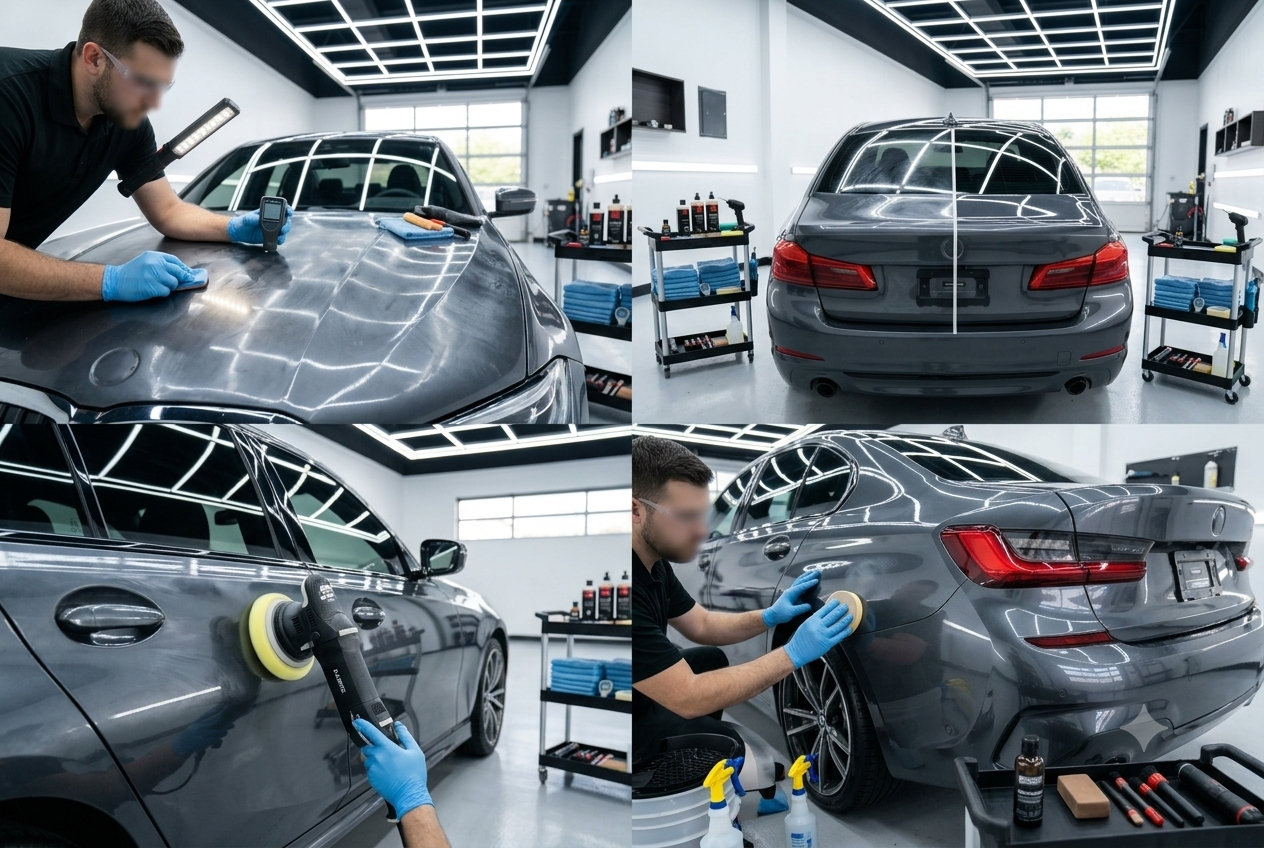
Paint Polishing and Car Paint Restoration: The Complete Guide 2026
Introduction
Paint Polishing and Car Paint Restoration for A car’s paint is often the first thing people notice, and over time, exposure to sun, road debris, harsh weather, and improper washing techniques can leave even a well-maintained vehicle looking dull, swirled, or faded. Paint polishing and car paint restoration have become essential services for anyone who wants to protect their vehicle’s appearance and long-term value, whether you’re maintaining a daily driver or restoring a classic. This guide covers everything you need to know about these two closely related but distinct processes, including the different techniques available, how to compare and choose between them, practical tips for each approach, and how to maintain that showroom shine once you’ve achieved it.
Why Paint Polishing and Car Paint Restoration Matter
Your vehicle’s paint isn’t just cosmetic — it’s also a protective layer shielding the metal beneath from rust, corrosion, and environmental damage. When that clear coat becomes scratched, oxidized, or degraded, it doesn’t just look bad; it also leaves the underlying paint and metal more vulnerable to long-term damage. Paint polishing addresses surface-level imperfections like light scratches, swirl marks, and minor oxidation, restoring gloss and clarity without significantly altering the paint itself. Car paint restoration goes a step further, addressing more significant damage like deep oxidation, faded clear coat, or extensive scratching that requires a more involved correction process.
Beyond aesthetics, investing in proper paint care also protects your vehicle’s resale value. A car with a swirl-free, glossy finish consistently commands a higher resale price than one with dull, scratched, or oxidized paint, even if the mechanical condition of both vehicles is identical. Understanding when your vehicle needs simple polishing versus more comprehensive restoration helps you make cost-effective decisions about maintaining your car’s appearance over its lifetime.
Different Types of Paint Polishing and Restoration Techniques
Paint care spans a wide range of techniques, each suited to different levels of damage and desired outcomes.
- Hand Polishing: Using polish applied and worked in by hand with a microfiber cloth or applicator pad, suitable for light imperfections and smaller areas.
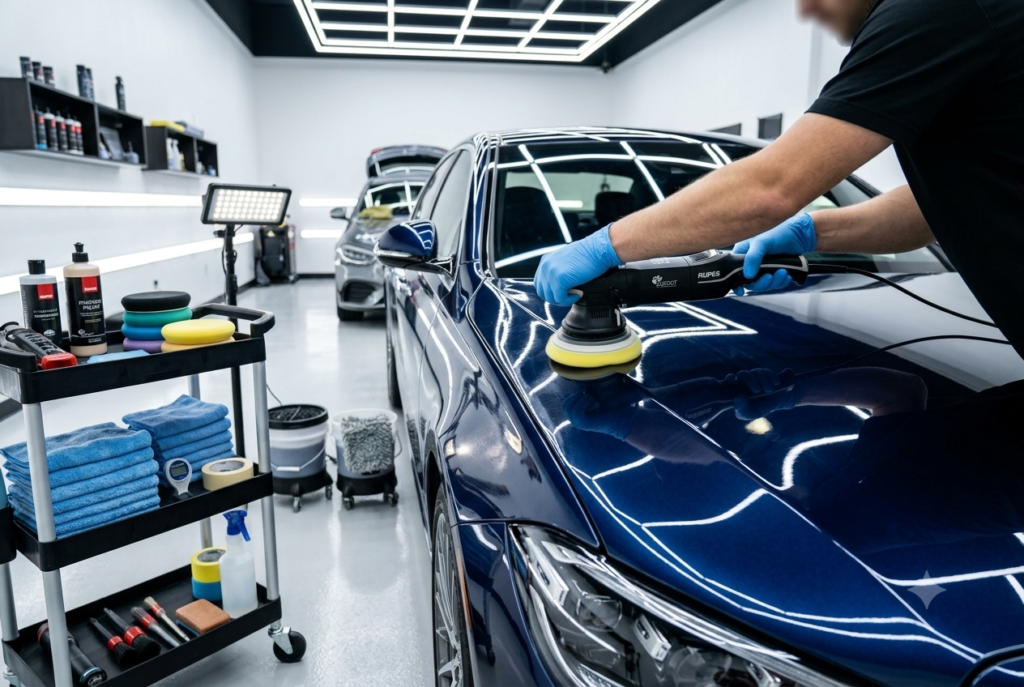
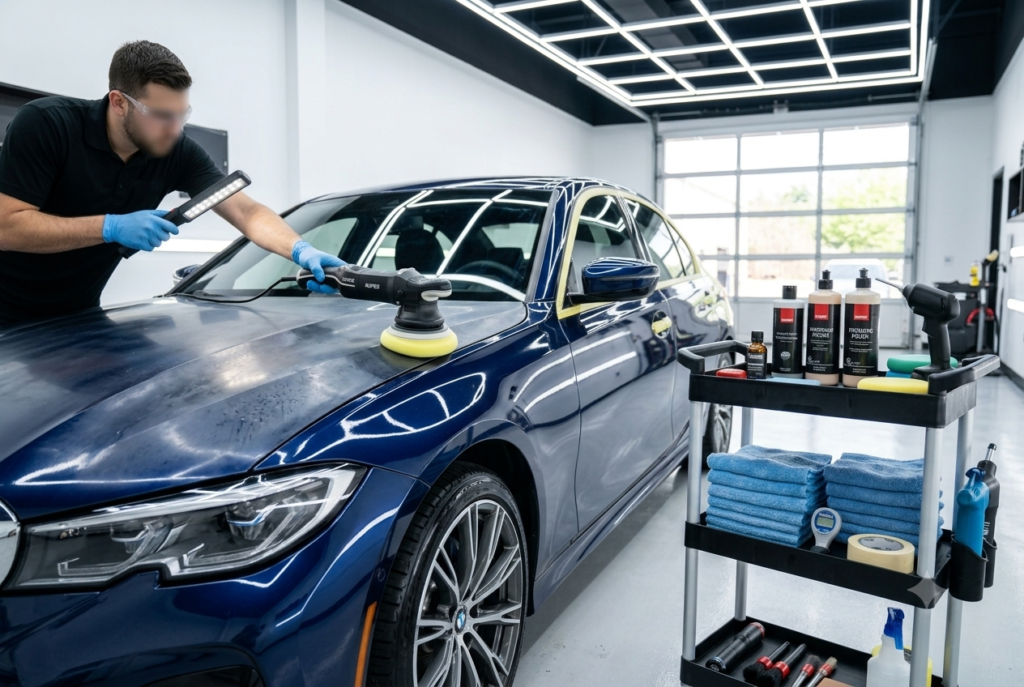
- Machine (Dual Action) Polishing: Using a dual-action orbital polisher to apply polish more evenly and efficiently than hand application, reducing the risk of paint damage from excessive heat buildup.
- Rotary Buffer Polishing: A more aggressive machine polishing method using a rotary buffer, capable of correcting more significant paint defects but requiring greater skill to avoid burning through the clear coat.
- Single-Stage Polishing: A single pass with one polish product designed to address mild imperfections and restore general shine without heavy correction.
- Multi-Stage Paint Correction: A more involved process using progressively finer polishing compounds to remove deeper scratches and swirl marks in multiple passes.
- Wet Sanding: A more aggressive restoration technique involving fine-grit sandpaper to level significant clear coat damage before polishing, typically reserved for severe imperfections.
- Clay Bar Treatment: Not polishing itself, but a preparatory decontamination step that removes embedded surface contaminants before polishing begins.
- Oxidation Removal: A specialized restoration process targeting the chalky, dull appearance caused by UV exposure and clear coat breakdown over time.
- Scratch and Swirl Removal: Targeted correction addressing specific surface scratches and the fine circular marks often caused by improper washing techniques.
- Headlight Restoration: A related process using similar polishing techniques to restore clarity to yellowed or hazy plastic headlight lenses.
- Ceramic Coating Application: While not polishing itself, ceramic coatings are frequently applied after polishing or restoration to protect and prolong the finished result.
- Wax and Sealant Application: A final protective step following polishing, adding a layer of protection and enhancing gloss after correction work is complete.
Paint Polishing vs. Restoration Maintenance Comparison
Understanding the difference between polishing and full restoration helps clarify which approach your vehicle actually needs.
Paint Polishing is generally a lighter-touch process, addressing minor surface imperfections like light swirl marks, minor oxidation, and general dullness. It typically involves one or two passes with a polish product and can often be completed in a few hours, making it a more affordable and less time-intensive option for vehicles in generally good condition.
Car Paint Restoration involves a more comprehensive approach, often combining multiple techniques like wet sanding, multi-stage correction, and oxidation removal to address significant paint damage. This process is considerably more time-intensive and typically more expensive, but it’s necessary for vehicles with substantial paint degradation that basic polishing can’t adequately address.
In general, if your car’s paint issues are relatively minor and superficial, polishing alone is often sufficient. If your paint shows significant oxidation, deep scratches, or has been neglected for years without proper care, a full restoration process is typically necessary to achieve meaningful improvement.
Paint Polishing and Car Paint Restoration Explained
How Paint Polishing Works: Polish contains fine abrasive particles that gently remove a microscopic layer of the clear coat, leveling out minor imperfections like light scratches and swirl marks while restoring gloss and clarity. Depending on the severity of imperfections, this may be done by hand for very light correction or with a dual-action polisher for more consistent, efficient results across larger panel areas. Polish is generally less aggressive than compound, making it suitable for regular maintenance rather than significant correction work.
How Car Paint Restoration Works: Restoration typically begins with a thorough wash and clay bar treatment to remove embedded contaminants, followed by an assessment of the paint’s condition to determine the appropriate correction approach. For significant oxidation or deep scratches, this may involve wet sanding to level the damaged clear coat, followed by multiple stages of compounding and polishing to gradually restore clarity and gloss. The entire process often takes considerably longer than standard polishing, sometimes spanning a full day or more depending on the vehicle’s condition and size.
Pros & Cons of Each Type
Hand Polishing
Pros: Requires minimal equipment, offers precise control for smaller areas, and carries lower risk of paint damage from excessive heat or pressure.
Cons: More physically demanding and time-consuming than machine polishing, particularly for larger vehicles or more extensive correction needs.
Machine (Dual Action) Polishing
Pros: More efficient and consistent than hand polishing, with a lower risk of paint damage compared to rotary buffing.
Cons: Requires purchasing or renting equipment, and still requires some skill to use effectively without creating uneven results.
Rotary Buffer Polishing
Pros: Capable of correcting more significant paint defects more quickly than dual-action polishing.
Cons: Higher risk of burning through the clear coat if used improperly, generally recommended only for experienced users or professional detailers.
Multi-Stage Paint Correction
Pros: Achieves the most thorough, comprehensive results for significantly damaged paint.
Cons: Time-intensive and typically more expensive than single-stage polishing, often requiring professional expertise for best results.
Wet Sanding
Pros: Can effectively level severe clear coat damage that polishing alone can’t correct.
Cons: Carries significant risk if performed incorrectly, since removing too much clear coat can cause permanent damage requiring repainting.
Each Type Tips
For Hand Polishing: Work in small sections using a clean applicator pad, applying moderate pressure in overlapping circular motions, and always follow up with a clean microfiber cloth to remove excess product.
For Machine Polishing: Keep the polisher moving continuously across the surface to avoid concentrating heat in one area, and use the appropriate pad and polish combination for your specific correction needs.
For Rotary Buffing: If you’re new to rotary buffing, practice on a less visible panel first, and always keep the buffer moving to avoid generating excessive heat that can damage the clear coat.
For Multi-Stage Correction: Work through your compounds and polishes from most to least aggressive, checking your progress under proper lighting between each stage to avoid over-correcting.
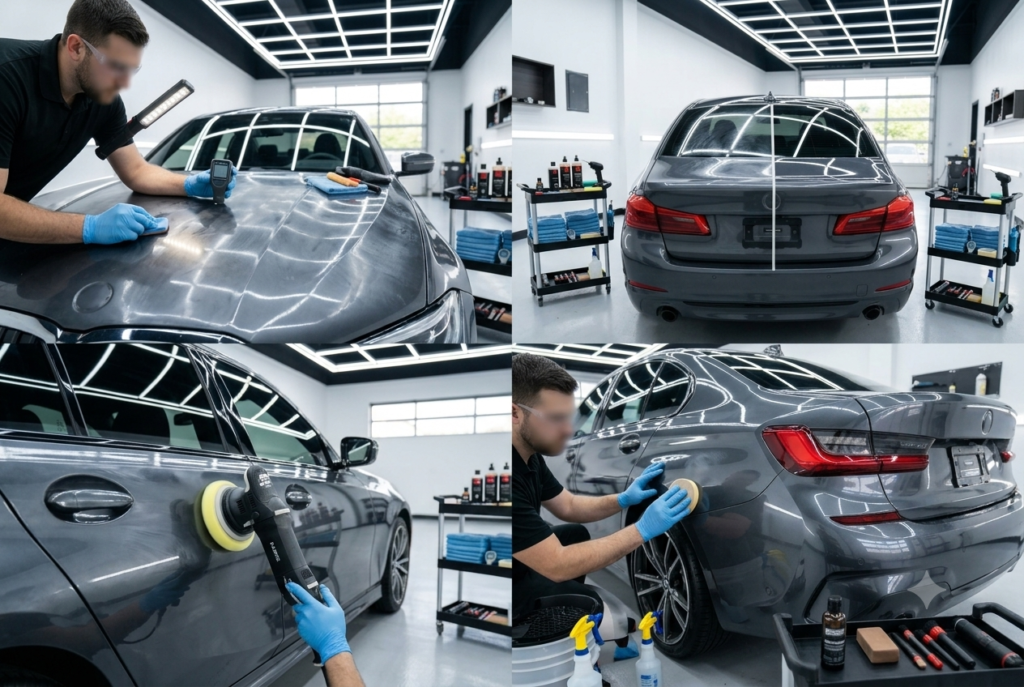
For Wet Sanding: Use the finest appropriate grit for your specific damage level, and work slowly and carefully, checking clear coat thickness periodically if you have access to a paint depth gauge, to avoid sanding through to the base coat.
For Oxidation Removal: Test a small, inconspicuous area first to gauge how the paint responds, since heavily oxidized paint sometimes requires more aggressive correction than lighter oxidation.
Cleaning & Maintenance
Proper cleaning before and after any polishing or restoration work significantly affects the quality and longevity of your results. Always wash your vehicle thoroughly before polishing to remove loose dirt and debris that could cause additional scratching during the correction process. Use a clay bar treatment periodically, particularly before major polishing work, to remove embedded contaminants that washing alone can’t address. After polishing or restoration, apply a quality wax or sealant to protect the freshly corrected paint and extend the time before your next correction is needed.
Wash your vehicle regularly using proper technique, including the two-bucket method and a quality microfiber wash mitt, to minimize the introduction of new swirl marks between polishing sessions. Consider applying a ceramic coating after restoration work for longer-lasting protection and easier ongoing maintenance, since these coatings create a durable, hydrophobic barrier that helps repel dirt and contaminants.
Common Mistakes to Avoid
Avoid using a rotary buffer without proper training or practice, since improper technique can easily burn through the clear coat and cause permanent damage. Don’t skip the clay bar step before polishing, since embedded contaminants left on the surface can cause additional scratching during the polishing process itself. Avoid polishing in direct sunlight or on a hot painted surface, since this can cause the product to dry too quickly and reduce its effectiveness.
Don’t assume more aggressive correction is always better, since using an overly aggressive compound when a milder polish would suffice removes more clear coat than necessary, reducing the paint’s long-term durability. Finally, avoid neglecting post-polish protection, since skipping wax or sealant application leaves freshly corrected paint more vulnerable to new damage and oxidation.
FAQs
1. What’s the difference between paint polishing and car paint restoration? Polishing addresses minor surface imperfections and general dullness, while restoration is a more comprehensive process addressing significant oxidation, deep scratches, or heavily neglected paint.
2. How often should I polish my car’s paint? Most experts recommend polishing every six months to a year, depending on your vehicle’s exposure to sun, road debris, and washing frequency.
3. Can polishing remove deep scratches? Light polishing can improve the appearance of shallow scratches, but deep scratches that catch a fingernail typically require more aggressive correction or professional repair.
4. Is it safe to polish my car’s paint myself? Yes, with proper technique and appropriate products, many car owners successfully polish their own vehicles, though more significant correction work often benefits from professional expertise.
5. How much does professional car paint restoration typically cost? Costs vary widely based on vehicle size and paint condition, generally ranging from $300 to $1,000 or more for a comprehensive multi-stage restoration.
6. Does polishing remove clear coat? Yes, polishing removes a very thin, microscopic layer of clear coat to level out minor imperfections, which is why excessive or overly aggressive polishing over time can eventually thin the clear coat too much.
7. Can I polish my car too often? Yes, since each polishing session removes a small amount of clear coat, excessive frequency can eventually thin the protective layer too much, making periodic rather than constant polishing important.
8. What causes swirl marks on car paint? Swirl marks are typically caused by improper washing or drying techniques, such as using a dirty cloth or applying too much pressure during washing.
9. Is wet sanding safe for all vehicles? Wet sanding carries real risk if performed incorrectly and is generally recommended only for vehicles with significant clear coat damage, ideally performed by an experienced professional.
10. How long does a full paint restoration typically take? Depending on the vehicle’s size and paint condition, a full restoration can take anywhere from several hours to a full day or more.
11. Should I wax my car after polishing? Yes, applying wax or sealant after polishing helps protect the freshly corrected paint and extends the time before the next correction is needed.
12. Can paint restoration fix faded paint color? In many cases, yes, particularly if the fading is due to oxidation rather than deeper pigment loss, though severely faded paint may require repainting rather than restoration alone.
13. What’s the difference between polish and compound? Compound is more aggressive and designed for significant correction, while polish is milder and better suited for maintaining shine and addressing minor imperfections.
14. Is a ceramic coating necessary after paint restoration? While not strictly necessary, a ceramic coating helps protect freshly restored paint and can extend the time between future corrections, making it a popular add-on after restoration work.
15. Can I use the same products for polishing and restoration? Not typically, since restoration often requires a range of products from aggressive compounds to fine polishes, while basic maintenance polishing usually only requires a single, milder product.
Conclusion
Understanding the difference between paint polishing and car paint restoration empowers you to choose the right approach for your vehicle’s specific condition, whether that means a quick maintenance polish to restore shine or a more comprehensive restoration process to address significant damage. Whether you tackle these tasks yourself or work with a professional detailer, proper technique, appropriate product selection, and consistent follow-up maintenance are essential to achieving lasting, high-quality results. By investing in proper paint care and understanding when each approach is appropriate, you can protect your vehicle’s appearance, value, and long-term paint health for years to come.