2026 Honda CR-V: Is It Still the Best Family SUV? A Complete Review
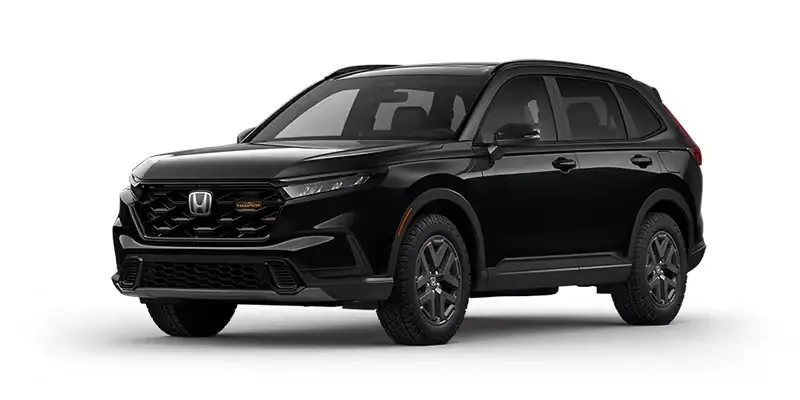
The 2026 Honda CR-V arrives with one mission: to remind the market exactly why it has spent decades as one of America’s most trusted, most purchased compact SUVs. In a segment that just witnessed Toyota’s bold all-hybrid reinvention of the RAV4, Honda has taken a different but equally deliberate approach. Rather than a ground-up redesign, the 2026 Honda CR-V brings targeted, meaningful upgrades — a larger touchscreen across the entire lineup, universal wireless charging, improved AWD traction management, and the debut of a rugged TrailSport Hybrid variant — while leaving its formidable strengths untouched.
The result is a vehicle that strengthens its case as the definitive family compact SUV. Class-leading rear legroom, a cavernous cargo hold, a quiet and refined driving experience, and a hybrid option that delivers outstanding real-world fuel efficiency are not new stories for the CR-V. But in 2026, those stories are told with greater polish, more standard technology, and a new trim line that broadens the vehicle’s appeal beyond the suburbs.
This review covers everything prospective buyers need to evaluate: powertrain options, full trim lineup with verified pricing, interior dimensions, safety technology, competitive positioning, and the honest trade-offs every shopper deserves to understand before signing.
Why the 2026 Honda CR-V Continues to Lead the Segment
The Honda CR-V’s dominance in the compact SUV market is not accidental. Since its US introduction in 1997, it has consistently prioritized the practical needs of real families over flashy styling trends or niche performance claims. The 2026 Honda CR-V continues that philosophy with a discipline that is genuinely rare at this price point.
Honda’s approach for 2026 is the automotive equivalent of a highly competent professional who identifies what is broken and fixes it without disrupting what already works brilliantly. The infotainment screen that lagged behind rivals on base trims has been replaced with a 9-inch display across all trims. Wireless phone integration, previously a premium feature, is now standard on every CR-V sold. The wireless charging pad is no longer an option you must specify — it simply comes with the car.
These are the kinds of updates that matter to families who use their SUV every single day. The 2026 Honda CR-V is not chasing headlines. It is chasing household approval ratings, and on that metric, it remains exceptional.
2026 Honda CR-V Powertrains: Turbocharged Gas and Proven Hybrid
1.5-Liter Turbocharged Four-Cylinder (Gas Models)
The standard powertrain in the 2026 Honda CR-V is a 1.5-liter DOHC turbocharged four-cylinder engine producing 190 horsepower. It is paired with a continuously variable transmission (CVT) and is available in both front-wheel-drive (FWD) and all-wheel-drive (AWD) configurations.
EPA-rated fuel economy for the gas models stands at 28 city / 33 highway / 30 combined mpg for FWD trims (LX, EX, EX-L). AWD versions of those same trims deliver 27 city / 31 highway / 29 combined mpg. These figures are competitive within the turbocharged compact SUV segment, though they fall well short of the hybrid variant’s efficiency.
The character of this engine in daily driving is one of quiet, linear power delivery. It does not announce itself aggressively from a stoplight, nor does it strain noticeably on highway merges. For buyers who cover primarily suburban and highway miles, it is a reliable, unfussy choice.
2.0-Liter Two-Motor Hybrid System
The 2026 Honda CR-V Hybrid represents the more compelling powertrain story. Honda’s two-motor hybrid system pairs a 2.0-liter Atkinson-cycle engine with dual electric motors to produce 204 combined horsepower. Critically, all CR-V Hybrid models come standard with AWD — Honda’s Real Time AWD system — with no FWD option available in the hybrid lineup.
The hybrid system uses an electronic CVT rather than a traditional gear-based transmission, and the result is a powertrain that feels genuinely seamless. Electric torque is available from a standing stop, making city driving and low-speed merging particularly effortless. The EPA rates the hybrid lineup at 40 city / 34 highway / 37 combined mpg across all four hybrid trim levels.
Consumer Reports real-world testing placed the hybrid’s overall mpg at approximately 35 mpg, which, for a family SUV with full AWD capability and 204 hp, represents exceptional value for daily running costs. Over a five-year ownership period, the fuel savings versus a competing gas-only compact SUV are substantial.
Powertrain Summary:
| Configuration | Engine | Horsepower | Fuel Economy (Combined) |
|---|---|---|---|
| Gas FWD (LX/EX/EX-L) | 1.5L Turbo | 190 hp | 30 mpg |
| Gas AWD (LX/EX/EX-L) | 1.5L Turbo | 190 hp | 29 mpg |
| Hybrid AWD (All Trims) | 2.0L + Dual Electric | 204 hp | 37 mpg |
One notable limitation for buyers who want maximum electrification: the 2026 Honda CR-V does not offer a plug-in hybrid (PHEV) variant in the United States. Buyers seeking daily electric-only driving capability will need to look elsewhere, as Honda has not announced a domestic PHEV version for this generation.
2026 Honda CR-V Interior: Where It Truly Excels
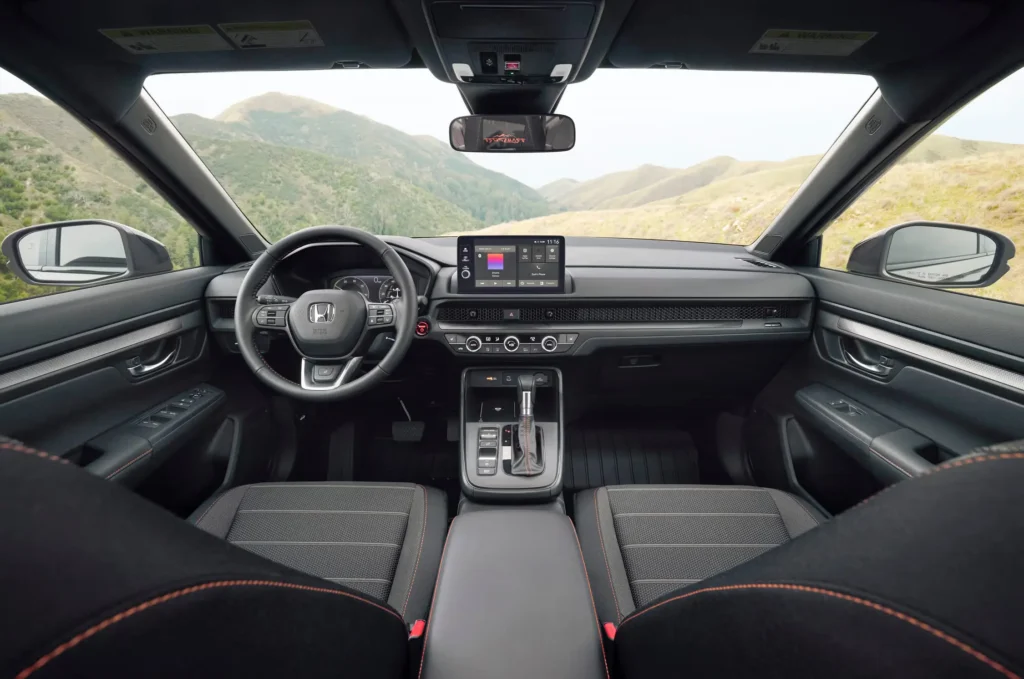
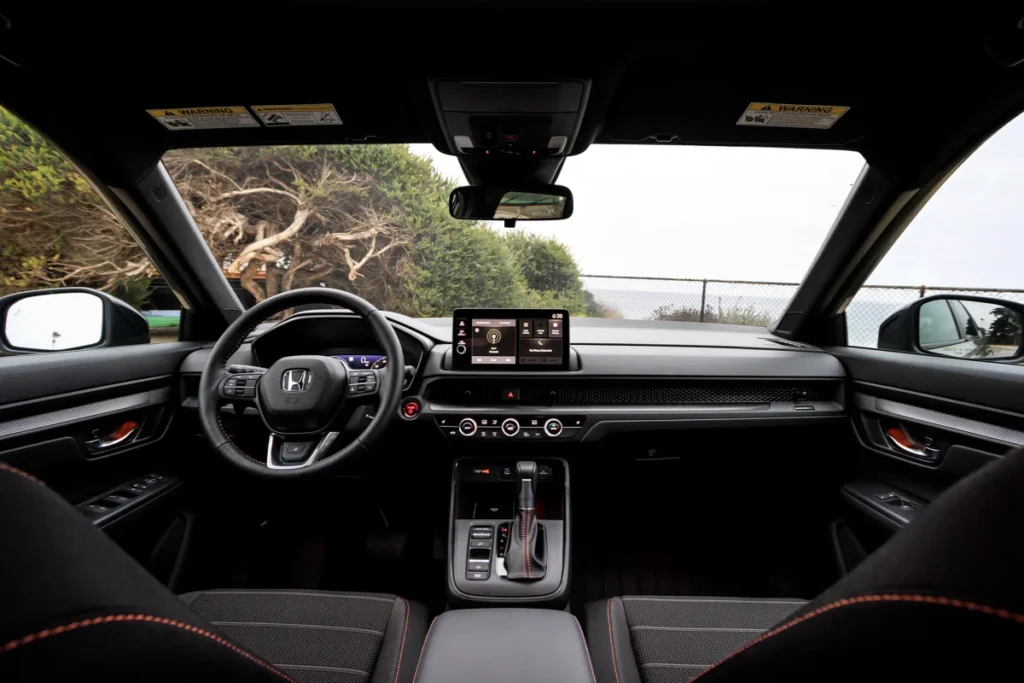
If there is one area where the 2026 Honda CR-V is essentially peerless in the compact SUV segment, it is the interior. Honda has spent decades refining the CR-V’s cabin for real-world family use, and the cumulative effect of those decisions is a vehicle that feels uncommonly thoughtful.
Space and Passenger Comfort
The 2026 Honda CR-V seats five passengers across two rows and delivers front-row legroom of 41.3 inches paired with a genuinely impressive 41 inches of rear legroom. That rear legroom figure is class-leading for a compact SUV and means that adult rear passengers, including tall ones, are not an afterthought. Getting in and out is also easy, thanks to a wide door opening and a comfortable seating height that avoids the awkward climb-in or step-down associated with some rivals.
Front seating offers up to a ten-way power-adjustable driver’s seat with two-way power lumbar support and dual memory settings on higher trims. Heated front seats are available from the EX trim upward.
Cargo Capacity
The 2026 Honda CR-V’s cargo figures are a defining selling point. With the rear seats in place, the CR-V offers 39.3 cubic feet of cargo volume behind the second row. Fold those seats flat and total maximum cargo capacity reaches 76.5 cubic feet. The rear cargo area features a wide opening and a low load floor, making it physically easy to load bulky items — strollers, luggage, sporting equipment, or flat-pack furniture — without strain.
The standard Easy Fold-Down 60/40 Split Rear Seatback allows for flexible configurations when carrying both passengers and cargo simultaneously. Multiple additional storage solutions are distributed throughout the cabin, including oversized door pockets, rear seatback pockets, a deep center console, and sunglasses storage.
Dashboard Design and Controls
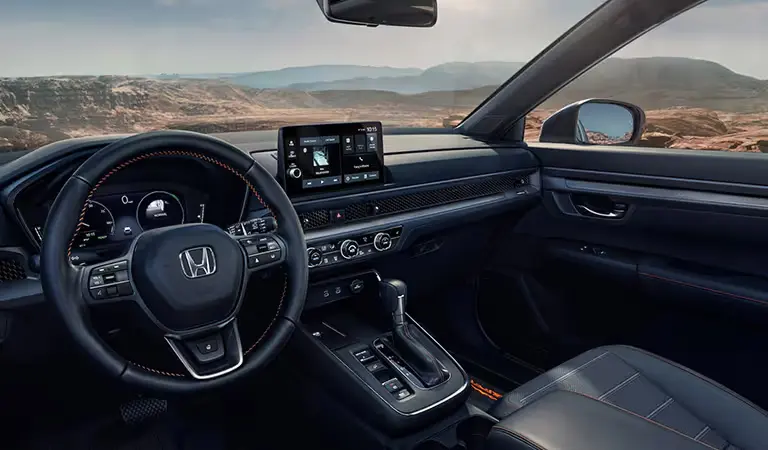
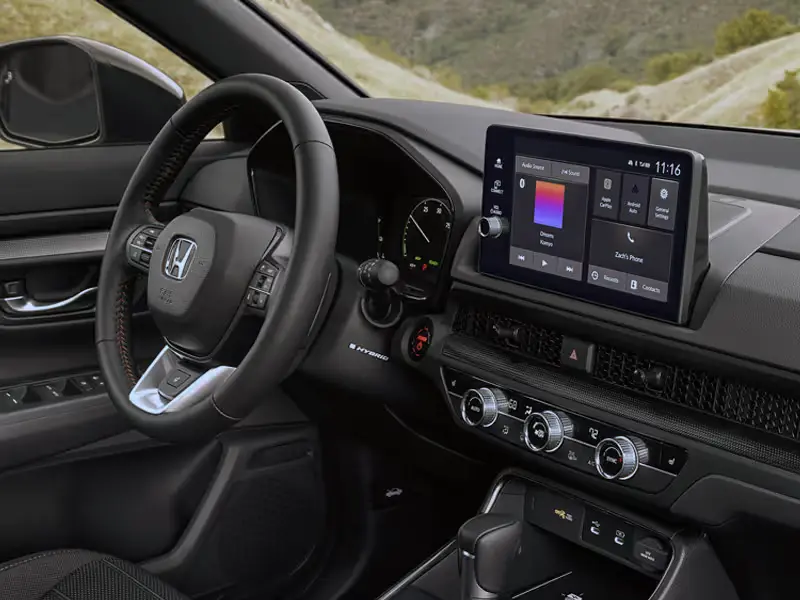
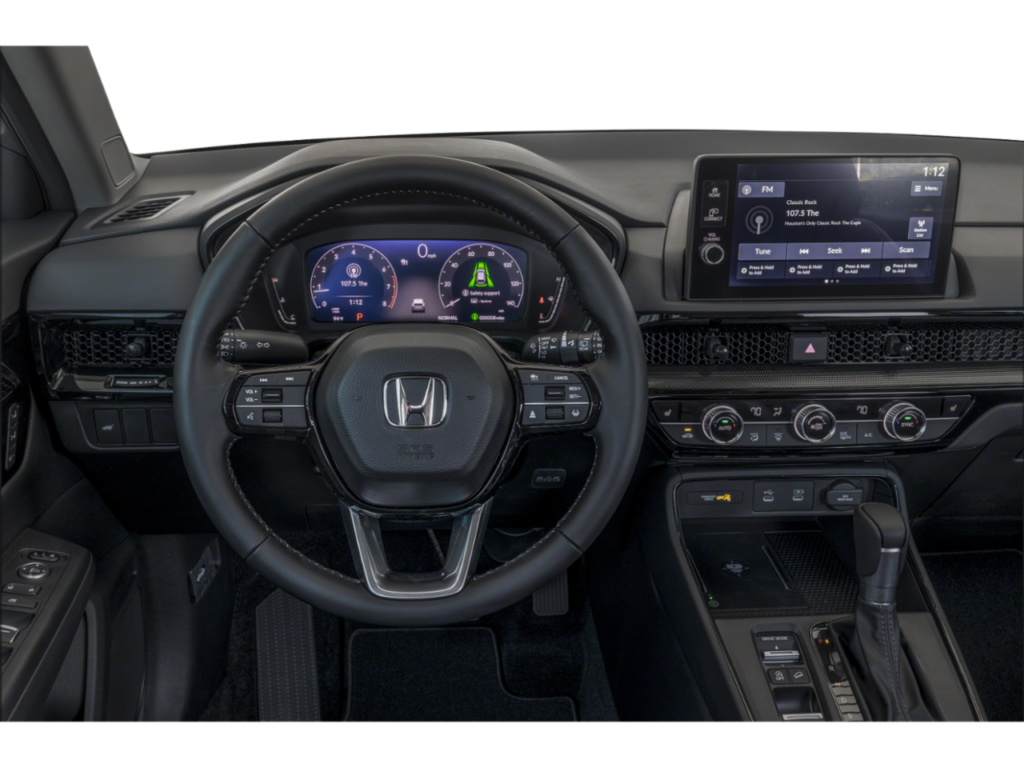
Honda’s cabin philosophy in the CR-V prioritizes physical controls where they matter most. The climate system uses dedicated knobs and buttons rather than burying temperature and fan-speed adjustments inside a touchscreen menu — a choice that many CR-V owners cite as one of their favorite practical features. The overall dashboard layout is clean and logical, and the honeycomb mesh design that conceals air vents keeps the aesthetic tidy without sacrificing airflow performance.
Technology and Infotainment
For 2026, every CR-V trim receives a 9-inch touchscreen with wireless Apple CarPlay and wireless Android Auto compatibility as standard. This represents a meaningful upgrade over the previous generation, where smaller screens and wired-only connectivity were common on entry trims.
Upper trims also gain a standard wireless Qi charging pad, available navigation with real-time traffic updates, and a customizable digital instrument cluster. The EX-L trim steps up to a 10.2-inch digital instrument cluster for a more premium feel. The Sport Touring Hybrid adds a Bose premium audio system for buyers who prioritize in-cabin sound quality.
2026 Honda CR-V Safety: Honda Sensing on Every Single Trim
Every 2026 Honda CR-V, regardless of trim or price, includes the full Honda Sensing suite of driver assistance technologies as standard equipment. This is one of Honda’s most consumer-friendly commitments in the modern compact SUV market: no buyer is left without critical safety technology simply because they chose the base trim.
The Honda Sensing standard package includes:
- Collision Mitigation Braking System (forward collision warning with automatic emergency braking)
- Road Departure Mitigation
- Lane Keeping Assist System
- Adaptive Cruise Control with Low Speed Follow
- Traffic Jam Assist
- Standard rearview camera with dynamic guidelines
Additional safety features available on higher trims include blind-spot warning, rear cross-traffic warning, and safe exit alert. Hands-free access to the power tailgate — operated by a foot swipe under the rear bumper — is a thoughtful safety-adjacent convenience feature for buyers who frequently load cargo with full hands.
For 2026, Honda has also improved the off-road traction management system on all AWD models, providing better performance in loose surface conditions — a meaningful upgrade for buyers in climates with seasonal snow, mud, or gravel roads.
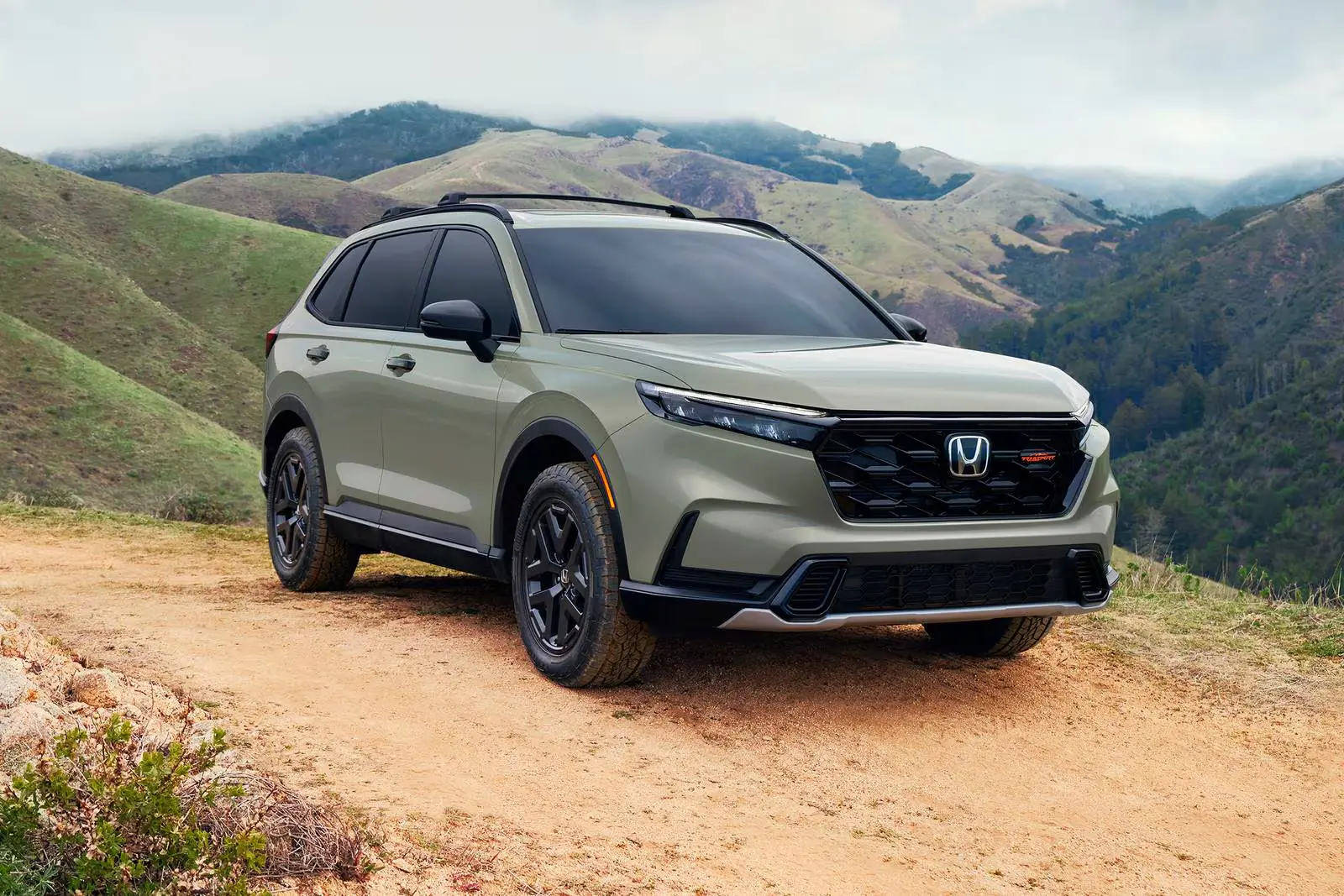
The new TrailSport Hybrid trim takes AWD capability further with all-terrain tires, hill-descent control, and an upgraded AWD system that can distribute up to 50 percent of power to the rear wheels, compared to a lower threshold in standard AWD configurations. Black exterior trim and orange TrailSport badges distinguish it visually.
2026 Honda CR-V Trim Levels and Pricing: Full Breakdown
The 2026 Honda CR-V is available in seven configurations: three gas-powered trims and four hybrid trims. All prices below are MSRP and include the standard destination charge.
CR-V LX — $32,370 (FWD) / $33,770 (AWD)
The LX is the base model and it is honest about what it offers. Standard equipment includes the 9-inch touchscreen, wireless Apple CarPlay and Android Auto, a wireless charging pad, Honda Sensing safety suite, and the 190 hp turbocharged engine. The LX is the only CR-V trim that does not include blind-spot warning as standard. For buyers on a disciplined budget who prioritize reliability and space over feature density, the LX remains a genuinely capable starting point.
CR-V EX — From $34,620 (FWD)
The EX adds blind-spot warning and rear cross-traffic warning, a power moonroof, heated front seats, and remote start. It represents a meaningful step up in everyday convenience over the LX and is a strong choice for buyers who want the full Honda Sensing suite without paying for leather upholstery.
CR-V EX-L — $36,100 (FWD) / $37,500 (AWD)
The EX-L introduces leather-trimmed seating, a ten-way power-adjustable driver’s seat with memory settings, a hands-free access power tailgate, and the 10.2-inch digital instrument cluster. For gas-engine buyers, the EX-L represents the best overall value, combining premium materials with the full technology suite at a price that remains south of $40,000 with AWD.
CR-V Hybrid Sport — $38,580 (AWD Standard)
The entry point into the hybrid lineup includes all the features of the EX-L, adds the 204 hp two-motor hybrid system, and makes AWD standard at no additional cost. The Sport trim also introduces sportier exterior accents and blacked-out trim elements. For buyers who cover high annual mileage, the fuel savings over the gas EX-L begin repaying the price difference relatively quickly.
CR-V Hybrid Sport-L — $41,675 (AWD Standard)
The Sport-L is the hybrid equivalent of the EX-L and adds ventilated front seats, a larger instrument display, and additional convenience features. It is widely regarded as the sweet spot of the hybrid lineup, delivering near-top-spec features without reaching the Sport Touring’s premium pricing.
CR-V Hybrid TrailSport — $40,250 (AWD Standard)
New for 2026, the TrailSport Hybrid is the most capable off-road variant in the CR-V family. It sits between the Sport and Sport-L in price but adds all-terrain tires, hill-descent control, the upgraded 50/50 rear-torque AWD system, easy-clean rubber floor mats, amber interior accent lighting, and distinctive black and orange exterior badging. For buyers in regions with demanding seasonal road conditions, the TrailSport’s capability upgrade is worth the modest premium over the Sport.
CR-V Hybrid Sport Touring — $44,000 (AWD Standard)
The range-topping Sport Touring adds a Bose premium audio system with 12 speakers, a panoramic moonroof, and the most comprehensive technology package in the CR-V lineup. Remote start, power tailgate with programmable height, and full wireless device integration are all standard. At $44,000, the Sport Touring competes with entry-level luxury compact SUVs and makes a strong case for itself on the strength of Honda’s long-term reliability record alone.
2026 Honda CR-V vs. Rivals: The Competitive Picture
The compact SUV segment is extremely competitive in 2026. The CR-V’s most direct challengers remain the Toyota RAV4, Hyundai Tucson, Nissan Rogue, Chevrolet Equinox, Subaru Forester, and Kia Sportage.
Against the newly all-hybrid 2026 Toyota RAV4, the CR-V presents a distinct alternative. The RAV4’s hybrid lineup starts at $33,350 — very close to the CR-V’s $32,370 gas base — but the CR-V Hybrid Sport starts at $38,580 versus the RAV4 Hybrid LE’s $33,350. Buyers who want Toyota’s hybrid power at a lower entry point will favor the RAV4, while buyers who prioritize interior space, driving refinement, physical controls, and Honda’s reliability history will find the CR-V more compelling.
The CR-V’s 76.5 cubic feet of maximum cargo capacity exceeds what most rivals offer. Its 41 inches of rear legroom is best in class. The Honda Sensing suite being standard on every trim — including the base LX — gives it a safety-feature advantage over competitors that still tiered these systems by price grade.
Where the CR-V falls short competitively: it does not offer a PHEV variant in the US, putting it behind the RAV4 Prime and Hyundai Tucson PHEV for buyers who want daily electric-only commuting capability. The RAV4’s GR Sport also stakes out performance territory the CR-V does not attempt to address. And while the CR-V’s cabin is practical and refined, the Mazda CX-5 offers a more premium feel at a similar price for buyers who weight interior aesthetics above practical volume.
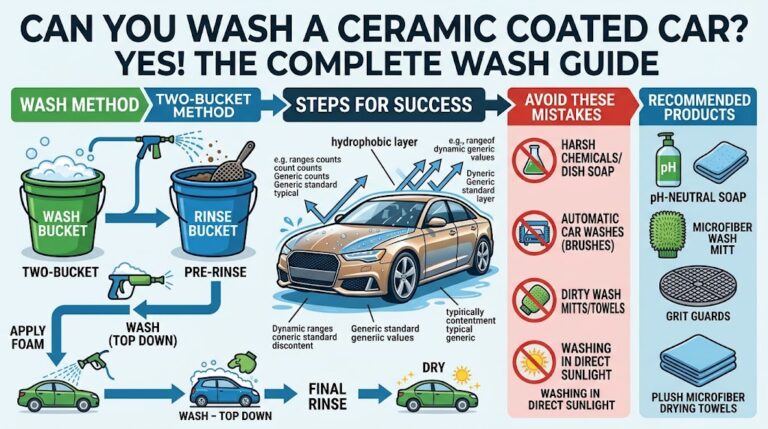
Maintaining any new SUV’s appearance is a meaningful part of long-term ownership satisfaction. Owners of the 2026 Honda CR-V who want to preserve their vehicle’s paint against UV damage, road debris, and environmental contaminants can explore ceramic coating and paint protection film services at Red’s Detail Co., an Atlanta-based auto detail center with extensive experience protecting SUVs and crossovers. Their Paint Protection Film vs. Ceramic Coating guide offers a useful comparison for new SUV owners deciding how to protect their investment from day one.
Who Should Buy the 2026 Honda CR-V?
The 2026 Honda CR-V is built for a specific kind of buyer: one who values long-term practicality over short-term novelty, who will use the cargo space routinely, who has passengers in the rear seats regularly, and who wants confidence that the vehicle will still be performing reliably in ten years.
Families with rear-seat passengers will find no better compact SUV for day-to-day comfort. The class-leading rear legroom is not a marketing claim — it is a difference passengers feel on every long trip.
High-mileage daily commuters should take a hard look at the Hybrid Sport or Sport-L. The 37 combined mpg EPA rating translates into meaningful annual fuel savings for drivers covering above-average miles, and Honda’s hybrid system has a proven track record of low long-term maintenance costs.
Buyers in winter-weather climates or light off-road situations now have a purpose-built option in the TrailSport Hybrid. The enhanced rear-torque AWD system, all-terrain tires, and hill-descent control make it the most capable CR-V Honda has ever offered below the $42,000 mark.
Value-focused buyers will appreciate that the base LX, at $32,370, includes a 9-inch touchscreen, wireless phone integration, a wireless charger, and the complete Honda Sensing safety suite as standard — a level of standard equipment that several rivals still charge extra for.
Honest Pros and Cons of the 2026 Honda CR-V
Compelling Strengths:
The 2026 Honda CR-V leads the compact SUV segment in rear legroom and total cargo volume. Honda Sensing being standard across every trim — including the base model — removes a frustrating tiering practice still found among rivals. The hybrid powertrain delivers 37 mpg combined with full AWD standard, strong performance, and a smooth, linear driving experience that makes urban commuting genuinely pleasant. Physical climate controls, a clean dashboard layout, and intuitive cabin ergonomics distinguish the CR-V from competitors who have buried everyday functions inside touchscreen submenus. Honda’s long-term reliability record and strong resale value reduce total cost of ownership over a multi-year ownership period.
Genuine Limitations:
The absence of a PHEV option in the United States is the CR-V’s most significant competitive gap in 2026. Buyers who want daily electric-only driving range cannot get it from any CR-V trim. The base LX trim is the only grade that omits blind-spot warning, which feels like a meaningful gap at a time when rivals include it at comparable or lower price points. The CR-V’s styling, particularly in gas-only trims, is workmanlike rather than distinctive. Buyers who prioritize curb appeal or a more premium interior aesthetic may find the Mazda CX-5 or even the updated Hyundai Tucson more satisfying aesthetically at a similar price.
Frequently Asked Questions About the 2026 Honda CR-V
Does the 2026 Honda CR-V have wireless Apple CarPlay?
Yes. For 2026, wireless Apple CarPlay and wireless Android Auto are standard on all CR-V trim levels, including the base LX. A wireless Qi charging pad is also now standard across the entire lineup.
What is the starting price of the 2026 Honda CR-V?
The 2026 Honda CR-V starts at $32,370 for the LX FWD trim. The range-topping Sport Touring Hybrid has an MSRP of $44,000. Kelley Blue Book Fair Purchase Pricing suggests many buyers are achieving $370 to $850 below MSRP depending on trim and market conditions.
Is the 2026 Honda CR-V Hybrid always AWD?
Yes. All 2026 CR-V Hybrid models — Sport, Sport-L, TrailSport, and Sport Touring — include Honda’s Real Time AWD as standard with no FWD option available.
Which CR-V trim offers the best value?
For gas-engine buyers, the EX-L at $36,100 FWD or $37,500 AWD delivers the strongest combination of premium materials, full technology, and safety features. For efficiency-focused buyers, the Hybrid Sport-L at $41,675 represents the hybrid lineup’s best balance of features and price.
Does the 2026 Honda CR-V offer a plug-in hybrid (PHEV) in the US?
No. The 2026 CR-V does not offer a PHEV variant for the United States market. Buyers seeking plug-in electric range in a compact SUV should evaluate the Toyota RAV4 Prime or the Hyundai Tucson PHEV as alternatives.
What is the towing capacity of the 2026 Honda CR-V?
The 2026 Honda CR-V is rated to tow up to 1,500 lbs when properly equipped with the gas engine, and up to 1,500 lbs with the hybrid powertrain. This is suitable for light utility trailers and small watercraft but is below what heavier-duty rivals like the RAV4 AWD can manage.
What is new for the 2026 Honda CR-V?
The three most significant updates for 2026 are: a larger 9-inch touchscreen now standard across all trims (replacing smaller screens on entry grades), standard wireless Apple CarPlay, Android Auto, and wireless charging on every model, and the debut of the TrailSport Hybrid — a new off-road-oriented trim with all-terrain tires and an upgraded AWD system capable of distributing up to 50 percent of drive force to the rear axle.
Final Verdict: Still the Best Overall Family Compact SUV
The 2026 Honda CR-V does not need to reinvent itself to stay relevant — it needs to keep doing what it does better than almost anyone else. In 2026, it does exactly that. The addition of standard wireless technology across every trim removes one of the few legitimate complaints directed at recent CR-V generations. The TrailSport Hybrid addresses a capability gap that outdoor-focused buyers had. The hybrid powertrain remains one of the smoothest, most fuel-efficient options in the compact SUV class.
What the 2026 Honda CR-V cannot offer is plug-in electric range or the kind of headline-grabbing performance story that rivals like the RAV4 GR Sport now provide. But for the vast majority of compact SUV buyers — families seeking maximum interior space, long-term reliability, everyday fuel efficiency, and standard safety technology at a reasonable price — the 2026 Honda CR-V is still the most complete answer in the segment.
It remains, without serious argument, the benchmark family compact SUV.
For owners who want to protect the paint and finish of their new 2026 Honda CR-V for the long term, Red’s Detail Co. in Atlanta offers professional-grade ceramic coatings, paint protection film, and paint correction services. Their ceramic coating guide explains how these treatments bond to factory paint to defend against UV rays, environmental contaminants, and everyday wear — a smart investment for any new compact SUV owner.
Related Content:
- 2026 Honda CR-V vs. 2026 Toyota RAV4: Which Compact SUV Wins?
- Honda CR-V Hybrid vs. Toyota RAV4 Hybrid: Fuel Economy Deep Dive
- Best Compact SUVs for Families in 2026: Top 5 Ranked
- How to Protect Your New SUV’s Paint: Ceramic Coating vs. PPF Explained
All pricing figures are MSRP as published by Honda and verified against current dealer and third-party listings. Destination charges of $1,395 are included unless otherwise noted. Fuel economy figures are EPA estimates; real-world results will vary by driving conditions and habits. Final transaction prices will vary by market, dealer, and available incentives.