
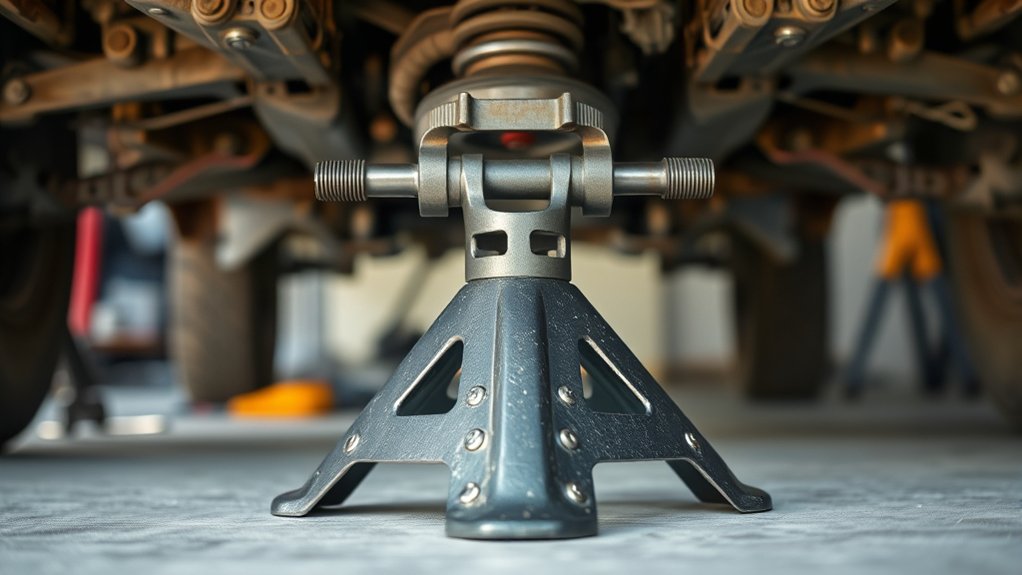
How Does a Jack Stand Work?
Choosing the right jack stand can feel overwhelming, especially when you want reliable support for your vehicle without second-guessing its safety. You’re not alone—many DIY mechanics struggle to compare weight ratings, locking systems, and base stability.
A jack stand supports your vehicle after you raise it with a floor jack. You position its height-adjustable column beneath an approved lift point, then engage the ratchet pawl, locking pin, screw, or combination mechanism.
The wide base distributes the load while the saddle contacts the vehicle securely. Use matching, properly rated stands on firm, level ground, and lower the vehicle onto them carefully.
Always check stability before working underneath. The sections ahead explain how jack stands work and how to choose and set them up safely.
Key Takeaways
- A floor jack lifts the vehicle, while jack stands safely support its weight at approved lift points.
- The stand’s wide base distributes the load and improves stability on firm, level ground.
- A height-adjustable column positions a rated saddle beneath the vehicle’s reinforced support point.
- A ratchet pawl, locking pin, screw, or combination secures the column before carrying the load.
- Matching, properly rated stands must be inspected, evenly positioned, and stability-tested before anyone works underneath.
What Is a Jack Stand?
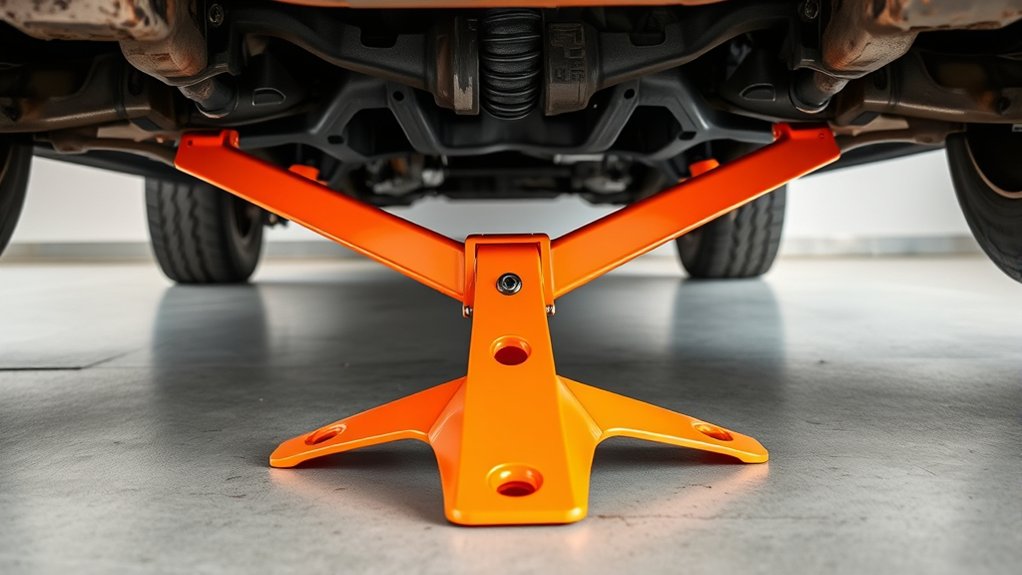
A jack stand is a sturdy support tool that holds a vehicle off the ground after you’ve raised it with a jack. You place it beneath an approved support point, then lower the vehicle onto its saddle. Unlike a jack, it isn’t designed for lifting; it provides a stable, stationary foundation while you work.
Most jack stands feature a wide base, a notched or pin-adjustable column, and a load-rated saddle. You’ll find models made from welded steel or cast components, with capacities suited to different vehicle weights.
Jack stands combine wide bases, adjustable columns, and load-rated saddles, with construction and capacities designed for various vehicles.
Choose a pair or set that exceeds your vehicle’s supported weight, and match the design to the manufacturer’s lifting guidance. A brief History overview shows how basic mechanical supports evolved into standardized automotive equipment.
Today, Industry standards influence capacity labels, construction quality, and safety testing. Before use, inspect each stand for cracks, bent parts, damaged welds, or missing hardware.
Never rely on a hydraulic jack alone when you’re underneath a vehicle.
How Does a Jack Stand Work?
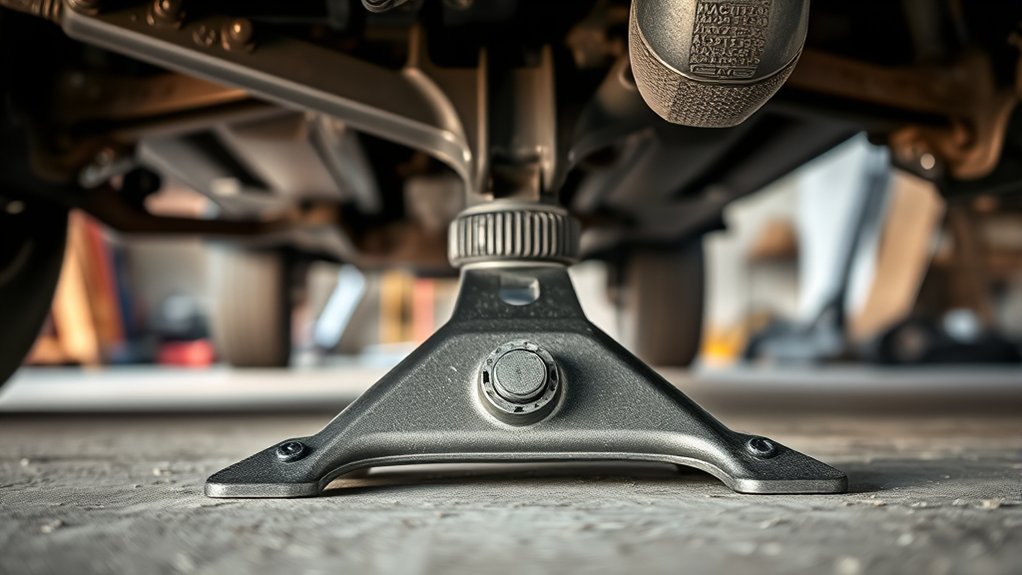
You’ll see how the base, saddle, and adjustable post work together to support your vehicle. After lifting the vehicle with a jack, place the stand beneath a strong support point. The safety-locking mechanism secures the chosen height and helps prevent the stand from lowering suddenly.
Jack Stand Components
When you use a jack stand, several components work together to support your vehicle securely. The base spreads weight across the ground, while the upright column carries force.
A saddle cradles the vehicle’s approved contact point, and a height-adjustment mechanism sets the stand’s position. A locking pin or ratchet prevents unwanted movement.
Innovative design improves stability, access, and ease of inspection, while material durability helps the stand resist stress, corrosion, and wear. Check each part for damage before use.
| Component | Main role | What you should check |
|---|---|---|
| Base | Distributes load | Cracks or bending |
| Column | Carries force | Rust or distortion |
| Saddle | Contacts vehicle | Secure, undamaged surface |
Some models add a secondary lock for extra security. Read the manufacturer’s markings so you understand capacity, compatible contact areas, and replacement requirements.
Never modify, weld, or substitute components, because small changes can compromise the stand’s designed strength.
Lifting And Supporting
Once you’ve inspected the components, position the jack stand on firm, level ground beneath the vehicle’s approved support point. Raise your vehicle with a floor jack, then slide the stand into place at the manufacturer-designated lift area.
Lower the vehicle slowly until its weight rests squarely on the stand. Use matching stands on both sides when the job requires stable support, such as a Tire rotation or Brake inspection.
- Choose a height that keeps the vehicle level.
- Center the support point over the stand’s saddle.
- Keep the stand’s base fully planted.
- Leave room to work without overreaching.
Check that the vehicle sits steadily before beginning your task. Keep the floor jack positioned nearby as an auxiliary support, but don’t rely on it alone.
Lift or lower only as needed to create working clearance, and avoid placing any part of your body underneath during adjustments.
Safety Locking Mechanisms
A jack stand’s safety locking mechanism prevents the support column from slipping after you set the height. Most stands use a ratchet bar with teeth and a spring-loaded pawl. As you raise the column, the pawl clicks over each tooth. When you stop, it engages a tooth and carries the load.
Some models use a pin that passes through aligned holes, while others combine both systems for extra security. Before placing your vehicle on the stands, inspect the pawl, pin, and welds for damage.
Keep the mechanism clean, but don’t coat it with engine oil, which can attract grit or prevent reliable engagement. Set the parking brake, chock the wheels, and verify tire pressure only after you’ve secured the vehicle.
Never rely on the jack alone, and never exceed the stand’s rated capacity.
What Parts Make Up a Jack Stand?
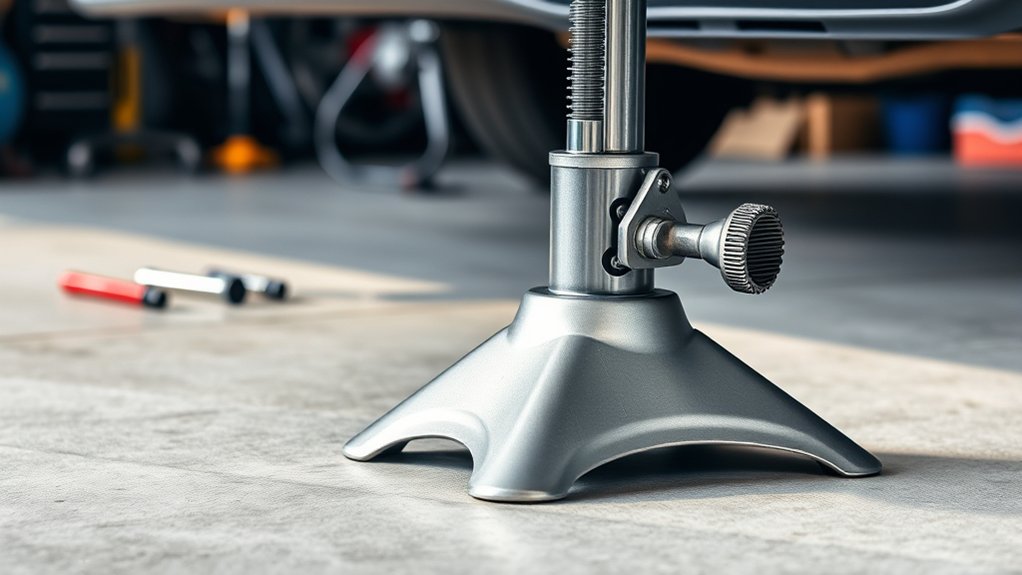
A jack stand consists of a sturdy base, a height-adjustable support column, a locking mechanism, and a saddle that cradles your vehicle’s lifting point. Together, these parts distribute weight and keep your raised vehicle supported while you work.
- Base: You get a wide, stable platform that resists tipping on a firm surface.
- Support column: This vertical section bears the load and lets you set the stand to a suitable height.
- Locking mechanism: A pawl-and-tooth system or pin holds the column at a selected position.
- Saddle: This notched top contacts a vehicle’s approved support point and helps prevent sliding.
Manufacturers may add reinforcing ribs, handles, or protective coatings. A stand’s creative design often balances strength, portability, and manufacturing cost.
Its historical evolution moved from simple fixed supports to adjustable, rated equipment suited to modern vehicles. Check each component for cracks, bending, corrosion, or missing hardware before use.
Don’t substitute loose blocks or improvised supports for properly rated stands.
How Does a Jack Stand Lock in Place?
Jack stands lock in place using a ratchet, pin, or screw mechanism. Each design holds the support arm securely at your chosen height. Make sure the mechanism is fully engaged before placing your vehicle on the stand.
Locking Mechanism Types
Jack stands lock in place through a ratcheting pawl, locking pin, or screw mechanism, depending on the design. Each type holds the adjustable column at a selected height, but you should understand its operation before placing a load on the stand.
- Ratcheting pawl: Teeth engage automatically as you raise the column, while a handle releases it.
- Locking pin: You insert a steel pin through aligned holes to prevent movement.
- Screw mechanism: You turn a threaded post to set height and create a firm mechanical lock.
- Hybrid designs: Some stands combine a ratchet with a secondary pin for added security.
For Industrial safety, inspect the lock for wear, cracks, or deformation. During Maintenance procedures, verify full engagement and follow the manufacturer’s instructions.
Never rely on friction alone, and don’t modify any locking component.
Securing the Support Arm
Once the support arm reaches the desired height, its locking mechanism must engage fully before you place any load on the stand. Set the arm’s teeth or holes into the stand’s locking pawl, pin, or ratchet, depending on the design.
Then lower the vehicle gently until its weight rests on the stand, not the jack. Confirm that the arm cannot slide, rock, or drop when you apply light pressure by hand.
Keep the stand on firm, level ground, and position it beneath an approved support point. Never rely on friction alone or improvise with blocks, bricks, or Vintage tools.
For DIY safety, use matching stands rated for the vehicle’s weight, check for damage, and keep your hands clear while adjusting. If the lock doesn’t seat completely, lower the vehicle and reset it.
How Do Jack Stands Hold Up a Vehicle?
When you raise a vehicle with a floor jack, jack stands support its weight through a sturdy saddle that rests against a designated lift point on the frame or unibody. The stand transfers the load through its welded frame into a broad base, while a locking mechanism prevents the support arm from dropping.
Once you lower the jack gently, the stand carries the vehicle’s weight without relying on hydraulic pressure.
That stable support lets you work confidently on routine jobs, including:
- Engine diagnostics beneath the vehicle
- Tire rotation and brake inspections
- Exhaust-system checks
- Suspension-component service
Your stands must have enough capacity for your vehicle, and you should use them in pairs when required by the service procedure.
Inspect each stand for cracks, bent parts, or damaged teeth before use. Keep the load centered on the saddle, and never treat a jack stand as a lifting tool.
A floor jack raises the vehicle; the stand holds it. With both tools on firm, level ground, you gain reliable support while working.
Where Should You Place Jack Stands?
Proper placement keeps the vehicle stable on the stands. Consult your owner’s manual to identify the manufacturer-designated support points, usually reinforced sections of the frame, unibody pinch welds, or axles.
Place each stand directly beneath an approved point, keeping it level on firm, flat ground. Never support a vehicle beneath thin floor panels, suspension components not rated for support, plastic parts, or the oil pan.
You’ll need enough clearance to access the area safely without positioning a stand where it could interfere with steering or suspension movement.
Choose locations that support the vehicle’s weight evenly, especially when you’re lifting one end or the entire vehicle. For tasks such as an engine oil change, use the specified front support points rather than improvising.
During a tire rotation, support the vehicle only at approved locations and maintain stable contact. If you can’t identify safe points, stop and check the manual or ask a qualified mechanic before proceeding.
How Do You Set Up Jack Stands?
To set up jack stands, start by parking your vehicle on a stable, level surface that can support its weight. Place the stands at the manufacturer-recommended support points, then slowly lower the vehicle onto them.
Once the vehicle is resting on the stands, make sure each one is firmly positioned and stable. Give the vehicle a gentle shake to confirm it won’t move before working underneath it.
Choose a Stable Surface
Choose a hard, level surface such as a concrete garage floor before setting up jack stands. A stable foundation keeps the stands from sinking, rocking, or tipping while you work.
Avoid soft soil, gravel, grass, slopes, and cracked pavement, which can shift under a vehicle’s weight. Sweep away oil, water, snow, and loose debris so each stand’s base stays fully supported.
Check these surface conditions first:
- Concrete feels solid and dry.
- The floor remains level in every direction.
- No cracks, potholes, or weak patches cross your work area.
- Adequate lighting helps you spot hazards.
Don’t rely on plywood over soft ground as a permanent solution; it can bend or sink. If you work in a rented facility, review its safety rules and warranty coverage requirements.
Good tool maintenance includes cleaning stand feet and inspecting them for damage before use, but surface stability comes first.
Position the Jack Stands
Position the jack stands at the vehicle manufacturer’s approved support points, keeping them on the same solid, level surface. Consult your owner’s manual to identify each point and confirm the stand’s saddle fits securely against the vehicle’s reinforced area.
Set both stands at equal height, aligned across the axle or frame section you’re supporting. Keep their bases fully open and flat, with no rocks, tools, mats, or other debris underneath.
Never place a stand beneath suspension components, fuel tanks, plastic panels, or thin body metal unless the manufacturer specifically permits it.
Weather conditions matter, too. Avoid positioning stands on wet, icy, muddy, or sloped ground.
As maintenance tips, inspect each stand for cracks, bent parts, rust, and readable load ratings before positioning it. Follow the manufacturer’s instructions, and use stands rated for your vehicle.
Lower and Check Stability
With both stands set at the approved points, lower the jack slowly until the vehicle’s weight rests fully on the saddles. Keep your hands and feet clear, and don’t rely on the jack once the stands carry the load.
Release hydraulic pressure gradually, watching each stand for movement or tilting.
- Confirm both saddles remain centered on their approved lifting points.
- Check weight distribution by ensuring the vehicle sits evenly.
- Push the vehicle gently at a solid, safe area to test stability.
- Inspect the stands, base, and floor for shifting or damage.
If anything moves, stop immediately. Raise the vehicle, reposition the stands, and lower it again.
Never work underneath until the stands sit squarely on firm, level ground and the vehicle feels stable. Keep the jack nearby as a backup support, but never use it alone.
Recheck stability before beginning repairs.
Which Automotive Jack Stand Types Are Available?
Automotive jack stands come in several types, each designed for different vehicles, lifting needs, and workspace conditions. Fixed-height stands offer a simple, sturdy option for routine repairs when you work at one consistent elevation.
Jack stands vary by design, helping support different vehicles, repair tasks, lifting heights, and workspace conditions.
Adjustable stands use a removable pin, ratchet bar, or screw mechanism, allowing you to change their height for various vehicles and tasks.
Tripod stands provide a wide footprint and suit lighter-duty work, while compact stands fit easily beneath smaller cars. Heavy-duty stands support trucks, SUVs, and commercial vehicles with stronger frames and higher capacities.
Pin-type models lock height with a steel pin, and ratchet-style stands let you raise the support quickly through several positions.
You might use stands during brake service, suspension repairs, Tire rotation, or underbody inspections. They can also hold your vehicle securely while you access components for Engine cooling system work.
Each type serves a different purpose, so match the stand’s design to your vehicle and planned repair.
How Do You Choose a Safe Jack Stand?
How do you choose a safe jack stand? Start by matching its rated capacity to your vehicle’s weight, then select a pair with a comfortable safety margin. Check that the stands meet recognized safety standards and feature sturdy steel construction, broad feet, and a locking mechanism that won’t slip.
- Choose a height range that supports your vehicle levelly on firm ground.
- Confirm the saddle fits your vehicle’s approved support points.
- Prefer ratchet-style or pin-lock designs with clearly visible settings.
- Inspect welds, bases, and adjustment teeth before every use.
Consider your typical projects, too. A low-profile stand may suit cars, while taller stands can support trucks. Choose stands that make routine work, such as Battery maintenance or Tire rotation, practical without forcing awkward positioning.
Buy matched stands from a reputable manufacturer, and keep the product’s capacity and height specifications accessible. When the stand’s design, rating, and fit align with your vehicle, you’ll create a stable foundation for safe repairs and maintenance.
What Jack Stand Mistakes Should You Avoid?
Even well-rated jack stands can fail when they’re used incorrectly. Don’t place them on soft, sloped, or uneven ground; choose solid, level pavement instead.
Engage the parking brake, shift into Park or first gear, and chock the wheels that remain on the ground. Never rely on a hydraulic jack alone, and don’t exceed either stand’s rated capacity.
Before lifting, check your vehicle’s owner’s manual for approved support points. Set each stand securely, then lower the vehicle slowly until its weight rests on the saddles.
Give the car a firm shake before working underneath, and keep people clear while positioning it.
| Mistake | Safer choice |
|---|---|
| Supporting suspension parts | Use specified lift points |
| Skipping a stability check | Test the vehicle gently |
During a Tire rotation or Brake inspection, use matching stands at equal heights. Never stack blocks, substitute improvised supports, or crawl underneath if anything shifts.
Inspect stands for bent legs, damaged welds, or missing pins, and replace questionable equipment immediately.
Frequently Asked Questions
How Much Do Jack Stands Typically Cost?
You’ll typically pay $25–$60 for a basic pair of jack stands, while heavy-duty models often cost $70–$150 or more. Pricing depends on weight capacity, height range, construction, and brand.
For occasional maintenance, choose an affordable pair rated for your vehicle’s weight. Budget considerations shouldn’t outweigh safety, so avoid unbranded stands with questionable locks or welds.
Buying a four-pack may save money if you service vehicles frequently or need extra stability.
Can Jack Stands Be Used on Trucks and SUVS?
Yes, you can use jack stands on trucks and SUVs, but you must choose stands rated above your vehicle’s weight. Why risk a dangerous collapse with undersized equipment?
Check your owner’s manual for approved support points, then place stands on solid, level ground. Proper weight distribution keeps the load balanced, while stability improvement comes from using pairs or more stands as directed.
Never rely on a hydraulic jack alone, and inspect stands before every use.
How Often Should Jack Stands Be Inspected or Replaced?
You should inspect your jack stands before every use, checking for cracks, bent parts, rust, damaged welds, worn pawls, and readable capacity labels.
Follow a thorough inspection schedule: monthly if you use them regularly, and after any overload, drop, or impact.
Replace stands immediately after damage, severe corrosion, or a failed locking mechanism. Even unused stands need replacement when they exceed the manufacturer’s service life or no longer operate securely.
Can Jack Stands Damage a Vehicle’s Frame or Underbody?
Yes, jack stands can damage your vehicle’s frame or underbody if you place them incorrectly, overload them, or use damaged equipment. Think of your car’s structure as an eggshell: strong when supported properly, but vulnerable when pressure concentrates in one spot.
Protect vehicle stability by consulting your owner’s manual and using approved support points. For frame protection, place stands on solid, reinforced areas, keep the load level, and never support delicate panels, exhaust components, or suspension parts.
Are Jack Stands Safe for Long-Term Vehicle Storage?
Yes, you can use jack stands for long-term vehicle storage if you set them correctly and inspect them regularly. Choose stands rated above your vehicle’s weight, position them at approved support points, and place them on a level, solid surface.
Check vehicle stability periodically, especially after temperature changes or floor movement. Protect against rust, and verify material durability before use. Don’t rely on a jack alone; use wheel chocks and stable supports.
Conclusion
When you lift your vehicle, the real protection begins after the jack stops. A jack stand’s frame, saddle, and locking mechanism must work together to support the load without shifting.
Choose stands rated for your vehicle, place them on solid ground, and check every lock before you crawl underneath. Never rely on a jack alone—the smallest mistake can have serious consequences.
Take your time and follow each setup step carefully. Understanding how a jack stand works helps keep you safe and prevents avoidable accidents.