How Does an Automotive Water Pump Work?
Overheating, coolant leaks, and unexpected repair bills can make choosing the right automotive water pump feel stressful. You’re not alone—many vehicle owners struggle to know which pump offers reliable performance and long-term protection.
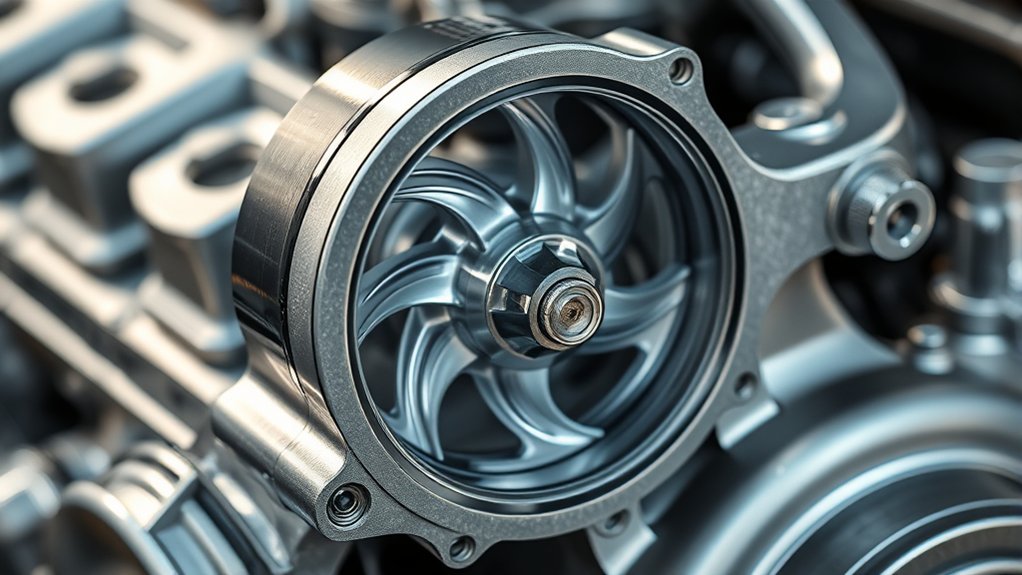
An automotive water pump circulates coolant through your engine and radiator to control temperature. Its impeller spins inside the housing, pushing coolant through passages around the cylinders and cylinder head, where it absorbs combustion heat.
The thermostat directs hot coolant to the radiator, which releases heat through its fins and airflow. Cooled liquid then returns to the pump for another cycle.
If you want to understand pump parts, failure signs, and replacement, the sections ahead explain them further.
Key Takeaways
- The water pump circulates coolant through the engine, absorbing heat from the cylinders and cylinder head.
- A belt, chain, or electric motor spins the impeller, creating pressure that moves coolant through engine passages.
- The thermostat directs coolant to the radiator when the engine reaches operating temperature.
- The radiator transfers heat from the coolant to outside air before cooled coolant returns to the pump.
- Proper circulation prevents overheating. Leaks, noise, rising temperatures, or poor cabin heat may indicate pump failure.
What Does an Automotive Water Pump Do?
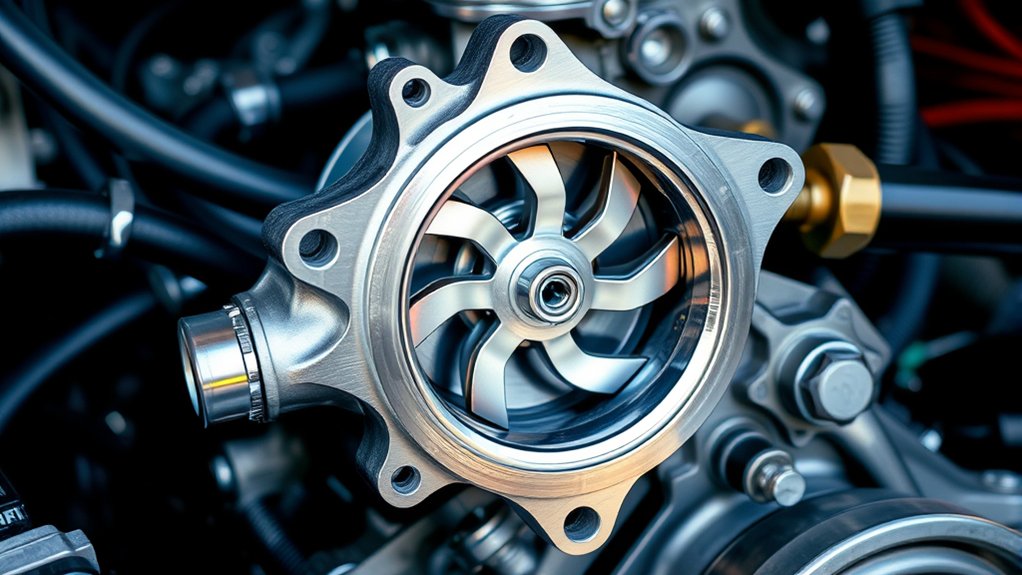
An automotive water pump circulates coolant through the engine and radiator to control operating temperature. By maintaining steady heat control, it helps you prevent overheating, protect internal components, and support reliable performance.
A reliable water pump keeps coolant moving, prevents overheating, and supports consistent engine performance.
The pump also helps your engine reach and maintain its intended temperature, which promotes efficient combustion and reduces unnecessary stress.
When you include the pump in routine Automotive maintenance, you can catch worn bearings, damaged seals, leaks, or a loose drive belt before they cause serious damage.
Watch for coolant puddles, unusual grinding or whining, temperature increases, and steam from the engine bay. These signs can indicate that the pump no longer works properly.
A functioning pump supports Engine efficiency by helping the engine operate within its designed temperature range. It also protects the cylinder head, gasket, and other costly parts from heat-related failure.
Replacing a failing pump promptly can save you from extensive repairs and keep your vehicle dependable on every trip. Regular inspections and timely service preserve cooling-system reliability.
How Does the Cooling System Circulate Coolant?
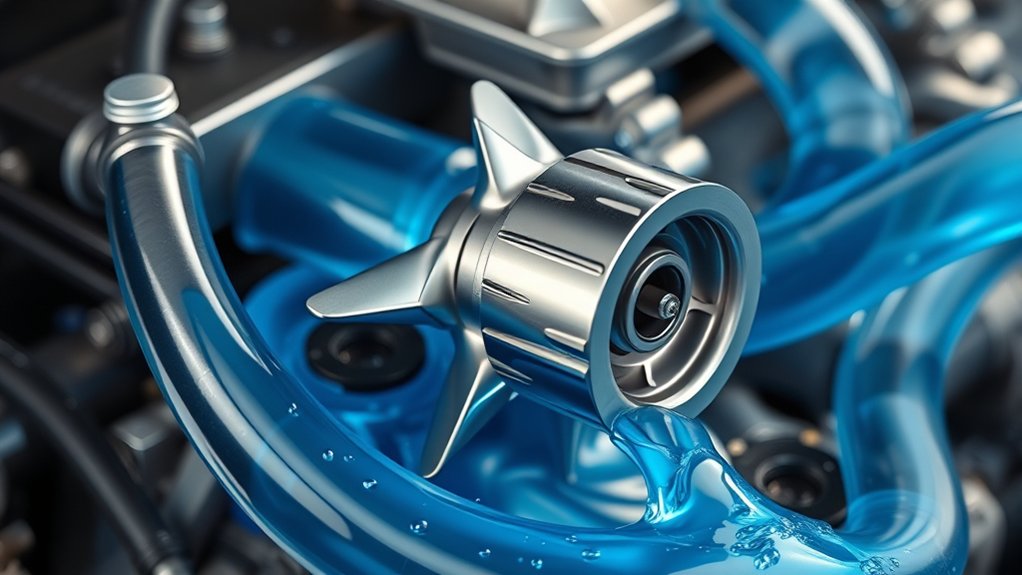
You’ll follow coolant as it moves from the water pump through the engine and into the radiator. The pump keeps the coolant flowing so it can absorb heat from the engine and release that heat through the radiator. This ongoing cycle helps keep the engine at a stable temperature.
Coolant Flow Path
When the engine runs, the water pump pushes coolant through the engine block and cylinder head, where it absorbs heat from internal components. The hot fluid then travels to the radiator through the upper hose.
Air moving across the radiator removes heat, and the cooled coolant returns through the lower hose. Your thermostat manages this route by directing coolant through the radiator after the engine reaches operating temperature.
This coolant flow supports steady system circulation and helps prevent overheating.
| Stage | Location | Purpose |
|---|---|---|
| 1 | Engine block | Absorbs heat |
| 2 | Cylinder head | Cools passages |
| 3 | Upper hose | Carries hot coolant |
| 4 | Radiator | Releases heat |
| 5 | Lower hose | Returns coolant |
The reservoir accommodates expansion and supplies coolant as the system cools. Hoses, passages, and seals keep the circuit closed, allowing coolant to repeat this path continuously.
Water Pump Operation
How does the cooling system circulate coolant? Your engine drives the water pump through a belt, chain, or electric motor. Inside the pump, an impeller spins and creates pressure, moving coolant through passages in the engine and cylinder head.
A sealed bearing supports the rotating shaft, while a mechanical seal keeps the automotive fluid inside the housing. The pump continuously maintains flow whenever the engine requires cooling, and its design matches the engine’s operating demands.
You’ll find hoses and gaskets directing coolant between components without allowing leaks. Although coolant doesn’t provide engine lubrication, proper circulation helps protect lubricated parts from excessive temperatures.
If the pump’s bearing, seal, or impeller fails, circulation weakens or stops. You may then notice overheating, coolant leaks, noise, or a warning light.
Heat Transfer Cycle
As the water pump pushes coolant through the engine, it absorbs heat from the cylinder walls and cylinder head before carrying that heat to the radiator. Once there, the coolant flows through narrow tubes while air passes over the fins.
This heat exchange releases engine heat into the atmosphere, lowering the coolant’s temperature. The cooled fluid then returns through the lower radiator hose and reenters the water pump.
Your thermostat controls this cycle by regulating flow according to engine temperature. When the engine’s cold, it stays closed, allowing faster warm-up.
As temperatures rise, it opens and sends coolant through the radiator. The cooling system repeats this circulation continuously, helping you maintain stable operating temperatures, prevent overheating, and protect gaskets, pistons, and other essential engine components during driving.
What Parts Make Up a Water Pump?
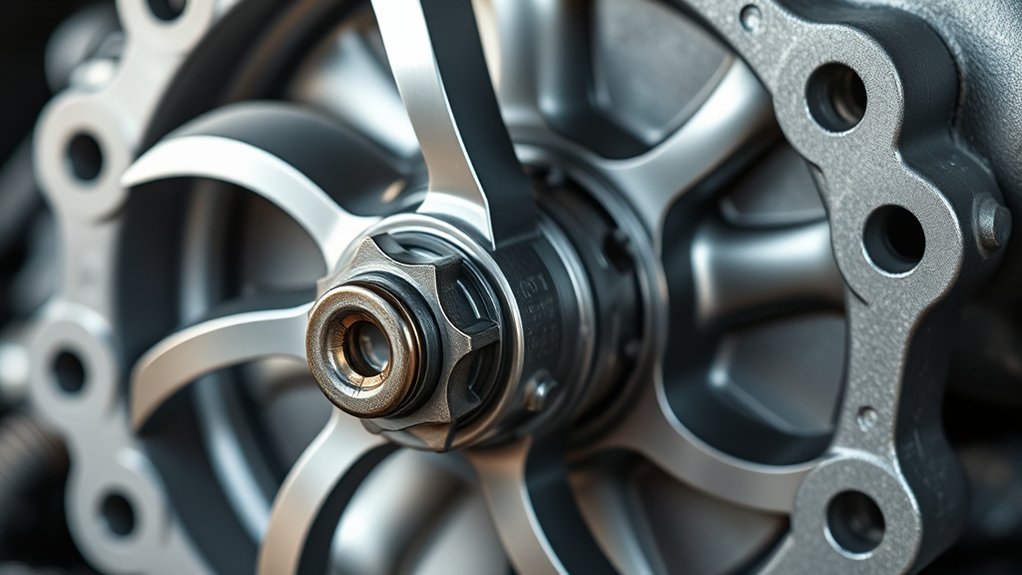
An automotive water pump has three essential parts: the pump housing, impeller assembly, and seals and bearings.
The housing holds the coolant, while the impeller assembly circulates it through the engine. Seals and bearings help the pump run smoothly and prevent leaks.
Pump Housing
The pump housing is the water pump’s protective outer shell, enclosing the impeller and directing coolant between the engine and radiator. Its passages guide coolant efficiently while its mounting surfaces create a secure seal against the engine block.
A thoughtful pump housing design supports proper flow, limits turbulence, and leaves room for dependable gasket placement. You’ll typically find housings made from cast iron, aluminum, or durable composite materials.
Material durability matters because the housing faces heat, pressure, vibration, and constant contact with coolant. Corrosion-resistant construction helps prevent leaks and preserves accurate passage shapes over time.
When you inspect the pump, look for cracks, warping, corrosion, or damaged sealing surfaces. These flaws can reduce circulation or allow coolant to escape, even when the rest of the assembly remains serviceable.
Impeller Assembly
Impeller Assembly
At the center of the water pump, the impeller assembly drives coolant through the engine’s cooling passages. As the pulley turns, it rotates the impeller inside the pump housing.
Curved blades scoop up coolant and push it outward through centrifugal force, creating the flow your engine needs to control operating temperature.
You’ll find several impeller designs, including stamped steel, cast iron, and molded plastic versions. Each shape, blade angle, and blade count affects how efficiently the pump moves coolant.
A well-matched impeller design supports strong pump efficiency without demanding unnecessary power from the engine. The impeller’s hub connects to the pump shaft, while its balanced construction helps maintain smooth rotation.
When you choose a replacement pump, match the impeller design to your vehicle’s engine and cooling-system requirements.
Seals And Bearings
A mechanical seal keeps coolant inside the pump while preventing it from reaching the shaft and bearings. As the impeller spins, this seal maintains a tight barrier against pressure, heat, and vibration.
You’ll typically find a stationary ceramic face, a rotating carbon face, a spring, and a rubber boot working together. If the seal wears, coolant can leak through the weep hole, signaling a problem before bearing damage occurs.
Bearings support the shaft and let it rotate smoothly with minimal friction. Most modern water pumps use permanently sealed bearings, so you shouldn’t add grease during routine service.
However, proper bearing lubrication exists inside the sealed unit, and contamination or coolant intrusion can destroy it. For effective seal maintenance, watch for leaks, grinding noises, wobbling, or overheating.
Replace the pump promptly when these symptoms appear to protect your engine.
What Drives an Automotive Water Pump?
What drives an automotive water pump depends on the engine design: a serpentine belt, timing belt, or electric motor typically powers it. In a belt-driven system, crankshaft rotation turns the pump pulley, so coolant circulation follows engine speed.
As you accelerate, the pump generally spins faster and moves more automotive fluid through the cooling passages, radiator, and heater core. A timing belt may drive the pump inside the engine’s timing assembly, making correct belt tension and replacement intervals especially important.
Some designs use an electric motor controlled by the vehicle’s computer, allowing coolant flow to match temperature demands.
Your pump’s drive arrangement affects maintenance:
- Inspect belt condition and tension regularly.
- Watch for squealing, slipping, or fraying.
- Follow the manufacturer’s timing-belt service schedule.
- Keep coolant at the specified level and mixture.
- Check for leaks near the pulley or housing.
Proper cooling protects engine lubrication by preventing excessive heat that can thin oil and accelerate wear. If the drive fails, circulation stops, temperatures rise, and severe engine damage can follow quickly.
How Do Mechanical and Electric Pumps Differ?
Mechanical water pumps use the engine’s rotation to circulate coolant, while electric pumps use a motor controlled by the vehicle’s computer. You’ll typically find the mechanical design on older or conventional engines.
Its speed follows engine speed, and a worn belt, bearing, or seal can disable it.
An electric pump can run independently, helping modern vehicles manage temperature efficiently during startup, idling, and shutdown. Your computer can adjust its output based on engine load, fuel injection demands, and operating temperature.
| Feature | Mechanical pump | Electric pump |
|---|---|---|
| Power source | Engine rotation | Electric motor |
| Control | Fixed by speed | Computer-managed |
| Common concern | Belt or seal wear | Wiring or motor failure |
You won’t diagnose either pump by checking tire pressure; that system is separate. Instead, watch for overheating warnings, coolant leaks, unusual noises, or temperature changes.
A mechanical pump usually costs less and uses simpler controls, while an electric unit offers greater flexibility but depends on reliable wiring, sensors, and battery power. Your vehicle’s design determines which option you’ll service.
How Does Coolant Travel Through the Engine?
Your water pump pushes coolant through the engine’s passages, radiator, and hoses in a continuous loop. As the coolant flows around hot components, it absorbs and carries away engine heat. This steady circulation helps keep temperatures under control. Next, you’ll see how the cooling system manages that heat.
Coolant Flow Path
Coolant travels through the engine in a continuous loop, starting at the water pump and moving through passages around the cylinders and cylinder head to absorb heat. From there, it flows toward the thermostat, which directs coolant through the radiator once operating temperature rises.
After the radiator releases heat, the cooler liquid returns to the pump through the lower hose. When the thermostat stays closed, coolant circulates through an internal bypass, helping the engine warm evenly.
Your vehicle’s coolant flow dynamics depend on clear passages, correct hose routing, and steady pressure. Pump efficiency keeps this circulation consistent as engine speed changes.
- Pump pushes coolant through the block.
- Passages guide flow around cylinders.
- The head receives circulating coolant.
- Thermostat controls the route.
- Radiator returns cooled coolant.
A properly sealed system prevents air pockets from interrupting the loop.
Engine Heat Transfer
As the pump keeps coolant moving, heat transfers from the engine’s metal surfaces into the liquid. Coolant enters passages around the cylinders and cylinder head, where combustion creates intense temperatures.
As it flows, it absorbs heat from these areas and carries that energy toward the thermostat. When the coolant remains cool enough, the thermostat restricts flow to help the engine reach operating temperature.
Once the coolant gets hot, the thermostat opens, sending it through the radiator for cooling before it returns to the pump. This circulation protects engine components from overheating and helps maintain efficient combustion.
Engine oil also absorbs heat and lubricates moving parts, while Transmission fluid may use a coolant-connected heat exchanger. Together, these fluids manage heat, but coolant provides the primary path for removing engine heat.
How Does the Radiator Remove Engine Heat?
The radiator removes engine heat by transferring it from hot coolant to the surrounding air. Your water pump sends heated coolant through narrow tubes inside the radiator.
Thin metal fins surround those tubes, increasing surface area so airflow can carry heat away. As your vehicle moves, outside air passes through the fins; the cooling fan adds airflow when speed is low.
Cooled liquid then returns to the engine, where it absorbs more heat.
Radiator efficiency depends on clean fins, unobstructed airflow, and proper coolant circulation. Coolant properties also matter because the fluid must resist boiling, freezing, and corrosion while carrying heat effectively.
You can picture the process like this:
- Hot coolant enters the radiator.
- Tubes spread heat across metal fins.
- Air removes heat from the fins.
- The fan supports airflow at low speeds.
- Cooler coolant returns through the outlet.
This continuous exchange helps you maintain stable engine temperature during changing driving conditions.
What Causes Automotive Water Pump Failure?
Water pump failure usually starts with worn bearings, a damaged seal, corrosion, or a broken impeller. Bearings can wear from age, poor lubrication, excessive belt tension, or misalignment.
If you overtighten the drive belt, you’ll place unnecessary stress on the pump shaft and bearing. A hardened or contaminated coolant mixture can damage the mechanical seal.
Neglected coolant changes allow rust and deposits to attack internal components. Corrosion may also develop when incompatible coolants mix or air enters the cooling system.
An impeller can crack, loosen, or erode, reducing circulation through the engine and radiator. Electrical water pumps face additional risks, including motor wear, wiring faults, and control-module problems.
Regular Automotive maintenance helps prevent these causes: use the specified coolant, maintain correct belt tension, and follow service intervals.
During Engine diagnostics, inspect the pump, belt, coolant condition, and mounting area to identify underlying damage before installing a replacement. Correct the cause, or the new pump may fail prematurely.
What Are the Warning Signs of Failure?
Recognizing the warning signs early can help you address the underlying problem before your engine overheats. Although Battery maintenance and correct Tire pressure support reliable driving, neither prevents water-pump symptoms.
Pay attention to changes in temperature, sounds, and coolant levels, and don’t ignore dashboard warnings.
- Rising temperature gauge: Your engine may run hotter than normal or overheat during traffic.
- Coolant leaks: You might see green, orange, pink, or blue fluid beneath the vehicle’s front area.
- Grinding or whining: A failing pump bearing can create unusual noise from the engine bay.
- Steam or a sweet smell: Escaping coolant may produce steam or a noticeable odor around the hood.
- Coolant warning or poor cabin heat: Reduced circulation can trigger alerts or leave your heater blowing cold air.
If you notice one or more signs, stop driving when it’s safe and let the engine cool. Continuing to operate an overheating vehicle can cause severe damage, so arrange a professional inspection promptly.
Never remove the coolant cap while the engine remains hot.
How Do You Replace a Faulty Water Pump?
Replacing a faulty water pump typically involves draining the coolant, removing components that block access, installing the new pump with a fresh gasket, and refilling and bleeding the cooling system.
Let the engine cool, disconnect the battery, and consult your service manual for torque specifications.
During Automotive maintenance, you’ll usually remove belts, hoses, covers, or fans before unbolting the pump. Clean the mounting surface, install the replacement gasket correctly, and tighten bolts evenly.
Refill with the specified coolant, then run the engine while monitoring temperature and leaks.
| Step | What you’ll do | Key caution |
|---|---|---|
| Diagnose | Confirm pump failure | Use Engine diagnostics |
| Remove | Drain coolant and components | Label connections |
| Install | Fit gasket and pump | Follow torque specs |
Afterward, bleed trapped air according to the manufacturer’s procedure and recheck the coolant level after a test drive.
If overheating continues, stop driving and inspect the thermostat, radiator, and hoses. Dispose of old coolant safely; it’s toxic to people and animals.
Frequently Asked Questions
How Much Does Automotive Water Pump Replacement Typically Cost?
You’ll typically pay $400–$900 for automotive water pump replacement, though luxury vehicles, difficult access, and dealership labor can raise the bill above $1,200. Your estimate usually includes parts, labor, coolant, and system testing.
If the pump shares space with the timing belt, replacing both can cost $800–$1,800. Ask for a written quote and confirm warranty coverage.
Proper coolant circulation and normal pump lifespan can help prevent premature repairs and overheating.
Can a Failing Water Pump Damage Other Engine Components?
Yes, a failing water pump can damage other engine components, and the trouble may begin quietly. As coolant flow weakens, your engine temperature rises, sometimes before you notice a warning.
Continued driving can warp the cylinder head, destroy the head gasket, damage pistons, or seize the engine. Pump failure may also cause belt damage if the bearing locks.
Watch for overheating, coolant leaks, grinding noises, or steam. Stop driving immediately when temperatures climb.
How Often Should an Automotive Water Pump Be Replaced?
You should replace your automotive water pump according to your vehicle manufacturer’s interval, typically every 60,000–100,000 miles, though some pumps last the engine’s lifetime. Check your owner’s manual and consider replacement when you change the timing belt, since labor overlaps.
Watch for leaks, overheating, bearing noise, or poor coolant circulation; these symptoms demand prompt inspection. Proper coolant maintenance improves pump longevity, but it can’t prevent every failure or guarantee a fixed replacement schedule.
Can You Drive Safely With a Noisy Water Pump?
You shouldn’t drive far with water pump noise. Imagine a faint whine becoming a grinding roar beneath your hood. A failing pump can stop circulating coolant, quickly pushing your engine into the red.
Safety concerns include overheating, breakdowns, belt damage, and expensive engine repairs. Pull over if the temperature rises, steam appears, or coolant leaks.
Arrange an inspection promptly, and use a tow truck rather than risking engine damage or roadside danger.
What Warranty Coverage Applies to Automotive Water Pump Repairs?
Warranty coverage depends on your vehicle’s manufacturer, age, mileage, and the failed part’s cause. If the water pump remains under the factory warranty, the manufacturer may cover parts and labor, provided you’ve followed required maintenance.
Extended warranties can include pumps, but deductibles, exclusions, and approved-repair-shop rules may apply. Review your contract’s repair policies, keep service records, and ask the dealer for written confirmation before authorizing work.
Normal wear or neglect often isn’t covered.
Conclusion
You might think an automotive water pump simply pushes coolant around, but its real job is more precise: it keeps heat moving away from your engine before damage begins.
As you’ve seen, the pump, belt or motor, thermostat, radiator, and coolant work as one system. If you notice leaks, overheating, or unusual noises, don’t ignore them.
Investigate promptly, because confirming a failing automotive water pump early can prevent a minor repair from becoming major engine damage.