How Does an Automotive Torque Wrench Work?
Struggling to tighten bolts accurately without overdoing it or leaving them too loose? You’re not alone—many DIYers and automotive enthusiasts find torque specifications confusing. The right automotive torque wrench can make the job easier and help protect your vehicle.
An automotive torque wrench lets you tighten fasteners to a precise torque specification by converting your hand force into measured rotational force. You set the required value, attach the correct socket, and pull smoothly with the wrench positioned squarely.
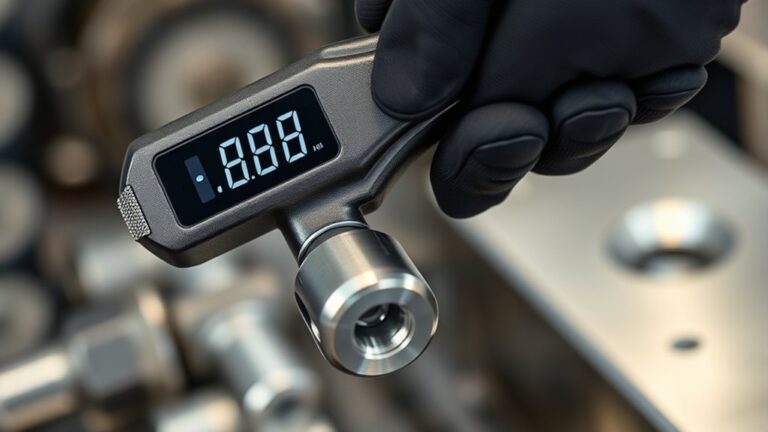
A click wrench releases its internal spring-loaded mechanism at the preset torque, producing a click and slight handle movement that tells you to stop. Digital, beam, and dial models display the applied force differently.
You’ll also learn how to choose, maintain, and check one accurately.
Key Takeaways
- An automotive torque wrench applies a precise rotational force to tighten fasteners to the manufacturer’s specified torque.
- Click-type wrenches use a calibrated spring mechanism that clicks and slightly releases when the preset torque is reached.
- Digital, beam, and dial wrenches indicate torque through screens, scales, or needles instead of a clicking mechanism.
- Set the wrench to the specified value, attach the correct socket, and pull smoothly without jerking or exceeding its range.
- Proper torque prevents stripped threads, component damage, loosening, and uneven clamping, while regular calibration ensures accuracy.
How Does an Automotive Torque Wrench Work?
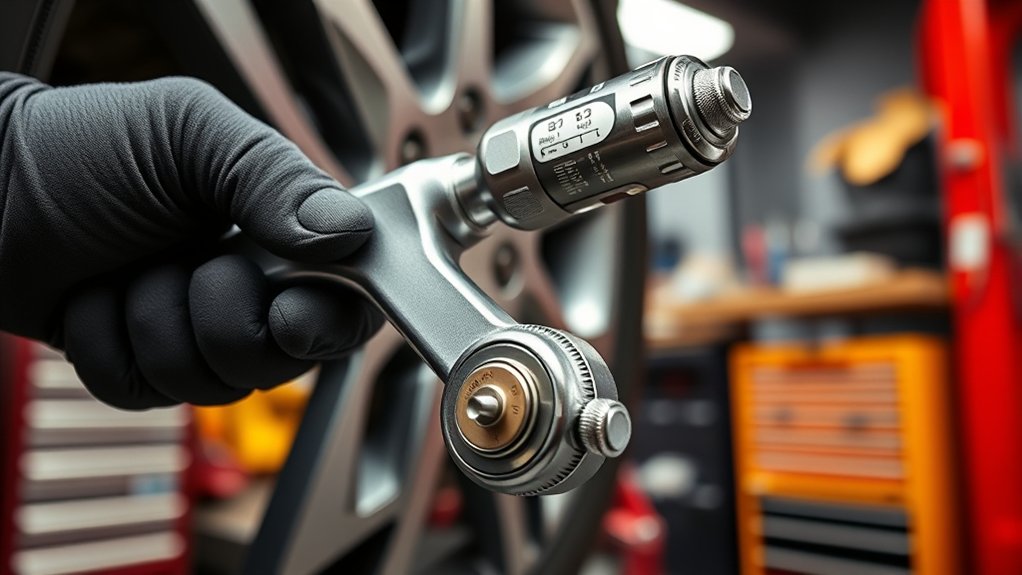
An automotive torque wrench applies a precise amount of rotational force to a fastener, helping you tighten bolts and nuts to the manufacturer’s specifications. Inside, a calibrated spring, beam, or electronic sensor measures the force you apply through the handle.
In a click-style model, you set the desired value by turning the grip. As torque reaches that setting, the wrench releases its internal mechanism and produces a noticeable click. You then stop pulling instead of adding force.
Digital models use sensors and display the measurement on a screen, while beam-style wrenches show force through a pointer moving across a scale.
You attach the correct socket to the drive, position it squarely on the fastener, and pull smoothly at the handle’s grip point. Proper Wrench ergonomics improve control and reduce measurement errors.
Regular Torque calibration keeps the tool’s readings dependable. Store a click wrench at its lowest setting when you’re finished using it.
Why Automotive Torque Specifications Matter
Following automotive torque specifications helps prevent fastener damage and ensures the right clamping force. It protects threads, components, and connections from loosening or being overtightened. Most importantly, it helps keep your vehicle safe by securing critical parts properly.
Preventing Fastener Damage
Using the correct torque specification prevents fastener damage by applying the precise clamping force the joint requires. When you follow the manufacturer’s value, you protect threads, bolt heads, nuts, and mating surfaces from excessive stress.
Overtightening can stretch a bolt, deform threads, crush a gasket, or damage lightweight components. Undertightening can let vibration loosen hardware, causing repeated movement and wear.
Before tightening, inspect threads for dirt, damaged areas, or fastener corrosion. Replace compromised hardware instead of forcing it into place.
You’ll also get more reliable results when you verify torque wrench calibration and use the correct socket. Avoid extensions or adapters that change leverage unless you account for their effect.
Apply torque smoothly, keep the wrench square, and stop immediately when it reaches the specified value.
Ensuring Proper Clamping Force
Proper automotive torque specifications guarantee the joint develops the clamping force needed to hold components securely under load and vibration. When you tighten a fastener to its specified value, you create consistent tension without exceeding the joint’s design limits.
That tension helps prevent loosening, shifting, and uneven pressure between mating surfaces. Always check the manufacturer’s torque value for the exact fastener, material, and application rather than relying on a general chart.
Consider fastener lubrication, too, because oil, anti-seize, or thread coatings change friction and can increase the resulting clamping force at the same wrench setting. Follow the specified condition for dry or lubricated threads.
Regular torque calibration keeps your wrench accurate, while smooth, controlled operation helps you reach the target repeatably. Recheck only when the service instructions require it.
Supporting Vehicle Safety
Correct torque specifications support vehicle safety by keeping critical components securely clamped under braking, steering, suspension, and engine loads. When you use an automotive torque wrench, you reduce the risk of loose fasteners, damaged threads, and uneven pressure.
That control helps wheels, brake components, steering connections, and suspension parts perform as designed, especially during sudden stops or emergency maneuvers.
You should follow the vehicle manufacturer’s torque values rather than rely on feel or guesswork. After servicing a wheel or chassis component, recheck fasteners as directed and watch for unusual noise, vibration, or handling changes.
Proper torque also supports accurate Tire alignment by maintaining secure mounting points. During Engine diagnostics, correctly tightened sensors, brackets, and related hardware prevent avoidable faults.
How Click Torque Wrenches Signal the Set Torque
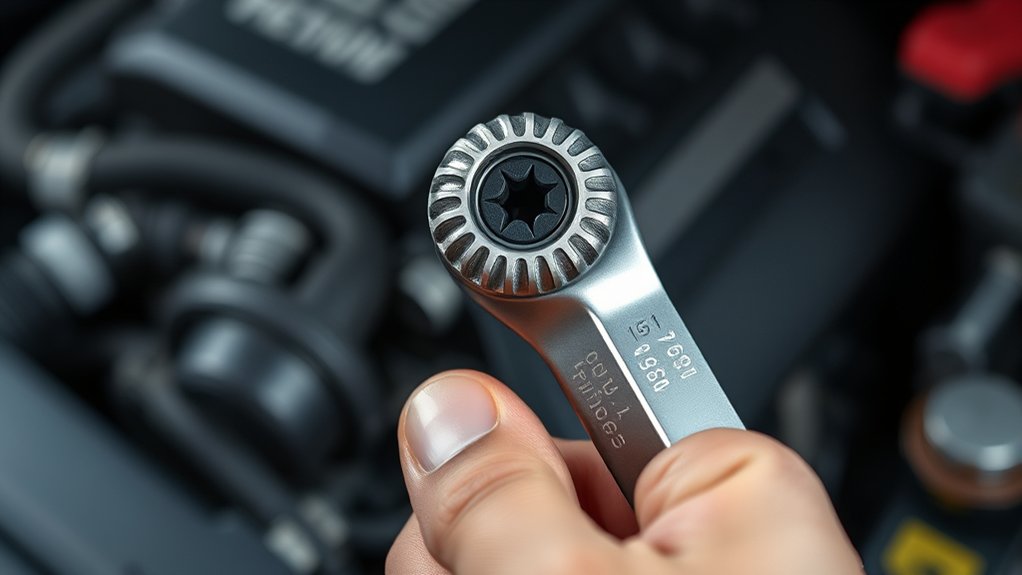
When the applied torque reaches your preset value, a click torque wrench releases its internal spring-loaded mechanism, creating a sharp click and a slight handle movement. This signal tells you to stop turning, preventing you from applying excessive force to the fastener.
Inside the tool, you adjust spring tension by setting the desired torque on the handle scale. As you turn, force transfers through the handle to the calibrated spring.
Once that force matches your setting, the mechanism slips briefly and produces the audible and tactile alert.
You should listen and feel for the click rather than continue tightening. A quiet workspace helps you hear it, while an ergonomic design lets you maintain a steady grip and apply force smoothly.
Proper Torque wrench calibration keeps the click aligned with the indicated value, so inspect calibration periodically and avoid using the wrench as a breaker bar.
After use, return the setting to its recommended minimum to reduce spring stress.
How Torque Wrench Types Differ
Torque wrench types differ mainly in how they display the applied torque, signal the preset value, and handle different working conditions. A click wrench releases its mechanism with a tactile and audible snap when you reach the setting. A beam wrench uses a pointer and scale, so you watch torque increase in real time.
Torque wrench types vary in feedback and operation, from audible clicks to real-time beam readings for precise torque control.
A digital wrench shows a numerical reading and can provide lights, sounds, or vibration for greater feedback. You’ll also find dial wrenches, which display live torque through a needle, and electronic models that record measurements for documentation.
Each design transfers force through its drive, handle, and internal mechanism, affecting accuracy and usability. Proper Calibration procedures keep any type reliable, while regular inspection helps detect wear or damage.
Consider ergonomic design, too. A comfortable grip, readable scale, and balanced body help you apply steady force without unnecessary strain. Storage, maintenance, and correct handling protect the mechanism and preserve consistent performance during automotive repairs.
Which Automotive Torque Wrench Should You Choose?
Choosing an automotive torque wrench depends on the fasteners you’ll service, the required torque range, and how precisely you need to work. For routine wheel, brake, and suspension jobs, a click-type wrench offers practical accuracy and straightforward operation.
Choose a beam wrench if you want a durable, low-cost option and can read its scale while applying force. For frequent professional work, a digital model provides clear readings, programmable alerts, and useful data tracking.
Match the wrench’s torque range to your vehicle’s specifications; avoid choosing one that barely covers your target value. A smaller wrench improves control on low-torque fasteners, while a larger model handles demanding suspension or drivetrain hardware.
Consider drive size, overall length, storage, and grip comfort, especially when you’ll use it for extended periods. Check the manufacturer’s accuracy claims and service support, then verify Torque wrench calibration requirements.
A reputable brand, protective case, and replaceable parts can make your investment last longer.
How to Set an Automotive Torque Wrench
Before setting an automotive torque wrench, check the vehicle’s service manual for the correct torque value and units. Confirm whether specifications use newton-metres, pound-feet, or another measurement, then select the matching scale.
Unlock the handle, rotate it until the primary scale reaches the target, and align the handle’s index line with the exact increment. Lock the adjustment so it won’t move accidentally.
If the wrench uses a digital display, enter the value with its controls and verify the unit setting. Good ergonomic grip design helps you adjust the handle confidently without straining your hand.
| Check | What to confirm | Why it matters |
|---|---|---|
| Units | Nm or lb-ft | Prevents conversion errors |
| Range | Value fits wrench | Maintains accuracy |
| Condition | No damage or slipping | Supports safe use |
Don’t guess a setting or force a range beyond the tool’s limits. Torque wrench calibration also matters: inspect its certification date and have it tested when accuracy is uncertain.
Return an adjustable wrench to its lowest marked setting after use.
How to Tighten Automotive Fasteners Correctly
How should you tighten an automotive fastener? Start by cleaning the mating surfaces and threading the fastener by hand. Turn it until it seats without forcing it, then check the manufacturer’s torque specification for that specific component. Don’t guess or substitute a general value.
Set your torque wrench to the required setting, and select the correct socket. Grip the handle at its marked point, keeping your wrist straight and applying steady pressure. Good Wrench ergonomics helps you maintain control and pull smoothly, rather than jerk the tool.
Tighten the fastener gradually until the wrench signals that you’ve reached the setting. Stop immediately; don’t add extra force after the click or release.
For multiple fasteners, use the specified sequence, usually a crisscross or star pattern, and make several passes with increasing torque. Verify each fastener once, then lower the setting before storing the wrench.
Follow scheduled Torque calibration practices so your readings remain dependable during future repairs.
What Can Make a Torque Wrench Inaccurate?
A torque wrench can become inaccurate through wear, improper storage, contamination, or rough handling. Over time, its spring, mechanism, or electronic sensor may lose consistency.
> Wear, poor storage, contamination, and rough handling can gradually reduce a torque wrench’s accuracy and reliability.
Calibration issues can also develop after repeated use, exposure to extreme temperatures, or an accidental drop. If you ignore these causes, you could create a loose joint or damage an expensive fastener.
Common sources of trouble include:
- Storing a click wrench under tension can weaken its spring.
- Dirt, grease, or rust inside the mechanism can interfere with movement.
- Using an extension or cheater bar improperly can overload the tool.
- User error, such as pulling too quickly or gripping the wrong place, can alter applied force.
You should also avoid using a torque wrench as a breaker bar. Side loading, impacts, and forcing a stuck fastener can damage internal parts.
Electrical problems, low batteries, or moisture may affect digital models. Treat the wrench carefully, follow its storage instructions, and protect it from harsh shop conditions.
How to Check Torque Wrench Accuracy
To check your torque wrench’s accuracy, start by inspecting it for damage, wear, or loose parts. Then, use a torque tester to measure its output and compare the results with the calibration standard.
Inspect Wrench Condition
Before checking accuracy, inspect the torque wrench for worn, damaged, or loose parts that could affect its readings. Clean away grease, dirt, and metal debris, then examine the handle, head, drive, and adjustment mechanism.
Check that the scale remains legible and that the locking collar holds its setting firmly. Don’t use the wrench if you notice cracks, bent components, rust, or unusual movement. These problems can undermine tool durability and put user safety at risk.
- Look for chipped sockets or rounded drive edges.
- Test the ratchet direction switch for smooth engagement.
- Confirm the handle doesn’t wobble or separate.
- Watch for a sticking, weak, or silent release click.
Record any damage and remove the wrench from service until a qualified technician evaluates it. Never attempt to straighten, lubricate, or dismantle precision parts without manufacturer guidance.
Use a Torque Tester
Once the wrench passes a visual inspection, check its accuracy with a calibrated torque tester. Secure the tester on a stable, level surface, then attach the torque wrench according to the manufacturer’s instructions.
Set the wrench to a specified torque value and apply force smoothly through the handle. Stop when the tester registers the wrench’s release or click, and record the displayed measurement.
Repeat the process at several settings, such as low, middle, and high capacity, to evaluate performance across its range.
Follow the tester’s Calibration procedures, including warm-up time, correct adapter use, and proper alignment. Don’t force the wrench past its rated capacity.
Also, check the manufacturer’s torque wrench history for recommended testing intervals and approved equipment. Handle every reading consistently to maintain reliable test conditions.
Compare Calibration Results
Compare each tester reading with the torque value set on the wrench, then calculate the difference as a percentage of the target value. Check the result against your manufacturer’s tolerance and relevant calibration standards.
A small deviation may fall within specification, while a larger error signals that you shouldn’t trust the tool until a qualified service adjusts it. Consistent testing protects every fastener, component, and person relying on your work.
- Accurate readings help you tighten critical parts with confidence.
- Detecting drift can prevent costly damage and dangerous failures.
- Documented results make maintenance decisions clear and defensible.
- Reliable tools give you peace of mind on every repair.
Repeat the test at low, middle, and high settings to reveal uneven performance. Record the date, settings, readings, and percentage errors for future comparison.
If results exceed tolerance, label the wrench, remove it from service, and arrange calibration. Never confuse repeatability with measurement accuracy: identical readings can still be wrong.
How to Store and Maintain a Torque Wrench
Store your torque wrench in its protective case, set to its lowest marked setting, and keep it in a clean, dry place away from moisture and extreme temperatures. These Storage tips protect its spring, scale, and internal mechanism from damage.
Store your torque wrench properly to protect its spring, scale, and internal mechanism from moisture, heat, and damage.
Don’t leave the wrench under tension, in a toolbox without protection, or exposed to oil, dirt, or direct sunlight.
Follow simple Maintenance routines to preserve accuracy. Wipe the tool with a clean, dry cloth after use, and remove grime from the drive head and adjustment handle.
Don’t immerse it in solvent or spray lubricant into the mechanism unless the manufacturer permits it. Inspect the ratchet, socket connection, locking collar, and handle for wear or looseness.
Use only the accessories specified for your model, and never use the wrench as a breaker bar.
Have it calibrated at the recommended interval, or sooner if you drop it, overload it, or notice inconsistent readings. Record service dates so you won’t miss the next check.
Frequently Asked Questions
Can a Torque Wrench Loosen Bolts as Well as Tighten Them?
Yes, you can use a torque wrench to loosen bolts, but you shouldn’t rely on it for routine removal. Most torque wrenches support reverse operation, provided you set the direction correctly.
However, breaking loose stubborn fasteners can exceed the wrench’s range and damage its mechanism, reducing calibration accuracy. Use a standard breaker bar first, then apply the torque wrench for precise torque application when tightening.
Always follow the manufacturer’s instructions.
Are Torque Wrenches Safe to Use With Impact Sockets?
Yes, impact sockets can make torque-wrench work safer, stronger, and smoother when you choose them correctly. Use impact sockets that match your wrench’s drive size and fastener, and inspect them for cracks or wear.
Their durable construction handles high loads without shattering like standard chrome sockets might. However, don’t use an impact gun with a torque wrench unless the manufacturer specifically allows it.
For consistent torque accuracy, pull slowly and steadily.
What Is the Difference Between Torque and Bolt Tension?
Torque measures the twisting force you apply to a bolt, while bolt tension measures the clamping force stretching the fastener and joining parts.
When you tighten a bolt, torque creates friction and causes bolt elongation, producing tension. However, only a small portion of applied torque becomes useful tension; friction consumes most of it.
You need accurate torque calibration because lubrication, threads, and contact surfaces can considerably change the final bolt tension.
Can Torque Wrenches Be Used on Bicycles or Household Projects?
Yes—you can use torque wrenches for bicycles and household projects, and one small mistake can cause costly damage: over-tightening accounts for many fastener failures.
During Bicycle maintenance, choose an inch-pound or Newton-meter wrench with a low range, then follow each component’s specification.
For Household repairs, use the wrench on machinery, appliances, and structural fasteners, but avoid delicate electronics.
Always select the correct socket, set the prescribed torque, and store the tool unloaded.
Do Torque Wrenches Require Batteries or Electrical Power?
No, you don’t need batteries or electrical power for a standard click-type torque wrench. You set its torque value manually, then tighten until you feel and hear the click.
Battery operated models, including digital torque wrenches, use power for electronic displays, alerts, and measurements. Electrical powered tools may offer extra features, but they require charging or batteries.
For bicycles and household projects, a mechanical wrench usually provides reliable, convenient performance without electricity.
Conclusion
Using an automotive torque wrench helps you tighten fasteners accurately, protect components, and drive with greater confidence.
Set the specified torque, pull smoothly, and stop when the wrench signals you. Don’t force it past that point.
Choose the right wrench, check its calibration, and store it properly after use. With these habits, you’ll avoid costly mistakes and keep your vehicle running safely.
A little care now can save you a world of trouble later. Knowing how an automotive torque wrench works helps you use it correctly every time.