How Does a Timing Chain Work?
A worn or noisy timing chain can leave you worried about expensive engine damage, and you’re not alone—many drivers struggle to recognize the warning signs early. Choosing the right replacement parts can help protect your engine and restore reliable performance.
A timing chain keeps your engine’s crankshaft and camshaft synchronized, usually at a 2:1 ratio, so the valves open and close at the correct moments. As the crankshaft turns, sprockets drive the chain and rotate the camshaft through each piston cycle.
Guides keep the chain aligned, while a tensioner prevents slack and noise. Engine oil reduces friction and wear throughout the system.
If the chain stretches or fails, you’ll notice warning signs and learn how to prevent costly damage below.
Key Takeaways
- A timing chain connects the crankshaft and camshaft, synchronizing their rotation, typically at a 2:1 ratio.
- As the crankshaft turns, the chain drives the camshaft sprocket, controlling when valves open and close.
- Guides keep the chain aligned, while a tensioner prevents slack, noise, and skipped teeth.
- Engine oil lubricates the chain, sprockets, guides, and tensioner, reducing friction, heat, and wear.
- Proper timing ensures efficient combustion, smooth performance, and reliable engine operation.
What Does a Timing Chain Do?
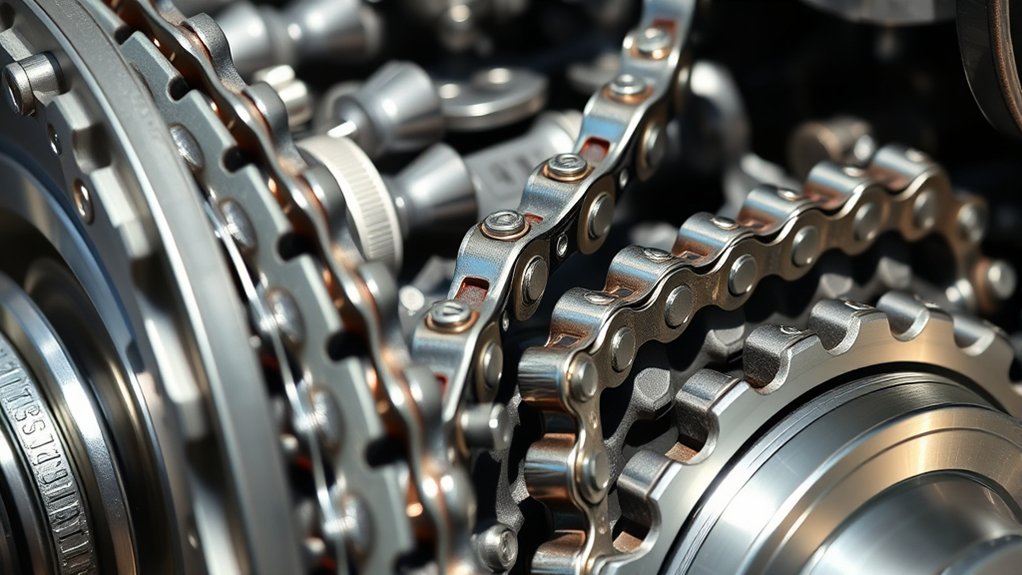
A timing chain synchronizes the crankshaft and camshaft so your engine’s valves open and close at the right moments during each combustion cycle. By maintaining this relationship, it helps your engine breathe properly, produce power, and operate smoothly.
You rely on it to keep valve timing consistent while the engine runs at different speeds and loads.
Engine oil plays an important supporting role. It lubricates the chain, guides, and tensioner, reducing friction and heat.
Engine oil reduces friction and heat, helping the timing chain, guides, and tensioner operate smoothly and reliably.
Using the recommended oil and changing it on schedule can help prevent premature wear. Neglected oil may become contaminated or lose its protective properties, increasing noise and stress throughout the timing system.
Chain durability depends on proper lubrication, accurate tension, and quality components. Although a timing chain often lasts longer than a belt, it isn’t maintenance-free.
Stretch, damaged guides, or a failing tensioner can affect engine performance and may trigger warning signs. Addressing unusual rattling, rough running, or starting problems promptly can protect your engine from costly damage.
How Does a Timing Chain Work?
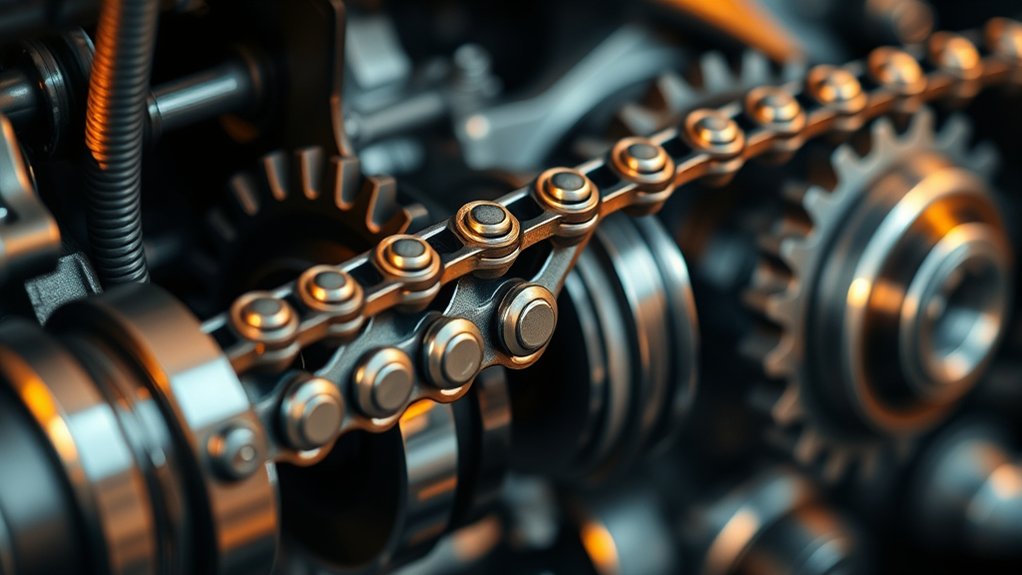
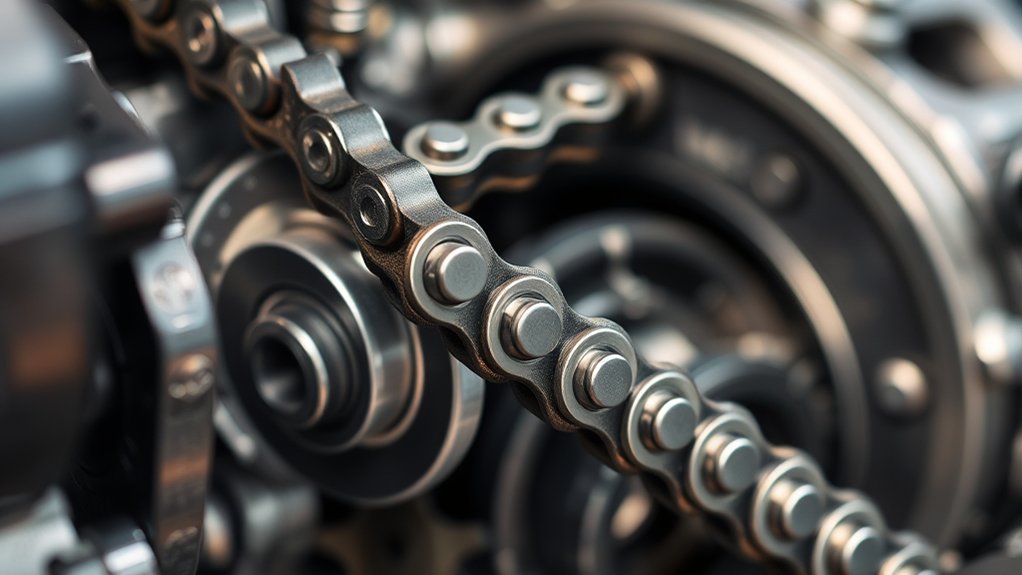
As the crankshaft turns, the timing chain transfers that rotation to the camshaft through precisely aligned sprockets. The chain wraps around each sprocket and moves continuously as the engine runs.
Guides keep it on track, while a tensioner maintains proper tightness and limits vibration. Together, these parts let the chain handle high temperatures, speed, and repeated load inside the engine.
You’ll often notice timing-chain condition through changes in engine noise. A rattling sound during startup, especially from the front of the engine, may indicate a worn chain, weak tensioner, or damaged guide.
Ignoring that warning can allow the chain to loosen or break, potentially causing severe engine damage.
Follow your vehicle’s Maintenance tips, including recommended oil changes and inspections. Clean oil helps lubricate the chain and tensioner, reducing wear.
You should also address warning lights, rough running, or unusual sounds promptly. Although timing chains generally last longer than belts, they still require proper lubrication and attention.
How Does the Chain Synchronize the Engine?
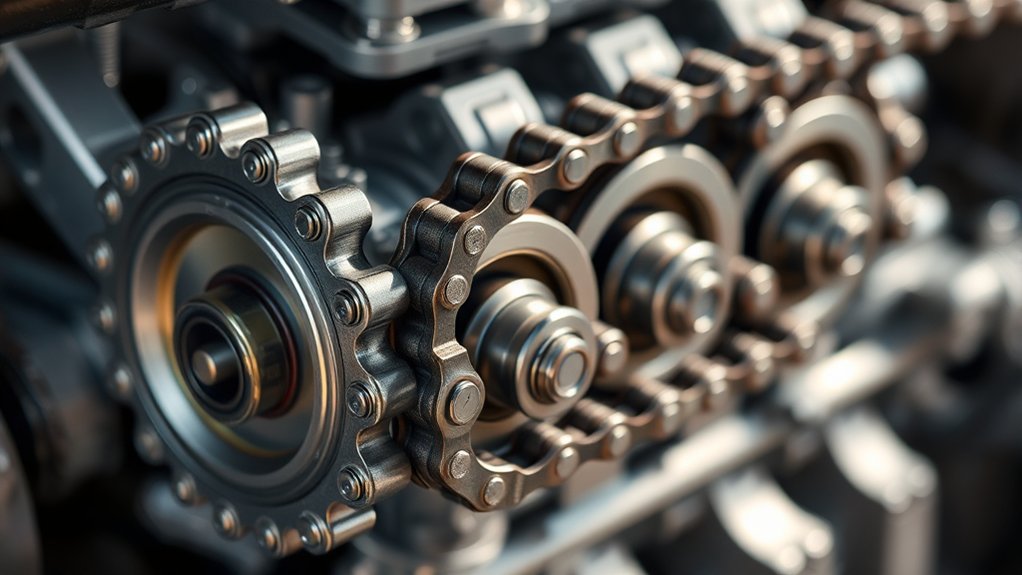
Your timing chain connects the crankshaft and camshaft, keeping them turning in sync. As the crankshaft rotates, the chain makes sure the camshaft opens and closes the valves at exactly the right moments. This precise timing helps your engine burn fuel efficiently and run smoothly.
Crankshaft-Camshaft Synchronization
The timing chain synchronizes the crankshaft and camshaft by linking their sprockets in a precise ratio, typically turning the camshaft once for every two crankshaft rotations. As you drive, the crankshaft converts piston movement into rotation, while the chain transfers that rotation to the camshaft.
Matching timing marks on the sprockets help technicians install the chain in the correct position. Chain guides and tensioners keep it engaged with the sprockets, limiting slack as the engine runs.
You’ll rely on clean Engine oil to lubricate the chain, sprockets, guides, and tensioner, reducing wear and preserving accurate synchronization. Follow your vehicle’s Maintenance schedule for oil changes and inspections.
If the chain stretches, jumps, or breaks, the crankshaft and camshaft can lose their relationship, potentially stopping the engine or causing internal damage.
Precise Valve Timing
That synchronized rotation sets precise valve timing, opening and closing the intake and exhaust valves at specific points in each piston’s cycle. You rely on the timing chain to keep the crankshaft and camshaft aligned, so combustion occurs efficiently and power delivery stays smooth.
A stretched chain can shift this relationship, causing hard starts, misfires, poor acceleration, or internal contact between valves and pistons.
| Timing condition | Engine effect |
|---|---|
| Correct alignment | Efficient combustion |
| Worn chain | Retarded valve timing |
| Skipped teeth | Severe running problems |
You should also maintain proper Valve clearance, because incorrect spacing can alter valve operation and create noise.
During Engine diagnostics, technicians check timing marks, chain tension, and camshaft position signals. If readings disagree, you’ll need prompt inspection before minor wear develops into costly engine damage or a complete timing failure.
Regular oil changes help protect the chain and guides.
What Are Timing Chain Guides?
Timing chain guides are stationary components that keep the chain aligned as it moves between the crankshaft and camshaft sprockets. You’ll find them inside the engine, where they support the chain’s path and prevent excessive side-to-side movement.
Their surfaces typically use durable plastic or composite materials, while a rigid backing provides structural support. As the chain travels, each guide helps it follow the correct route around the sprockets.
You’ll notice their importance through several benefits:
- Maintain accurate chain alignment
- Reduce vibration and rattling
- Protect nearby engine components
- Support consistent valve timing
Over time, friction, heat, and oil contamination can wear a guide’s surface or cause it to crack. You might then hear Chain noise, especially during startup or acceleration.
Broken guide material can also circulate through the engine’s lubrication system. During Timing chain replacement, you should inspect every guide and replace damaged parts together.
Properly fitted guides help your chain operate quietly and keep valve timing dependable throughout the engine’s service life.
What Does the Timing Chain Tensioner Do?
Your timing chain tensioner keeps the chain tight while the engine runs. By preventing slack, it helps avoid noise, poor engine timing, and potentially serious damage. Next, you’ll see how this component helps the chain run smoothly.
Maintains Chain Tension
The timing chain tensioner keeps the chain tight as the engine runs, preventing slack that could cause rattling, skipped teeth, or incorrect valve timing. It applies steady pressure through a spring, hydraulic piston, or both.
As you drive, the tensioner adjusts to normal chain movement and temperature changes, helping the chain maintain consistent contact with its guides and sprockets. Proper chain lubrication supports smooth tensioner operation, while regular tension maintenance helps protect the timing system.
- You may notice quieter operation during startup.
- Clean engine oil helps the tensioner respond correctly.
- A worn tensioner can create clicking or scraping sounds.
- Timely inspections help you catch wear before it affects performance.
If the tensioner loses pressure, your engine may run unevenly or trigger a warning light. Follow the manufacturer’s service intervals and use the recommended oil to support reliable operation.
Prevents Chain Slack
By pressing against the chain guide, the tensioner prevents slack from developing between the camshaft and crankshaft sprockets. Its spring or hydraulic mechanism applies steady pressure as you drive, keeping the chain engaged with every tooth.
Without that pressure, the chain could rattle, skip teeth, or alter valve timing, potentially causing severe engine damage.
You’ll help the tensioner work correctly by maintaining proper oil quality and following the manufacturer’s service intervals. Clean oil supports hydraulic operation, while adequate chain lubrication reduces friction and wear throughout the timing system.
You should also watch for rattling during startup, poor engine performance, or trouble codes that may indicate tensioner wear.
During tensioner maintenance, a technician can inspect the guide, chain, and tensioner together. Replacing worn components promptly helps preserve accurate timing and prevents a loose chain from becoming an expensive failure.
Why Does Timing Chain Lubrication Matter?
Proper lubrication keeps a timing chain’s links, pins, and guides moving smoothly. It reduces friction, heat, and wear inside the engine.
Engine oil forms a protective film over these moving parts. This helps your chain operate quietly and maintain accurate valve timing.
Lubrication importance becomes clear when oil levels drop or the oil breaks down. Without enough clean oil, metal surfaces contact each other, creating heat and accelerating wear.
Contaminated oil can also carry abrasive particles through the timing system. These particles may damage guides and tensioner components.
- You’ll help reduce rattling and harsh chain noise.
- You’ll limit friction during cold starts.
- You’ll protect guides, sprockets, and tensioners.
- You’ll support consistent engine performance.
You should check your oil level regularly and follow the manufacturer’s oil-change schedule. Use the recommended oil grade because the wrong viscosity may not flow effectively through narrow passages.
If you notice persistent rattling, low oil pressure, or metal debris, have the engine inspected promptly. Good lubrication won’t eliminate normal wear, but it can considerably extend timing-chain service life.
Timing Chain or Timing Belt: What’s the Difference?
Timing chains and timing belts perform the same basic job: they synchronize the crankshaft and camshaft so the engine’s valves open and close at the right time. You’ll find key differences in their construction, service needs, and operating environment.
| Feature | Timing Chain | Timing Belt |
|---|---|---|
| Material | Metal links | Reinforced rubber |
| Lubrication | Runs in engine oil | Runs dry behind a cover |
| Service | Often longer-lasting | Scheduled replacement |
A chain’s metal construction generally offers greater Material durability and can withstand heat, oil, and heavy use. However, its Manufacturing process makes it more complex and potentially noisier.
A belt uses molded rubber reinforced with fibers, so it operates quietly and weighs less. You’ll typically replace a belt at the interval listed in your owner’s manual, while many chains remain installed longer.
Your engine’s design determines the choice, balancing noise, cost, packaging, and maintenance. Check your service schedule to identify which system your vehicle uses and when technicians should inspect or replace it.
What Causes Timing Chain Failure?
Your timing chain can fail if it doesn’t get enough lubrication, which leads to excess friction and heat. A worn tensioner can also allow the chain to become loose, while regular wear may cause it to stretch over time. Catching these problems early can help prevent serious engine damage.
Lack Of Lubrication
When engine oil can’t reach the timing chain, its links, guides, and tensioner wear rapidly from friction and heat. Low oil levels, blocked passages, or an unsuitable oil viscosity can restrict flow and trigger lubrication failure.
You may notice rattling, rough running, or metal particles in the drained oil, but continued driving can cause severe internal damage.
- Check your oil level regularly, especially before long trips.
- Use the viscosity and specification listed in your owner’s manual.
- Replace the oil filter at every recommended service.
- Investigate leaks before the level drops dangerously low.
Oil contamination also accelerates wear. Dirt, fuel, coolant, and sludge can reduce oil’s protective film and clog narrow passages around the chain.
Follow the service schedule, repair leaks promptly, and stop driving if the oil warning light appears. Clean, correctly specified oil helps your timing chain run quietly and reliably.
Worn Chain Tensioner
A worn chain tensioner can no longer maintain the correct pressure, allowing the timing chain to slacken, rattle, and skip across the sprockets. You may hear rattling during startup, notice rough running, or see an illuminated check-engine light when valve timing changes.
Low oil pressure, contaminated oil, or a failed tensioner spring can prevent the device from holding the chain securely. If you ignore these warnings, the chain could jump teeth and cause severe engine damage.
Have a technician inspect the tensioner, guide, sprockets, and related components before driving further. Depending on the design, a tensioner adjustment might restore proper tension, but many engines require chain replacement when the tensioner has worn or its contact surface has deteriorated.
Don’t confuse this fault with normal chain wear; focus on the tensioner’s inability to maintain pressure.
Excessive Chain Stretch
Excessive timing chain stretch develops when prolonged wear enlarges the chain’s pins and bushings, increasing slack between the links. As chain wear progresses, the chain can’t maintain precise valve timing.
You may notice rattling during startup, rough idling, reduced power, or an illuminated check-engine light. Ignoring these signs can let the chain skip teeth, causing serious engine damage.
Common contributors include:
- Low or contaminated oil that accelerates friction
- Tension issues from a weak or stuck tensioner
- Overheated engines that degrade lubrication
- High mileage and frequent short trips
You can help prevent excessive stretch by changing your oil at the recommended intervals and using the correct grade.
If you hear persistent rattling, have a technician inspect the chain, guides, and tensioner promptly. Replacing worn components early protects your engine from costly timing failure.
What Are the Signs of Timing Chain Problems?
Common signs of timing chain problems include rattling or ticking noises, difficult starting, engine misfires, rough idling, and reduced power. You may hear engine noise most clearly during startup, when low oil pressure leaves the chain tensioner unable to maintain proper tension.
> Rattling noises, difficult starts, misfires, rough idling, and reduced power can signal timing chain trouble.
As the chain stretches or its guides wear, valve timing can shift, causing your engine to run poorly, hesitate, or stall. You might also notice a check-engine light, especially when the camshaft and crankshaft fall out of synchronization.
In severe cases, the engine may refuse to start because the chain has jumped teeth or broken. Oil leaks around the timing cover can indicate a damaged gasket, though they don’t always confirm a chain fault.
Don’t ignore these symptoms. Continued driving can allow the chain to slip further and cause piston-to-valve contact, leading to expensive internal damage. Have a qualified technician inspect the system promptly and verify timing with appropriate diagnostic tests.
How Can You Prevent Timing Chain Damage?
You can prevent timing chain damage by changing the engine oil and filter at the manufacturer’s recommended intervals, using the correct oil grade, and responding promptly to unusual noises or warning lights.
Engine oil lubricates the chain, guides, and tensioner, reducing friction and wear. Don’t stretch service intervals, especially if you drive in traffic, tow regularly, or make frequent short trips.
- Check the oil level monthly and top it up with the approved specification.
- Listen for rattling during startup, acceleration, or idling.
- Replace a worn tensioner, guide, or sprocket before it damages the chain.
- Follow the service schedule for inspections and related component replacement.
Tension maintenance matters because a weak or stuck tensioner can let the chain slap, skip teeth, or lose accurate valve timing.
Avoid harsh acceleration until the engine reaches operating temperature, and fix oil leaks promptly.
If your vehicle shows a check-engine light or develops persistent rattling, have a qualified technician inspect it.
Early attention can prevent costly engine damage and keep your timing system reliable.
Frequently Asked Questions
How Much Does Timing Chain Replacement Typically Cost?
You’ll typically pay $1,000–$2,500 for timing chain replacement, though luxury vehicles or difficult engine designs can push costs beyond $3,000.
Your final bill depends on parts, labor rates, and whether worn guides, tensioners, or seals need replacement.
Ask your mechanic for a detailed estimate and confirm they’ll inspect lubrication issues and chain tension.
If you hear rattling, experience poor performance, or see warning lights, don’t delay. Continued driving could cause costly engine damage.
How Long Does Timing Chain Replacement Usually Take?
You’ll usually spend one to two days replacing a timing chain, though some engines can turn the job into an eternity of labor. You might need longer if technicians find damaged guides, tensioners, or sprockets.
Your vehicle’s Maintenance schedule can influence timing, especially if related parts need replacement. Warning signs, including rattling, poor performance, or trouble starting, may justify urgent service.
Ask your mechanic for a model-specific estimate before scheduling the repair.
Can a Timing Chain Be Replaced Without Removing the Engine?
Yes, you can often replace a timing chain without removing the engine. Your mechanic typically gains Engine access by removing covers, accessories, and sometimes the radiator or front support.
However, cramped engine bays may require partial engine lowering or removal for safe, efficient work. You’ll also need correct Chain tension, precise alignment, and new guides and tensioners.
Because errors can cause severe damage, you shouldn’t attempt this repair without proper tools and experience.
Which Vehicles Commonly Use Timing Chains?
You’ll commonly find timing chains in many modern vehicles, including Toyota, Honda, Nissan, Subaru, BMW, Mercedes-Benz, Volkswagen, and Ford models. Manufacturers often use them in engines designed for long service intervals and precise engine timing synchronization.
You’ll still need to check your specific engine, because some brands use timing belts in certain models or years. Timing chain durability varies with maintenance, oil quality, driving conditions, and the engine’s design.
Can You Drive With a Noisy Timing Chain?
You can drive briefly with a noisy timing chain, but it’s like ignoring a warning bell under your hood. Stop driving and arrange an inspection as soon as possible.
A failing Timing chain tensioner may let the chain loosen, skip teeth, or break, causing severe engine damage. Don’t rev the engine or take long trips.
If your noisy engine rattles during startup, idles roughly, or loses power, have a mechanic diagnose it immediately.
Conclusion
Your timing chain is the engine’s tiny conductor, keeping every valve and piston moving in perfect harmony. When it works, your car runs smoothly; when it fails, chaos can strike in seconds, causing catastrophic engine damage and an eye-watering repair bill.
Don’t ignore rattles, misfires, or poor performance. Follow your vehicle’s maintenance schedule, use the right oil, and have warning signs checked immediately. Understanding how a timing chain works and caring for it can save your engine and your wallet from disaster.