
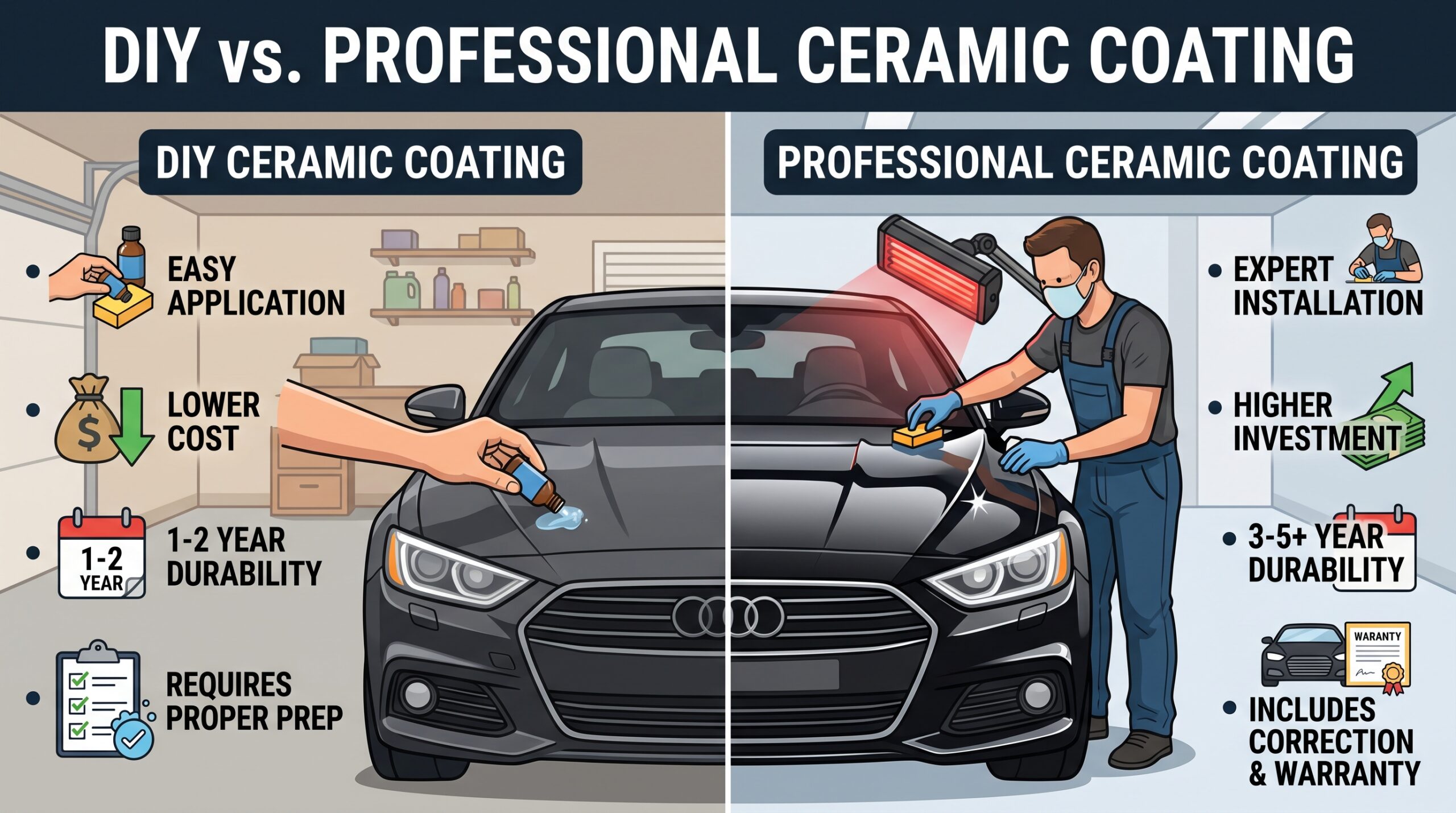
DIY Spray Coatings vs. Professional Grade Ceramic Coatings: The Honest Truth
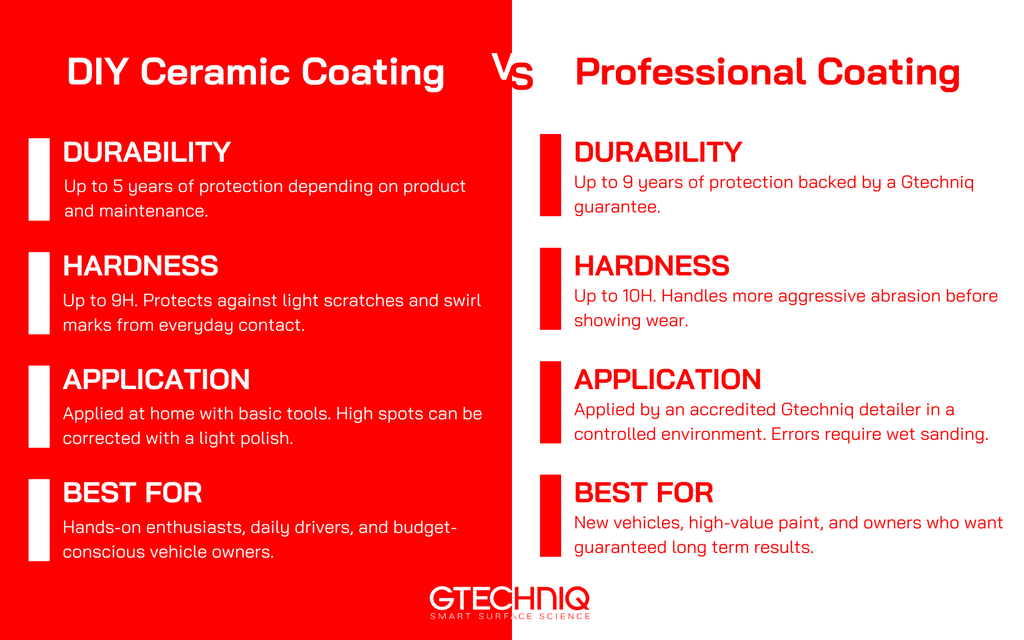
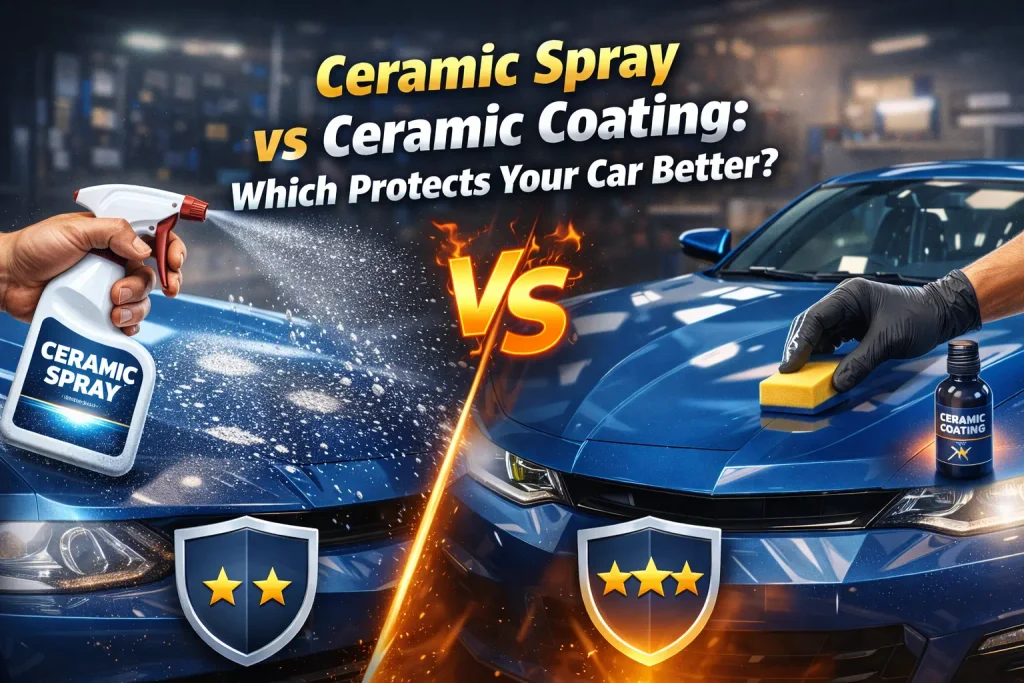
Quick Answer: In the DIY vs professional ceramic coating debate, DIY sprays and kits cost less upfront but rely on heavily diluted formulas that last only a few months to a couple of years. Professional installations use high-solids resins, multi-stage paint correction, and controlled curing environments that deliver 5 to 10 years of protection, at a higher price and with none of the risk of a botched application.
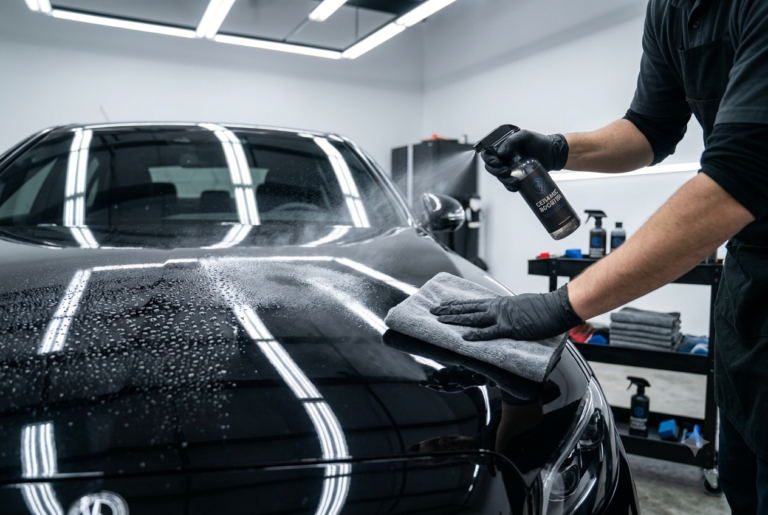
With the explosion of automotive detailing content on social media, consumer-grade ceramic products have flooded the market. A quick search reveals countless $30 spray bottles, DIY glass-bottle kits, and influencers promising professional five-year ceramic results in under 20 minutes in your driveway.
For many car owners, the prospect of getting showroom glass-like protection at a fraction of the cost is tempting. However, there is a fundamental divide between consumer DIY products and certified professional installations that goes far beyond the price tag. Here is the honest truth about the DIY vs professional ceramic coating decision, and what actually separates the two approaches.
1. The Chemical Reality: Active Solids and SiO2 Concentration in DIY vs Professional Ceramic Coating
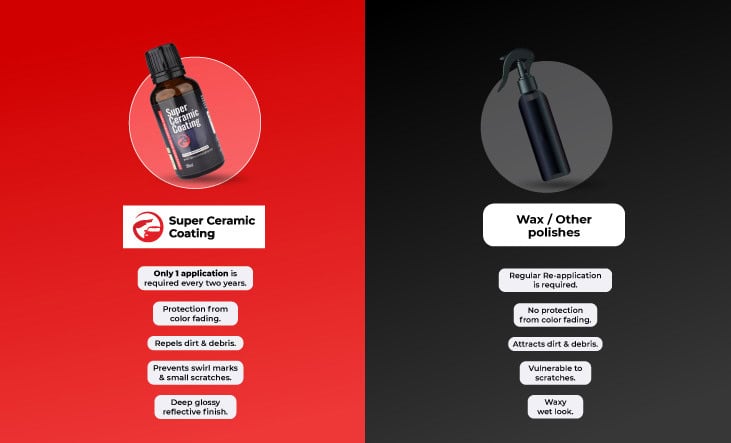
The performance of any ceramic coating relies on its concentration of silicon dioxide, titanium dioxide, and advanced cross-linking resins. This single factor explains most of the performance gap in the DIY vs professional ceramic coating comparison.
DIY consumer sprays typically contain 10 to 20 percent active solids, heavily diluted with solvents. They’re designed to be forgiving, so amateur detailers don’t permanently streak their paint. This makes them easy to wipe off, but it also causes them to wash away within 3 to 6 months, one of the clearest early signals in the DIY vs professional ceramic coating comparison.
Consumer glass-bottle kits offer higher solids, typically 30 to 50 percent, providing 1 to 2 years of durability, placing them squarely in the middle of the DIY vs professional ceramic coating spectrum. They still remain limited in layer thickness to prevent catastrophic user errors during application.
Certified professional systems, such as CQuartz Finest Reserve, contain dense, high-solids hybrid nano-epoxy resins, typically 70 to 90-plus percent active solids. They create a measurable sacrificial layer up to 3 microns thick, delivering up to 10 years of verified durability.
2. Surface Preparation: The 80% Rule of DIY vs Professional Ceramic Coating
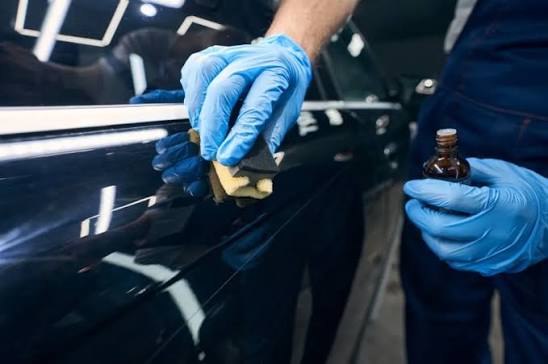
In professional surface preservation, the coating is only as good as the surface beneath it. Applying even a $1,000 professional coating over dirty, swirled paint will result in immediate bonding failure, which is exactly why preparation matters more than the product itself in any DIY vs professional ceramic coating comparison.
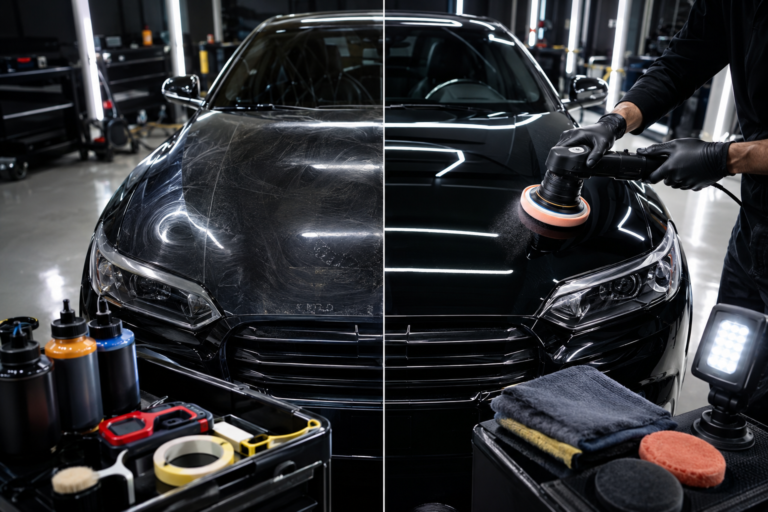
A typical DIY approach looks like this: wash, quick wipe, apply coating, and any existing defects get locked underneath permanently. A professional studio approach looks very different, and this contrast is really the heart of the entire DIY vs professional ceramic coating comparison: chemical decontamination, clay bar treatment, multi-stage paint correction, panel prep, coating application, and finally infrared curing.
DIY installs often skip several critical steps. Chemical iron decontamination, which dissolves embedded brake dust and rail dust from clear coat pores, is frequently missed. Mechanical clay barring, which pulls embedded tree sap and tar deposits from the paint, is another common omission.
Multi-stage machine polishing, which eliminates 80 to 95 percent of swirl marks, buffer trails, and scratches, is often skipped entirely due to lack of equipment or experience. Residue stripping, which removes all polishing oils using specialized solvent panel wipes so the coating can form a covalent bond with bare clear coat, is easy to overlook without proper training.
A certified studio spends 10 to 20-plus hours on preparation alone before ever opening a bottle of ceramic coating, which is a labor investment most DIY vs professional ceramic coating comparisons overlook entirely.
3. The Working Environment in DIY vs Professional Ceramic Coating: Garage vs. Cleanroom Studio
Ceramic coatings are chemically sensitive to humidity, temperature spikes, direct sunlight, and airborne debris during the application and initial flash phase, which is another major factor separating the two sides of the DIY vs professional ceramic coating decision.
Applying a coating outdoors or in an unsealed garage exposes tacky clear coats to falling dust, flying insects, pollen, and sudden humidity shifts, a risk unique to the DIY side of the DIY vs professional ceramic coating equation. If dust settles into the coating while it flashes, it gets permanently sealed into the glass matrix, with no easy fix short of machine correction.
Professional studios, by contrast, use climate-controlled bays, advanced air filtration, high-CRI defect-inspection lighting, and infrared curing lamps to thermally bake panels at around 60 degrees Celsius, or 140 degrees Fahrenheit, locking in maximum hardness before the car ever hits the road. This environmental control is one of the least visible but most important parts of the DIY vs professional ceramic coating equation.
4. What Happens When a DIY vs Professional Ceramic Coating Application Goes Wrong?
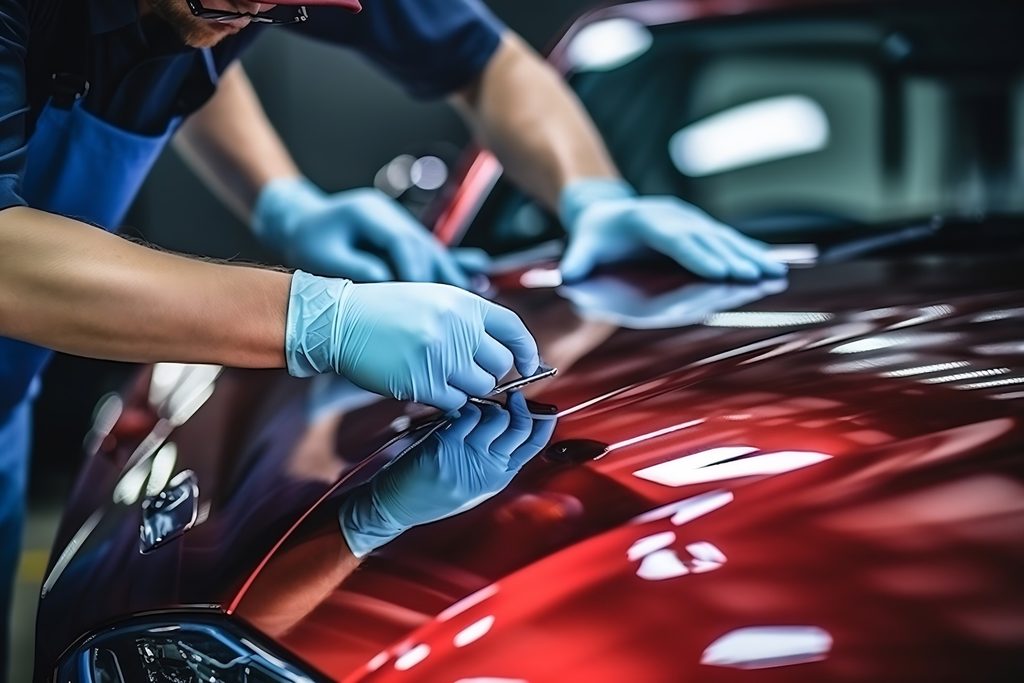
Applying a true ceramic coating is not like buffing off traditional carnauba wax. Once a nanocoating flashes, it hardens rapidly, and mistakes become difficult or impossible to reverse without professional correction.
| Common DIY Mistake | Cause | The Result and Fix |
|---|---|---|
| High spots | Coating wasn’t leveled in time before flashing | Dark, iridescent cloudy patches; must be machine compounded down to bare clear coat |
| Severe streaking | Uneven application or working in direct sun | Permanent hazy streaks locked across panels |
| Trapped contaminants | Inadequate chemical prep or claying | Gritty texture sealed beneath the glass layer |
| Clear coat strike-through | Inexperienced DIY machine polishing | Burning through thin clear coat on sharp body edges |
Fixing a botched DIY ceramic coating usually costs significantly more than a standard professional installation, since the entire vehicle must undergo aggressive wet sanding and compounding to strip the cured high spots, which is often the most expensive possible outcome in the entire DIY vs professional ceramic coating decision.
Direct Comparison: DIY Ceramic vs. Professional Installation
| Comparison Metric | Consumer DIY Spray / Kit | Professional Certified Installation |
|---|---|---|
| Average Cost | $50-$200 (supplies only) | $1,000-$2,500+ (includes all labor and prep) |
| Durability and Lifespan | 3 months to 2 years | 5 to 10 years |
| Chemical Resistance | pH 4-9 | pH 2-13 (extreme acid and alkaline defense) |
| Labor Investment | 6 to 15 hours of your own labor | Zero owner effort (1-3 days in studio) |
| Defect Removal | Minimal (depends on DIY skill) | 90%+ swirl and scratch elimination |
| Equipment Required | Basic towels and applicator | DA polishers, IR lamps, paint depth gauges, cleanroom |
| Warranty Coverage | None | Documented, manufacturer-backed warranty |
This table makes the DIY vs professional ceramic coating trade-off easy to see at a glance: DIY wins on upfront cost, while professional installation wins on nearly every long-term performance metric.
When Does DIY Make Sense vs. Hiring a Professional?
DIY ceramic coating makes sense in a few specific situations, and recognizing them honestly is the first step in any DIY vs professional ceramic coating decision. It’s a reasonable choice if you own an older daily commuter or project car where spending $1,500 or more isn’t financially justifiable. It also makes sense if you genuinely enjoy detailing as a hands-on weekend hobby and already own dual-action polishers and proper lighting. Finally, it’s a fair option if you have realistic expectations and are comfortable with 6 to 12 months of durability rather than multiple years.
Professional ceramic coating is the clear choice in other situations. If you drive a brand-new vehicle, luxury car, exotic, or daily driver you plan to keep long-term, professional installation protects that investment properly. If your vehicle has existing swirl marks and scratches that require professional multi-stage correction, a DIY application will only lock those defects in permanently.
If you want a transferable, manufacturer-backed warranty to protect vehicle resale value, only certified installation qualifies. And if you want guaranteed, flawless results without the risk of burning paint or locking in high-spot hazing, professional installation removes that risk entirely.
Is There a Middle Ground in the DIY vs Professional Ceramic Coating Debate?
Some owners look for a middle path between the two extremes, and a few reasonable options exist within the DIY vs professional ceramic coating spectrum. Booking a professional paint correction service and then applying a mid-tier consumer glass-bottle coating yourself can capture some of the benefit of proper preparation without the full flagship price tag. This approach still leaves the coating itself at a lower durability tier, typically 1 to 2 years, but it avoids the worst-case scenario of locking defects under a coating.
Another middle-ground option is choosing an entry-level professional package rather than a flagship one. Many certified studios offer tiered pricing, and an entry-level professional installation still includes proper decontamination and correction, just with a shorter-lived coating product, landing somewhere between full DIY and the top-tier CQuartz Finest Reserve experience in both cost and longevity. This tiered approach is often the most overlooked answer to the DIY vs professional ceramic coating question.
Why This Decision Matters More Than It Seems
The DIY vs professional ceramic coating choice isn’t just about the coating’s lifespan, and this framing is often missing from quick online comparisons. It’s about what happens to the clear coat underneath during the process. A rushed or improperly prepared DIY application can trap contaminants or lock in existing swirl marks permanently, meaning the paint looks worse under close inspection than it did before the coating went on.
Professional correction, by contrast, actively improves the paint’s condition before sealing it under a coating, so the end result reflects genuine improvement rather than a glossy layer hiding underlying problems. This distinction is often lost in online comparisons that focus purely on price and marketed durability numbers.
What Social Media Gets Wrong About the DIY vs Professional Ceramic Coating Debate
A lot of the confusion fueling this debate traces back to how these products are marketed online. Viral videos showing a $30 spray bottle producing water beading identical to a $2,000 professional installation are technically accurate in the moment, since fresh application of almost any SiO2 product will bead water reasonably well on day one.
What these videos rarely show is the six-month mark, when the DIY spray has already washed away while the professional coating is just getting started on its multi-year lifespan. They also rarely show the preparation work, or lack thereof, that went into each application, even though preparation quality often matters more than the product itself in determining how the paint actually looks and performs over time.
This gap between a flashy first impression and genuine long-term performance is exactly why the DIY vs professional ceramic coating comparison needs to be evaluated over years, not days, to be meaningful.
How to Evaluate Your Own Situation Honestly
Rather than defaulting to whichever option feels more appealing in the moment, it helps to answer a few honest questions before deciding. How long do you realistically plan to keep this vehicle? A short ownership window shifts the math meaningfully toward DIY or entry-level options. Does your current paint already have visible swirl marks or scratches? If so, skipping professional correction means locking those defects in permanently, regardless of which coating product you choose.
Do you have the tools, lighting, and experience to safely operate a dual-action polisher without burning through clear coat? If not, attempting multi-stage correction yourself carries real risk of making the paint worse rather than better. Finally, how much do you value your own time and weekends? Six to fifteen hours of DIY labor is a real cost even when the product itself is inexpensive.
Answering these questions honestly, rather than simply comparing sticker prices, tends to point most owners toward the option that actually fits their situation rather than the one that just sounds cheaper on the surface.
The Hidden Costs Rarely Mentioned in DIY Comparisons
Sticker-price comparisons in the DIY vs professional ceramic coating debate often leave out a few costs that only show up later. Consumables add up quickly on the DIY side: clay bars, polishing pads, compound, panel wipe solvent, and applicator suede all need replacing across multiple sessions, and a beginner often goes through more product than an experienced technician would for the same job.
Mistakes carry a real financial cost too. A single high-spot or streaking error, as outlined in the mistake table above, frequently costs more to correct than the entire DIY product budget in the first place, since fixing it requires the same machine compounding a professional job would have used from the start. Time also has a cost, even when it isn’t paid directly. Six to fifteen hours spent on a DIY application is time not spent on other weekend activities, which is worth factoring in honestly when comparing the two paths.
On the professional side, the main hidden cost worth understanding is that flagship coatings and full correction packages price in a level of preparation and warranty support that a bargain-tier professional quote may not include, so it’s worth asking what’s actually covered before assuming all quotes in the DIY vs professional ceramic coating market are equivalent.
Frequently Asked Questions
Can I buy professional-grade ceramic coatings online and apply them myself?
No. True flagship coatings like CQuartz Finest Reserve are strictly restricted to audited, certified detailers who carry verified insurance, cleanroom facilities, and advanced training. This restriction is a key part of the DIY vs professional ceramic coating distinction, since the product itself isn’t available outside certified channels.
Are $20 ceramic detail sprays completely useless?
Not at all. Consumer ceramic sprays are great as maintenance toppers to boost slickness on an already-coated car, or as quick short-term protection between hand washes. They are simply not replacements for a true high-solids base coating, which is the core distinction running through the entire DIY vs professional ceramic coating discussion.
How do I know if my clear coat is too thin for correction?
Certified professionals use precision digital paint depth gauges to measure the total thickness of the substrate, primer, base, and clear coat in microns, ensuring there is sufficient clear coat remaining to polish safely before any coating is applied, a step almost never available to the DIY side of the DIY vs professional ceramic coating comparison.
Can a DIY coating be fixed later by a professional?
Often, yes, though it typically requires more labor than a standard first-time installation in the DIY vs professional ceramic coating world. A certified detailer will usually need to machine polish away the DIY layer entirely, address any locked-in defects, and then apply a proper professional system from a clean starting point.
Does the DIY vs professional ceramic coating decision change for a vehicle I plan to sell soon?
Yes, somewhat. If you plan to sell within a year or two, a lower-cost DIY or entry-level solution may make more financial sense, since you won’t be around long enough to benefit from a multi-year professional warranty. That said, visible defects locked in by a rushed DIY job can still hurt resale value, so quality of application still matters even on a shorter ownership timeline.
What questions should I ask a shop before booking a professional installation?
Ask specifically which coating product and tier will be used, since “ceramic coating” alone doesn’t distinguish between an entry-level and flagship formula. Ask how many hours of paint correction are included in the quote, and whether the facility uses infrared curing equipment. Getting clear answers to these questions is the best way to confirm you’re actually comparing equivalent options within the DIY vs professional ceramic coating spectrum, rather than assuming all professional quotes represent the same level of work.
Experience Master Craftsmanship at Red’s Detail Co.
A flawless ceramic finish is the result of patience, controlled environments, and mastery over machine polishing. At Red’s Detail Co., our certified craftsmen utilize industry-leading CQuartz ceramic systems, high-intensity IR curing, and meticulous multi-stage correction to deliver deep optical clarity that a DIY approach simply cannot match.
Ready to protect your vehicle with proven, certified ceramic technology? Contact Red’s Detail Co. in Marietta today to schedule your custom paint evaluation.
Related Reading on Our Site
- Top 10 Ceramic Coating Benefits
- Ceramic Coating vs PPF: Which Is Right for Your Car
- How Long Does Ceramic Coating Really Last
- What Is CQuartz Finest Reserve
- How to Wash and Maintain a Ceramic Coated Vehicle
- Is Ceramic Coating Scratch-Proof? Myths and Realities
- Ceramic Coating vs Wax: Which Is Worth the Investment
- How Much Does Ceramic Coating Cost
- Why Apply Ceramic Coating to a Brand-New Car Immediately
- Ceramic Coating Curing Time: Rules and Care Guide
- Ceramic Windshield Coating: Clear Vision and Rain Repellency
- Wheel Ceramic Coating: Repel Brake Dust and Grime
- Book a Consultation
3 Comments