How Does an Oil Filter Work Step by Step
Many drivers worry about dirty oil, clogged filters, and expensive engine repairs. You’re not alone—many people struggle to know how an oil filter works or which one to choose. Understanding the process can help you protect your engine and maintain smoother performance.
How Does an Oil Filter Work Step by Step
An oil filter cleans your engine oil in several steps. First, the oil pump sends dirty oil containing soot, dust, and metal particles into the filter.
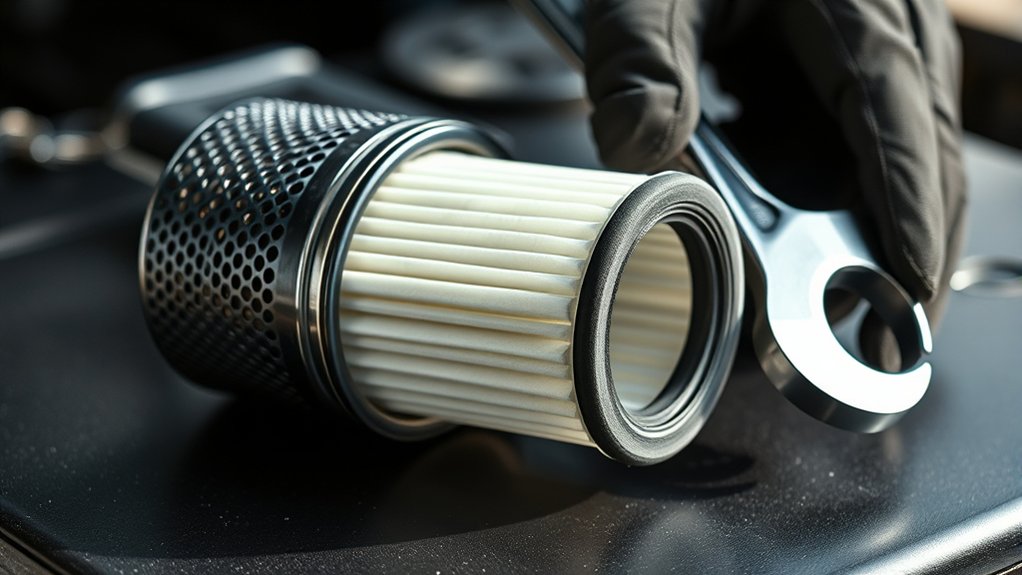
The oil passes through pleated cellulose or synthetic media, which traps contaminants.
Clean oil exits through the center and returns to lubricate engine parts.
An anti-drainback valve helps during startup, while a bypass valve maintains flow if the filter clogs.
You’ll learn how to choose, replace, and maintain one properly below.
Key Takeaways
- The oil pump draws dirty oil from the engine and sends it through the filter’s inlet port.
- Pressurized oil flows through pleated cellulose or synthetic media that traps dirt, metal particles, and other contaminants.
- The pleated design provides extensive filtering area while maintaining sufficient oil flow and debris capacity.
- Cleaned oil exits through the central outlet and returns to lubricate bearings, camshafts, pistons, and other components.
- Anti-drainback and bypass valves maintain oil availability during startup and keep oil flowing when the filter becomes restricted.
What Does an Oil Filter Do?
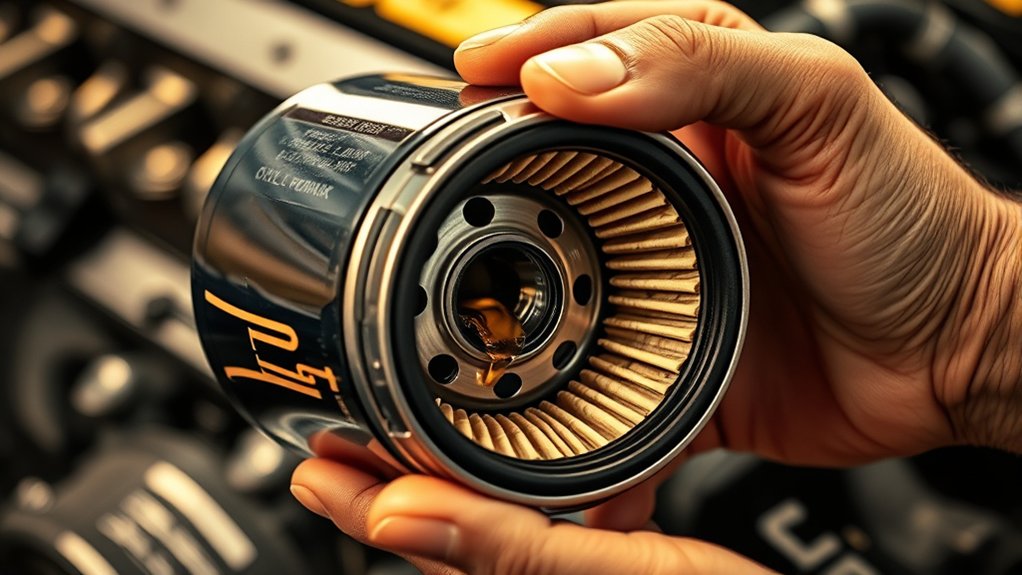
An oil filter removes dirt, metal particles, and other contaminants from engine oil before the oil circulates through the engine. By trapping these harmful particles, it helps protect bearings, pistons, cylinder walls, and other precision components from abrasive wear.
Oil filters trap harmful contaminants, protecting precision engine components from abrasive wear and supporting reliable lubrication.
You can think of the filter as a barrier that keeps lubricating oil clean while allowing it to flow at the rate your engine needs.
Oil filter materials determine how effectively the filter captures contaminants. Most filters use pleated cellulose, synthetic fibers, or a blend of both.
Synthetic media usually provides finer filtration and maintains consistent performance under demanding conditions. The filter’s design also balances filtration efficiency with oil flow, because excessive restriction can reduce lubrication.
A properly functioning filter supports stable oil pressure, cleaner engine operation, and longer component life.
You should replace it according to your vehicle manufacturer’s schedule, using a filter that matches your engine’s specifications and operating requirements.
How Does Dirty Oil Reach the Filter?
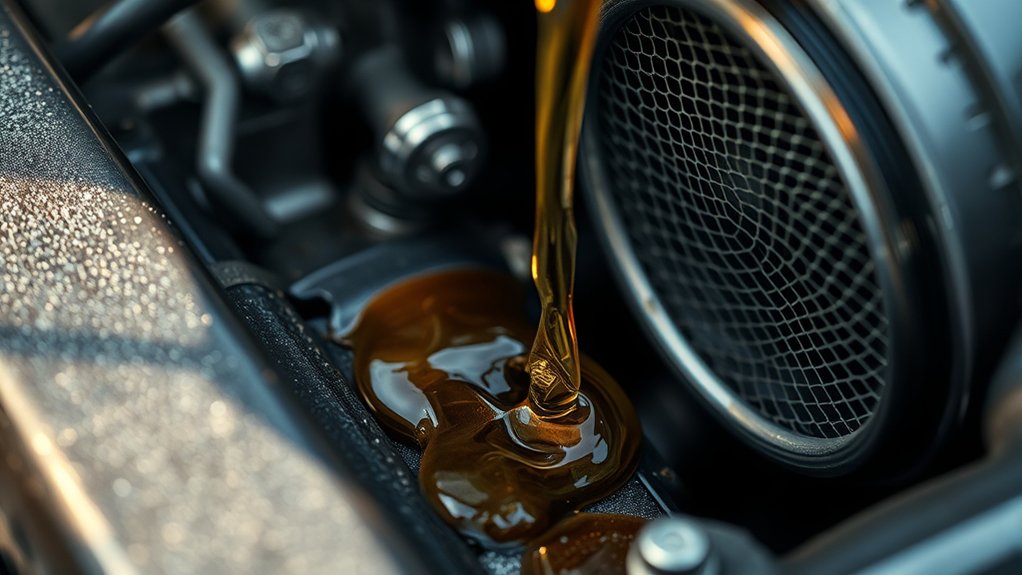
How Does Dirty Oil Reach the Filter?
As the engine runs, oil picks up soot, metal particles, dust, and other contaminants from lubricated components. The oil pump creates circulation, pushing this increasingly dirty oil through internal passages toward the filter housing.
Before filtration begins, the oil’s route depends on galleries, seals, and the engine’s lubrication design, not on gravity alone.
| Contaminant | Typical source |
|---|---|
| Soot and sludge | Combustion blow-by |
| Metal particles | Wear at bearings and gears |
As you drive, heat thins the oil while moving parts continually add debris. The oil carries these particles away from friction points, protecting surfaces temporarily while transporting contamination toward the filter.
Its condition also depends on oil filter materials, which must withstand pressure, heat, and chemical exposure once filtration occurs.
Changing oil and filters on schedule limits the environmental impact of discarded contaminants and prevents excessive buildup inside the lubrication circuit.
Restricted passages or neglected maintenance can slow circulation, increase friction, and leave critical parts with less protection.
Understanding this journey helps you see why clean oil matters before it reaches the filter.
How Does Oil Enter the Filter?
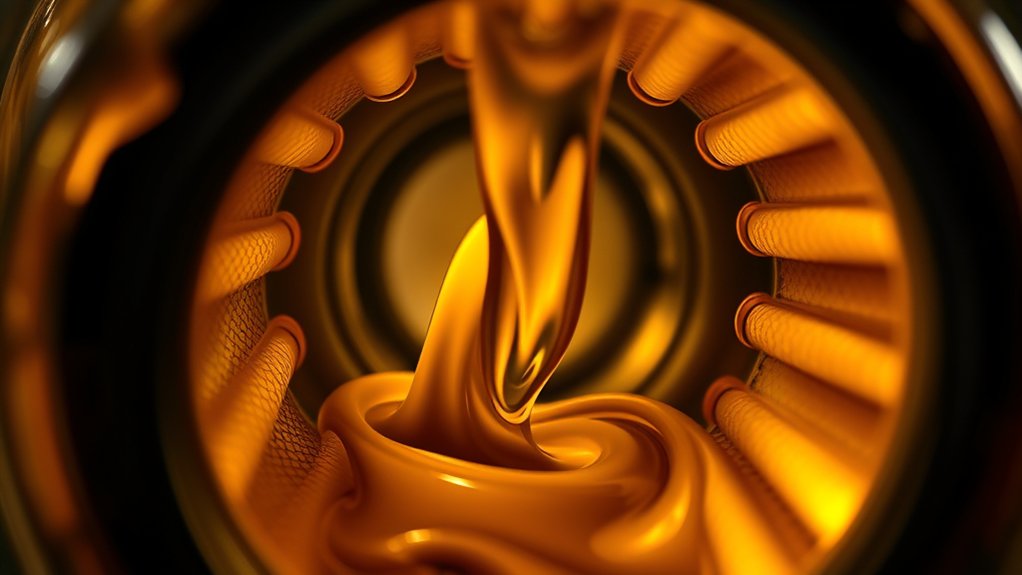
Your oil pump creates pressure that pushes dirty oil toward the filter. The oil enters through the filter’s inlet port and flows into the housing. From there, it moves through the filter media, where dirt and other contaminants are removed.
Oil Pump Pressure
When the engine runs, the oil pump draws lubricant from the oil pan and pushes it through the engine’s oil passages toward the filter. As the pump turns, it creates pressure that keeps oil moving through the lubrication system.
You can think of this pressure as the force that drives dirty oil toward the filter housing. Engine speed, oil temperature, viscosity, and bearing clearances all affect pressure.
Cold, thick oil usually creates higher pressure, while hot, thin oil flows more easily. A pressure-regulating valve prevents excessive force from damaging seals or components.
The pump must maintain enough pressure to support steady flow and effective cleaning. Oil filter materials and filter efficiency also influence how easily oil passes through the filter, especially as contaminants accumulate and resistance increases.
Inlet Port Entry
After the oil pump builds pressure, oil enters the filter through inlet ports in the filter housing. These openings sit around the filter’s mounting base and guide pressurized oil into the filter’s entry area.
A gasket seals the connection between the filter and engine, preventing leaks as oil arrives. The port design must balance sufficient flow with structural strength, so manufacturers select suitable Oil filter materials and refine each detail during the Manufacturing process.
- Check the gasket for damage before installation. A poor seal can let oil escape.
- Use the correct filter because the inlet-port size and placement must match your engine.
- Keep the mounting surface clean to maintain a tight, reliable connection.
At this stage, oil has only entered the filter. The next step determines how it moves through the housing.
Filter Housing Flow
Once oil passes through the inlet ports, the filter housing directs it into the space around the filter media. You’ll find this outer chamber distributes oil evenly across the filter material, preventing one section from carrying the entire load.
As the oil moves through the pleated media, contaminants remain trapped while cleaner oil reaches the center tube. The housing’s shape, seals, and internal supports control the flow rate and keep oil from bypassing the filtration surface.
You’ll also rely on the housing to withstand pressure and maintain alignment during engine operation. If the filter fits correctly, its gasket seals against the mounting base, stopping leaks as oil enters.
A properly designed housing reduces turbulence, supports consistent filtration, and guides the cleaned oil toward the outlet passage for return to the engine.
How Does an Oil Filter Trap Contaminants?
An oil filter traps contaminants as pressurized oil passes through its pleated filter media. The media captures dirt, metal particles, soot, and other debris while allowing clean oil to flow through.
As oil enters the media, contaminants larger than its microscopic openings become lodged between the folds. Some smaller particles also adhere to the fibers through surface attraction, improving contaminant removal without stopping normal oil flow.
The pleated design creates more filtering area, helping the filter hold debris and maintain filter efficiency throughout its service life.
You can understand the process through these key points:
- Particle capture: The media physically blocks harmful debris before it can circulate.
- Debris storage: Deep pleats hold accumulated contaminants without quickly restricting flow.
- Pressure protection: A bypass valve may open if heavy buildup creates excessive resistance.
Your driving conditions affect how quickly the media loads. Dusty roads, short trips, and worn engine parts can increase contamination, so you should replace the filter at the recommended interval.
How Does Filtered Oil Return to the Engine?
Once the filter removes contaminants, the clean oil flows out through the outlet. Engine oil pressure then pushes it through internal passages, delivering it to the bearings and other moving parts.
Filtered Oil Exits
After the oil passes through the filter media, it exits through the filter’s central outlet and flows into the engine’s main oil passage. From there, it reaches bearings, camshafts, pistons, and other lubricated parts.
Your filter’s design keeps this route sealed, preventing unfiltered oil from mixing with the cleaned supply. The Oil filter material affects how effectively the element traps contaminants, while Filter capacity determines how much debris it can hold before replacement becomes necessary.
- The central outlet provides a clean path back into the engine.
- Proper sealing protects every component from abrasive particles.
- A correctly sized filter supports consistent oil cleanliness.
You’ll find the outlet positioned inside the filter housing, aligned with the engine’s receiving passage. As the oil leaves, it carries heat away and reduces friction throughout moving assemblies.
Regular filter replacement helps preserve this clean return path and protects engine life.
Pressure Sends Oil
Oil pressure pushes the filtered oil from the central outlet into the engine’s main oil passage. As you drive, the oil pump maintains pressure, creating the force that moves clean oil away from the filter.
The filter’s bypass valve may open briefly if the oil is cold, thick, or the filter becomes restricted, preventing excessive pressure buildup. Once pressure stabilizes, the filter directs oil through its outlet without allowing contaminants to return.
You can support reliable flow by choosing the correct filter and changing it at the recommended interval. Oil filter materials, including the media, seal, and housing, affect durability, filtration, and disposal requirements.
Considering their Environmental impact helps you select responsibly made products and recycle used filters properly. The pressurized oil now continues through the engine’s internal passageways.
Oil Reaches Bearings
Pressurized, filtered oil travels through the engine’s main passages to reach the crankshaft and connecting-rod bearings. As you drive, the oil forms a thin film between moving metal surfaces, reducing friction, heat, and wear.
After lubricating these bearings, it splashes onto cylinder walls, pistons, and other components before draining into the oil pan. The oil pump then draws it through the filter again, continuing the circulation cycle.
- Clean oil protects bearing surfaces from abrasive particles and premature damage.
- Correct oil pressure keeps the protective film intact under heavy loads.
- Choosing durable Oil filter materials can reduce replacements and environmental impact.
You’ll help this system work properly by checking the oil level, using the manufacturer’s recommended grade, and replacing the filter on schedule.
If a warning light appears, stop driving and investigate promptly, because bearing damage can become expensive quickly.
What Does the Anti-Drainback Valve Do?
When the engine shuts off, the anti-drainback valve keeps oil from flowing out of the filter and back into the engine. This flexible seal sits near the filter’s inlet openings and closes when oil pressure disappears.
The anti-drainback valve seals the filter’s inlet openings when pressure drops, helping keep oil inside after shutdown.
By retaining oil inside the filter, it helps prevent the filter from emptying while your vehicle rests.
When you start the engine again, the valve opens as pressure builds, allowing oil to reach the filter media and continue through the lubrication system.
You’ll typically find this feature in spin-on filters, although its design varies with the filter’s construction and application.
Oil filter materials, including the rubber or silicone used for the seal, affect how well the valve withstands heat, oil exposure, and repeated cycling.
A silicone anti-drainback valve often remains flexible longer than a basic nitrile version. If the valve hardens, tears, or fails to seal, you may notice delayed lubrication and increased startup noise.
How Does the Bypass Valve Maintain Oil Flow?
When the oil gets too thick or the filter becomes clogged, the bypass valve opens to keep the oil flowing. This helps prevent oil starvation, so your engine continues to receive the lubrication it needs.
Bypass Valve Activation
The bypass valve opens when a clogged filter or thick, cold oil creates excessive pressure across the filter media, allowing oil to flow around the element instead of stopping completely. You’ll find this spring-loaded bypass valve mechanism inside or near the filter housing.
Its calibrated spring holds the valve shut during normal operation, directing oil through the filter media. When pressure reaches the specified threshold, the spring compresses, and the valve opens.
- Pressure response: The valve reacts automatically to the pressure difference across the filter.
- Material choice: Durable oil filter materials withstand heat, pressure, and repeated cycling.
- Temporary function: Once pressure falls, the spring pushes the valve closed again.
This design protects consistent circulation through the engine while the filter handles restricted conditions. Manufacturers tune the opening pressure for each engine and filter design, so you should use the recommended replacement filter.
Preventing Oil Starvation
A bypass valve helps prevent oil starvation by preserving circulation when the filter media becomes restricted. As contaminants collect, the oil filter material can limit flow and create a pressure difference across the filter.
When that difference reaches the valve’s calibrated threshold, the valve opens, providing an alternate path for oil around the clogged media. You still receive a steady supply, even though filtration temporarily decreases.
This safeguard protects against flow interruption caused by cold, thick oil, heavy contamination, or an overdue filter. However, you shouldn’t treat bypass operation as normal.
Replace the filter according to the recommended filter lifespan, and investigate warning signs such as unusual pressure readings. A clean filter lets oil pass through the media normally, while the bypass valve remains closed and ready for restricted conditions.
Maintaining Engine Lubrication
During normal operation, the bypass valve maintains engine lubrication by opening when restricted filter media creates excessive pressure resistance. This safety feature routes some oil around the filter, ensuring your engine still receives essential lubrication during cold starts, heavy loads, or clogged conditions.
Although unfiltered oil may contain contaminants, continued flow prevents damaging metal-to-metal contact. Once pressure drops, the valve closes, allowing filtration to resume.
- Oil filter materials affect how quickly pressure rises as contaminants accumulate.
- You’ll protect lubrication by replacing the filter at the recommended interval.
- Regular filter maintenance helps prevent bypass operation and preserves oil cleanliness.
You shouldn’t treat the bypass valve as a substitute for maintenance. If it opens frequently, your filter may be saturated, damaged, or incorrectly installed.
Check for warning signs, including unusual engine noise or a rising oil-pressure indicator. Use the correct filter for your vehicle, because its valve-opening specification supports the engine’s designed flow rate and pressure.
How Does the Filter Protect the Engine at Startup?
When you start the engine, the oil filter helps protect it by trapping dirt and metal particles before contaminated oil reaches critical components. During the first seconds, oil pressure builds as the pump sends oil through the filter.
A properly designed anti-drainback valve keeps oil from flowing out of the filter while the engine sits, so lubrication reaches bearings, camshafts, and other moving parts sooner. The filter’s bypass valve can also maintain oil flow if cold, thick oil creates temporary resistance, protecting components while the engine warms.
Oil filter materials affect startup performance. Durable filter media captures harmful particles without unnecessarily restricting flow, while strong end caps and seals help the filter withstand pressure changes.
You can support this protection with regular maintenance. Follow your vehicle manufacturer’s interval, choose the correct filter, and use Filter replacement tips such as lubricating the gasket and tightening it correctly.
These steps help your filter perform reliably every time you turn the key.
What Happens When an Oil Filter Clogs?
As an oil filter clogs, trapped contaminants restrict oil flow and increase resistance inside the lubrication system. Your engine may then receive less lubricant, especially during acceleration or high temperatures.
That reduced flow prevents oil from carrying heat away and separating moving surfaces. As friction rises, you might notice louder operation, sluggish performance, or an illuminated oil-pressure warning.
Continued restriction can force the bypass valve open, allowing dirty oil to circulate rather than stopping lubrication completely.
- Wear increases: Abrasive particles can damage bearings, camshafts, and cylinder walls, shortening engine life.
- Pressure changes: Restricted passages make the pump work harder, increasing stress on seals and related components.
- Waste grows: Saturated Oil filter materials and contaminated oil require proper disposal to reduce Environmental impact.
A severely clogged filter can ultimately contribute to overheating, component scoring, or catastrophic failure. Because the filter’s condition affects every lubricated part, ignoring warning signs turns a small restriction into expensive damage.
Never treat unusual engine noise or low oil pressure as harmless. These symptoms demand immediate attention.
How Do You Choose and Replace an Oil Filter?
Choosing the right oil filter starts with your vehicle manufacturer’s specifications. Check your owner’s manual for the correct part number, thread size, gasket dimensions, and pressure rating.
Compare oil filter types, including conventional, synthetic, and high-efficiency models. Then select one that matches your driving conditions and budget.
| Task | What to check | Why it matters |
|---|---|---|
| Choose | Part number and filter type | Ensures compatibility |
| Prepare | Drain pan, wrench, and new oil | Keeps replacement orderly |
| Install | Lubricated gasket and hand-tight seal | Prevents leaks |
Follow the recommended replacement intervals, usually every oil change, unless your manufacturer specifies otherwise.
To replace the filter, warm the engine briefly, park safely, and let the oil drain. Remove the old filter with a wrench, checking that its gasket comes off.
Lightly coat the new gasket with clean oil, screw it on by hand, and tighten it according to the instructions.
Refill the engine, start it, and inspect for leaks. Dispose of the old oil and filter responsibly.
Frequently Asked Questions
How Often Should You Change Your Oil Filter?
You should change your oil filter whenever you change your engine oil, typically every 5,000 to 7,500 miles for modern vehicles, though your owner’s manual takes priority.
Frequent towing, short trips, dusty roads, or severe temperatures may shorten the filter lifespan, so replace it more often under those conditions.
Good oil filter maintenance helps remove contaminants, protect engine components, and maintain proper oil flow. Don’t reuse an old filter, even with fresh oil.
Can You Reuse an Old Oil Filter?
Generally, you can’t safely reuse an old oil filter. Once it traps grit and contaminants, its media may restrict flow, and its seal can weaken.
For proper oil filter maintenance, replace the filter whenever you change your oil, unless your vehicle’s manufacturer specifies otherwise. Choose the correct filter, lubricate its gasket, and install it securely.
Afterward, follow local recycling procedures by draining the used filter and taking it to an approved collection center.
What Happens if You Install the Wrong Oil Filter?
Installing the wrong oil filter can restrict flow, allow unfiltered oil through, leak, or detach during driving. You may notice low oil pressure, engine noise, warning lights, or overheating.
In severe cases, inadequate lubrication can cause costly engine damage. Don’t drive if you suspect an error. Shut the engine off and verify the filter’s part number, gasket, size, and specifications.
Good oil filter maintenance and avoiding installation mistakes protect your engine and warranty.
Are Synthetic-Media Oil Filters Better Than Conventional Ones?
Synthetic-media oil filters are generally better because you get higher filtration efficiency, longer service life, and stronger protection against contaminants. Picture microscopic fibers forming a dense net that catches grit while oil continues flowing smoothly.
Synthetic filters also resist heat and pressure better than many conventional paper filters. However, you’ll usually pay more, and your vehicle may not require the upgrade.
Follow your manufacturer’s specifications and change the filter on schedule.
How Should You Dispose of a Used Oil Filter?
Drain the used oil filter thoroughly, then place it in a sealed, leakproof bag or container. Don’t put it in household trash or pour oil down a drain.
Check local Environmental regulations and contact an auto-parts store, service center, or household hazardous-waste facility for accepted recycling procedures. Many facilities recycle the metal and recover residual oil.
Keep filters upright during transport, and never burn, crush, or abandon them outdoors.
Conclusion
Now you know how an oil filter works step by step. As you drive, it catches harmful dirt, keeps oil moving, and protects your engine’s moving parts.
Even the bypass and anti-drainback valves help maintain lubrication when conditions change. You’ll protect that system best by choosing the correct filter and replacing it at the recommended interval.
Think of the oil filter as your engine’s security guard: small, hardworking, and essential for every mile you travel safely.