How Does a Timing Belt Tensioner Work?
Worried that a worn timing belt tensioner could leave you with rough running or an expensive engine repair? You’re not alone—many drivers struggle to know which parts keep their engine’s timing reliable. Understanding how a timing belt tensioner works can help you spot problems early and choose the right replacement.
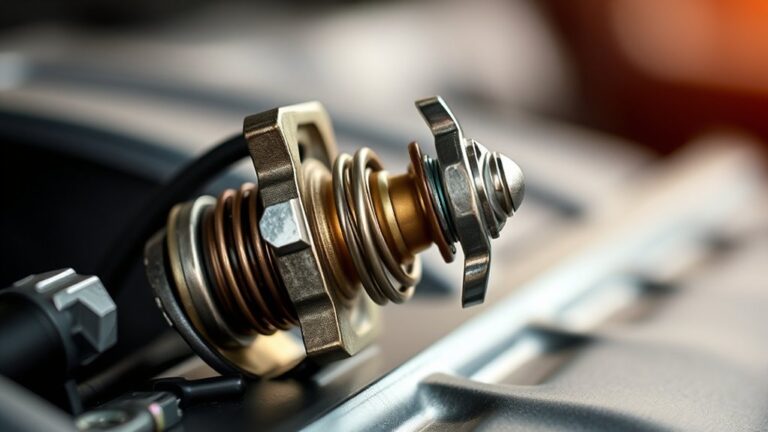
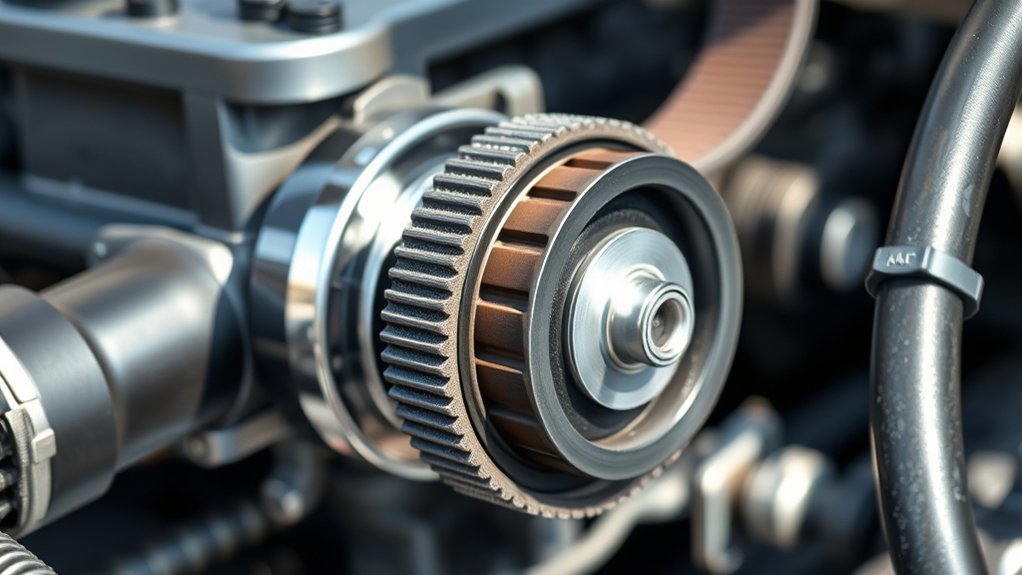
A timing belt tensioner keeps your engine’s timing belt tight and aligned as speed, temperature, and load change. Its spring-loaded arm, eccentric pulley, or hydraulic actuator applies steady pressure, absorbs torque fluctuations, and compensates for belt wear and expansion.
This prevents slack, tooth skipping, and valve-timing errors while reducing vibration and component stress. If the tensioner fails, you may notice rattling, belt movement, rough running, or starting problems.
The following sections explain its types, failure causes, and maintenance.
Key Takeaways
- A timing belt tensioner applies steady pressure, keeping the belt tight and properly aligned between the crankshaft and camshaft pulleys.
- Spring-loaded, eccentric, or hydraulic mechanisms automatically compensate for belt wear, thermal expansion, and normal movement.
- The tensioner absorbs torque fluctuations and vibration, reducing belt stress and preventing tooth skipping or slippage.
- It maintains accurate valve timing during acceleration, deceleration, and changing engine speeds for smooth, efficient combustion.
- Worn tensioners may cause rattling, belt vibration, oil leaks, rough running, or timing failure, requiring prompt inspection or replacement.
What Does a Timing Belt Tensioner Do?
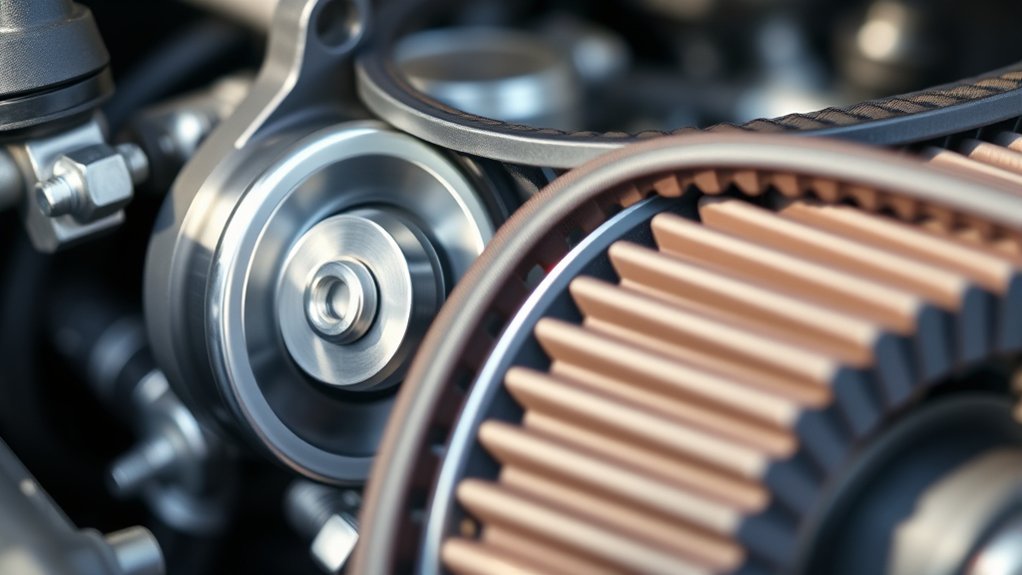
A timing belt tensioner keeps the belt tight as it synchronizes the crankshaft and camshaft. It maintains proper belt tension, preventing slack, excessive movement, and tooth skipping.
By supporting consistent timing, the tensioner helps your engine open and close its valves at the intended moments. That stability protects internal components and helps your vehicle deliver smooth, dependable performance.
A properly tensioned belt also supports fuel efficiency because accurate valve timing allows combustion to occur more effectively.
Although the tensioner doesn’t control engine lubrication, its reliable operation helps prevent belt failure that could damage components responsible for oil circulation.
You’ll usually find the tensioner working alongside an idler pulley and other timing-system parts. However, its job remains distinct: it preserves the belt’s required tension throughout engine operation.
When the tensioner wears, you may notice rattling, whining, rough running, or starting problems.
Replacing it according to your manufacturer’s maintenance schedule helps protect the timing system and avoid costly engine damage.
How Does a Timing Belt Tensioner Work?
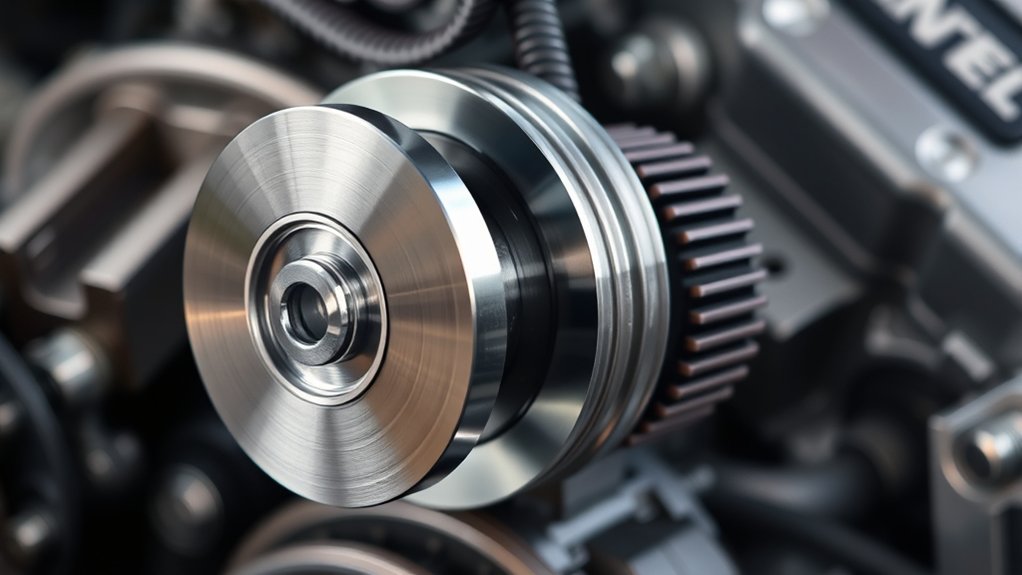
A timing belt tensioner keeps the belt at the right tension while you drive. This steady pressure helps prevent the belt from slipping on the pulleys and throwing off the engine timing. Now, let’s look at how its components maintain that tension.
Maintains Belt Tension
As the engine runs, the timing belt tensioner keeps steady pressure on the belt so it stays tight against the camshaft and crankshaft pulleys. Its spring-loaded arm or hydraulic mechanism adjusts that pressure as the belt expands, contracts, and experiences normal wear.
You’ll get consistent belt tension, which helps the camshaft and crankshaft maintain their precise relationship during every engine cycle. Proper tension also reduces vibration and limits stress on the belt, pulleys, and bearings.
As a result, your engine can operate smoothly and quietly without placing unnecessary loads on connected components. Although engine lubrication doesn’t directly control tension, it protects related moving parts from excessive friction.
That support helps preserve reliable operation and fuel efficiency. You’ll need correct tension specifications during installation to support lasting performance and accurate valve timing.
Prevents Belt Slippage
Proper tension also prevents the timing belt from slipping on the crankshaft and camshaft pulleys. As you drive, the tensioner keeps consistent pressure against the belt, preserving its grip as engine speed and temperature change.
This control protects camshaft alignment, ensuring the valves open and close at the correct moments. Without enough tension, the belt can jump teeth, disrupting pulley synchronization and causing rough operation, power loss, or internal engine damage.
Excessive tension creates different risks, including accelerated wear on the belt, pulleys, and tensioner bearing. You should inspect the tensioner whenever you service the timing belt, checking for worn components, unusual movement, or noise.
Replacing damaged parts promptly helps maintain reliable engagement. By keeping the belt seated firmly, the tensioner supports accurate timing and helps your engine run smoothly.
How Does It Keep the Belt Tight?
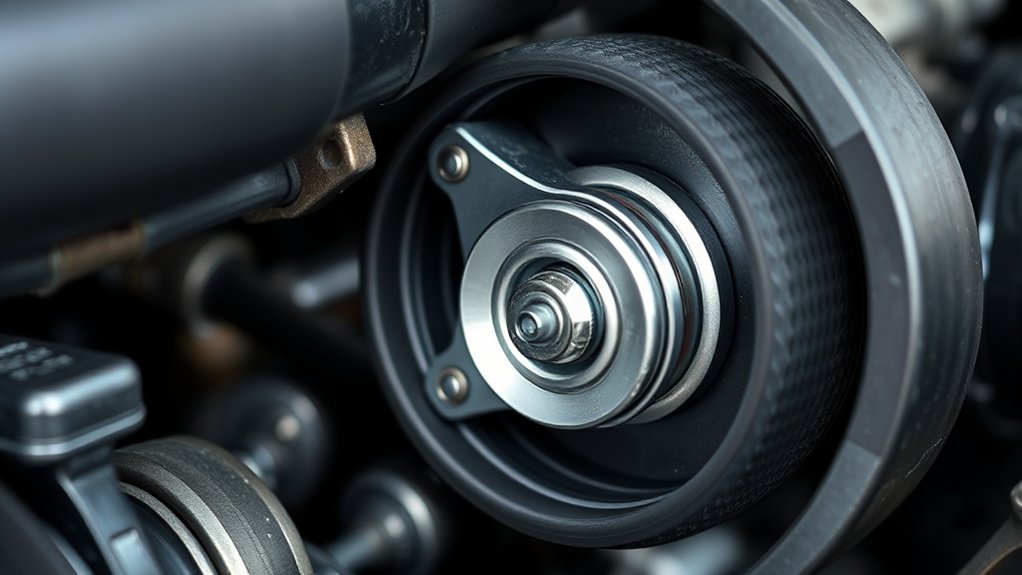
A spring-loaded tensioner keeps your timing belt tight by applying steady pressure. As the belt stretches or conditions change, the tensioner automatically adjusts its position. That consistent pressure helps maintain proper belt engagement and engine timing.
Spring-Loaded Tension
Spring-loaded tension keeps the timing belt tight by pressing an idler pulley against its slack side. As the belt moves, the spring applies steady force, reducing slack and helping the belt maintain proper engagement with the camshaft and crankshaft sprockets.
You’ll find this design in tensioners that use a coiled spring, torsion spring, or spring-loaded arm. The spring’s preload provides enough pressure to limit vibration without placing excessive strain on the belt, bearings, or water pump.
During installation, you’ll set the tensioner according to the manufacturer’s specifications. Some systems combine spring force with a hydraulic mechanism for damping movement, while others require manual adjustment to establish the correct initial tension.
You should inspect the spring, pulley, and mounting hardware for wear before fitting a replacement belt.
Automatic Belt Adjustment
Automatic belt adjustment uses a pivoting arm, eccentric pulley, or hydraulic actuator to maintain the timing belt’s tension as it wears and expands with heat. As you drive, the mechanism responds to changes in belt length and movement, repositioning the pulley to remove developing slack.
You don’t need to adjust it manually during normal operation, because the tensioner compensates for gradual wear and temperature-related expansion. This automatic action helps the belt stay engaged with the camshaft and crankshaft teeth, preserving Camshaft synchronization and accurate Engine timing.
During installation, you must set the tensioner correctly and align its indicator marks, if provided. Otherwise, the adjustment range may become limited, allowing the belt to loosen, jump teeth, or suffer premature wear before its recommended replacement interval.
Consistent Belt Pressure
As the timing belt moves, the tensioner applies steady force through its spring, hydraulic actuator, or eccentric mechanism, keeping the belt firmly against the crankshaft and camshaft sprockets. This pressure prevents slack, tooth skipping, and harmful vibration as engine speed changes.
You’ll get accurate valve timing, smoother operation, and less wear on related components. Unlike clutch maintenance, which addresses engagement parts, tensioner service protects synchronization directly.
Consistent tension can also support Fuel efficiency by helping the engine maintain precise combustion timing.
| Tensioner action | Benefit |
|---|---|
| Maintains pressure | Prevents belt slack |
| Absorbs vibration | Reduces tooth wear |
You should inspect the tensioner whenever you replace the belt. Check for leaks, rough bearings, unusual noise, or a weak spring.
If pressure drops, the belt may loosen or jump teeth, potentially causing severe valve and piston damage. Replacing worn components promptly keeps your engine reliable and efficient.
What Types of Timing Belt Tensioners Exist?
Timing belt tensioners generally fall into three types: spring-loaded, hydraulic, and manual. Each design maintains proper belt pressure differently, so you’ll need to match the tensioner to your engine’s specifications.
Spring-loaded tensioners use a built-in spring to apply steady force. They’re compact, affordable, and common in many engines, though their spring can weaken over time.
Hydraulic tensioners use pressurized oil and a piston to provide controlled, consistent tension. They operate quietly, but leaks or internal wear can reduce their effectiveness.
Manual tensioners rely on your adjustment during installation. They’re simple and durable, yet incorrect setup can cause excessive wear or slippage.
When choosing a replacement, consider compatibility, service requirements, and the manufacturer’s instructions. Timing belt materials also influence the suitable tensioner design because different belts respond differently to pressure and wear.
Pay attention to tensioner noise, which may signal a worn bearing, weak spring, or failing hydraulic mechanism. Replacing the complete tensioner assembly when recommended can help protect your engine’s valve timing system.
How Does It Handle Engine Speed Changes?
When engine speed changes, the timing belt tensioner adjusts its force to keep the belt taut and maintain accurate valve timing. As you accelerate, crankshaft speed rises, and the belt experiences greater movement and load. The tensioner’s spring, hydraulic mechanism, or automatic adjustment system responds by applying suitable pressure.
As engine speed changes, the timing belt tensioner adjusts pressure to maintain proper tension, alignment, and accurate valve timing.
This response helps control slack without overstressing the belt or pulleys. When you release the accelerator or the engine slows, the tensioner reduces or redistributes force as belt movement settles.
It also absorbs minor fluctuations caused by torque pulses, helping limit engine vibration transmitted through the belt drive. A stable tensioner keeps the belt tracking correctly as speed changes, supporting consistent belt alignment with the camshaft and crankshaft sprockets.
You may notice that the tensioner works continuously rather than only during acceleration. Its pulley or arm follows changing belt loads in real time, compensating for temperature-related expansion and normal wear while the engine operates across its speed range.
Why Does Correct Belt Tension Matter?
Maintaining the correct belt tension keeps the timing belt firmly engaged with the crankshaft and camshaft sprockets, so valve timing stays accurate. You need this precise relationship for dependable Camshaft synchronization throughout every engine cycle.
If the belt runs too loosely, its teeth may move out of position, changing when the valves open and close. If it’s too tight, excessive load can stress the belt, tensioner, water pump, and shaft bearings.
Proper tension helps the belt transfer rotational force efficiently while accommodating heat, vibration, and changing engine speed. That consistency supports complete combustion, smooth power delivery, and efficient Fuel injection timing.
Your engine control system can schedule fuel and ignition events more accurately when mechanical timing remains stable. Correct tension also helps preserve the intended compression cycle, emissions performance, and fuel economy.
What Are the Signs of a Failing Tensioner?
A failing timing belt tensioner often produces warning signs before it causes serious engine damage. You may hear unusual Engine noise, including whining, rattling, or clicking near the timing cover.
These sounds can change with engine speed and shouldn’t be ignored. You might also notice visible belt vibration, uneven movement, or slack during inspection.
Oil leaks around the timing-cover area can contaminate the belt and signal that you need professional attention.
| Sign | What you may notice | Recommended response |
|---|---|---|
| Unusual noise | Whine, rattle, or click | Stop delaying an inspection |
| Belt movement | Fluttering or slack | Have the system checked |
| Oil leaks | Wetness near the cover | Arrange prompt service |
Poor tension can cause rough running, difficult starting, or an illuminated check-engine light if belt timing shifts.
Don’t remove the cover or adjust the tensioner while the engine runs. If you spot several symptoms together, limit driving and have a qualified technician inspect the timing system.
Early diagnosis can help you avoid sudden belt failure and extensive engine damage.
What Causes Timing Belt Tensioner Failure?
Timing belt tensioner failure usually results from worn bearings, weak springs, hydraulic leaks, or contamination from engine oil and coolant. As you drive, heat, vibration, and constant belt load can accelerate these problems.
A bearing may lose lubrication, develop excessive play, or seize, preventing the pulley from turning smoothly. A mechanical tensioner’s spring can weaken with age, reducing its ability to maintain proper belt pressure.
In hydraulic designs, a damaged seal may let fluid escape, so the tensioner can’t control movement effectively. Oil and coolant contamination can degrade rubber components, alter friction, and promote corrosion.
The Timing belt material itself also affects service life. An aged, hardened, or damaged belt can place uneven loads on the tensioner.
Incorrect belt alignment, excessive tension, and neglected maintenance add further stress. You may notice Tensioner noise, but failure can occur before obvious sounds appear.
Replacing the belt at its recommended interval and fixing leaks promptly helps prevent premature tensioner damage.
How Is a Timing Belt Tensioner Replaced?
Replacing a timing belt tensioner requires precise engine timing and careful access to the belt system. You’ll typically disconnect the battery, remove covers and obstructions, and rotate the crankshaft to its specified timing marks.
Before loosening the tensioner, you must secure the belt and confirm that the camshaft and crankshaft positions won’t shift.
Next, release the old tensioner according to the manufacturer’s procedure. Install the replacement, route the belt correctly, and set its tension using the specified method.
Some tensioners require an alignment pointer, while others need a torque setting or hydraulic pin removal. Tighten every fastener to the recommended specification.
Rotate the engine by hand through several complete cycles, then recheck the timing marks and tension indicator. If everything aligns, reinstall the covers and reconnect the battery.
A correctly tensioned belt supports proper valve timing, helping control Engine emissions and maintain Fuel efficiency. If timing appears incorrect, don’t start the engine; correct the installation first.
How Can You Prevent Tensioner Problems?
You can prevent tensioner problems by replacing the timing belt and tensioner at the manufacturer’s recommended intervals and inspecting them for wear, leaks, cracks, or unusual movement. Follow your vehicle’s service schedule, even if the belt appears intact, because internal wear may remain hidden.
Keep the engine clean so you can spot oil leaks near the timing cover, water pump, or tensioner. Repair leaks promptly because contaminated belts and bearings can deteriorate quickly.
Keep the engine clean, identify leaks early, and repair contamination near timing components before damage worsens.
Don’t ignore engine noise, such as whining, chirping, rattling, or grinding, especially during startup. These sounds may indicate a loose belt, failing bearing, or misaligned pulley.
Use quality replacement parts and have a qualified technician set belt tension correctly. Avoid spraying belt dressing or lubricants on the timing system, as these products can damage components or conceal symptoms.
During routine maintenance, verify proper pulley alignment and check for coolant contamination. If you notice starting problems, rough running, or visible belt damage, stop driving and arrange an inspection immediately.
Frequently Asked Questions
How Much Does Timing Belt Tensioner Replacement Typically Cost?
You’ll typically pay $300–$800 for timing belt tensioner replacement, including parts and labor. Your vehicle’s make, engine design, shop rates, and whether you need a complete belt replacement can change the total.
A tensioner cost alone may run $100–$300, while replacing the belt, tensioner, water pump, and related components together often reaches $800–$1,500.
Ask your mechanic for an itemized estimate and confirm whether the warranty covers parts and labor.
Can a Bad Tensioner Damage Other Engine Components?
Yes, a bad tensioner can turn your engine’s rhythm into a destructive drumbeat. If it loosens, the timing belt may slip or jump, disrupting engine synchronization and causing valves to collide with pistons in interference engines.
You could face bent valves, damaged pistons, or even cylinder-head repairs. A failing tensioner can also shred the belt and contaminate nearby components.
Prioritize belt maintenance, watch for rattling, and replace worn parts promptly to prevent costly damage.
Should the Water Pump Be Replaced With the Tensioner?
Yes, you should usually replace the Water pump during Tensioner replacement, especially when both components use the same timing belt. The pump may have similar service intervals, and accessing it requires much of the same labor.
Replacing it proactively prevents leaks, bearing failure, and potential belt damage later. Check your vehicle’s maintenance schedule, inspect the pump for wear, and follow the manufacturer’s recommendations before completing the repair.
How Long Can a Timing Belt Tensioner Last?
A timing belt tensioner typically lasts 60,000–100,000 miles, often matching your belt’s recommended replacement interval, or about five to seven years. You shouldn’t rely on mileage alone, because heat, oil leaks, contamination, and driving conditions can shorten its life.
During timing belt maintenance, replace the tensioner with the belt and inspect the water pump. Follow your vehicle manufacturer’s schedule, and replace it sooner if you hear whining, rattling, or notice belt slack.
Can I Drive With a Noisy Timing Belt Tensioner?
You shouldn’t drive with a noisy timing belt tensioner except briefly to reach a repair shop. A failing tensioner can loosen the belt, causing poor engine performance, a noisy engine, or catastrophic valve and piston damage if the belt jumps or breaks.
Treat unusual squealing, rattling, or grinding as a tensioner warning. Stop driving if the noise worsens, the engine misfires, or the warning light appears, and arrange towing for safety.
Conclusion
A timing belt tensioner keeps your engine’s timing precise by maintaining the belt’s correct tension as speed and temperature change. If it wears out, you may notice noise, vibration, poor performance, or starting trouble.
Replacing the timing belt tensioner with the belt at the recommended interval can prevent costly engine damage. Pay attention to warning signs and follow your vehicle manufacturer’s service schedule.
With proper care, you’ll keep this small but mighty component working smoothly and your engine running in harmony.