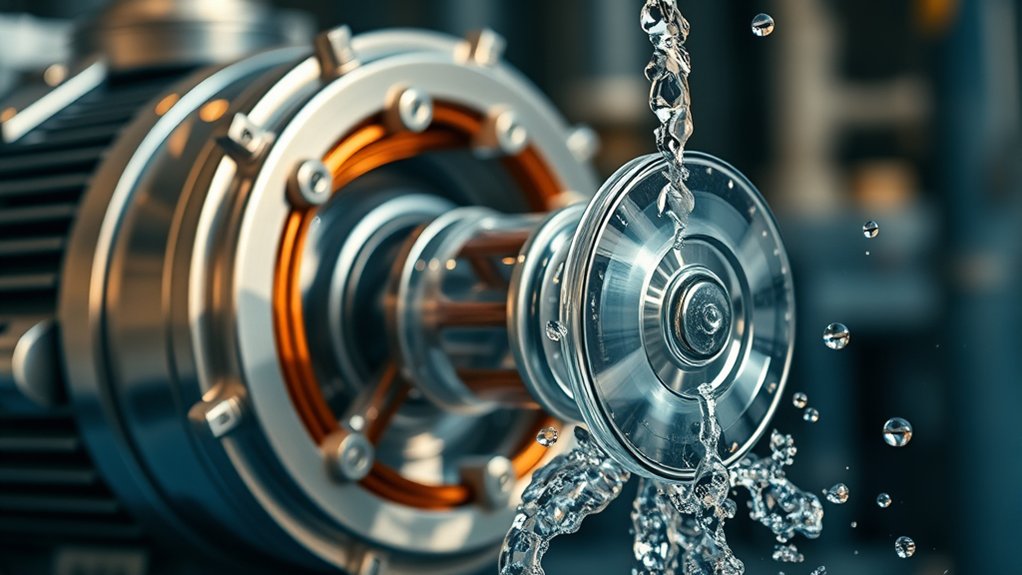
How Does an Electric Water Pump Work Step by Step
Many people struggle to choose the right electric water pump, especially when they need reliable flow without confusing installation requirements. You’re not alone—understanding how these pumps work can make it easier to compare models and find one that suits your system.
An electric water pump converts electricity into motor power, spinning an impeller through a shaft. First, the rotating impeller creates low pressure at the inlet, drawing water through a sealed, screened intake.
Next, curved blades accelerate the water outward, while the casing converts that velocity into pressure.
Finally, pressurized water exits through the outlet and travels through your piping.
Sensors, valves, or variable-speed drives regulate flow.
Submersible and self-priming models use specialized startup methods you’ll learn about next.
Key Takeaways
- Electricity powers the motor, creating magnetic fields that rotate the shaft and attached impeller.
- The rotating impeller creates low pressure at the inlet, drawing water through the intake.
- Curved impeller blades accelerate water outward, while the casing converts velocity into pressure.
- Pressurized water exits through the outlet and travels through connected pipes to its destination.
- Sensors, valves, pressure tanks, or variable-frequency drives regulate flow, pressure, and motor speed as demand changes.
What Is an Electric Water Pump?
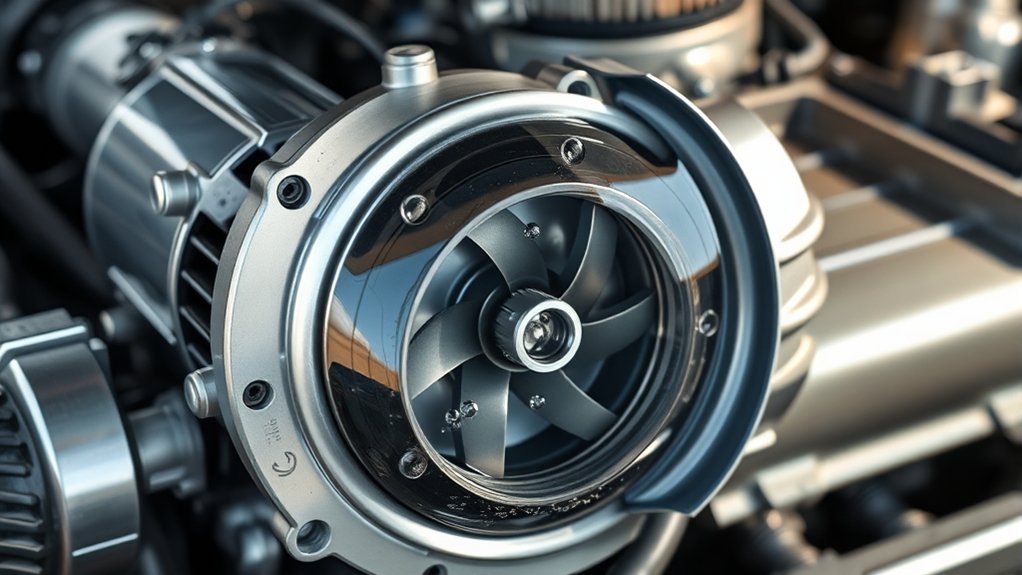
An electric water pump is a device that uses an electric motor to move water through pipes, tanks, or other systems. You’ll find one in homes, gardens, wells, heating equipment, and industrial facilities.
Electric water pumps move water efficiently through pipes and systems in homes, gardens, wells, and industrial facilities.
Its housing contains an inlet, an outlet, an impeller or diaphragm, seals, and connections that guide water from one location to another.
When you use a pump, you can supply water to faucets, circulate it through a heating loop, drain a flooded area, or irrigate plants.
Different designs suit different tasks. Centrifugal pumps work well for steady flow, while diaphragm pumps handle pressure demands and some contaminated liquids.
You’ll need to match the pump’s flow rate, pressure, water temperature, and material compatibility to your system. Proper sizing prevents poor performance and unnecessary wear.
Regular pump maintenance, including inspections and seal checks, helps extend service life. Water filtration can also protect internal parts by removing sand, grit, and debris before they enter the pump.
How Do Electric Pumps Power the Motor?
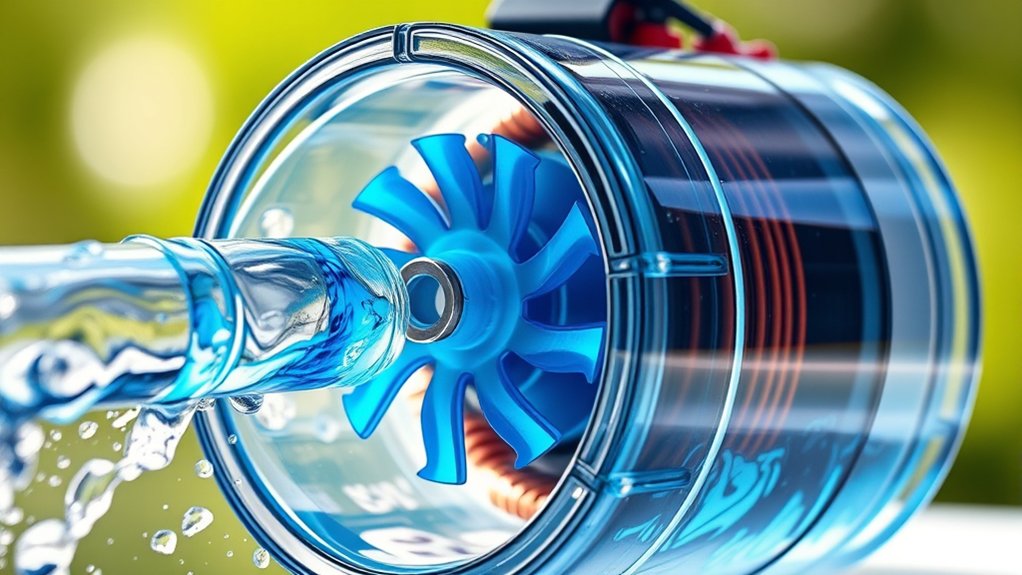
You send electrical energy to the motor, which converts it into mechanical power. Inside the motor, magnetic fields drive the moving components. That energy then transfers through the impeller shaft. As the shaft rotates, it spins the impeller and moves the water.
Electrical Energy Conversion
Electric water pumps convert electrical energy into mechanical energy that turns the impeller. When you switch on the pump, electricity enters the motor through its wiring and control components.
The motor’s internal coils use this current to produce torque, which drives the connected shaft and impeller. As the impeller spins, it transfers energy to the water, creating flow and pressure.
The pump’s voltage and current ratings must match the power supply, or overheating and poor performance can result. You’ll improve Energy efficiency by choosing the correct pump size, limiting unnecessary restrictions, and checking for leaks.
Regular Pump maintenance also keeps electrical connections secure and reduces resistance. Before servicing, you should disconnect power to prevent electric shock.
A properly supplied motor delivers steady operation while using electricity responsibly.
Motor Magnetic Fields
Inside the motor, current flowing through the coils creates magnetic fields that attract and repel the rotor’s magnets. As your controller switches electrical current between coil groups, it changes the magnetic fields’ strength and direction in a precise sequence.
The rotor responds to these changing forces, producing the motor’s driving power without direct mechanical contact between the energized coils and permanent magnets. You can think of this process as controlled magnetic pushing and pulling.
The motor’s design determines how effectively it converts electrical input into usable force. Proper voltage, current, and coil alignment help maintain strong, stable fields and reduce wasted energy.
Consequently, magnetic fields play a central role in pump efficiency. Insulation, bearings, and cooling also protect the motor’s electromagnetic performance during continuous operation, helping you achieve reliable water movement.
Impeller Shaft Rotation
Those changing magnetic fields make the rotor spin, transferring motor power to the impeller through the shaft. As the rotor turns, the shaft carries this torque directly into the pump chamber.
You’ll see the impeller rotate at the same speed when the coupling or motor shaft connects properly. Its curved blades then push water outward, creating pressure and steady flow through the outlet.
Impeller design determines how efficiently the pump converts rotation into movement. Blade angle, diameter, and shape affect flow rate and energy use.
Shaft alignment also matters. When the shaft stays centered, bearings experience less friction, seals remain tight, and the motor runs quietly.
If alignment slips, vibration, heat, and wear can increase quickly. Regular inspection helps you maintain smooth rotation and reliable electric pump performance.
How Do Electric Water Pumps Draw Water In?
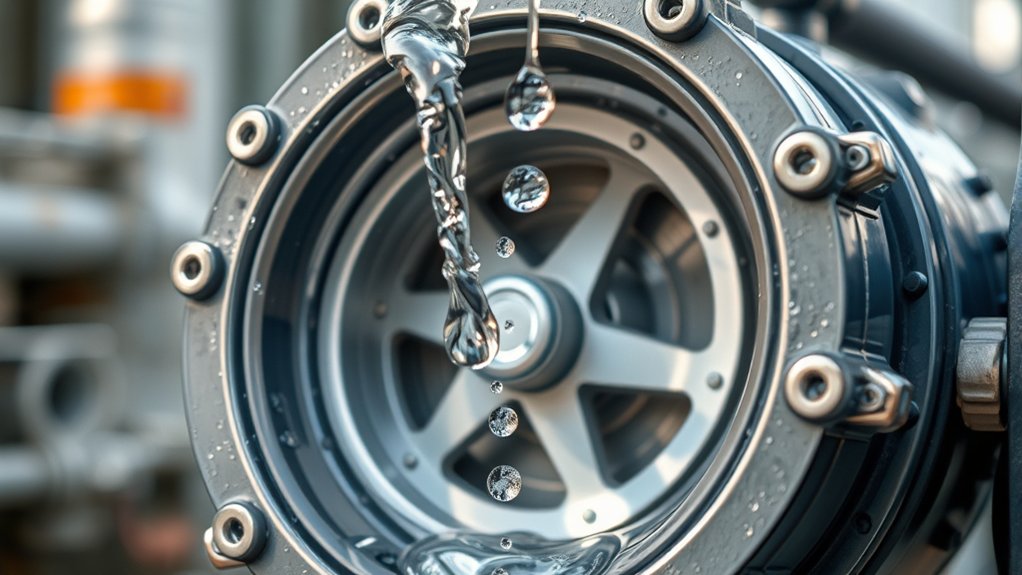
When you switch on an electric water pump, its motor spins an impeller that creates a low-pressure area at the inlet. You’ll see this pressure difference pull water from a tank, well, or supply line through the suction pipe.
Atmospheric pressure, or pressure from a raised source, pushes water toward the pump. A tight, correctly sized inlet line helps maintain steady flow, while a foot valve or check valve prevents water from draining backward after shutdown.
Air leaks can interrupt suction, so you should seal every connection carefully. Water filtration protects the inlet from sand, leaves, and debris that could restrict flow.
Regular pump maintenance includes inspecting seals, valves, and the intake screen.
| Component | Role during intake |
|---|---|
| Inlet pipe | Carries water to the pump |
| Atmospheric pressure | Pushes water inward |
| Foot valve | Keeps the line filled |
| Strainer | Blocks damaging debris |
Prime the pump when required, and never run it dry. Without water, the inlet can’t establish reliable suction.
How Does an Impeller Build Water Pressure?
Once water reaches the pump, the spinning impeller builds pressure by accelerating it outward from the center toward the outer edge. As you examine the process, notice how each curved blade transfers energy to the water.
A spinning impeller accelerates water outward, while curved blades transfer energy and begin building pressure.
The impeller’s rotation increases velocity, while the surrounding casing gradually converts some of that velocity into pressure. This balance lets the pump create a steady force without relying on gravity alone.
Your results depend on several factors:
- Impeller design: Blade shape, diameter, angle, and clearance control how efficiently the impeller transfers energy.
- Rotation speed: A faster motor generally raises water velocity and produces greater pressure.
- Water flow dynamics: Friction, turbulence, and changing passage width affect energy conversion inside the pump.
You’ll get smoother, more consistent pressure when the impeller matches the motor and pump chamber. If the blades are damaged or clogged, they can’t move water efficiently, so pressure drops.
Proper alignment also helps you avoid vibration and uneven loading during operation.
How Does Water Leave Through the Outlet?
After the impeller raises the water’s pressure, the casing guides it toward the outlet. As you follow the water’s path, you’ll see the curved housing convert the impeller’s spinning motion into a smoother forward stream. The outlet opening connects the pump to a discharge pipe, hose, or appliance, so water can travel where you need it.
Fluid dynamics explains why the water exits efficiently: pressure pushes the liquid from the casing into the lower-pressure discharge line. The casing’s shape reduces sudden turbulence and helps keep the flow attached to its walls. A properly sealed outlet prevents leaks and keeps air from entering the system.
You should inspect this connection during Pump maintenance. Check the outlet fitting, gasket, and nearby pipe for cracks, looseness, corrosion, or dripping water. Clear debris that could obstruct the passage, but don’t alter valves or settings while examining it.
Once the outlet remains secure and unobstructed, the pump can deliver water reliably through the connected line.
How Do Pumps Control Flow and Pressure?
You can control flow with valves, bypasses, or variable-speed drives. Pressure regulation systems help maintain your target pressure by adjusting the pump’s output as demand changes. By changing the pump speed, you can fine-tune both flow and pressure for more efficient operation.
Flow Control Methods
Electric water pumps control flow and pressure by changing how quickly the impeller moves water or by regulating the water’s path through the system. You can adjust speed with a variable-speed motor, which lets the pump match demand instead of running constantly at full output.
You can also restrict or redirect water with valves, bypass lines, or adjustable outlets. These methods affect flow efficiency, energy use, and system performance.
- Set the pump speed to match your required flow rate.
- Open valves gradually to prevent sudden surges and vibration.
- Check filters, seals, and impeller passages during pump maintenance.
When you select a control method, consider pipe size, water demand, and operating schedules. A correctly sized pump responds smoothly, reduces wasted electricity, and limits component wear.
Monitor flow regularly so you can identify blockage or abnormal operation early.
Pressure Regulation Systems
Pressure regulation systems keep water moving at a steady force as demand changes. Pressure sensors monitor the pressure inside the pump or supply line and send readings to a controller.
When pressure drops as you open another faucet, the controller allows the pump to deliver more water. When demand decreases, it restricts operation to prevent excessive pressure.
A pressure switch can start or stop the pump at preset limits, while a pressure tank stores water under pressure and reduces frequent cycling.
You’ll get steadier flow, quieter operation, and less stress on pipes and fixtures.
Safety mechanisms protect the system if pressure rises too high. Relief valves release excess pressure, and shutoff controls stop operation during faults or dry-running conditions.
These safeguards help your electric pump operate reliably without exceeding its designed limits.
Pump Speed Adjustment
To match water demand, the pump adjusts its motor speed rather than running at one constant rate. A sensor monitors pressure or flow, while a variable-frequency drive changes motor speed.
When you open another faucet, the controller accelerates the motor to maintain pressure. When demand drops, it slows the pump, reducing flow and energy use.
You get steadier service without forcing the system to operate at maximum capacity.
- Low demand: The motor slows, limiting unnecessary pressure and noise.
- High demand: The motor speeds up to deliver more water quickly.
- Changing demand: The controller continuously fine-tunes output for stable performance.
This adjustment improves Energy efficiency and can reduce wear on seals, bearings, and pipes. Regular Pump maintenance keeps sensors accurate, the drive responsive, and cooling systems clear.
You should inspect electrical connections and clean filters so speed control remains reliable.
How Do Submersible Pumps Work Underwater?
Submersible pumps work underwater because their sealed motor drives an impeller that draws in surrounding water and pushes it through a discharge pipe. You place the pump directly in a tank, well, sump, or flooded area, so it doesn’t need to lift water through a long suction line.
Its Submersible design keeps electrical components protected inside a watertight housing while a screen blocks large debris from entering. During Underwater operation, water surrounds the motor and helps carry away heat, allowing continuous pumping when the unit has proper cooling and ventilation through the liquid.
When you switch on the pump, electricity creates magnetic force in the motor, turning the shaft and attached impeller. The spinning blades increase water pressure and guide flow toward the outlet.
A check valve can limit backflow after shutdown, while a float switch can start or stop pumping as the water level changes. You should inspect seals, cables, and intake screens regularly to maintain safe, reliable performance.
How Do Self-Priming Pumps Start?
When you start a self-priming pump, its priming chamber fills with water. The impeller then creates suction, drawing trapped air out of the intake line and expelling it.
Once the air is removed, water can flow continuously through the pump.
Priming Chamber Fills
A self-priming pump starts as its casing and priming chamber fill with water, usually with help from a small amount of fluid retained after the previous cycle. When you switch on the motor, the impeller begins turning inside this liquid.
You open the water inlet, allowing incoming water to enter and mix with the retained fluid. This arrangement lets the pump prepare itself without manual refilling each time.
You can recognize effective filling when:
- The priming chamber holds enough water to cover the impeller.
- The casing remains sealed, preventing fluid from draining away.
- The inlet path stays open and free of blockages.
As the chamber fills, the pump develops the liquid seal needed for startup. You should keep the pump level and check its connections, because leaks can interrupt priming and reduce performance.
Air Gets Expelled
Once the priming chamber holds enough water, the spinning impeller mixes that water with trapped air and drives the mixture toward the pump’s discharge outlet.
As you run the pump, this pressure pushes air through the discharge line while water circulates back through the chamber. Each cycle removes more air, allowing the impeller to create a stable flow and establish suction from the water source.
This air expulsion process lets your self-priming pump start without manual filling after every use, provided the chamber retains water and the suction line stays sealed.
You’ll know priming has finished when the discharge becomes steady and air-free. For reliable starts, include leak checks and valve inspections in your pump maintenance routine.
Stop the pump if it runs dry, because overheating can damage seals and the impeller.
Why Do Electric Water Pumps Lose Performance?
Electric water pumps lose performance when wear, clogs, electrical faults, or air leaks restrict the system’s ability to move water. You may notice weaker flow, unusual noise, overheating, or longer operating times.
Dirt can block the impeller, while scale buildup narrows passages and increases resistance. A damaged seal lets air enter, preventing the pump from maintaining steady pressure.
Worn bearings, corroded wiring, or a failing motor can also reduce speed and output.
You can prevent many problems by focusing on three areas:
- Inspect regularly: Check connections, seals, hoses, and the impeller for damage or debris.
- Control contaminants: Use Water filtration to keep sediment from reaching internal components.
- Follow Pump maintenance: Clean the housing, remove scale, lubricate approved parts, and replace worn seals promptly.
If performance suddenly drops, switch off power before investigating. Never run the pump dry, because friction and heat can damage its components quickly.
Prompt cleaning and repairs help restore reliable circulation and extend service life.
How Do You Choose the Right Electric Water Pump?
Choosing the right electric water pump starts with matching its flow rate, pressure, power source, and materials to your system’s requirements. Estimate the gallons per minute and total head, including elevation and pipe resistance.
Then choose a pump that meets those demands without excessive energy use.
| Requirement | What to check |
|---|---|
| Flow rate | Required gallons per minute |
| Pressure | Total head and system resistance |
| Power | Voltage, amperage, and efficiency |
| Materials | Fluid compatibility and durability |
For clean water, a standard centrifugal pump may work well. Water filtration systems often need steady pressure and corrosion-resistant components, while dirty water requires a solids-handling design.
Check inlet and outlet sizes, temperature limits, noise, controls, and installation space before buying. Select a reputable model with accessible replacement parts and clear warranty coverage.
Finally, consider Pump maintenance: choose a pump with easy inspection, cleaning, and seal replacement.
Matching capacity carefully prevents overheating, poor performance, and unnecessary operating costs while extending service life.
Frequently Asked Questions
How Much Electricity Does an Electric Water Pump Typically Consume?
An electric water pump typically consumes 100 to 1,500 watts, depending on its size, flow rate, pressure, and operating time. A small household pump may use 200–500 watts, while larger well or industrial models require more.
To estimate daily power consumption, multiply wattage by hours of operation, then divide by 1,000 for kilowatt-hours. You’ll reduce costs by choosing an efficient model, maintaining it properly, and improving energy efficiency.
How Often Should an Electric Water Pump Be Maintained?
How often should you maintain your electric water pump? Follow a routine maintenance schedule: inspect it monthly for leaks, unusual noise, vibration, loose connections, and reduced flow.
Clean the intake and housing every three to six months, depending on water quality and usage. Check seals, bearings, wiring, and filters annually, or follow the manufacturer’s instructions.
Increase your inspection frequency if you operate the pump continuously or in dusty, corrosive, or demanding conditions.
Can an Electric Water Pump Run Dry Without Sustaining Damage?
No, you shouldn’t let an electric water pump run dry because insufficient water can overheat seals, damage bearings, and reduce pump efficiency.
Some self-priming or dry-run-rated models include protective features, but you should still check the manufacturer’s specifications.
If your pump loses its water supply, switch it off immediately, inspect it for damage, and restore proper priming before restarting. Running dry can also increase power consumption and shorten the pump’s service life.
What Safety Precautions Should You Follow When Installing an Electric Water Pump?
Treat installation safety like building a shield: you’ll safeguard yourself, your pump, and your home. First, switch off power at the breaker and verify it’s dead before handling wires.
Follow the manufacturer’s instructions, use correctly rated cables, and guarantee proper electrical grounding through a qualified circuit. Keep connections dry, sealed, and raised above standing water.
Secure the pump firmly, install required valves, and check for leaks before restoring power. Never operate it dry.
How Long Does an Electric Water Pump Usually Last?
You can expect an electric water pump to last about 5–15 years, depending on water quality, operating hours, installation, and maintenance.
You’ll extend its life by preventing dry running, cleaning filters, checking seals, and addressing leaks promptly.
Watch for increased pump noise, reduced flow, overheating, or cycling, which may signal wear.
Maintaining proper energy efficiency also reduces motor strain.
Follow the manufacturer’s service schedule, and replace the pump when repairs become frequent or uneconomical.
Conclusion
Now that you understand how an electric water pump works, you can see it as a tireless relay team: the motor starts the race, the impeller builds momentum, and the outlet delivers water where you need it.
Choose the right pump by matching its flow rate, pressure, lift, and application. A small 2023 garden-pump test showed that clogged inlets can dramatically reduce output, proving that regular maintenance matters.
Keep filters clean and prevent dry running to help your pump provide dependable service for years. Understanding how an electric water pump works makes it easier to choose, use, and maintain the right model.