
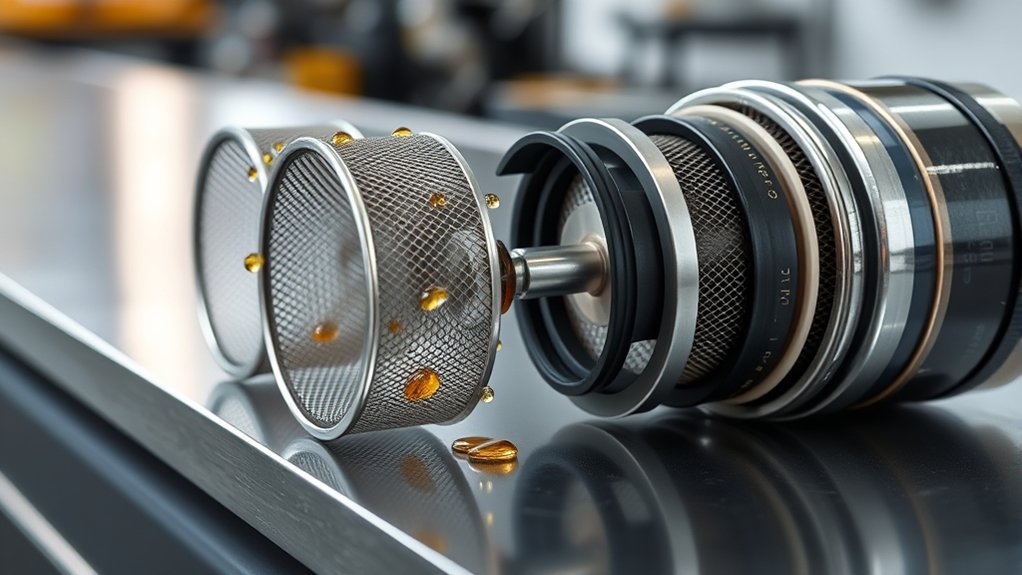
How Does a Reusable Oil Filter Work Step-by-Step
Regular oil-filter replacement can be messy, costly, and easy to forget. If you want cleaner oil and fewer disposable parts, you’re not alone—many drivers are looking for a simpler, more sustainable option. Understanding how a reusable oil filter works can help you choose and maintain the right one.
A reusable oil filter works by sending oil from the pump into a durable housing, where stainless-steel mesh or pleated media traps dirt, sludge, and metal particles.
Clean oil then exits through the outlet and returns to lubricate engine components.
A bypass valve maintains flow when oil is cold or the media is restricted, while an anti-drainback valve prevents emptying.
You’ll need to inspect and clean the filter regularly, and the steps below explain proper maintenance and reuse.
Key Takeaways
- The oil pump sends dirty engine oil from the sump through passages into the reusable filter.
- Oil flows through stainless-steel mesh or pleated media that traps larger debris and fine contaminants.
- Clean oil exits the filter and returns to lubricate bearings, camshafts, pistons, and other engine components.
- Bypass and anti-drainback valves maintain oil flow during cold starts, high resistance, and engine shutdown.
- During maintenance, remove, clean, inspect, dry, and correctly reinstall the filter before checking for leaks.
What Is a Reusable Oil Filter?
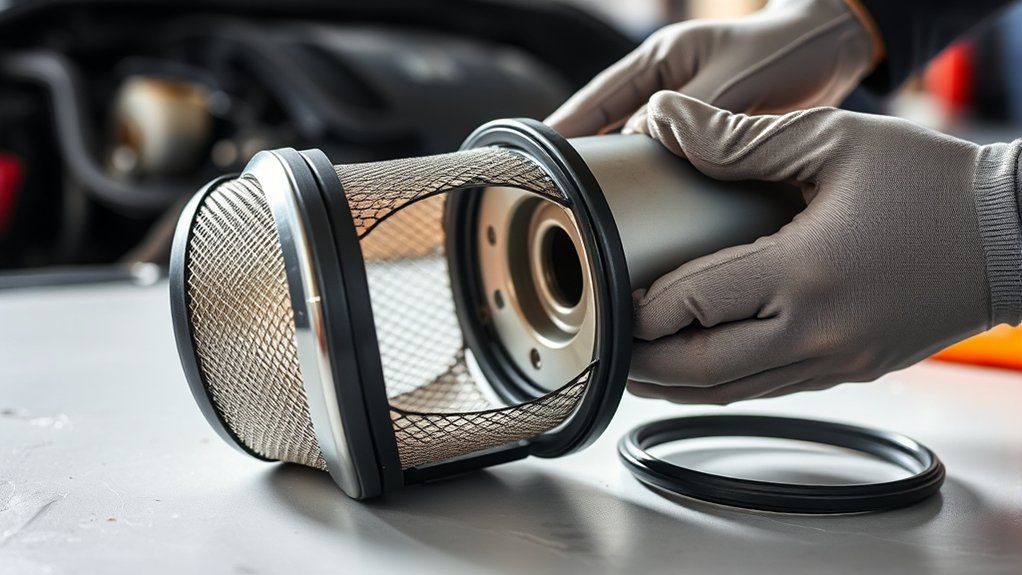
A reusable oil filter is a cleanable filter designed to trap contaminants in engine oil without requiring replacement after every service. You install it in the same filter housing or designated position, then clean and reuse it during later maintenance.
Unlike a disposable filter, it supports repeated servicing, helping you reduce the number of used filters sent to landfills or incinerators.
Reusable filters reduce waste by eliminating the need to discard a filter after every oil change.
You’ll typically choose one when you want lower long-term waste, consistent filtration, and fewer replacement purchases. Its environmental impact can be smaller because you reuse the filter rather than discard it after each oil change.
However, you still need to handle dirty oil responsibly and follow the manufacturer’s cleaning instructions.
The manufacturing process may require more durable materials and tighter construction than a conventional filter, which can increase its initial cost. In return, repeated use can offset that expense over time.
Before buying, confirm compatibility with your engine, service schedule, and driving conditions to ensure reliable protection.
The Main Parts of a Reusable Oil Filter
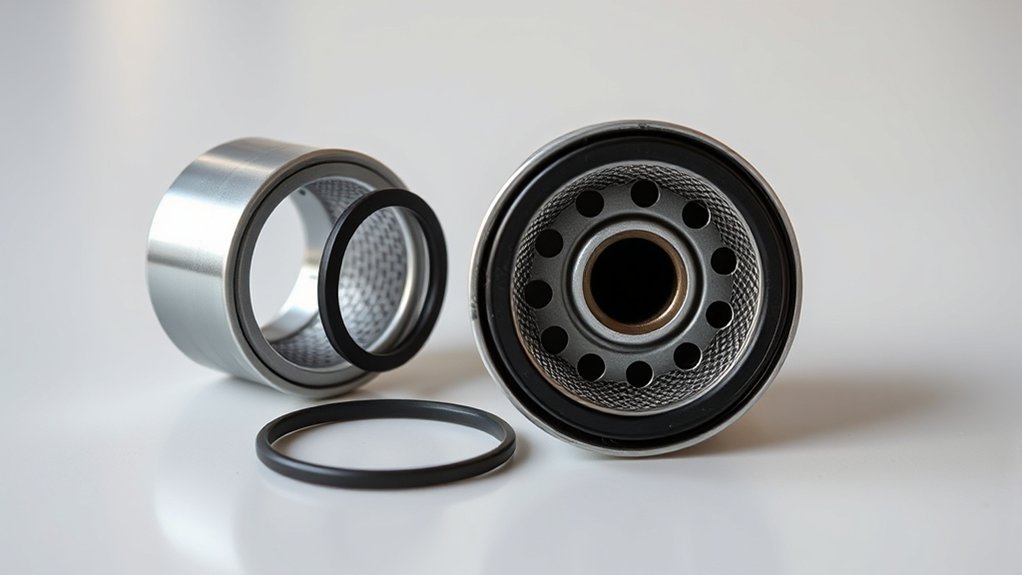
Inside a reusable oil filter, several durable parts work together to remove contaminants from engine oil. You’ll find a strong outer housing that protects the internal components and withstands pressure, heat, and vibration.
Inside, a fine stainless-steel mesh or pleated screen captures dirt, metal particles, and sludge while allowing cleaned oil to pass through. End caps hold the filtering media securely, and a center tube supports the element so it won’t collapse during operation.
Many models include a bypass valve, which opens if the media becomes restricted, and an anti-drainback valve that helps retain oil when you shut down the engine.
A threaded base or mounting connection lets you secure the filter to its housing, while a gasket creates a tight seal and prevents leaks.
Oil filter materials affect durability, cleaning, and filtration performance. During the manufacturing process, manufacturers shape, weld, and test each part to guarantee reliable service and proper fit.
How Oil Flows Into the Filter
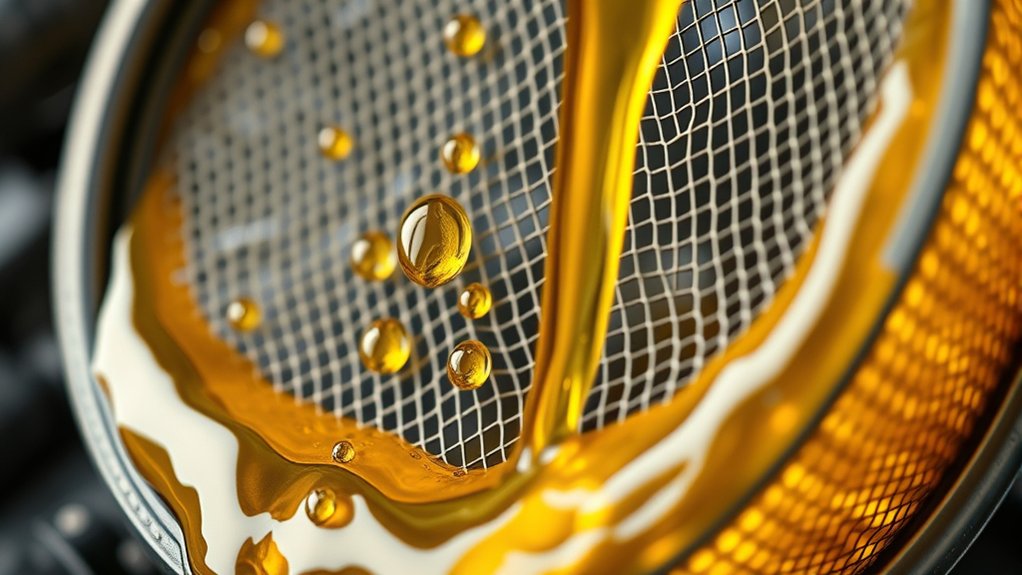
When the engine runs, the oil pump draws oil from the sump and sends it through passages toward the filter. You’ll see this oil flow enter through the filter’s inlet openings, which connect to the engine’s oil gallery and mounting base. Pressure from the pump keeps the lubricant moving, while the filter housing directs it into the reusable element.
Your filter design determines how smoothly oil reaches that element. Internal channels, seals, and support structures guide the stream without allowing leaks around the housing.
A spring or bypass assembly may also sit inside the unit, helping manage pressure when resistance changes. As oil fills the chamber, it spreads across the available surface and continues toward the outlet passage.
The engine then receives the returning oil through connected galleries. Because fittings must align correctly, you’ll need to install the filter securely and use the specified gasket.
That connection preserves steady flow during startup, acceleration, and normal driving conditions.
How the Filter Traps Dirt and Debris
As oil passes through the filter, its layered media structure captures contaminants. The fine openings trap dirt and debris while allowing clean oil to keep flowing.
Filtering Media Structure
A reusable oil filter’s media uses a network of small passages to capture dirt while allowing oil to flow through. As you examine the filtering media, you’ll find layered stainless-steel mesh or a fine, pleated screen.
These layers create a large surface area without making the filter bulky. The pore size determines which particles the structure can hold back while maintaining suitable oil flow.
A strong frame keeps each layer aligned, so pressure doesn’t collapse the passages.
- Fine mesh supports thorough filtration.
- Coarse mesh helps maintain flow.
- Pleats increase usable surface area.
- Stainless steel withstands heat and chemicals.
- Rigid supports preserve the media’s shape.
Because you can wash and reuse this structure, you’ll restore its open passages during maintenance. Always choose media designed for your engine’s oil viscosity and service demands.
Debris Capture Process
As oil enters the reusable filter, its debris-laden flow passes through progressively finer mesh that captures dirt, metal particles, and carbon deposits. You’ll see larger contaminants stop at the outer screen, while smaller particles lodge deeper within the pleated media.
This staged path prevents rapid clogging and keeps oil moving through the filter. Oil filter materials, such as stainless steel mesh or washable synthetic media, provide durable surfaces that hold debris without breaking down.
As pressure pushes oil through, the filter’s pores separate contaminants from the lubricating fluid. Its debris filtration efficiency depends on pore size, media design, oil viscosity, and the filter’s condition.
You should inspect and clean the element regularly, because accumulated debris restricts flow and can reduce protection. Proper cleaning restores capacity and maintains consistent filtration performance.
Where Filtered Oil Goes Next
Once the reusable filter removes contaminants, the cleaned oil flows back into the engine through the outlet and continues lubricating its moving parts. You’ll find it traveling through internal passages toward bearings, camshafts, pistons, and other areas that need steady protection.
Oil filtration supports smooth operation by returning oil with fewer abrasive particles after debris trapping occurs inside the filter.
From there, the oil:
- Reduces friction between moving surfaces
- Carries heat away from loaded components
- Helps protect bearings from premature wear
- Supports cleaner contact between engine parts
- Returns toward the oil pan after circulation
As the engine runs, the pump keeps moving oil through this continuous circuit. You’ll benefit from more consistent lubrication because the reusable filter helps limit contaminants before they reach sensitive surfaces.
The cleaned oil doesn’t remain in one location. It circulates throughout the engine, performs its protective work, and eventually returns to the sump.
This ongoing movement lets the filter contribute to dependable performance while preserving the oil’s useful properties between service intervals.
How Valves Prevent Drainback and Oil Starvation
Check valves help keep oil from draining out of the filter and galleries when the engine is off. When you start the engine, you won’t wait for the pump to refill empty passages, so lubrication reaches bearings, camshafts, and other moving parts sooner.
Check valves preserve oil in critical passages, delivering faster lubrication to vital engine components when you start.
The anti-drainback valve, usually a flexible silicone or rubber seal, closes against reverse flow after pressure falls. During operation, rising pressure opens it and lets oil pass through the filter media.
A pressure-relief valve provides another layer of protection. If cold, thick oil or a restricted filter creates excessive resistance, the valve opens a bypass path.
You’ll still receive oil flow, although it may temporarily receive less filtration. These valve mechanisms support smooth Oil flow regulation across changing speeds, temperatures, and pressure conditions.
Together, they reduce startup friction, prevent oil starvation, and help maintain a stable supply without interfering with the filter’s normal operation or requiring extra action from you.
When Should You Clean a Reusable Oil Filter?
Clean your reusable oil filter at the intervals recommended by the manufacturer. You may need to inspect it sooner if you notice reduced oil flow, unusual engine noises, or signs of contamination. Before reinstalling the filter, check it for metal particles and other debris.
Follow Recommended Intervals
Follow the manufacturer’s recommended cleaning interval, typically every 10,000 to 15,000 miles, or sooner if you drive in dusty conditions or notice reduced oil flow. Staying consistent protects oil filtration performance and supports reliable engine lubrication.
Add cleaning to your maintenance schedule, coordinating it with oil changes when practical. Don’t wait for warning signs if your vehicle works hard, travels off-road, or frequently operates in stop-and-go traffic.
- Check your vehicle or filter manufacturer’s mileage recommendation.
- Record each cleaning date and mileage in your service log.
- Set a calendar reminder before the next interval arrives.
- Use shorter intervals for severe driving conditions.
- Reinstall the filter only after completing its specified cleaning and drying process.
Following a predictable routine helps you avoid neglected maintenance and keeps the reusable filter working efficiently between services. Always follow the manufacturer’s instructions for cleaning products, drying time, and reinstallation to prevent damage.
Inspect For Debris
Inspect the reusable oil filter for trapped dirt, metal particles, or sludge whenever you remove it for service. Check the element under bright light, and look closely between pleats, screens, or mesh.
Moderate debris accumulation usually means the filter is doing its job, but heavy buildup can restrict oil flow and requires immediate cleaning. Pay attention to glitter-like particles, which may indicate internal engine wear rather than ordinary contamination.
Examine the gasket, housing, and oil filter materials for cracks, distortion, or hardened surfaces. If you spot tears or permanent damage, replace the filter instead of washing it.
Clean the filter whenever inspection reveals significant contamination, after severe driving conditions, or whenever the oil appears unusually dirty. Don’t reinstall it until it’s completely clean and dry.
How to Clean and Reinstall the Reusable Oil Filter
Once the filter is removed, clean it with an approved solvent or warm, soapy water, depending on the manufacturer’s instructions. Check the engine temperature first. A cool engine protects your hands and prevents burns.
Let the filter drain, then wash away trapped particles without damaging its mesh or pleats. Oil viscosity can affect how quickly residue leaves the filter, so give thicker oil extra time to drain.
- Spray or soak the filter as directed.
- Brush gently with a soft, clean brush.
- Rinse until the water or solvent runs clear.
- Dry completely with compressed air or a lint-free cloth.
- Inspect the seal, housing, and filter media for damage.
Before reinstalling, lightly coat the gasket with fresh engine oil. Seat the filter firmly in its housing, ensuring it sits straight and seals evenly.
Tighten the cap or fasteners to the manufacturer’s torque specification. Don’t overtighten them.
Refill the engine with the recommended oil, run it briefly, and inspect for leaks. Shut the engine off, wait several minutes, and confirm the oil level before driving.
Reusable vs. Disposable Oil Filters
When comparing reusable and disposable oil filters, look at both cost and longevity over the filter’s service life. A reusable filter can save you money on replacements, but it requires regular cleaning and maintenance. Disposable filters are easier to manage and deliver consistent performance, while reusable models can offer better long-term value when properly cared for.
Cost and Longevity
Reusable oil filters typically cost more upfront, but you can clean and reinstall them through multiple oil changes, reducing replacement purchases over time. Their long service life may offset the initial price, especially if you keep your vehicle for years.
Disposable filters cost less today, yet repeated purchases can exceed a reusable filter’s cost.
- Compare the initial price with your expected ownership period.
- Check the filter’s rated lifespan before buying.
- Factor in replacement media, seals, or cleaning supplies.
- Look for material durability that supports repeated use.
- Consider environmental impact from fewer discarded filters.
You’ll save most when you follow the manufacturer’s replacement schedule and choose a filter sized for your vehicle.
A reusable model can provide better long-term value, while a disposable option may suit short-term ownership or tighter budgets. Calculate total costs rather than judging by the checkout price.
Maintenance and Performance
Beyond long-term cost, maintenance demands and filtration performance should guide your choice. With a reusable filter, you’ll remove, clean, inspect, and reinstall the element at each service interval. Follow the manufacturer’s cleaning method and replace damaged seals or media promptly.
You’ll spend more time servicing it, but you can monitor wear and prevent restricted oil flow. Disposable filters offer simpler maintenance: you’ll replace the entire unit and seal, then recycle or discard them according to local rules.
Their performance remains consistent when you choose the correct micron rating and change them on schedule. Compare oil filter materials, because stainless-steel mesh, synthetic media, and cellulose trap particles differently.
Also consider environmental impact. Reusable designs reduce replacement waste, while cleaning requires supplies and responsible handling of oily residue. Your driving conditions should determine the best balance.
Reusable Oil Filter Maintenance
How do you keep a reusable oil filter working effectively? Clean and inspect it at every oil change. Remove the filter carefully, drain excess oil, and wash away trapped debris with approved solvent. Let it dry completely before reinstallation; moisture can dilute oil and encourage corrosion.
- Check the pleats, seals, threads, and housing for damage.
- Confirm the filter fits securely and the gasket seats evenly.
- Follow the manufacturer’s cleaning and service intervals.
- Use compatible oil and replace damaged parts immediately.
- Record service dates to prevent missed maintenance.
Your choice of Oil filter materials affects cleaning methods and service life. Stainless-steel mesh may tolerate repeated washing, while specialized synthetic media might require gentler handling.
Always verify Engine oil compatibility, because unsuitable oil can degrade seals, restrict flow, or reduce filtration. After installation, tighten the filter to the specified torque, start the engine, and check for leaks.
Monitor oil pressure and engine performance during the next drive. If contamination remains or flow seems restricted, clean the filter again or replace it.
Proper maintenance protects internal components, supports consistent lubrication, and helps your reusable filter deliver reliable performance.
Frequently Asked Questions
Can Reusable Oil Filters Improve Engine Performance or Fuel Efficiency?
Yes, a reusable oil filter can support engine performance and fuel efficiency, but you’ll usually notice only modest gains. Its durable construction and cleanable media may maintain consistent filtration, helping preserve engine cleanliness and reduce abrasive wear.
A properly maintained filter can also offer a longer filter lifespan than disposable alternatives. However, you won’t gain meaningful efficiency if you neglect cleaning, damage the filter, or use unsuitable oil. Follow your manufacturer’s maintenance schedule.
Are Reusable Oil Filters Compatible With Synthetic and Conventional Motor Oils?
Ironically, a reusable oil filter is compatible with both synthetic and conventional motor oils, despite being designed for repeated service.
Synthetic compatibility usually depends on the filter’s materials, seals, and manufacturer specifications, not the oil’s origin.
For oil type considerations, choose the viscosity and formulation your engine requires, then clean the filter thoroughly during each change.
Don’t mix incompatible additives, and replace damaged components promptly to protect engine performance.
How Much Does a Reusable Oil Filter Typically Cost?
You’ll typically pay $20–$60 for a reusable oil filter, though premium stainless-steel models can cost $80–$150. Your exact price depends on your vehicle, filter material, brand, and included cleaning tools.
For a useful cost comparison, disposable filters usually cost $5–$15 each, while reusable options can reduce long-term spending after several oil changes. Check the manufacturer’s fitment guide before buying, and factor in cleaning supplies and replacement seals.
Do Reusable Oil Filters Affect Vehicle Warranties?
A hypothetical example: you install a reusable oil filter, then your engine fails under warranty. The filter alone shouldn’t void coverage, but you’ll need to prove it didn’t cause the damage.
Warranty implications depend on your vehicle’s manufacturer policies, maintenance requirements, and local law. Keep receipts, document servicing, and choose an approved filter.
If the manufacturer denies a claim, ask for written evidence linking the filter to the failure.
What Environmental Benefits Do Reusable Oil Filters Provide?
Reusable oil filters reduce waste because you clean and reuse them instead of discarding disposable filters after each oil change. You also lower demand for filter materials, manufacturing energy, packaging, and transportation.
Through proper maintenance, you support pollution reduction by keeping used filter media and trapped oil out of landfills. Follow local guidelines for Eco friendly disposal of cleaning fluids and captured residue.
You’ll save resources while potentially reducing long-term maintenance waste.
Conclusion
A reusable oil filter can save money and reduce waste, but only when you maintain it correctly. By understanding how oil enters, passes through the filtering media, and returns to your engine, you’ll know when cleaning is necessary.
Why risk restricted oil flow when a thorough inspection takes only minutes? Clean the filter at the recommended intervals, replace damaged parts, and reinstall it securely.
With consistent care, you’ll help protect your engine and keep filtration working effectively. Following these steps will help you understand how a reusable oil filter works step-by-step.