How Does a Tire Inflator Work Step-by-Step
Low tire pressure can be frustrating, especially when you’re in a hurry or far from a gas station. You’re not alone—many drivers struggle with knowing how a tire inflator works and when to stop filling.
This guide explains the process step by step so you can inflate your tires with confidence.
You connect the inflator’s hose to the tire valve and secure the fitting. When you switch it on, its motor draws outside air through an intake filter and drives a piston or diaphragm to compress it.
Pressurized air travels through a one-way check valve and hose into the tire. The gauge tracks pressure as the tire fills.
You stop manually or use automatic shutoff at the recommended level, replace the valve cap, and can learn troubleshooting tips below.
Key Takeaways
- Connect the inflator’s hose securely to the tire valve and ensure the power source is properly connected.
- The motor drives a piston or diaphragm, drawing outside air through an intake filter.
- The compressor compresses the air, increasing its pressure before sending it through the hose.
- A check valve directs air into the tire while preventing pressurized air from flowing backward.
- Monitor the gauge, stop at the recommended pressure, disconnect the hose, and replace the valve cap.
Identify the Main Tire Inflator Parts
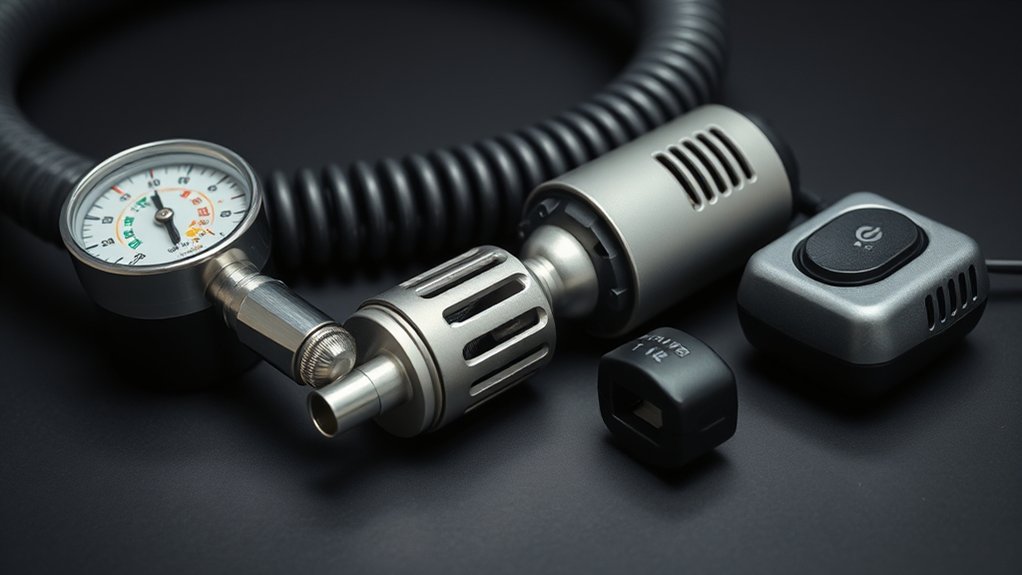
A tire inflator uses several key parts to move air into your tire: a motor, compressor, air hose, pressure gauge, control switch, and power source. The motor supplies energy, while the compressor converts that energy into pressurized air.
You’ll find the hose carrying air from the compressor toward the tire valve, though you’ll connect it during the next step.
The pressure gauge shows the current pressure, helping you compare it with your vehicle manufacturer’s recommended level. A digital display may provide an easier reading than an analog dial.
The control switch starts or stops inflation, and some models include an automatic shutoff that prevents overinflation. Your inflator may use a wall outlet, vehicle socket, or rechargeable battery.
The control switch manages inflation, while automatic shutoff features and versatile power options improve safety and convenience.
For tire inflation safety, inspect each part for cracks, loose wires, or damage before operation. Follow inflator maintenance tips by cleaning the air filter, checking the hose, and storing the unit somewhere dry.
Understanding these parts helps you operate the inflator confidently.
Connect the Inflator to the Tire Valve
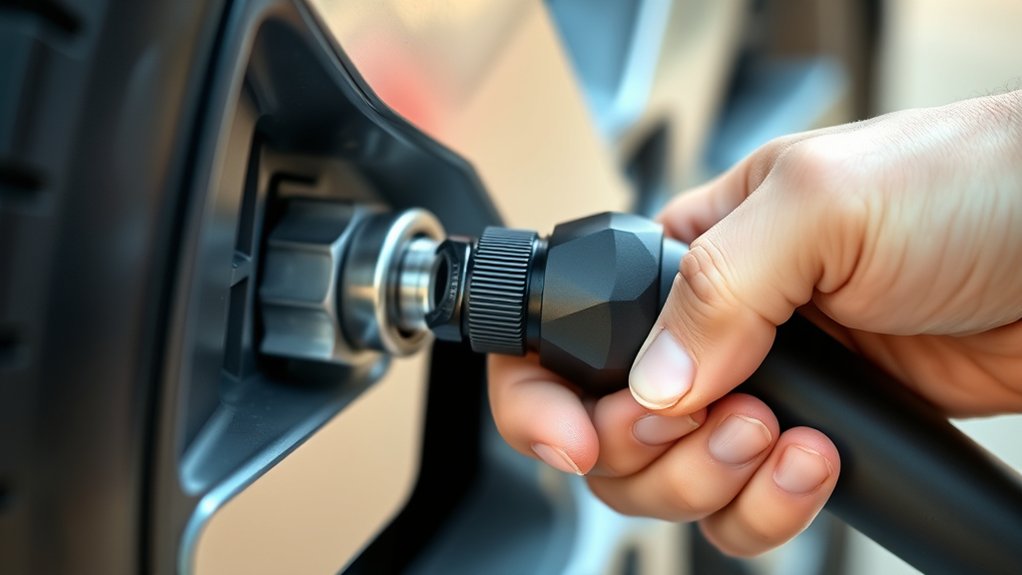
Once you’ve identified the main parts, attach the air hose firmly to the tire valve. Remove the valve cap and place it somewhere clean so you won’t lose it.
Press the hose connector straight onto the valve stem, then secure the lever or twist the fitting, depending on your inflator’s design. A proper connection should feel tight and shouldn’t hiss around the edges.
If you hear escaping air, release the connector, check the valve stem for dirt or damage, and reconnect it.
Before switching on the unit, confirm that the hose won’t bend sharply or snag on nearby objects. Follow basic Tire inflation safety: keep your face and hands away from the valve, wear eye protection when recommended, and never exceed the pressure listed on the tire sidewall or vehicle placard.
When you finish, turn off the inflator, remove the connector carefully, and replace the valve cap. Good Inflator storage tips include coiling the hose loosely and keeping fittings clean and dry.
How a Tire Inflator Draws in Air?
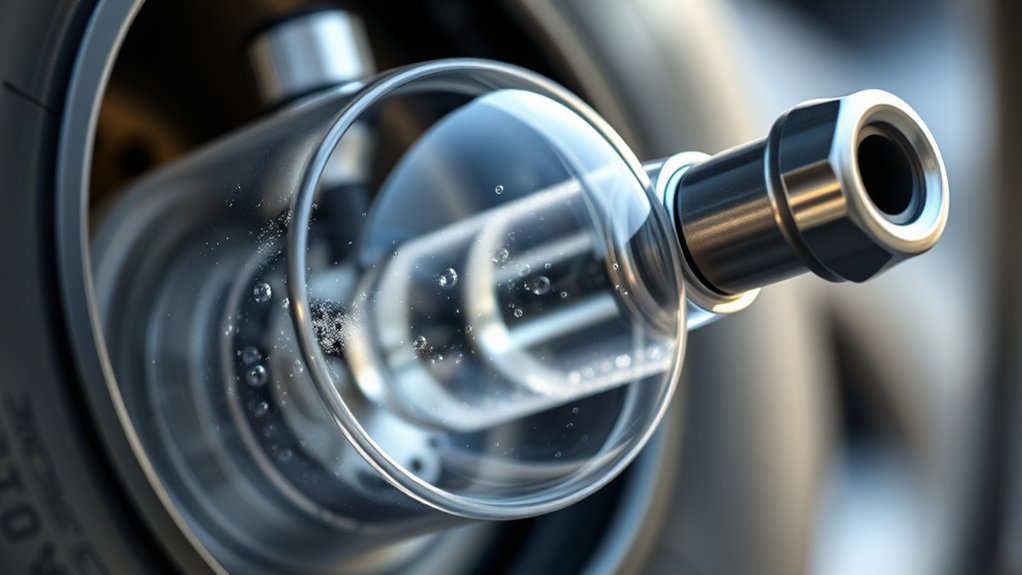
How does a tire inflator draw in air? Once you connect the hose to the valve, the inflator’s motor powers a small piston or diaphragm. As this part moves backward, it enlarges an internal chamber and creates lower pressure than the surrounding atmosphere.
Air then enters through an intake opening, passing a filter that helps block dust and debris. An inlet valve controls this one-way flow, opening during the intake stroke and closing afterward. You don’t need to add air manually; the machine continually repeats this cycle.
| Part | Role |
|---|---|
| Intake filter | Traps debris |
| Inlet valve | Controls airflow |
Clean intake air supports consistent inflation speed and helps protect internal components. Keep the filter clear, and you’ll reduce strain that could shorten the unit’s life.
Although this stage only supplies air to the mechanism, proper airflow contributes to reliable pressure delivery, tire durability, and dependable operation. Avoid covering intake vents while your inflator runs, because restricted airflow can reduce performance and cause overheating.
How a Tire Inflator Compresses Air?
Once the inflator draws in air, its motor powers a piston or diaphragm that compresses it. As the air is squeezed into a smaller space, its pressure increases before the inflator pushes it through the hose. Next, you’ll see how the intake process leads to compression and pressurization.
Air Intake Process
When you turn on a tire inflator, its motor drives a piston, diaphragm, or rotary mechanism that draws air through an intake valve. Your power source, such as a battery or wall outlet, supplies the energy needed to keep this movement steady.
As the mechanism moves, it creates lower pressure inside the intake chamber, allowing outside air to enter. An air filter catches dust, grit, and other particles before they reach the internal parts.
You’ll usually find the intake opening near the motor housing, protected by a small screen or cover.
- The intake valve opens as the mechanism begins its cycle.
- Clean surroundings help the filter maintain strong airflow.
- A blocked filter can reduce the inflator’s efficiency.
This process supplies a continuous stream of clean air for the next stage, while the inflator’s housing guides airflow safely toward its internal working chamber.
Compression And Pressurization
Inside the working chamber, the inflator compresses the incoming air by reducing the space it occupies. A motor drives a piston or diaphragm, which moves back and forth to draw in air, squeeze it, and force it through a one-way valve.
Each stroke increases pressure until the air can enter your tire. The valve prevents compressed air from flowing backward, so pressure builds steadily in the hose and tire.
As you use the inflator, you’ll hear the motor cycling and may feel the hose warming slightly. Your target pressure depends on the vehicle, tire material, load, and road conditions.
A pressure sensor or gauge tracks inflation, helping you stop at the recommended level. Proper compression guarantees even inflation, better handling, and reduced wear during every trip, too.
Send Compressed Air Through the Hose
The inflator pushes compressed air through the hose and toward the tire valve. Once the motor compresses the air, the hose provides a sealed passage between the device and your tire.
The hose carries compressed air from the inflator to the tire valve through a sealed, reliable passage.
Its flexible design lets you position the inflator easily, while reinforced walls withstand increased air pressure during tire inflation.
As air travels, the hose’s inner diameter affects flow speed. A wider passage can move more air, while a narrow or damaged hose may slow delivery.
Keep the hose straight and fully connected so the compressor doesn’t waste energy forcing air through leaks or sharp bends.
- Check the hose for cracks, loose fittings, or crushed sections.
- Press the connector firmly onto your tire’s valve.
- Watch the inflator’s gauge as air enters the tire.
You’ll hear the motor working and may feel slight vibration in the hose. Follow your tire’s recommended air pressure rather than guessing.
This steady transfer continues until the inflator reaches your selected setting or you stop the process.
Keep Air From Flowing Back
A check valve keeps air from flowing back through the hose once it enters your tire. That way, you won’t lose air or the pressure you’ve built when you stop inflating.
Check Valve Function
Once compressed air enters the hose, a check valve keeps it from flowing back into the inflator or compressor. As you inflate your tire, pressure pushes the valve mechanism open, allowing air to move toward the tire.
When the pressure changes direction, the mechanism closes automatically. This simple action supports steady flow regulation and helps your inflator work efficiently.
- A spring-loaded seal responds to pressure differences.
- The valve opens only when air moves toward the tire.
- A closed valve separates the hose from the pump chamber.
You can think of the check valve as a one-way doorway. It permits forward movement during inflation but blocks reverse movement through the pump.
Its compact design works without electrical controls or manual adjustment. By maintaining the intended airflow direction, it helps the compressor deliver pressure smoothly and protects its internal components from unwanted backpressure during operation.
Preventing Air Loss
Preventing air loss starts with stopping pressurized air from flowing back through the hose or pump. Your inflator’s check valve closes when the motor stops, trapping air inside the tire and delivery line.
If the valve seals properly, you won’t hear hissing or watch the hose lose pressure immediately after inflation. Keep the connector firmly attached while you work, and remove it only after the valve has shut.
Inspect the hose, fittings, and valve area for cracks, dirt, or worn seals that could create an escape path. During tire storage, protect the inflator from dust, moisture, and crushing that could damage these parts.
Include valve inspection in your Inflator maintenance routine, and replace faulty seals or connectors promptly. These steps help your inflator retain air efficiently during each use.
Maintaining Tire Pressure
Your tire inflator maintains pressure by using a check valve to keep air from flowing back through the hose when the motor stops. This one-way component holds air inside your tire, so the pressure reading stays dependable while you disconnect the inflator.
It also helps the motor restart smoothly because compressed air doesn’t rush backward through the pump.
For reliable performance, inspect the valve, hose, and connector regularly. Replace damaged seals, and tighten connections before inflating. These simple steps support tire safety and improve inflation accuracy.
- Check the valve for dirt or damage before each use.
- Confirm the connector locks securely onto the tire valve.
- Recheck pressure after removing the inflator and fit the cap.
If pressure drops quickly, stop driving and look for a puncture or leaking valve. Maintaining the correct pressure improves handling, tread wear, and fuel efficiency.
Measure Tire Pressure With a Gauge
A tire-pressure gauge shows whether your tires have enough air before you inflate them. Check the recommended tire pressure in your owner’s manual or on the driver’s doorjamb, not the number molded into the sidewall. Measure when the tires are cool for a reliable reading.
Remove the valve cap, press the gauge firmly onto the valve stem, and read the result. If air escapes, reseat the gauge and try again.
Record each reading so you can spot gradual losses and support regular inflator maintenance.
| Gauge reading | Meaning | Your action |
|---|---|---|
| Below recommendation | Underinflated | Note the difference |
| At recommendation | Correct pressure | Replace the cap |
| Above recommendation | Overinflated | Record the excess |
Check all four tires, plus the spare if accessible. Inspect each valve cap and stem for damage while measuring.
A digital gauge displays a precise number, while a pencil-style gauge uses a sliding scale. Wipe dirt from the valve before connecting, then store the gauge safely.
Consistent measurements help you identify leaks and maintain even tire wear.
Stop the Inflator at the Set Pressure
Set the inflator to the vehicle manufacturer’s recommended pressure, then stop it when the reading reaches that value. Watch the display closely as air enters the tire, because pressure can rise quickly.
Monitor the pressure closely, stopping the inflator as soon as it reaches the vehicle manufacturer’s recommended setting.
If your inflator has an automatic shutoff, enter the target pressure before starting and let the unit stop itself. Otherwise, release the trigger immediately when the gauge reaches the setting.
For reliable Tire inflation safety, follow these checks:
- Keep your eyes on the pressure reading instead of relying on the tire’s appearance.
- Pause briefly, check the pressure again, and account for any reading changes after stopping.
- Don’t exceed the recommended value, since overinflation can reduce traction and ride comfort.
Replace the valve cap securely after you finish, then inspect the hose, cord, and fittings for damage.
Basic inflator maintenance keeps readings dependable and helps prevent leaks during your next use. Store the inflator in a dry, clean place, away from heat and moisture, so it remains ready when you need it.
How Electric and Manual Inflators Work Differently?
Electric inflators use a motor and pump to force air into the tire, while manual models rely on your physical effort to move air through a piston. When you choose an electric unit, you connect it to a power source, set the target pressure, and let the pump build pressure automatically.
You’ll usually inflate a tire faster with less physical effort, making electric models practical for frequent use or larger tires.
With a manual inflator, you press a handle or foot pedal repeatedly. Each stroke draws air in and pushes it through the hose and valve.
You control the pace yourself, so inflation takes longer, but you won’t need batteries, a vehicle outlet, or a wall socket. Comparing Electric vs manual options means weighing convenience against independence.
For inflator efficiency, consider speed, power access, tire size, and how often you’ll inflate. Choose the type that best matches your routine and available energy source.
Fix Common Tire Inflator Problems
When your tire inflator stops working properly, check the power source, hose connection, and tire valve first. A loose plug, damaged cable, or weak battery can prevent the motor from starting. Secure every connection, recharge the battery, or test another outlet.
If the motor runs but pressure doesn’t rise, inspect the hose for cracks and tighten its fittings. Press the chuck firmly onto the valve, then check for air leaks around the seal. Remove dirt from the valve core, but don’t overtighten it.
- Slow inflation: Confirm you’ve selected the correct pressure unit and use suitable inflation techniques for your tire.
- Overheating: Turn the inflator off and let it cool before continuing; follow its duty-cycle limits.
- Inaccurate readings: Compare the display with a reliable gauge and replace damaged sensors or hoses.
For tire safety, inflate only to the vehicle manufacturer’s recommended pressure. Stop immediately if you smell burning, hear unusual grinding, or see smoke. Replace faulty equipment rather than risking injury or tire damage. Clean and store your inflator dry after each use.
Frequently Asked Questions
How Often Should You Check Your Tire Pressure?
You should check your tire pressure at least once a month and before every long trip. Check it when the tires are cold, because heat temporarily raises readings.
Your vehicle’s doorjamb label or owner’s manual lists the correct pressure; don’t rely on the number molded into the tire.
Regular checks improve safety, handling, fuel economy, and tire life. For better inflation accuracy, use a quality gauge and inspect pressure after sudden temperature changes.
What Tire Pressure Is Recommended for Your Vehicle?
Your vehicle’s recommended tire pressure appears on the driver’s doorjamb sticker, inside the fuel-filler door, or in your owner’s manual. Use that specification, usually measured in PSI, rather than the maximum pressure printed on the tire sidewall.
Check pressure when tires are cold with a reliable tire gauge. During the inflation process, add or release air gradually, then recheck each tire, including the spare, to guarantee accurate pressure.
Can Tire Inflators Damage Tires When Used Incorrectly?
Yes, a tire inflator can damage your tires when you use it incorrectly. Treat air like a river: too little leaves you stranded, while too much strains the tire’s walls.
For tire safety, check your vehicle’s recommended pressure first, then use an accurate gauge and avoid exceeding the limit. Inflation accuracy matters, so inflate gradually, inspect for bulges or leaks, and stop immediately if the tire becomes hot, distorted, or damaged.
Are Portable Tire Inflators Allowed on Airplanes?
You can’t assume portable tire inflators are allowed on airplanes. Airline regulations and security rules vary by country, carrier, and device type.
You may pack a small, battery-powered inflator in carry-on luggage if you protect its lithium battery and meet watt-hour limits. Check spare batteries separately, and ask your airline before traveling.
Safety concerns may lead security officers to confiscate pressurized components, damaged batteries, or devices they consider hazardous. Verify requirements beforehand.
How Should You Store a Tire Inflator Between Uses?
Store your tire inflator in a cool, dry place away from direct sunlight, moisture, heat, and flammable materials. Let it cool completely after use, then coil its cord or hose loosely to prevent kinks.
Remove batteries if you won’t use it for an extended period. For storage safety, keep the device out of children’s reach.
Inflator maintenance includes cleaning air vents, checking cables, and inspecting connectors for damage before storage.
Conclusion
Once you understand how a tire inflator works, you’ll see the whole process differently. You connect it, draw in air, compress it, and send it through the hose while the gauge tracks pressure.
Each part works together to protect your tires and your ride. Whether you choose an electric or manual model, you can solve common problems faster and inflate with confidence.
Check the set pressure, stop promptly, and you’re ready to go. With a clear understanding of how a tire inflator works, maintaining the right tire pressure becomes simple.