
The Science of Hydrophobic Coatings: How Water Beading Keeps Paint Clean
Quick Answer: A hydrophobic car coating works by lowering the surface energy of the clear coat so water forms tight, round beads instead of spreading flat. This physics-driven effect, known as the Lotus Effect, lets rolling water pick up dirt and carry it away, reduces wash-induced swirl marks, and speeds up drying. Professional formulas like CQuartz Finest Reserve achieve contact angles above 110 degrees for a genuine hydrophobic car coating experience, well beyond what wax or consumer sprays can sustain.
Few sights in modern auto detailing are as satisfying as watching water hit a ceramic-coated hood. Instead of pooling into flat, clingy sheets, water instantly breaks into thousands of spherical beads that race across panels and fly off the car with the slightest breeze. While this visual effect looks impressive on social media videos, water beading is not just for show. It represents a fundamental principle of surface physics known as hydrophobic surface tension.
Understanding the science behind a hydrophobic car coating, and the accompanying Lotus Effect, explains how advanced nanopolymers actively keep your vehicle cleaner, reduce wash friction, and shield factory clear coat from permanent environmental degradation.


What Does “Hydrophobic” Actually Mean?
The term hydrophobic comes from the Greek roots hydro, meaning water, and phobos, meaning fear. In material science, a hydrophobic surface is one that possesses extremely low surface energy, causing it to actively repel water molecules.
Untreated automotive paint behaves in a hydrophilic way. Factory clear coat is naturally porous and has high surface energy, so water spreads out flat, clinging to the clear coat pores and trapping airborne pollutants, brake dust, and road oils against the paint. A hydrophobic car coating flips this behavior entirely. Nanoparticles of silicon dioxide and hybrid epoxy resins cross-link into those microscopic pores, creating an ultra-dense, non-polar, low-energy barrier that forces water to repel away from the surface instead.


The Physics of the Water Contact Angle
Detailing chemists and material scientists measure a coating’s water repellency using the water contact angle, the thermodynamic angle formed where the edge of a water droplet meets the solid paint surface. The higher this angle, the more effective the hydrophobic car coating is at repelling water.
| Surface Type | Water Contact Angle | Surface Behavior | Real-World Performance |
|---|---|---|---|
| Bare / unprotected clear coat | Under 45 degrees | Hydrophilic (wetting) | Water sheets flat, holding onto dirt and road oils |
| Traditional carnauba wax | 75-85 degrees | Mildly hydrophobic | Moderate water beading; breaks down rapidly under heat |
| Standard ceramic coating | 95-105 degrees | Hydrophobic | Tight, round beads; strong water shedding above 40 MPH |
| Flagship nano-epoxy (CQuartz) | 110-118 degrees | Superhydrophobic tier | Ultra-tight spherical beads; maximum self-cleaning action |
The higher the contact angle, the rounder the water droplet becomes. Round droplets have minimal surface area touching the paint, making them unstable and eager to roll off at the slightest tilt or acceleration, which is the entire mechanical basis behind why a hydrophobic car coating performs the way it does.


The “Lotus Effect”: How Nature Inspired Self-Cleaning Paint
The core principle behind ceramic coating hydrophobicity is biomimicry, specifically modeled after the leaves of the lotus flower. In nature, lotus leaves thrive in muddy, swampy waters yet always remain spotless. Under an electron microscope, the surface of a lotus leaf is covered in microscopic papillae, or tiny wax bumps.
Because water cannot settle flat into the microscopic gaps between these bumps, droplets balance on the very tips of the nanostructure. As rain falls, water droplets roll across the leaf rather than sliding, and the surface tension of the spherical droplet turns out to be stronger than the adhesion between dirt particles and the leaf. Dirt, mud, and organic contaminants get picked up by the rolling droplet and washed away completely.
When applied to automotive paint, certified coatings like CQuartz Finest Reserve replicate this exact microscopic geometry, creating the famous self-cleaning effect that any well-executed hydrophobic car coating is designed to produce.


4 Real-World Benefits of Hydrophobic Surface Tension
1. The True Self-Cleaning Effect
During everyday highway driving in the rain, rolling water droplets act like microscopic sponges. As rain sweeps across the hood, doors, and rear quarter panels, the beads encapsulate loose road dust, fresh pollen, and atmospheric soot, pulling them off the car before they can dry into baked-on grime. This is the most visually obvious payoff of a properly maintained hydrophobic car coating.
2. Drastic Reduction in Wash-Induced Swirl Marks
Over 80 percent of clear coat swirl marks and scratches are accidentally created during the wash and dry cycle, when dirt particles are dragged across dry paint. On a hydrophobic surface, dirt particles cannot mechanically anchor to the paint pores. A simple touchless pre-rinse knocks off up to 70 percent of topical road film before a wash mitt ever touches the car, minimizing wash-induced marring considerably.
3. Rapid, Touchless Drying
Drying a vehicle with conventional towels is tedious and carries friction risks. Because a hydrophobic car coating dramatically lowers surface tension, water sheets away effortlessly. Most standing water rolls off panels before you even pick up a towel, and the remaining beads can be blown off using a dedicated warm-air blower or cordless leaf blower, enabling a fully touchless, scratch-free drying process.
4. Defense Against Acidic Etching and Road Salts
When acid rain, industrial pollutants, or winter road salts land on a hydrophobic surface, they get concentrated inside suspended water beads rather than spreading into a broad chemical pool across the clear coat. This localized barrier provides a critical window of time to rinse away harmful chemicals before they can etch into the underlying paint.
Hydrophobic vs. Oleophobic: The Complete Picture
While hydrophobicity repels water-based liquids, high-end professional coatings are also formulated to be oleophobic, or oil-repelling. Hydrophobic action repels rainwater, morning dew, mud, and slush. Oleophobic action repels asphalt tar, diesel exhaust soot, greasy fingerprints, and industrial oils. This dual-action defense ensures that both water-soluble and oil-soluble highway contaminants struggle to adhere to a vehicle’s exterior, which is why a genuinely high-performance hydrophobic car coating almost always includes oleophobic properties as well.
Why Hydrophobic Performance Declines (and How to Revive It)
Over 6 to 12 months of daily driving, owners sometimes notice that their hydrophobic car coating’s water beading looks sluggish. This doesn’t mean the coating has vanished. The microscopic nano-valleys of the coating simply become clogged with airborne road films, iron particles, and mineral scale. Because the contaminants sit on top of the coating, water ends up touching the road grime rather than the nanoglass underneath.
The restoration protocol is straightforward. A simple chemical decontamination wash using a dedicated iron remover, such as CARPRO IronX, followed by a high-solids SiO2 booster spray, such as CARPRO Reload 2.0, dissolves the embedded grime and restores peak contact angles almost immediately.
Does Every Ceramic Coating Achieve the Same Hydrophobic Result?
No, and this is a common point of confusion for owners comparing products. A hydrophobic car coating’s contact angle depends heavily on the underlying formulation, the quality of surface preparation before application, and how well the coating has cured. Consumer sprays with lower active solids content typically top out in the mildly-to-moderately hydrophobic range and lose that performance within weeks. Professional flagship systems, applied over properly decontaminated and corrected paint, reach the superhydrophobic tier and hold that performance for years rather than weeks.
Even within professional-grade products, application quality matters. A rushed or improperly leveled application can leave a hydrophobic car coating performing well below its rated contact angle, which is one more reason certified installation and proper curing time make a measurable difference in real-world results.
How Vehicle Speed Affects Hydrophobic Performance
The self-cleaning effect described earlier isn’t purely passive; vehicle speed actively influences how well a hydrophobic car coating sheds water. At low speeds or while parked, water beads sit relatively still on the surface, relying mostly on gravity and surface tension to eventually roll off. Once a vehicle exceeds roughly 35 to 40 miles per hour, airflow across the body panels adds significant additional force, physically pushing beaded water off the surface far faster than gravity alone would manage.
This is why owners often notice the most dramatic beading and shedding behavior during highway driving in the rain, rather than during a slow city commute. A hydrophobic car coating with a high contact angle takes full advantage of this aerodynamic assist, since rounder, less-adhered droplets respond more readily to airflow than the flatter, more clingy droplets found on untreated paint.
Common Misconceptions About Hydrophobic Car Coating Performance
A few misunderstandings tend to shape how people think about this technology, and clearing them up helps set realistic expectations. Some owners assume a higher contact angle always means better overall paint protection, but contact angle specifically measures water-shedding behavior, not chemical resistance, UV protection, or scratch resistance, all of which depend on other properties of the coating formula.
Others assume that once beading looks strong, the coating must be brand new or recently applied, when in reality a well-maintained hydrophobic car coating can maintain strong beading for years if properly decontaminated and topped up periodically. A third misconception is that hydrophobic performance is purely cosmetic, when in fact the reduced dirt adhesion and touchless drying it enables translate directly into fewer wash-induced scratches over the life of the vehicle.
Measuring Hydrophobic Performance at Home
Professional detailers use precision goniometers to measure exact contact angles, but owners can get a reasonably good sense of their hydrophobic car coating’s condition with a simple visual check. Spraying a fine mist of water onto a clean panel and observing the resulting droplets tells most of the story.
Tight, marble-like beads that hold their shape and roll at the slightest tilt indicate strong hydrophobic performance still intact. Flatter, more oval-shaped droplets that spread slightly and sit still even on an angled panel suggest the surface has picked up contamination and could benefit from a decontamination wash and booster application.
Performing this simple check periodically, particularly after a few months of daily driving, gives a practical early warning system for when maintenance is due, well before the coating’s protective qualities decline enough to become obvious during a rainstorm.
Hydrophobic Car Coating and Climate Considerations
Local climate shapes how much practical value a hydrophobic car coating delivers day to day. In regions with frequent rain, the touchless drying and self-cleaning benefits show up constantly, since every rain event becomes an opportunity for the coating to lift dust and grime off the surface automatically. In drier climates, the hydrophobic effect matters less for rain specifically, but still provides meaningful benefits during the occasional wash, sprinkler exposure, or morning dew.
Humid climates, common throughout much of the Southeast for a large part of the year, present an interesting case, since high ambient moisture combined with strong hydrophobic behavior can sometimes produce more visible beading and dripping than drier regions, simply because there’s more moisture in the air to interact with the coated surface in the first place. Cold climates introduce a different consideration, since a hydrophobic car coating helps prevent slush and road brine from clinging to lower body panels, though the coating itself doesn’t change how quickly ice forms in freezing conditions on any surface.
Why Hydrophobic Behavior Alone Isn’t the Whole Story
It’s worth remembering that water beading, however satisfying to watch, is just one visible signal of a coating’s overall quality. A hydrophobic car coating with an impressive contact angle can still fall short in other areas if the underlying formulation lacks strong UV resistance, chemical resistance, or hardness. Reputable manufacturers engineer these properties together, so a genuinely well-formulated product delivers strong beading alongside strong protection in every other category.
This is worth keeping in mind when evaluating marketing claims, since a flashy water-beading demonstration video shows only one property of a much more complex chemical system that makes up a genuine hydrophobic car coating. A hydrophobic car coating that beads water impressively but was applied without proper paint correction or decontamination will still underperform its potential, regardless of how good that first rainstorm looks.
Frequently Asked Questions
Does hydrophobic mean my car will never get dirty?
No. While a hydrophobic car coating significantly slows down dirt accumulation and makes cleaning effortless, fine dust and oily traffic film will still settle on horizontal surfaces during dry weather.
Can a wax achieve the same hydrophobic water beading as a ceramic coating?
Fresh carnauba wax produces short-term water beading, but its organic oils melt under summer sun exposure, often within four to six weeks, causing the contact angle to collapse. A properly cured hydrophobic car coating maintains high contact angles across multi-year lifespans and extreme temperatures instead.
Will high-pressure car washes damage the hydrophobic layer?
Touchless high-pressure rinses with clean water will not harm the coating. However, automated tunnel washes with rotating abrasive brushes will physically scour away the microscopic surface profile, ruining hydrophobic performance over repeated visits.
How can I tell if my hydrophobic car coating still needs a booster or a full reapplication?
If water beading has flattened but a decontamination wash and booster spray restore tight beading immediately, the coating itself is still intact and just needs surface maintenance. If beading remains flat even after decontamination, the coating has likely worn past its effective lifespan and needs a fresh application.
Does temperature affect how hydrophobic a coating performs?
Slightly. Very cold water can behave a bit differently on a hydrophobic car coating compared to warm water, but the underlying chemical bond and contact angle remain consistent across normal driving temperature ranges. Performance changes owners notice are almost always due to surface contamination rather than temperature itself.
Experience Advanced Nanotechnology at Red’s Detail Co.
Harness the power of surface physics to keep your vehicle cleaner, glossier, and easier to maintain. At Red’s Detail Co., we install certified CQuartz Finest Reserve ceramic coatings engineered to deliver extreme hydrophobic contact angles and durable paint defense in Marietta and Atlanta.
Ready to experience the ultimate self-cleaning gloss? Contact Red’s Detail Co. today to schedule your vehicle evaluation.
Related Reading on Our Site
- Top 10 Ceramic Coating Benefits
- Ceramic Coating vs PPF: Which Is Right for Your Car
- How Long Does Ceramic Coating Really Last
- What Is CQuartz Finest Reserve
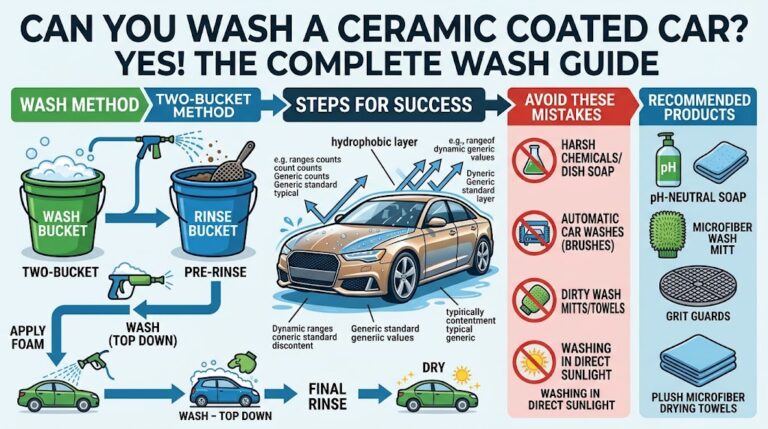
- How to Wash and Maintain a Ceramic Coated Vehicle
- Is Ceramic Coating Scratch-Proof? Myths and Realities
- Ceramic Coating vs Wax: Which Is Worth the Investment
- How Much Does Ceramic Coating Cost
- Why Apply Ceramic Coating to a Brand-New Car Immediately
- Ceramic Coating Curing Time: Rules and Care Guide
- Ceramic Windshield Coating: Clear Vision and Rain Repellency
- Wheel Ceramic Coating: Repel Brake Dust and Grime
- DIY vs Professional Ceramic Coating: The Honest Truth
- How to Prevent and Remove Water Spots from Ceramic Coating
- Why Prep Work Is 90% of Ceramic Coating Success
- Interior Ceramic Coating: Protecting Leather, Fabric, and Trim
- Book a Consultation
Note on architectureassociate.com: Checked again for consistency with the previous sixteen posts. It remains an architecture and design blog with no automotive content, so it has not been included here for the same relevance reasons noted previously.
Note on internal link domain: These internal links continue to assume redsdetailco.com as your site’s domain, matching the slugs used across the prior sixteen articles in this series. Please confirm or correct before publishing.