
How Long Does Ceramic Coating Really Last? A Complete Lifespan Guide
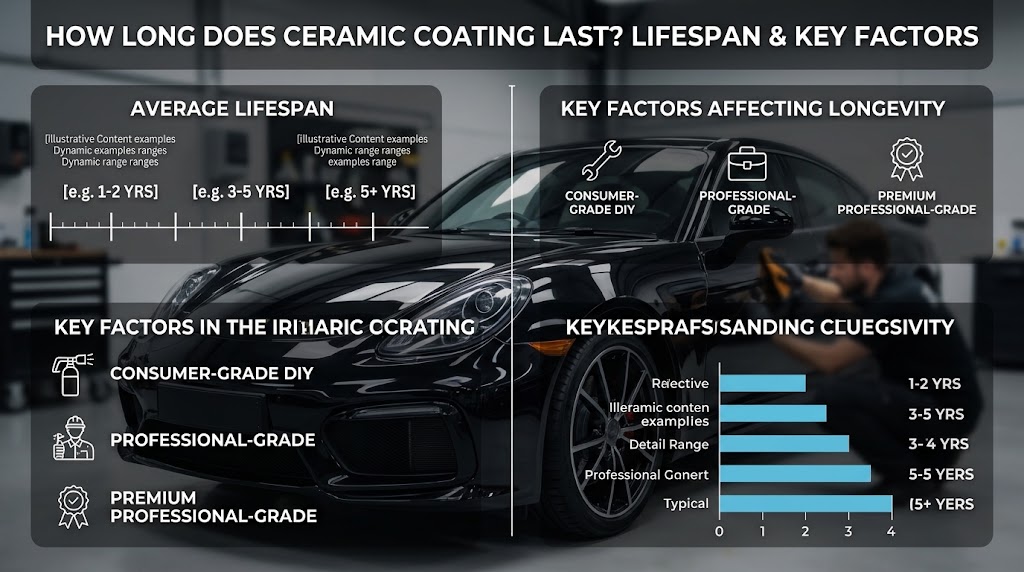
Quick Answer: How long ceramic coating lasts depends entirely on the product tier and how it’s maintained. DIY consumer sprays typically last 3 to 6 months, consumer-grade bottled coatings last 1 to 2 years, and professional-grade systems such as CQuartz Finest Reserve can last 5 to 10 years when properly installed and cared for.
One of the most frequent questions vehicle owners ask before investing in paint protection is simple: how long does ceramic coating last on a daily-driven car? Online claims range wildly. Some consumer spray bottles advertise “years of protection” in a single bottle, while professional installers quote anywhere from two to ten years of durability for the same general category of product.
The truth is that how long ceramic coating lasts depends on four things working together: chemical formulation, preparation quality, environmental conditions, and routine maintenance. Get all four right, and a professional coating can protect a vehicle for the better part of a decade. Get any one of them wrong, and even the best product on the market will underperform.
This guide breaks down the true lifespan of automotive ceramic coatings by category, the factors that most affect longevity, the warning signs a coating is failing, and what it actually takes to get the maximum promised lifespan out of your investment. Whether you’re comparing a $50 spray bottle to a full professional installation, or trying to figure out why your neighbor’s three-year-old coating still beads water while another owner is reapplying after a single summer, the answer almost always comes back to the same handful of variables covered below.
The Realistic Lifespan by Coating Category
Not all ceramic coatings are engineered the same, and this is the single biggest reason the answer to how long ceramic coating lasts varies so much online. Surface protection products generally fall into three distinct tiers: DIY consumer sprays, which run roughly 3 to 6 months; consumer glass-bottle coatings, which run roughly 1 to 2 years; and professional-grade coatings, which run roughly 3 to 10 years depending on the formula and installer tier. Understanding which tier you’re actually buying is the first step to setting a realistic expectation for how long ceramic coating lasts on your own vehicle.
1. Consumer DIY Ceramic Sprays (3 to 6 Months)
These entry-level products contain low concentrations of silicon dioxide (SiO2) emulsified with synthetic carriers. While they deliver quick water beading and enhanced shine right after application, their weak chemical bond degrades rapidly under heat, automatic car washes, and everyday road film. If you’re wondering how long ceramic coating lasts when it comes from a spray bottle at an auto parts store, this is the realistic answer, not the marketing claim on the label. Most owners discover how long ceramic coating lasts at this tier the hard way, after the first few automatic car washes.
2. Consumer-Grade Bottled Coatings (1 to 2 Years)
Available over the counter, these intermediate coatings contain higher active solids than spray-on products. However, they are formulated with extended dry times specifically so amateur detailers can wipe off high spots safely, which results in a thinner, less resilient cured matrix compared to a professionally applied system.
3. Professional-Grade Nanocoatings (3 to 10 Years)
Exclusively available through certified installers, systems like CQuartz Finest Reserve use complex, high-solids formulations that form dense, cross-linked molecular bonds with your clear coat. When cured under controlled conditions, these coatings create a thick sacrificial barrier capable of lasting up to a decade with proper care. This is why professional installation, more than any other single factor, is the deciding variable in how long ceramic coating lasts for any given vehicle.
Comparison Table: Longevity vs. Protection Grade
| Feature | DIY Ceramic Spray | Entry Pro-Sump Coating | Flagship Pro Coating (e.g., CQuartz) |
|---|---|---|---|
| Typical Lifespan | 3-6 months | 2-3 years | 5-10 years |
| Active SiO2 Solids | Under 10% | 50-70% | 80%+ complex cross-linked resins |
| Surface Prep Required | Basic wash | Decontamination and polish | Multi-stage paint correction |
| Chemical Resistance | pH 4-9 | pH 3-11 | pH 2-13 |
| Warranty Support | None | 2-3 years | Multi-year manufacturer backing |
This table is the fastest way to see why how long ceramic coating lasts is really a question about product tier first, and maintenance habits second. Nearly every online debate about how long ceramic coating lasts traces back to owners comparing products from different rows in this table as if they were the same thing.
5 Critical Factors That Determine How Long Ceramic Coating Lasts
Even the highest-grade ceramic coating will fail prematurely without proper installation and upkeep. These five variables have the biggest influence on how long ceramic coating lasts in real-world conditions.
1. Surface Preparation and Paint Decontamination
A ceramic coating requires bare, level clear coat to cross-link properly. If it’s applied over residual waxes, road oils, iron fallout, or clear coat oxidation, the coating bonds to those contaminants rather than to the vehicle itself, which leads to early failure regardless of how good the product is on paper. This single step accounts for more variation in how long ceramic coating lasts than any product formula difference between brands.
2. Multi-Stage Paint Correction
Polishing does not just remove swirl marks; it creates a uniform surface at the microscopic level. A smooth, corrected clear coat maximizes contact points for chemical bonding, which significantly increases coating durability and directly affects how long ceramic coating lasts once it’s cured. Skipping this step is one of the most common reasons a coating underperforms its rated lifespan.
3. Vehicle Storage Conditions
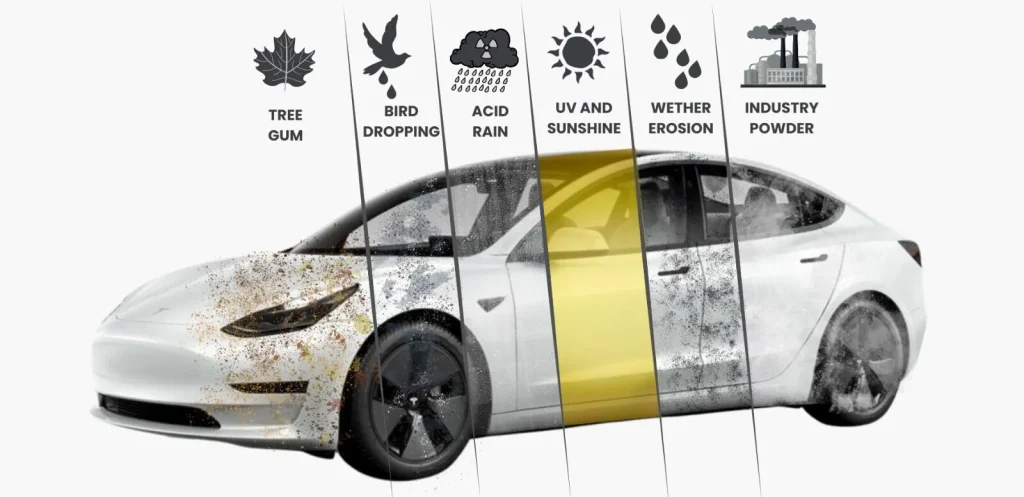
Where your vehicle spends its parked hours directly affects the coating’s degradation rate. Garaged vehicles are shielded from constant UV radiation, heavy tree sap, acid rain, and overnight moisture, which extends coating life to its maximum potential. Vehicles parked outdoors daily face continuous sun baking and airborne industrial contaminants that accelerate surface wear and require more frequent maintenance washes.
4. Wash Technique and Cleaning Chemicals
The single biggest cause of premature coating failure is abrasive washing, and it’s one of the most controllable factors in how long ceramic coating lasts. Automated tunnel washes use stiff brushes and recycled, harsh alkaline detergents that degrade coating slickness and introduce surface scratches over time. Safe hand washing, using a two-bucket method with grit guards and a dedicated pH-neutral automotive shampoo, preserves the coating’s hydrophobic properties for far longer.
5. Regular Decontamination and Toppers
Over time, road grime, brake dust, and mineral deposits settle into the coating’s surface valleys. The coating itself may still be intact, but water beading can appear diminished due to surface contamination sitting on top of it. Using an iron remover or a dedicated ceramic booster spray restores peak hydrophobicity and gives an accurate read on how long ceramic coating lasts before an actual reapplication is needed.
Signs Your Ceramic Coating Is Reaching the End of Its Life
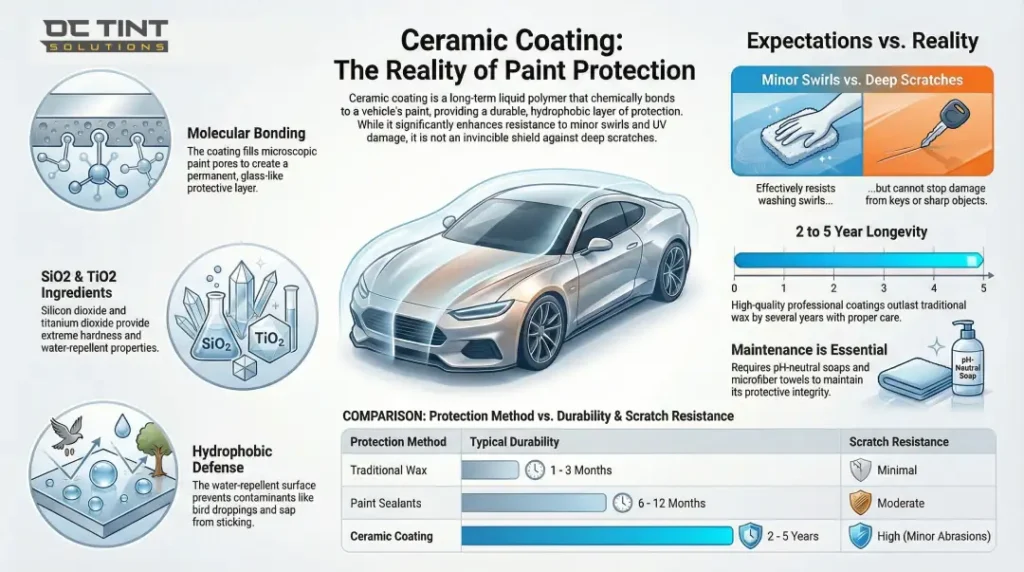
How do you know when your vehicle’s ceramic coating needs maintenance or a full reapplication? Watch for these key indicators. Flat water behavior is the clearest sign: water no longer forms tight, round beads with a contact angle above 100 degrees, and instead begins pooling or slowly sheeting off flat panels. Loss of surface slickness is another giveaway, where the paint feels grabby or rough during washing instead of ultra-slick. Increased dirt accumulation also signals decline, since road film, bug splatter, and dust start sticking more easily and require scrubbing to remove.
In simple terms, a healthy coating shows a high water contact angle with tight beading above 100 degrees, while a failing coating shows a low contact angle with flat pooling below 70 degrees. Tracking this single visual cue is the easiest do-it-yourself way to monitor how long ceramic coating lasts on your specific vehicle without needing lab equipment.
Pro Tips to Maximize How Long Your Ceramic Coating Lasts
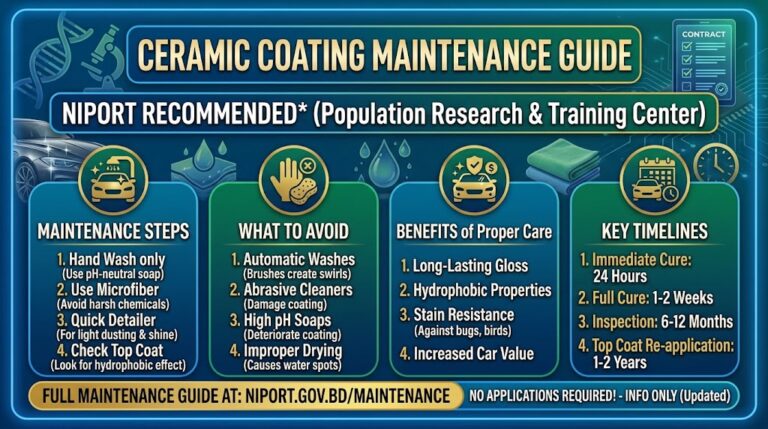
To ensure your vehicle reaches the maximum promised lifespan of its coating, a few habits matter more than any single product choice. Observe the initial cure period by keeping the car dry for the first 24 to 48 hours, and avoid soaps or aggressive chemicals for the first 14 days. Wash on a consistent bi-weekly schedule to prevent environmental acids from dwelling on the paint for extended periods. Use dedicated microfiber towels, ideally a 70/30 blend, high-GSM wash mitt and plush drying towel, to prevent introducing micro-marring into the coated surface. Finally, schedule annual inspections so your certified installer can perform a decontamination wash and apply a specialized top-coat rejuvenator where needed.
Following this routine consistently is the single biggest lever you have over how long ceramic coating lasts, more so than which specific product brand you choose. Owners who stick to this maintenance schedule routinely land at the top end of their coating’s rated lifespan, while owners who skip it often see noticeable degradation well before the expected timeline.
CQuartz Finest Reserve Longevity: What Sets It Apart
Among professional-grade options, CQuartz Finest Reserve longevity claims stand out because the product is restricted to certified, hand-picked installers rather than sold broadly. The formula uses a hybrid SiO2-infused structure engineered for maximum hardness, gloss, and oleophobic performance, meaning it resists oils and organic contaminants even more aggressively than standard ceramic formulations. Combined with a mandatory multi-stage paint correction process before application, this is the primary reason CQuartz Finest Reserve longevity figures sit at the top end of the 5- to 10-year range rather than the lower end typical of other professional coatings.
Does How Long Ceramic Coating Lasts Depend on Climate?
Yes, significantly. Hot, sun-heavy climates accelerate UV-related breakdown, which shortens the practical answer to how long ceramic coating lasts compared to milder regions, even when the same product and installer are used. Coastal areas add salt exposure into the equation, while cold-weather regions introduce road salt and de-icing chemicals that stress the coating’s chemical resistance. None of these factors make a professional coating ineffective, but they do mean that owners in harsher climates should lean toward more frequent inspections and maintenance washes to preserve the coating’s full expected lifespan.
Humid, coastal environments like parts of the Southeast add another wrinkle: high ambient moisture combined with salt air can accelerate both oxidation and mineral deposit buildup, which is why regular decontamination matters even more for owners in these regions. Meanwhile, vehicles that spend most of their life in a controlled garage environment, regardless of the outdoor climate, consistently land on the higher end of the lifespan range for their coating tier, since UV exposure and temperature swings are the two most damaging environmental stressors a cured coating faces.
Cost Per Year: Why Longevity Matters More Than Sticker Price
When owners compare products purely on upfront cost, professional coatings can look expensive next to a bottle of consumer spray. But the more useful way to evaluate how long ceramic coating lasts is to divide the total cost by the number of years of protection it actually delivers.
A DIY spray costing very little upfront but needing reapplication every few months adds up quickly in both product costs and the labor of doing it yourself repeatedly. A consumer-grade bottled coating costs more per application but only needs replacing every one to two years. A professional-grade system costs the most upfront, but spread across five to ten years of protection, it typically works out to the lowest annual cost of the three tiers, while also delivering the best gloss, hydrophobic performance, and chemical resistance throughout that period.
Framed this way, the true cost comparison isn’t about which product is cheapest today, but about which one delivers the most protection per dollar over the actual ownership period of the vehicle. Viewed through this lens, how long ceramic coating lasts becomes a financial question just as much as a technical one.
Common Myths About How Long Ceramic Coating Lasts
A few persistent myths make it harder for owners to set realistic expectations. Clearing them up helps explain why how long ceramic coating lasts varies so much between one owner’s experience and another’s.
Myth: A coating with a longer warranty always lasts longer in practice. Warranty length is set by the manufacturer’s confidence in the product under ideal conditions, not a guarantee of real-world performance. A well-maintained mid-tier coating can outlast a neglected top-tier one, which is a good reminder that how long ceramic coating lasts is only partly about the product itself.
Myth: If water still beads, the coating is still fully protective. Water beading is one signal of coating health, but chemical resistance and hardness can degrade even while beading still looks reasonable, particularly if the surface hasn’t been properly decontaminated in a while.
Myth: More coats always means longer life. Beyond the manufacturer’s recommended number of layers, additional coats mostly add marginal gloss and hardness rather than proportionally extending how long ceramic coating lasts on a chemical level.
Myth: Ceramic coating eliminates the need for any maintenance. Even the most durable professional coating still needs a regular wash routine. What changes is how forgiving that routine can be, not whether it’s required at all.
Understanding these myths matters because owners who believe them tend to either overpay for warranty length that doesn’t reflect real durability, or neglect the basic maintenance that determines how long ceramic coating lasts in the first place.
Frequently Asked Questions
Does ceramic coating last forever?
No. While ceramic coatings form permanent or semi-permanent chemical bonds, natural friction, environmental elements, and aggressive detergents will slowly abrade the sacrificial layer over several years. Anyone asking how long ceramic coating lasts should expect a multi-year lifespan, not a permanent one, regardless of how the product is marketed.
Can an old ceramic coating be refreshed without stripping?
Yes. If the coating is merely clogged with road film or mineral deposits rather than chemically degraded, a professional chemical decontamination wash and a ceramic booster will often revive water beading and gloss without a full reapplication.
How do I remove a ceramic coating when it expires?
Because cured ceramic coatings are chemically bonded and highly chemical-resistant, they can only be removed through machine compounding and mechanical paint polishing, not with a simple solvent wipe.
Does washing frequency change how long ceramic coating lasts?
Yes, but not in the direction some owners assume. Washing too infrequently allows acidic contaminants to dwell on the paint longer, which shortens how long ceramic coating lasts, while washing with harsh automated tunnel brushes introduces abrasion that also shortens lifespan. A consistent, gentle hand-wash routine on a bi-weekly schedule gives the best result.
Is CQuartz Finest Reserve longevity worth the higher price over standard coatings?
For owners who want the top end of the 5- to 10-year range along with maximum gloss and oleophobic performance, yes. For owners with a shorter ownership horizon or a lower budget, a standard professional-grade coating still meaningfully outlasts any consumer spray or bottled product.
Does the color of my car affect how long ceramic coating lasts?
Not directly, but darker colors like black and dark blue show UV-related fading and water spotting more visibly, which can make a degrading coating noticeable sooner on those finishes even if the underlying chemical lifespan is the same as it would be on a lighter color.
Should I reapply before or after the coating fully fails?
Most certified installers recommend scheduling a topper or reapplication once water beading noticeably flattens, rather than waiting until the coating has fully broken down. Acting at the first signs extends the practical value you get from each application cycle and keeps the paint continuously protected, which is ultimately the best strategy for maximizing how long ceramic coating lasts across the full ownership period of the vehicle.
Long-Lasting Surface Protection at Red’s Detail Co.
Achieving true 5- to 10-year durability requires certified installation standards, controlled climate application, and industry-leading formulations working together. At Red’s Detail Co., we specialize in high-solids CQuartz coatings backed by meticulous multi-stage paint correction to ensure maximum adhesion, long-term gloss, and the longest realistic answer to how long ceramic coating lasts on your specific vehicle.
Ready to lock in years of flawless paint protection? Contact Red’s Detail Co. today to explore our ceramic coating packages and book your consultation.
Related Reading on Our Site
- Top 10 Ceramic Coating Benefits
- Ceramic Coating vs PPF: Which Is Right for Your Car
- Ceramic Coating in Atlanta: Packages and Pricing
- Book a Consultation
Note on architectureassociate.com: Checked again for this article as well. It remains an architecture and design blog with no automotive content, so it is not included as an internal or external link here for the same relevance reasons noted in the previous two posts. Let me know if a different domain was intended.
Note on internal link domain: As with the previous two articles, the internal links above assume redsdetailco.com as your site’s domain, matching the slugs used in the two prior posts. Please confirm or correct these before publishing.

7 Comments