
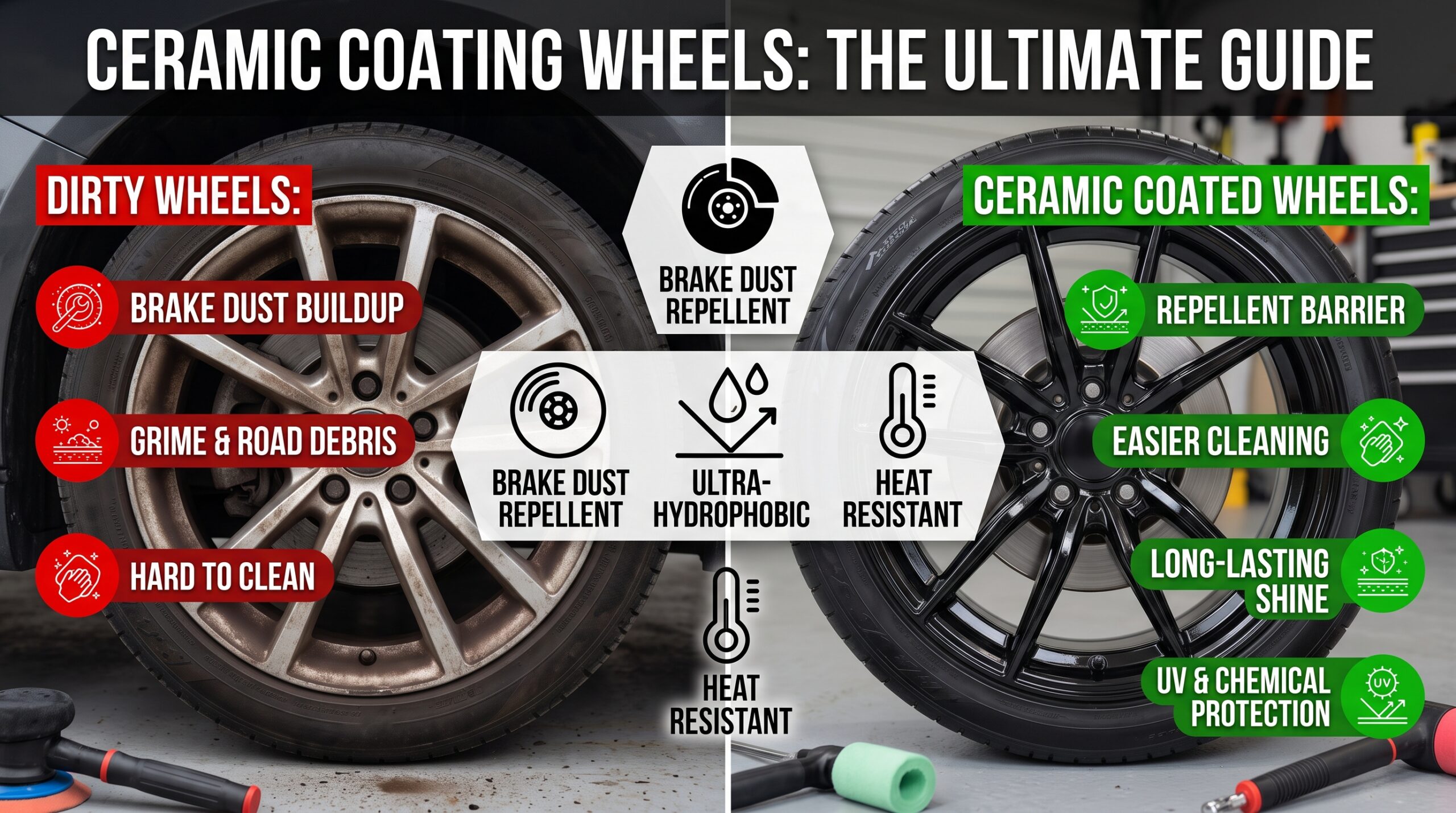
Wheel Ceramic Coating: The Secret to Repelling Brake Dust and Grime
Quick Answer: Ceramic coating wheels with a dedicated high-temperature product creates a slick, non-stick barrier that prevents hot brake dust and road grime from bonding to the wheel finish. Instead of embedding into the clear coat, dust rests loosely on top and rinses away with water pressure, cutting cleaning effort dramatically compared to bare or waxed wheels.
Ask any car owner or detailing enthusiast about the most frustrating part of washing a vehicle, and the answer is almost universal: the wheels. Within just a few days of daily driving, especially on performance vehicles with aggressive braking systems, clean wheels become coated in a thick, dull layer of dark brake dust. Left untreated, this metallic fallout combines with road grime and moisture, baking permanently into the clear coat or powder-coated finish of your rims.
While traditional wheel waxes melt within days under high braking temperatures, ceramic coating wheels with a high-temp formula provides a durable, heat-resistant barrier that changes how you maintain your vehicle. Here is everything you need to know about ceramic coating your wheels and brake calipers.
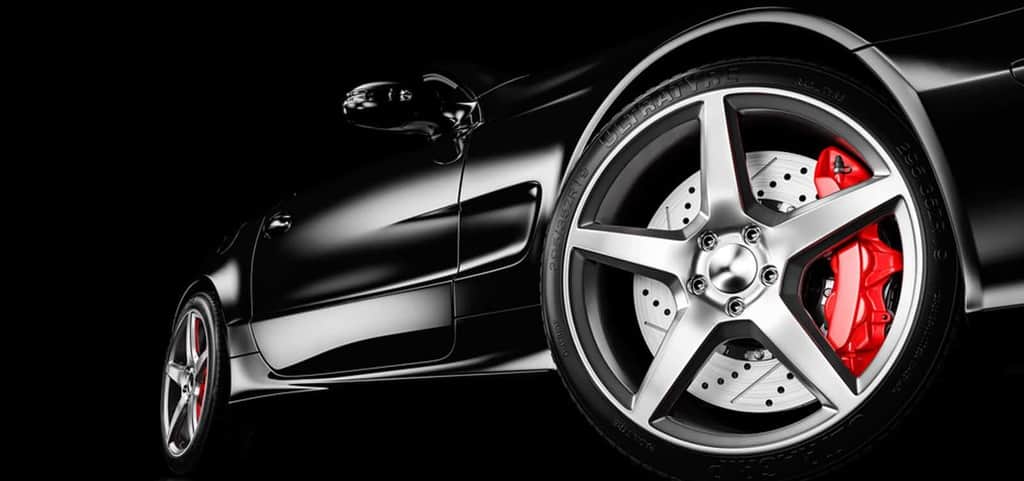
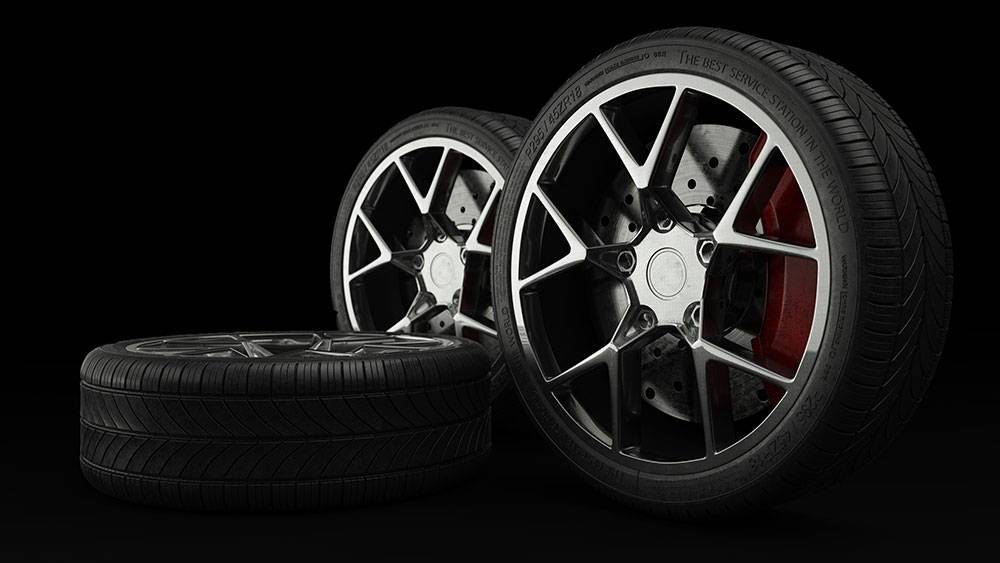
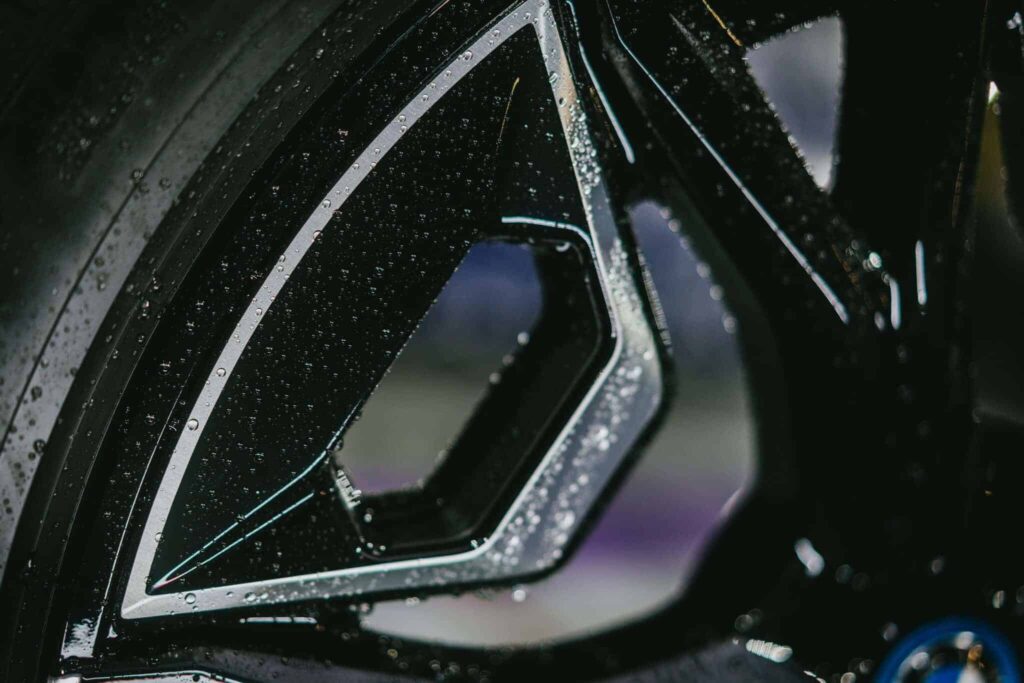
Why Wheels Take the Worst Abuse on Your Vehicle
Your wheels operate in the harshest environment of any component on your vehicle’s exterior. During routine stopping, brake pads clamp down on steel or carbon-ceramic rotors, generating intense friction. Wheel faces and brake calipers routinely reach temperatures between 150 and 400 degrees Celsius, or 300 to 750 degrees Fahrenheit.
Brake pads also shed microscopic, red-hot iron particles that shoot into the air and embed directly into the pores of unprotected wheel finishes. On top of that, corrosive road salts and chemical de-icers from winter driving settle into wheel barrels, accelerating corrosion and pitting over time.
Traditional carnauba waxes and paint sealants have melting thresholds under 85 degrees Celsius, or 185 degrees Fahrenheit, causing them to vaporize after just a few miles of moderate city driving. This is precisely why ceramic coating wheels has become the standard recommendation among professional detailers rather than relying on wax at all.
What Is a High-Temperature Wheel Ceramic Coating?
Dedicated wheel coatings, such as CARPRO CQuartz DLUX, differ meaningfully from standard body paint coatings. They are formulated with over 50 percent pure condensed silica and organosilane resins, engineered specifically to bond to smooth and textured metals, powder coats, and high-heat plastics.
These formulas offer extreme heat tolerance, withstanding surface temperatures exceeding 500 degrees Celsius, or 1000 degrees Fahrenheit, without breaking down or yellowing. Their dense nanostructure fills the microscopic porosity of aluminum and clear-coated wheels to prevent hot iron fallout from anchoring in the first place.
They also deliver extreme chemical resistance, standing up to harsh environmental acids and strong alkaline de-icers across a pH range of roughly 2 to 13.
Top 5 Benefits of Ceramic Coating Wheels
1. Drastic Reduction in Brake Dust Adhesion
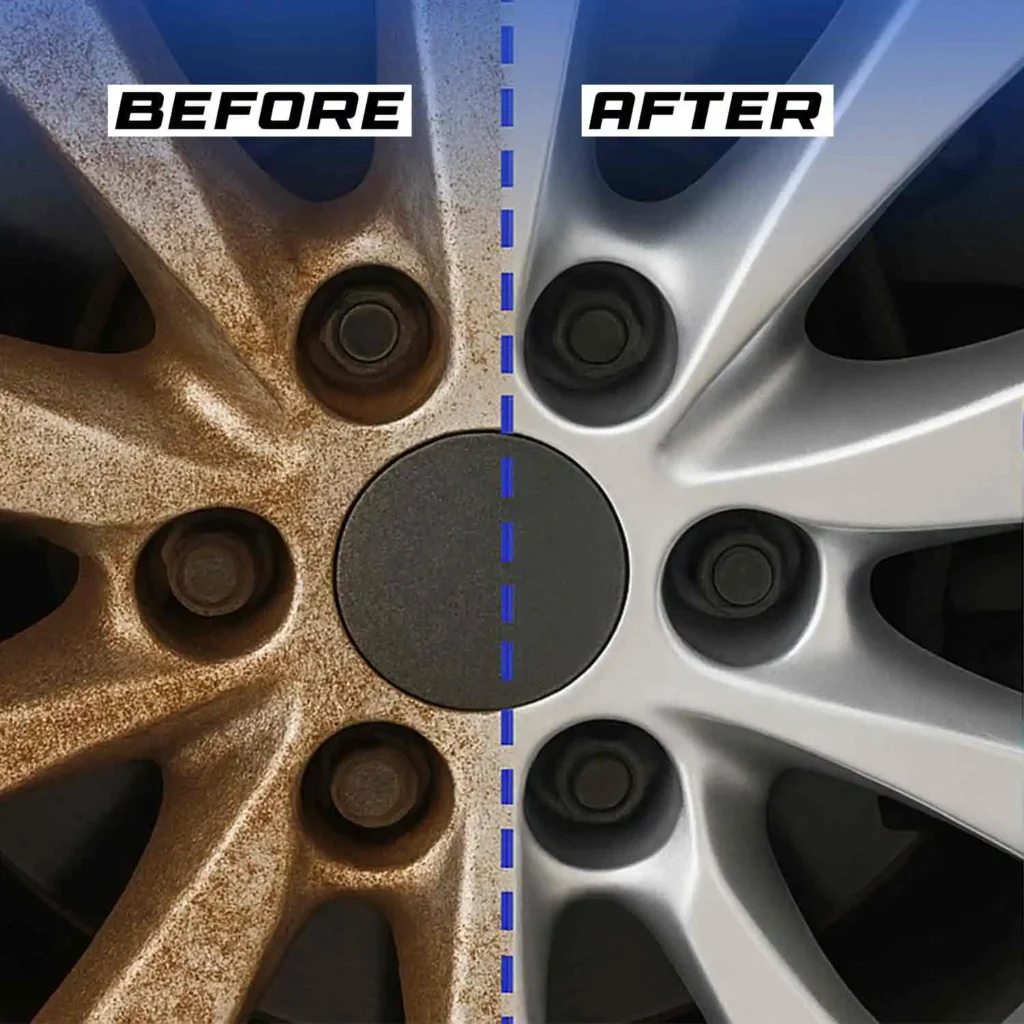
The cured nanoglass creates a low-energy, non-stick surface. While ceramic coating wheels cannot prevent your brakes from shedding dust in the first place, it prevents hot metallic shards from burning into the wheel finish. Brake dust rests loosely on top of the coating rather than embedding into the clear coat underneath, which is the single biggest practical benefit of ceramic coating wheels for daily drivers.
2. Effortless Cleaning Through Touchless Rinsing
Cleaning coated wheels no longer requires heavy scrubbing or dangerous, acid-based wheel cleaners. In most cases, a high-pressure water rinse alone knocks off 70 to 80 percent of accumulated brake dust once ceramic coating wheels has been properly installed. A gentle pass with a soft microfiber mitt and pH-neutral car shampoo easily removes any remaining topical film after that.
3. Protection Against Corrosion and Permanent Pitting
When hot iron particles dwell on unprotected aluminum wheels, moisture triggers chemical oxidation, etching tiny microscopic pits into the surface. Over time, this leads to permanent clear coat failure and expensive refinishing costs. Ceramic coating wheels acts as an impermeable barrier instead, preserving the factory alloy underneath and avoiding one of the most costly wheel repairs a vehicle owner can face.
4. High-Gloss Depth on Gloss, Satin, and Matte Finishes
On gloss and diamond-cut wheels, the coating delivers a deep, reflective mirror finish that enhances metallic flakes and complex spoke designs. On matte and satin wheels, it protects the delicate finish from turning shiny or greasy, maintaining a rich, deep factory appearance instead of an artificial sheen.
5. Multi-Year Durability
Unlike quick spray waxes that degrade in days, professional-grade ceramic coating wheels installations typically deliver one to two-plus years of resilient, continuous protection through intense heat and harsh seasonal weather.
Wheel Faces vs. “Wheel-Off” Full Barrel and Caliper Packages
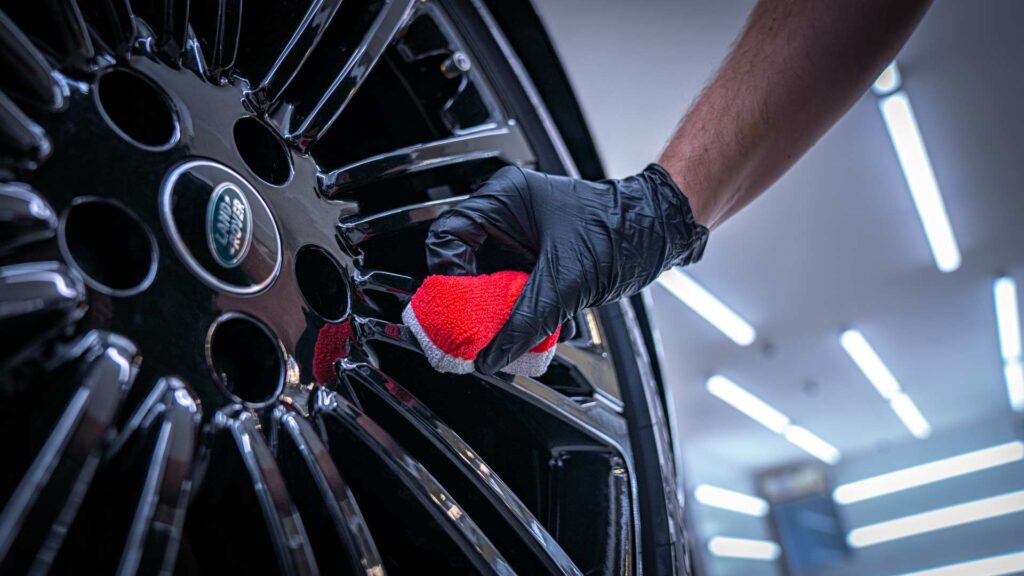
When booking a wheel ceramic coating appointment, detailing studios generally offer two levels of service. A wheel-faces package covers only the visible front spokes, and the wheels remain mounted on the vehicle throughout the process. A wheel-off package, by contrast, involves removing the wheels entirely so that the full 360-degree barrels, spokes, and brake calipers can all be coated.
| Feature | Wheel-Faces Package | “Wheel-Off” Complete Package |
|---|---|---|
| Coverage Area | Outer face and visible spokes | Outer face, inner barrel, back spokes, brake calipers |
| Wheel Removal | Wheels stay mounted on vehicle | Wheels removed, torqued to factory spec upon completion |
| Inner Barrel Protection | Minimal (hard-to-reach areas remain bare) | Complete (stops heavy barrel grime buildup) |
| Brake Caliper Defense | Not included | Full high-temp caliper ceramic seal |
| Ideal Candidate | Daily drivers with tight, enclosed spoke patterns | Sports cars, luxury SUVs, high-performance Brembo or AP calipers |
For performance vehicles with open-spoke alloy wheels, the wheel-off package is the gold standard for ceramic coating wheels, ensuring that brake calipers and deep inner barrels stay as clean as the front faces.
The 4-Stage Wheel Coating Installation Process
Applying a long-lasting wheel coating requires intensive decontamination to strip baked-on iron deposits. The process starts with chemical iron decontamination, using color-changing iron dissolvers such as CARPRO IronX to melt away embedded brake particles.
Mechanical clay and tar removal follows, using clay bar treatment and solvent washes to remove baked road tar and adhesive wheel-weight residue.
Machine polishing comes next, leveling out micro-scratches, swirl marks, and water spots on the wheel faces. Finally, degreasing and coating application take place, where panel wipes strip all residual polishing oils before the technician hand-applies the coating across all surfaces, followed by controlled heat curing to lock in maximum hardness.
How to Safely Maintain Ceramic Coated Wheels
Maintaining wheels after ceramic coating wheels installation is straightforward. Use dedicated pH-neutral soaps, such as CARPRO Reset, and avoid harsh, acid-based spray cleaners that can degrade the coating over repeated use.
Clean inner barrels with soft wool or microfiber wheel wands rather than stiff nylon bristle brushes, which can cause micro-marring even on a coated surface. Finally, use a warm-air blower or a dedicated microfiber drying towel to prevent standing mineral water spots from forming after each wash.
Is Ceramic Coating Wheels Worth It for Every Vehicle Type?
For most owners, yes, though the value proposition shifts slightly depending on the vehicle in question. Performance and luxury vehicles with large, open-spoke wheels and aggressive braking systems see the fastest and most visible payoff from ceramic coating wheels, since these setups generate the most brake dust and have the most surface area exposed to it.
Daily commuter vehicles with smaller, more enclosed wheel designs still benefit meaningfully, primarily through the drastic reduction in weekly cleaning effort rather than dramatic visual transformation. Winter-driven vehicles in road-salt regions arguably benefit the most from a pure protection standpoint, since the corrosion resistance ceramic coating wheels provides can meaningfully extend the life of factory alloy finishes that would otherwise pit and corrode over a few harsh winters.
Common Mistakes Owners Make With Wheel Coatings
A few avoidable habits account for most of the disappointment we see with wheel coatings. Skipping proper iron decontamination before application is the most common, since any embedded brake dust left in the pores at the time of coating gets permanently sealed underneath rather than removed.
Using acid-based wheel cleaners after coating is another frequent issue, since these harsh chemicals can degrade the coating’s chemical resistance over repeated exposure, even though the coating itself is rated to resist far milder acids and alkalis. Choosing a standard body-panel ceramic coating instead of a dedicated high-temperature wheel formula is a third mistake, since standard coatings simply aren’t engineered to survive the extreme temperatures wheels and calipers regularly reach during hard braking.
Frequently Asked Questions
Will ceramic coating stop my brakes from generating brake dust?
No. Ceramic coating wheels does not change brake pad friction or reduce dusting at the source. However, it stops the dust from sticking, allowing it to rinse off with water pressure instead of baking permanently into the finish.
Can powder-coated or painted brake calipers be coated?
Yes. In fact, high-performance brake calipers benefit tremendously from coatings like CQuartz DLUX. It prevents brake fluid stains, eliminates baked-on dust, and keeps high-visibility caliper colors, such as red, yellow, or acid green, vibrant for far longer than an uncoated finish.
Can you ceramic coat matte or satin black rims?
Yes. High-quality wheel coatings bond seamlessly with matte and satin finishes without adding an artificial, greasy shine, preserving the original factory look while still delivering the brake dust and corrosion resistance that make ceramic coating wheels worthwhile in the first place.
How often does a wheel coating need to be reapplied?
Most professional-grade wheel coatings last one to two years under normal driving conditions, though heavy winter road-salt exposure or very aggressive braking habits can shorten that window somewhat. A yearly inspection is a reasonable way to confirm whether ceramic coating wheels reapplication is due.
Does ceramic coating wheels work on wheels that already have some pitting or corrosion?
The coating itself won’t reverse existing damage, but a proper installation includes machine polishing to correct as much of the surface as safely possible before the coating is applied, which meaningfully improves the final appearance even on wheels with some prior wear.
How Wheel Coatings Compare to Other Wheel Protection Options
Ceramic coating wheels isn’t the only protection option on the market, and understanding how it stacks up against the alternatives helps clarify why it’s become the professional standard. Spray-on wheel waxes and sealants cost very little upfront and are easy to apply at home, but their melting threshold sits well below normal braking temperatures, meaning they vaporize within days of regular driving rather than weeks or months, which is the core reason ceramic coating wheels has largely replaced wax in this category.
Powder coating and clear wheel wraps offer strong physical protection against curb rash and cosmetic damage, but they don’t provide meaningful resistance to brake dust adhesion the way a dedicated ceramic formula does, and they involve a much more invasive and expensive process to apply or remove.
Vinyl wheel films sit somewhere in between, offering some physical protection similar to paint protection film for body panels, but they typically don’t address the underlying brake dust and heat resistance problem that ceramic coating wheels is specifically engineered to solve. For owners whose primary frustration is the constant cycle of scrubbing baked-on brake dust, rather than curb rash or cosmetic wear, a dedicated high-temperature ceramic coating remains the most targeted and cost-effective solution available.
What to Expect During Your First Post-Coating Wash
The first wash after a wheel coating installation often surprises owners who are used to the old scrubbing routine. Instead of reaching for a stiff brush and acid-based wheel cleaner, a simple pre-rinse with a hose or pressure washer typically knocks loose the majority of accumulated dust within seconds. Many owners report needing little more than this rinse step for several washes in a row before any dust buildup becomes visible enough to warrant the gentle microfiber pass described earlier.
This dramatic reduction in required effort is often the moment owners fully appreciate the value of ceramic coating wheels, since the contrast with their prior routine of scrubbing baked-on grime with dedicated wheel brushes and harsh chemical cleaners becomes immediately obvious.
Over time, as the coating ages toward the end of its rated lifespan, dust adhesion gradually increases again, which is the clearest practical signal that a reapplication is approaching.
Choosing the Right Installer for Wheel Coating Work
Not every detailing shop that offers paint ceramic coatings also has the specialized equipment and experience needed for proper wheel coating installation. Because wheels and calipers reach far higher temperatures than painted body panels, the coating formulas used, and the curing process required, differ meaningfully from standard paint protection work.
When evaluating a potential installer for ceramic coating wheels, it’s worth asking specifically whether they use a dedicated high-temperature wheel formula rather than a standard body coating repurposed for wheels, whether wheel-off service is available for full barrel and caliper coverage, and what decontamination process they use to strip existing baked-on brake dust before application.
An installer who can answer these questions clearly and confidently is generally a strong indicator of genuine wheel-coating expertise, rather than a shop simply extending its standard paint coating service to a surface it wasn’t originally designed to protect.
The Bigger Picture: Wheels as Part of a Complete Protection Plan
Owners who invest in ceramic coating wheels often find it’s a natural extension of a broader vehicle protection mindset rather than an isolated purchase. A vehicle with a professionally coated paint finish but bare, dust-caked wheels tends to look mismatched, since the contrast between a showroom-glossy body and dull, grimy rims becomes more noticeable rather than less once the paint itself looks its best.
Treating wheels, calipers, glass, and paint as a single coordinated protection plan, rather than separate afterthoughts, tends to produce the most cohesive result, both cosmetically and in terms of long-term maintenance effort across the entire vehicle.
Regional Considerations for Ceramic Coating Wheels
Where you live and drive can shift how much value ceramic coating wheels delivers in practice. In hot climates with long summers, brake components run consistently hotter over the course of routine city driving, which means uncoated wheels accumulate baked-on dust faster and coated wheels get more frequent exposure to the extreme temperatures the coating is specifically engineered to withstand.
In regions with harsh winters and heavy road-salt use, the corrosion-resistance benefits of ceramic coating wheels tend to matter more than the brake-dust convenience factor alone, since salt and de-icing chemicals are what typically cause the permanent pitting and clear coat failure owners want to avoid most.
Coastal areas add another consideration, since salt air alone, independent of winter road treatments, can accelerate wheel corrosion over time. Owners in these regions often find that ceramic coating wheels pays for itself primarily through avoided refinishing costs rather than through reduced weekly cleaning time, though both benefits still apply.
Protect Your Wheels at Red’s Detail Co.
Keep your wheels looking pristine without spending hours scrubbing brake dust. At Red’s Detail Co., we provide precision wheel correction and certified CQuartz DLUX high-temperature wheel and caliper coatings in Marietta and the greater Atlanta area.
Ready to upgrade your wheels with durable high-heat protection? Contact Red’s Detail Co. today to schedule your wheel-off protection package.
Related Reading on Our Site
- Top 10 Ceramic Coating Benefits
- Ceramic Coating vs PPF: Which Is Right for Your Car
- How Long Does Ceramic Coating Really Last
- What Is CQuartz Finest Reserve
- How to Wash and Maintain a Ceramic Coated Vehicle
- Is Ceramic Coating Scratch-Proof? Myths and Realities
- Ceramic Coating vs Wax: Which Is Worth the Investment
- How Much Does Ceramic Coating Cost
- Why Apply Ceramic Coating to a Brand-New Car Immediately
- Ceramic Coating Curing Time: Rules and Care Guide
- Ceramic Windshield Coating: Clear Vision and Rain Repellency
- Book a Consultation

6 Comments