
Ceramic Glass Coating: Improve Driving Visibility and Rain Repellency
Quick Answer: Ceramic coating on windshield glass chemically bonds with the silica in the glass surface, filling microscopic pores so water beads tightly and rolls off at highway speed instead of smearing across the wiper’s path. Compared to over-the-counter rain repellents, professional ceramic coating on windshield glass lasts far longer, resists wiper chatter, and meaningfully reduces night glare.
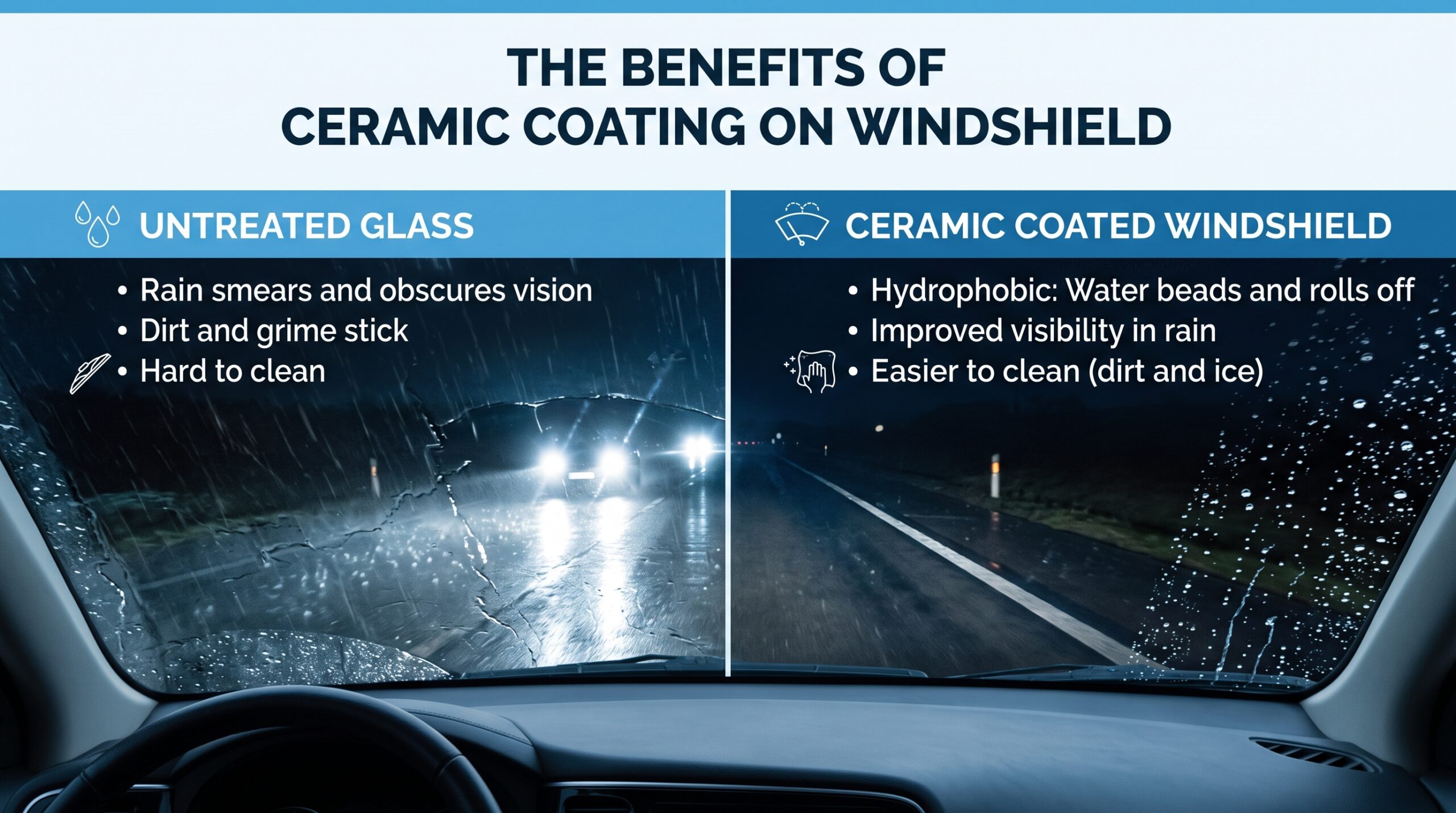
Driving through a torrential downpour with standard, unprotected automotive glass is an exhausting experience. Even with wiper blades operating at maximum speed, rainwater smears across the windshield, creating distorted light reflections, severe glare from oncoming headlights, and compromised road visibility.
While most car owners associate ceramic coatings strictly with painted body panels, applying professional ceramic coating on windshield and other automotive glass is one of the most effective safety and convenience upgrades available. This guide explores the science behind ceramic windshield coatings, how they differ from cheap consumer water repellents, and why crystal-clear glass is essential for daily driving safety.
What Is a Ceramic Glass Coating?
Automotive glass may appear completely flat and smooth to the naked eye, but under microscopic inspection, it is covered in tiny peaks, valleys, and pores. These microscopic imperfections trap rainwater, road oils, mineral deposits, and wiper blade rubber residue.
A professional ceramic coating on windshield surfaces, such as CARPRO FlyBy30, is an inorganic liquid nanopolymer formulated specifically to bond covalently with silica-based glass. Uncoated glass traps water and grime in its pores, causing light to scatter and wipers to smear.
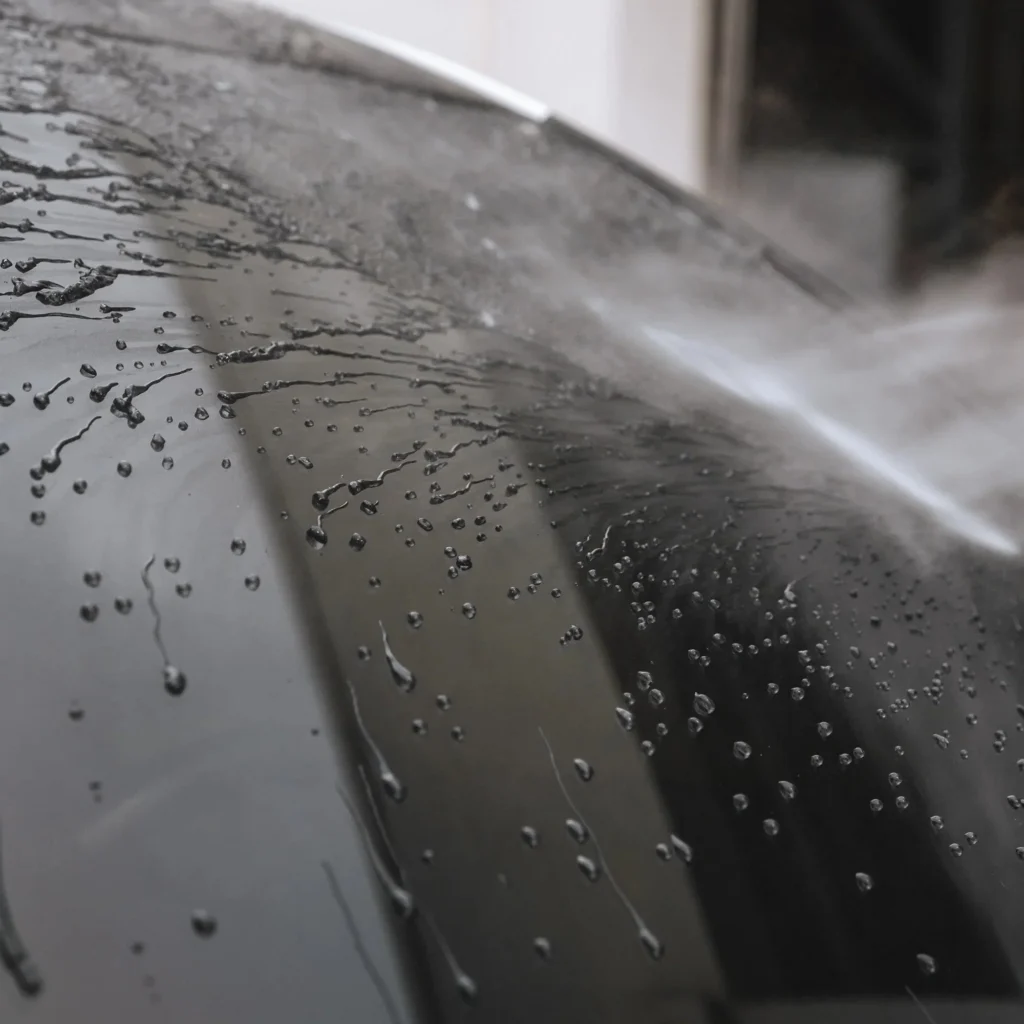
Once cured, a ceramic glass coating fills these micro-cavities, creating an ultra-slick, optically transparent barrier with a high hydrophobic contact angle exceeding 110 degrees, so water beads and rolls off instead of clinging to the surface.
Ceramic Coating on Windshield vs. Over-the-Counter Rain Repellents
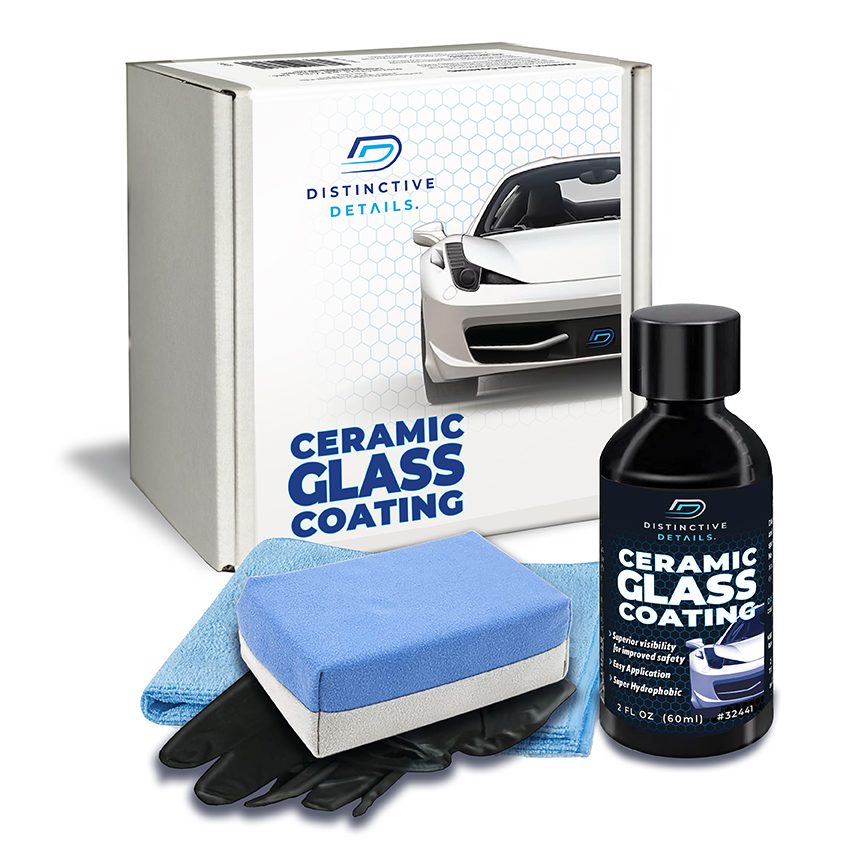
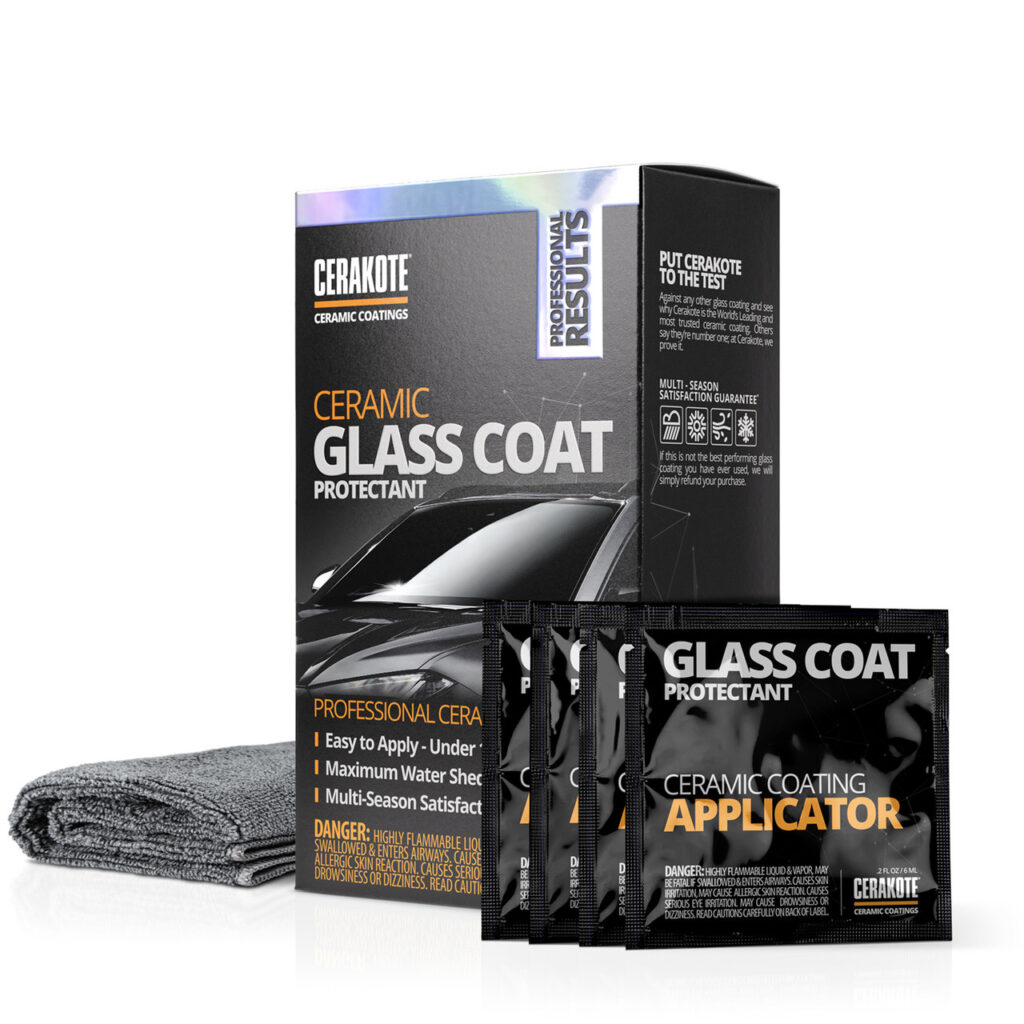
Many drivers are familiar with yellow-bottle spray or wipe-on rain repellents sold at auto parts stores. While these products provide temporary water beading, their chemical makeup is fundamentally different from professional ceramic coating on windshield glass.
| Feature | Consumer Wipe-On Repellent | Professional Ceramic Glass Coating |
|---|---|---|
| Active Chemistry | Silicone oils and temporary polymers | High-solids cross-linked inorganic silanes |
| Bond Type | Physical surface tension (sits on top) | Covalent chemical bond (integrated with glass) |
| Typical Lifespan | 3-6 weeks | 1-2 years (up to 30,000 wiper cycles) |
| Wiper Blade Chatter | High (causes judder, skipping, and haze) | Low (smooth surface reduces friction) |
| Chemical Resistance | Low (stripped by washer fluid and bug wash) | High (resists harsh solvents and washer fluids) |
| Night Glare Reduction | Minimal | High (optically pure, anti-refraction) |
This comparison makes the case for professional ceramic coating on windshield glass fairly clear: the consumer product buys a few weeks of convenience, while the professional coating delivers a full season or more of consistent, chemically bonded performance.
Top 5 Benefits of a Ceramic Windshield Coating
1. Superior Wet-Weather Driving Visibility
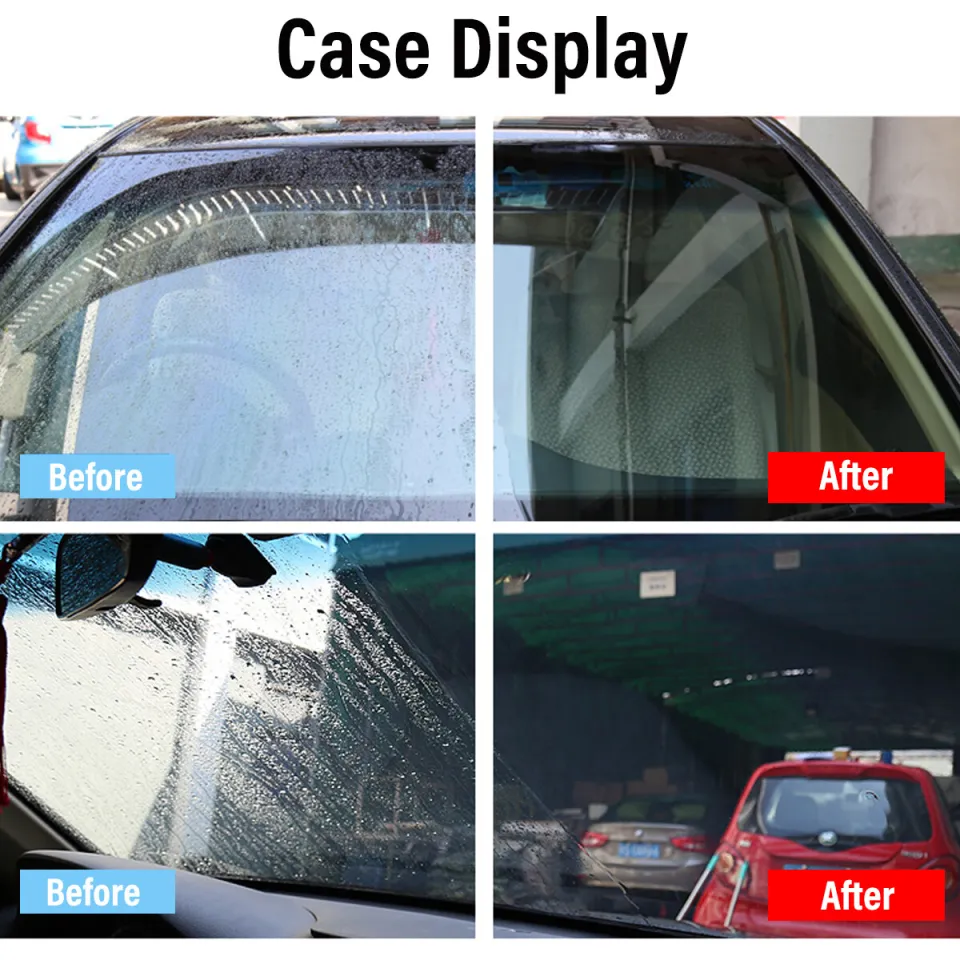
The primary benefit of ceramic coating on windshield glass is immediate visual clarity during rainstorms. At speeds above 35 to 45 miles per hour, airflow pushes water droplets up and off the windshield without requiring wiper blade intervention at all.
This improves driver reaction times in sudden downpours by eliminating distorted sheets of standing water that would otherwise obscure the road ahead.
2. Elimination of Wiper Chatter and Nighttime Glare
Consumer rain repellents often leave an oily film that causes wiper blades to skip, vibrate, and leave behind white safety-hazard hazing during night driving. Professional ceramic coating on windshield surfaces chemically integrates with the glass instead, creating an ultra-low-friction surface.
This smooth interface allows wiper blades to sweep silently across panels without judder while drastically cutting down headlight refraction from oncoming traffic.
3. Effortless Removal of Ice, Frost, and Snow
During winter months, scraping frozen frost and ice off untreated windshields can be tedious and risks scratching the glass. Because ice cannot form a strong mechanical bond with the hydrophobic nanostructure created by ceramic coating on windshield surfaces, morning frost and thin ice sheets scrape off with light, minimal effort.
Wiper blades are also far less likely to freeze directly to the glass surface overnight.
4. Resistance to Bug Splatter, Tree Sap, and Water Spotting
Highway driving leaves windshields plastered with acidic bug splatter and oily road grime. Bug splatter and sap, both organic acids, lift cleanly with basic washer fluid rather than smearing across the driver’s field of vision once ceramic coating on windshield glass is applied.
Mineral water spotting from calcium and magnesium in sprinkler water or acid rain also struggles to chemically etch a coated surface the way it would bare glass.
5. Increased Glass Durability and Scratch Resistance
While ceramic coating on windshield glass cannot stop high-speed highway rocks from cracking a windshield outright, the added surface hardness provides meaningful resistance against fine sand pitting, wiper blade sweep scratches, and environmental abrasion accumulated over thousands of highway miles.
The Professional Glass Coating Installation Process
Applying long-lasting ceramic coating on windshield and other automotive glass requires meticulous preparation. Simply wiping a coating over dirty glass will cause rapid failure.
The process begins with chemical decontamination, where glass is stripped using iron fallout removers and solvent cleaners to eliminate road film, traffic exhaust oils, and old sealants. Mechanical glass polishing follows, using specialized cerium oxide compounds to level out hard water stains, light wiper marks, and microscopic oxidation.
Next comes panel wipe and solvent prep, where high-purity alcohol solutions remove all polishing oils, leaving a fully sterile silica surface. Finally, precision nanocoating application takes place, with the coating applied evenly in cross-hatch patterns, leveled, and allowed to cure to form permanent covalent bonds with the glass.
Should You Coat All Vehicle Glass or Just the Windshield?
While the front windshield handles the majority of road debris and forward visibility, applying ceramic glass protection to all exterior windows and mirrors delivers significant advantages beyond just ceramic coating on windshield glass alone. Side windows benefit meaningfully too, keeping side mirrors and blind spots completely clear when merging in heavy highway rain.
Rear windows are especially valuable to coat on SUVs, hatchbacks, and sedans that lack a rear wiper blade. Side mirrors also benefit, since coating eliminates water droplets that obscure rear vision during parking maneuvers.
How Ceramic Coating on Windshield Glass Compares to Paint Coatings
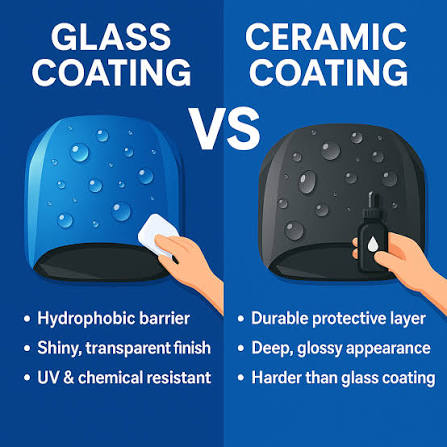
Owners familiar with ceramic coating for body panels often assume windshield coatings work identically, but there are a few meaningful differences worth understanding. Paint coatings are formulated to bond with a clear coat over painted metal, while glass coatings are engineered specifically for the silica structure of automotive glass, which behaves differently at a molecular level.
Glass coatings also tend to have a shorter effective lifespan, typically one to two years compared to the two to ten years common for paint coatings, largely because windshields face constant mechanical friction from wiper blades that painted panels never experience. Despite these differences, both technologies rely on the same core principle: filling microscopic surface pores with a hard, cross-linked barrier that repels water and contaminants far better than the untreated surface underneath.
Maintaining a Coated Windshield
A ceramic coating on windshield glass isn’t entirely maintenance-free, though it requires far less effort than uncoated glass. Cleaning the glass regularly with an ammonia-free automotive glass cleaner and a clean microfiber glass towel helps preserve the hydrophobic effect without stripping the coating’s bond.
It’s worth noting that standard washer fluids will not harm or strip a professional-grade ceramic glass coating, so there’s no need to switch to specialty fluids once the coating is applied. Avoiding ammonia-based glass cleaners is the main precaution, since ammonia can gradually degrade the coating’s chemical structure over repeated use, shortening its otherwise multi-year performance window.
Common Mistakes That Shorten Windshield Coating Life
A handful of avoidable habits account for most of the premature failures we see with ceramic coating on windshield glass. Using ammonia-based glass cleaners is the most frequent culprit, since many household and even some automotive glass cleaners contain ammonia that gradually breaks down the coating’s bond over repeated applications.
Visiting automated brush car washes is another common issue, since the same abrasive brushes that damage a painted ceramic coating also introduce fine scratching and premature wear to a coated windshield. Ignoring worn or damaged wiper blades is a third overlooked factor, since a wiper blade with exposed metal or a torn edge can physically scratch through the coating over repeated passes, even though the coating itself resists ordinary wiper friction well. Finally, skipping the recommended reapplication window, rather than waiting until beading has visibly failed, means driving through a meaningful stretch of reduced protection before the issue becomes obvious.
Signs Your Windshield Coating Needs Renewal
Because ceramic coating on windshield glass wears down gradually rather than failing all at once, a few visual and functional cues help identify when it’s time for a fresh application. Water that once beaded into tight, round droplets starting to spread and sheet across the glass at highway speed is usually the first sign.
Increased wiper chatter or a return of the faint judder that a fresh coating eliminates is another common indicator, since a degrading coating gradually loses the ultra-low-friction surface that keeps wiper blades gliding smoothly. Bug splatter and road grime sticking more stubbornly than they used to, requiring scrubbing rather than a simple wash with washer fluid, also points toward a coating that has worn past its effective lifespan.
Catching these signs early and scheduling a renewal application before the coating fully wears away keeps visibility and safety consistent, rather than allowing a gradual decline to go unnoticed until a difficult driving situation makes it obvious.
Why Visibility Upgrades Matter as Much as Paint Protection
It’s easy to think of paint protection as the priority investment and glass coatings as an afterthought, but the safety case for ceramic coating on windshield glass is arguably just as strong as the cosmetic case for protecting paint. Paint protection preserves a vehicle’s appearance and resale value, but a coated windshield directly affects how quickly a driver can react to hazards during a sudden downpour.
It also affects how much glare interferes with night driving in oncoming headlights, and how much visual strain accumulates over a long highway drive in difficult weather.
For commuters who spend significant time driving during rain, at night, or through regions with harsh winters, prioritizing ceramic coating on windshield glass alongside, or even ahead of, paint protection is a reasonable and often underrated decision.
Ceramic Coating on Windshield Glass for Specific Driving Scenarios
Different driving situations benefit from windshield glass coating in slightly different ways, and understanding which scenario applies to you can help set the right expectations. Highway commuters who log significant daily mileage benefit most from the wet-weather visibility and bug-splatter resistance, since these are the two contaminants they encounter most consistently over a typical week.
Rural and suburban drivers who park under trees or near lawn sprinklers see the biggest advantage from the coating’s resistance to sap, pollen, and hard water spotting, all of which tend to accumulate faster in these environments than on a vehicle parked in a covered downtown garage.
Drivers in northern climates who deal with regular winter weather benefit substantially from the easier ice and frost removal a coated windshield provides, often cutting morning scraping time down considerably compared to bare glass.
Ride-share and delivery drivers, who spend an outsized number of hours behind the wheel in varied weather conditions compared to typical commuters, often see the fastest return on investment simply because they encounter more total rain, glare, and debris exposure over a given month than an average driver would.
Combining Windshield Coating With a Full Vehicle Protection Package
Many owners choose to add ceramic coating on windshield and other glass surfaces as part of a broader vehicle protection package rather than as a standalone service. Bundling glass coating alongside a paint ceramic coating and, where appropriate, Paint Protection Film on high-impact panels creates a more complete defense against the range of conditions a vehicle actually encounters on the road.
Since much of the surface preparation, scheduling, and curing infrastructure overlaps between these services, many certified studios offer meaningful savings when glass coating is added at the same appointment as paint protection work, rather than scheduled as a separate visit down the road.
Frequently Asked Questions About Pricing and Scheduling
Owners considering ceramic coating on windshield glass alongside other services often have practical scheduling and cost questions that aren’t strictly technical. Adding glass coating to an existing paint protection appointment typically adds only a modest amount of extra labor time, since the vehicle is already in a controlled cleanroom environment and much of the decontamination equipment is already in use.
Scheduling glass coating as a standalone service is also perfectly reasonable for owners who already have paint protection in place and simply want to add the visibility and wiper-life benefits afterward, though it may involve a separate appointment and a smaller, more focused preparation process limited to the glass surfaces alone.
Frequently Asked Questions
Will ceramic coating on my windshield ruin my wiper blades?
No. In fact, it does the opposite. By smoothing out the microscopic valleys in the glass and creating a slick, low-friction surface, ceramic coating on windshield glass reduces drag and prevents wiper rubber from tearing or wearing prematurely.
Can ceramic glass coating be applied over existing rock chips or cracks?
Small surface pits can be coated over, but any structural cracks or deep stars should be professionally repaired, or the windshield replaced, before applying ceramic coating on windshield glass, to prevent moisture from getting trapped underneath.
How do I clean and maintain my ceramic coated glass?
Clean the glass regularly using an ammonia-free automotive glass cleaner and clean microfiber glass towels. Standard washer fluids will not harm or strip a professional-grade ceramic glass coating.
Does ceramic coating on windshield glass work with automatic wipers and rain-sensing sensors?
Yes. Because the coating is optically transparent and doesn’t alter the glass’s light-transmission properties in any way that interferes with sensor operation, rain-sensing wiper systems continue to function normally, and some owners report even more consistent sensor behavior once water beads predictably instead of sheeting unevenly.
Is ceramic coating on windshield glass worth it if I don’t drive much in the rain?
It still offers meaningful value even for drivers in drier climates, since the same coating that repels rain also resists bug splatter, hard water spotting from sprinklers, and general grime buildup, all of which affect visibility and cleaning effort regardless of how often it actually rains.
Experience Crystal-Clear Visibility at Red’s Detail Co.
Never compromise on road safety during severe weather. At Red’s Detail Co., we provide specialized multi-stage glass polishing and certified CQuartz ceramic glass installations across Marietta and the greater Atlanta area.
Ready to upgrade your wet-weather driving clarity and safety? Contact Red’s Detail Co. today to add a professional ceramic coating on windshield glass to your vehicle package.
Related Reading on Our Site
- Top 10 Ceramic Coating Benefits
- Ceramic Coating vs PPF: Which Is Right for Your Car
- How Long Does Ceramic Coating Really Last
- What Is CQuartz Finest Reserve
- How to Wash and Maintain a Ceramic Coated Vehicle
- Is Ceramic Coating Scratch-Proof? Myths and Realities
- Ceramic Coating vs Wax: Which Is Worth the Investment
- How Much Does Ceramic Coating Cost
- Why Apply Ceramic Coating to a Brand-New Car Immediately
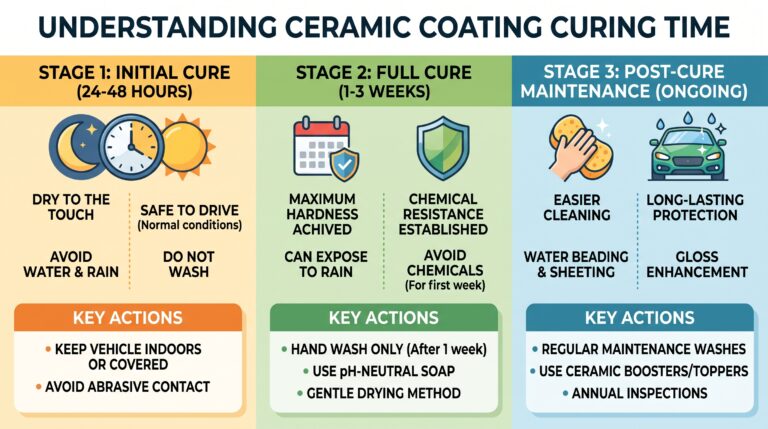
- Ceramic Coating Curing Time: Rules and Care Guide
- Book a Consultation
One Comment