
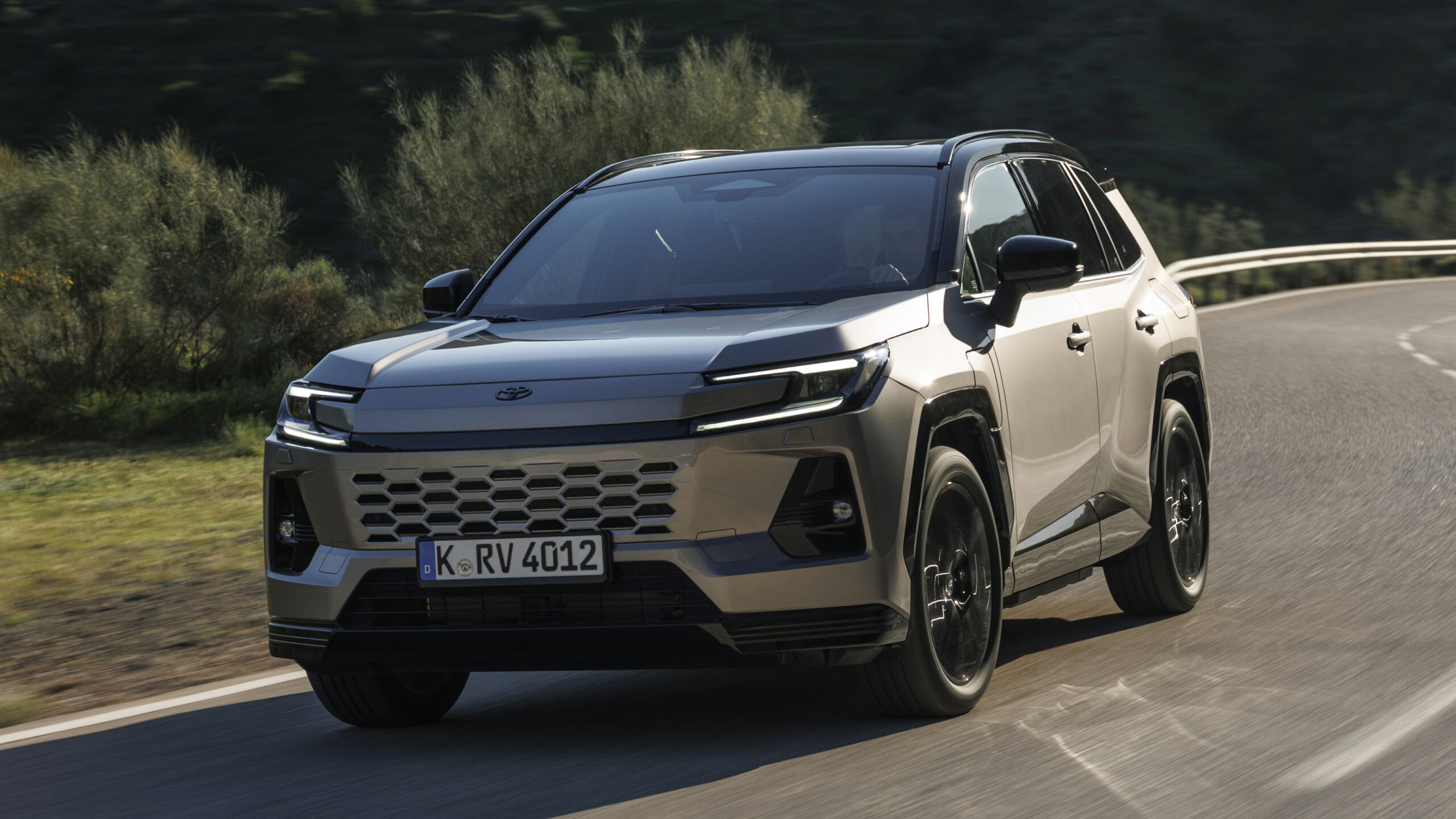
2026 Toyota RAV4: Performance, Trims, and Pricing Review — Everything You Need to Know
The 2026 Toyota RAV4 is not just an update. It is a complete, ground-up reinvention of America’s best-selling compact SUV. For the first time in the nameplate’s 30-year history, Toyota has eliminated the conventional gasoline-only engine entirely. Every single 2026 Toyota RAV4 that rolls off the production line now runs on a hybrid powertrain, a decision as bold as it is strategically calculated. The result is a vehicle that is more powerful, more efficient, and more technologically advanced than any RAV4 before it — and it arrives at a price point that, in many trims, is surprisingly competitive.
Whether you are a first-time compact SUV buyer, a loyal Toyota owner considering an upgrade, or a family weighing fuel costs against long-term reliability, this comprehensive review covers everything you need to make a confident decision about the 2026 Toyota RAV4.
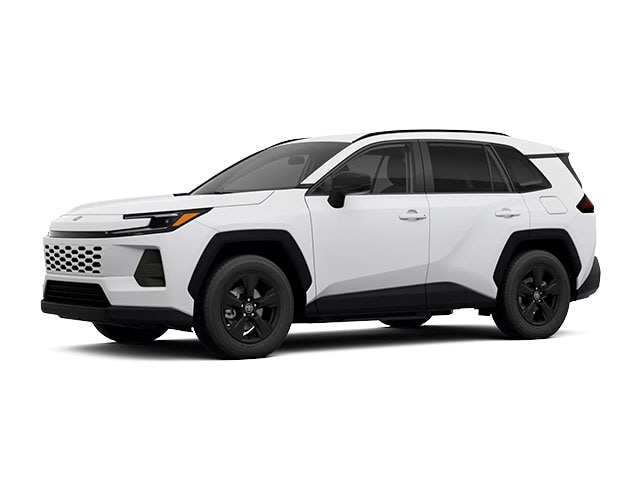
Why the 2026 Toyota RAV4 Matters More Than Ever
The RAV4 did not become America’s top-selling compact crossover by accident. It pioneered the segment when it debuted in 1996 as one of the first car-based crossover SUVs, demonstrating that a vehicle could deliver SUV utility with car-like comfort and refinement. Thirty years later, the 2026 Toyota RAV4 outsells every other Toyota SUV and crossover combined. That kind of market dominance demands respect, but it also demands reinvention.
Toyota’s decision to make the 2026 RAV4 hybrid-only mirrors moves it has already made with the Camry sedan and the Sienna minivan. The brand is betting that hybrid power is the near-future of mainstream vehicles, and the 2026 RAV4 makes the strongest possible case for that position. Buyers gain more horsepower, dramatically better fuel economy, and a lower total cost of ownership — often without paying a significant premium over where the gas-only model previously sat.
For anyone researching compact SUVs in 2026, the 2026 Toyota RAV4 is the undeniable benchmark.
2026 Toyota RAV4 Powertrain: Hybrid-Only and Better for It
Every 2026 Toyota RAV4 is powered by Toyota’s fifth-generation hybrid system, pairing a 2.5-liter four-cylinder engine with electric motors. This is not a mild hybrid arrangement — it is a full hybrid system that can operate on electric power alone at low speeds and delivers genuinely impressive performance numbers.
The standard RAV4 Hybrid produces 226 combined horsepower in front-wheel-drive (FWD) configuration and steps up to 236 combined horsepower with all-wheel drive (AWD). To put those figures in context, the outgoing 2025 gas-only RAV4 made 203 horsepower, and the 2025 RAV4 Hybrid produced 219 hp with AWD. The 2026 model surpasses both versions in both configurations. The AWD system is achieved by adding a dedicated rear electric motor, which not only improves traction in adverse conditions but contributes to the power boost as well.
For buyers who want even more capability, the 2026 RAV4 Plug-In Hybrid (PHEV) takes output all the way to 324 combined horsepower — a 7 percent jump over the 2025 PHEV’s 302 hp. The PHEV also offers an impressive 50 miles of electric-only range, meaning many suburban drivers will rarely touch the gasoline engine during daily commuting.
The transmission across all 2026 Toyota RAV4 models is a continuously variable automatic (CVT), which Toyota’s hybrid system uses seamlessly to keep the engine in its most efficient operating range.
Key Performance Figures at a Glance:
| Configuration | Horsepower | Est. Fuel Economy |
|---|---|---|
| HEV FWD | 226 hp | Up to 44 mpg combined |
| HEV AWD | 236 hp | 39–44 mpg combined |
| PHEV AWD | 324 hp | 50 miles EV range |
The fuel economy gains over the previous gas-only model are dramatic. Toyota estimates up to 47 mpg city and 40 mpg highway in certain RAV4 Hybrid configurations, compared to 27 city / 35 highway on the old gas RAV4. For high-mileage commuters, those numbers translate directly into hundreds of dollars saved every year at the pump.
2026 Toyota RAV4 Design: Three Personality Families
Toyota has organized the 2026 RAV4 lineup into three distinct design families, allowing buyers to choose a vehicle that genuinely matches their lifestyle rather than simply selecting a price tier.
Core trims (LE, XLE Premium, Limited) emphasize refined everyday utility with clean lines, upscale materials, and a focus on comfort and technology.
Rugged trims (Woodland) deliver trail-ready aesthetics and capability, including all-terrain tires, increased ground clearance, and a darker, more outdoors-focused visual package.
Sport Design trims (SE, XSE, GR Sport) pursue a more aggressive, energetic appearance with blacked-out exterior trim, sportier bumpers, and — at the top of the range — the first-ever RAV4 GR Sport with performance tuning courtesy of Toyota’s Gazoo Racing division.
This three-family structure gives the 2026 Toyota RAV4 broader consumer appeal than any previous generation and helps explain why Toyota is so confident about going all-hybrid despite the modest price premium over the old base model.
2026 Toyota RAV4 Interior, Technology, and Cargo
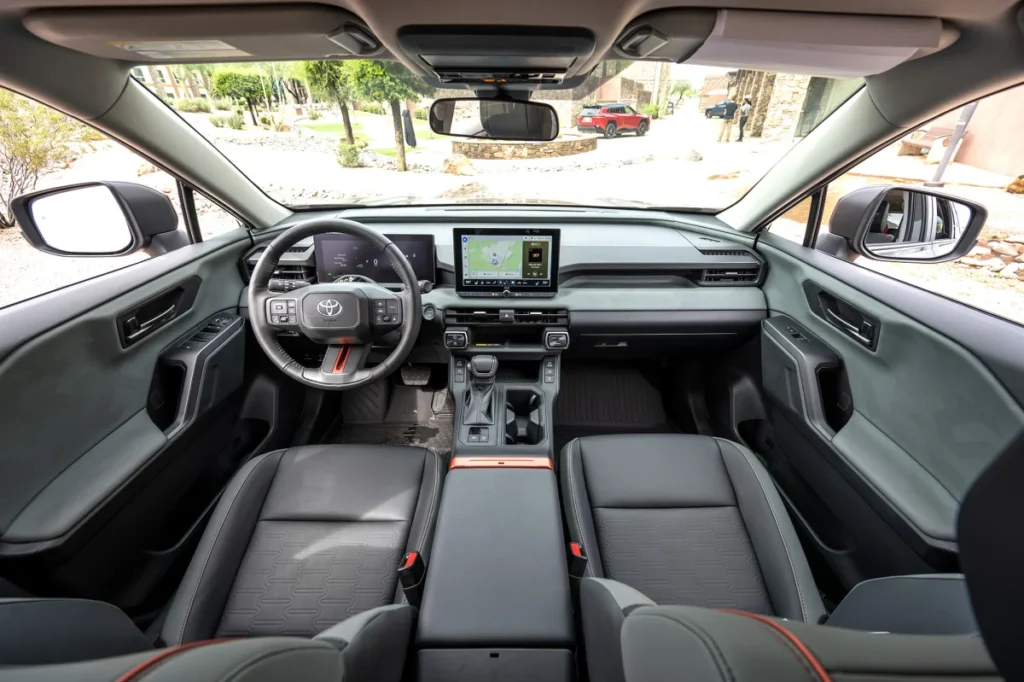
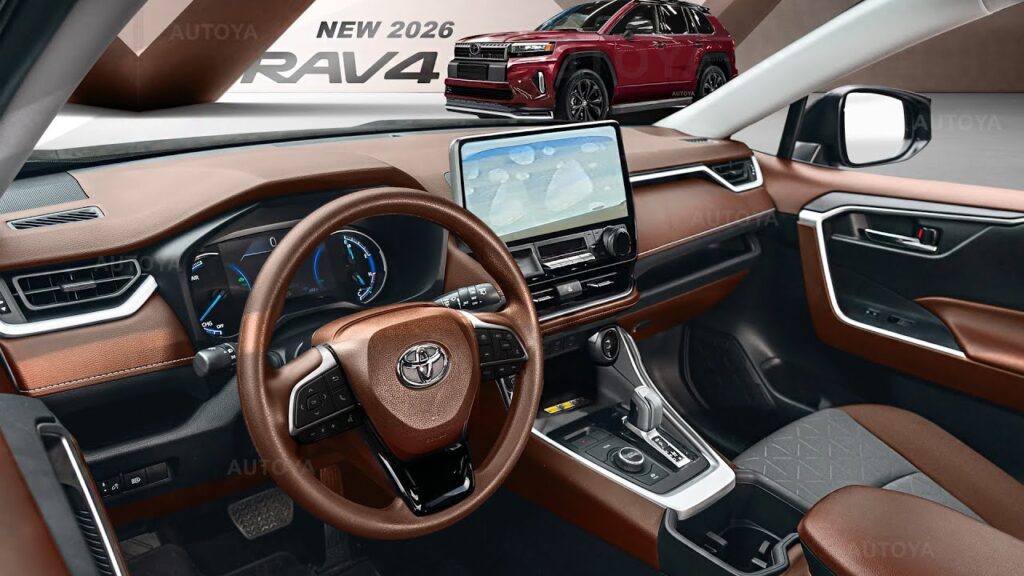
Inside, the 2026 Toyota RAV4 represents a substantial upgrade over its predecessor. The cabin has been redesigned with a focus on reducing noise intrusion — a known weakness of previous RAV4 generations — through added structural rigidity and expanded sound-deadening materials. Built on a reinforced version of Toyota’s TNGA-K platform, the 2026 model delivers a noticeably quieter, calmer highway experience.
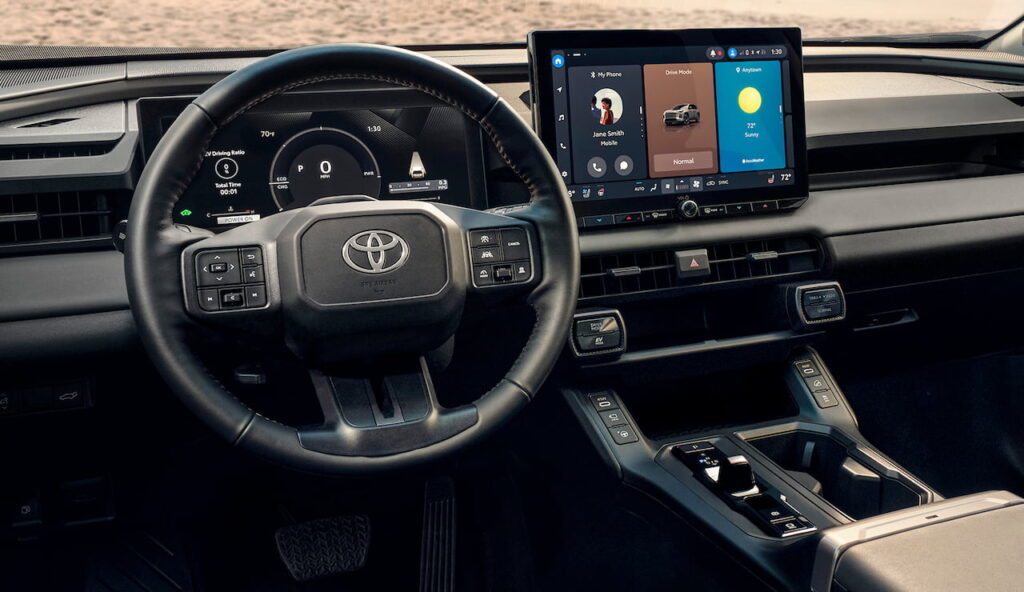
The centerpiece of the interior technology is Toyota’s new Audio Multimedia system running on the Arene software platform. Every 2026 Toyota RAV4 comes standard with a 12.3-inch digital gauge cluster. The infotainment display is a 10.5-inch touchscreen on base and mid-range trims, stepping up to a 12.9-inch touchscreen on the XSE and Limited grades. Both sizes include onscreen climate controls, which frees up physical panel space for a cleaner dashboard aesthetic. Wireless Apple CarPlay and Android Auto are standard across the range.
Cargo capacity remains a key strength for families. The RAV4 offers a practical 37.5 cubic feet of cargo space behind the second row, expanding to nearly 69.8 cubic feet with the rear seats folded. This positions the 2026 Toyota RAV4 as one of the more generous cargo haulers in the compact SUV segment.
For those who regularly tow, towing capacity varies by drivetrain: FWD and base AWD LE models are rated at 1,750 lbs, while most other AWD configurations are rated for up to 3,500 lbs — enough to handle a small boat, personal watercraft, or light utility trailer with ease.
2026 Toyota RAV4 Safety: Toyota Safety Sense 4.0
Every 2026 Toyota RAV4 comes equipped with the latest iteration of Toyota’s advanced driver assistance suite: Toyota Safety Sense 4.0 (TSS 4.0). This is the first vehicle in Toyota’s lineup to feature this upgraded system, replacing the TSS 2.5 used in previous RAV4 generations.
TSS 4.0 adds meaningful new capabilities over its predecessor, including front cross-traffic warning and a driver monitoring system — two features absent from older RAV4 models. The full standard safety feature list includes:
- Pre-collision system with pedestrian and cyclist detection
- Adaptive cruise control with lane tracing assist
- Lane departure alert and lane keeping assist
- Trailer lane tracing assist
- Auto high beam control
- Road sign assist
- Front cross-traffic alert (new in 4.0)
- Driver alertness monitor (new in 4.0)
- Blind-spot warning and rear cross-traffic alert
- Safe exit alert
- Backup camera with dynamic guidelines
The XSE and Limited trims go further with a panoramic parking camera system and front and rear parking sensors with rear automatic braking. The GR Sport adds a 3D panoramic view monitor as standard. These features make the 2026 Toyota RAV4 among the most comprehensively equipped vehicles for safety in its segment, regardless of trim level chosen.
2026 Toyota RAV4 Trim Levels and Pricing: Complete Breakdown
The 2026 Toyota RAV4 spans seven trim levels organized across the three design families. Pricing below includes the $1,450 destination and handling fee where noted by Toyota.
RAV4 LE — From $33,350 (FWD) / $34,750 (AWD)
The base LE is the entry point into the 2026 Toyota RAV4 family, and it is far from bare-bones. Standard equipment includes the 12.3-inch gauge cluster, 10.5-inch touchscreen, wireless Apple CarPlay/Android Auto, TSS 4.0, and Toyota’s full hybrid system. The LE is available in both FWD and AWD configurations, with AWD adding $1,400 to the price.
RAV4 SE — From $36,150 (FWD)
The SE is the sport-oriented step-up for buyers who want a more aggressive exterior without moving to the PHEV-exclusive trims. Standard features add 18-inch black wheels, black exterior trim, heated front seats, and a power-adjustable driver’s seat. AWD is a $1,400 option here as well.
RAV4 XLE Premium — From $37,550 (FWD)
The XLE Premium shifts the focus toward comfort and convenience. Buyers gain synthetic leather seats, heated front seats, a wireless phone charger, and an optional power liftgate. This trim strikes the strongest balance between everyday practicality and premium feel within the Core design family. AWD remains a $1,400 option.
RAV4 Woodland — From $41,350 (AWD Standard)
The Woodland is the rugged outlier in the lineup. AWD is standard and not optional. The Woodland features all-terrain tires, additional ground clearance, unique exterior cladding, and enhanced off-road capability — making it the go-to choice for buyers who frequently encounter gravel roads, light trails, or unpredictable weather. The Woodland is also available with the PHEV powertrain starting at $46,750, and it is one of only two PHEV trims to offer DC fast-charging capability.
RAV4 XSE — From $42,750 (AWD Standard)
The XSE brings a sportier visual character with a larger 12.9-inch infotainment touchscreen, sportier styling elements, and AWD as standard. The XSE PHEV starts at $48,650 and also supports DC fast charging, allowing a 10 to 80 percent charge in approximately 30 minutes under ideal conditions.
RAV4 Limited — From $44,750 (AWD Standard)
The Limited is the top-tier non-GR model, offering heated and ventilated front seats, a premium JBL audio system, the 12.9-inch touchscreen, panoramic parking cameras, and AWD as standard. This is the 2026 Toyota RAV4 for buyers who want the full luxury compact SUV experience without crossing into performance-oriented territory.
RAV4 GR Sport (PHEV) — From $49,950 (AWD Standard)
The GR Sport is the most exciting new addition to the 2026 RAV4 family. Developed in partnership with Toyota’s Gazoo Racing division, it features a unique body kit with a rear wing and widened stance, sportier front and rear bumpers, a performance-tuned suspension, and the full 324 hp PHEV powertrain. It is the first RAV4 ever fitted with summer performance tires, and it accelerates from 0 to 60 mph in just 5.7 seconds — performance that genuinely approaches hot-hatch territory in a crossover SUV body. The GR Sport also includes a 3D panoramic view monitor and the most comprehensive technology package in the lineup.
2026 Toyota RAV4 vs. Rivals: How It Competes
The compact SUV segment is the most competitive in the American automotive market. The 2026 Toyota RAV4 faces pressure from the Honda CR-V, Hyundai Tucson, Chevrolet Equinox, Nissan Rogue, Subaru Forester, and Kia Sportage. In the hybrid sub-segment specifically, the CR-V Hybrid and Tucson Hybrid represent the strongest alternatives.
The 2026 Toyota RAV4 holds several decisive advantages. Its standard hybrid powertrain across all trims means buyers do not need to pay a premium for fuel efficiency — it is baked into every version. The safety technology suite (TSS 4.0) is more advanced than what Honda currently offers as standard on the CR-V. Toyota’s resale value remains best-in-class, with RAV4 models historically retaining more of their purchase price over five years than virtually any rival. And the GR Sport variant gives Toyota something no competitor currently offers: a genuine performance compact SUV hybrid with race-division tuning.
The RAV4’s weaknesses relative to rivals are real but limited. The Honda CR-V interior is widely regarded as more premium-feeling in base trim. The Hyundai Tucson Hybrid offers a more stylishly designed cabin. And some drivers may find the CVT transmission less engaging than the eight-speed automatic found in certain rivals. These are considered trade-offs, not deficiencies.
For related reading on how competing vehicle platforms and architecture influence compact SUV design decisions, the team at architectureassociate.com offers detailed insights into structural engineering approaches that underpin modern crossover development.
Who Should Buy the 2026 Toyota RAV4?
The 2026 Toyota RAV4 is not one vehicle — it is seven, each targeting a meaningfully different buyer profile.
Daily commuters and families will find the LE and XLE Premium deliver exceptional value. The fuel savings from the hybrid system alone can offset a substantial portion of the price premium over legacy gas-only competitors within three to four years of ownership.
Outdoor enthusiasts and adventure seekers should look closely at the Woodland trim. It offers the most capable off-road setup of any non-PHEV RAV4, with AWD standard and terrain-ready tires included in the base price.
Performance-minded drivers who want a compact SUV that can genuinely excite them should consider the GR Sport. At $49,950, it competes with European performance crossovers at a significantly lower price point and delivers acceleration figures that make it one of the quickest vehicles in its class.
Eco-conscious drivers or plug-in advocates will find the SE PHEV and XSE PHEV offer the ideal combination of daily electric commuting and long-range road trip capability, with DC fast charging available on the Woodland and XSE PHEV trims for rapid top-ups away from home.
Pros and Cons of the 2026 Toyota RAV4
Undeniable Advantages:
The fuel economy improvements are transformative. The move to an all-hybrid lineup delivers up to 44 mpg combined in FWD configurations, estimated to save over $500 per year in fuel costs compared to the average value SUV. The power increase — 226 hp in base form — gives the 2026 Toyota RAV4 more muscle than its gas predecessor without sacrificing efficiency. Toyota Safety Sense 4.0 is the most comprehensive standard safety system in the RAV4’s history. Strong resale value, Toyota’s legendary long-term reliability record, and the breadth of seven trim levels covering every buyer profile round out a compelling ownership proposition.
Real Limitations Worth Acknowledging:
The base price of $33,350 is approximately $3,550 higher than where the 2025 gas RAV4 started, which will deter the most price-sensitive buyers. The Woodland trim, while significantly capable, carries a notably steep price jump of $3,830 over the 2025 Woodland. The CVT, while smooth in hybrid operation, lacks the mechanical engagement of a traditional stepped automatic for drivers who prize a more connected driving feel. Highway noise, though improved with new sound deadening, remains higher than what is found in more premium competitors like the Mazda CX-5.
Frequently Asked Questions About the 2026 Toyota RAV4
Is the 2026 Toyota RAV4 available with a gasoline-only engine?
No. Toyota has eliminated the gas-only powertrain for the 2026 model year. Every 2026 Toyota RAV4 runs exclusively on a full hybrid (HEV) or plug-in hybrid (PHEV) powertrain.
What is the starting price of the 2026 Toyota RAV4?
The 2026 Toyota RAV4 starts at $33,350 for the LE FWD trim, inclusive of the $1,450 destination fee. The range-topping GR Sport PHEV starts at $49,950.
Does the 2026 Toyota RAV4 offer all-wheel drive?
Yes. AWD is available as a $1,400 option on the LE, SE, and XLE Premium trims. It is standard on the Woodland, XSE, Limited, and GR Sport models. All PHEV configurations come with AWD standard.
What is the towing capacity of the 2026 Toyota RAV4?
FWD and base AWD LE models are rated at 1,750 lbs. Most other properly equipped AWD configurations can tow up to 3,500 lbs.
How far can the 2026 RAV4 PHEV travel on electricity alone?
Toyota estimates approximately 50 miles of electric-only range for the standard PHEV configurations, with the GR Sport EPA-rated at 48 miles of electric range.
Is DC fast charging available on the 2026 RAV4 PHEV?
DC fast charging is available only on the Woodland PHEV and XSE PHEV trims. Toyota estimates these models can charge from 10 to 80 percent in approximately 30 minutes under ideal conditions.
Final Verdict: The 2026 Toyota RAV4 Sets a New Standard
The 2026 Toyota RAV4 represents the most significant reinvention of America’s favorite compact SUV in a generation. By committing fully to hybrid power across every trim level, Toyota has delivered a vehicle that is genuinely better in nearly every measurable dimension than the model it replaces. It is faster, more efficient, better equipped with technology, and — across the right trims — better value than many buyers would expect.
The honest trade-off is the price floor. Shoppers who previously entered the RAV4 family below $30,000 will need to recalibrate their expectations, and those who were deeply committed to the gasoline engine have been left without a Toyota option in this segment. But for the vast majority of compact SUV buyers — those prioritizing long-term value, fuel savings, safety technology, and dependability — the 2026 Toyota RAV4 makes a more compelling case for itself than ever before.
From the practical LE to the exhilarating GR Sport, this generation of the RAV4 is a smart, forward-thinking investment that earns its position at the top of the compact SUV segment.
For further information, if you need the best guide for buying a car, please follow Red’s Detail Co.
Related Content:
- How Compact SUV Platform Architecture Affects Long-Term Reliability
- Hybrid vs. Plug-In Hybrid: Which Makes More Financial Sense in 2026?
- 2026 Toyota RAV4 vs. Honda CR-V Hybrid: A Detailed Comparison
- Toyota Safety Sense 4.0 Explained: What Every New Feature Actually Does
Pricing figures sourced from manufacturer announcements and current dealer listings. All prices include destination and handling fees. Final transaction prices will vary by region, dealer, and available incentives. Fuel economy figures are EPA estimates; real-world results will vary.




One Comment