How Does an Iridium Spark Plug Work Step by Step
Choosing the right spark plug can be frustrating, especially when you want smoother performance, easier starts, and better fuel efficiency. You’re not alone—many drivers struggle to understand how iridium spark plugs work and whether they’re worth it. This guide explains the process step by step.
An iridium spark plug works when your ignition coil converts battery power into thousands of volts. The voltage travels to the plug, reaches the narrow gap, and creates an electric arc between the fine-wire iridium center electrode and ground electrode.
That spark ignites the air-fuel mixture, forming a flame kernel that drives the piston and crankshaft. Iridium withstands heat and erosion, helping maintain reliable ignition, while proper installation and maintenance support long service life.
The sections below explain each step in detail.
Key Takeaways
- The ignition coil converts low-voltage battery power into thousands of volts and sends it to the iridium spark plug.
- High voltage creates an intense electric field across the plug’s narrow gap, ionizing the gas between the electrodes.
- The fine-wire iridium tip concentrates the electric field, allowing a reliable spark with less required voltage.
- The spark forms a hot plasma channel that ignites the fuel-air mixture and creates a flame kernel.
- Combustion expands gases, pushing the piston downward while iridium’s durability supports consistent ignition over many miles.
What Makes Iridium Spark Plugs Different?
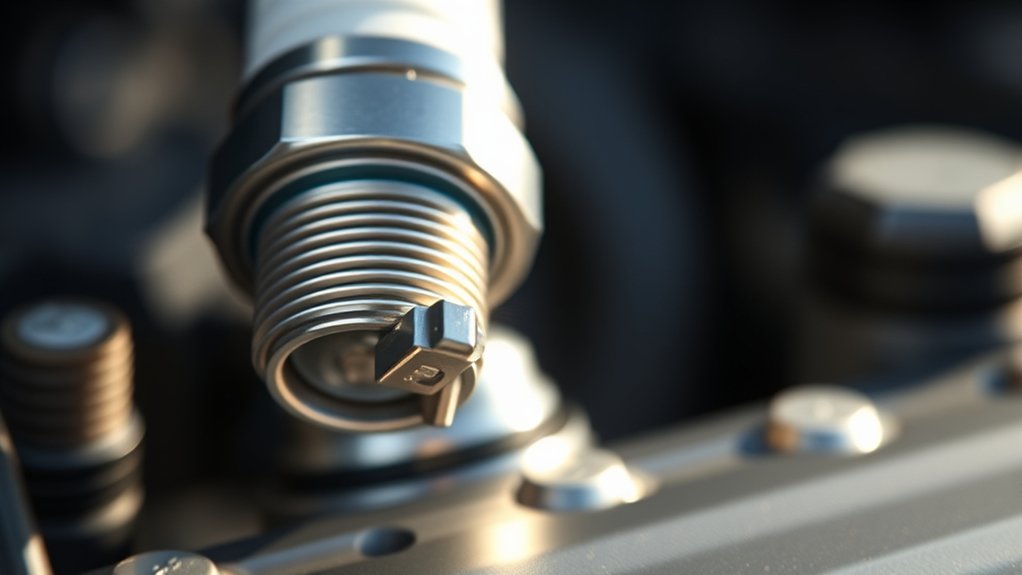
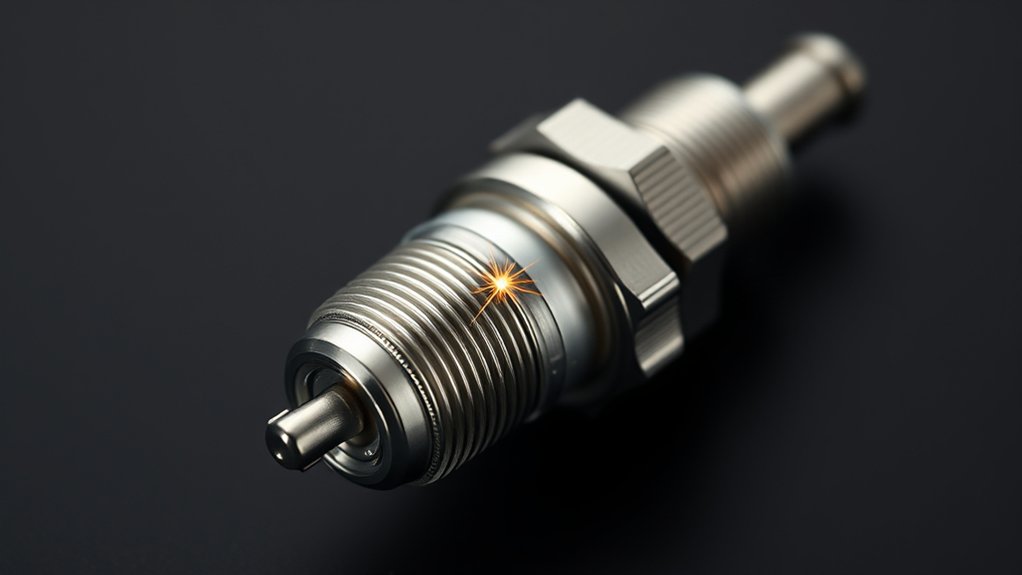
Iridium spark plugs stand out because their center electrode uses a dense, heat-resistant iridium alloy instead of conventional nickel or copper-based materials. These iridium properties let the electrode tolerate intense combustion temperatures, pressure, and electrical wear for longer periods.
Because iridium remains durable at a smaller diameter, manufacturers can use a fine-wire tip without sacrificing strength. That narrow tip concentrates the electric field at the firing point, helping the spark form reliably across the gap.
You’ll also find that this design requires less metal around the tip, which exposes more of the spark to the fuel-air mixture. Spark plug design thus affects ignition consistency, service life, and resistance to fouling.
A fine electrode can improve cold starts and throttle response, while the robust alloy limits erosion that gradually widens the gap. You still need the correct heat range and gap specification, since iridium construction can’t compensate for an improperly matched plug or neglected engine maintenance.
How the Ignition Coil Creates High Voltage
When the engine control module commands a spark, the ignition coil converts the vehicle’s low-voltage electrical supply into the thousands of volts needed to cross the spark plug gap.
Inside, an iron core boosts magnetic strength. Current first flows through the primary winding, building a magnetic field.
When the module interrupts that current, the field collapses rapidly and induces much higher voltage in the secondary winding.
| Coil stage | What happens |
|---|---|
| Primary energizing | Low voltage creates a magnetic field |
| Switching | The module stops primary current |
| Field collapse | Magnetic energy changes rapidly |
| Secondary induction | High voltage develops |
Your ignition system controls this timing precisely, so the coil releases energy at the right moment for combustion.
The coil’s output depends on winding ratios, core design, battery condition, and switching speed.
Although spark plug materials, including iridium, influence durability and gap performance, the ignition coil supplies the electrical force that initiates the spark.
It doesn’t create energy from nothing. It transforms stored electrical energy efficiently.
How Voltage Reaches the Iridium Spark Plug
Once the ignition coil activates, it sends a high-voltage pulse through the ignition wire. That pulse travels to the spark plug and reaches its terminal connection. From there, the voltage passes through the plug and creates the spark needed for combustion.
Ignition Coil Activation
The engine control unit triggers the ignition coil at precisely the right moment, interrupting current in the coil’s primary winding and creating a powerful magnetic-field collapse. You rely on this controlled event for accurate Ignition timing and consistent combustion.
The coil’s design determines how efficiently it stores energy before switching off, while the engine computer adjusts activation according to speed, load, temperature, and sensor feedback. Spark plug materials also influence the required energy, with iridium’s fine center electrode supporting reliable ignition with less voltage demand.
- The ECU calculates the firing moment.
- The primary circuit builds magnetic energy.
- The switching transistor stops current flow.
- The collapsing field induces high voltage.
This activation sequence prepares the ignition system for the next stage without yet describing how the pulse travels. Your coil must respond quickly and repeatably, ensuring every cylinder receives properly timed energy during operation.
High-Voltage Pulse Travels
After the ignition coil generates the high-voltage pulse, it travels through the ignition wire or coil-on-plug boot toward the spark plug’s terminal. Along this route, insulation contains the electrical energy and helps prevent arcing to nearby engine components.
Your ignition system times this pulse with the engine’s position, sending it when the cylinder needs ignition. The conductor carries the surge rapidly, while resistance and shielding limit interference with sensors and control circuits.
Temperature, vibration, and moisture can affect transmission, so the wire or boot must maintain reliable insulation under demanding conditions. In a modern spark plug design, the pulse eventually reaches the plug’s upper connection point, ready for the internal path that directs energy toward the firing end.
This controlled delivery helps produce a consistent spark during each combustion cycle.
Plug Terminal Connection
At the plug’s upper terminal, the high-voltage pulse enters through the metal contact inside the ignition boot. This connection transfers energy from the ignition coil into the plug’s central conductor.
A secure fit matters because looseness, corrosion, or moisture can increase resistance and weaken the pulse. Inside the insulator, the terminal stud guides voltage toward the resistor and center electrode.
Although electrode material affects durability and conductivity, the terminal connection determines whether energy arrives consistently. Your Spark plug design also includes insulation that prevents the voltage from escaping to the engine head.
- Check the boot for cracks or carbon tracking.
- Keep the terminal clean and firmly seated.
- Replace damaged terminal hardware promptly.
- Match the connector to the plug’s design.
With a reliable connection, you’ll support a strong, repeatable spark across the gap.
How the Spark Plug Gap Creates an Arc
When voltage rises between the iridium center electrode and ground electrode, the spark plug gap becomes the point of least resistance. The electric field intensifies across this narrow space, pushing electrons through the gas molecules between the electrodes.
As electrons collide with molecules, they free additional electrons and create ions. This chain reaction rapidly turns the normally insulating gas into a conductive path.
Your spark gap controls how much voltage the ignition system must produce. A gap that’s too wide may resist breakdown, while a gap that’s too narrow can weaken the discharge and reduce exposure to the surrounding charge.
The iridium center electrode’s fine tip concentrates the electric field, helping the required voltage build efficiently.
Once the gas ionizes, current travels through the newly formed channel. This arc formation produces the bright electrical discharge you recognize as a spark.
The arc remains brief because the ignition coil’s stored energy releases quickly across the gap.
How the Spark Ignites the Air-Fuel Mixture
The spark’s hot plasma channel ignites the air-fuel mixture around the gap, creating a small flame kernel. You can think of this kernel as the starting point for controlled combustion.
Heat from the channel breaks fuel molecules apart, while nearby oxygen supports rapid chemical reactions. As the kernel grows, it spreads outward through the compressed mixture, provided the temperature and mixture strength remain suitable.
Several factors help the spark create a reliable flame:
- Electrode materials: Iridium’s durable, fine center electrode concentrates electrical energy, supporting a strong, consistent discharge.
- Spark timing: The ignition system delivers the spark at the intended moment, when the mixture can ignite effectively.
- Mixture condition: Correct fuel concentration and adequate oxygen help the flame kernel develop instead of fading.
- Cylinder pressure: Higher pressure affects the voltage needed and influences how quickly the initial flame forms.
You won’t see a large explosion at the gap. Instead, you’ll see a tiny, intensely hot ignition zone expanding through the mixture.
How the Spark Turns Into Engine Power
Once the spark ignites the air-fuel mixture, combustion quickly builds pressure inside the cylinder. That pressure pushes the piston downward, turning the explosion into mechanical motion. From there, the force travels through the engine and helps produce power.
Spark Ignites Mixture
At the precise moment the iridium spark jumps the plug’s narrow gap, it creates a rapidly expanding flame kernel that ignites the compressed air-fuel mixture. Your ignition timing determines when this event begins, while spark voltage must overcome the gap’s resistance reliably.
The iridium center electrode concentrates electrical energy, helping the spark form consistently under demanding conditions. To understand this ignition step, focus on four essentials:
- The ignition coil supplies high voltage.
- The electrode gap directs the spark.
- The flame kernel starts near the plug.
- The kernel spreads through the mixture.
As you follow the sequence, remember that the spark doesn’t push the piston directly. Instead, it initiates the controlled chemical reaction that makes engine power possible.
Accurate timing and a strong, stable spark help the mixture ignite evenly across the cylinder.
Combustion Builds Pressure
As the flame kernel spreads, combustion rapidly converts the mixture’s chemical energy into expanding gases that raise cylinder pressure. You’ll see this pressure increase as the burning charge heats and expands throughout the cylinder.
The flame front must travel smoothly and quickly, creating a controlled pressure rise rather than a damaging shock. Your ignition system helps determine this timing by delivering the spark at precisely the right moment.
Iridium’s fine center electrode requires less voltage, helping the spark begin reliably and support consistent flame development. However, spark plug materials also affect heat transfer, durability, and resistance to fouling, so engineers match each plug to the engine’s operating demands.
Proper mixture strength, compression, and ignition timing keep combustion stable, allowing pressure to build efficiently before the next stage begins.
Pressure Drives Pistons
The rising cylinder pressure pushes the piston downward, converting the spark’s released energy into mechanical motion. As combustion expands, you’ll see piston motion accelerate through the power stroke.
Cylinder compression gives the mixture density, while the iridium plug’s consistent spark helps release energy at the right moment. The connecting rod transfers the piston’s force to the crankshaft, changing straight-line movement into rotation.
- Combustion creates rapidly expanding gases.
- Gas pressure forces the piston down.
- The connecting rod transfers that force.
- The crankshaft delivers usable engine power.
You’ll get stronger torque when ignition timing, mixture balance, and compression work together. After the piston reaches bottom dead center, the crankshaft carries it through exhaust, intake, and compression strokes.
The cycle repeats thousands of times per minute, turning each controlled spark into steady propulsion. A healthy plug supports complete combustion, helping your engine produce smooth power, efficient operation, and dependable acceleration under changing loads.
Why Iridium Resists Heat and Wear
Because iridium has an exceptionally high melting point and strong atomic bonds, it withstands the intense heat and electrical erosion inside an engine. As you start the engine, the plug’s center electrode faces repeated temperature spikes and thousands of high-voltage discharges.
Iridium withstands extreme heat and repeated electrical discharges, helping the center electrode maintain reliable performance over time.
Iridium’s dense structure helps it resist melting, cracking, and gradual material loss under these conditions.
You’ll also find that manufacturers can use an extremely fine iridium electrode without sacrificing strength. Its small tip concentrates the electrical discharge while exposing less metal to erosion.
That design supports consistent spark formation as the plug accumulates miles. Iridium durability comes from more than hardness; the metal also resists chemical attack from combustion gases and deposits.
Heat resistance protects the electrode when combustion temperatures rise, while its wear resistance helps preserve the intended gap.
As a result, you won’t need to replace the plug as often as a conventional nickel-electrode plug, provided your engine remains properly maintained.
How Iridium Plugs Affect Fuel Economy and Power
That stable, fine-wire spark can also influence how efficiently your engine burns fuel and produces power. Because iridium’s electrode requires less voltage, your ignition system can deliver a consistent spark across a wider range of conditions.
You may notice smoother acceleration, cleaner throttle response, and more dependable starts. However, an iridium plug doesn’t create extra horsepower by itself; it helps your engine use its existing design more effectively.
- Fuel efficiency: A reliable spark supports more complete combustion, so you may waste less fuel during each cycle.
- Power enhancement: Consistent ignition helps maintain strong combustion, especially when you accelerate or climb hills.
- Throttle response: You can experience steadier response because each cylinder ignites its mixture more reliably.
- Long-term consistency: The fine wire maintains its shape, helping performance remain stable over many miles.
Your actual gains depend on engine condition, ignition calibration, driving habits, and plug specifications. Replacing worn conventional plugs with correctly matched iridium versions can restore lost efficiency and responsiveness, rather than provide a dramatic upgrade.
What Causes an Iridium Spark Plug to Fail?
Although iridium is highly durable, an iridium spark plug can still fail from overheating, fuel contamination, improper installation, or worn ignition components. Excessive combustion temperatures can melt the electrode tip, crack the insulator, or weaken the plug’s internal seal.
Oil, coolant, or rich fuel mixtures may coat the firing end, preventing a reliable spark and accelerating deposits. Poor-quality fuel can also leave ash that insulates the electrode.
When you install a plug, incorrect torque can damage its shell or distort the sealing washer. Over-tightening transfers stress through the insulator, while under-tightening allows heat to escape poorly and encourages vibration.
Using the wrong reach or heat range creates similar risks. Although manufacturers select durable spark plug materials, every design has temperature and voltage limits.
A failing ignition system can overload the plug with excessive voltage or deliver weak, inconsistent pulses that cause misfiring and carbon buildup. Mechanical problems, such as detonation or excess cylinder pressure, can damage the plug even sooner.
How to Spot and Replace a Worn Plug
When an iridium spark plug wears out, look for hard starting, rough idling, misfires, reduced acceleration, or poorer fuel economy. Don’t ignore these signs, because continued driving can strain the ignition system and increase emissions.
Remove the plug only after the engine cools, then disconnect the ignition coil or plug wire.
- Inspect the tip for rounded electrodes, cracked porcelain, heavy carbon, oil, or a widened gap.
- Compare the gap with your vehicle manufacturer’s specification. Don’t file or bend an iridium electrode unnecessarily.
- Check related causes, including incorrect ignition timing, damaged coils, vacuum leaks, or poor fuel delivery.
- Install the correct replacement, tightening it to the specified torque without cross-threading.
Spark plug materials affect durability, so choose the specified iridium type rather than substituting a cheaper design.
Apply anti-seize only if the manufacturer permits it, and avoid excess dielectric grease on the electrode. Reconnect the coil, start the engine, and confirm smooth operation.
Dispose of the old plug responsibly.
Frequently Asked Questions
Can Iridium Spark Plugs Be Used in Any Engine?
No, you can’t use iridium spark plugs in every engine. Check your owner’s manual or manufacturer specifications for spark plug compatibility, including thread size, reach, heat range, electrode design, and required gap.
Iridium plugs often fit engines designed for equivalent conventional plugs, but they won’t correct an incompatible ignition system or incorrect specifications. Their longer iridium lifespan offers durability, yet you should still install the exact recommended plug for reliable performance.
How Often Should Iridium Spark Plugs Be Replaced?
Treat your iridium spark plugs like marathon runners: they typically last 60,000–100,000 miles, though some vehicles reach 120,000 miles. Your owner’s manual sets the most accurate spark plug lifespan and replacement intervals for your engine.
Replace them sooner if you notice hard starting, misfires, rough idling, poor acceleration, or declining fuel economy. Don’t wait for failure; inspect them during scheduled service, because driving conditions, engine modifications, and maintenance can shorten their lives.
Can I Clean and Reuse an Iridium Spark Plug?
Yes, you can clean and reuse an iridium spark plug if its electrode, insulator, and threads remain undamaged. For effective spark plug cleaning, remove light deposits with a soft brush and approved cleaner.
Don’t sand, scrape, or use aggressive abrasives, which can damage the fine iridium tip. Check the gap for cracks, erosion, and oil fouling, and follow the manufacturer’s recommendations.
Replace the plug if any defect appears or performance remains poor.
Are Iridium Spark Plugs Compatible With Alternative Fuels?
Yes, iridium spark plugs generally work with alternative fuels, but compatibility depends on your engine and fuel type. Think of them as durable runners: a marathoner still needs the right shoes.
Iridium’s high melting point and fine electrode support reliable ignition, yet ethanol, LPG, CNG, or hydrogen can alter heat, deposits, and wear.
Check your manufacturer’s recommendations for alternative fuel compatibility and spark plug materials, then adjust gaps and replacement intervals accordingly.
What Tools Are Needed to Install Iridium Spark Plugs?
You’ll need a spark-plug socket, ratchet, extension, and torque wrench to install iridium spark plugs. Keep a magnetic pickup tool or rubber insert nearby to prevent drops, plus compressed air for cleaning each well.
Use a gap gauge carefully if the manufacturer permits gap adjustment; iridium electrodes can bend easily. Apply dielectric grease sparingly to the boot, and follow the vehicle’s specified spark plug torque for accurate tightening.
Conclusion
Iridium spark plugs turn your engine’s electrical pulse into a precise, reliable flame. As you’ve seen, their fine-wire electrodes need less voltage, resist erosion, and maintain a consistent gap longer than conventional plugs.
In fact, iridium melts at about 4,470°F, helping it survive extreme combustion temperatures. When you replace worn plugs on schedule and use the correct gap, you’ll support easier starts, steadier power, better efficiency, and fewer misfires from your iridium spark plugs, mile after mile.