How Does an Electric Radiator Fan Work?
Overheating can turn a normal drive into a stressful roadside breakdown, especially when your radiator fan stops working. You’re not alone—many drivers struggle to choose a reliable electric radiator fan that keeps engine temperatures under control.
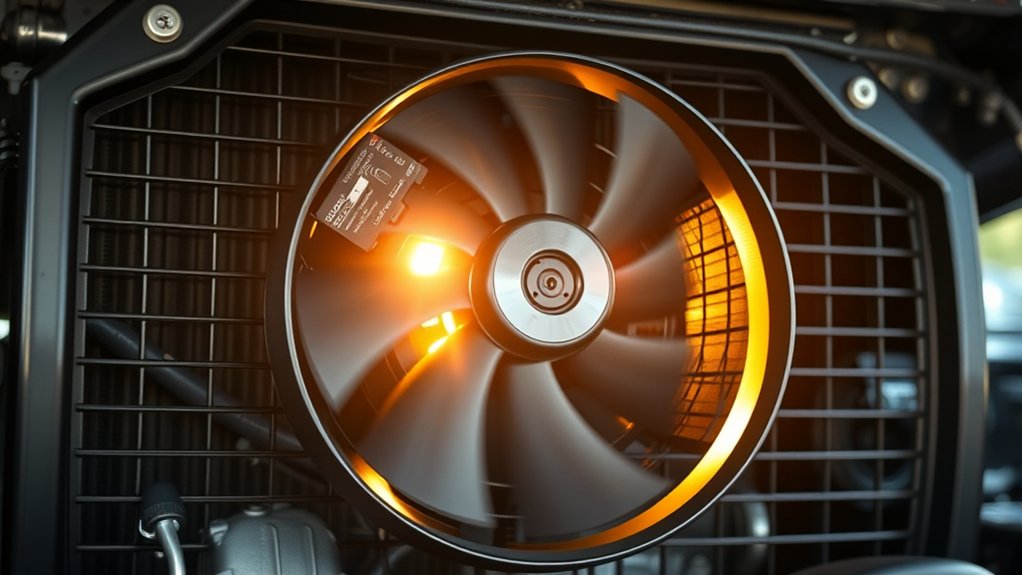
An electric radiator fan helps keep your engine from overheating by pushing air through the radiator’s fins. When coolant reaches a preset temperature, a sensor signals a relay or control module to power the fan’s motor.
The blades then draw or push air across the radiator, carrying heat away. Your fan may also run when you switch on the air conditioner, and some systems adjust its speed electronically.
You’ll learn more about activation, testing, failures, and maintenance below.
Key Takeaways
- An electric radiator fan pulls or pushes air through the radiator to remove heat from the coolant.
- A temperature sensor or ECU activates the fan when coolant temperature reaches a preset threshold.
- The fan motor receives battery power through a fuse and relay, which safely controls high electrical current.
- Relays, resistors, or electronic controllers adjust fan speed according to engine temperature and cooling demand.
- The fan may also activate during air-conditioning use, heavy loads, hot weather, or low vehicle speed.
How Does an Electric Radiator Fan Work?
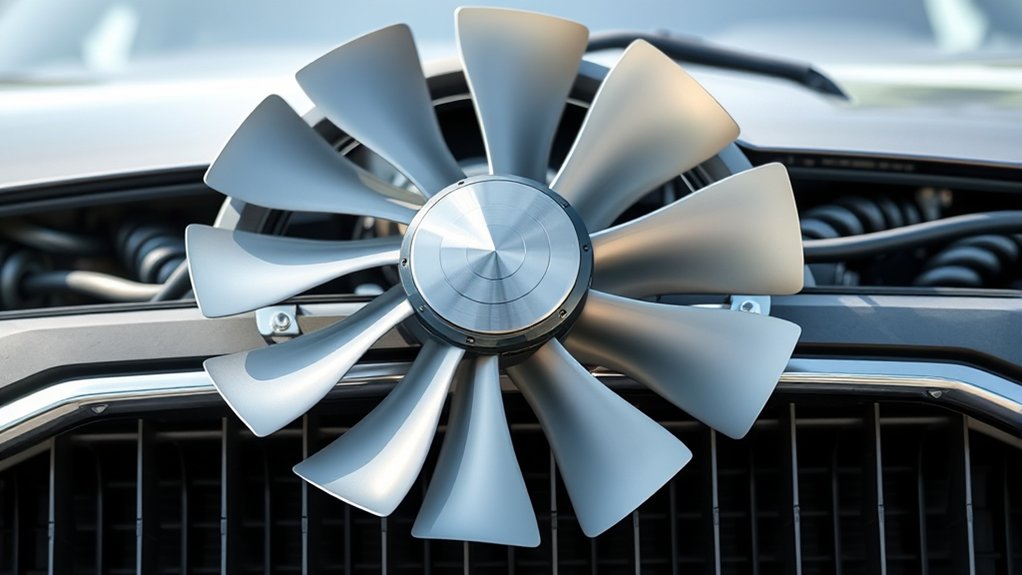
An electric radiator fan pulls air through the radiator to remove heat from the engine coolant. Unlike a belt-driven fan, it uses an electric motor, wiring, and a controller to operate independently from engine speed. When the fan spins, its blades create airflow across the radiator fins. That airflow carries heat from the coolant into the surrounding air, helping maintain efficient engine operation.
You’ll find the fan mounted behind or, on some vehicles, in front of the radiator. A shroud directs air through the fins instead of letting it escape around the blades. The motor receives power through a relay and fuse, while the vehicle’s control system manages electrical delivery based on cooling requirements.
For quieter operation, inspect the blades, shroud, mounts, and bearings if you notice radiator fan noise. Follow reliable fan installation tips: match airflow direction, secure every fastener, protect wiring, and confirm proper clearance before testing the assembly.
When Does an Electric Radiator Fan Turn On?
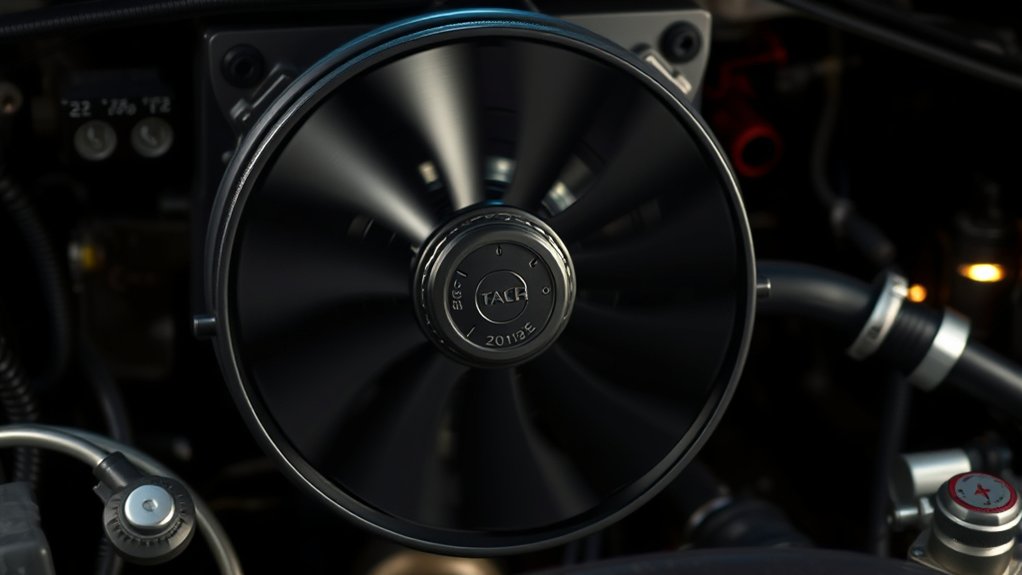
Your electric radiator fan turns on when a temperature sensor detects that the coolant or engine is getting too hot. It can also switch on when the cooling system needs extra help, such as when you use the air conditioner or when there isn’t enough airflow through the radiator.
Temperature Sensor Activation
The temperature sensor turns the electric radiator fan on when coolant reaches a preset threshold, usually around 195–220°F (90–105°C). It monitors temperature continuously and sends a signal to the fan relay or control module when cooling becomes necessary. As coolant temperature falls below the lower switch point, the sensor signals the fan to shut off.
You’ll typically find one of these activation methods:
- A threaded thermal switch that closes an electrical circuit
- An engine coolant temperature sensor managed by the computer
- A programmable controller that adjusts activation points
This automatic control helps maintain stable engine temperature without running the fan constantly. On an electric vehicle, a similar sensor-based strategy can manage cooling fans for batteries and power electronics.
Accurate sensor readings improve fan efficiency, reduce electrical consumption, and limit unnecessary noise. If the sensor fails, the fan might run continuously or never activate.
Cooling System Demands
Beyond the sensor’s temperature reading, cooling system demands determine when the electric radiator fan turns on. Your vehicle’s computer monitors engine load, vehicle speed, air-conditioning use, and radiator fluid temperature to decide whether airflow needs assistance.
During slow traffic or idling, natural airflow drops, so the fan starts to protect the engine from overheating. When you switch on the air conditioner, the fan may run immediately to remove heat from the condenser and maintain comfortable cabin temperatures.
Heavy towing, steep climbs, and hot weather also increase demand, causing longer or more frequent fan cycles. At highway speeds, incoming air often provides enough cooling, allowing the fan to stop.
How the Temperature Sensor Switches the Fan On
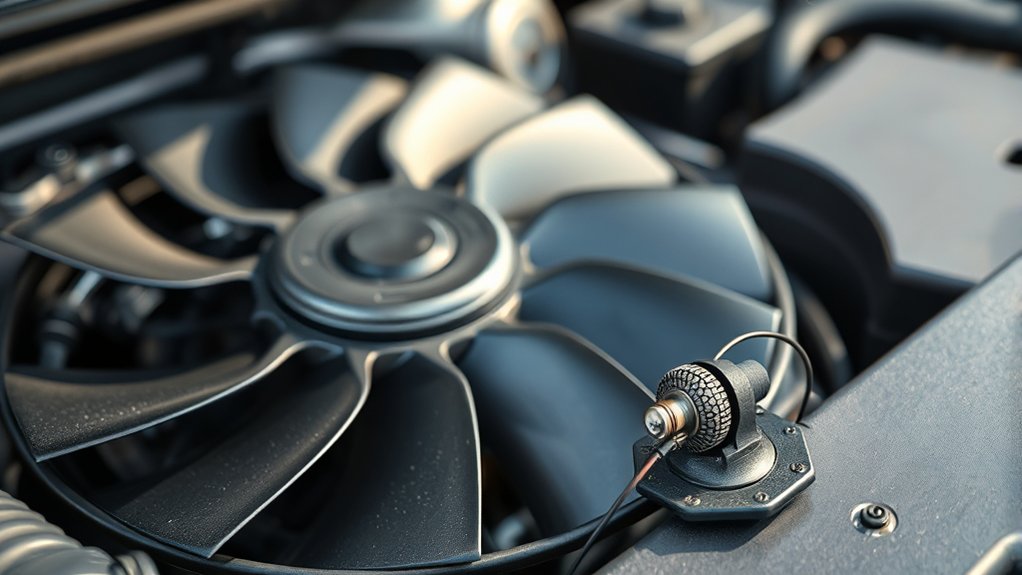
As coolant temperature rises, a temperature sensor signals the radiator fan relay to close the circuit and supply power to the motor. You’ll find this sensor near a coolant passage, thermostat housing, or radiator outlet, where it monitors engine heat.
When coolant reaches its calibrated threshold, the sensor changes state, triggering the fan’s electrical response. As temperature falls, it switches back, allowing the fan to stop and preventing unnecessary battery drain.
Several factors influence this timing:
- Your vehicle may use one temperature threshold to start and another to stop the fan.
- The sensor’s position affects how quickly it detects changing coolant temperatures.
- A faulty sensor can cause continuous operation, delayed cooling, or no fan activation.
This automatic control supports steady coolant circulation, especially when airflow through the radiator is limited at idle or in traffic.
Although the sensor starts the cooling response, fan blade design determines how effectively the moving air removes heat. You’ll get the best results when the sensor reads accurately and the cooling system remains properly filled, sealed, and free from air pockets.
What Does the Fan Relay Do?
Your fan relay controls power to the electric radiator fan. When the temperature sensor sends a signal, the relay switches the fan on or off. This allows the fan to handle high electrical current safely and efficiently.
Controls Fan Power
The fan relay controls power to the electric radiator fan by acting as a switch between the battery and the motor. When the vehicle’s control circuit activates the relay, an internal contact closes and sends battery voltage through the fan fuse and wiring.
The motor then receives the current it needs to spin and move air through the radiator.
- You get reliable motor power without routing high current through a small control switch.
- The relay limits electrical load on the vehicle’s control module.
- A failing relay can stop the fan, cause intermittent operation, or leave it running.
The relay itself doesn’t measure radiator fluid or engine temperature. Instead, it simply carries or interrupts power when another control component commands it.
If the fan won’t run, you can inspect the relay, fuse, connectors, and ground before replacing the motor. A clicking sound doesn’t always prove the contacts work, so test voltage at the fan connector, too.
Responds To Temperature Signals
Once the relay is ready to carry power, a temperature signal tells it when to energize the fan. A coolant sensor monitors heat near the engine.
When coolant reaches the programmed threshold, the sensor sends a signal to the control module, which closes the relay contacts. Current then reaches the fan motor, increasing airflow through the radiator.
As temperatures fall, the module opens the contacts, and the fan stops.
| Signal condition | Relay response |
|---|---|
| Coolant below threshold | Keeps contacts open |
| Coolant reaches threshold | Closes contacts |
| Temperature remains high | Maintains fan power |
| Coolant cools sufficiently | Opens contacts |
This automatic response supports radiator efficiency without running the fan constantly. By controlling airflow only when needed, the relay reduces electrical load and helps protect engine performance.
If the fan never starts, check the sensor, relay, wiring, and fuse before assuming the motor has failed. Temperature settings may vary by vehicle and operating conditions.
How an Electric Radiator Fan Changes Speed
How does an electric radiator fan change speed? Your vehicle’s control system adjusts fan speed by changing the electrical power sent to the motor. When coolant temperature rises, the controller may select a higher speed setting. As temperature drops, it reduces power or switches the fan off.
Many vehicles use relays, resistors, electronic controllers, or pulse-width modulation to manage these changes.
You’ll notice speed control through:
- Low speed for steady temperature control
- Higher speed when heat rises quickly
- Automatic shutoff after cooling demand falls
This staged operation balances cooling efficiency with fan noise. Lower speeds consume less electricity and produce quieter operation, while higher speeds provide stronger temperature management when necessary.
Some systems use two separate fans, running one or both depending on the signal. Others vary motor speed continuously rather than choosing fixed stages.
If a sensor, relay, or controller fails, the fan may run constantly, stay off, or operate at only one speed. Proper diagnosis requires checking electrical signals, connections, and the fan motor.
How Fan Airflow Cools the Radiator
Fan speed determines how much air moves through the radiator, but airflow does the actual heat exchange. As your fan pulls air across the radiator’s fins, heat transfers from hot tubes into the moving air.
The fins increase surface area, helping the radiator release heat efficiently. Cooler air carries that heat away, while radiator fluid circulates through the tubes and returns to the engine at a lower temperature.
This process supports consistent engine cooling, especially when your vehicle moves slowly or stops.
| Airflow condition | Heat transfer | Cooling result |
|---|---|---|
| Low airflow | Limited heat removal | Temperature rises |
| Steady airflow | Balanced transfer | Stable operation |
| Strong airflow | Rapid heat removal | Faster cooling |
A properly sealed shroud directs air through the core instead of allowing it to escape around the edges. You’ll get better cooling when the fins stay clean and unobstructed.
Dirt, bent fins, or debris can restrict airflow. The fan’s control system increases airflow when coolant temperature rises, then reduces it after the radiator has removed enough heat.
Therefore, airflow, not fan noise, determines actual cooling performance.
Electric and Belt-Driven Fans Compared
Electric fans use motors and temperature controls to deliver airflow when needed, while belt-driven fans draw power from the engine and spin continuously with engine speed. As you compare them, you’ll see that each design affects efficiency, cooling control, and available space.
Electric fans can run after shutdown, support precise temperature management, and free the engine from constant fan drag. Belt-driven fans offer straightforward operation and strong airflow at higher engine speeds, but their output changes with engine speed.
Your main design considerations include:
- Control: Electric fans respond to sensors, switches, or electronic commands, while belt-driven units follow engine rotation.
- Packaging: Electric models fit various locations, helping you work around crowded engine bays.
- Comfort: Shrouds, balanced blades, and proper mounting improve noise reduction for either system.
You’ll also weigh electrical capacity, airflow demands, and climate. An electric setup may improve fuel economy during light-load driving, while a belt-driven fan remains familiar and mechanically simple.
Choose the arrangement that matches your vehicle’s cooling requirements and driving conditions.
Common Causes of Electric Radiator Fan Failure
Your electric radiator fan can fail for a few common reasons. For example, a blown fuse or faulty temperature sensor may prevent it from getting the power or signal it needs. A damaged fan motor can also keep it from working properly.
Blown Fuse
When a radiator fan stops working suddenly, a blown fuse may be the simplest explanation. The fuse protects the fan circuit from excessive current, so it sacrifices itself before wiring or the motor suffers damage. You can check it in the vehicle’s fuse box, using the diagram in your owner’s manual.
- Look for a broken metal strip or darkened fuse.
- Replace it only with the specified amperage.
- Watch for another failure after installation.
A replacement fuse should restore fan operation, but don’t ignore repeated failures. A shorted wire, seized fan motor, damaged relay, or loose connection may keep drawing too much current.
Without airflow, Engine temperature can rise quickly, especially in traffic. Check Radiator fluid levels as part of your inspection, but remember that low fluid won’t explain a fuse that keeps blowing.
Disconnect power before handling related wiring.
Faulty Temperature Sensor
A faulty temperature sensor can keep the radiator fan from switching on even when the engine is overheating. This sensor monitors engine temperature and signals the control system when cooling becomes necessary.
If it fails, you may notice rising temperatures, warning lights, or coolant boiling. Check radiator fluid levels first, because low fluid can also create misleading readings.
You can compare the sensor’s resistance with your vehicle’s specifications or scan for related fault codes. Don’t drive far if the temperature gauge climbs; overheating can cause serious engine damage.
| Symptom | Likely clue |
|---|---|
| Fan stays off | Sensor signal fails |
| Gauge reads cold | Open circuit |
| Warning light appears | Stored fault code |
A mechanic can test the wiring, connector, and sensor, then replace the faulty component. Afterward, verify that the fan activates at the specified temperature.
Damaged Fan Motor
Why does a radiator fan motor fail? You’ll usually find the answer in electrical strain, contamination, or physical damage. A worn motor may spin slowly, stop intermittently, or refuse to start, causing engine temperatures to rise.
Common warning signs include:
- A grinding, humming, or clicking noise
- A Fan blade that turns roughly or wobbles
- A burning smell or repeatedly blown fuse
Moisture, road debris, and excessive heat can damage bearings and windings. Over time, heat may break down the motor insulation, allowing short circuits that reduce performance or destroy the motor.
You shouldn’t keep driving if the fan won’t operate, especially in traffic. Check the fuse, relay, wiring, and connector first, then test voltage at the motor.
Replace the damaged unit when internal wear or electrical failure prevents reliable operation.
How to Test an Electric Radiator Fan Safely
Before testing an electric radiator fan, switch off the engine, remove loose clothing and jewelry, and keep your hands clear of the blades. Let hot components cool before you begin. Wear safety glasses, engage the parking brake, and work in a well-ventilated area.
Check the fuse, relay, wiring, and connectors for visible damage. Don’t bridge terminals unless your vehicle’s service manual specifies the correct procedure.
With a multimeter, test for battery voltage at the fan connector while the engine reaches its normal operating temperature. If voltage appears but the fan doesn’t run, the motor may be faulty.
If voltage remains absent, inspect the relay, temperature sensor, and control circuit. You can also listen for unusual Radiator fan noise, such as grinding, clicking, or humming, but never place your hands near moving blades.
Follow fan installation tips by verifying connector alignment and secure mounting before testing. Stop immediately if wiring overheats, sparks, or smells burnt, and seek professional assistance.
How to Maintain Reliable Radiator Fan Performance
After testing the fan safely, maintain its performance by keeping the blades, shroud, and radiator free of dirt and debris. Use compressed air or a soft brush, working gently so you don’t bend the fins. Inspect the wiring, connectors, fuse, and relay for corrosion, loose connections, or damaged insulation. Secure any chafed wires before they cause an intermittent failure.
Keep fan blades, the shroud, radiator, and wiring clean and secure to maintain reliable cooling performance.
- Check coolant level and condition regularly.
- Watch for unusual fan noise, vibration, or delayed startup.
- Confirm airflow direction and verify the fan runs when needed.
Monitor Radiator fluid for the manufacturer’s recommended level and mixture. Low coolant can raise Engine temperature and force the fan to work harder.
If the temperature climbs, stop driving when safe and investigate leaks, a stuck thermostat, or a failing water pump. Clean the radiator’s external surface during routine service, and replace worn fan motors promptly.
Follow your vehicle’s maintenance schedule, and never work near moving blades or a hot engine. These habits help your electric radiator fan cool consistently and extend its service life.
Frequently Asked Questions
Can an Electric Radiator Fan Drain the Battery When the Engine Is Off?
Yes, an electric radiator fan can drain your battery when the engine’s off, especially if a faulty relay, temperature sensor, or wiring keeps it running. Normal fan operation after shutdown usually lasts only a few minutes and shouldn’t cause trouble.
However, extended power consumption can create noticeable battery drain, particularly with an older battery. If you hear the fan running continuously, check the cooling system and electrical controls promptly to prevent a dead battery.
How Much Does It Cost to Replace an Electric Radiator Fan?
You’ll typically pay $300–$800 to replace an electric radiator fan, including parts and labor. Like replacing a team’s tired goalkeeper, the price depends on your vehicle, fan assembly, and accessibility.
A basic motor may cost $100–$300, while a complete assembly can exceed $500. Your mechanic should test relays, wiring, and temperature sensors first.
Proper fan maintenance improves cooling efficiency and may prevent another expensive replacement later, especially in heavy traffic or hot climates.
Can a Faulty Radiator Fan Cause the Air Conditioner to Blow Warm Air?
Yes, a faulty radiator fan can cause your air conditioner to blow warm air, especially when you’re stopped or driving slowly. The fan helps move air through the condenser, allowing refrigerant to release heat.
Without sufficient airflow, your cooling system can’t condense refrigerant effectively, so cabin air feels warmer. You may also notice overheating, unusual noises, or inconsistent cooling.
Have a technician inspect the fan, fuse, relay, and wiring promptly.
Are Electric Radiator Fans Compatible With All Vehicle Models?
Not every electric radiator fan fits every vehicle model. One size doesn’t fit all. You’ll need to match the fan’s dimensions, mounting points, airflow capacity, voltage, and electrical connections to your vehicle.
Compatibility issues can arise with limited space, unusual wiring, or insufficient cooling performance. Vehicle modifications, such as custom brackets, relays, or wiring, may help with installation, but you shouldn’t guess.
Check the manufacturer’s specifications and consult a qualified technician before purchasing.
How Long Does an Electric Radiator Fan Typically Last?
An electric radiator fan typically lasts 8–12 years, or roughly 80,000–150,000 miles, though your driving conditions and maintenance habits matter. You can extend its fan lifespan through regular radiator maintenance, including cleaning debris, checking wiring, and inspecting fuses and relays.
Excessive heat, moisture, corrosion, or frequent stop-and-go driving can shorten service life. If you notice overheating, unusual noises, or inconsistent operation, test or replace the fan promptly to protect your engine.
Conclusion
An electric radiator fan keeps your engine from overheating by pulling air through the radiator when natural airflow isn’t enough. Sensors, relays, and control modules work together to switch it on and adjust its speed.
Unlike belt-driven fans, it runs only when needed, improving efficiency. Because cooling-system faults can quickly cause expensive damage, don’t ignore unusual temperatures or fan noises.
You’ll protect your engine by testing faults promptly. Overheating can warp cylinder heads in minutes, not hours, so understanding how an electric radiator fan works can help prevent serious damage.