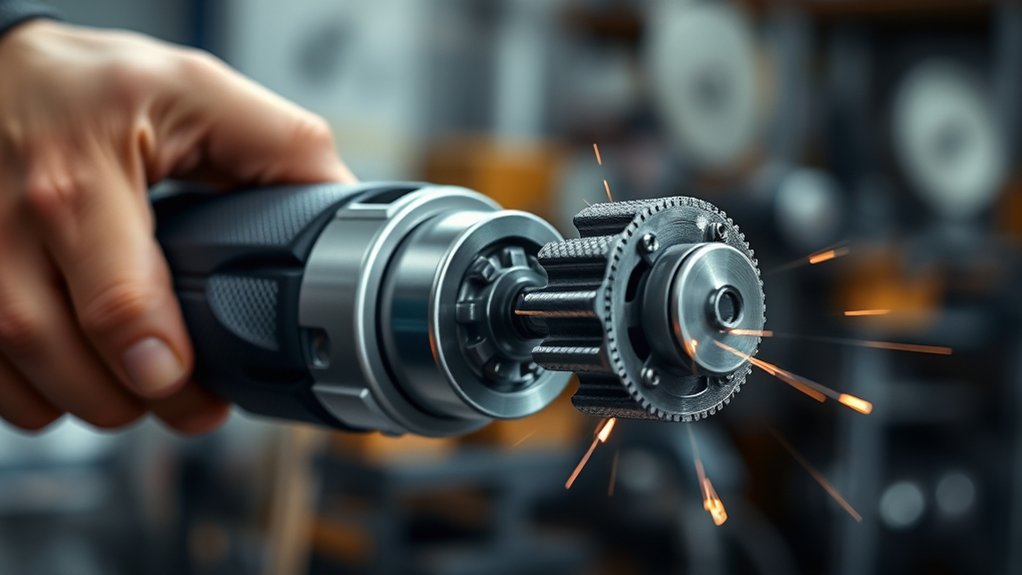
How Does an Electric Ratchet Work?
Removing stubborn nuts and bolts by hand can be tiring, especially when you’re working in tight spaces. You’re not alone—many people struggle with limited access, hand fatigue, and slow progress. Understanding how an electric ratchet works can help you choose the right tool for faster, easier fastening.
An electric ratchet uses a rechargeable battery to power a motor when you squeeze the trigger. Electrical energy creates magnetic force that spins the motor, while internal gears reduce speed and multiply torque.
That torque turns the square drive and attached socket, allowing you to tighten or remove nuts and bolts with less effort. You can switch directions and vary speed for control, but you shouldn’t use it on severely seized or delicate fasteners.
The sections below explain its power, mechanics, uses, and safe operation.
Key Takeaways
- A rechargeable battery sends electrical power through a trigger-controlled circuit to the ratchet’s motor.
- The motor converts electrical energy into rotation using magnetic fields created by coils and magnets.
- Internal gears reduce motor speed while multiplying torque for turning nuts and bolts effectively.
- The ratchet head transfers torque through its square drive and socket, rotating fasteners clockwise or counterclockwise.
- A variable-speed trigger controls operation, while the direction switch selects tightening or loosening.
How Does an Electric Ratchet Work?
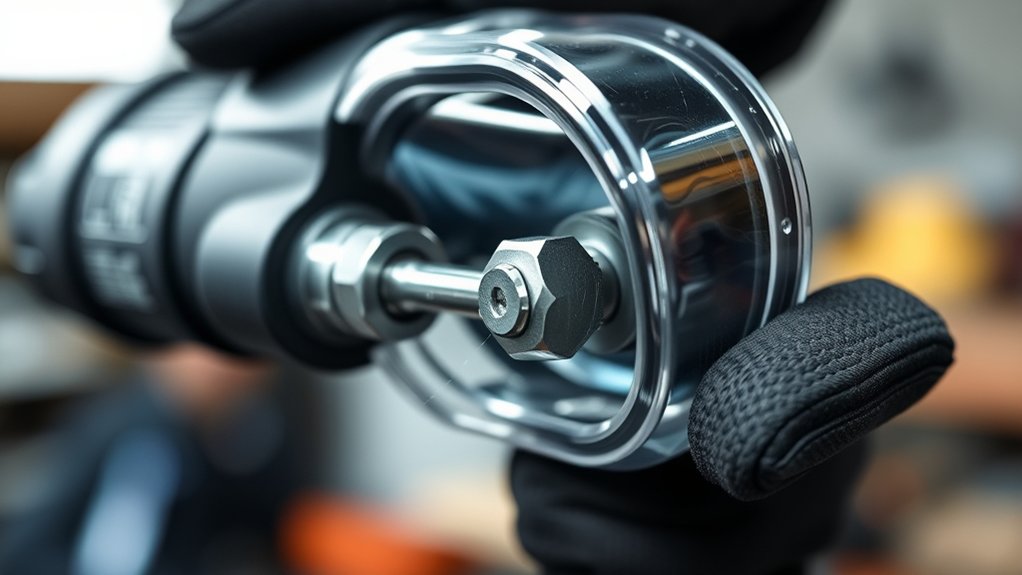
An electric ratchet uses a battery-powered motor to turn a socket and tighten or loosen fasteners. When you press the trigger, the motor drives gears inside the head. Those gears transfer torque to the square drive, which spins your attached socket.
An electric ratchet’s motor drives internal gears that transfer torque to the square drive, spinning the attached socket.
A selector switch sets clockwise or counterclockwise rotation, so you can install or remove nuts and bolts. You guide the tool while its internal clutch and gearing control movement.
Unlike a manual ratchet, it reduces repetitive wrist motion and speeds work in confined spaces. You still need to start threads by hand and finish critical fasteners with a calibrated torque wrench, because the ratchet usually isn’t designed for precise final torque.
An ergonomic design helps you maintain a secure grip, reach tight areas, and reduce hand strain. Keep the drive clean, match the socket to the fastener, and practice proper battery maintenance to support reliable operation.
Always inspect the tool before use and follow its instructions.
What Powers an Electric Ratchet?
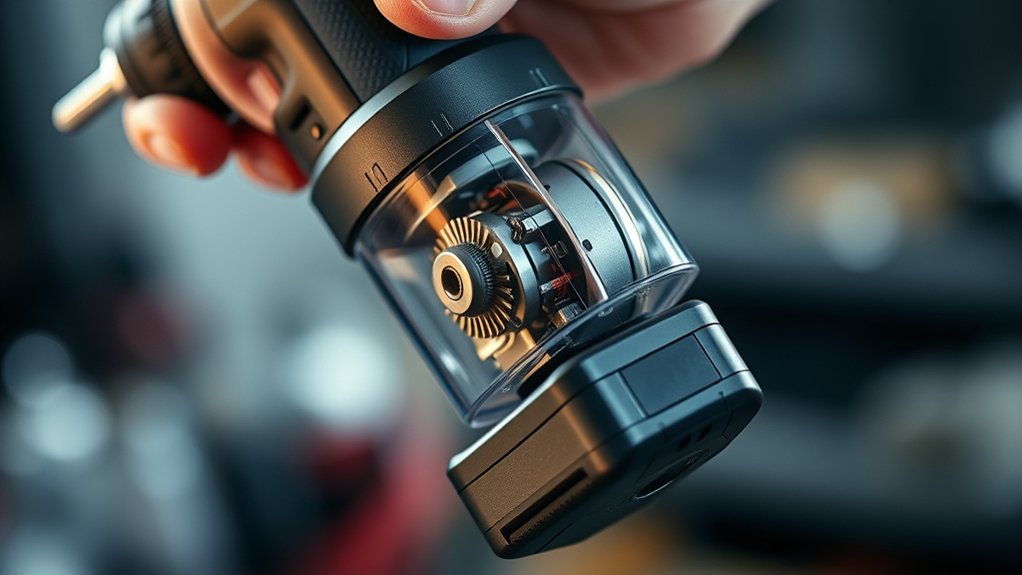
You power an electric ratchet with a rechargeable battery that supplies energy to its motor. The motor then converts that electrical energy into the rotating force that turns the socket. In other words, the battery powers the motor, and the motor delivers controlled fastening power.
Battery-Powered Motor
A rechargeable battery sends electrical current to the ratchet’s motor, which converts that energy into rotational force. When you squeeze the trigger, the motor turns the drive head, helping you tighten or loosen fasteners without manual pumping.
Modern battery technology gives you dependable power in a compact package. Lithium-ion cells typically provide strong performance, recharge quickly, and avoid significant memory loss.
The pack’s capacity affects runtime, while voltage influences torque and speed.
| Feature | What you get | Why it matters |
|---|---|---|
| Lithium-ion cell | Steady output | Longer working sessions |
| Compact pack | Lower weight | Easier handling |
| Brushless motor | Efficient operation | Less maintenance |
An ergonomic design balances the battery and motor, so you can work comfortably in cramped spaces. You’ll appreciate a slim grip, a responsive trigger, and a battery gauge that helps you plan recharges.
Choose a capacity that matches your workload and keeps the tool manageable.
Electrical Energy Transfer
Electrical energy transfer begins when the battery sends current through the ratchet’s control circuitry to the motor. The circuit regulates voltage and current, so you get steady torque without overwhelming the motor.
When you press the trigger, a switch completes the path, allowing electrons to flow from the battery through the motor’s windings. Magnetic fields then interact, turning electrical energy into mechanical rotation at the drive head.
A controller may adjust power according to trigger pressure, giving you better speed control and preventing unnecessary drain. Battery efficiency matters because a well-designed pack delivers more usable energy between charges and stays cooler during demanding tasks.
An ergonomic design also improves power management by positioning controls where you can operate them naturally. This helps you apply consistent pressure while reducing fatigue during extended fastening jobs.
How an Electric Ratchet Creates Torque
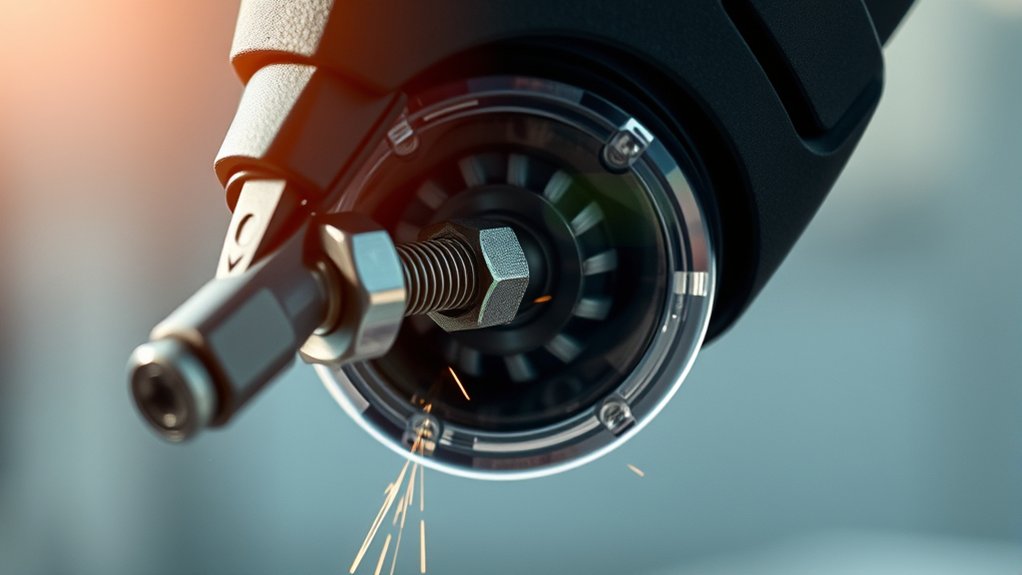
Your electric ratchet’s motor powers the initial rotation that starts the torque-producing process.
From there, the gears slow the rotation while multiplying torque, giving you more turning force. Finally, the ratchet mechanism transfers that force to the fastener, allowing you to tighten it with control.
Motor Powers Rotation
When you press the trigger, the battery sends current to the ratchet’s electric motor, causing its internal coils and magnets to spin the motor shaft. That spinning motion creates the rotation you need to turn a fastener. You control the output by adjusting trigger pressure, so gentle squeezing helps you start smoothly while full pressure delivers maximum speed.
- Electrical energy: Your charged battery supplies power through the motor’s wiring.
- Magnetic force: Coils and permanent magnets interact, producing shaft rotation.
- Torque delivery: The rotating shaft transfers twisting force to the drive head.
- User control: You guide direction and pressure with the switch and trigger.
Good battery maintenance keeps current flowing consistently. An ergonomic design helps you hold the tool steadily, reducing fatigue as you work in tight spaces. This direct motor action powers fastening without combustion or manual swinging.
Gear Reduction Multiplies Torque
After the motor spins, a gear train reduces its speed and multiplies the torque reaching the drive head. Each gear transfers motion through carefully chosen ratios, allowing you to loosen or tighten fasteners that demand more force than the motor could deliver directly.
You’ll notice slower output rotation, but that trade-off gives you stronger turning power and better control. The gears also help the tool use the battery’s energy efficiently, so proper Battery maintenance supports consistent performance and extends runtime.
With an ergonomic design, you can position the ratchet comfortably while the reduction system supplies the mechanical advantage. Gear materials, tooth shape, and lubrication affect efficiency, noise, and durability.
As you apply pressure, the motor continues driving the gear train, converting speed into usable torque at the head.
Ratchet Mechanism Delivers Force
Once the gear train delivers torque, the ratchet mechanism transfers that force to the drive head while allowing rotation in the tightening direction.
When you press the trigger, the motor spins the gear train, which turns the ratchet wheel. A pawl engages the wheel’s teeth, pushing the socket forward instead of letting it slip backward.
As you release the trigger, the pawl resets for the next pulse.
- Torque delivery: Each motor rotation becomes controlled fastener movement.
- Direction control: A selector changes the pawl’s engagement for tightening or loosening.
- Smooth operation: Proper lubrication reduces friction, heat, and wear.
- User benefits: Battery efficiency improves runtime, while noise reduction makes work more comfortable.
The mechanism doesn’t create torque by itself. It channels the motor’s multiplied force.
You’ll feel that force as steady, compact power at the socket, even in tight spaces where a manual ratchet proves difficult.
How Its Gearbox Multiplies Torque
The gearbox multiplies torque by using a small motor gear to drive larger gears, reducing output speed while increasing turning force. As you squeeze the trigger, the motor spins quickly, but the gear train transfers that motion through progressively larger gear ratios.
This lets you apply greater force without demanding the same torque directly from the motor. The tradeoff is slower output rotation, which helps the tool manage resistance efficiently.
| Gearbox feature | What you notice | Main benefit |
|---|---|---|
| Small input gear | High motor speed | Efficient power transfer |
| Larger driven gears | Reduced rotation | Increased torque |
| Multiple stages | Compounded reduction | Stronger output force |
The gearbox also cushions sudden load changes, protecting internal components and improving control. You’ll get better performance when you match the tool’s torque capacity to the job.
Battery safety still matters because excessive load can increase current draw and heat. An ergonomic design helps you hold the ratchet steadily while the gearbox handles demanding resistance, reducing strain during extended work.
How the Ratchet Head Turns Fasteners
Press the trigger to start the motor, which spins the socket around the fastener. The gearbox slows the rotation to increase torque, making it easier to loosen or tighten stubborn bolts.
You can switch between forward and reverse to control the ratchet head’s rotation direction.
Motor-Driven Socket Rotation
When you press the trigger, the electric motor sends torque through a gear-reduction system to the ratchet head, which spins the attached socket around the fastener. You guide the tool while its square drive keeps the socket aligned, letting you tighten or loosen nuts with steady, powered rotation.
Release the trigger, and the motor stops, giving you immediate control. The ratchet mechanism also lets you reposition the handle without removing the socket when space gets tight.
- Choose forward to tighten or reverse to loosen.
- Seat the socket fully before pressing the trigger.
- Keep your fingers clear of the rotating head.
- Use short trigger presses near the fastener’s end.
Battery safety matters: inspect the pack, avoid damaged cells, and charge it correctly. An ergonomic design helps you maintain a comfortable grip and precise control during repetitive work.
Gear Reduction And Torque
Behind that steady socket rotation, a gear-reduction system trades motor speed for usable torque. Inside your electric ratchet, several gears mesh to lower the motor’s rapid revolutions while multiplying its turning force.
The final gear drives the output shaft and socket, helping you loosen or tighten fasteners without wrestling with excessive hand effort. You’ll notice the tool turns slower than a drill, but that controlled speed gives you better engagement and reduces the risk of stripping hardware.
Efficient gearing also limits the motor’s workload, supporting battery longevity during repeated jobs. Combined with an ergonomic design, the balanced torque delivery keeps your wrist comfortable and improves control in cramped spaces.
The ratchet head converts compact motor power into practical fastening performance, letting you work steadily and confidently.
Forward And Reverse Control
A direction switch changes the motor’s rotation so the ratchet head can tighten or loosen fasteners. You select forward to drive a bolt clockwise or reverse to back it out.
The ratchet mechanism then transfers motor power through the gears while allowing controlled fastening in tight spaces. Use these steps:
- Set the switch to forward for tightening.
- Align the socket squarely with the fastener.
- Press the trigger gradually to control speed.
- Select reverse to remove the fastener.
You’ll prevent accidental movement by releasing the trigger before changing direction. Some models include a lockout position, which helps during storage or socket changes.
This control also supports battery efficiency because you can stop the motor immediately when the fastener seats. An ergonomic design places the switch and trigger within easy reach, so you can work comfortably and change direction quickly.
How Speed and Direction Controls Work
Speed and direction controls regulate how the electric ratchet applies torque to a fastener. When you squeeze the variable-speed trigger lightly, the motor turns slowly, giving you better control as you start threading. Press farther to increase speed and finish the task efficiently. Releasing the trigger stops the motor, so you can adjust your grip or reposition the tool without unplugging it.
A forward-and-reverse switch changes the motor’s rotation. Select forward to tighten a fastener and reverse to loosen it, but release the trigger before changing direction. This habit protects the switch and helps prevent abrupt movement.
Some models include a lockout position that keeps the trigger from activating accidentally during storage or battery maintenance.
An ergonomic design places these controls where your thumb and fingers can reach them naturally. You won’t need to twist your wrist or remove your hand to adjust operation.
Use the lowest practical speed near delicate components, then increase pressure only when you need more torque.
What an Electric Ratchet Can and Cannot Do
An electric ratchet excels at quickly installing and removing nuts and bolts, especially in tight spaces where a standard ratchet is awkward to use. You’ll appreciate its speed, compact head, and ergonomic design during routine repairs, assembly, and maintenance.
It reduces hand fatigue, but it isn’t a universal replacement for manual tools.
- You can run fasteners down efficiently, then finish tightening them by hand for proper control.
- You can reverse direction instantly, making removal and installation convenient.
- You shouldn’t use it to break loose heavily seized fasteners, because its motor may lack sufficient torque.
- You must avoid over-tightening delicate hardware, because the tool may damage threads or components.
Battery life determines how long you can work before recharging, so keep a spare battery available for extended jobs.
The ratchet also can’t replace careful inspection. You’ll still need to choose the correct socket, align it properly, and verify final tightness.
Use it as a speed-focused helper, not as your only source of fastening force.
Electric Ratchet vs. Impact Wrench: Which Fits the Job?
When you’re choosing between an electric ratchet and an impact wrench, match the tool to the fastening job. An electric ratchet delivers controlled torque and a slim head, so you can reach confined spaces and finish work with less manual effort. Its ergonomic design helps you maintain comfort during repeated fastening, while battery efficiency supports longer sessions between charges.
Choose an electric ratchet for controlled torque, comfortable handling, efficient battery use, and access to confined fastening spaces.
However, it usually provides less torque and slower fastening than an impact wrench.
Choose an impact wrench when you need high breakaway torque, rapid installation, or the strength to handle stubborn, heavily tightened fasteners. Its powerful hammer mechanism saves time, but it produces more noise, vibration, and potential overtightening.
You’ll also need more clearance around the fastener and should use the correct torque settings or a torque wrench for accuracy.
Consider fastener size, required torque, workspace, and control. Select the electric ratchet for precision and access; choose the impact wrench for speed and power.
Best Uses for an Electric Ratchet
After comparing power and control with an impact wrench, consider where an electric ratchet performs best. You’ll appreciate its compact head and controlled torque when space feels tight and speed matters.
- Automotive repairs: Remove and install bolts around engine bays, suspension components, and battery trays without wrestling with a long handle.
- Routine maintenance: Handle oil-pan hardware, brackets, covers, and other repeated fastening tasks faster than a hand ratchet.
- Assembly work: Build equipment, furniture, or machinery efficiently when you need consistent motion and easy access.
- Overhead repairs: Reduce wrist strain while servicing fixtures, appliances, or machinery in awkward positions.
Battery efficiency helps you complete more jobs between charges, especially when you choose the right voltage and avoid unnecessary overuse. An ergonomic design also keeps the tool comfortable during extended sessions.
Choose an electric ratchet when portability, access, and moderate fastening power matter more than maximum breakaway force. Keep a manual ratchet nearby for final adjustments and stubborn fasteners, while the electric model handles repetitive work quickly and smoothly.
How to Use an Electric Ratchet Safely
Before using an electric ratchet, inspect the tool, socket, battery, and fastener for damage, then wear safety glasses and keep your fingers clear of the drive head. Choose a socket that fits tightly, and confirm the battery locks securely into place.
Battery safety starts with using the manufacturer’s charger, keeping contacts dry, and replacing swollen, cracked, or overheated batteries.
Set the ratchet’s direction before you position it, and keep the socket fully seated on the fastener. Grip the handle firmly, but don’t force the tool or use extensions unless the manual permits them.
Its ergonomic design can reduce strain, yet you should still maintain a balanced stance and avoid awkward reaches.
Squeeze the trigger gradually, watch the fastener, and release it as soon as you reach the required torque. Never use an electric ratchet near flammable vapors or in wet conditions unless it’s specifically rated for them.
Disconnect the battery before changing sockets, clearing jams, or storing the tool.
Frequently Asked Questions
How Long Does an Electric Ratchet Battery Typically Last?
You’ll typically get several hours of intermittent use from an electric ratchet battery, or roughly 50–150 fastening cycles per charge, depending on torque, battery capacity, material, and tool condition.
Battery longevity usually spans two to five years with regular care. Most lithium-ion packs handle about 500–1,000 charging cycles before capacity noticeably declines.
You’ll extend runtime by avoiding deep discharges, extreme temperatures, overloading, and prolonged storage while fully charged.
How Should You Clean and Maintain an Electric Ratchet?
Like a steady drumbeat, you’ll keep your electric ratchet reliable with simple care. Remove the battery before cleaning, then wipe the tool with a dry or slightly damp cloth. Brush debris from the head, vents, and trigger; don’t use solvents or spray water inside.
Add the manufacturer-recommended lubricant sparingly. Check fasteners, cables, and the battery for damage, and store everything somewhere cool and dry. These maintenance tips protect performance and battery life.
Can Electric Ratchets Be Used in Wet or Dusty Environments?
Yes, you can use electric ratchets in wet or dusty environments, but check their ratings first. Look for water resistance and dust protection, such as an IP rating, before exposing the tool to moisture, grit, or debris.
You shouldn’t submerge it or operate it in heavy rain unless the manufacturer approves it. Wipe and dry the ratchet afterward, clean vents carefully, and store it somewhere dry to prevent corrosion and damage.
What Accessories Are Compatible With Electric Ratchets?
You’d think an electric ratchet needs a suitcase of special gear, but fortunately, it doesn’t. You can use compatible sockets, extensions, adapters, universal joints, and impact-rated accessories sized for your model.
Check the manufacturer’s drive size and accessory compatibility before attaching anything. Spare batteries and rapid chargers also help preserve battery life during long jobs.
Avoid ordinary chrome sockets with high-torque settings. Choose impact-rated versions for safer, more reliable performance.
How Much Does a Quality Electric Ratchet Usually Cost?
You’ll usually pay $100–$250 for a quality electric ratchet. Budget models cost around $50–$100, while professional kits can exceed $300 with extra batteries, chargers, and sockets.
Battery technology affects both price and runtime, so lithium-ion models typically cost more than older designs. Consider the power source, torque, warranty, and included accessories before buying.
You’ll often save money by choosing a kit that already includes two batteries and a charger.
Conclusion
An electric ratchet turns stored energy into controlled motion, like a small engine guiding a steady hand. Its battery powers a motor, and gears build torque for loosening or tightening fasteners with precision.
You’ll find it useful in cramped spaces, where speed and access matter more than extreme power. Unlike an impact wrench, it isn’t a hammer.
Use it safely, and let this compact tool become your mechanical compass for efficient repairs. Understanding how an electric ratchet works helps you get the most from this versatile tool.