2026 Audi Q5 Review: 8 Bold Upgrades That Shatter the Old Formula
Key Takeaways
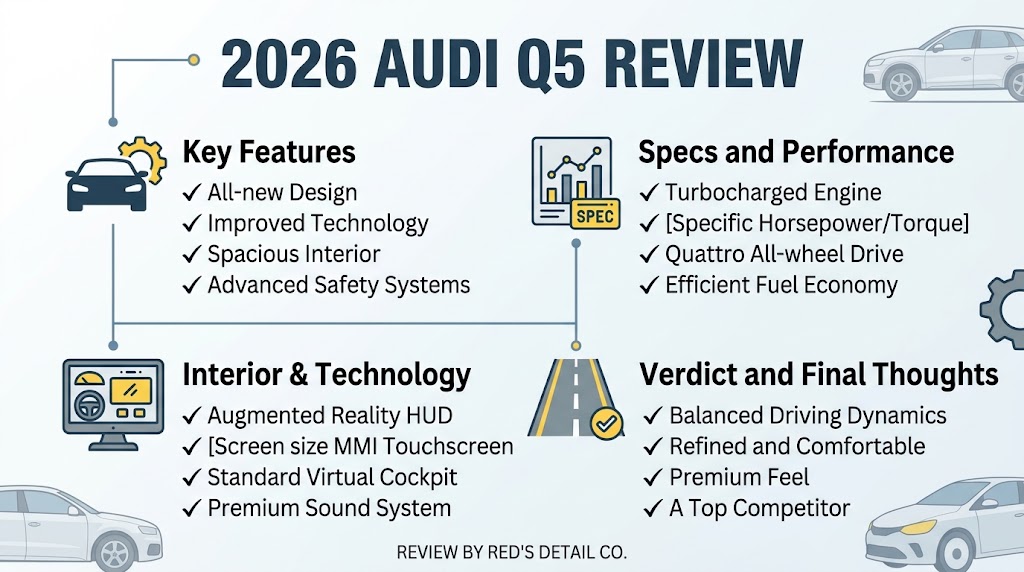
- The 2026 Audi Q5 launches on Volkswagen Group’s new Premium Platform Combustion (PPC) architecture, bringing a ground-up redesign for the third generation.
- A 2.0-liter turbocharged four-cylinder paired with a 48-volt mild-hybrid system delivers 268 horsepower through a 7-speed S tronic dual-clutch transmission.
- Standard Quattro Ultra AWD and a taut European suspension calibration make the 2026 Audi Q5 the most driver-focused vehicle in its competitive class.
- The “Digital Stage” cockpit — featuring an 11.9-inch virtual cockpit, a 14.5-inch central MMI display, and an optional 10.9-inch passenger screen — is the most ambitious interior technology package in the luxury compact SUV segment.
- Physical HVAC controls have been removed from the dashboard and relocated to a permanent bar on the primary touchscreen, a usability trade-off that divides reviewers and owners alike.
- Towing capacity reaches 4,400 pounds when properly equipped, expanding the vehicle’s utility envelope beyond most direct rivals.
Introduction
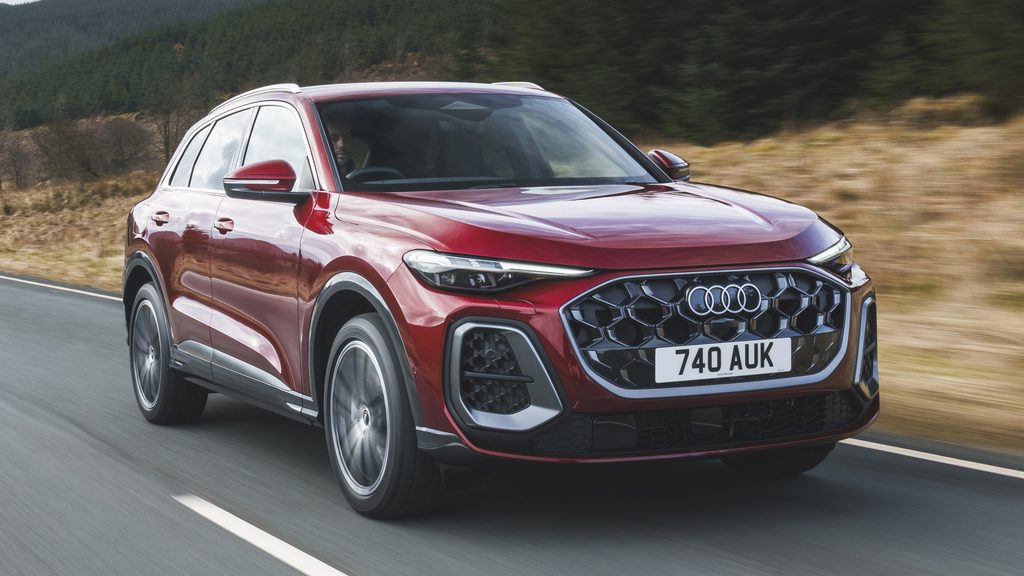
When the second-generation Audi Q5 ended production in 2024, it had spent eight years as Audi’s best-selling model worldwide — shifting nearly 298,000 units in its final year alone. That kind of commercial performance creates a difficult design brief for the team charged with replacing it. Preserve too much of the formula and the successor feels timid. Disrupt too aggressively and you risk alienating the loyal ownership base that built the nameplate’s reputation. The 2026 Audi Q5 review must begin with an honest assessment of how Audi navigated that tension — because the decisions made on the third generation are bold, consequential, and will define how this vehicle is received across its full production lifecycle.
The answer is that Audi chose disruption. The third-generation 2026 Audi Q5 moves onto Volkswagen Group’s Premium Platform Combustion architecture, introduces a multi-screen digital cockpit unlike anything the nameplate has offered before, pairs its powertrain with a 48-volt mild-hybrid system for the first time, and retunes the suspension and steering to deliver a measurably more athletic character than its predecessor. This is not an incremental update dressed in new sheet metal. It is a vehicle that has been reconsidered from the platform upward.
For buyers cross-shopping the luxury compact SUV segment — where the BMW X3, Mercedes-Benz GLC, Genesis GV70, and Volvo XC60 are all competitive — the 2026 Audi Q5 presents a compelling but nuanced case. This review examines every significant dimension of the vehicle: the technology architecture, the powertrain character, the ride and handling balance, the ownership cost implications, and the specific trade-offs that every prospective buyer needs to understand before making a final decision.
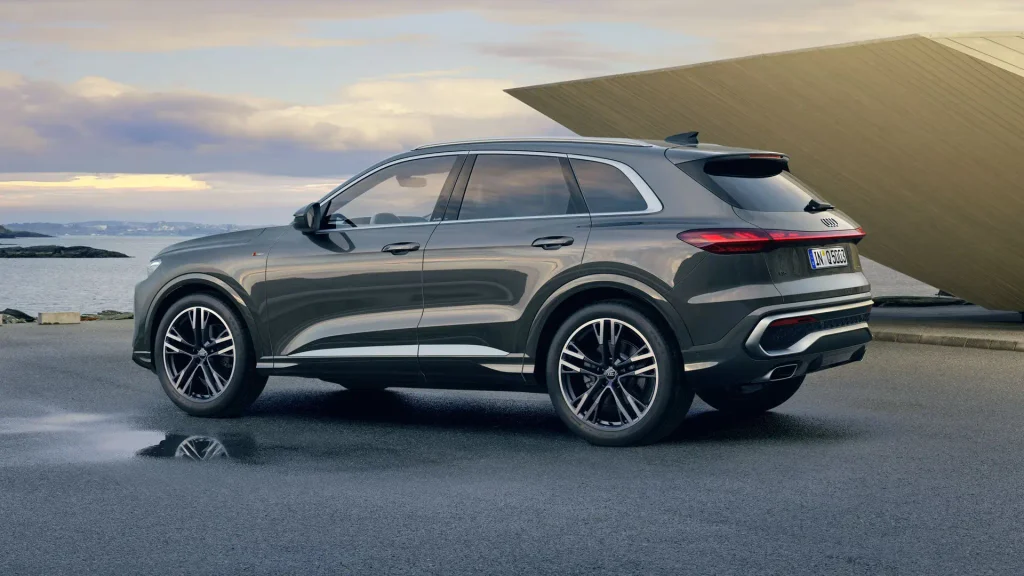
Quick Facts: 2026 Audi Q5
| Specification | Detail |
|---|---|
| Engine | 2.0-liter turbocharged TFSI inline-4 + 48V MHEV Plus |
| Horsepower | 268 hp |
| Torque | Available via 48V torque fill at low speeds |
| Transmission | 7-speed S tronic dual-clutch (DCT) |
| Drivetrain | Quattro Ultra AWD (standard) |
| 0-60 mph | Approximately 6.0 seconds |
| Dimensions | 185.7 in L x 74.8 in W x 65.7 in H |
| Cargo Capacity | 27.6 cu ft (behind rear seats); 56.9 cu ft (seats folded) |
| Towing Capacity | 4,400 lbs (properly equipped) |
| Platform | Volkswagen Group PPC (Premium Platform Combustion) |
| Primary Display | 14.5-inch MMI touchscreen (Android Automotive OS) |
| Instrument Cluster | 11.9-inch Audi Virtual Cockpit |
| Optional Passenger Display | 10.9-inch independent screen |
| Seating | 5 passengers |
Technology and the Digital Stage Cockpit: Audi’s Most Ambitious Interior Bet
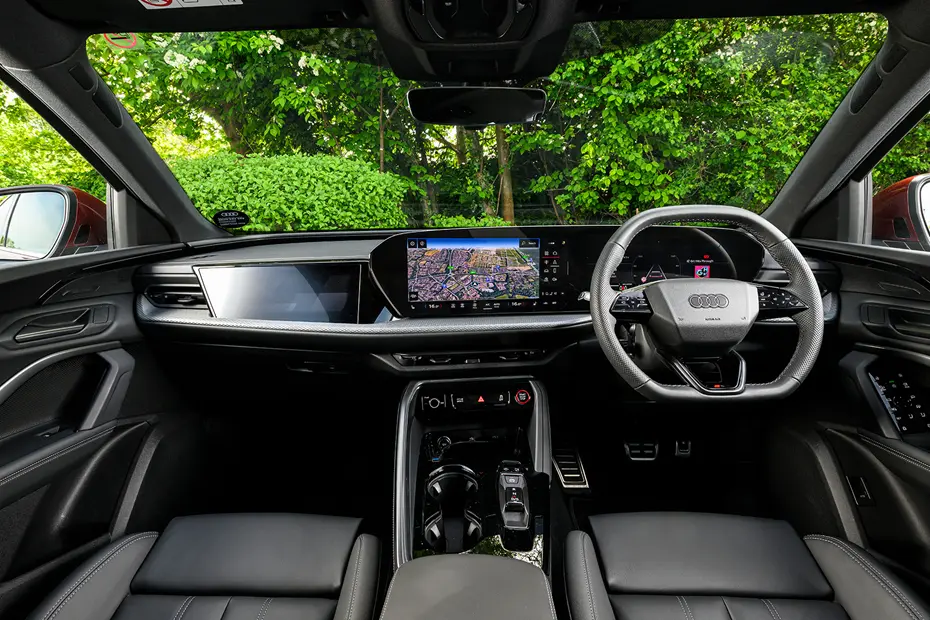
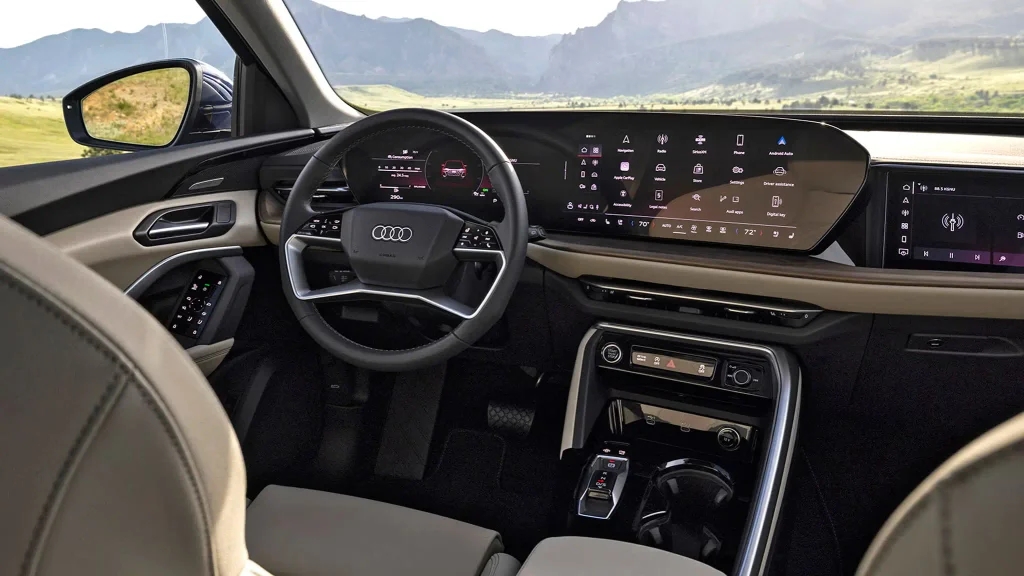
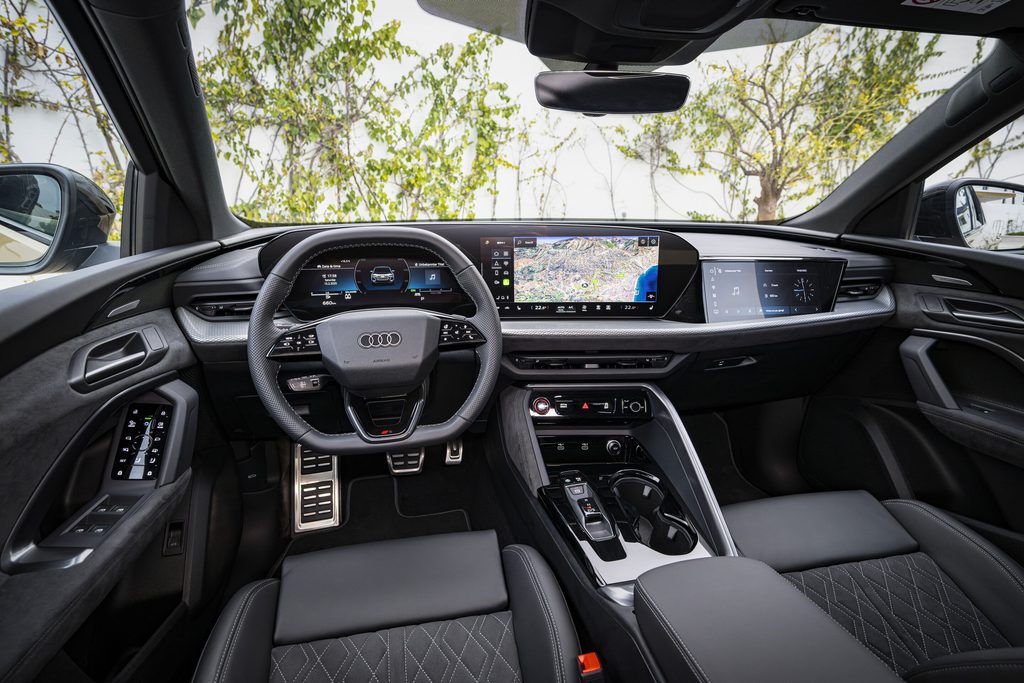
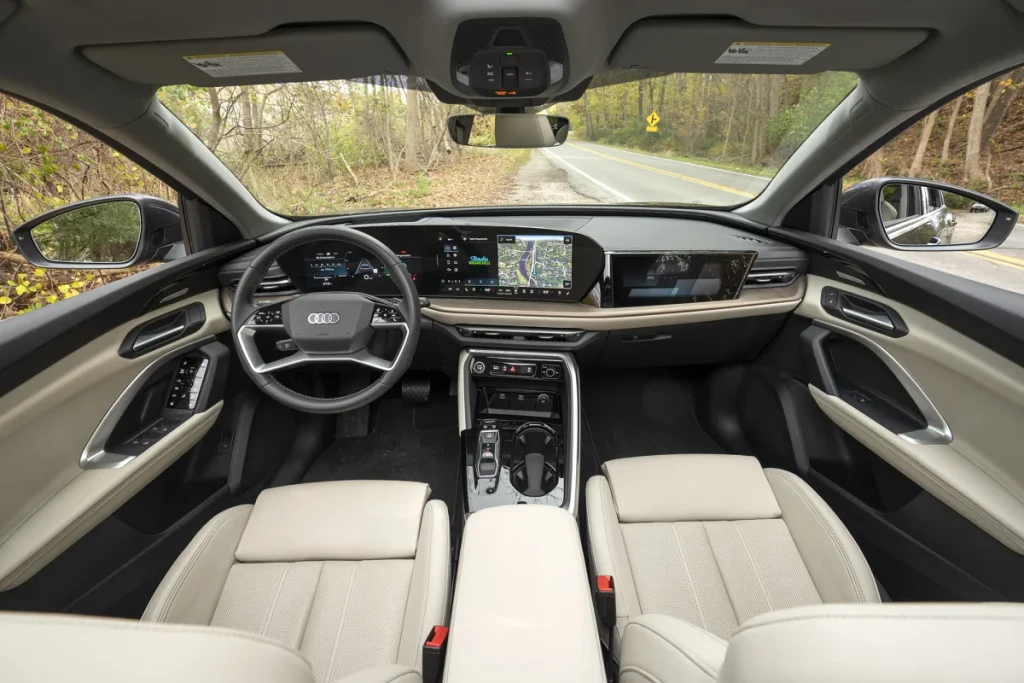
The cabin of the 2026 Audi Q5 is where the generational shift is felt most immediately and most decisively. Audi designates the new interior architecture the “Digital Stage,” and the name is accurate. A sweeping curved housing integrates the 11.9-inch Audi Virtual Cockpit gauge cluster and the 14.5-inch central MMI touchscreen into a single continuous visual sweep that dominates the forward cabin environment. The effect is visually coherent in a way that competitors who have simply bolted large individual screens into otherwise conventional dashboards have not achieved.
The MMI touchscreen runs Android Automotive OS — a native operating system rather than a mirrored phone interface — which means the navigation, media, and vehicle systems operate from the screen’s own processing hardware rather than relying on the occupant’s phone. Wireless Apple CarPlay and Android Auto are both present for those who prefer their phone ecosystem, and over-the-air software update capability means the system’s feature set is not frozen at the moment of purchase.
The Optional Passenger Display
The available 10.9-inch front-passenger display is one of the most genuinely useful technology additions in the luxury compact SUV segment. Positioned to allow the co-pilot to manage navigation inputs, streaming media, and infotainment independently, it removes a source of distraction that affects every vehicle where the driver is the only person with access to the central screen while moving. For buyers who regularly travel with a navigator or a technology-engaged passenger, the passenger display is a meaningful quality-of-life improvement that justifies its option cost in practical use.
Lighting Architecture
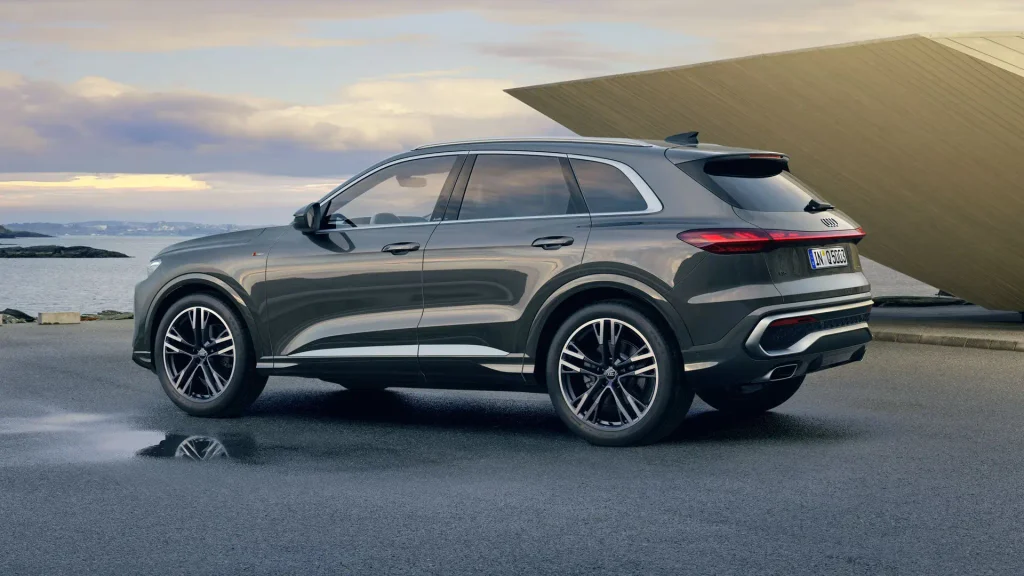
The 2026 Audi Q5 brings second-generation digital OLED rear taillights as part of its lighting system, a feature that goes beyond visual design. The OLED units are capable of displaying safety proximity warnings to vehicles following behind — a genuine active safety function delivered through a lighting element. At the front, standard high-set LED headlamps are available with customizable daytime running light signatures, allowing owners to distinguish their vehicle’s face in ways that earlier generations could not.
Audio
The available 19-speaker, 685-watt Bang and Olufsen 3D Sound system is one of the segment’s premium audio options. Cabinet-quality audio in a vehicle interior is a difficult acoustic engineering problem — the irregular surfaces, glass panels, and variable passenger loads all complicate speaker placement and tuning — and Audi’s partnership with Bang and Olufsen produces results that consistently satisfy buyers who prioritize in-cabin audio quality.
The HVAC Trade-Off: Where the Digital Stage Creates Friction
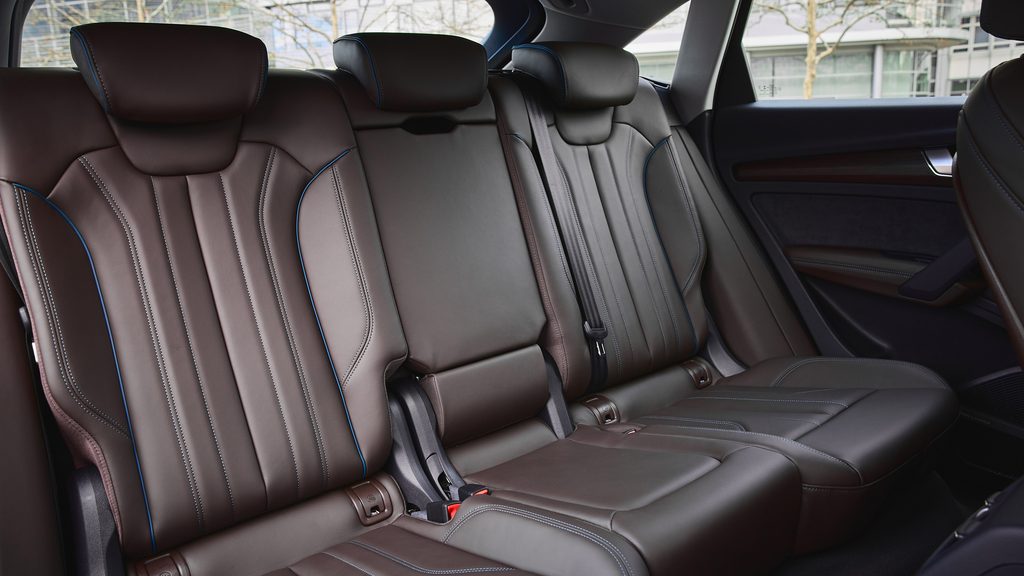
Any honest 2026 Audi Q5 review must address the most contested decision Audi made in the “Digital Stage” architecture: the relocation of physical HVAC controls. Temperature adjustment, fan speed, and airflow direction in the 2026 Q5 are managed through a permanent bottom bar on the primary 14.5-inch touchscreen rather than through dedicated physical buttons. This is a deliberate design choice in service of the minimalist dashboard aesthetic, and it achieves its visual goal. The dashboard reads clean, horizontal, and contemporary.
The usability cost is real. Adjusting cabin temperature while moving requires a driver to redirect attention from the road to the screen surface, locate the HVAC bar, and execute a touch input — a sequence that takes longer than a reflexive physical knob adjustment, particularly in the first weeks of ownership when muscle memory for the system has not yet developed. Independent reviewers at outlets including Top Gear and Edmunds have noted this as the most significant ergonomic criticism of the third-generation interior, and owner feedback in early market months reflects the same concern.
Buyers who frequently adjust climate settings during longer commutes should experience the HVAC interface personally during an extended test drive before committing. For buyers who set their preferred temperature once and leave it, the trade-off is largely invisible in daily use.

Powertrain: The 48-Volt Mild-Hybrid System in Practice
The heart of the standard 2026 Audi Q5 is a 2.0-liter turbocharged four-cylinder TFSI engine producing 268 horsepower. That figure represents a meaningful increase over the previous generation’s base engine output, and the engineering story behind the improvement involves the 48-volt MHEV Plus mild-hybrid system that works alongside the combustion engine.
The 48-volt system’s primary contribution in daily driving is torque fill at low engine speeds. Turbo lag — the momentary hesitation between throttle input and full boost pressure that turbocharged engines exhibit at low RPM — is partially masked by the electric motor’s immediate torque availability. The result is throttle response that feels more linear and natural than a turbocharged four-cylinder without mild-hybrid assistance. The system also improves auto stop-start transitions, making the engine’s restart behavior nearly imperceptible at traffic lights — a usability refinement that compounds over thousands of low-speed driving cycles.
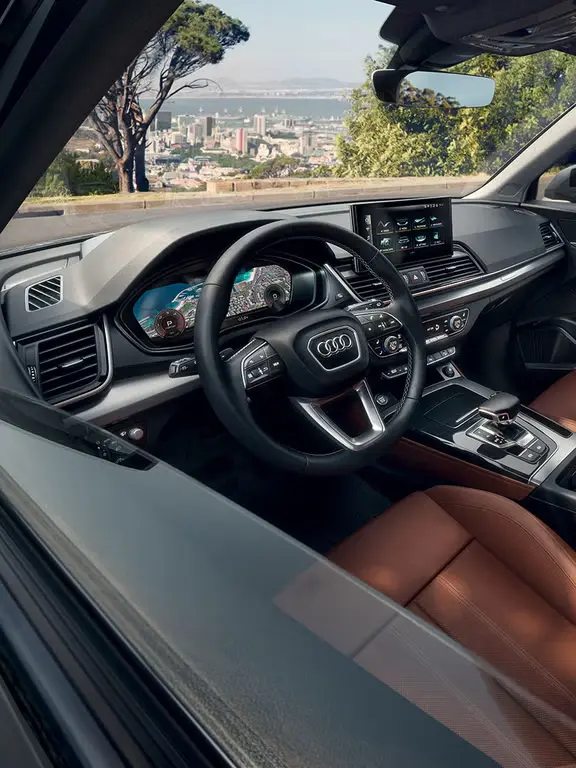
The 7-speed S tronic dual-clutch transmission manages gear changes with the precision characteristic of dual-clutch architecture: fast, clean upshifts that favor performance and efficiency over the cushioned feel of a torque-converter automatic. The trade-off is that very low-speed parking maneuvers and stop-and-go traffic can feel slightly less fluid than the smooth, graduated torque delivery of a traditional automatic. Buyers accustomed to dual-clutch transmissions will adapt quickly. Buyers transitioning from vehicles with torque-converter automatics should be aware of the difference in character during the evaluation period.
The 0-to-60 mph figure of approximately 6.0 seconds is competitive for the class, placing the standard Q5 meaningfully quicker than vehicles like the Lexus RX 350’s approximately 7.0-second run. For buyers who want considerably more, the SQ5 variant replaces the four-cylinder with a 362-horsepower 3.0-liter turbocharged V6, compressing the 0-to-60 figure to performance car territory while remaining within the Q5’s body and interior architecture.
Ride, Handling, and Driving Character
The chassis tuning of the 2026 Audi Q5 reflects its European development priorities clearly and unapologetically. The standard steel coil suspension is calibrated on the firm side of the luxury compact SUV spectrum — body roll through fast sweepers is minimal, road tracking is precise, and the overall handling balance rewards confident corner entry in a way that vehicles tuned primarily for comfort isolation do not.
The trade-off is that sharp pavement breaks and pronounced road imperfections transmit into the cabin more readily than on competitors with softer suspension calibration, particularly on models equipped with larger 20- or 21-inch wheel specifications. In urban environments with deteriorated pavement, this distinction is noticeable. Buyers who prioritize ride compliance over handling precision should evaluate the optional adaptive air suspension, which provides measurably better absorption over rough surfaces while retaining the Q5’s composed cornering character in dynamic driving modes.
Steering response is one of the 2026 Audi Q5’s consistent strengths. In Comfort mode, the steering is light and progressive, appropriate for low-effort urban maneuvering. Switching to Dynamic mode adds deliberate weighting that improves feedback precision without crossing into heavy-handed territory. The system’s character favors stability and accuracy over the kind of direct road surface communication that sports car steering delivers, making it an exceptionally composed highway cruiser while still communicating enough to support confident driving on winding roads.
Standard Quattro Ultra AWD contributes meaningfully to the planted character reviewers consistently note. The system monitors road conditions and distributes torque between the axles proactively rather than reactively, providing traction security that all-wheel drive systems with slower response times cannot match. In adverse weather conditions — rain, light snow, wet mountain roads — the Quattro system’s reputation for confidence is well-earned and well-documented across decades of real-world performance.
Comfort, Rear Space, and Practical Utility
Seating and Interior Materials
Multi-way power-adjustable sport front seats with heating and optional ventilation provide a range of adjustment that accommodates a wide driver height and torso spectrum. The sport seat shape offers lateral bolstering appropriate for the vehicle’s handling character without becoming restrictive for long-distance comfort. Available upholstery options — perforated leather, Dinamica microfiber, and recycled textile alternatives — reflect Audi’s commitment to offering sustainable material pathways without removing the premium feel that buyers in this segment expect.
Acoustic insulation and wind damping on the 2026 Audi Q5 are competitive with the segment without reaching the exceptional isolation levels of the Lexus RX 350. Wind noise management is particularly well-executed, and the dual-clutch transmission’s quiet cruising behavior at highway speeds contributes to a cabin environment that reads refined rather than merely quiet.
Rear Seat Configuration
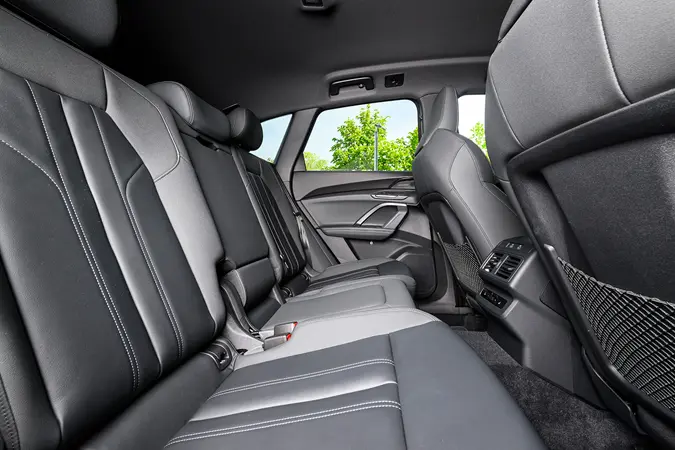
The rear seat configuration on the 2026 Audi Q5 uses a 40/20/40 split layout with sliding and reclining functionality, allowing rear passengers to trade cargo volume for legroom according to the trip’s requirements. Passenger legroom is slightly expanded over the outgoing generation. Independent reviewers note that the rear cabin, while functional and well-finished, is not the class leader in outright spaciousness — the Q5’s rear dimensions remain one area where the BMW X3 and Genesis GV70 offer more generous accommodation.
Cargo and Towing
Cargo capacity of 27.6 cubic feet behind the rear seats expands to 56.9 cubic feet with seats folded — figures that are competitive and practical for the target buyer’s lifestyle requirements. The standard hands-free gesture-activated electric tailgate is a daily-use convenience feature that proves its value during grocery loading and equipment transport. Towing capacity of 4,400 pounds when properly equipped opens the vehicle to light trailer and watercraft applications that competitors rated lower cannot address.
Long-Term Ownership Costs: The Honest Assessment
The 2026 Audi Q5 review must address ownership costs with the same transparency it brings to performance and technology. German luxury vehicles have an established pattern: exceptional on-road experience, higher complexity, and service costs that accumulate differently from Japanese luxury alternatives.
The PPC platform is newer in production history than the Toyota GA-K architecture underlying the Lexus RX 350, which means long-term reliability data for this specific generation is still accumulating rather than fully available. Buyers who place maximum weight on documented long-term repair frequency data will find the Lexus RX 350’s established reliability record more reassuring than the Q5’s promising but shorter track record on the new platform.
Audi’s service infrastructure is well-developed in metropolitan markets, and complimentary maintenance coverage terms are worth confirming at the point of purchase against current program specifics. Premium fuel is required for the TFSI engine, adding to the operating cost calculation relative to naturally aspirated alternatives. Buyers financing or leasing should factor both fuel grade and anticipated service costs into their total cost-of-ownership model.
The 2026 Audi Q5’s technology complexity — particularly the multi-screen digital architecture — introduces software-dependent systems that are more sophisticated than those in the previous generation. Over-the-air update capability addresses some of this through software refinement post-sale, but the underlying hardware complexity is a structural difference from simpler interior architectures.
2026 Audi Q5 vs. 2026 Lexus RX 350: The Defining Trade-Off
The most common cross-shopping comparison for the 2026 Audi Q5 is the 2026 Lexus RX 350, and the decision between them reflects a genuine values difference rather than a clear superiority argument in one direction.
| Attribute | 2026 Audi Q5 | 2026 Lexus RX 350 |
|---|---|---|
| Engine | 2.0L Turbo I4 + 48V Mild-Hybrid (268 hp) | 2.4L Turbo I4 (275 hp) |
| Transmission | 7-Speed Dual-Clutch (S tronic) | 8-Speed Torque-Converter Automatic |
| 0-60 mph | ~6.0 seconds | ~7.0 seconds |
| Cockpit Style | Multi-screen Digital Stage + passenger display | Single horizontal 14-inch touchscreen |
| Driving Feel | Planted, taut handling; firm European damper tuning | Cushioned, isolated; soft highway float |
| Cargo (seats folded) | 56.9 cu ft | 25 cu ft |
| Towing | 4,400 lbs | Not rated for significant towing |
| Reliability Data | Third-generation, accumulating | Established, top-rated segment record |
| HVAC Controls | Touchscreen-integrated | Physical and touchscreen hybrid |
The Q5 delivers more performance, more cargo utility, more technology ambition, and a more driver-engaged chassis. The RX 350 delivers a quieter cabin, a smoother powertrain character, longer-established reliability data, and an ergonomic interface that requires less adaptation. Neither vehicle is objectively superior — they are optimized for different versions of what a luxury compact crossover should feel like.
Protecting the 2026 Audi Q5’s Finish: Why Paint Protection Matters More on This Vehicle
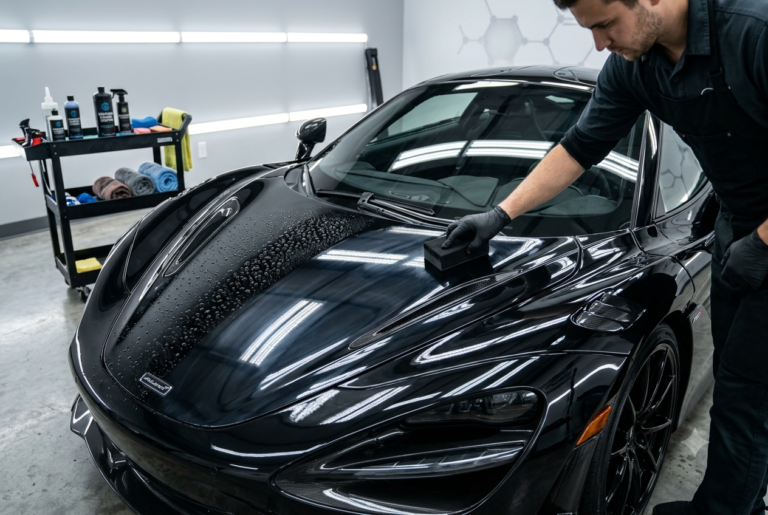
The 2026 Audi Q5 arrives with a premium paint and surface finish that warrants serious protection consideration from day one. Audi’s exterior panel quality is high, and the vehicle’s resale performance is directly connected to the condition of that exterior finish across years of ownership. Stone chips on the front fascia and hood leading edge, brake dust embedding in wheel finishes, and UV degradation on painted surfaces are the primary threats that professional protection services address.
Ceramic coating applied professionally to the 2026 Audi Q5 creates a chemically bonded protective layer over the factory clear coat that resists environmental contamination, repels water and road film, and maintains the paint’s gloss depth in a way that conventional washing alone cannot sustain. For a vehicle equipped with Audi’s customizable LED daytime running light signatures and digital OLED taillights — elements that depend on clean, optically clear lenses and surrounding painted surfaces — maintaining surface condition is part of preserving the vehicle’s designed visual impact.
Paint Protection Film (PPF) addresses the physical impact threats that ceramic coating cannot: stone chips, gravel strikes, and abrasion from road debris on the front bumper, hood, mirror caps, and rocker panels. A professionally installed PPF package on the high-impact zones of the 2026 Audi Q5 absorbs these strikes invisibly and self-heals minor surface marks through its thermoplastic properties, leaving the underlying paint unaffected after years of highway driving.
Atlanta-area owners of the 2026 Audi Q5 can access professional ceramic coating, paint protection film installation, and paint correction services at Red’s Detail Co., a Marietta-based specialist with over 30 years of combined detailing experience and certification in CQuartz Finest Reserve coatings and Suntek paint protection film. For owners considering which protection approach suits their ownership model and budget, the complete guide to ceramic coating versus wax from Red’s Detail Co. provides a thorough chemistry and cost analysis. Buyers who want a comprehensive understanding of what professional detailing involves before scheduling a service will find the professional car detailing guide equally useful.
For owners of the 2026 Audi Q5 with Dinamica microfiber or perforated leather interior upholstery — both sensitive to improper cleaning chemistry — the leather seat cleaning and interior care guide covers the correct methods and products for maintaining premium upholstery without degrading the surface over time.
Frequently Asked Questions
Is the 2026 Audi Q5 a major redesign?
Yes. The 2026 Audi Q5 is a full third-generation redesign built on Volkswagen Group’s new Premium Platform Combustion (PPC) architecture. It introduces a new multi-screen “Digital Stage” interior, a 48-volt mild-hybrid powertrain system, redesigned exterior lighting with second-generation digital OLED taillights, and a re-tuned suspension and steering system. It is not a facelift of the previous generation.
What engine is in the 2026 Audi Q5?
The standard 2026 Audi Q5 uses a 2.0-liter turbocharged four-cylinder TFSI engine producing 268 horsepower, paired with a 48-volt mild-hybrid system and a 7-speed S tronic dual-clutch transmission. The performance-oriented SQ5 variant uses a 362-horsepower 3.0-liter turbocharged V6.
Does the 2026 Audi Q5 come with all-wheel drive standard?
Yes. Quattro Ultra AWD is standard on all 2026 Audi Q5 models. There is no front-wheel-drive variant in the current lineup.
How does the 2026 Audi Q5 compare to the BMW X3?
The 2026 Audi Q5 and BMW X3 are close segment competitors. The Q5 offers a more ambitious digital interior architecture, standard AWD, and strong cargo utility. The X3 is widely regarded as more dynamically engaging and has a longer current-generation reliability record. Both vehicles require premium fuel and carry similar long-term service cost profiles.
What are the main criticisms of the 2026 Audi Q5?
The most consistent criticism across independent reviews is the removal of physical HVAC controls in favor of touchscreen integration, requiring additional driver attention for climate adjustments. The rear seat space, while adequate, is not class-leading. The dual-clutch transmission can feel less fluid than a torque-converter automatic in very low-speed urban driving.
Is the 2026 Audi Q5 worth buying over the Lexus RX 350?
The 2026 Audi Q5 is the better choice for buyers who prioritize driving engagement, technology ambition, cargo utility, and towing capacity. The Lexus RX 350 is the better choice for buyers who prioritize long-term reliability data, cabin isolation, ownership cost predictability, and a smoother automatic transmission character. Neither vehicle is universally superior — the decision depends on which performance priorities align with your daily driving reality.
Conclusion
The third-generation 2026 Audi Q5 is the most ambitious version of this nameplate Audi has produced. The PPC platform brings genuine structural improvement. The mild-hybrid powertrain addresses the turbo lag characteristic that previous four-cylinder Q5 models carried. The “Digital Stage” cockpit is the most sophisticated interior technology package in the luxury compact SUV class. Quattro AWD, recalibrated steering, and a chassis tuned for European precision combine to make the 2026 Audi Q5 the most driver-focused vehicle in its competitive set.
The trade-offs are real and worth taking seriously. The HVAC touchscreen integration is a usability compromise that some owners will accept immediately and others will find persistently frustrating. The dual-clutch transmission character differs meaningfully from a conventional automatic. The rear seat space does not lead the class. And the long-term reliability data for this new PPC generation is still accumulating — a consideration that matters differently depending on how much weight a buyer places on established versus emerging platform records.
For the buyer who wants a luxury compact SUV that rewards engagement, delivers impressive technology depth, provides genuine cargo and towing utility, and offers the most driver-connected chassis in the segment, the 2026 Audi Q5 is an outstanding choice. The 2026 Audi Q5 review verdict is clear: this is a vehicle that has made bold choices, delivered on most of them, and created a genuinely exciting product from what was already the segment’s best-selling nameplate. Whether its specific formula matches your daily use case is the only question that remains to be answered on a test drive.
Related Content from Red’s Detail Co.
- Benefits of Ceramic Coating vs. Wax: The Complete Guide 2026
- The Best Guide to Professional Car Detailing: Types, Maintenance, and Expert Tips 2026
- Leather Seat Cleaning, Stain Removal, and Steam Cleaning Car Interior: The Best Guide 2026
- 2026 Kia Telluride: Full Review of the Top 3-Row SUV
- 2026 Mazda CX-50: Driving Dynamics and Interior Luxury — The Complete Review
- 2026 Toyota RAV4: Performance, Trims, and Pricing Review
- 2026 Ford Explorer: Engine Options and Towing Capacity — The Complete Review