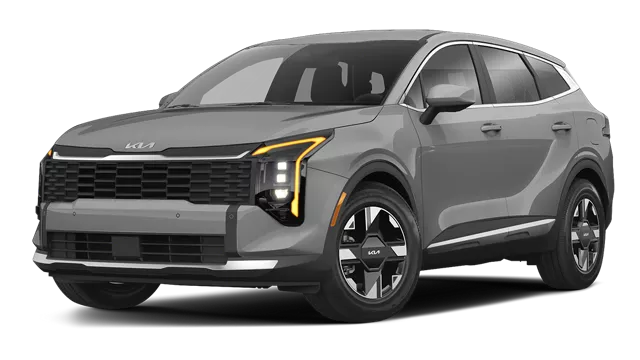
2026 Hyundai Tucson Review: Interior, Tech and Specs — The Complete Buyer’s Guide
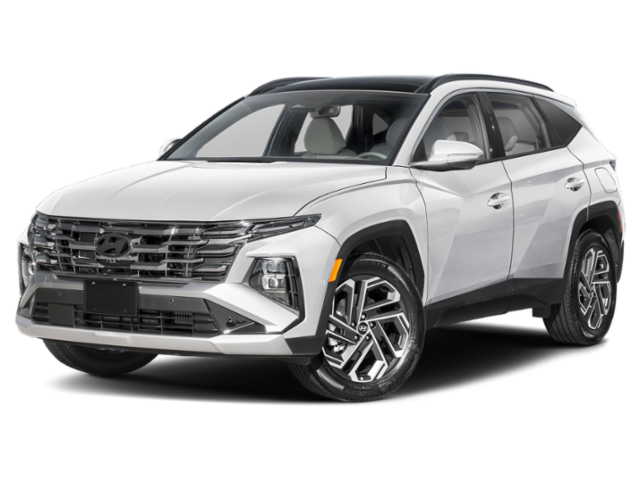
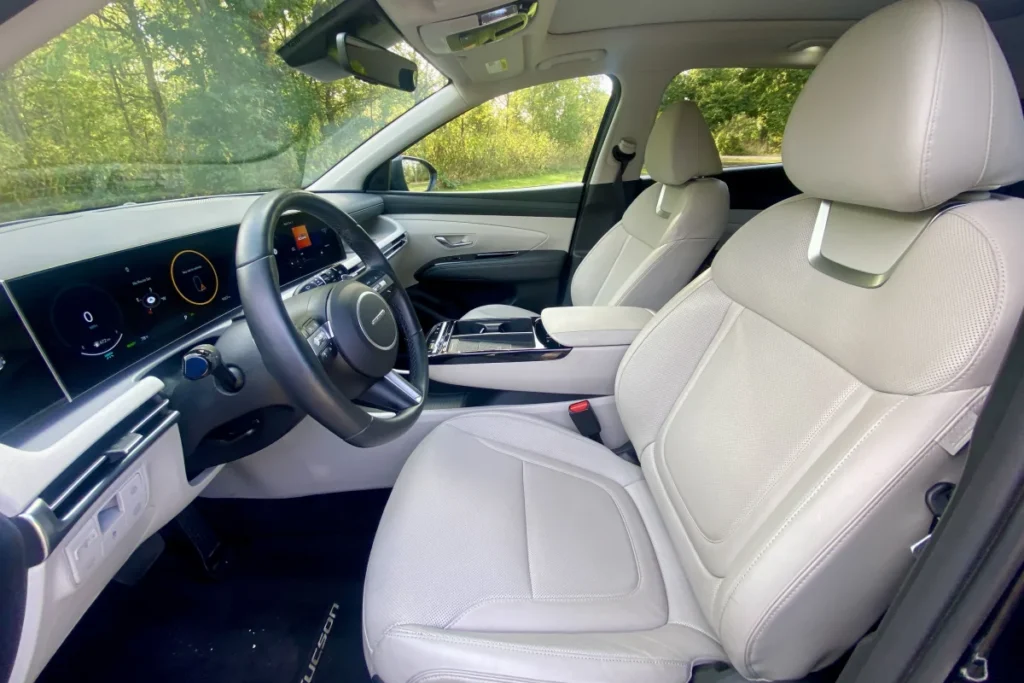
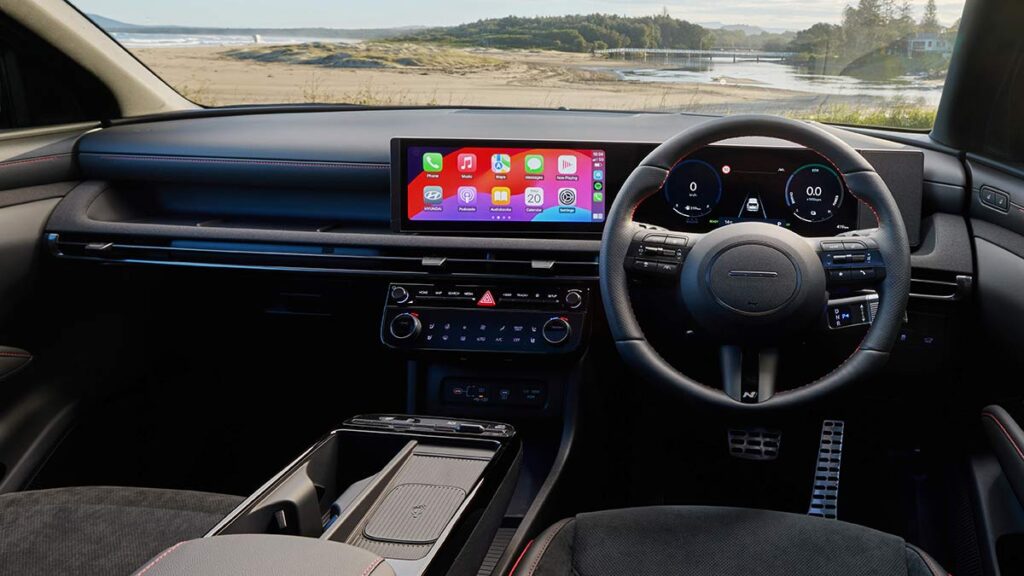
The 2026 Hyundai Tucson is one of the most quietly disruptive compact SUVs on the American market. While rivals like the Toyota RAV4 generate headlines with ground-up redesigns and the Honda CR-V competes on heritage and interior volume, the Tucson wins its customers with a different kind of argument: more standard technology, bolder design, three distinct powertrain options, and an industry-leading warranty that no competitor comes close to matching. The result is a vehicle that routinely outperforms its price tag in ways that matter to real-world buyers.
The 2026 model year is a refinement year rather than a reinvention year. The significant styling and engineering refresh arrived with the 2025 generation, and the 2026 Hyundai Tucson builds on that foundation with targeted content updates: a new Hybrid Blue SE entry trim, increased towing capacity for the gas models, and trim-level reorganization in the hybrid lineup that improves both value and access. What has not changed is the Tucson’s core appeal — a tech-forward interior that punches above its price class, a hybrid powertrain that delivers punchy performance alongside outstanding efficiency, and a warranty program that protects buyers more thoroughly than any mainstream competitor.
This review provides a complete assessment of the 2026 Hyundai Tucson: powertrain options, full ten-trim lineup with verified pricing, interior dimensions and technology, safety systems, competitive positioning, and the honest trade-offs every prospective buyer deserves to understand.
Why the 2026 Hyundai Tucson Deserves Your Serious Attention
The compact SUV segment is saturated with capable, well-engineered vehicles. Standing out requires something more than adequate performance and reasonable pricing. The 2026 Hyundai Tucson’s competitive identity rests on three pillars that rivals consistently fail to match simultaneously.
First, the technology content delivered at every price point is genuinely impressive. Dual 12.3-inch panoramic curved displays, available fingerprint authentication, Hyundai Digital Key 2, and over-the-air software update capability are not features typically found in compact SUVs priced below $40,000. Hyundai has made a deliberate choice to bring near-luxury cabin technology into a mainstream price bracket, and the 2026 Tucson executes that vision persuasively.
Second, the warranty program remains without peer in the mainstream compact SUV segment. A 5-Year/60,000-Mile New Vehicle Limited Warranty paired with a 10-Year/100,000-Mile Powertrain Warranty is not a marketing gimmick — it is a substantive financial commitment that reduces the total cost of ownership risk for buyers over a multi-year period. Electrified models add 10-Year/100,000-Mile coverage on the hybrid battery as well.
Third, the 2026 Hyundai Tucson is the only compact SUV in the mainstream segment to offer all three powertrain architectures — conventional gas, full hybrid, and plug-in hybrid — giving buyers genuine flexibility to match their ownership situation to their driving profile.
2026 Hyundai Tucson Powertrains: Three Distinct Choices
2.5-Liter Naturally Aspirated Four-Cylinder (Gas Models)
The standard engine across all five gas trim levels is a 2.5-liter naturally aspirated four-cylinder producing 187 horsepower and 178 lb-ft of torque. It is paired with an eight-speed automatic transmission and is available in both front-wheel drive (FWD) and HTRAC all-wheel drive (AWD). EPA fuel economy for FWD configurations is rated at 25 city / 33 highway / 28 combined mpg, with AWD versions returning 24 city / 30 highway / 26 combined mpg.
The honest assessment of this engine is that it is adequate rather than spirited. For everyday commuting and highway cruising with one or two occupants, it performs without complaint. Under heavier loads — a full passenger count on a long climb, or a highway merge with luggage aboard — the naturally aspirated 2.5-liter can feel underwhelming compared to turbocharged rivals. Buyers who prioritize energetic performance should look seriously at the hybrid variants rather than accepting the base engine’s limitations as unavoidable.
One meaningful 2026 update: the gas model’s towing capacity has been increased from 2,000 to 2,750 pounds when equipped with trailer brakes. This makes the gas Tucson a more capable light-duty tow vehicle than its hybrid counterpart, which remains rated at 2,000 pounds.
1.6-Liter Turbocharged Hybrid System
The 2026 Hyundai Tucson Hybrid pairs a turbocharged 1.6-liter four-cylinder engine with an electric motor to produce 231 combined horsepower and 271 lb-ft of torque. All hybrid trims come standard with a six-speed automatic transmission and HTRAC AWD — there is no FWD hybrid option. The hybrid battery is positioned under the rear passenger seat to maximize cargo space and lower the vehicle’s center of gravity, a packaging decision that benefits both handling and practicality.
EPA ratings for the hybrid are a standout: 38 mpg city / 38 mpg highway / 38 mpg combined — an unusually flat fuel economy curve that performs nearly as well at highway speeds as in the city. U.S. News reviewers found the hybrid system operates with more refinement and less noise than most competing hybrid SUV powertrains, and independent reviewers have consistently praised the seamless, linear power delivery from the combined gas-electric system. Driving range on the hybrid, according to manufacturer estimates, can approach 500 miles on a full tank with careful acceleration.
1.6-Liter Turbocharged Plug-In Hybrid (PHEV)
The 2026 Hyundai Tucson Plug-In Hybrid takes electrification further. The PHEV uses a more powerful 97 hp electric motor and a larger 13.8 kWh battery alongside the same 1.6-liter turbocharged engine, producing 268 combined horsepower and 271 lb-ft of torque with standard HTRAC AWD. EPA-estimated electric-only range is 32 miles, and Edmunds real-world testing recorded 29.3 miles of EV range with 37.2 mpg once the combustion engine engaged. Total driving range from a full charge and a full tank is approximately 420 miles. For buyers who can charge at home overnight, daily commuting effectively becomes an electric-only affair, eliminating fuel costs entirely for typical weekday use.
PHEV pricing starts at $42,425 for the SEL trim and reaches $50,650 for the Limited — a significant premium that is partially offset by federal tax credit eligibility and long-term fuel savings.
Powertrain Comparison:
| Configuration | Power Output | Combined MPG / EV Range | AWD |
|---|---|---|---|
| Gas FWD | 187 hp | 28 mpg | Optional |
| Gas AWD | 187 hp | 26 mpg | Standard |
| Hybrid AWD | 231 hp | 38 mpg | Standard |
| PHEV AWD | 268 hp | 32 miles EV | Standard |
2026 Hyundai Tucson Interior: Technology That Genuinely Impresses
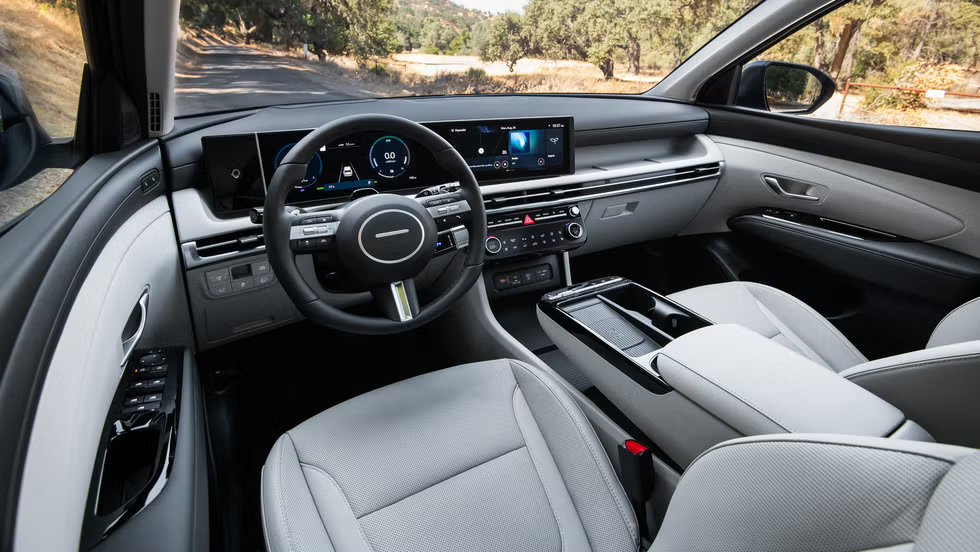
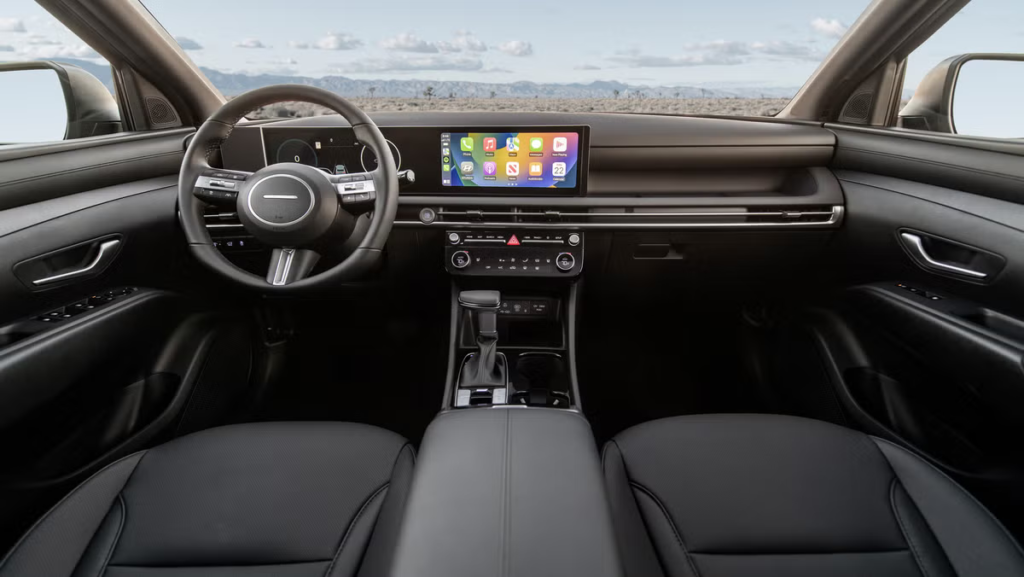
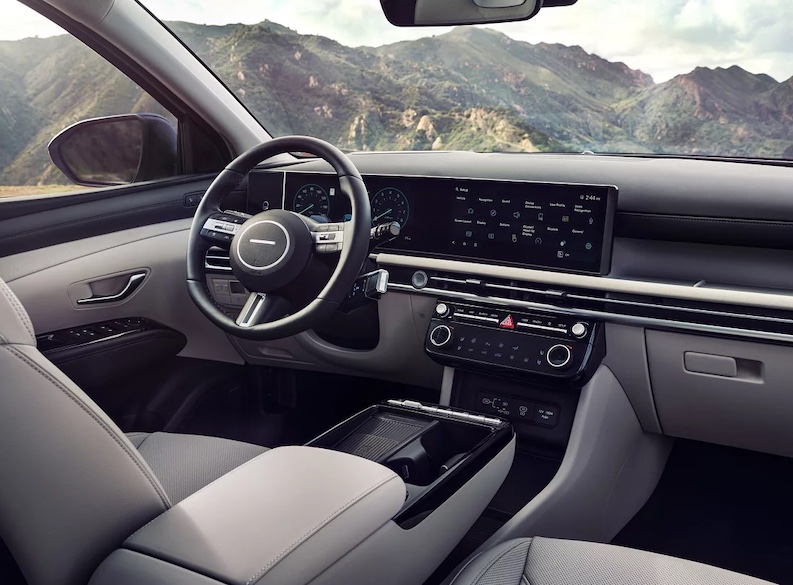
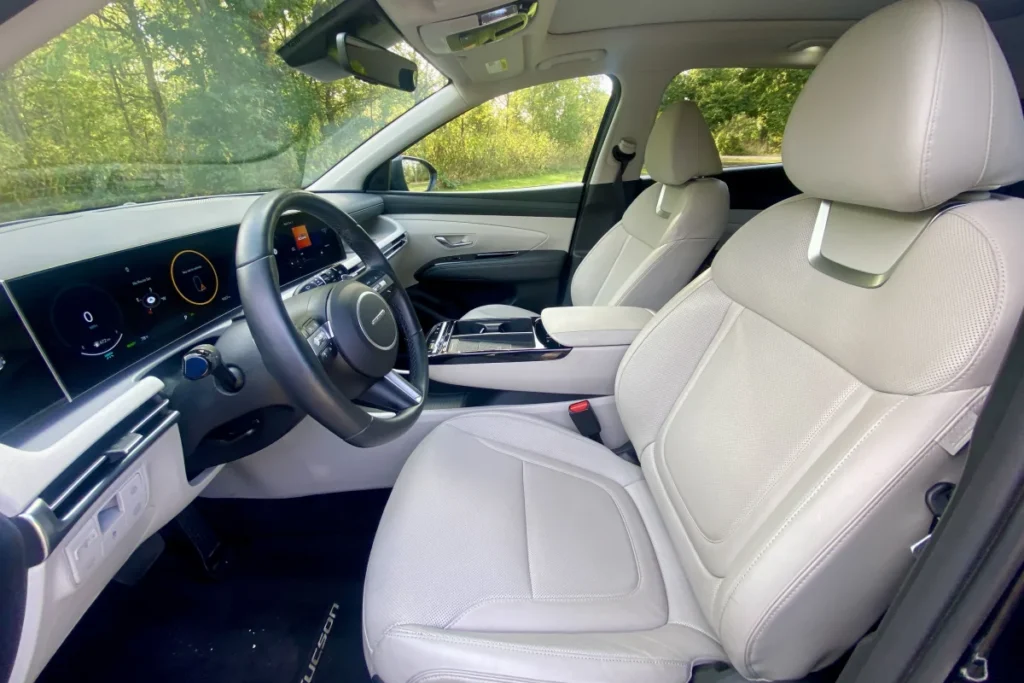
The cabin of the 2026 Hyundai Tucson is where the vehicle makes its most forceful argument against rivals. Hyundai’s interior designers have consistently demonstrated a willingness to bring near-premium technology and materials to mainstream price points, and the Tucson’s cabin reflects that commitment more clearly than almost any competitor in the segment.
Panoramic Dual-Screen Display
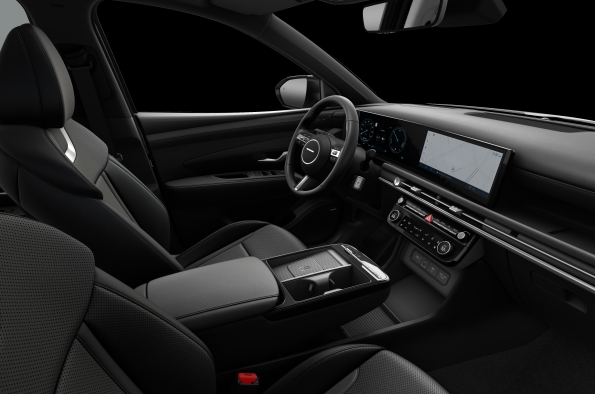
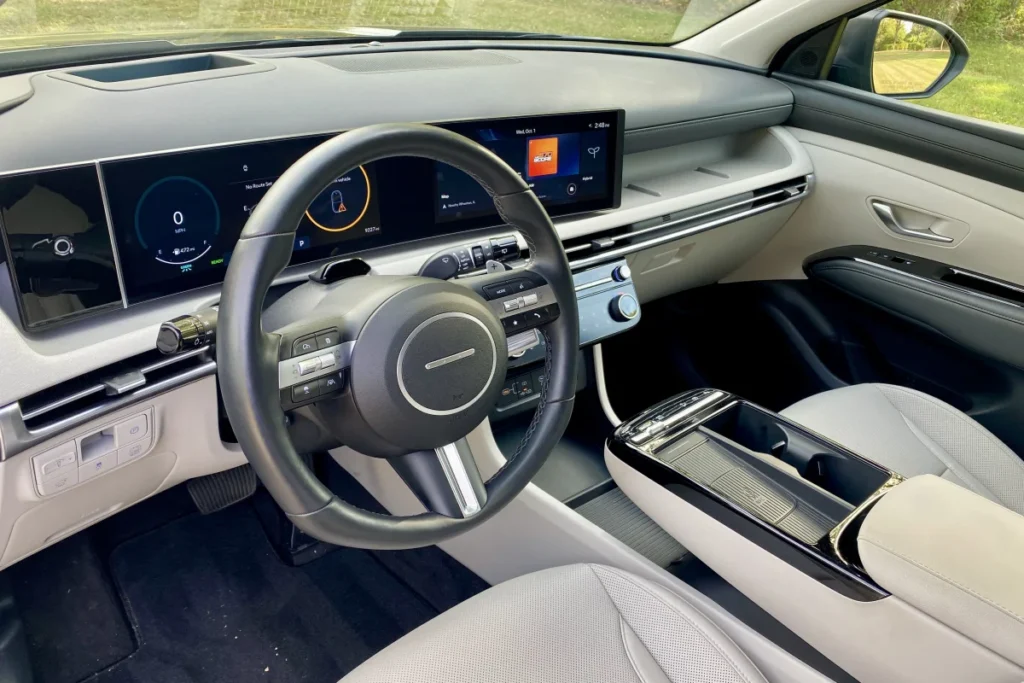
The headline technology feature in the 2026 Hyundai Tucson is the integrated panoramic curved display available from the SEL Convenience trim upward. Two 12.3-inch screens — one for the digital instrument cluster and one for the infotainment touchscreen — are housed beneath a single continuous curved glass panel, creating a seamless, premium visual aesthetic that reads as genuinely upscale rather than feature-padded. The infotainment screen supports wireless Apple CarPlay and wireless Android Auto, while over-the-air software updates keep the system current without requiring dealer visits.
The base SE trim uses an 8-inch touchscreen rather than the larger panel. The SEL adds wireless smartphone connectivity and a wireless charging pad. Buyers who want the full dual-screen setup should plan their trim selection accordingly, as the panoramic display is not available at the SE or base SEL level.
Hyundai Digital Key 2 and Fingerprint Authentication
Hyundai’s Digital Key 2 system allows compatible smartphones or smartwatches to lock, unlock, and start the Tucson by tapping the door handle — no traditional key fob required. Available on higher trims, it represents a genuinely convenient advancement for buyers who prefer to minimize what they carry. The fingerprint authentication scanner, exclusive to the Limited trim, enables the vehicle to recognize individual drivers and automatically apply their preferred seat position, mirror angles, and infotainment profiles.
Bluelink Connected Services and Over-the-Air Updates
Hyundai’s Bluelink connected car platform enables remote engine start, climate pre-conditioning, door lock and unlock, and vehicle status monitoring from a compatible smartphone. Paired with the Tucson’s over-the-air update capability, these features represent a level of connectivity infrastructure typically associated with vehicles priced significantly above this segment.
Passenger Space and Comfort
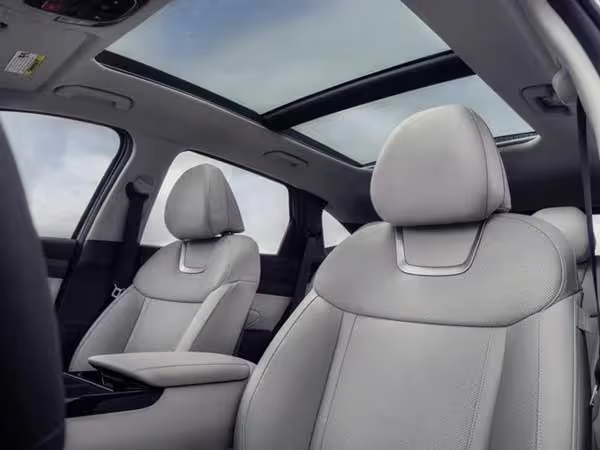
The 2026 Hyundai Tucson’s interior dimensions are competitive across the board. The cabin offers 41.4 inches of front legroom and 41.3 inches of rear legroom — figures that place it at or near the top of the compact SUV class for rear-seat passenger comfort. Headroom is generous at 38.3 inches front and 39.5 inches rear. Total interior volume is 146.9 cubic feet.
Seating comfort benefits from heated front seats standard on all but the base SE trim. The Limited trim adds ventilated front seats, heated rear seats, an eight-way power-adjustable passenger seat, and memory seat settings for the driver. Ambient interior lighting is available from the SEL Convenience trim upward.
Cargo Capacity
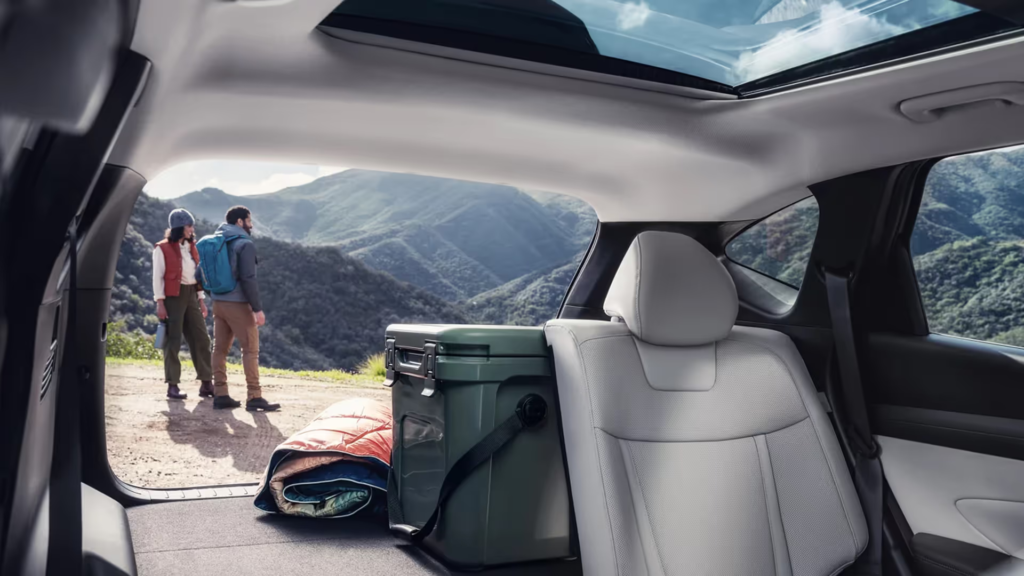
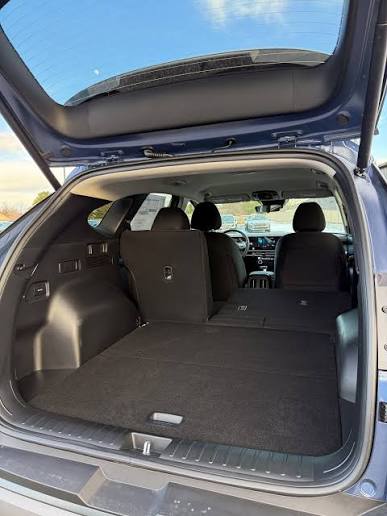
The 2026 Hyundai Tucson provides 38.7 cubic feet of cargo space behind the rear seats in gas and hybrid configurations, expanding to 74.5 cubic feet with the rear seats folded flat. The standard 60/40 split-folding rear seatback enables flexible mixed passenger-and-cargo configurations. One trade-off to note: the PHEV’s larger battery pack reduces behind-seat cargo capacity to 31.9 cubic feet, a meaningful reduction that buyers who prioritize cargo volume should factor into their powertrain decision.
The cargo area features a wide opening and a practical load floor, with the rear cargo space accessible via an available hands-free smart liftgate that opens in response to a foot swipe.
2026 Hyundai Tucson Safety: SmartSense on Every Trim
Every 2026 Hyundai Tucson — including the base SE — comes equipped with Hyundai SmartSense, a comprehensive driver assistance suite that competes strongly with any safety package in the mainstream compact SUV segment. The SmartSense system uses a combination of radar sensors, cameras, and ultrasonic sensors to deliver active safety interventions, and now includes infrared-based driver monitoring as standard equipment.
Standard SmartSense features across all trims include:
- Forward Collision-Avoidance Assist with pedestrian and cyclist detection
- Lane Keeping Assist
- Lane Following Assist
- Driver Attention Warning
- Blind-Spot Collision Warning (standard from SEL trim)
- Rear Cross-Traffic Collision Warning
- Adaptive Cruise Control with Stop-and-Go
Upper trims — SEL Premium and Limited — add Highway Driving Assist, Smart Cruise Control 2, Forward Attention Warning, a Blind-Spot View Monitor that displays a live camera feed in the instrument cluster when a turn signal is activated, and a Surround View Monitor for low-speed maneuvering. The Limited also includes Remote Smart Parking Assist, front and rear parking sensors, and a head-up display.
The safety system’s track record is strong. U.S. News ranked the 2026 Hyundai Tucson Hybrid as the winner of the 2026 Best Compact Hybrid SUV for Families award, citing comprehensive safety equipment and child safety seat accommodation as key strengths. The LATCH system includes two complete sets of connectors for rear outboard seats with a tether anchor for the center seat — important for families who regularly install child safety seats.
One meaningful trim-level caveat: the XRT trim, despite its strong visual appeal and standard AWD, omits several safety features present on the SEL Premium — including Highway Driving Assist, Forward Attention Warning, and Smart Cruise Control 2. Buyers who prioritize the fullest safety suite should select the SEL Premium over the XRT if those features matter to their use case.
2026 Hyundai Tucson Trim Levels and Pricing: Complete Breakdown
The 2026 Hyundai Tucson is available in ten configurations spanning five gas trims and four hybrid trims plus the separate PHEV lineup.
Gas Trims
SE — From $29,200 (FWD) The SE is the entry point and delivers genuine daily value. Standard equipment includes an 8-inch touchscreen with wireless Apple CarPlay and Android Auto, forward collision-avoidance assist, lane keeping assist, 17-inch alloy wheels, and a standard proximity key with push-button start. FWD is standard; AWD is a modest upgrade option.
SEL — From $30,550 (FWD) The SEL adds heated front seats, an 8-way power-adjustable driver seat with lumbar support, a hands-free smart liftgate with adjustable height, wireless charging pad, 18-inch wheels, power-heated mirrors, and rear privacy glass. For most daily-use buyers who want reasonable features at a fair price, the SEL represents the best gas-trim entry point.
SEL Premium — From $33,800 (FWD) The SEL Premium is the most feature-rich mid-tier offering and the trim that Autoblog identifies as the sweet spot of the gas lineup. It adds the full dual 12.3-inch panoramic curved display, leatherette H-Tex seat surfaces, a panoramic sunroof, navigation, wireless device charging, Highway Driving Assist, and LED taillights. AWD is available as an option.
XRT — From $33,475 (AWD Standard) The XRT is the adventure-oriented variant, featuring an exclusive spoke-pattern wheel design with blacked-out accents, dark chrome accent grille, gloss black pillars, XRT liftgate badging, exclusive side cladding, Terrain Mode (providing specific calibration for mud, snow, and sand), and AWD as standard equipment. A standard tow hitch makes it the only Tucson trim delivered with towing hardware already fitted. However, the XRT trades away the panoramic dual-screen display and several advanced safety features present on the SEL Premium, making it a narrowly focused choice for buyers who prioritize off-road aesthetics and basic trail capability over technology depth.
Limited — From $39,175 (AWD Standard) The top gas trim delivers the complete Tucson experience. The Limited adds genuine leather-trimmed seats, ventilated front and heated rear seats, an eight-way power-adjustable passenger seat with memory settings, Bose premium audio with eight speakers, a 12-inch color head-up display, bi-LED projector headlights rated Good by the Insurance Institute for Highway Safety, a panoramic moonroof, Surround View Monitor, Blind-Spot View Monitor, Remote Smart Parking Assist, front and rear parking sensors, fingerprint authentication, and 19-inch wheels. At $39,175 with AWD standard, the Limited competes directly with entry-level luxury compact SUVs and does so with a genuinely compelling feature-per-dollar argument.
Hybrid Trims
Hybrid Blue SE — From approximately $33,800 (AWD Standard) New for 2026, the Hybrid Blue SE is the entry point into the Tucson’s hybrid lineup and provides AWD, 231 hp, and 38 combined mpg as the floor rather than the ceiling. For buyers whose priority is fuel efficiency over luxury content, this trim provides the hybrid system’s strongest financial case.
Hybrid SEL — From approximately $35,700 (AWD Standard) The Hybrid SEL adds the heated front seats, wireless charging pad, smart liftgate, and 18-inch wheels of the gas SEL, combined with the hybrid powertrain’s efficiency and AWD standard.
Hybrid SEL Convenience — From approximately $34,900 (AWD Standard) The Hybrid SEL Convenience offers the dual panoramic curved display and most SEL Premium convenience features with the hybrid powertrain — Autoblog notes it as the hybrid lineup’s strongest value proposition, sitting approximately $1,100 above the gas SEL Premium while gaining significantly more power and dramatically better fuel economy.
Hybrid Limited — From approximately $42,075 (AWD Standard) The top hybrid trim mirrors the gas Limited’s full feature content — Bose audio, ventilated seats, leather trim, panoramic moonroof, head-up display, fingerprint authentication — with the hybrid powertrain’s 231 hp and 38 combined mpg. Battery warranty coverage extends to 10 years / 100,000 miles.
2026 Hyundai Tucson vs. Rivals: How It Competes
Positioned against the Honda CR-V, Toyota RAV4, Kia Sportage, Nissan Rogue, and Mazda CX-5, the 2026 Hyundai Tucson makes its strongest arguments on three fronts.
On warranty protection, the Tucson is simply unmatched. No mainstream compact SUV rival offers a 10-Year/100,000-Mile powertrain warranty. Honda’s CR-V carries a standard 3-Year/36,000-Mile basic warranty. Toyota’s RAV4 provides 3-Year/36,000-Mile basic coverage and 5-Year/60,000-Mile powertrain coverage. The Tucson’s warranty advantage reduces long-term ownership cost uncertainty in a meaningful, quantifiable way.
On technology content at a given price point, the Tucson’s dual panoramic curved display, available fingerprint scanner, Digital Key 2, and over-the-air update capability are not matched at equivalent price levels by the CR-V or RAV4. Buyers who genuinely use technology features day-to-day will find the Tucson’s mid-range trims deliver a cabin experience that reads as legitimately premium.
On powertrain breadth, the Tucson is alone in offering all three architectures — gas, hybrid, and PHEV — with AWD standard on all electrified variants. The RAV4 is now hybrid-only for 2026, eliminating gas-only buyers. The CR-V lacks a PHEV in the US market. The Tucson serves all three buyer profiles without compromise.
Where the Tucson concedes ground: the base gas engine is demonstrably less exciting than the 2026 RAV4’s hybrid-standard powertrain. The CR-V’s maximum cargo volume of 76.5 cubic feet exceeds the Tucson’s 74.5 cubic feet. Mazda’s CX-5 delivers a more premium tactile interior feel, even if it lacks the Tucson’s technology depth.
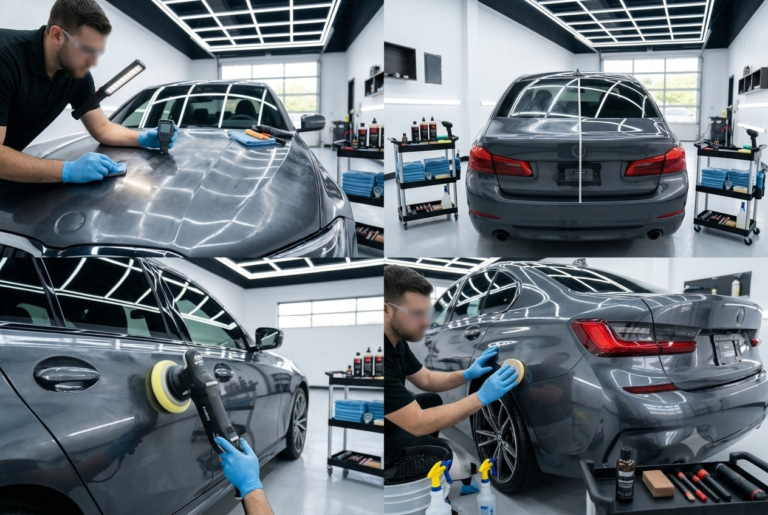
For buyers who take pride in their SUV’s appearance and want to protect the Tucson’s bold exterior finish over the long term, professional paint protection is a worthwhile consideration from the moment of purchase. Red’s Detail Co., an Atlanta-based auto detail specialist, offers ceramic coatings that bond chemically to factory paint to guard against UV exposure, acid rain, bird droppings, and environmental contaminants — read their full explanation of how the process works at redsdetailco.com/service/ceramic-coatings. For buyers deciding between ceramic coating and paint protection film, their detailed comparison at redsdetailco.com breaks down the advantages and trade-offs of each approach for a new SUV purchase.
Who Should Buy the 2026 Hyundai Tucson?
The 2026 Hyundai Tucson covers more buyer profiles than most compact SUVs, precisely because its ten-trim, three-powertrain lineup is built for range rather than a single target customer.
Technology-focused buyers who want luxury-grade interior screens, seamless digital key access, and over-the-air updates without paying luxury prices should configure the SEL Convenience or SEL Premium. Both trims deliver the full dual-screen panoramic display at price points well below $40,000.
Daily commuters with home charging capability will find the PHEV SEL the most financially rational option over a five-year horizon. The 32-mile electric-only range eliminates fuel consumption on typical weekday commutes, and Hyundai’s 10-year battery warranty removes the long-term reliability concern that holds some buyers back from plug-in electrified vehicles.
Hybrid buyers seeking efficiency and performance without PHEV complexity will find the Hybrid SEL Convenience the strongest value proposition in the Tucson lineup — more power than any gas-only competitor at this price, 38 combined mpg, AWD standard, and a full technology package.
Adventure-oriented buyers who need AWD, terrain management, and a factory-fitted tow hitch at a price below $35,000 will find the XRT the most purpose-specific option, provided they are comfortable accepting its trade-off of reduced technology content relative to the SEL Premium.
Value-conscious families who want the most standard safety features, the industry’s best warranty coverage, and generous rear-seat space at a sub-$31,000 entry price will find the gas SEL makes an honest, hard-to-refuse argument at its price point.
Honest Pros and Cons of the 2026 Hyundai Tucson
Decisive Strengths:
The 10-Year/100,000-Mile powertrain warranty is a category-leading ownership protection program with no close rival in the mainstream compact SUV segment. The dual 12.3-inch panoramic curved display delivers an interior technology experience that significantly exceeds what the Tucson’s price tag implies. Three powertrain options — gas, hybrid, and PHEV — give buyers genuine flexibility to match their driving profile. The Hybrid’s 38 combined mpg is one of the strongest fuel economy figures in any AWD compact SUV. Standard SmartSense safety technology across all trims, including the sub-$30,000 SE, means no buyer is left without meaningful active safety coverage. Rear legroom of 41.3 inches competes with the best in the segment for family use.
Real Limitations Worth Acknowledging:
The base 2.5-liter gas engine is the weakest powertrain in the compact SUV class for driving engagement, and it is noticeably underpowered under real-world loads. The XRT trim, despite its visual and capability appeal, sacrifices several meaningful safety and technology features compared to the SEL Premium at a similar price — a trade-off that some buyers will regret. The Tucson’s distinctive front grille design with pixel-pattern LED lighting is polarizing — some buyers find it striking and premium, while others find it overly aggressive for a family vehicle. PHEV cargo capacity at 31.9 cubic feet is a meaningful reduction from the gas and hybrid figure and will disappoint buyers who regularly haul large loads.
Frequently Asked Questions About the 2026 Hyundai Tucson
What is Hyundai’s warranty on the 2026 Tucson?
Hyundai provides a 5-Year/60,000-Mile New Vehicle Limited Warranty and a 10-Year/100,000-Mile Powertrain Warranty on the 2026 Tucson. Electrified models — Hybrid and PHEV — also receive 10-Year/100,000-Mile coverage on the hybrid battery system. This is the most comprehensive warranty program offered by any mainstream compact SUV brand in the United States.
What is the starting price of the 2026 Hyundai Tucson?
The 2026 Hyundai Tucson starts at $29,200 for the gas SE trim. The Hybrid lineup begins at approximately $33,800 for the Hybrid Blue SE. PHEV pricing starts at $42,425. The range-topping Hybrid Limited sits at approximately $42,075.
How many trim levels does the 2026 Hyundai Tucson offer?
The 2026 Hyundai Tucson is available in ten configurations: five gas trims (SE, SEL, XRT, SEL Premium, Limited) and four hybrid trims (Hybrid Blue SE, Hybrid SEL, Hybrid SEL Convenience, Hybrid Limited), plus the PHEV lineup reviewed separately.
Does the 2026 Hyundai Tucson have AWD?
AWD is available as an option on most gas trims and is standard on all hybrid and PHEV configurations. The XRT gas trim includes AWD as standard equipment.
What is the fuel economy of the 2026 Hyundai Tucson Hybrid?
The 2026 Hyundai Tucson Hybrid is EPA-rated at 38 mpg city, 38 mpg highway, and 38 mpg combined across all four hybrid trim levels — an unusually flat efficiency curve that performs almost as well at speed as in urban stop-and-go conditions.
How far can the 2026 Hyundai Tucson PHEV travel on electricity only?
The 2026 Hyundai Tucson Plug-In Hybrid offers an EPA-estimated 32 miles of electric-only driving range. Edmunds real-world testing recorded 29.3 miles of EV range in mixed driving conditions.
Does the 2026 Hyundai Tucson offer a plug-in hybrid?
Yes. The 2026 Hyundai Tucson Plug-In Hybrid is available in SEL and Limited trims, starting at $42,425, and delivers 268 horsepower with standard HTRAC AWD and approximately 420 miles of total combined driving range.
Final Verdict: The Tech-Forward Choice That Earns Every Dollar
The 2026 Hyundai Tucson does not win its buyers by being the most exciting compact SUV or by offering the largest cargo hold. It wins them by delivering more standard technology, broader powertrain choice, and stronger warranty protection than anything else in the mainstream compact SUV segment — and doing so at a starting price that remains genuinely accessible.
The base gas engine is a real limitation, and the XRT’s safety trade-off is worth knowing before you configure. But the hybrid lineup — particularly the SEL Convenience — makes an argument that is difficult to refute: 231 horsepower, 38 combined mpg, AWD as standard, a dual-screen panoramic display, and a 10-year powertrain warranty, all for well under $37,000.
For buyers who value long-term ownership confidence, real-world technology that works every day, and the flexibility to choose gas, hybrid, or PHEV based on their actual lifestyle — the 2026 Hyundai Tucson remains one of the most rational and rewarding choices in the compact SUV market.
Owners of the 2026 Hyundai Tucson who want to preserve the vehicle’s bold exterior styling over the long term should explore professional paint protection options. Red’s Detail Co. in Atlanta specializes in ceramic coatings, paint correction, and paint protection film for SUVs and crossovers. Visit redsdetailco.com to learn how their customized approach to vehicle protection can maintain your Tucson’s finish against UV damage, road debris, and environmental wear.
Related Content:
- 2026 Hyundai Tucson vs. 2026 Honda CR-V: Which Family SUV Wins?
- Hyundai Tucson Hybrid vs. Toyota RAV4 Hybrid: Efficiency and Value Compared
- Best Compact SUV Hybrid Under $40,000 in 2026: Ranked and Reviewed
- How to Protect Your New SUV’s Paint with Ceramic Coating vs. PPF
All pricing is MSRP as published by Hyundai and cross-referenced against current third-party dealer and market data. Destination charges and applicable fees are not included in base prices unless stated. EPA fuel economy figures are estimates; real-world results will vary. PHEV federal tax credit eligibility is subject to buyer income qualifications and current IRS guidelines.