How Does a Timing Belt Work Step by Step
A worn or failing timing belt can leave you worried about poor engine performance, unexpected breakdowns, or costly repairs. You’re not alone—many drivers struggle to understand how this essential component works and why it matters.
This guide explains how a timing belt works step by step, so you can better recognize its role in keeping your engine running smoothly.
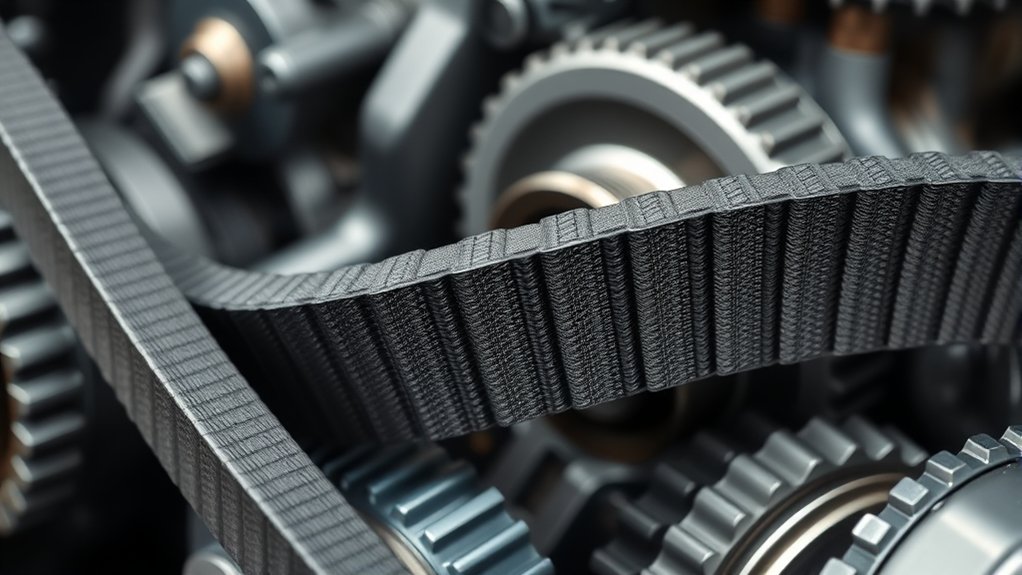
A timing belt connects your engine’s crankshaft and camshaft, using toothed pulleys to transfer power without slipping.
As the crankshaft turns, the belt rotates the camshaft at half its speed, so cam lobes open and close valves at precisely the right moments.
A tensioner keeps the belt tight and aligned.
This synchronization controls the four-stroke cycle, supporting combustion and performance.
If the belt slips or breaks, your engine may misfire or suffer serious damage.
The steps below explain each part in detail.
Key Takeaways
- The crankshaft turns when the engine runs, driving the toothed timing belt through its pulley.
- The belt transfers rotation to the camshaft while maintaining a precise two-to-one crankshaft-to-camshaft speed ratio.
- Matching belt teeth and pulley grooves prevent slipping and keep crankshaft and camshaft positions synchronized.
- As the camshaft rotates, its lobes open intake and exhaust valves at the correct moments during each four-stroke cycle.
- Tensioners maintain belt tightness. If the belt slips or breaks, valve timing fails and serious engine damage may result.
What Does a Timing Belt Connect?

A timing belt connects the engine’s crankshaft to the camshaft, synchronizing their rotation so the valves open and close at the correct moments. You’ll find this belt inside the engine’s timing cover, where it links these two essential components without transferring power to accessories.
The crankshaft sits at the bottom of the engine and responds to piston movement. The camshaft sits above it and controls the intake and exhaust valves.
By keeping both shafts coordinated, the belt supports precise combustion and helps protect the valves and pistons from contact.
Your engine may also use the belt to drive the water pump, although designs vary by vehicle. It doesn’t normally control engine lubrication; the oil pump usually handles that task.
Proper valve timing can support fuel efficiency by helping the engine burn its mixture effectively. When the belt wears, cracks, or loses teeth, the engine may run poorly or stop.
Regular inspection and replacement keep this connection dependable and protect costly internal components.
How Does a Timing Belt Transfer Power?
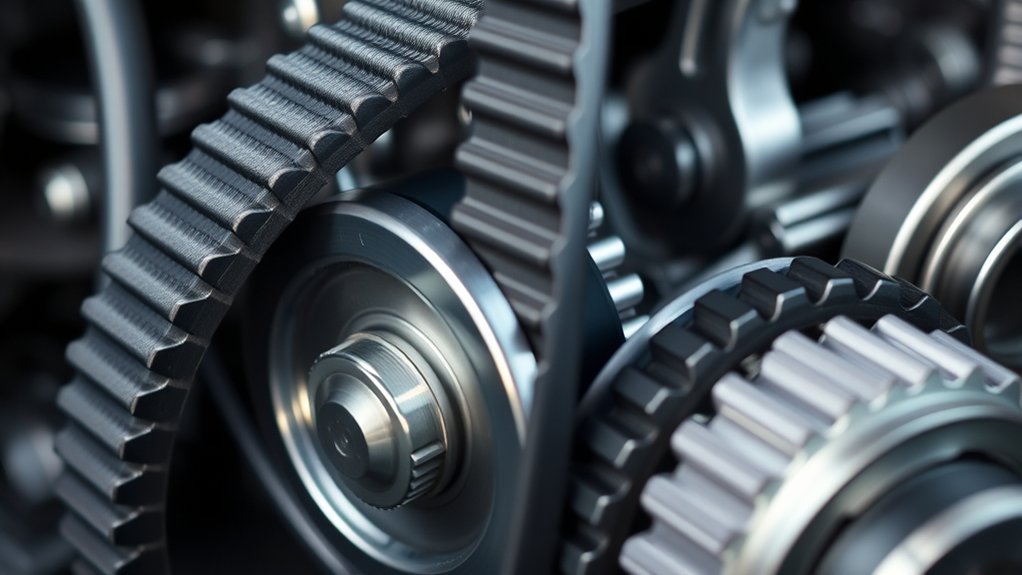
Your timing belt transfers power by keeping the crankshaft and camshaft turning in sync. Its teeth fit into matching grooves on each pulley, so the belt doesn’t slip as the crankshaft rotates. This coordination ensures the camshaft opens and closes the valves at exactly the right times.
Synchronized Crankshaft Rotation
How does a timing belt keep the crankshaft and camshaft synchronized? It links both shafts so they rotate in a precise relationship.
As the crankshaft turns from combustion force, it drives the belt, which transfers that motion to the camshaft. This coordination ensures the camshaft opens and closes the valves at the correct moments during each engine cycle.
You rely on accurate crankshaft alignment to establish the proper starting position during installation or service. If the alignment shifts, valve timing can become inaccurate, reducing performance or potentially causing internal damage.
Correct belt tension keeps the belt stable as the engine runs. Too little tension may allow slack and timing variation, while excessive tension can overload related components.
Toothed Belt Engagement
Toothed engagement transfers crankshaft power through interlocking belt teeth and pulley grooves. As you turn the key, the crankshaft rotates the toothed pulley, which drives the belt without slipping.
Each tooth seats inside its matching groove, creating positive traction rather than relying on friction. The belt then carries that rotation to the camshaft pulley, maintaining the required speed relationship between both shafts.
Proper gear alignment keeps every tooth centered and prevents uneven loading, skipping, or premature wear. Pulley synchronization ensures the camshaft turns at exactly half the crankshaft’s speed, so valves open and close at the correct moments.
You’ll get smooth power transfer only when the belt tension, tooth profile, and pulley surfaces remain correct. If engagement fails, valve timing shifts, potentially causing severe engine damage.
Why Do Timing Belts Need Tensioners?

As the crankshaft turns, a timing belt tensioner keeps the belt tight enough to maintain precise contact with the camshaft and other pulleys. Without steady pressure, the belt could slacken, slap against covers, or skip over pulley teeth.
You rely on the tensioner to absorb normal belt vibration and compensate for slight changes caused by heat, wear, and engine movement. Its bearing lets the pulley rotate smoothly, while a spring or hydraulic mechanism maintains the specified load.
| Tensioner function | Benefit | Risk without it |
|---|---|---|
| Maintains pressure | Stable belt tracking | Slack or flapping |
| Absorbs vibration | Quieter operation | Accelerated wear |
| Compensates for wear | Longer service life | Tooth damage |
During service, a technician checks belt tension adjustment carefully because excessive force can overload bearings, while insufficient force promotes slipping.
Timing belt materials also affect the required setting. Reinforced rubber belts need the manufacturer’s precise tension specification.
You shouldn’t adjust tension by feel alone. Use the correct tools and replace a noisy, rough, or leaking tensioner promptly.
How Does the Belt Keep Timing in Sync?
The belt keeps timing in sync by locking the crankshaft and camshaft together through matching teeth. As you drive, the crankshaft turns from engine power, and the belt transfers that rotation to the camshaft at an exact ratio.
Because the belt’s teeth fit securely into matching sprocket grooves, neither shaft can slip independently under normal conditions. You’ll find that the camshaft turns once for every two crankshaft rotations, preserving precise valve timing and protecting the engine from interference.
Proper belt tensioning keeps the belt wrapped tightly around each sprocket, preventing tooth skipping, vibration, and excessive movement. A tensioner and guide pulleys maintain that contact as the belt travels.
Advanced materials help the belt resist heat, oil exposure, stretching, and repeated flexing, so its length remains stable over time. When you follow the manufacturer’s replacement interval, you reduce wear-related timing changes and help the engine maintain dependable synchronization throughout its service life.
What Happens During the Four-Stroke Cycle?
During the four-stroke cycle, your engine completes intake, compression, combustion, and exhaust in sequence. Each stage uses one piston’s movement to prepare the next, creating a continuous power-producing process.
First, the piston moves downward during intake, drawing an air-fuel mixture into the cylinder. It then travels upward for compression, squeezing that mixture into a smaller space.
Near the top, the spark ignites it in a gasoline engine. The resulting explosion forces the piston downward during combustion, producing useful power.
Finally, the piston rises again during exhaust, pushing burned gases out of the cylinder.
The crankshaft converts this piston movement into rotation, while Engine synchronization keeps each cylinder operating in the proper sequence.
You depend on accurate timing for smooth performance, efficient fuel use, and reliable starting. Although this cycle repeats rapidly, Belt maintenance helps preserve dependable operation by supporting consistent engine timing and preventing premature belt failure.
Regular inspections can help you address wear before it disrupts the cycle.
How Does a Timing Belt Control Valves?
Your timing belt keeps the crankshaft and camshaft moving in sync. As the camshaft rotates, its lobes open and close the valves at just the right times. This timing allows the engine to take in air and fuel, then release exhaust efficiently.
Synchronizing Camshaft Rotation
A timing belt synchronizes the crankshaft and camshaft so the camshaft opens and closes each valve at precisely the right moment. As you drive, the crankshaft turns from piston movement, and the toothed belt transfers that rotation to the camshaft without slipping.
Carefully matched teeth and timing marks maintain camshaft synchronization, keeping both shafts aligned through every engine cycle. The belt’s fixed relationship ensures the camshaft rotates at half the crankshaft’s speed, which preserves the engine’s four-stroke sequence.
Proper belt tensioning prevents slack, tooth jumping, and inaccurate timing. An automatic tensioner or adjustable pulley maintains the required tension as the belt wears and temperatures change.
If the belt stretches, breaks, or skips teeth, synchronization fails, potentially causing piston-to-valve contact. That’s why precise installation and regular inspection matter.
Opening And Closing Valves
With the camshaft synchronized to the crankshaft, its lobes press against the valve train at precise points in each engine cycle. As you turn the key, the timing belt keeps this relationship intact.
Each lobe pushes a lifter, rocker arm, or follower, opening an intake or exhaust valve when needed. The valve then closes as the lobe rotates away, allowing its spring to return it firmly to its seat.
Intake valves open to admit the air-fuel mixture, while exhaust valves open to release burned gases. This exact sequence prevents piston-to-valve contact and maintains compression.
When the belt slips, valves open too early or late, reducing power and potentially causing damage. Proper timing supports fuel efficiency, smooth operation, and lower engine noise.
You should replace the belt according to the manufacturer’s schedule.
How Does Valve Timing Affect Combustion?
How Does Valve Timing Affect Combustion?
Valve timing controls when the intake and exhaust valves open and close, directly affecting how efficiently the cylinder fills and empties. When the intake valve opens at the right moment, your engine draws in the proper amount of air and fuel.
Closing it precisely helps build compression before ignition, allowing the fuel mixture to burn evenly and produce useful power.
The exhaust valve must open after combustion has done its work. That timing lets burned gases leave without reducing the cylinder’s ability to compress the next charge.
Valve overlap, when both valves remain slightly open, can improve cylinder filling at certain engine speeds. However, excessive overlap may dilute the incoming charge.
Your engine also depends on correct valve clearance. Too little clearance can keep a valve from seating fully, while too much can reduce lift and duration.
In either case, combustion becomes less efficient, power drops, and emissions increase. Precise valve timing keeps combustion controlled, efficient, and consistent across the operating range.
What Happens When a Timing Belt Slips?
When a timing belt slips, the camshaft loses its precise position relative to the crankshaft, disrupting valve timing. You’ll notice rough idling, misfires, reduced power, or difficulty starting because the valves no longer open and close when the pistons expect them to.
A slipped timing belt disrupts valve timing, causing rough idling, misfires, power loss, or difficult starting.
A small slip might let your engine run poorly, while a larger one can stop combustion entirely. In an interference engine, moving pistons may strike open valves, bending them and potentially damaging pistons, the cylinder head, or other components.
You might also hear unusual knocking or receive warning lights as sensors detect abnormal timing. The belt’s failure can affect more than ignition timing.
Fuel injection may occur at the wrong moment, wasting fuel and increasing emissions. Although engine lubrication won’t correct incorrect timing, insufficient lubrication can worsen heat and friction around related components.
If you suspect slipping, stop driving and have a technician inspect the timing system promptly. Continuing to run the engine can turn a repairable timing problem into extensive internal damage.
How Long Does a Timing Belt Last?
Your timing belt usually lasts between 60,000 and 100,000 miles, although your vehicle’s owner’s manual will provide the most accurate replacement interval. As the belt ages, look for signs of wear, such as cracking or fraying, and pay attention to unusual ticking noises or engine misfires. Replacing the belt on schedule can help prevent costly engine damage.
Average Belt Lifespan
Most timing belts last between 60,000 and 100,000 miles, or about five to seven years, but the exact interval depends on the vehicle, engine design, driving conditions, and belt materials. Your owner’s manual provides the most accurate replacement schedule.
Heat, oil exposure, dust, frequent short trips, and heavy towing can shorten service life. Material durability and manufacturing quality also affect how long the belt maintains proper tension and tooth strength.
Use this guide as a general estimate:
| Factor | Typical effect |
|---|---|
| Normal driving | Near scheduled interval |
| High heat | May shorten life |
| Oil contamination | Can cause early deterioration |
| Heavy loads | Adds mechanical stress |
Don’t rely only on mileage. Age matters even when you drive infrequently.
Replace the belt according to the manufacturer’s time or mileage limit, whichever comes first, and follow the recommended service procedure for your engine.
Replacement Warning Signs
Mileage and age provide useful guidelines, but visible warning signs can indicate that a timing belt needs replacement sooner. Look for cracks, fraying, glazing, missing teeth, or oil contamination during inspections.
You may also notice a ticking noise, difficult starting, rough idling, misfires, or an engine that suddenly stalls. These symptoms can signal belt wear or poor tension, although other faults may cause them too.
Don’t delay a professional inspection if your vehicle shows these signs. A failed belt can let pistons and valves collide, causing severe engine damage.
Follow your manufacturer’s Maintenance tips, including recommended inspection intervals and replacement schedules. A technician can use diagnostic tools to confirm timing problems and assess related components, such as the tensioner, idler pulleys, and water pump, before installing a new belt.
How Can You Prevent Timing Belt Failure?
Prevent timing belt failure by following the manufacturer’s replacement schedule and having the belt inspected regularly. Don’t wait for visible cracks or strange noises; age and mileage can weaken the belt internally.
Ask your technician to examine the tensioner, idler pulleys, water pump, and seals during service. Replace related components when recommended, since a worn pulley or leaking seal can damage a new belt.
| Prevention step | Benefit |
|---|---|
| Follow service intervals | Reduces breakage risk |
| Inspect belt components | Finds wear early |
| Replace tensioners | Maintains proper tension |
| Fix oil leaks | Prevents belt deterioration |
Keep the engine properly tuned, because misfires and overheating add stress. Professional Engine diagnostics can identify running problems before they affect belt performance.
Use the correct parts and ensure installation matches the manufacturer’s timing marks. A properly maintained cooling system also protects the belt’s surrounding components.
Record each service date and mileage so you can plan the next replacement. Consistent care protects your engine, supports Fuel efficiency, and helps you avoid costly internal damage.
Frequently Asked Questions
Can I Drive With a Noisy Timing Belt?
You shouldn’t drive with a noisy timing belt unless you’re traveling directly to a repair shop. A noisy belt may indicate wear, misalignment, loose tension, damaged pulleys, or imminent failure.
If the belt breaks, your engine could suffer severe internal damage, leaving you stranded. Stop driving if you hear slapping, squealing, or grinding.
Arrange a professional belt inspection immediately. Have the technician check related tensioners, pulleys, and components before you continue driving.
How Much Does Timing Belt Replacement Typically Cost?
You’ll typically pay $500–$1,500 for timing belt replacement, though luxury, diesel, and difficult-to-service vehicles may cost $2,000 or more. Your cost estimate usually includes the belt, tensioner, idler pulleys, water pump, labor, and related seals.
Ask your mechanic for an itemized quote before approving work. Follow your manufacturer’s replacement schedule, commonly every 60,000–100,000 miles or five to seven years, to prevent expensive engine damage and unexpected breakdowns.
What Is Included in a Timing Belt Replacement Service?
A timing belt replacement service can feel like giving your engine a new lease on life. Your technician removes the old belt, inspects timing belt materials, and installs a correctly tensioned replacement.
The service often includes a new tensioner, idler pulleys, and water pump, because these parts may fail alongside the belt.
You’ll also receive inspections for leaks and damage, plus guidance about future replacement intervals based on your vehicle and driving conditions.
Should the Water Pump Be Replaced With the Timing Belt?
Yes, you should usually replace the water pump with the timing belt, especially when both components share the same labor-intensive access. This approach prevents paying for overlapping labor later and reduces the risk of a failing pump damaging your new belt.
Replacement necessity depends on your vehicle’s design, mileage, pump condition, and manufacturer recommendations. Ask your technician to inspect the pump, tensioner, pulleys, seals, and coolant system during the service.
How Long Does Timing Belt Replacement Usually Take?
Timing belt replacement usually takes 4–8 hours, though complex engines may require a full day. About 60% of the job involves careful access and reassembly, not belt removal itself.
Your technician must preserve engine synchronization and complete precise belt tensioning before testing the engine. You’ll often save time by replacing the water pump, tensioner, and pulleys simultaneously.
Ask for an estimate because vehicle design and corrosion can change labor time.
Conclusion
A timing belt quietly keeps your engine’s entire rhythm in step. It connects the crankshaft and camshaft, controls valve timing, and supports efficient combustion.
When tension, wear, or skipped teeth disrupt that rhythm, expensive damage can follow, so don’t wait for warning signs. Follow your vehicle manufacturer’s replacement schedule, inspect related components, and replace the belt when recommended.
Understanding how a timing belt works step by step can help prevent costly engine damage. After all, prevention costs far less than an engine rebuild, doesn’t it?