
How Does a Brake Pad Work Step by Step
When your vehicle takes longer to stop or your brakes start squealing, choosing the right replacement brake pads can feel overwhelming. You’re not alone—many drivers struggle to compare materials, performance, and value, so this guide will help you find a reliable option.
How Does a Brake Pad Work Step by Step
When you press the brake pedal, you create hydraulic pressure in the master cylinder. Brake fluid carries that pressure through the lines to the caliper.
The caliper pistons push the brake pads against the spinning rotor, creating friction that converts your vehicle’s motion into heat and slows the wheels.
As you brake repeatedly, heat and friction gradually wear the pads. Squealing, grinding, vibration, or weaker stopping may signal replacement, and the steps below explain how to keep braking reliable.
Key Takeaways
- Pressing the brake pedal moves the master-cylinder piston, creating hydraulic pressure in the brake fluid.
- Brake fluid carries pressure through lines to the caliper, pushing its pistons outward.
- Caliper pistons press the inner and outer brake pads against the rotating rotor.
- Friction between pads and rotor converts the vehicle’s kinetic energy into heat, slowing or stopping the wheel.
- Heat dissipates through the rotor and airflow, while pad material gradually wears and eventually requires replacement.
What Does a Brake Pad Do?

A brake pad presses against the brake rotor when you apply the brake pedal, creating friction that slows and stops your vehicle. As the pad contacts the rotor, it converts your vehicle’s motion into heat.
This controlled friction reduces wheel speed, helping you slow smoothly, stop safely, and hold your vehicle stationary. You rely on pads to work consistently across temperature changes, traffic conditions, and repeated stops.
Brake pads provide consistent stopping power through changing temperatures, traffic conditions, and repeated braking.
Their friction surface gradually wears away, so you’ll eventually need replacement pads. Worn pads may produce squealing, grinding, reduced stopping power, or longer stopping distances.
Brake pad materials affect performance, noise, heat resistance, and lifespan. Organic pads typically operate quietly, while semi-metallic and ceramic options offer different balances of durability and braking feel.
Brake pad manufacturing bonds friction material to a steel backing plate, which supports the pad and transfers force to the rotor. Manufacturers also shape grooves, slots, or chamfers to manage heat, dust, vibration, and noise during braking.
How Does Brake Pedal Force Reach the Pads?
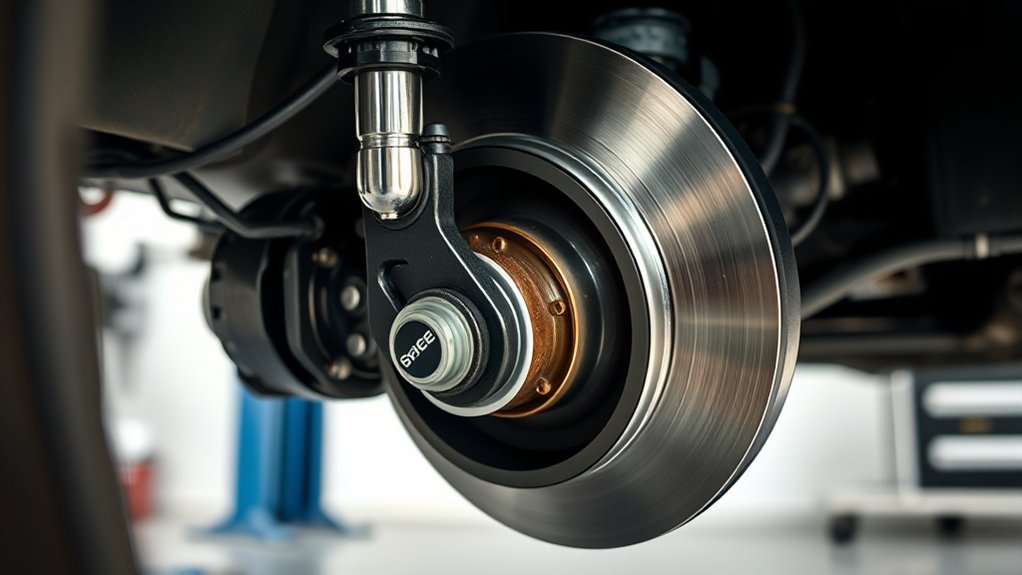
When you press the brake pedal, hydraulic pressure transfers your effort through the master cylinder and brake fluid to each wheel’s caliper. Your pedal movement pushes a piston inside the master cylinder, which converts mechanical force into fluid pressure.
Brake lines carry that pressure through the vehicle, while flexible hoses allow each wheel to move with the suspension. As pressure reaches a caliper, it creates the force needed for the pad-contact process described next.
Your braking system balances pressure across the wheels so your vehicle slows predictably. The master cylinder reservoir supplies fluid and compensates for minor volume changes, while seals prevent leaks and preserve pressure.
Air in the lines can compress, reducing pedal firmness and response, so proper bleeding matters.
During brake pad installation, you must use the correct pads for your vehicle and account for brake pad composition, which affects friction, heat tolerance, noise, and wear.
Never ignore leaks, low fluid, or a spongy pedal. Each can weaken force transmission and increase stopping distance.
How Does the Caliper Press the Brake Pads?
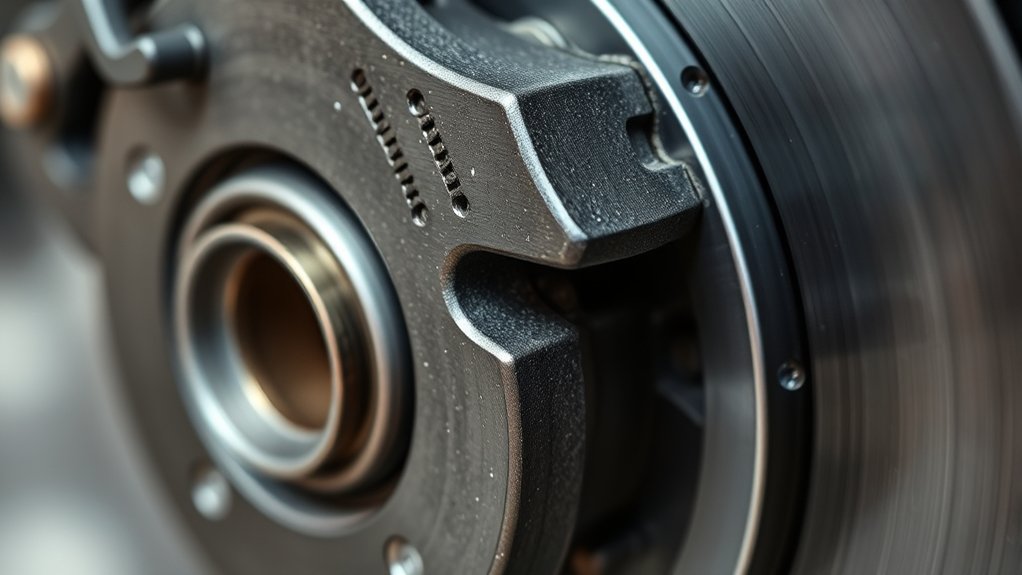
Hydraulic pressure pushes the caliper piston outward, forcing the inner brake pad against the rotor. As you press the brake pedal, fluid enters the caliper chamber and creates pressure behind the piston. The piston slides through its seal, transferring that force to the pad’s backing plate.
Hydraulic pressure drives the caliper piston outward, pressing the inner brake pad firmly against the rotor for controlled braking.
In a floating caliper design, the piston pushes the inner pad while the caliper body shifts on its guide pins. That movement draws the outer pad inward, creating balanced pressure from both sides.
A fixed caliper design uses pistons on opposing sides, so each piston pushes its own pad directly. In either arrangement, the caliper converts hydraulic force into controlled mechanical force.
Brake pad composition affects how the pad handles this load. Its friction material, bonding agents, and steel backing plate must resist heat and remain stable under pressure.
Your caliper’s seals, pins, and piston also need proper lubrication and alignment to apply force evenly and reliably.
How Do Brake Pads Contact the Rotor?
As the caliper piston moves outward, it pushes the brake pad toward the rotor. The pad’s friction surface then presses against the spinning rotor, creating the friction that slows your vehicle.
Caliper Piston Movement
Pressing the brake pedal sends hydraulic pressure through the caliper, pushing its piston outward. Your caliper design determines how that force travels.
In a floating caliper, the piston moves one brake pad outward while the caliper slides on guide pins, drawing the opposite pad inward. A fixed caliper uses pistons on both sides, so each piston moves its pad toward the rotor without caliper movement.
Piston types vary by vehicle and braking demands. Single-piston systems use one large piston, while multi-piston systems divide force among several smaller pistons.
Seals around each piston prevent fluid leaks and flex slightly as pressure rises. When you release the pedal, hydraulic pressure drops, and the seals help retract the pistons slightly.
This controlled movement creates the clearance needed for the wheel to rotate freely between stops.
Friction Surface Engagement
Once the caliper piston moves outward, the brake pad’s friction material contacts the rotating rotor face. As you press the pedal, hydraulic pressure pushes the pad evenly against the disc.
Friction then converts your vehicle’s motion into heat, slowing the wheel. Your brake pad design controls how evenly pressure spreads and how quickly heat escapes.
| Contact stage | What you feel | What occurs |
|---|---|---|
| Initial touch | Slight bite | Pad meets rotor |
| Full engagement | Firm deceleration | Friction increases |
| Heat buildup | Possible fade | Materials absorb energy |
Brake pad materials affect stopping power, noise, dust, and temperature resistance. Ceramic compounds usually run quietly, while semi-metallic compounds handle demanding heat effectively.
The rotor’s smoothness and the pad’s alignment also matter. If contamination, glazing, or uneven wear interrupts contact, braking may feel weak or vibrate.
Properly matched components maintain consistent friction across repeated stops.
How Does Brake Pad Friction Slow the Wheels?
When you press the brake pedal, the pads clamp onto the rotor and turn the wheels’ motion into heat. As the rotor heats up, it slows down, while friction keeps the pads gripping firmly enough to bring your vehicle to a stop.
Friction Converts Motion
As you press the brake pedal, the brake pads clamp the spinning rotor, and their friction converts the wheel’s kinetic energy into heat. The pads press against the rotor’s surface, creating resistance that opposes rotation.
As this contact continues, the tire’s grip on the road allows your vehicle to slow smoothly. Brake pad materials influence how consistently this process works, while the friction coefficient describes the available gripping force between pad and rotor.
- Hydraulic pressure pushes each pad inward.
- The rotor’s motion creates sliding contact.
- Friction resists the rotor’s direction.
- Reduced rotor speed slows the wheel.
You’ll feel controlled deceleration as the pads maintain contact. Their design balances strong friction with predictable pedal response, helping you reduce speed without sudden changes.
Clean, even contact also supports stable braking across repeated stops.
Heat Slows Rotation
Friction converts the wheel’s motion into heat within the brake pads and rotor, raising their temperatures as they slow the spinning assembly. As you press the brake pedal, hydraulic force pushes the pads against the rotor, creating resistance that removes rotational energy.
That energy doesn’t disappear; it becomes heat, which spreads through the rotor, pads, caliper, and nearby components. Thermal expansion can slightly change their dimensions, affecting clearances and brake response as temperatures rise.
If you maintain pressure too long or brake repeatedly, temperatures may climb beyond the system’s ideal range. Excessive heat can cause material degradation, glazing, cracking, or reduced pad life.
You’ll notice that heat itself limits rotation by consuming energy, while proper cooling restores the components’ ability to manage braking safely during continued use.
Grip Reduces Speed
The brake pad’s friction surface grips the spinning rotor, creating a force that opposes wheel rotation. As you press the brake pedal, hydraulic pressure pushes the pads against both sides of the rotor.
This friction converts motion into heat, reducing wheel speed and helping your vehicle stop.
- Brake pad materials affect grip, heat resistance, and stopping consistency.
- Strong contact gives you controlled deceleration without instantly locking the wheels.
- Even pressure helps each wheel slow smoothly and keeps your vehicle stable.
- Pad wear indicators alert you when the friction layer needs replacement.
As the pads wear thinner, their ability to manage heat and maintain dependable contact can decline. You may notice longer stopping distances, squealing, or vibration when service becomes necessary.
Replacing worn pads protects the rotor and restores reliable braking. Your tires then regain traction as rotation matches road speed, allowing you to stop safely and steer when needed.
What Happens to Brake Heat?
When you press the brake pedal, friction converts your car’s motion into heat at the pad-and-rotor contact surfaces. That energy raises the temperature of the pads, rotors, calipers, and nearby air.
Braking friction transforms motion into heat, warming the pads, rotors, calipers, and surrounding air.
As the rotor spins, it carries heat away from the contact area, while airflow across its surfaces helps cool the assembly. Some heat also travels through the caliper and into the hub, so repeated stops can gradually warm surrounding components.
Your braking system must release this energy quickly enough to prevent excessive temperature buildup. If heat accumulates, you may notice reduced braking performance, a longer pedal response, or brake fade.
After you stop, the components continue radiating heat and transferring it to the air until temperatures fall. Brake pad design, including ventilation and contact shape, influences how evenly heat spreads.
Brake pad materials also affect how the pad handles heat, but you’ll investigate those differences in the next section. For now, keep in mind that every stop transforms motion into heat, and cooling completes the braking process.
How Do Brake Pad Materials Affect Braking?
How Do Brake Pad Materials Affect Braking?
Brake pad materials affect how quickly your vehicle stops, how smoothly it brakes, and how well it handles heat.
Brake pad composition determines friction, noise, pedal feel, and performance across driving conditions. As you press the pedal, the pad’s friction material grips the rotor, converting motion into heat and slowing your vehicle.
You’ll commonly encounter these options:
- Ceramic: Quiet, clean, and smooth, with consistent performance for everyday driving.
- Semi-metallic: Strong heat handling and excellent stopping power, though it may produce more noise.
- Organic: Softer, quieter, and budget-friendly, but less suitable for severe heat.
- Low-metallic: Combines organic compounds with metal for stronger braking and improved heat transfer.
Material durability affects how confidently your pads perform under repeated braking, especially during towing, mountain driving, or heavy traffic.
The best choice depends on your vehicle, climate, driving habits, and manufacturer specifications.
You shouldn’t choose solely by price. Matching the pad’s characteristics to your needs helps deliver predictable control, comfortable braking, and dependable performance whenever you need to stop.
Why Do Brake Pads Wear Over Time?
Every time you press the pedal, friction between the pad and rotor gradually removes a small amount of friction material. This loss occurs because your vehicle converts motion into heat, and the pad must absorb and release that energy repeatedly.
Each stop applies pressure and generates heat, while heavier vehicles, frequent traffic, steep hills, and aggressive braking increase the workload. Moisture, road grit, and rotor imperfections can also add abrasion, causing the pad to wear faster.
Heavy traffic, steep hills, aggressive braking, and road contaminants increase heat and abrasion, accelerating brake pad wear.
Brake pad materials influence how quickly this process occurs. Softer compounds usually provide smooth, quiet braking but may wear sooner, while harder compounds can last longer yet place more demand on the rotor.
Your driving habits and vehicle use thus shape brake pad lifespan. Carrying heavy loads, towing, or driving in mountainous areas raises operating temperatures and accelerates material loss.
Regular maintenance, correct installation, and measured pedal application can reduce unnecessary wear and help you get the intended service life from each pad.
How Can You Recognize Worn Brake Pads?
You can often tell that your brake pads are worn by listening for squealing or grinding noises when you brake. You may also notice reduced braking performance, such as longer stopping distances or a softer brake pedal. If you notice any of these warning signs, have them checked promptly to help keep you safe.
Squealing or Grinding Noises
When you hear a high-pitched squeal each time you brake, the wear indicator may be rubbing against the rotor to warn you that the pads are nearly worn out. Don’t ignore it, even if the sound disappears occasionally.
A grinding noise usually means the friction material has worn away, allowing the metal backing plate to contact the rotor. That contact can quickly damage the rotor and requires prompt inspection.
- Squealing often signals a wear indicator or vibration.
- Grinding suggests the friction material may be gone.
- Clicking or scraping can indicate loose or damaged hardware.
- Changes in noise after rain may come from surface rust.
Brake pad materials and brake pad design affect normal sound levels, but sudden, persistent noise deserves attention. Arrange an inspection soon, and avoid removing components before a qualified technician checks the brake assembly.
Reduced Braking Performance
Noise isn’t the only warning sign; worn brake pads can also reduce braking performance. You may need more distance to stop, press the pedal harder, or feel your car pull to one side.
A soft, spongy pedal or vibration through the steering wheel deserves immediate attention. Different brake pad materials wear differently, while brake pad design affects heat control, friction, and stopping consistency.
Don’t wait until metal contacts the rotor; schedule an inspection promptly.
| Warning sign | What you may feel |
|---|---|
| Longer stops | Rising panic |
| Hard pedal pressure | Tired legs |
| Vehicle pulling | Loss of control |
| Soft pedal | Uncertainty |
| Vibration | Shaking confidence |
If your warning light appears, treat it seriously. Your brakes protect you, your passengers, and everyone nearby.
Replacing worn pads can restore dependable stopping power and prevent costly rotor damage. Drive slowly, increase following distance, and seek professional service before continuing normal travel.
How Does Maintenance Keep Brake Pads Reliable?
Regular maintenance keeps brake pads reliable by catching wear, contamination, and hardware problems before they reduce stopping performance. When you inspect your brakes, you protect consistent friction and give yourself more control in traffic.
Check these areas during service:
- Measure pad thickness and replace pads before they reach the manufacturer’s minimum.
- Look for uneven wear, cracks, glazing, or oil contamination that can weaken braking.
- Clean and lubricate caliper slide pins so the pads release and apply evenly.
- Inspect rotors, clips, shims, and brake fluid for damage or deterioration.
Your driving habits and vehicle use affect service intervals, so don’t rely only on a calendar. Follow the owner’s manual and address squealing, grinding, vibration, pulling, or a soft pedal promptly.
Understanding Brake pad materials helps you choose pads suited to heat, noise, and driving demands. Brake pad design also affects cooling, contact, and wear patterns.
With timely inspections and correct replacement, you’ll preserve dependable stopping power and extend related brake-component life.
Frequently Asked Questions
How Often Should Brake Pads Be Replaced?
You should replace brake pads about every 30,000–70,000 miles, but your driving habits, vehicle, and pad material affect brake lifespan. Check them during routine service, especially if you frequently drive in traffic, tow loads, or brake hard.
Don’t wait for a fixed mileage if you hear squealing, feel vibration, or notice reduced stopping power. Many vehicles include pad wear indicators, so schedule an inspection immediately when they activate to protect your safety and rotors.
Can Brake Pads Be Replaced Without Changing the Rotors?
Yes, you can replace brake pads without changing the rotors when the rotors remain smooth, thick enough, and within the manufacturer’s specifications.
Think of your pads as shoes and rotors as a dance floor: you only replace the floor when it’s cracked, warped, deeply grooved, or below its discard thickness. Your mechanic should inspect both.
Brake pad materials and Brake pad types affect wear, noise, stopping power, and rotor compatibility, so choose carefully.
How Much Does a Typical Brake Pad Replacement Cost?
You’ll typically pay $150–$400 per axle for a brake pad replacement, including parts and labor. Your vehicle, pad material, and local labor rates affect the final price.
Ceramic pads usually cost more than semi-metallic options, while luxury or performance cars may cost considerably more. Ask whether the quote includes inspection and hardware.
For a useful cost comparison, consider rotor condition and brake pad lifespan before choosing the cheapest service.
Should Brake Pads Be Replaced on All Wheels Simultaneously?
Typically, you shouldn’t replace brake pads on all wheels simultaneously. Replace them by axle, installing new pads on both wheels of the same axle to maintain balanced braking.
Inspect the opposite axle, since brake pad wear can vary with driving habits, vehicle weight, and brake design. Consider brake pad materials, rotor condition, and remaining thickness before deciding.
Your mechanic should measure everything and recommend replacement based on safety, not mileage alone.
Can Different Brake Pad Brands Be Used on the Same Vehicle?
Yes, you can use different brake pad brands on the same vehicle, but you should match each axle’s pads as a set. Brand compatibility matters because friction ratings, noise levels, and performance can vary.
Don’t mix brands on the same axle unless your manufacturer or mechanic approves. Check your vehicle’s specifications and rotor condition first.
Comparing brake pad materials helps you choose ceramic, semi-metallic, or low-metallic options that suit your driving needs and budget safely.
Conclusion
Understanding how a brake pad works helps you recognize the small chain of events behind every controlled stop. When you press the pedal, hydraulic force moves the caliper, clamps the pads against the rotor, and turns motion into heat—much like a modern-day chariot checking its charge.
Because friction material wears away, regular inspections matter. Listen, feel, and respond to warning signs so your brakes can keep protecting you mile after mile. Understanding how a brake pad works can help you maintain safer braking performance.