How Does a Mechanic Creeper Work?
Working beneath a vehicle can leave your back sore, your movements restricted, and your patience wearing thin. You’re not alone—many home mechanics struggle to stay comfortable while reaching tight spaces, which is why choosing the right mechanic creeper matters.
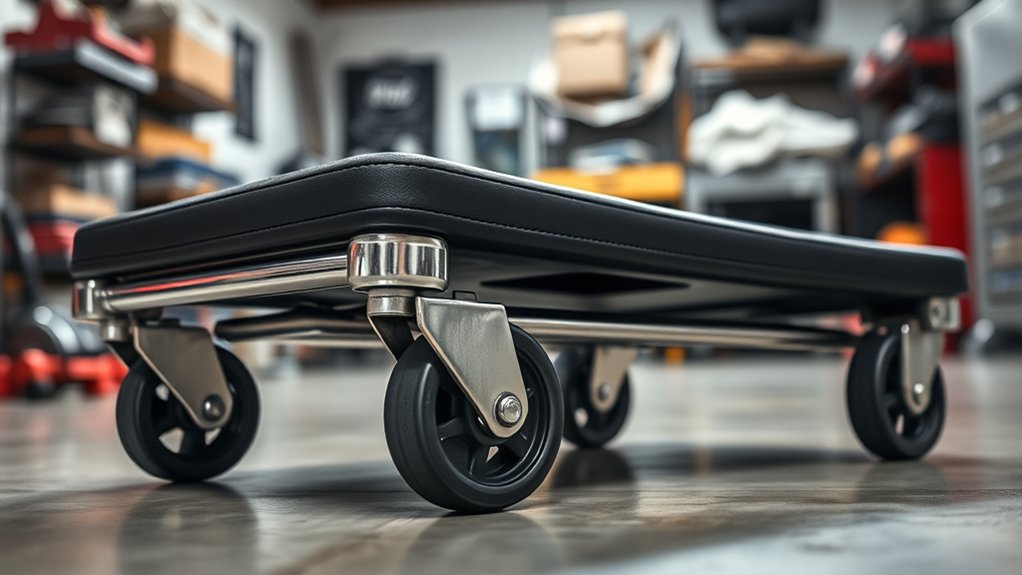
A mechanic creeper lets you slide beneath a secured vehicle on a low, padded frame. Its rigid structure distributes your weight, while contoured padding supports your back and shoulders during repairs.
Swiveling casters rotate 360 degrees, helping you steer, reposition, and roll smoothly across the garage floor.
Choose a model rated above your weight and tools, then inspect it regularly for damage.
You’ll find more tips on selecting, using, and maintaining one safely below.
Key Takeaways
- A mechanic creeper provides a low, rigid platform that supports your body while you work beneath a vehicle.
- Swiveling casters rotate 360 degrees, allowing smooth steering, repositioning, and movement across garage floors.
- Padded or contoured surfaces distribute body weight, reduce pressure, and improve comfort during extended repairs.
- Low-profile designs maximize clearance, while convertible models can transform into seats for work around wheels or engine bays.
- A creeper’s frame, casters, padding, and weight rating must be inspected regularly for safe, reliable operation.
What Is a Mechanic Creeper?
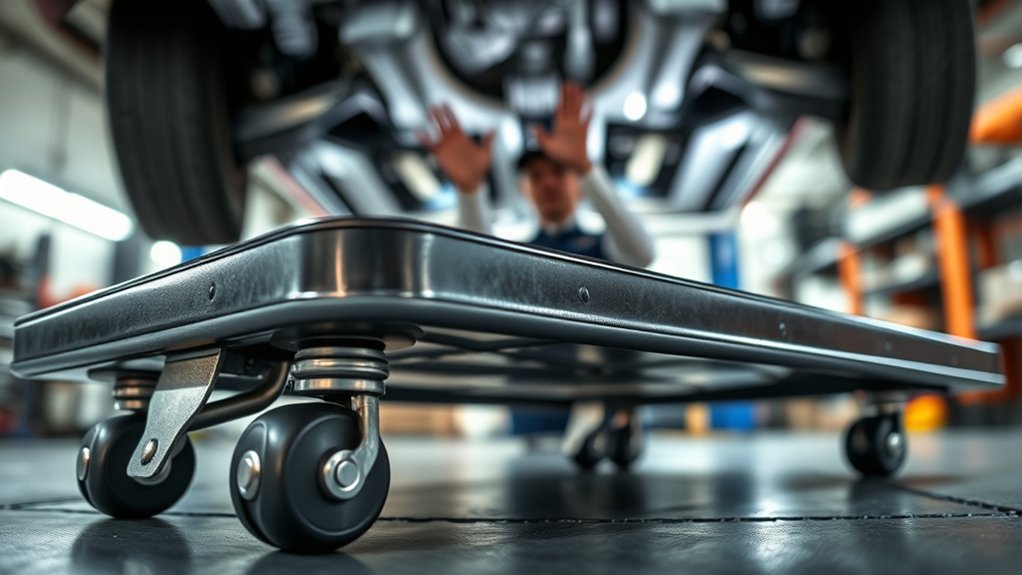
A mechanic creeper is a low, wheeled platform that lets you slide beneath a vehicle while lying on your back. You rest your shoulders, back, and head on its padded surface, keeping your body supported as you inspect or repair components. Most models use a rigid frame made from steel, aluminum, or durable plastic, with casters attached underneath for easy repositioning.
You can choose a creeper with a flat design for maximum clearance or a contoured design for added comfort. Some versions include adjustable headrests, padded cushions, and built-in Tool storage, giving you a convenient place for sockets, wrenches, and fasteners.
Safety features may include a stable frame, locking casters, rounded edges, and weight-rated construction. Before purchasing, check the creeper’s capacity, overall dimensions, padding, and wheel quality.
The right model should fit your workspace, support your weight, and provide comfortable access during automotive maintenance tasks.
How Does a Mechanic Creeper Work?
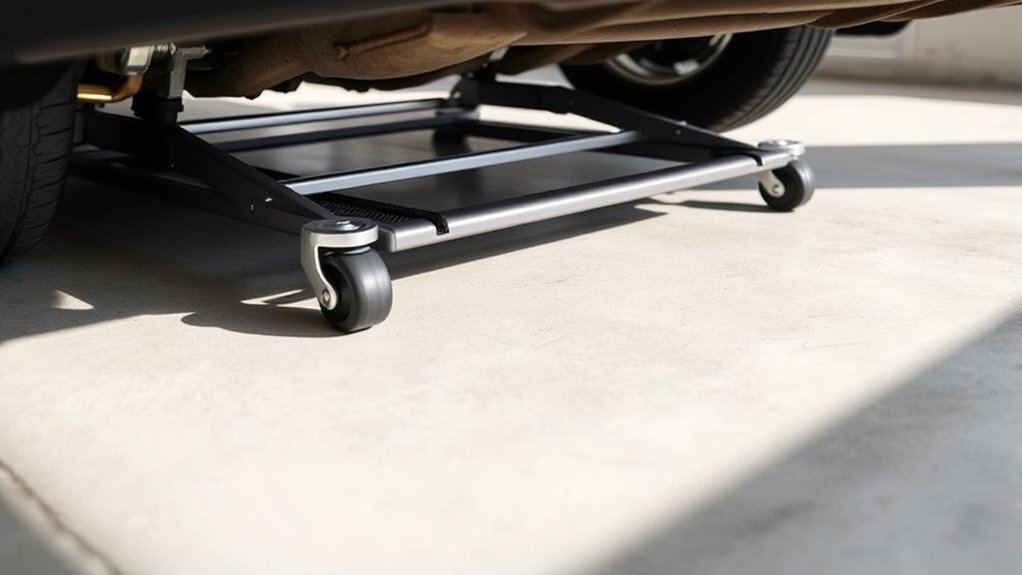
A mechanic creeper uses a sturdy frame to support you while you work beneath a vehicle. Its rolling wheels let you move smoothly across the floor, and its low-profile design makes it easier to access the underside of a car comfortably.
Creeper Frame Design
The creeper’s frame forms a low, rigid platform that supports your body while keeping you close to the vehicle’s underside. Manufacturers shape it from steel, aluminum, or reinforced plastic to balance strength, weight, and durability.
Its broad surface distributes pressure across your back, while a contoured design helps you maintain a comfortable position during extended automotive repairs. Raised edges can help keep your shoulders aligned and reduce the chance of sliding off the platform.
Some frames include padded headrests or adjustable sections, allowing you to match the creeper to your body and working angle. Integrated trays or compartments provide convenient tool storage, so you can keep essential wrenches and fasteners nearby.
A well-designed frame also resists twisting under load, giving you stable support whenever you reach beneath a vehicle.
Rolling Wheel Movement
Smooth wheel movement lets you roll beneath a vehicle with minimal effort. Each caster swivels as you push, helping you change direction without lifting or dragging the creeper.
Quality wheels maintain contact across concrete, while sealed bearings reduce resistance and keep rolling consistently. Before working, inspect each wheel for cracks, loose fasteners, or trapped debris.
A quick check prevents sudden stops and protects your balance.
Picture how these features work together:
- Swiveling casters guide you around stands, jacks, and scattered equipment.
- Wide wheels cross small floor joints without catching.
- Durable bearings support repeated movement during repairs.
Keep the floor clear, since cords and parts can interrupt motion. Store tools where you can reach them without blocking the wheels; organized tool storage supports efficient work.
Likewise, battery maintenance becomes easier when you can roll smoothly between the vehicle, charger, and workbench. Clean wheels after dusty jobs to preserve reliable movement.
Comfortable Under-Car Access
Once the wheels position you beneath the vehicle, the creeper’s padded body supports your back and shoulders while keeping you close to the work area. Its contoured design helps distribute your weight, so you can inspect components or make repairs without pressing against the pavement.
A low profile gives you useful clearance beneath the chassis, while a headrest can reduce neck strain during extended jobs. You’ll work more steadily when the creeper lets you shift your position smoothly instead of repeatedly crawling out and back in.
Some models include Tool storage trays or side compartments, keeping sockets, fasteners, and hand tools within reach. Use Automotive safety practices by securing the vehicle with jack stands, blocking wheels, and checking clearance before you roll underneath.
A comfortable creeper helps you focus on accurate repairs.
How Do Mechanic Creeper Casters Enable Movement?
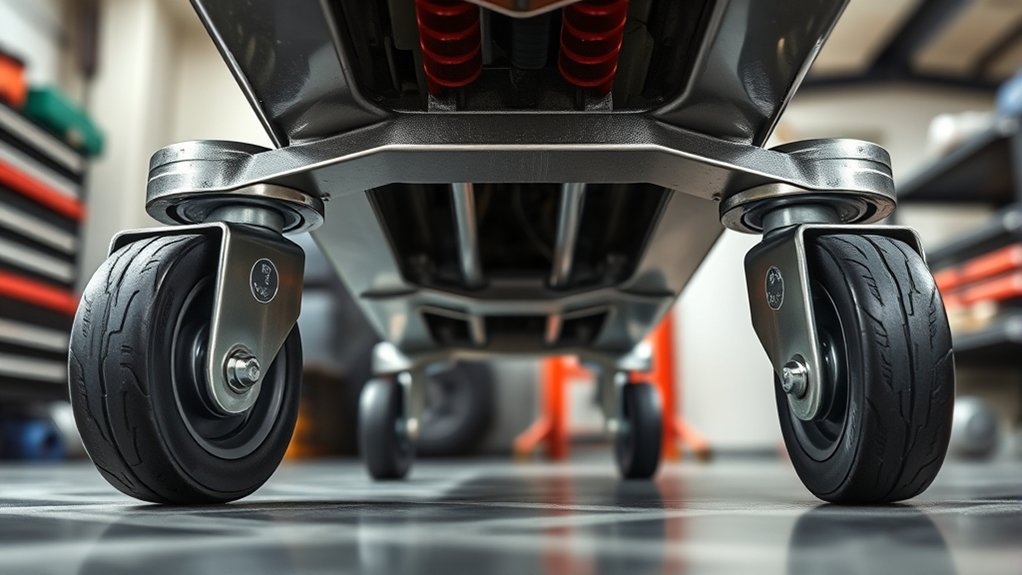
Mechanic creeper casters enable movement by swiveling beneath the frame and rolling smoothly across the floor, allowing you to steer, reposition, and work beneath a vehicle without lifting the creeper. Each caster rotates 360 degrees, so you can change direction with a push from your shoulders, hips, or feet. Sealed bearings reduce friction, while durable wheels glide over clean garage floors and handle small surface changes.
Picture how the casters respond as you work:
- You push gently, and the creeper rolls toward the brake assembly.
- You shift your weight, and swivel wheels pivot for a tight turn.
- You pull with your feet, and the creeper backs away smoothly.
Locking casters can hold your position when you need steady access, while wider wheels improve tracking and reduce snagging. Choose a creeper with automotive safety features and ergonomic design, including stable wheel placement and smooth rolling action. Keep the floor clear of cords, tools, and oil to maintain predictable movement.
How Does the Frame Support Your Weight?
Your creeper’s frame spreads your weight across its length, helping you stay balanced and supported. Its reinforced construction adds strength where it matters most, so the frame is less likely to bend or fail during normal use. Together, these features give you a more stable platform while you work beneath a vehicle.
Weight Distribution Design
A mechanic creeper spreads your weight across its frame, distributing pressure through the deck, crossmembers, and casters instead of concentrating it in one spot. As you lie down, the broad deck supports your back while each caster shares the load with the others.
This balanced layout helps you maintain ergonomic comfort and steadier movement beneath a vehicle.
Picture the load moving through three connected points:
- Deck: Cradles your body and spreads contact across a wide surface.
- Crossmembers: Transfer pressure sideways and prevent concentrated stress.
- Casters: Receive the distributed load and roll smoothly over the floor.
Your position still matters. Centering your hips and shoulders keeps pressure balanced, while shifting too far toward one end can increase strain on nearby supports.
Low, evenly spaced storage solutions can preserve balance without interfering with your movement or clearance.
Reinforced Frame Construction
Steel tubing, reinforced joints, and strategically placed crossmembers form the creeper’s structural backbone, so it can support your weight without excessive flexing. As you move beneath a vehicle, the frame spreads your load across its length instead of concentrating pressure at one weak point.
Welded connections and gussets help prevent twisting, while a durable finish resists impacts, moisture, and shop chemicals. You’ll feel the difference when the creeper rolls smoothly over uneven garage surfaces.
| Frame feature | Support benefit |
|---|---|
| Steel tubing | Resists bending |
| Reinforced joints | Prevents separation |
| Crossmembers | Distributes your weight |
This rigid design improves safety during Vehicle maintenance and keeps the creeper dependable through repeated use. It also supports Garage organization by giving you a compact, sturdy platform that stores easily and stays ready for your next repair.
Why Does Padding Matter Under a Car?
Padding cushions your body from the hard, uneven ground beneath a car, reducing pressure on your back, shoulders, and hips as you work. It improves under-car comfort, so you can focus on repairs instead of shifting constantly to escape painful contact.
Padding reduces pressure on your back, shoulders, and hips, making under-car repairs more comfortable and focused.
The importance of padding becomes clear during long inspections, oil changes, or brake jobs, when small pressure points can become distracting aches.
Picture how cushioning helps you:
- It spreads your weight across a wider surface, easing strain on your spine.
- It softens bumps, gravel, and floor cracks that could press through a thin board.
- It supports your body while you reach, turn, or slide beneath the vehicle.
Good padding also helps regulate contact with a cold garage floor, keeping your muscles from tightening as quickly. When you stay comfortable, you’re less likely to rush, lose concentration, or adopt awkward positions.
That comfort supports steadier movements and safer, more productive work beneath the car.
How Do Mechanic Creeper Designs Compare?
Low-profile creepers work best when you need to fit into tight spaces, while convertible designs let you switch between a creeper and a seat. Padded frames offer more comfort, while rigid frames typically provide firmer support and greater durability. Choose a design based on your available space, the tasks you handle, and the level of comfort you prefer.
Low-Profile Creepers
Low-profile creepers use a slim frame and recessed casters to give you more clearance beneath a vehicle while keeping your body close to the floor. You can slide under a low sedan, inspect tight spaces, and roll smoothly across a garage floor without scraping your shoulders.
- Picture a narrow frame clearing the oil pan.
- Imagine padded support reducing pressure on your back.
- See swivel casters guiding you around tires and jack stands.
This design works best when you need stable, ground-level access for inspections, oil changes, or brake work. It won’t replace a hydraulic lift for raising a vehicle, so secure the car properly before you crawl underneath.
Choose a creeper with durable casters, a contoured cushion, and a weight rating that exceeds your body weight. Its low height improves access, but uneven surfaces can limit movement and comfort.
Convertible Creeper Designs
Convertible creepers combine a rolling mechanic creeper with a hinged seat or raised backrest, so you can switch between lying beneath a vehicle and sitting beside it without changing tools. This design suits Automotive repair tasks that alternate between undercarriage access and work around wheels, doors, or engine bays.
You can lower the platform to slide under a car, then raise the backrest for a more upright position when inspection or assembly requires better reach. Locking hinges keep each configuration stable, while casters let you reposition without standing repeatedly.
Many models include Tool storage, such as side trays or built-in compartments, so you can keep fasteners and hand tools nearby. Choose a convertible creeper when you value one adaptable platform over separate low and seated equipment for changing repair positions throughout a job.
Padded Versus Rigid Frames
When choosing between padded and rigid-frame mechanic creepers, consider how comfort, support, and durability affect your repair work. A padded frame cushions your back and shoulders during long inspections, while its contoured surface can reduce pressure on hard garage floors.
However, thick padding may restrict air circulation and absorb oil or moisture. A rigid frame typically feels firmer, rolls smoothly, and resists bending under frequent use.
Its exposed surface also simplifies cleaning and often provides stronger material durability, though it can feel unforgiving without a thin cushion.
Picture your options:
- You sink comfortably into supportive foam.
- You glide beneath a vehicle on a sturdy shell.
- You wipe grime from a simple, resilient surface.
Choose padding for comfort-focused jobs and rigidity for heavy-duty reliability. Some creepers combine both, giving you balanced support and easier maintenance.
What Mechanic Creeper Weight Capacity Do You Need?
Choose a mechanic creeper with a weight capacity that exceeds your body weight, clothing, and any tools you’ll carry underneath the vehicle. Keep in mind that extra margin for movement, uneven loads, and accidental pressure on the frame is important.
A creeper rated just above your total weight may flex, crack, or fail prematurely, creating a serious vehicle safety risk.
For most home garages, a capacity of 300 pounds suits many users and provides room for basic equipment. If you weigh more, wear heavy protective clothing, or routinely carry jacks, impact tools, or parts, choose a model rated for 400 pounds or more.
Check the manufacturer’s rating rather than relying on appearance or price. Remember that the listed limit covers everything on the creeper, not just you.
Use built-in tool storage carefully, since loaded trays and holders add weight. Inspect the frame, casters, fasteners, and padding regularly.
Replace the creeper if you notice bending, cracks, or damaged welds. Never exceed its stated capacity.
How Easy Is the Mechanic Creeper to Steer?
Steering a mechanic creeper should feel smooth and predictable, allowing you to position yourself under the vehicle without excessive effort. Swiveling casters make the biggest difference, letting you change direction with a gentle push rather than lifting or dragging the frame. Six-wheel designs often track steadily, while larger casters roll more easily across seams, gravel, or uneven garage floors.
As you compare models, picture how each feature affects control:
- A low frame slides beneath a vehicle and turns without catching.
- Wide casters keep your path stable as you pivot around a tire.
- A padded headrest supports comfortable repositioning without restricting movement.
A lightweight creeper generally steers more easily, but excessive lightness can make it wander. Look for sturdy construction, smooth bearings, and casters that swivel freely without wobbling.
Tool storage can add convenience, though bulky trays may interfere with turning or increase width. For Automotive safety, choose predictable handling and responsive steering, so you can make controlled adjustments in a well-maintained workspace without unnecessary strain.
How Do You Use a Mechanic Creeper Safely?
Use a mechanic creeper safely by inspecting it before each use and setting it on a clean, level surface. Check that the wheels roll freely, the frame feels stable, and the padding supports you comfortably. Clear tools, cords, and spilled fluids from your path to prevent trips or sudden stops.
Inspect your mechanic creeper, choose a clean, level surface, and clear obstacles before sliding underneath a vehicle.
Wear safety glasses, secure loose clothing, and tie back long hair. Before sliding underneath a vehicle, park it on solid ground, switch off the engine, engage the parking brake, and remove the keys.
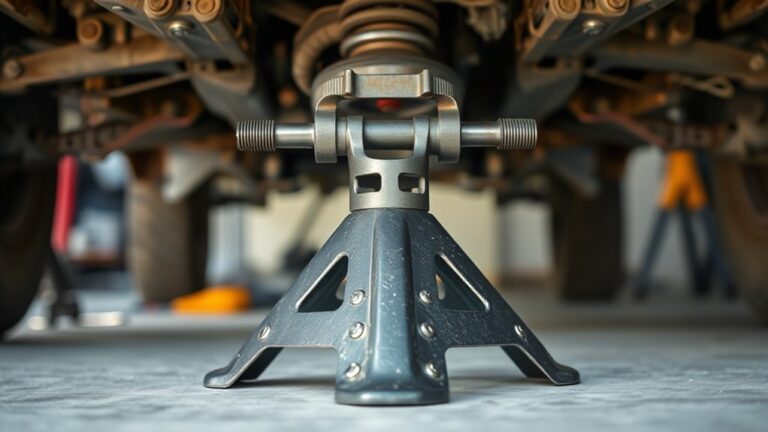
Support the vehicle with properly rated jack stands; never rely on a jack alone. Chock the wheels that remain on the ground, and confirm the car won’t shift before you begin car maintenance.
Move slowly, keep your hands clear of pinch points, and maintain a stable position while reaching. Don’t exceed the creeper’s weight limit or use it on uneven surfaces.
Good garage organization keeps essential tools nearby without blocking your exit. Stop immediately if the creeper shifts or feels unstable.
How Do You Maintain a Mechanic Creeper?
Keep your mechanic creeper clean and inspect it regularly to extend its service life. After each vehicle maintenance task, wipe away grease, dirt, and metal shavings with a damp cloth. Dry every surface thoroughly so moisture doesn’t cause rust, especially around fasteners and steel frames.
- Check the wheels: Roll the creeper across a clean floor. Replace cracked casters, tighten loose bolts, and remove hair or debris from axles.
- Examine the padding: Look for torn vinyl, flattened foam, or exposed edges. Repair small damage promptly, or replace the pad when support and comfort decline.
- Protect the frame: Apply a light lubricant to moving joints, but keep oil off the cushion and floor. Touch up chipped paint to limit corrosion.
Store your creeper indoors, away from rain, heat, and chemicals. Keep it upright or hang it securely when possible. Include it in your tool storage routine, and don’t place heavy equipment on top of it. Regular care keeps it stable, comfortable, and ready for your next repair.
Frequently Asked Questions
Can a Mechanic Creeper Be Used on Uneven Outdoor Surfaces?
Yes, you can use a mechanic creeper on uneven outdoor surfaces, but you’ll face reduced control and increased tipping risk. Outdoor terrain such as gravel, grass, or dirt may hinder the casters, making movement difficult.
Check the surface stability before lying down, and choose the flattest area available. Use wheel chocks, a support mat, or ramps when appropriate.
For significant slopes, rocks, or soft ground, you shouldn’t use the creeper.
What Accessories Are Compatible With a Mechanic Creeper?
You can pair a mechanic creeper with rolling tool storage, magnetic trays, parts bins, LED work lights, padded headrests, and protective floor mats. Think of it as your workshop’s small orbiting station, carrying essentials within reach while you move beneath a vehicle.
Choose accessories that match the creeper’s frame and attachment points. Tool storage reduces interruptions, while ergonomic accessories support your neck, back, and knees during longer repairs and maintenance tasks.
How Much Does a Quality Mechanic Creeper Typically Cost?
You’ll typically pay $50–$150 for a quality mechanic creeper, while premium models can exceed $200. Expect basic plastic designs near $30–$60, but spend more for stronger frames, padded surfaces, smooth casters, and adjustable features.
Compare warranties and weight capacity during your Price comparison, because Tool durability often justifies a higher price. If you’ll use it frequently, choose a well-built creeper; occasional home repairs may not require premium construction or features.
Can a Mechanic Creeper Fit Inside a Vehicle for Transportation?
Can a mechanic creeper fit inside your vehicle for transportation?
Yes, you can usually carry one, but you’ll need enough vehicle storage and a suitable loading path. A low-profile creeper often fits in a trunk, SUV, or pickup bed, while folding models save even more space.
Check the creeper height, length, and width against your cargo area before buying. Protect the interior with a blanket and secure the creeper during travel.
Are Mechanic Creepers Suitable for People With Back Problems?
Mechanic creepers may suit you if you have mild back problems, but they aren’t automatically safe or comfortable. Choose one with an ergonomic design, firm padding, and adequate back support to keep your spine aligned.
A padded headrest and adjustable features can reduce strain while you work. Avoid models that force you to arch or twist.
If you experience pain, numbness, or limited mobility, ask your healthcare professional before using one.
Conclusion
A mechanic creeper turns a cramped space beneath your car into a smoother path to every repair. Its casters roll you into position, its frame carries your weight, and its padding cushions the hard ground.
Choose one that steers easily, supports you safely, and fits your workspace. Before you slide underneath, secure the vehicle and inspect the creeper.
With proper care, this simple tool becomes your trusted bridge between frustration and a finished repair. Understanding how a mechanic creeper works helps you use it safely and confidently.