How Does a Slotted Brake Rotor Work Step-by-Step
When your brakes feel less responsive, run hot, or wear unevenly, choosing the right rotor can be frustrating. You’re not alone—many drivers struggle to find a setup that stays reliable during towing, steep descents, or spirited driving. This slotted brake rotor guide will help you compare options with confidence.
When you press the brake pedal, hydraulic pressure pushes the pads against the spinning slotted rotor, converting motion into heat through friction. Machined slots interrupt the contact surface and channel away heat, gases, dust, and water.
This helps the pads maintain consistent friction and reduces hot spots, fade, and uneven wear during repeated braking. You’ll get the greatest benefit during towing, steep descents, or aggressive driving.
Keep going to learn how selection and maintenance affect performance.
Key Takeaways
- Hydraulic pressure presses the brake pads against the rotor, converting the vehicle’s kinetic energy into friction and heat.
- Precisely machined slots interrupt the contact surface, creating channels for gases, dust, and water to escape.
- As the rotor spins, centrifugal force moves moisture and debris outward, helping maintain consistent pad-to-rotor friction.
- The slots refresh the pad surface and reduce glazing, supporting stable braking during repeated or high-temperature stops.
- Properly designed slotted rotors can resist hot spots and distortion, but may increase pad wear and noise compared with smooth rotors.
What Makes a Slotted Brake Rotor Different?
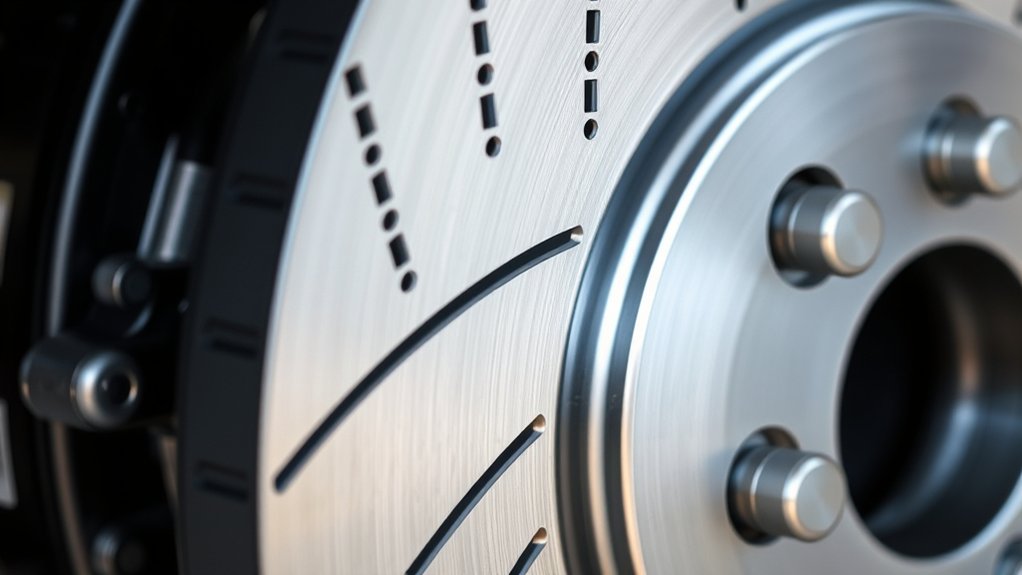
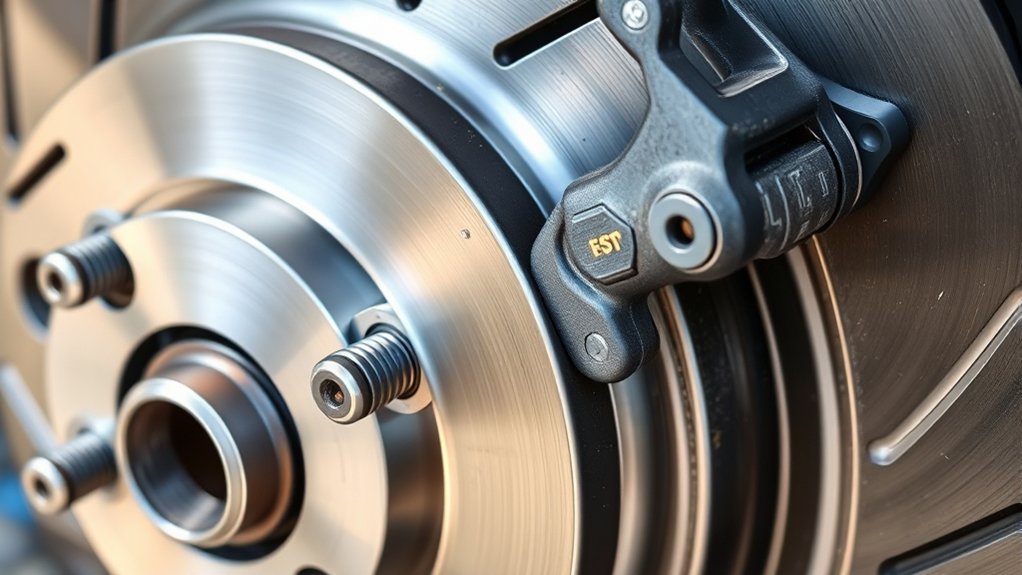
A slotted brake rotor differs from a smooth rotor because it has machined grooves across its friction surfaces. As you inspect the rotor, you’ll notice each slot follows a precise pattern rather than a random cut.
These channels reduce the uninterrupted surface area and give the disc a more purposeful design for demanding driving conditions. Their placement can also influence aerodynamic efficiency around the rotating assembly, although brake performance remains the main reason manufacturers add them.
You’ll find slotted rotors in various vehicles, from performance cars to trucks that face frequent braking demands.
Compared with producing a plain disc, creating accurate grooves adds manufacturing complexity, because machines must cut consistent depths and maintain exact spacing. That extra work can increase cost and requires careful quality control.
You should also recognize that slot shapes, counts, and angles vary by brand, so two slotted rotors might look different while sharing the same basic construction.
How a Slotted Brake Rotor Meets the Pad
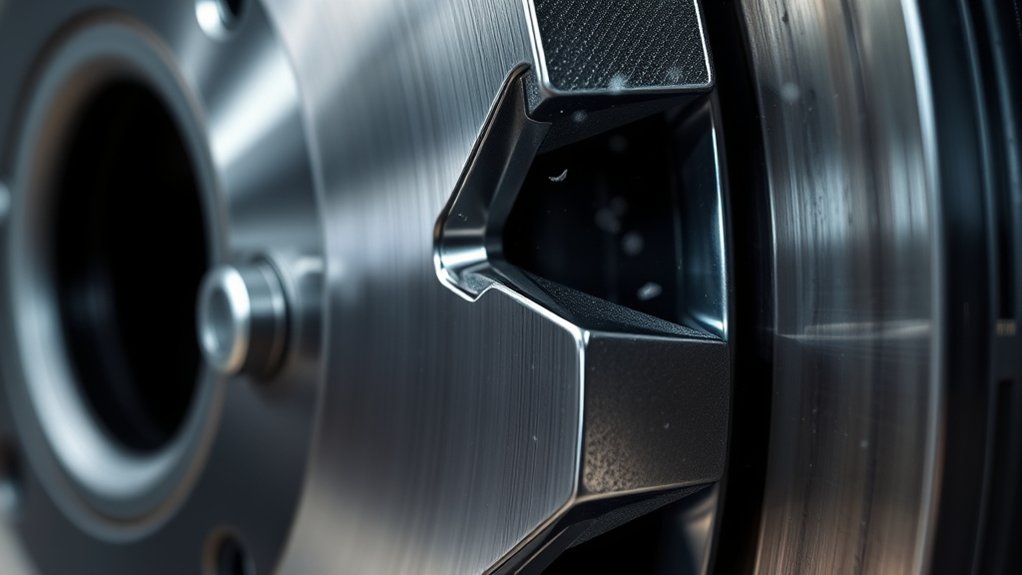
As the wheel turns, the slotted rotor meets the brake pad across its machined friction surface, allowing the pad’s material to grip the disc and create friction. You’ll notice that the rotor’s flat faces contact the pad consistently as the caliper holds each pad in alignment.
The slots interrupt that contact at precise points, giving dust, gases, and water a path away from the interface. They also help refresh the pad’s contact surface as the disc rotates, while the rotor’s machined edges remain controlled and predictable.
Brake pad materials affect how this meeting feels and sounds. Organic, semi-metallic, and ceramic compounds respond differently to the rotor’s texture, temperature, and slot pattern.
Rotor manufacturing processes also matter. Accurate casting, heat treatment, machining, and balancing help produce even faces and reliable dimensions.
When you press the pedal, the caliper moves the pads squarely onto those faces, maintaining stable contact without requiring the rotor to be perfectly smooth.
How Brake Pads Generate Stopping Friction
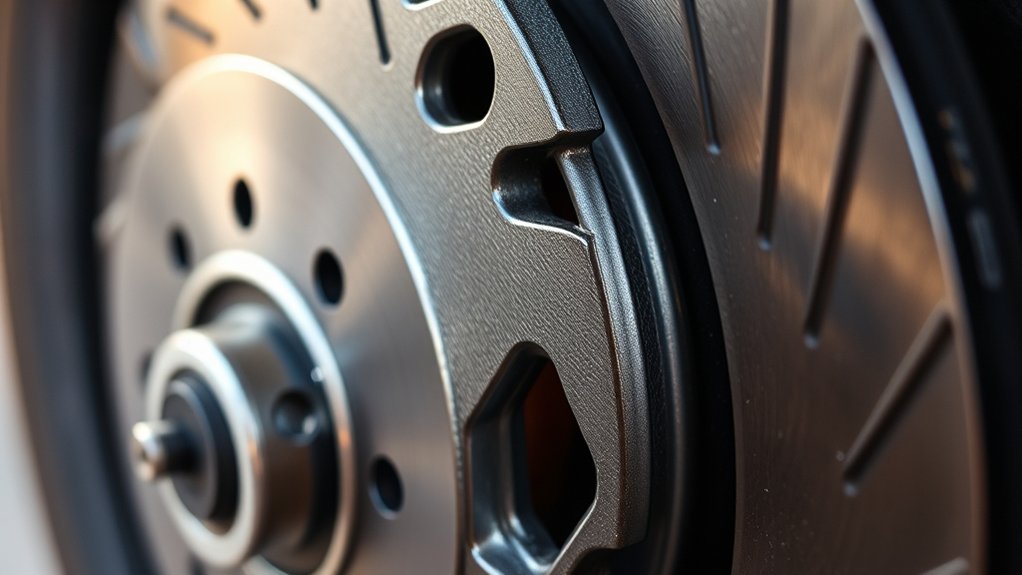
When hydraulic pressure pushes the brake pads against the spinning rotor, their friction converts the wheel’s kinetic energy into heat and slows the vehicle. You control this process through the pedal, which increases clamping force and raises friction at the pad-rotor interface.
Hydraulic pressure clamps the pads against the rotor, converting kinetic energy into heat and slowing the vehicle.
As the pads grip the rotor, microscopic high and low spots interact, creating resistance to rotation. Brake pad materials determine how that resistance develops. Organic compounds offer quiet, smooth engagement, while semi-metallic and ceramic formulations balance heat tolerance, wear, noise, and stopping power differently.
Rotor manufacturing also affects friction. A properly cast, machined, and heat-treated rotor provides a stable surface for the pad compound to transfer a thin friction layer. That layer helps produce predictable braking and protects the rotor from uneven wear.
Temperature changes matter, too: excessive heat can reduce friction, harden the pad surface, or distort components. You’ll get consistent stopping performance when the pad compound, rotor surface, and applied pressure work within their intended operating range.
How Slots Maintain Consistent Pad Contact
Slots sweep across the pad face as the rotor spins, removing dust, gases, and moisture that could disrupt contact. As you brake, their edges break up surface buildup and help the pad reconnect with fresh rotor areas. This action supports more even friction instead of allowing isolated patches to carry the entire load.
You’ll notice the benefit most when braking repeatedly or after the vehicle sits in wet conditions. The slots also give the pad a controlled path for slight movement, reducing the chance of glazing or uneven transfer material. However, they don’t replace proper caliper alignment, smooth slides, or sufficient pad thickness.
Brake pad materials influence how consistently this contact develops. Softer compounds conform quickly, while harder compounds need accurate bedding. Rotor manufacturing techniques matter, too: precise slot depth, spacing, and rotor flatness help maintain predictable engagement around the disc.
With compatible components and correct installation, slots keep your pads working against a stable, evenly distributed braking surface.
How Slotted Rotors Manage Heat and Dust
Slotted rotors manage heat and dust by creating channels that let hot gases and loose friction material escape from the pad–rotor interface. As you brake repeatedly, those slots interrupt the pad’s contact path, helping shed heat and reduce localized hot spots.
More even temperatures can limit friction changes, protect the rotor from stress, and support predictable pedal response during demanding driving.
The channels also collect and move away some abrasive dust produced as the pads wear. That action helps keep debris from building heavily between the pad and rotor, although it won’t eliminate dust or replace regular cleaning.
Because slots remove small amounts of rotor material, you should choose a quality design engineered for adequate strength and material durability. Proper installation and compatible pads matter, too.
Beyond function, the machined pattern can improve your vehicle’s aesthetic appeal, especially through open-spoke wheels. Still, appearance shouldn’t outweigh thermal performance, noise control, service life, and the manufacturer’s specifications when you select replacements.
How Slots Clear Water and Brake Gas
When you’re driving in wet conditions, slots help channel water away from the pad and rotor surfaces. They also vent the gases produced when friction heats the brake pad material, helping your brakes maintain more consistent contact and stopping power.
Water Channeling Through Slots
As the rotor spins through wet conditions, its slots sweep water away from the pad-to-rotor contact area, helping the pads maintain consistent friction.
As you apply the brakes, the pad presses against the rotating surface and pushes moisture into nearby grooves. The slot design gives that water a direct path toward the rotor’s outer edge, where centrifugal force helps discharge it.
This water runoff reduces the film that can separate the pad from the rotor, so your brake pedal feels more predictable after passing through rain or puddles.
Properly machined slots also avoid trapping moisture beneath the pad, allowing the contact surface to reestablish friction quickly.
You’ll still need quality pads, adequate tread, and smooth braking technique, because slots can’t overcome standing water or severely worn components.
Brake Gas Venting
Water isn’t the only material slots help move away from the pad contact area. During hard braking, heat causes binders and resins in Brake pad materials to release gases.
This gas can form a thin cushion between the pad and rotor, reducing friction and making the pedal feel less responsive. As the rotor spins, its slots interrupt that layer and give gases a path to escape.
Each slot also scrapes across the pad surface, helping refresh contact and maintain consistent bite. You’ll notice the greatest benefit during repeated stops, where heat builds quickly.
Slot shape, depth, spacing, and edge finish affect how effectively venting occurs. Quality Rotor manufacturing techniques keep these features consistent, so every slot clears gas predictably without creating excessive pad wear or rotor stress.
Why Heat Control Protects Stopping Power
Heat control protects stopping power by keeping the brake pads and rotor within an effective operating range. Each time you brake, friction converts motion into intense heat. If temperatures rise too far, the pad surface can lose friction, a condition known as brake fade.
You’ll need more pedal pressure, yet your vehicle may slow less effectively. A slotted rotor helps manage this heat by giving gases, dust, and some heat a path away from the contact surface.
Its slots also refresh the pad’s working surface, supporting more consistent friction during repeated stops. When the rotor sheds heat efficiently, it resists distortion and reduces the risk of uneven contact, so you can count on steadier pedal response.
Heat management also supports Material durability by limiting thermal stress on the rotor and pads. Although Aesthetic appeal may influence your choice, reliable temperature control matters more.
It helps preserve stopping performance when traffic, towing, or downhill driving demands repeated braking.
Slotted Brake Rotors vs. Smooth Rotors
Slotted brake rotors and smooth rotors both provide reliable stopping power, but they serve different driving needs. Smooth rotors have a continuous braking surface, so they typically deliver quiet, predictable operation for everyday commuting.
Slotted rotors add machined grooves that help clear gases, dust, and moisture while giving the pad a fresh contact path. This design can improve consistency during repeated braking, though it may produce more noise and wear pads faster.
Your choice should match your vehicle, driving style, and manufacturer guidance. Consider these differences:
- Smooth rotors generally offer quieter operation and longer pad life.
- Slotted rotors help maintain friction when braking repeatedly.
- Either design needs quality brake pad materials for balanced performance.
You’ll also need compatible rotor installation techniques, including correct torque, clean hub surfaces, and proper bedding.
Don’t assume slots automatically improve stopping performance. Tire grip, caliper condition, pad compound, and rotor quality matter more.
Compare specifications, warranty coverage, and replacement costs before selecting either rotor design for your vehicle.
When Slotted Rotors Are Worth Using
Whether slotted rotors are worth using depends on how and where you drive. If you tow, carry heavy loads, descend steep roads, or drive aggressively, slots can help your brakes maintain consistent friction.
They scrape away water, gases, and surface debris while revitalizing the pad contact area, which can improve pedal response during repeated stops.
You may also benefit if your vehicle regularly faces high heat, such as during autocross, track days, or mountainous commuting. However, slotted rotors usually offer limited advantages for gentle daily driving.
Smooth rotors often provide quieter operation, longer pad life, and lower cost in ordinary conditions.
Consider rotor materials and manufacturing processes, since design quality affects strength, noise, heat management, and durability. A well-made slotted rotor can outperform a cheap alternative, but slots won’t compensate for unsuitable pads, overloaded vehicles, or poor braking technique.
Choose them when your driving creates repeated heat and demands stable performance, not simply because they look sporty. Their benefits matter most when standard rotors approach their practical limits.
How to Choose and Maintain Slotted Rotors
Choose slotted rotors by matching their design to your vehicle, driving conditions, and brake-pad material. Select a reputable brand with correct dimensions, compatible metallurgy, and slots engineered for your calipers.
Consider these priorities:
- Material durability: High-quality cast iron resists cracking, warping, and corrosion better than bargain alternatives.
- Cost considerations: Compare the rotor price with installation, replacement frequency, and the cost of suitable pads.
- Driving demands: Choose moderate slots for daily commuting or aggressive designs for towing, mountain roads, or track use.
Before buying, verify the rotor’s diameter, thickness, bolt pattern, and minimum discard specification in your vehicle’s service information.
During maintenance, inspect slots for packed debris, heat checking, deep grooves, or uneven wear. Clean the braking surface with brake cleaner, but don’t lubricate it.
Measure thickness periodically and replace rotors in axle pairs when they approach the discard limit. Bed new rotors and pads according to the manufacturer’s procedure, then avoid prolonged brake applications that create excessive heat.
You’ll preserve stopping performance by checking caliper movement, wheel torque, and pad condition regularly.
Frequently Asked Questions
How Long Do Slotted Brake Rotors Typically Last?
You’ll typically get 30,000 to 70,000 miles from slotted brake rotors, though your driving habits, vehicle weight, climate, and rotor material can shorten or extend that range. Aggressive braking, towing, track use, and corrosion cause faster wear.
Slotted designs help manage heat and reduce brake fade, but they don’t last indefinitely. Inspect your rotors whenever you replace pads, and replace them when thickness, cracks, deep grooves, or vibration indicates damage.
Can Slotted Rotors Cause Extra Noise During Braking?
Yes, slotted rotors can cause extra brake noise, especially during light braking or when the slots pass beneath the pads. You may hear a faint hum, scrape, or clicking sound, but harsh grinding indicates a problem.
Brake noise often decreases after proper bedding-in and may remain minimal with quality components. Although slots can slightly affect rotor durability, they improve gas and debris removal.
Have a technician inspect persistent sounds, vibrations, or reduced stopping power promptly.
Are Slotted Brake Rotors Compatible With Every Vehicle?
No, slotted brake rotors aren’t compatible with every vehicle. You need to match the rotor’s diameter, thickness, bolt pattern, hub fitment, and caliper clearance to your specific model.
Rotor design differences can affect noise, braking feel, and pad wear, while Brake rotor materials influence heat tolerance and durability.
Check your owner’s manual, manufacturer specifications, or a trusted parts catalog before buying. If you’re unsure, ask a qualified mechanic to confirm compatibility.
Do Slotted Rotors Require Special Brake Pads?
No, you usually don’t need special brake pads for slotted rotors. Standard, vehicle-approved pads typically work well, provided you match them to your calipers and driving needs.
Check Brake pad compatibility in your owner’s manual or with the manufacturer before installation. Also, consider the Rotor surface finish: aggressive slots can increase pad wear, noise, or dust.
Choose quality pads, bed them in correctly, and replace rotors and pads as a matched, compatible set when necessary.
How Much Do Slotted Brake Rotors Usually Cost to Replace?
You’ll usually pay $250–$600 to replace slotted brake rotors on one axle, including parts and labor; performance or premium options can push the total toward $800. Think of each rotor as a shield: quality protects your stopping power and wallet.
Check brake pad compatibility before buying, since most standard pads work, but your vehicle’s specifications matter. Follow rotor installation tips, including cleaning mounting surfaces, torquing lug nuts correctly, and replacing worn pads together.
Conclusion
A slotted brake rotor works like a well-tuned pressure valve for your braking system. As you press the pedal, its slots sweep away gas, dust, and heat while keeping the pads biting consistently.
That steady contact helps your vehicle stop confidently, whether you’re commuting or tackling demanding roads. Choose slotted brake rotors when heat control and reliable response matter most, and maintain them properly.
With the right care, slotted brake rotors will help keep every stop smooth, controlled, and secure.