10 Best Self Driving Car Stocks Top Picks For Every Budget
As an Amazon Associate, I earn from qualifying purchases. This post contains affiliate links. Which means I may earn a small commission when make a purchase through my links, at no additional cost to you.
If you want to invest in the future of transportation but feel overwhelmed by the options, understanding the best self driving car stocks can help you make smarter decisions. The self-driving car industry is growing rapidly and offers opportunities for investors interested in technology and innovation.
This review is for those looking to identify reliable companies leading the way in autonomous vehicle development. We will explore key players in the market, highlighting their strengths and potential risks. You can expect clear information on market trends, company profiles, and factors influencing stock performance in this emerging sector.
Whether you’re new to investing or seeking to expand your portfolio, this guide will provide useful insights to consider before making investment choices.
Top Contenders Revolutionizing the Future of Autonomous Vehicles
| Image | Product | Price |
|---|---|---|
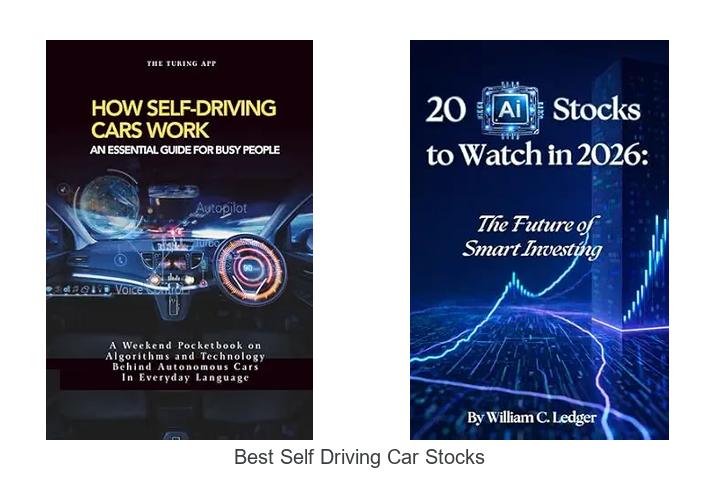
Pick 1  | How Self Driving Cars Work by Tech Frontiers | Check Price On Amazon |
Pick 2  | AI Stocks to Watch 2026: Ultimate Stock Picks Series | Check Price On Amazon |
Pick 3  | Self-Driving Cars | Check Price On Amazon |
1. How Self Driving Cars Work by Tech Frontiers
Self-driving car technology is reshaping the future of transportation, and this book presents its concepts clearly. It explains the algorithms and technology behind autonomous vehicles in simple, accessible language.
The book offers an overview of the key AI components that power self-driving cars. Covering essential topics such as sensors, machine learning, and decision-making processes, it presents complex ideas in everyday terms. With 40 concise pages, it is easy to read and packed with valuable insights.
The independently published volume is lightweight and measures 6 by 9 inches, making it convenient to carry. Readers will find the explanations clear without overwhelming technical jargon. It serves as a solid starting point for those interested in AI stocks related to autonomous cars.
The brief format makes it suitable for busy readers seeking a quick but insightful introduction. Overall, the book balances detailed content with straightforward presentation and suits investors and tech curious readers seeking foundational knowledge in this sector.
Pros
- Clear, simple explanations of complex technology
- Concise and easy to read in one sitting
- Lightweight and portable format
Cons
- Limited depth due to short length
- No author biography included
- Focused mainly on AI, less on hardware
Who Should Buy It?
Ideal for investors and readers interested in AI technology behind autonomous vehicles. Perfect for those who want a quick and clear introduction without heavy technical detail.
Key Specifications
| Specification | Details |
|---|---|
| Title | How Self Driving Cars Work: Algorithms and Technology Behind Autonomous Cars In Everyday Language (Tech Frontiers) |
| Author/Publisher | Independently published |
| Publication Date | May 3, 2026 |
| Print Length | 40 pages |
| Language | English |
| ISBN/ASIN | 979-8195386788 |
| Weight | 2.4 ounces |
| Dimensions | 6 x 0.1 x 9 inches |
| Format Type | |
| Part of series | Tech Frontiers |
The specifications highlight a concise printed volume measuring 6 by 9 inches, making it easy to handle and carry. The 40-page length indicates a brief but focused coverage. The use of English language ensures accessibility to a broad audience. The lightweight nature at 2.4 ounces adds to portability and convenience for reading anywhere. Being independently published shows that it may offer unique perspectives not commonly found in mainstream releases.
These specs suggest a quick, readable format suited for introductory learning. The shorter page count means the content delivers core concepts without excessive detail. Compact dimensions and light weight offer comfort and ease during use, appealing especially to readers on the go. The focus on AI within the Tech Frontiers series points to a neat, specialized approach beneficial for readers wanting clear, targeted information on self-driving car technology.
2. AI Stocks to Watch 2026: Ultimate Stock Picks Series
Investing in artificial intelligence stocks is becoming a popular strategy for new investors aiming to ride the wave of future technology growth. This guide presents a clear and concise overview of 20 AI stocks to watch in 2026, providing an accessible introduction for beginners. The book contains 136 pages of insightful content that explains the potential of AI-driven markets and highlights top companies in this sector.
It is well-structured to help readers understand the market dynamics, stock performance predictors, and investment outlook. The printed book is a handy size, making it easy to reference at any time.
Its independently published status allows fresh insights without corporate biases. The language is straightforward and approachable, perfect for those new to stock investing or those who want to better understand smart AI investments.
Overall, the book offers good value as an educational tool and research companion. It suits individuals seeking a beginner-friendly guide to start exploring AI stocks, particularly those interested in the economic impact of self-driving technologies and other intelligent systems. Readers looking for detailed financial data or in-depth technical analysis may want to supplement this guide with additional resources.
Pros
- Clear beginner-friendly explanations
- Compact and easy-to-carry format
- Focus on future AI growth stocks
Cons
- Limited depth on financial analysis
- Not for advanced investors
- Small print length limits detail
Who Should Buy It?
Ideal for novice investors wanting an introduction to AI stock options. Useful for those who prefer straightforward explanations and a compact guide. Not suited for readers seeking advanced investment strategies or deep technical details about AI companies.
Key Specifications
| Specification | Details |
|---|---|
| Title | 20 AI Stocks to Watch in 2026: The Future of Smart Investing (Ultimate Stock Picks Series) |
| Author/Publisher | Independently published |
| Publication Date | January 1, 2026 |
| Print Length | 136 pages |
| Language | English |
| ISBN/ASIN | 979-8241902597 |
| Weight | 8.2 ounces |
| Dimensions | 5.5 x 0.34 x 8.5 inches |
| Format Type | |
| Edition | Ultimate Stock Picks Series |
The book’s specifications indicate a well-sized paperback suitable for handheld reading and quick reference. The 136 pages provide enough room for a comprehensive beginner’s introduction without overwhelming the reader. Its moderate weight of 8.2 ounces ensures portability, making it convenient to carry in a bag or backpack. The standard book dimensions and English language ensure easy accessibility and usability worldwide. This format type is ideal for those who prefer physical books over digital, allowing note-taking and easy flipping through pages.
These specifications influence its usability and appeal mostly to new investors and casual readers. A moderate length means the book can maintain reader interest and provide actionable insights without lengthy technical jargon. The print format supports comfortable reading sessions at home or on the go. The publishing date ensures up-to-date content reflecting current and near-future stock trends. Overall, the specs benefit readers who want educational content in a concise, portable package that emphasizes ease of use and practical knowledge.
3. Self-Driving Cars
Self-Driving Cars: The New Way Forward offers a clear introduction to the evolving world of autonomous vehicles. It combines technology insights with regulatory updates to provide a solid understanding of this growing sector. This book, published by Lerner Publications in 2018, targets readers from grades 6 to 12.
It spans 120 pages and uses accessible language, making it suitable for younger readers interested in how self-driving cars operate and their legal challenges. The enhanced typesetting and screen reader support improve the reading experience for a broad audience.
Readers can expect to gain knowledge about technological advancements and the regulatory environment influencing self-driving cars. The book balances technical details with approachable explanations, making complex topics like sensors, software, and government policies easy to grasp. Its format includes features like page flip and word wise, aiding comprehension.
It’s an excellent resource for students, educators, and anyone looking for a foundational overview of both industry progress and upcoming legal frameworks. The compact length ensures information is digestible, while the inclusion of accessibility features shows thoughtful publication design.
Overall, this work suits those seeking an introduction rather than highly technical specification or investment advice.
Pros
- Clear blend of tech and regulation
- Accessible for middle and high school readers
- Enhanced typesetting and screen reader support
Cons
- Publication date may limit recent updates
- Not for advanced technical readers
- X-Ray feature not available
Who Should Buy It?
Ideal for students and educators interested in self-driving car technology and regulations. Also good for casual readers seeking a straightforward introduction to autonomous vehicle developments and related laws.
Key Specifications
| Specification | Details |
|---|---|
| Title | Self-Driving Cars: The New Way Forward |
| Author/Publisher | Lerner Publications |
| Publication Date | August 1, 2018 |
| Print Length | 120 pages |
| Language | English |
| ISBN/ASIN | 978-1541538252 |
| File Size | 27.5 MB |
| Screen Reader | Supported |
| Enhanced Typesetting | Enabled |
| Page Flip | Enabled |
| Word Wise | Enabled |
| Grade Level | 6 – 12 |
| Reading Age | 11 – 18 years |
The specifications highlight the book’s accessibility and usability for a younger audience. With a reading level set between grades 6 and 12, the language is simplified enough to make complex topics understandable. The file size indicates a lightweight digital format that loads quickly. Features like screen reader support and enhanced typesetting make it easier to navigate and read, especially for users with visual impairments or those who prefer varied text presentation. The moderate page count ensures the content is concise yet informative without overwhelming readers.
These specs contribute to the book’s practicality and user comfort. The inclusion of features such as page flip and Word Wise helps maintain reading flow and comprehension, particularly for students. The English language choice and age-appropriate content enhance usability in educational settings. Although published in 2018, the foundational information remains useful for beginners. Overall, the specifications suit readers who need an easy setup and clear interface alongside engaging content on self-driving cars and regulatory insights.
4. Autonomy The Quest to Build the Driverless Car

Driverless cars are reshaping the future of transportation, and this audiobook offers an inside look at their evolution. It provides a thorough exploration of the history and development behind autonomous vehicles. The narrative follows the quest to create self-driving cars while highlighting the impact on society and technology.
Narrated by George Newbern, the audiobook lasts 11 hours and 21 minutes, perfect for listeners interested in technology and innovation. The author Lawrence D. Burns shares his expertise, making complex topics accessible and engaging.
Listening to this audiobook offers insight into how driverless cars have evolved and their potential to transform the world. The unabridged format preserves all the details, enhancing understanding.
It’s well suited for those curious about the background and future of driverless vehicles, offering a detailed historical perspective. The pacing and narration style provide a smooth experience, ensuring the listener stays engaged throughout. Overall, it is an informative and thought-provoking resource for anyone wanting a richer grasp of autonomous vehicle history.
Pros
- Detailed historical perspective on driverless cars
- Engaging narration by George Newbern
- Clear and accessible explanations
Cons
- Focuses more on history than technical specifics
- Audiobook length may be long for casual listeners
- Less content on current market implications
Who Should Buy It?
Ideal for listeners interested in the story behind autonomous vehicle technology. Best for those who enjoy in-depth historical and societal contexts rather than technical details. Suitable for professionals, students, or anyone curious about driverless cars’ evolution.
Key Specifications
| Specification | Details |
|---|---|
| Title | Autonomy: The Quest to Build the Driverless Car-And How It Will Reshape Our World |
| Author/Publisher | Lawrence D. Burns / Ecco |
| Publication Date | August 28, 2018 |
| Listening Length | 11 hours and 21 minutes |
| Language | English |
| Format Type | Audiobook |
| Edition | Unabridged |
The audiobook format allows for an immersive experience in the world of autonomous vehicles. The 11-hour listening length offers a comprehensive but manageable deep exploration. Being unabridged means the entire content from the author is present, ensuring no detail is missed. The English language narration makes the content accessible to a wide audience. The audiobook’s release in 2018 provides insights into developments up to that time, making it a useful reference for recent history.
The narration by George Newbern enhances ease of listening through clear and engaging delivery. The unabridged edition suits those who prefer full content without summarization. Its length and format require committed listening time but reward with thorough understanding. This audiobook best fits anyone interested in how driverless cars were developed over time, plus the social and technological challenges encountered. It offers valuable knowledge to technology students, industry professionals, and curious listeners alike.
5. Elon Take the Wheel Tesla Self-Driving Technology

Self-driving technology is reshaping transportation, and understanding Tesla’s approach is key for investors. Elon Take the Wheel offers a clear look into Tesla’s self-driving tech, exploring its promises and pitfalls. The book analyzes Tesla’s Autopilot and Full Self-Driving systems with a critical eye.
It covers the technology’s development, safety concerns, and regulatory challenges. With 288 pages, the book balances technical information and accessible language.
BenBella Books publishes it, providing a well-structured and engaging read. The print size and weight make it manageable for regular reading sessions.
The book suits readers new to self-driving fundamentals and those wanting a realistic picture of Tesla’s tech landscape. It does not shy away from highlighting risks and delusions surrounding the hype.
Overall, it’s a solid resource for investors wanting an informed perspective on Tesla’s self-driving ambitions.
Pros
- Clear explanation of Tesla’s auto-driving basics
- Well-organized, balanced critique on tech risks
- Accessible language for non-experts
Cons
- Focuses mainly on Tesla, not other companies
- Some technical details may feel simplified
- Critical tone might deter optimistic investors
Who Should Buy It?
Ideal for those interested in Tesla’s self-driving technology foundation. Suitable for readers wanting a grounded view on the technology’s development and challenges. Also helpful for investors seeking awareness of potential risks linked to Tesla’s autonomous driving ambitions.
Key Specifications
| Specification | Details |
|---|---|
| Title | Elon Take the Wheel: The Danger and Delusion of Tesla’s Self-Driving Technology |
| Author/Publisher | BenBella Books |
| Publication Date | December 1, 2026 |
| Print Length | 288 pages |
| Language | English |
| ISBN/ASIN | 979-8902680116 |
| Weight | 1 pounds |
| Dimensions | 6 x 1.2 x 9 inches |
The specifications such as the book’s 288 pages and standard dimensions make it easy to carry and read anywhere. The English language and clear publishing details provide accessibility for a wide audience. The weight is light enough to comfortably hold during reading sessions. These factors combine to create a convenient format for those researching Tesla’s self-driving technology or studying automotive innovation.
The length and clear format allow for an in-depth yet manageable exploration of Tesla’s technology and related industry challenges. The publication date indicates up-to-date content on the topic as of late 2026. This book suits readers wanting straightforward, well-organized material about Tesla’s autonomous driving, helping investors, students, or tech observers grasp complex developments without feeling overwhelmed.
6. Autonomous Driving Technology and Regulation

Exploring the cutting edge of AI and self-driving technology, this book offers a clear insight into autonomous driving’s evolving landscape. It captures the interplay between technological innovation, business strategies, and regulatory frameworks shaping the industry today.
The book provides a detailed overview of key autonomy levels, the impact of AI, and the legal challenges faced by companies. With its balanced approach, readers gain a strong understanding of technological advancements, market dynamics, and policy considerations.
The comprehensive content is thoroughly researched and presented in an accessible way. The physical edition is sturdy and portable, with an easy-to-read layout spanning 304 pages.
This volume suits investors, business professionals, and tech observers keen on grasping how autonomous vehicles influence markets and regulations. Its practical tone supports informed decisions, while the blend of technology and regulation makes it highly relevant for those tracking AI-driven mobility shifts.
Pros
- Clear focus on AI and regulation
- Detailed market and tech insights
- Well-structured and accessible content
Cons
- Publication date set in the future
- Not a hands-on technical guide
- May be too specialized for some readers
Who Should Buy It?
Ideal for investors and professionals tracking AI and autonomous driving development. Also suited for policymakers and technology analysts wanting a thorough understanding of how autonomous driving intersects with business and regulation.
Key Specifications
| Specification | Details |
|---|---|
| Title | Autonomous Driving: Technology, Business, and Regulation |
| Author/Publisher | Wiley |
| Publication Date | October 26, 2026 |
| Print Length | 304 pages |
| Language | English |
| ISBN-10 | 1394340796 |
| ISBN-13 | 978-1394340798 |
| Weight | 1.27 pounds |
| Dimensions | 6 x 0.75 x 9 inches |
| Edition | 1st |
The specifications of this book include its print length of 304 pages and its manageable dimensions of 6 by 9 inches. This size supports easy handling and makes the volume convenient to carry or store on bookshelves. The weight of 1.27 pounds adds to its portability without being cumbersome. The first edition brings the latest perspectives as of its October 2026 publication date, ensuring that the material reflects current trends in autonomous vehicle technology and regulation. ISBN details enable easy lookup and purchase in diverse markets.
These specifications contribute to an enjoyable reading experience by delivering a comprehensive yet digestible volume. The moderate page count balances technical depth with readability, appealing to both casual readers and serious researchers. The physical build and standard size suit users who prefer printed materials over digital formats, providing durability and a comfortable grip. Its status as a first edition implies it contains up-to-date insights, making it valuable for readers interested in emerging AI and policy frameworks surrounding autonomous driving.
7. The Car That Paid for Itself Beginners Guide to Turo Hosting

Discover the potential of generating income through car sharing with this beginner-friendly guide. It offers clear steps on starting and growing a Turo hosting business from one vehicle to a full fleet.
The book provides practical advice on listing cars, managing rentals, and maximizing profits. It is concise at 50 pages, making it easy to digest without overwhelming new hosts.
The language is simple and suitable for younger readers interested in self-driving car ventures. The guide balances theory and actionable tips to help readers confidently enter the car sharing market.
Lightweight and portable, the book is a convenient companion for anyone curious about Turo hosting. It suits those new to car hosting who want a solid foundation without technical jargon.
Pros
- Clear and beginner-friendly language
- Compact and easy to read
- Focuses on practical Turo hosting tips
Cons
- Limited length may omit advanced details
- Narrow focus on Turo, not other platforms
- No physical durability enhancements due to thin format
Who Should Buy It?
Ideal for young individuals or beginners curious about starting Turo hosting. It helps new hosts learn key steps quickly and confidently. Those interested in self-driving car business ideas will find the guide approachable and informative.
Key Specifications
| Specification | Details |
|---|---|
| Title | The Car That Paid for Itself: A Beginner’s Guide to Turo Hosting, from One Car to a Fleet |
| Author/Publisher | Independently published |
| Publication Date | October 29, 2026 |
| Print Length | 50 pages |
| Language | English |
| ISBN/ASIN | 979-8166204219 |
| Weight | 4.5 ounces |
| Dimensions | 6 x 0.12 x 9 inches |
| Format Type | |
| Reading Level | Youth |
The specifications indicate a compact, light paperback book designed for ease of use and portability. Its 50-page length ensures the content is concise and straightforward, suited for quick reading sessions. The modest dimensions and weight make it convenient for carrying or storing. Being independently published, it likely focuses on personal insights or specialized knowledge about Turo hosting. The language and reading level target younger audiences and beginners, which suggests simplified explanations and less technical detail.
These specs ensure the guide is manageable for new learners and young readers interested in self-driving car ventures. It offers an accessible introduction without overwhelming the reader with volume or complexity. The light weight and small size enhance comfort when reading. Overall, it benefits casual learners or those exploring new income opportunities with Turo hosting, fitting well into a beginner’s setup or study routine.
8. AI Innovations Self-Driving Cars Book

AI Innovations and Self-Driving Cars offers a clear look at current AI trends advancing autonomous vehicles. The book focuses on practical AI and machine learning elements driving the self-driving car industry.
It provides a solid overview of recent breakthroughs and how they integrate into vehicle systems. Readers gain insight into the AI models and algorithms shaping automated driving.
The book is well-organized with 218 pages that balance technical detail and approachable language. Built for learning, it supports screen readers and includes enhanced typesetting for easier reading. While it does not feature the latest X-Ray or Word Wise tools, its straightforward format suits those studying AI applications in automotive technology.
LBE Press Publishing delivered a well-constructed content piece that suits researchers, students, and industry watchers. It is ideal for those interested in how artificial intelligence pushes car autonomy forward and wants a practical AI perspective.
The publication date from 2019 gives enough time for foundational concepts to be established, though readers should supplement with recent developments.
Pros
- Clear focus on AI and machine learning in self-driving
- Supports screen readers for accessibility
- Enhanced typesetting improves reading experience
Cons
- No X-Ray feature on Kindle
- Lacks Word Wise for easier vocabulary
- Publication date limits newest AI advances
Who Should Buy It?
Ideal for learners and professionals tracking AI in autonomous vehicles. Best for readers seeking practical AI insights without overly technical jargon. Suitable for those interested in foundational AI developments in self-driving car technologies.
Key Specifications
| Specification | Details |
|---|---|
| Title | AI Innovations and Self-Driving Cars: Practical Advances in AI and Machine Learning |
| Author/Publisher | LBE Press Publishing |
| Publication Date | March 26, 2019 |
| Print Length | 218 pages |
| Language | English |
| ISBN/ASIN | 978-0692161753 |
| File Size | 661 KB |
| Screen Reader | Supported |
| Enhanced Typesetting | Enabled |
| X-Ray | Not Enabled |
| Word Wise | Not Enabled |
| Page Flip | Enabled |
The book’s core specifications emphasize a digital format weighing 661 KB with accessibility features like screen reader support. This means readers with visual impairments can follow along comfortably. Enhanced typesetting ensures smoother navigation through the text on digital devices. While it lacks the X-Ray feature and Word Wise tools, the available options make for a more comfortable reading experience, particularly on Kindle. The 218-page length provides comprehensive coverage without overwhelming the reader.
These specifications support performance in terms of usability and accessibility. Enhanced typesetting improves clarity and reduces eye strain for longer reading sessions. Screen reader support broadens the user base to include those needing auditory assistance. The absence of some Kindle-specific aids might slow vocabulary-building or quick referencing. This setup is durable for educational use and well-suited for readers wanting foundational knowledge rather than interactive features. It benefits students, academics, and professionals studying AI in automotive technology.
9. The Four-Wheel Microchip Silicon Brains for Self-Driving Cars

Silicon brains are transforming how self-driving cars operate with smart technology. The Four-Wheel Microchip offers an accessible guide to understanding the tech behind autonomous vehicles.
It covers everything from sensor systems to AI algorithms in clear, simple language, making complex concepts easy to grasp. The book includes detailed explanations about how microchips process data, enabling vehicles to make driving decisions safely and efficiently. It is compact, lightweight, and printed with clean layouts for easy reading.
Although short, its focused content packs essential insights for readers interested in the future of transportation. Parents and educators will appreciate the approachable reading level that suits young learners as well as adults curious about automotive technology. The print quality feels sturdy, and the independent publishing ensures an original perspective.
Overall, this book suits anyone interested in the building blocks of self-driving car systems, especially those wanting a technical yet understandable introduction.
Pros
- Clear explanations of complex silicon tech
- Suitable for wide reading ages
- Compact and lightweight format
Cons
- Limited depth for advanced readers
- Print length may seem short
- Independent publishing can vary quality
Who Should Buy It?
Ideal for students, educators, and technology fans who want an easy introduction to how silicon chips power driverless cars. Also suitable for casual readers who want to grasp the key technology behind autonomous driving.
Key Specifications
| Specification | Details |
|---|---|
| Title | The Four-Wheel Microchip: How Silicon Brains Power Self-Driving Cars: From Sensors to AI—The Hidden Technology Reshaping Roads, Safety, and the Future of Transportation |
| Author/Publisher | Independently published |
| Publication Date | August 11, 2025 |
| Print Length | 132 pages |
| Language | English |
| ISBN/ASIN | 979-8297567030 |
| Weight | 9 ounces |
| Dimensions | 6.24 x 0.49 x 9.24 inches |
| Reading Level | 1 – 18 years |
The specifications indicate a concise book of 132 pages, making the content digestible for readers without overwhelming them. The English language publication and broad reading level from 1 to 18 years suggest that its explanations are simple, accessible, and designed to serve a very wide audience. The physical size and light weight mean the book is highly portable and convenient for casual reading or reference.
These specs support a comfortable reading experience suitable for both younger readers and adults seeking a foundational understanding. The relatively slim page count encourages quick completion while the size accommodates easy handling. As an independently published work, the book presents a focused view on silicon brain technology, making it a practical choice for educational or casual tech interest.
10. AI Driverless Self-Driving Cars by State-of-the-Art

AI Driverless Self-Driving Cars by State-of-the-Art explores the advances of AI and machine learning in autonomous vehicles. Its focus on Tesla self-driving systems makes it a unique resource for understanding these technologies in depth.
The book offers an insightful overview of practical applications and theoretical foundations behind driverless cars. Key features include detailed explanations of AI algorithms and their deployment in automotive tech. The content is structured clearly for easy reading, supporting screen readers and enhanced typesetting.
At 230 pages, it balances technical detail with accessibility. Readers will appreciate the focused critique on Tesla’s self-driving efforts and the practical insights offered.
Overall, it delivers solid value for researchers, machine learning students, and anyone evaluating Tesla’s position in autonomous vehicle development.
Pros
- In-depth focus on Tesla self-driving technology
- Clear, readable format with screen reader support
- Practical and theoretical AI insights combined
Cons
- Published in 2019, might lack latest updates
- X-Ray and Word Wise features not included
- Intermediate technical knowledge required
Who Should Buy It?
Ideal for readers interested in Tesla’s autonomous systems and AI. Suitable for students, researchers, and investors looking for technical background on self-driving cars. Works well as a reference for understanding machine learning applications in automotive fields.
Key Specifications
| Specification | Details |
|---|---|
| Title | State-of-the-Art AI Driverless Self-Driving Cars: Practical Adbances in Machine Learning and AI |
| Author/Publisher | LBE Press Publishing |
| Publication Date | March 26, 2019 |
| Print Length | 230 pages |
| Language | English |
| ISBN/ASIN | 978-0692132173 |
| File Size | 5.7 MB |
| Screen Reader | Supported |
| Enhanced Typesetting | Enabled |
| X-Ray | Not Enabled |
| Word Wise | Not Enabled |
| Page Flip | Enabled |
The book’s specifications reflect a focus on accessibility and readability. Its medium length of 230 pages makes it thorough without being overwhelming. Published in English by LBE Press Publishing, it is sized at 5.7 MB, making it manageable for digital devices. Features like screen reader support and enhanced typesetting improve usability for a broader audience, allowing comfortable reading sessions on various devices. The inclusion of page flip functionality also makes navigation easier. However, it does not support X-Ray or Word Wise features, which could assist with deeper word explanations.
These specifications support an effective reading experience suited for those wanting substantial technical content. The chapter length and format ease the understanding of complex AI topics related to Tesla’s self-driving tech. The screen reader support adds to comfort for longer study or critique sessions, benefiting researchers or professionals. While the lack of X-Ray might limit immediate reference to technical terms, the enhanced typesetting balances this by improving text clarity. Overall, the specs make it a durable and practical resource for academic or professional use.
Top Picks and Insider Tips for Investing in the Best Self-Driving Car Stocks
Understanding the selfdriving car industry
Market trends reveal a significant surge in demand for companies that are deeply integrated with smart vehicle networks and adaptable platforms. This interconnectivity allows firms to leverage real-time data, enhancing safety features and providing seamless user experiences, which in turn drives growth potential in this rapidly evolving sector.
Key players are distinguished not only by their innovative technologies but also by their ability to form strategic partnerships and expand their infrastructural capabilities swiftly, ensuring they stay ahead in the competitive landscape. Technological advancements, such as advanced sensor arrays and AI-driven decision-making systems, continue to shape the future, emphasizing the value of stock positions that support scalable and flexible growth models.
Financial health and performance
Access to robust networks and the ability to integrate with a variety of platforms play a crucial role in the growth potential of companies in the autonomous vehicle sector. Companies that maintain strong ties with technology partners and have room to incorporate additional features or services often position themselves for long-term success.
The ability to interface smoothly with emerging technologies ensures they stay competitive as the industry evolves. Additionally, firms that support scalable infrastructure are better equipped to adapt to rapid advancements and changing consumer demands, which can directly impact their market valuation.
Company’s autonomous technology portfolio
Company’s autonomous technology portfolio plays a crucial role in determining its potential for growth and resilience in the evolving market. A strong collection of patents and proprietary technology indicates a firm’s ability to innovate and maintain a competitive edge, protecting its solutions from duplication. Equally important are strategic partnerships and collaborations with key industry players, which can accelerate technological advancements and open new avenues for market penetration.
Additionally, substantial investment in research and development reflects a commitment to continuous improvement, ensuring that the company stays ahead in a rapidly changing environment. Evaluating these factors provides insight into how well-positioned a firm is to adapt, scale, and capitalize on emerging trends in autonomous driving technologies.
Regulatory and legal considerations
Effective integration with various platforms and the ability to accommodate future technological advancements play a crucial role in the long-term success and adaptability of stocks related to autonomous vehicles. Companies that maintain strong data-sharing capabilities and foster partnerships within the automotive and tech industries are better positioned to capitalize on emerging trends and innovations. Additionally, the capacity to scale operations and incorporate new features or services ensures resilience against market shifts and evolving consumer demands.
Additionally, the capacity to scale operations and incorporate new features or services ensures resilience against market shifts and evolving consumer demands.
Such flexibility also impacts investor confidence, as firms demonstrating technological fluidity and strategic alliances tend to mitigate risks associated with obsolescence. Evaluating how a company handles interoperability with existing infrastructure and its readiness to embrace expansions can reveal its potential for sustained growth and competitive advantage in a rapidly changing landscape.
Risks and volatility factors
Access to a wide network of partnerships and the potential for scalable growth are critical factors that can significantly impact the future performance of autonomous vehicle companies. Firms that are well-integrated with other tech players and demonstrate the ability to broaden their product offerings or enter new markets tend to adapt better to rapid industry changes. This adaptability plays a vital role in navigating fierce market competition and potential disruption from emerging innovations or new entrants.
This adaptability plays a vital role in navigating fierce market competition and potential disruption from emerging innovations or new entrants.
Moreover, the ability to evolve technologically is paramount, as the sector faces ongoing challenges such as software reliability, sensor accuracy, and regulatory compliance. Companies positioned to quickly upgrade or expand their technological capabilities can mitigate risks associated with failures or outdated systems.
Finally, external economic conditions and geopolitical tensions can influence supply chains, investment flows, and market access. Organizations with a flexible framework to establish new alliances or diversify their operations often have a stronger defense against these uncertainties, ensuring more stable growth prospects.
Longterm investment potential
Access to a well-connected network and the ability to scale operations play a crucial role in evaluating companies involved in autonomous vehicle technology. A firm’s strategic plans for growth and its vision for integrating future innovations highlight its potential for long-term success. Equally important is the strength and experience of the management team, as effective leadership drives execution and adaptation in a rapidly evolving market.
Equally important is the strength and experience of the management team, as effective leadership drives execution and adaptation in a rapidly evolving market. Additionally, understanding dividend policies and how shareholder value is prioritized offers insight into the company’s commitment to rewarding investors and sustaining financial health over time. Together, these factors provide a comprehensive view of a company’s ability to expand its influence and deliver consistent returns.
How Self-Driving Cars Operate Step by Step
Self-driving cars use a mix of technologies to move safely without a driver. These cars rely mainly on sensors, cameras, and software.
Here is a simple step-by-step flow of how they work:
- Detect surroundings: The car uses sensors and cameras to gather data about roads, other vehicles, pedestrians, and obstacles.
- Analyze information: The software processes the data to understand the environment and identify potential hazards.
- Make decisions: Based on the analysis, the system decides how to control the car’s speed, direction, and braking.
- Execute actions: Commands are sent to the car’s steering, throttle, and brakes to follow the planned course.
- Continuous updates: The sensors keep providing data, allowing constant adjustment to changing conditions.
This cycle repeats many times each second to keep the car driving smoothly and safely. The combination of hardware and software helps the vehicle interpret its surroundings much like a human driver would.
Understanding how self-driving technology works can help when looking at companies involved in this area. They develop the components and software that make autonomous driving possible.
FAQ’s
What Are The Top Self-Driving Car Stocks To Watch In 202
Some of the top self-driving car stocks to watch in 2024 include Tesla, known for its advanced Autopilot system, and Alphabet’s Waymo, a leader in autonomous driving technology. Other notable companies are NVIDIA, which supplies AI chips for self-driving applications, and Cruise, backed by General Motors.
How Do Self-Driving Car Companies Compare In Terms Of Stock Performance?
Self-driving car companies often show varied stock performance based on their technology progress, partnerships, and market adoption, with leaders like Tesla typically outperforming newer entrants. However, the sector remains volatile due to regulatory challenges and evolving competition.
Which Emerging Self-Driving Car Stocks Have The Highest Growth Potential?
Emerging self-driving car stocks with high growth potential include companies like Mobileye, Luminar Technologies, and Velodyne Lidar, as they lead in advanced sensor and AI technologies. Additionally, newer players focusing on autonomous software and electric vehicle integration, such as TuSimple and Nuro, show promising innovation driving market expansion.
What Factors Influence The Valuation Of Self-Driving Car Stocks?
The valuation of self-driving car stocks is influenced by factors such as technological advancements, regulatory developments, market adoption rates, and competition within the industry. Additionally, investor sentiment, company financial performance, and partnerships or collaborations also play significant roles.
Are There Any Risks Associated With Investing In Self-Driving Car Companies?
Yes, investing in self-driving car companies carries risks such as technological challenges, regulatory hurdles, and intense competition. Additionally, market adoption and safety concerns could impact the companies’ profitability and growth.
Final Verdict
For those seeking the best overall resource on self-driving car stocks, How Self Driving Cars Work by Tech Frontiers offers a broad and detailed look at AI companies shaping this industry. It suits readers who want a thorough understanding of the technology behind autonomous vehicles. AI Stocks to Watch 2026: Ultimate Stock Picks Series is ideal for beginners who prefer a clear, easy-to-follow guide that introduces promising stocks without overwhelming detail.
Autonomous Driving Technology and Regulation fits well for readers interested in the latest advancements and regulatory issues affecting AI and self-driving technology, providing a premium, focused approach. Finally, Autonomy The Quest to Build the Driverless Car offers valuable historical insights and context around the development of driverless cars, perfect for those curious about how the technology evolved. Together, these picks cover different angles for anyone exploring the best self driving car stocks on the market today.
Choose the option that best matches your current knowledge level and interest area to gain the most from your research on self-driving car stocks.