10 Best Focal Length for Car Photography Our Favorite Picks Compared
As an Amazon Associate, I earn from qualifying purchases. This post contains affiliate links. Which means I may earn a small commission when make a purchase through my links, at no additional cost to you.
Choosing the right lens can make a big difference when photographing cars, but figuring out the best focal length for car photography isn’t always straightforward. Many photographers struggle with whether to use wide-angle, standard, or telephoto lenses to capture the perfect shot that highlights a vehicle’s design and details.
This lens is designed for photographers who want sharp images and flexibility when capturing cars in various settings, from close-up details to full-body shots. The review will cover how this lens performs in different scenarios, its image quality, and practical tips for getting the most out of it.
Whether you are shooting on the street or in a studio, this guide will help clarify how the right focal length impacts your car photography results.
Finding the Perfect Perspective to Make Every Detail Stand Out
| Image | Product | Price |
|---|---|---|
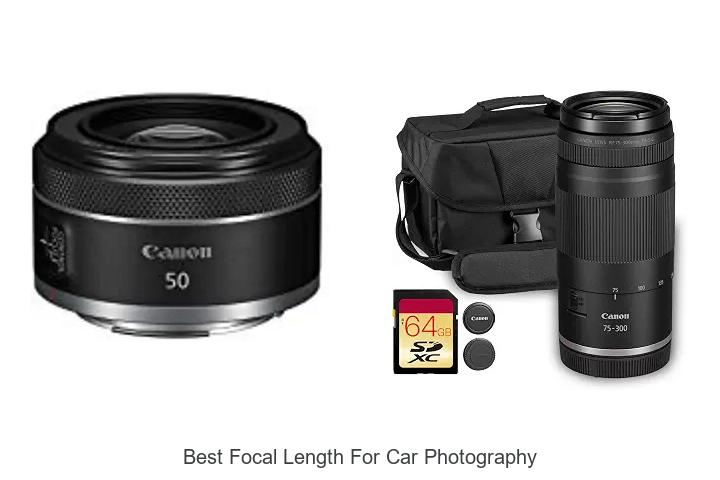
Pick 1  | Canon RF 50mm F1.8 STM Lens | Check Price On Amazon |
Pick 2  | Canon RF 75-300mm f/4-5.6 Telephoto Zoom Lens | Check Price On Amazon |
Pick 3  | Canon EF 75-300mm f/4-5.6 III Telephoto Zoom Lens | Check Price On Amazon |
1. Canon RF 50mm F1.8 STM Lens
Capturing cars with clarity and charm becomes easier with the Canon RF 50mm F1.8 STM Lens. This lens combines a compact, lightweight design with a sharp 50mm focal length and a bright f/1.8 aperture.
It excels in both daylight and low-light conditions, making it a versatile choice for car photographers. The lens features a smooth and quiet autofocus thanks to its stepping motor, perfect for video and photo work.
Its super spectra coatings help reduce ghosting and flare, enhancing color accuracy and image quality. The compact build makes it easy to carry and handle, while the control ring allows quick adjustments on the fly. Compatible with the entire Canon EOS R mirrorless system, it fits various cameras smoothly.
This lens balances image quality, portability, and functionality, proving ideal for those who want detailed, crisp images with beautiful background blur. It suits hobbyists and professionals who prioritize ease while shooting cars in different settings, whether urban environments or scenic landscapes.
Pros
- Compact and lightweight design
- Bright f/1.8 aperture for low light
- Smooth and quiet autofocus
Cons
- Not weather resistant
- No built-in image stabilization
- Fixed focal length limits versatility
Who Should Buy It?
Ideal for photographers using Canon EOS R mirrorless cameras who want sharp, vibrant car images. Great for users valuing portability without sacrificing image quality. Suitable for both casual shooters and serious hobbyists wanting an affordable prime lens with good performance.
Key Specifications
| Specification | Details |
|---|---|
| Brand | Canon |
| Focal Length Description | Standard 50 Millimeters |
| Maximum Aperture | 1.8 f_stop |
| Lens Type | Telephoto |
| Compatible Mountings | Canon RF |
| Focus Type | Auto Focus |
| Lens Design | Prime |
| Lens Coating Description | Super Spectra Coating |
| Special Features | Compact, Lightweight Fixed Focal Length Lens, Control Ring, Stepping Motor (STM) |
| Compatible Camera Models | Canon RF-mount mirrorless digital cameras |
The Canon RF 50mm F1.8 STM Lens is a fixed focal length prime lens with a 50mm standard telephoto view. The bright f/1.8 aperture lets in ample light, ideal for shooting cars in low-light conditions or creating pleasing background blur. The lens uses Canon’s Super Spectra coatings to reduce flare and ghosting, resulting in sharp images with vibrant color balance. It fits all Canon RF-mount mirrorless cameras, making it widely compatible for various shooting styles and needs.
Its autofocus system relies on a stepping motor that delivers quiet and smooth focusing, useful for both still photos and video. The compact and lightweight build enhances comfort during extended use, especially when shooting on the move. Lack of built-in image stabilization means steady hands or a tripod may benefit some users. This lens is best suited for photographers prioritizing portability, image sharpness, and creative aperture control in everyday car photography.
2. Canon RF 75-300mm f/4-5.6 Telephoto Zoom Lens
Telephoto zoom lenses that offer versatility and portability are valuable assets for photographers capturing dynamic scenes from a distance. Covering a broad range from 75mm to 300mm, this lens meets those needs with sharp imaging and ease of use. It is designed with a variable f/4-5.6 aperture, making it compact and lightweight, perfect for those who shoot sports, wildlife, and distant subjects alike.
The lens includes Canon’s Super Spectra Coating, which effectively reduces flare and ghosting, enhancing image clarity and color, especially in bright conditions. Close-focusing capabilities allow semi-macro shots, adding creative flexibility. The seven-blade aperture produces smooth bokeh, helping isolate subjects in complex environments.
Weighing just over 1 pound, it is easy to handle and carry during long shooting sessions. Autofocus operates quickly and quietly, aiding in capturing sharp images of moving cars or animals. This lens suits photographers who need a reliable telephoto zoom without the burden of a heavy setup and who value a balance between performance and portability.
The included accessories such as a camera bag and 64GB SD card further support travel and shooting convenience, making it an appealing value option for a wide range of uses.
Pros
- Lightweight and compact design
- Sharp images with reduced flare
- Includes bag and 64GB memory card
Cons
- Variable aperture limits low-light use
- Not compatible with DSLR cameras
- No built-in image stabilization
Who Should Buy It?
Ideal for photographers who want a portable telephoto zoom lens. Perfect for capturing distant subjects like cars and wildlife without carrying heavy gear. Great for travel and outdoor shoots needing flexibility from 75mm to 300mm.
Key Specifications
| Specification | Details |
|---|---|
| Brand | Canon |
| Focal Length Description | Telephoto 75 to 300 Millimeters |
| Maximum Aperture | f/4-5.6 |
| Lens Type | Telephoto |
| Compatible Mountings | Canon RF |
| Focus Type | Auto/Manual |
| Minimum Focusing Distance | 4.9 feet |
| Lens Design | Telephoto |
| Lens Coating Description | Canon’s Super Spectra Coating |
| Special Features | Lightweight |
The focal length of 75 to 300mm allows you to zoom in on distant subjects, making it a versatile telephoto choice. The variable maximum aperture of f/4-5.6 means the lens performs best in good lighting conditions but might struggle slightly in low light. Its compatibility with Canon RF mount full-frame and APS-C mirrorless cameras ensures it works seamlessly with advanced digital cameras. The minimum focusing distance of 4.9 feet enables semi-macro shots, which means you can capture detailed images of smaller subjects or closer objects.
These specifications combine to offer a lightweight and portable lens that is comfortable to carry on long shoots. The variable aperture keeps the design slim and manageable without sacrificing image quality. Canon’s Super Spectra Coating reduces flare and ghosting, resulting in clearer images with better contrast. Autofocus flexibility supports both automatic and manual focus modes, which benefits photographers working in dynamic settings like sports or wildlife. Overall, this lens best suits those needing an easy-to-handle telephoto zoom for outdoor and travel photography.
3. Canon EF 75-300mm f/4-5.6 III Telephoto Zoom Lens
Telephoto flexibility meets dependable performance with this zoom lens. It’s perfect for photographers needing extended reach and clear images in various outdoor settings. The Canon EF 75-300mm f/4-5.6 III is a lightweight zoom lens designed for full-frame Canon DSLRs but also works with APS-C models for even greater reach.
Its 4x zoom covers from 75mm to 300mm, ideal for capturing distant subjects like cars on the move or details from afar. The lens uses Canon’s Super Spectra coating to reduce flare and ghosting, ensuring crisp, vivid pictures even in bright conditions. Autofocus is controlled by a DC micro motor, providing smooth, reliable focusing when tracking dynamic subjects.
Its rounded seven-blade diaphragm creates a nice background blur, adding artistic quality to close-ups and portraits. While it lacks image stabilization, the lens remains portable and easy to handle, making it a solid choice for photographers prioritizing reach without bulk.
This lens suits those who want a versatile telephoto zoom that’s also suitable for sports, wildlife, and general photography demands.
Pros
- Wide 75-300mm zoom range
- Compact and lightweight design
- Effective flare and ghosting reduction
Cons
- No image stabilization included
- Variable maximum aperture limits low light use
- Autofocus can be noisy in video recording
Who Should Buy It?
Ideal for photographers aiming for extended telephoto reach in outdoor settings. Fits Canon users who want a lightweight, versatile zoom lens for car, wildlife, or sports shots without heavy gear.
Key Specifications
| Specification | Details |
|---|---|
| Brand | Canon |
| Focal Length Description | 75-300 millimeters |
| Maximum Aperture | f/4-5.6 |
| Lens Type | Telephoto Zoom |
| Compatible Mountings | Canon EF |
| Focus Type | Auto Focus |
| Minimum Focusing Distance | 30 centimeters |
| Lens Design | Zoom |
| Lens Coating Description | Super Spectra coating to reduce flare and ghosting |
| Special Features | Rounded seven-blade diaphragm for natural bokeh |
The lens covers a versatile focal length range from 75mm to 300mm. This allows for substantial zoom capability, suitable for capturing distant or moving subjects clearly. The maximum aperture varies between f/4 and f/5.6, impacting light intake and depth of field. Autofocus ensures quick subject acquisition, while the 30cm minimum focusing distance allows decent performance in close-up shots. Compatibility with Canon EF mount cameras provides flexibility for many Canon DSLR users.
These specifications result in a lens that works well for telephoto needs but can struggle in low light due to its aperture range. The lack of image stabilization requires steady hands or speedier shutter settings in dim settings. The Super Spectra coating helps maintain image clarity by reducing flare. The rounded diaphragm blades enhance background blur, which adds to aesthetic appeal. Best suited for users prioritizing reach and portability over the widest aperture or built-in stabilization.
4. TTArtisan AF 85mm F1.8 Neo Lens for Z Mount Cameras

Capturing detailed and intimate images requires a lens built for precision and clarity. The TTArtisan AF 85mm F1.8 Neo excels at portrait and close-up photography, delivering sharp focus and beautiful background blur. This autofocus prime lens is designed for Nikon Z mount cameras and features an optimized STM stepping motor for smooth, accurate focusing.
Its F1.8 aperture provides excellent low-light capability and shallow depth of field effects, ideal for isolating subjects from their surroundings. The optic design uses 12 elements in 8 groups including ED and high-refractive-index lenses to ensure sharp, edge-to-edge image quality. Without manual aperture or focus rings, the lens offers a straightforward shooting experience.
The minimum focusing distance of 0.8 meters allows for engaging close-up captures with natural perspective. Lightweight and compact, this lens suits photographers focusing on portraits, street scenes, or detailed shots where smooth autofocus and subtle bokeh are essential.
It performs well with both full-frame and APS-C Z cameras, making it a versatile addition to any Nikon mirrorless kit.
Pros
- Fast and smooth autofocus
- Large F1.8 aperture for low light
- Sharp image quality center to edges
Cons
- No manual focus or aperture rings
- Minimum focus distance not very close
- Limited to Nikon Z mount
Who Should Buy It?
Ideal for portrait and close-up photographers using Nikon Z cameras. Perfect when smooth autofocus and attractive background blur are needed. Also good for street and humanistic subjects.
Key Specifications
| Specification | Details |
|---|---|
| Brand | TTARTISAN |
| Focal Length Description | Standard focal length 85mm |
| Maximum Aperture | 1.8 millimeters |
| Lens Type | Prime |
| Compatible Mountings | Nikon Z |
| Focus Type | Auto Focus |
| Minimum Focusing Distance | 0.8m |
| Lens Design | Prime |
The TTArtisan AF 85mm F1.8 Neo lens features a fixed prime focal length of 85mm, ideal for tight portraits and close-up shots with natural perspective. Its maximum aperture of F1.8 lets in plenty of light, which is vital for shooting in darker environments and achieving a shallow depth of field. The autofocus system relies on an STM stepping motor for smooth, quiet focusing, while the design excludes manual rings to simplify shooting. Its minimum focusing distance of 0.8 meters allows photographers to capture detailed close-ups with moderate proximity.
These specifications combine to make a lens that balances performance and ease of use. The autofocus and optimized optics provide crisp images from center to edge, important for capturing details in portraits or street scenes. The lightweight prime design enhances comfort during extended shooting. While lacking manual aperture or focus control may limit creative manual adjustments, users focusing on getting sharp subjects with pleasing bokeh will benefit most. Nikon Z camera users wanting reliable autofocus in a compact lens will find it especially suitable.
5. Canon EF 50mm f/1.8 STM Lens

Offering a classic 50mm focal length, this lens delivers sharp and vibrant car images with ease. Its wide f/1.8 aperture excels in low light and twilight conditions, letting you capture crisp shots even at night.
The Canon EF 50mm f/1.8 STM Lens is a solid choice for photographers needing a versatile prime lens for both full-frame and APS-C Canon DSLRs. It shines with a quiet stepping motor that supports smooth autofocus, making it ideal for both stills and video capture.
The lens’s compact and lightweight build enhances comfort during long shoots, while its minimum focusing distance allows for detailed close-ups of automotive features. Without image stabilization, it relies on your steady handling, yet its optical quality and simple design make it great value.
A sturdy, easy-to-use lens, it suits users focusing on action, portraits, and night photography, including shots of cars with fine detail and depth. Professionals and hobbyists appreciate its straightforward operation and effective performance in various environments.
Pros
- Wide f/1.8 aperture for low light
- Quiet and smooth autofocus
- Lightweight and compact design
Cons
- No image stabilization
- Limited zoom flexibility with fixed focal length
- Not weather resistant
Who Should Buy It?
Ideal for Canon DSLR users wanting sharp, detailed car photos indoors or outdoors at night. Perfect for photographers who prefer a prime lens that balances close focus ability and wide aperture. Also useful for videographers who need quiet autofocus during recording.
Key Specifications
| Specification | Details |
|---|---|
| Brand | Canon |
| Focal Length Description | Standard 50 Millimeters |
| Maximum Aperture | f/1.8 |
| Lens Type | Standard |
| Compatible Mountings | Canon EF |
| Focus Type | Auto Focus |
| Minimum Focusing Distance | 0.35 meters |
| Lens Design | Prime |
| Lens Coating Description | Multicoated |
| Special Features | Stepping Motor (STM), Near silent AF, Compatible with full frame and APS-C |
The 50mm focal length offers a natural perspective, closely matching the human eye’s view. Its maximum aperture of f/1.8 allows for excellent light gathering, making it easier to shoot in low-light or nighttime conditions. The prime lens design means it has a fixed focal length, delivering sharp images with less distortion. A minimum focusing distance of 0.35 meters lets you capture fine details close-up, perfect for emphasizing parts of a car.
The autofocus system uses a stepping motor for smooth, quiet performance ideal for videos and stills alike. The multicoated lens elements help reduce flare and ghosting, enhancing image clarity and contrast. Its compact size and lightweight build improve portability and handling during longer sessions. While lacking image stabilization, steady hands or tripods can mitigate blur, making it suited for photographers prioritizing image quality and convenience.
6. Canon EF 75-300mm f/4-5.6 III Telephoto Zoom Lens

The Canon EF 75-300mm f/4-5.6 III Telephoto Zoom Lens offers a versatile zoom range that suits capturing dynamic car shots from various distances. Its lightweight design makes it easy to handle for extended shooting sessions. This lens covers focal lengths from 75mm to 300mm, allowing photographers to frame cars tightly or from afar with ease.
Although it lacks image stabilization, its super spectra coating helps reduce lens flare and ghosting. The autofocus system is driven by a micromotor, offering decent focus speed for this price point.
With a closest focusing distance of 1.5 meters, it allows for moderately close car photos. Built with 13 elements in 9 groups and a 7-blade aperture, it delivers good sharpness and pleasing bokeh. Its affordability and optical performance make it an excellent choice for photographers who want to explore telephoto shots without heavy investment.
Best suited for hobbyists and those needing a lightweight lens to capture detailed car images at varying distances.
Pros
- Affordable telephoto zoom range
- Lightweight and portable design
- Super Spectra coating reduces flare
Cons
- No image stabilization
- Micromotor autofocus is slower
- Minimum focus distance limits close-ups
Who Should Buy It?
This lens is suitable for photographers seeking an affordable telephoto option. It works well for those wanting to shoot cars from a distance with a lightweight, easy-to-handle lens. Beginners or hobbyists on a budget will find it helpful for experimenting with zoom shots without carrying heavy gear.
Key Specifications
| Specification | Details |
|---|---|
| Brand | Canon |
| Focal Length Description | 75-300 millimeters |
| Maximum Aperture | f/4-5.6 |
| Lens Type | Telephoto |
| Compatible Mountings | Canon EF |
| Focus Type | Auto Focus |
| Minimum Focusing Distance | 1.5 m / 4.9 ft |
| Lens Design | Zoom |
| Lens Coating Description | Super Spectra Coating |
| Special Features | 7-Blade Aperture, Lightweight Design, Full Frame Compatible |
The focal length range of 75-300mm provides flexibility in framing car photography, allowing distant or mid-range shots. The variable maximum aperture from f/4 to f/5.6 means less light intake at longer zooms, so shooting in good lighting is preferred. The super spectra coating reduces glare and improved contrast, helping capture clearer images in outdoor conditions. The autofocus system uses a micromotor, which is effective though not the fastest, but suits casual shooting. Close focus distance of 1.5 meters allows for moderate close-up shots but limits very tight compositions.
The lightweight design makes this lens comfortable for handheld use over long periods. The zoom and autofocus mechanisms are smooth but basic, reflecting its budget-friendly construction. Lack of image stabilization means using a tripod or high shutter speeds helps avoid blur. The 7-blade aperture contributes to smooth background bokeh, pleasing for isolating cars. This lens fits users needing a flexible telephoto zoom without carrying heavy gear, such as beginners and hobby photographers capturing outdoor or event car shots.
7. Canon RF 75-300mm F4-5.6 Telephoto Zoom Lens

Capturing distant car details becomes effortless with the Canon RF 75-300mm F4-5.6 telephoto zoom lens. Its wide zoom range delivers remarkable magnification, making it ideal for both close-ups and far-away shots.
The lens offers a lightweight design, making it easy to carry during long shooting sessions without fatigue. It boasts a maximum aperture of f/4-5.6, which allows decent light intake for outdoor shooting. The servo autofocus and pupil detection systems ensure fast, accurate focusing on moving cars, even at full zoom.
While lacking image stabilization, the lens compensates with sharp optics and a useful zoom ratio. The super spectra coating reduces flare and ghosting for clearer images. The build is compact and solid, fitting Canon RF mount mirrorless cameras perfectly.
Its ability to compress backgrounds gives photos a professional look, especially with blurred distant scenery. Without water resistance, the lens is best kept in dry conditions. Overall, its performance, portability, and extensive reach make it well-suited for hobbyists and photographers seeking a versatile telephoto option that’s lighter to handle for car photography and other outdoor subjects.
Pros
- Lightweight and easy to carry
- Impressive 75-300mm zoom range
- Fast autofocus with pupil detection
Cons
- No image stabilization feature
- Not water resistant
- Variable maximum aperture limits low-light use
Who Should Buy It?
This lens suits photographers who want a light telephoto zoom for capturing cars at a distance. Ideal for those using Canon RF mirrorless cameras needing a versatile lens with fast focusing. It fits shooters comfortable handling slower apertures in varied light and seeking background compression effects.
Perfect for casual outdoor car photography and wildlife or sports on a budget.
Key Specifications
| Specification | Details |
|---|---|
| Brand | Canon |
| Focal Length Description | 75–300mm |
| Maximum Aperture | f/4-5.6 |
| Lens Type | Telephoto Zoom |
| Compatible Mountings | Canon RF |
| Focus Type | Auto/Manual |
| Minimum Focusing Distance | 1.1 meters |
| Lens Design | Zoom |
| Lens Coating Description | Super Spectra Coating |
| Special Features | Servo AF, Pupil Detection |
The 75-300mm focal length makes the lens flexible for capturing subjects from moderate to large distances, ideal for cars on tracks or at events. The varying maximum aperture, from f/4 to f/5.6, affects how much light enters the lens, so shooting in bright daylight is optimal. Autofocus with manual override lets photographers switch between modes depending on the scene. Super Spectra Coating reduces reflections and enhances image clarity, improving photo quality in bright or backlit conditions.
Without built-in image stabilization, users need steady hands or tripods to avoid blur at longer focal lengths. The lens’s lightweight construction supports comfort during extended shooting. Its compatibility with Canon RF mirrorless mounts ensures easy integration with compatible cameras. Servo AF and pupil detection maintain focus accuracy on moving subjects, beneficial when photographing fast-moving cars. Lacking water resistance, this lens performs best in dry settings. Overall, it offers good balance between performance, portability, and feature set for outdoor photography.
8. Tamron 18-270mm f/3.5-6.3 VC PZD Zoom Lens for Nikon DSLR

Combining exceptional versatility and compact design, this zoom lens covers a broad focal range from wide-angle to telephoto. It lets users capture dynamic car shots from various distances without changing lenses.
The lens offers an 18-270mm focal length, ideal for everything from sweeping scenes to tight details. It comes with vibration compensation to reduce blur, helping produce sharp images in different shooting conditions.
Featuring a fast piezo drive focusing motor, it ensures quick and quiet autofocus performance. The lens is built for Nikon DSLRs with APS-C sensors, delivering an equivalent of 27-405mm on these cameras.
Its close focusing distance allows compelling shots with fine detail, while the moderate aperture range balances light gathering and depth of field control. This lens suits photographers who want all-in-one convenience for car photography, blending usability and flexibility in one compact unit.
Pros
- Wide 18-270mm zoom range
- Vibration Compensation for sharp images
- Compact and lightweight design
Cons
- Limited low-light capability
- No full-time manual focus override
- Variable aperture reduces consistency
Who Should Buy It?
Ideal for photographers needing one lens for varied car shots. Great for travel and event shooting where gear changes are impractical. Nikon APS-C users wanting range and image stabilization.
Key Specifications
| Specification | Details |
|---|---|
| Brand | Tamron |
| Focal Length Description | 18-270 millimeters |
| Maximum Aperture | f/3.5-6.3 |
| Lens Type | Telephoto Zoom |
| Compatible Mountings | Nikon F (DX) |
| Focus Type | Micromotor-type AF motor |
| Minimum Focusing Distance | 19.3 inches |
| Lens Design | Zoom |
| Lens Coating Description | Subwavelength Coating |
| Special Features | Vibration Compensation, Piezo drive focusing motor |
The 18-270mm focal length offers huge versatility for capturing cars at different distances, allowing wide-angle shots and long telephoto framing. The variable aperture from f/3.5 to f/6.3 suits ample daylight but limits performance in dimmer conditions. The 19.3-inch minimum focusing distance means getting close details is feasible. The subwavelength coating reduces reflections and ghosting, improving image clarity. Compatibility with Nikon F (DX) mount makes it ideal for APS-C sensor users wanting to cover many focal ranges without extra lenses.
The micromotor AF provides reliable autofocus performance, although without full-time manual override, adjustments may require switching modes. Vibration Compensation stabilizes images by minimizing camera shake, resulting in sharper shots at slower shutter speeds. Its zoom design and compact size enhance portability, making it well suited for photographers shooting cars outdoors or at automotive events. Overall, this lens offers a good balance of flexibility, sharpness, and convenience that benefits casual to intermediate users prioritizing an all-in-one zoom solution.
9. Canon EF-S 10-22mm f/3.5-4.5 USM Lens

Wide angle lenses offer captivating perspectives that enhance photography with expansive views. The Canon EF-S 10-22mm lens delivers a versatile zoom range perfect for capturing dynamic wide-angle shots of cars. It features a smooth USM autofocus system that operates quietly and swiftly, complemented by full-time manual focus control for fine adjustments.
The lens can focus as close as 9.5 inches, allowing striking close-ups without losing detail. Its circular aperture design produces natural bokeh highlights, contributing to pleasing background effects. Constructed with high-quality ED and aspherical glass elements, it minimizes distortions and aberrations, resulting in clear, sharp images.
Although it lacks optical stabilization, the digital IS helps reduce blur with some camera models. The build quality is solid yet lightweight, making it comfortable for extended shoots. It suits photographers who want dramatic perspectives and detailed wide-angle images, especially for landscape-oriented car shots or space-limited environments.
The lens balances ease of use with advanced features, offering excellent value for creative digital SLR users focusing on Canon EF-S mounts.
Pros
- Excellent wide-angle zoom range
- Fast and quiet USM autofocus
- Close focusing at 9.5 inches
Cons
- No built-in optical image stabilization
- Limited aperture range f/3.5-4.5
- Not water resistant
Who Should Buy It?
Ideal for photographers using Canon EOS digital SLRs seeking dramatic, wide-angle shots. Great for capturing cars in tight spaces or emphasizing surroundings. Suits users valuing lightweight build and reliable autofocus in a versatile zoom lens.
Key Specifications
| Specification | Details |
|---|---|
| Brand | Canon |
| Focal Length Description | Wide Angle 10 to 22 Millimeters |
| Maximum Aperture | f/3.5-4.5 |
| Lens Type | Wide Angle |
| Compatible Mountings | Canon EF-S |
| Focus Type | Auto Focus |
| Minimum Focusing Distance | 9.5 inches |
| Lens Design | Zoom |
| Lens Coating Description | Metal |
| Special Features | ED Glass Elements, Aspherical Elements |
The 10-22mm focal length range is ideal for capturing expansive wide-angle shots, letting photographers fit more of the car and environment into the frame. The variable maximum aperture from f/3.5 to f/4.5 allows decent light intake, though it is not as bright as prime lenses. The autofocus system uses Ultrasonic Motor (USM) technology for rapid and quiet focusing, which is essential when shooting moving subjects or in quiet settings. A close focusing distance of just 9.5 inches enables detailed close-ups to capture small car features sharply.
The zoom lens design offers flexibility compared to prime lenses, so photographers can quickly adjust framing without changing lenses. The metal coating enhances lens durability and reliability during use, though it is not water resistant, so care is needed in wet conditions. ED and aspherical glass elements reduce chromatic aberration and distortion, resulting in sharp, clean images. These specifications provide comfort and confidence for photographers wanting creative wide-angle shots with precision and control.
10. Canon EF 75-300mm f/4-5.6 III Telephoto Zoom Lens

Offering a versatile range for capturing distant details, this Canon telephoto zoom lens excels at bringing faraway subjects close. Its smooth zoom mechanism and compact design make it a practical choice for photographers needing flexibility in framing. The Canon EF 75-300mm f/4-5.6 III is compatible with Canon SLR cameras featuring EF mount, featuring an aperture range from f/4 to f/45.
It uses a DC autofocus motor for quick focusing and has a minimum focusing distance of 4.9 feet, allowing for decent close-up shots. The zoom ring is highlighted by a silver trim, lending style to its black, lightweight body.
Super Spectra coating reduces lens flare and ghosting for clearer images. Zooming has been improved to be smoother compared to earlier models.
This lens weighs 16.8 ounces and is compact enough for portability during car photography sessions. It does not have image stabilization or weather resistance but performs well in various lighting. Overall, it offers good value for photography enthusiasts wanting a renewed telephoto zoom lens that covers a broad focal length range without the bulk.
It suits hobbyists and semi-professionals looking for affordable reach and decent image quality on Canon DSLR bodies.
Pros
- Wide focal length coverage
- Smooth zoom mechanism
- Lightweight and compact
Cons
- No optical image stabilization
- Not weather resistant
- Limited aperture range
Who Should Buy It?
Ideal for Canon DSLR users needing a flexible telephoto zoom. Suitable for amateurs and hobbyists who want to capture distant vehicles and details without heavy gear. Great for those valuing portability and zoom reach in a budget-friendly renewed lens.
Key Specifications
| Specification | Details |
|---|---|
| Brand | Canon |
| Focal Length Description | 75-300mm |
| Maximum Aperture | f/4-5.6 |
| Lens Type | Telephoto |
| Compatible Mountings | Canon EF |
| Focus Type | Auto Focus |
| Minimum Focusing Distance | 4.9 feet |
| Lens Design | Zoom |
| Lens Coating Description | Super Spectra Coating |
| Special Features | Renewed, Smooth Zoom Mechanism |
The focal length range from 75 to 300mm allows photographers to shoot from mid-telephoto to long telephoto distances. This flexibility helps capture details on cars that are far away or in tight frames from a distance. The variable maximum aperture of f/4 to f/5.6 means the lens performs better in brighter conditions but can struggle slightly in low light. Its autofocus motor enables quick focus adjustments, suitable for capturing vehicles in motion with decent sharpness.
The zoom lens design is crafted for ease of use with smooth adjustments, helping compose shots rapidly. Super Spectra coating reduces unwanted lens flare and ghosting, improving image clarity. The 4.9-foot minimum focusing distance allows moderately close shots without switching lenses. While the lens does not have optical image stabilization and lacks weather sealing, its lightweight build enhances portability. This makes it particularly beneficial for photographers who shoot outdoors but do not require rugged weatherproof gear.
Unlock the Perfect Shot: Choosing the Best Focal Length for Stunning Car Photography
Understanding focal lengths in car photography
Focal length, measured in millimeters, determines the angle of view and magnification in your photos, directly shaping how vehicles appear within the frame. Shorter focal lengths offer a wider perspective, allowing more of the surrounding environment to be captured alongside the car, which is ideal for emphasizing context and dynamic scenes.
Conversely, longer focal lengths magnify distant subjects and compress the background, making them perfect for isolating details or highlighting design features from afar.
- Wide-angle lenses: Typically below 35mm, these capture expansive scenes but may distort the car’s proportions if used too closely.
- Standard lenses: Around 35-70mm, these render images with natural perspective, closely resembling the human eye’s view.
- Telephoto lenses: Above 70mm, they allow tight compositions from a distance, compressing space and emphasizing the subject’s shape.
Ensuring your equipment supports easy connection to accessories like external monitors or Wi-Fi, as well as the ability to accommodate additional lenses, filters, or extension tubes, can vastly improve the creative possibilities and workflow during shoots. Flexibility in interfacing and adding new gear enables photographers to adapt to varying lighting conditions, shooting environments, and artistic requirements without interruption.
Types of car photography and ideal focal lengths
Modern lenses often come with various ports and compatibility features that allow seamless integration with other accessories and devices, which can greatly enhance the overall shooting experience. For capturing closeups and intricate details of a car, having options to connect external macro adapters or extension tubes can provide greater versatility. Action and motion shots demand quick responsiveness and sometimes the ability to attach filters or remote triggers; being able to expand your setup ensures that you won’t miss exciting moments on the move.
Action and motion shots demand quick responsiveness and sometimes the ability to attach filters or remote triggers; being able to expand your setup ensures that you won’t miss exciting moments on the move. Wide-angle compositions benefit from the potential to add lens hoods or stabilizers, helping maintain image quality and sharpness across broader scenes.
Camera sensor size and its impact
Understanding the relationship between lens compatibility and the ability to add accessories or enhance functionality is crucial for capturing dynamic car photos effectively. Modern cameras and lenses often offer different connection options such as electronic contacts, which ensure seamless communication for autofocus and image stabilization. Additionally, expandable systems allow photographers to attach external flashes, filters, or even upgrade to lens adapters, which can significantly improve versatility on location.
Having a lens and camera setup that supports a broad range of attachments helps adapt to various shooting conditions and creative demands, from low light scenarios to capturing high-speed motion. Without this flexibility, photographers might find themselves limited by fixed capabilities, missing out on opportunities to enhance image quality and style.
Thus, making sure the equipment supports robust interface options and future enhancements leads to a more satisfying and feature-rich shooting experience.
- Reliable electronic communication between lens and body improves autofocus speed and accuracy.
- Options for adding or upgrading accessories extend creative possibilities.
- Expandable systems ensure longevity and adaptability as photographic needs evolve.
Lens features to consider
Ensuring your lens offers a smooth connection to your camera and future accessories is crucial for maximizing creative flexibility. Fast and precise autofocus is essential for capturing dynamic car shots with clarity, while image stabilization helps maintain sharpness even in low-light conditions or when shooting handheld.
Additionally, having multiple port options or compatibility with extension gear allows photographers to adapt their setup for various shooting environments, from tight urban spaces to wide-open tracks. These features combined support capturing detailed, crisp images regardless of lighting challenges or motion, enhancing overall performance and versatility.
Portability and handling
Portability and handling play a crucial role in dynamic shooting scenarios, especially when capturing fast-moving vehicles. The size and weight of a lens can significantly impact how easily you can maneuver and react to sudden changes, allowing for smoother framing and quicker adjustments. Compact and lightweight options reduce fatigue during extended sessions, making it easier to follow the action without missing key moments.
Compact and lightweight options reduce fatigue during extended sessions, making it easier to follow the action without missing key moments. Additionally, ensuring the lens works seamlessly with your existing camera body, tripods, or stabilizers is essential for maintaining stability and achieving sharp images. Compatibility with various gear and accessories also broadens creative possibilities, enabling the use of filters, remote triggers, or lens converters that enhance overall performance in diverse shooting conditions.
Budget and value
Being able to easily connect your lens to various camera bodies and accessories can significantly enhance your shooting experience. Lenses that offer broad compatibility with extension tubes, teleconverters, or external flashes provide greater creative flexibility and allow for future upgrades without the need for a complete overhaul of your gear.
Equally important is how well your lens setup supports adding new components over time. A lens that supports a wide range of accessories ensures that you can expand your toolkit as your skills evolve, making your investment more sustainable.
Accessories That Enhance Car Photography
Choosing the right lens is just one part of car photography. Some accessories can help improve your shots and make the process easier. These add-ons work well with lenses of various focal lengths.
One useful accessory is a circular polarizing filter. It reduces reflections on car windows and shiny surfaces. This helps bring out details and colors more clearly in your photos.
A tripod or monopod can be very helpful too. They keep your camera stable, which is important when shooting at slower shutter speeds or in low light. Using a tripod also helps you frame your shots precisely.
Lens hoods are simple but effective. They block unwanted light that can cause lens flare and reduce contrast. This helps maintain the clarity and sharpness of your images.
For close-up shots, extension tubes allow your lens to focus nearer than its normal minimum distance. This can capture small details in the car’s interior or badges.
Finally, a remote shutter release is great when you want to avoid camera shake. It lets you take a photo without touching the camera, which is useful when the camera is on a tripod.
- Circular polarizer filter
- Tripod or monopod
- Lens hood
- Extension tubes
- Remote shutter release
Using these tools can help improve the quality of your car photos. They offer more control over reflections, stability, and sharpness, which all contribute to better images.
FAQ’s
What Is The Ideal Focal Length For Capturing Detailed Car Portraits?
The ideal focal length for capturing detailed car portraits is typically between 85mm and 135mm, as it allows for flattering compression and sharp detail without distortion. This range helps highlight the car’s features while maintaining a natural perspective.
How Does Focal Length Affect The Perspective And Distortion In Car Photography?
In car photography, a shorter focal length (wide-angle lens) exaggerates perspective and can cause distortion, making parts of the car appear larger or stretched. A longer focal length (telephoto lens) compresses the perspective, reducing distortion and presenting the car with a more natural, flattering appearance.
Which Focal Lengths Work Best For Shooting Cars In Tight Or Confined Spaces?
Wide-angle lenses, typically ranging from 14mm to 35mm, work best for shooting cars in tight or confined spaces as they allow you to capture more of the scene in limited room. Additionally, using lenses on the shorter end of this range helps emphasize the car’s features without excessive distortion.
What Are The Advantages Of Using Wide-Angle Versus Telephoto Lenses For Car Photography?
Wide-angle lenses capture a broader scene, emphasizing the car’s environment and creating a dynamic sense of speed and space. In contrast, telephoto lenses compress distance, highlighting the car’s details and isolating it from the background for a more focused, dramatic effect.
How Do Different Focal Lengths Influence The Background And Environment In Car Photos?
Different focal lengths affect the background and environment in car photos by changing the perspective and depth of field; wide-angle lenses capture more of the surroundings and exaggerate the spatial relationship, making the background appear farther and more expansive. Telephoto lenses compress the scene, bringing the background closer to the car and often creating a blurred, isolated effect that emphasizes the vehicle.
Final Verdict
Choosing the right lens depends on what you want to capture in car photography. The Canon RF 50mm F1.8 STM Lens is a versatile choice, delivering sharp images and a natural perspective, making it the best overall for various shooting styles. For those on a budget seeking clear portraits and close-up shots of cars, the TTArtisan AF 85mm F1.8 Neo Lens for Z Mount Cameras offers great value with its flattering focal length and aperture.
If you need more reach to capture distant shots or details from afar, the Canon EF 75-300mm f/4-5.6 III Telephoto Zoom Lens provides flexibility and is the best premium option. Notably, the Canon EF 50mm f/1.8 STM Lens holds its own as the best choice specifically for telephoto zoom in car photography. Each of these lenses serves a different purpose, but the best focal length for car photography will vary depending on your shooting style and the compositions you envision.
For a balanced mix of quality and affordability, the Canon RF 50mm F1.8 STM Lens is a solid pick.