10 Best Car Photography Top Picks Compared for Stunning Shots
As an Amazon Associate, I earn from qualifying purchases. This post contains affiliate links. Which means I may earn a small commission when make a purchase through my links, at no additional cost to you.
Car photography can be challenging when trying to capture the true character and details of a vehicle. Finding the right tools and techniques makes a big difference in achieving sharp, well-lit, and visually appealing shots. The best car photography products help both amateurs and professionals improve their images with ease.
Whether you’re shooting classic cars, sports models, or everyday vehicles, these tools offer enhanced control and quality. They often include features that simplify lighting, focus, and angle adjustments, resulting in more dynamic photos.
This review will explore key aspects to look for in car photography gear, highlight the strengths and weaknesses of popular options, and help you decide which product fits your needs. You’ll learn how each choice impacts your final images without getting lost in complex technical jargon.
Capturing Automotive Excellence: Top Picks for Stunning Vehicle Shots
| Image | Product | Price |
|---|---|---|
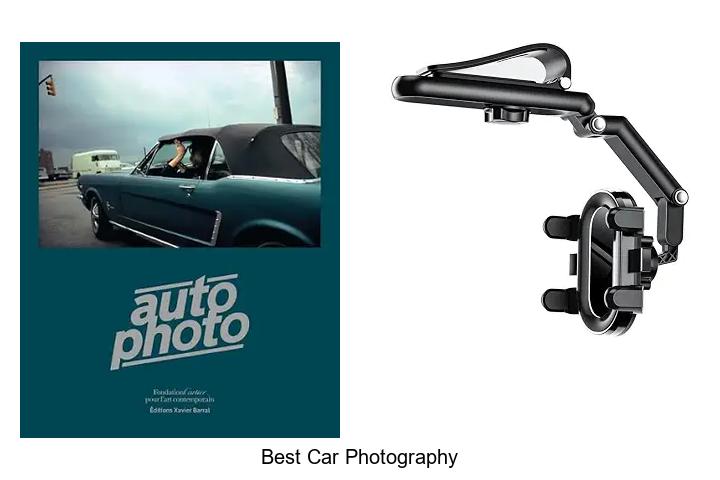
Pick 1  | Autophoto Cars & Photography 1900 to Now | Check Price On Amazon |
Pick 2  | Temvue Car Photography Phone Mount Stabilizer | Check Price On Amazon |
Pick 3  | Vintage Car Photography Beginner Guide | Check Price On Amazon |
1. Autophoto Cars & Photography 1900 to Now
The book offers a striking visual journey through the history of automotive photography. Each page brings to life iconic car images from the early 1900s to the modern era.
Autophoto: Cars & Photography, 1900 to Now is a large-format volume that combines artistic photography and automotive history. Spanning 464 pages, it chronicles the development of car imagery over more than a century. The weighty 4.66-pound book is well-bound, providing a high-quality feel ideal for collectors or coffee-table display.
The photos are carefully curated, showcasing the evolution of styles and technological progress in car photography. This volume is best suited for readers interested in both cars and the art of their visual presentation over time. Its substantial size and rich content make it a rewarding reference for photographers, designers, and car lovers who appreciate historical perspective.
The book is printed in English and published by Editions Xavier Barral in collaboration with Fondation Cartier Pour L’Art Contemporain, ensuring an authoritative and refined presentation. Overall, it delivers a highly immersive and educational experience that celebrates the relationship between cars and photography through decades.
Pros
- Extensive 464-page coverage
- High-quality print and binding
- Historical and artistic car photographs
Cons
- Large size may be cumbersome
- Heavy at 4.66 pounds
- Not a guide or instructional book
Who Should Buy It?
Ideal for car historians, photographers, and art lovers seeking detailed visual archives. Great for collectors and those who enjoy exploring automotive culture through images.
Key Specifications
| Specification | Details |
|---|---|
| Title | Autophoto: Cars & Photography, 1900 to Now |
| Publisher | Editions Xavier Barral/Fondation Cartier Pour L’Art Contemporain |
| Publication Date | July 25, 2017 |
| Print Length (pages) | 464 |
| Dimensions | 8.27 x 10.24 x 0.87 inches |
| ISBN-13 | 978-2869251311 |
| Item Weight | 4.66 pounds |
| Language | English |
The book’s 464 pages allow a broad look at automotive photography history. The dimensions of approximately 8.3 by 10.2 inches provide a comfortable reading and viewing experience while fitting well on coffee tables or bookshelves. Weighing 4.66 pounds, it’s a substantial volume that reflects its detailed content and quality binding. The ISBN ensures easy identification and ordering for collectors or libraries. Published in English, it suits a wide audience interested in visual automotive culture and contemporary art.
Due to its large print length and premium materials, the book serves not only as an informative guide but also as a display art piece. Its size enhances image clarity and impact, making it ideal for those appreciating photographic details. The durable construction supports frequent use, and the English language edition opens it to an international readership. These features benefit photography historians, designers, and car lovers who value both aesthetics and informative content.
2. Temvue Car Photography Phone Mount Stabilizer
Capturing steady shots inside a moving car can be challenging. This phone mount stabilizer offers a simple and effective way to keep your device secure for clear recordings and navigation.
The mount fits conveniently on your sun visor or rearview mirror, providing versatile placement options for different shooting angles. Crafted from durable ABS and metal, it resists shaking and slipping, thanks to its non-slip silicone pads that protect your phone from scratches.
The adjustable slide feature allows precise positioning, adapting to your preferred view or length. The mount supports a wide range of smartphone sizes, making it compatible with both iPhones and Android devices.
Its additional safety hammer tool adds practical value beyond phone mounting. Setup is straightforward and tool-free, ideal for quick installation and removal. This stabilizer is a practical choice for drivers wanting an affordable, reliable way to record and stream videos on the go.
Pros
- Adjustable angles for perfect positioning
- Non-slip silicone pads protect phones
- Includes safety hammer tool
Cons
- May not fit very large phone cases
- Metal can be slightly heavy
- Limited to sun visor or mirror mounting
Who Should Buy It?
Ideal for casual videographers and vloggers who need a stable phone mount for in-car filming. Perfect for users seeking a sturdy yet affordable stabilizer that works with most smartphones and offers easy setup. Also good for those who want to capture driving moments or use their phone hands-free inside the vehicle.
Key Specifications
| Specification | Details |
|---|---|
| Brand | Temvue |
| Color | Black |
| Compatible Devices | Smartphones |
| Compatible Phone Models | Universal |
| Mounting Type | Rear View Mirror |
| Additional Features | Adjustable |
| Compatible with Vehicle Type | Automobile |
| Item Weight | 240 g |
| Model Name | Car Photography Phone Mount Stabilizer |
| Enclosure Material | Metal |
The phone mount is designed with versatility and durability in mind. It fits most smartphones, accommodating different sizes universally. The adjustable slide mechanism provides flexibility for angle and length, allowing users to customize the view to their needs. The mounting options include the rearview mirror and sun visor, two commonly used locations inside vehicles, letting users aim for the best perspective while driving or recording. The mount also features a non-slip silicone pad to secure phones safely without causing scratches.
With a solid build from metal and ABS plastics, the holder ensures reliable longevity and sturdiness essential for use inside moving vehicles. Its 240-gram weight supports a firm grip but remains manageable for easy installation or relocation. The adjustable nature improves comfort by letting users find the exact angle needed, enhancing video quality and reducing camera shake. This setup favors drivers and content creators who want a dependable mount that balances durability, stability, and practical usability over extended periods.
3. Vintage Car Photography Beginner Guide
Capturing the charm of vintage cars requires a special approach that balances artistry with technical skill. Vintage Car Photography for Beginners provides a focused guide dedicated to helping users master this unique niche.
This compact guidebook, spread over 36 pages, is perfect for those interested in classic cars and museum-quality photography. It offers practical tips tailored to capturing the details and ambiance of premium vintage collections. The book delivers clear advice on framing, lighting, and composition specifically suited for museum settings, which enhances image quality without heavy equipment.
Its lightweight and portable format makes it easy to carry along to car shows or galleries. The guide is accessible for newcomers, offering straightforward language and structured lessons that help build confidence.
While it is short and concise, it covers essential concepts that prepare readers for more advanced techniques in the future. Ideal for beginners with a passion for classic car photography, this guide combines approachable content with a focus on quality outcomes. It is particularly effective for photographers aiming to document museum collections with a professional feel.
Overall, it strikes a good balance between ease of use and delivering valuable insights, making it a useful addition for anyone wanting to improve their skills in photographing vintage automobiles.
Pros
- Clear, beginner-friendly explanations
- Compact and portable format
- Focuses on museum-quality photography
Cons
- Relatively short at 36 pages
- Limited depth for advanced techniques
- No digital file size specified
Who Should Buy It?
Ideal for those new to vintage car photography seeking a practical, easy-to-understand guide. Perfect for photographers interested in capturing museum-quality images and classic car details with minimal equipment. A great resource for hobbyists aiming to improve their skills with an emphasis on premium collections.
Key Specifications
| Specification | Details |
|---|---|
| Title | Vintage Car Photography for Beginners |
| Publisher | Csfotoimages |
| Publication Date | April 6, 2026 |
| Print Length (pages) | 36 |
| Dimensions | 6 x 0.09 x 9 inches |
| ISBN-13 | 979-8295765070 |
| Item Weight | 2.89 ounces |
| Language | English |
This guidebook is published by Csfotoimages and was released on April 6, 2026. Its concise length of 36 pages contributes to an easy read, ideal for beginners. The physical dimensions of 6 by 9 inches and a slim 0.09-inch thickness make it a lightweight addition to any photography toolkit, easy to carry and handle. The English language format targets a broad audience, while the unique ISBN ensures easy identification and ordering from bookstores or online platforms.
The small size and weight enhance portability, enabling users to bring the book along to museums or car shows for immediate reference. The concise presentation means the guide stays focused on essential techniques without overwhelming the reader. It accommodates beginners looking for accessible advice on vintage car photography, especially in premium museum settings. Those who want detailed manuals may find it limited, but its straightforward approach suits those requiring quick, practical tips.
4. The Ultimate Car Photography Guide

Automotive photographers seeking thorough guidance will appreciate the richness of this guide. It offers clear, step-by-step instructions to elevate car photography skills.
The Ultimate Car Photography Guide is a detailed resource covering all aspects of automotive photography. It explains essential techniques, from composition and lighting to post-processing, making it suitable for both beginners and those wanting to refine their craft.
The content is structured logically, allowing readers to progress at their own pace. Built as a digital book with screen reader support and enhanced typesetting, it is accessible and convenient for different reading preferences. The language is English, and the inclusion of features like Word Wise and Page Flip improves usability, especially for learners.
The guide focuses on practical advice and techniques rather than theory, emphasizing hands-on learning and improving image quality. It is valuable for photographers who want a well-rounded manual that covers everything needed to shoot impressive car photos.
With its accessible format and detailed content, it delivers solid value for anyone serious about automotive photography.
Pros
- Clear step-by-step photography techniques
- Accessible with screen reader support
- Includes practical tips for all skill levels
Cons
- Publication date may mean some tech is outdated
- No X-Ray feature for quick reference
- File size requires moderate storage space
Who Should Buy It?
This guide suits photographers aiming to master automotive photography. Ideal for beginners and intermediate users wanting clear instructions and practical advice in one resource. Perfect for digital readers who prefer accessible, well-organized manuals.
Key Specifications
| Specification | Details |
|---|---|
| Title | The Ultimate Car Photography Guide: A Complete Guide to Automotive Photography |
| Publication Date | April 11, 2018 |
| Language | English |
| File Size | 6.6 MB |
| Screen Reader | Supported |
| Enhanced Typesetting | Enabled |
| Word Wise | Enabled |
| Page Flip | Enabled |
The key specifications highlight the guide’s accessibility and user-friendly digital format. Screen reader support means the book is usable for individuals with visual impairments. Enhanced typesetting and Word Wise improve the reading experience by adjusting font and providing helpful vocabulary definitions. The file size of 6.6 MB suggests it is lightweight enough for most devices, allowing quick downloads and easy storage. Publication in English makes it widely accessible to a broad audience, and the digital features support flexible reading on various platforms.
These specifications contribute to an overall smooth reading and learning experience. Enhanced typesetting and page flip functionality aid quick navigation through different chapters. Users benefit from the inclusive design catering to different reading needs. The file size and digital format allow photographers to carry it on portable devices easily. Although some features like X-Ray are missing, the guide remains efficient for practical use, suited well to those who value accessibility and ease when learning new photography techniques.
5. Classic Car Definitive Visual History

Vintage car lovers and visual learners will appreciate the stunning collection within these pages. The book presents an impressive timeline of classic cars, enriched with beautiful images and clear details. It offers a visual feast with 320 pages showcasing a broad range of historic vehicles.
Published by DK, the book is part of their Definitive Transport Guides series. The second edition was released in 2023, featuring updated content and photos.
At nearly 4 pounds and just over 11 inches tall, it has a sturdy build and large format. The print length ensures thorough coverage of classic automotive history. This volume excels at combining rich visuals with informative captions.
Readers can explore car designs from across decades with sharp, high-quality photos. Its size and weight might challenge casual carrying but enhance display appeal on a coffee table.
Suitable for anyone interested in automotive history or design, it is especially good for those who enjoy visual storytelling through photography. The balance of text and images makes it both educational and enjoyable.
As a visual car history reference, the book delivers impressive content and durability for ongoing use.
Pros
- Extensive collection of high-quality images
- Detailed visual history of classic cars
- Large format enhances photo display
Cons
- Heavy and large to carry around
- Some may prefer more technical specifications
- Limited to classic car era only
Who Should Buy It?
Those fascinated by automotive history and design will appreciate this book. It’s ideal for readers who prefer learning through images and detailed captions. Visual learners and collectors seeking a coffee table book with substance will find it valuable.
Key Specifications
| Specification | Details |
|---|---|
| Title | Classic Car: The Definitive Visual History |
| Publisher | DK |
| Publication Date | April 11, 2023 |
| Print Length (pages) | 320 |
| Dimensions | 9.56 x 1.06 x 11.44 inches |
| ISBN-13 | 978-0744073751 |
| Item Weight | 3.69 pounds |
| Language | English |
| Edition/Series | 2nd / DK Definitive Transport Guides |
The book’s key specifications reveal a focus on visual quality and depth. At over 300 pages, the content is thorough, giving time to explore many classic car models. The large dimensions offer a spacious canvas for detailed photographs, making small features easier to see. Language choice ensures accessibility to a broad English-speaking audience, and the second edition indicates updated information from the first. These features work together to enhance the viewing experience and learning process.
The durable weight of nearly 4 pounds shows strong build quality for frequent handling, but it may feel unwieldy for travel reading. The extensive page count and large format cater well to readers wanting detailed imagery and context, benefiting collectors and history lovers. As a coffee table book, its size and weight add presence and durability, making it a lasting visual reference for classic car fans.
6. Autofocus Car Photography Book V&A Museum

Cars often appear as dynamic subjects, and this guide brilliantly captures their photographic essence. Autofocus: The Car in Photography (V&A Museum) offers a rich visual and instructional journey through car photography’s artistic side.
This 192-page book focuses on photography composition, examining how cars interact with their environment and the camera. It features captivating images alongside expert commentary that helps readers understand framing, lighting, and perspective. The solid hardcover and high-quality printing enhance its appeal for collectors and photographers alike.
Its clear explanations make it accessible to beginners yet insightful enough for advanced users. Autofocus is an excellent source of inspiration and technique guidance, ideal for photographers aiming to improve visual storytelling using cars. The book’s physical size and weight suit readers who enjoy a tactile learning experience and comprehensive presentation.
Overall, it delivers value through both educational content and carefully curated imagery.
Pros
- Detailed composition guidance
- High-quality printed images
- Accessible for all skill levels
Cons
- Heavier than typical photography books
- Focuses mainly on composition, less on technical tips
- Limited to car subjects only
Who Should Buy It?
Ideal for photographers seeking to improve car photography composition. Also great for art lovers who appreciate how vehicles shape visual narratives. Readers wanting a physical book with museum-quality design will enjoy it most.
Key Specifications
| Specification | Details |
|---|---|
| Title | Autofocus: The Car in Photography (V&A Museum) |
| Publisher | Thames & Hudson |
| Publication Date | December 10, 2019 |
| Print Length (pages) | 192 |
| Dimensions | 10.04 x 7.99 x 0.9 inches |
| ISBN-13 | 978-0500480526 |
| Item Weight | 2.31 pounds |
| Language | English |
| Edition/Series | V&A Museum |
The book’s dimensions provide a comfortable reading experience, allowing images and text to be clearly displayed. At just under an inch thick, it holds substantial content without feeling overwhelming. The print length of 192 pages balances detailed coverage with concise advice, perfect for those wanting a comprehensive yet approachable guide. Its weight reflects the quality hardcover binding, contributing to its durability and ensuring it will last on any bookshelf.
These specifications support both usability and presentation. The sturdy build means the book handles frequent use without damage. The size and page count make it suitable for study at home or carrying to photoshoot locations. It is especially useful for photographers focused on composition who want in-depth examples. Overall, this design appeals most to those who value physical books as creative resources and museum-grade publications.
7. The Supercar Photography Book

Capturing the essence of high-performance cars with sharp clarity defines this book’s appeal. The Supercar Photography Book offers stunning photos focused on precision and detail that bring cars to life on every page.
This collection features a wide range of supercars, illustrated with crisp images ideal for those seeking to improve image sharpness in their own photography. The large print edition makes viewing easy and enjoyable, emphasizing popular sharpening techniques through vivid examples. Its compact size and weight allow for convenient handling, whether at home or in the studio.
The book provides insight into the composition and focus elements that make supercars look exceptional. While it’s concise with 47 pages, it succeeds in offering focused, high-quality content about capturing razor-sharp photos.
Photographers who want straightforward tips targeting clarity and precision will appreciate the easily digestible layout. This book fits nicely into a coffee table collection or as a personal photography reference. Its print quality aids readers in learning how to highlight automotive curves and details sharply, which is vital in car photography.
The clear images and simple guidance provide fresh inspiration for photographers of all skill levels interested in sharpness and detail enhancement. It suits individuals aiming to elevate their car photos with a strong emphasis on clarity and detail.
Pros
- Sharp and clear image examples
- Large print for easy reading
- Compact and lightweight design
Cons
- Limited page count
- Focuses mainly on sharpness tips
- No digital file option
Who Should Buy It?
Ideal for photographers focused on sharpening their car images. Also good for collectors or those interested in supercar visuals. Fits those wanting a quick, accessible resource for improving photo clarity.
Key Specifications
| Specification | Details |
|---|---|
| Title | The Supercar Photography Book: Compelling Photos Of Supercar Collection As A Perfect Gift Idea For Family Relatives Friends Lover All Age |
| Publisher | Independently published |
| Publication Date | July 22, 2022 |
| Print Length (pages) | 47 |
| Dimensions | 8.5 x 0.12 x 11 inches |
| ISBN-13 | 979-8841977964 |
| Item Weight | 6.2 ounces |
| Language | English |
| Edition/Series | Large Print |
The key specifications show a lightweight, easy-to-handle book with 47 pages and large print format. The dimensions provide a balance between portability and showcasing photos with good size. It’s designed in English and was released independently, suggesting focused, niche content. The ISBN ensures easy identification and ordering. At just over six ounces, the book is portable enough for casual use or as a gift, emphasizing ease of handling alongside visual quality.
These specs enhance ease of use and value for learners focusing on photo sharpness. The large print aids readability and visual clarity, while the modest page count helps keep content concise. The size and light weight allow convenient viewing without strain, suitable for both beginners and those wanting quick reference tips. This book suits anyone seeking a compact, focused guide to capturing crisp supercar images with clear examples.
8. How to Photograph Cars Book

Capturing classic cars in vivid detail can be simple with a clear, focused guide. This book offers a solid foundation for anyone wanting to shoot vintage vehicles with confidence. How to Photograph Cars provides practical advice tailored for beginners interested in vintage car photography.
It covers fundamental techniques, lighting, composition, and settings that suit older models. The book is concise with 143 pages, making it manageable to absorb the essential concepts.
The first edition from 2003 is published by Motorbooks Intl, indicating a trusted source for automotive photography content. Its print format offers a hands-on experience without digital distractions.
The book’s size and weight make it easy to carry on location. Step-by-step instructions help users avoid common pitfalls when photographing gloss, curves, and intricate details of classic cars. This guide offers excellent value for beginners who want to develop skills with a niche photographic subject.
It is especially suited for those captivated by vintage car aesthetics and want to translate that passion into quality images. Overall, it encourages practical learning and sharper image results without complex jargon or overwhelming technicalities.
Pros
- Clear beginner-focused instructions
- Specifically targets vintage car photography
- Compact and easy to carry
Cons
- Published in 2003, may be outdated
- Limited to print format only
- Covers fewer advanced techniques
Who Should Buy It?
Ideal for beginners who want to learn car photography basics. Perfect for photographers focusing on vintage or classic cars. Also useful for hobbyists seeking a straightforward, print-based resource without technical overwhelm.
Key Specifications
| Specification | Details |
|---|---|
| Title | How to Photograph Cars |
| Publisher | Motorbooks Intl |
| Publication Date | January 1, 2003 |
| Print Length (pages) | 143 |
| Dimensions | 8.75 x 0.5 x 8.25 inches |
| ISBN-13 | 978-0760312438 |
| Item Weight | 1.05 pounds |
| Language | English |
| Edition/Series | First Edition |
The book’s 143 pages offer a focused approach for beginners wanting to understand car photography basics. Its compact size of about 8.75 by 8.25 inches makes it handy for carrying outdoors. The first edition published by Motorbooks Intl confirms its authenticity and value for vintage car photographers. Weighing just over a pound, it is light enough to bring alongside your camera during shoots. Printed in English, it targets a broad audience globally familiar with the language.
Having a fixed print length means the book is straightforward and concise, avoiding unnecessary complexity. The physical dimensions support easy handling and setup on location without bulk. Older publication means photo techniques may miss recent digital advances but remain relevant for composition and lighting fundamentals. Beginners especially benefit from a tactile, dedicated book that focuses on vintage cars’ unique photographic challenges.
9. Learn To Shoot Cars Automotive Photography Guide

Capturing crisp and sharp images of cars requires guidance and technique. This automotive photography guide offers practical tips to improve clarity in car shots.
The guide covers five specific methods to achieve sharper images, making it suitable for anyone aiming to enhance their automotive photography skills. With only seven pages, the guide is concise yet focused, providing clear advice without overwhelming readers.
Written in English and published in 2018, the content supports screen readers, making it accessible to more users. The digital format allows for easy reading on various devices. It is ideal for those who want straightforward tips to boost their car photography.
While short, it delivers valuable techniques applicable even for beginners. The guide’s simplicity and directness help users learn quickly and apply the concepts effectively.
Pros
- Clear, focused tips for sharper automotive images
- Accessible digital format with screen reader support
- Concise and easy to understand
Cons
- Very short length limits depth
- No images or visual examples included
- Not suitable for advanced photographers
Who Should Buy It?
Anyone looking for quick, practical advice to improve car photography clarity will benefit. It suits beginners and casual photographers who prefer concise guides without technical overload.
Key Specifications
| Specification | Details |
|---|---|
| Title | Learn To Shoot Cars Automotive Photography Guide |
| Publication Date | October 3, 2018 |
| Print Length (pages) | 7 |
| Language | English |
| File Size (KB) | 376 |
| Screen Reader | Supported |
| Enhanced typesetting | Enabled |
| Page Flip | Enabled |
The guide’s primary specifications reveal a short, focused digital booklet aimed at improving car photography. With only seven pages, it delivers quick lessons, perfect for readers who want concise information. The English language and screen reader support make it accessible for a wide audience. Features like enhanced typesetting and page flip enhance digital reading comfort, allowing smooth navigation through the content on devices such as tablets or e-readers.
These specifications ensure the guide is lightweight and easy to use on multiple platforms. The short length means readers can quickly learn and apply tips without time investment. Enhanced readability features support users with different needs, making it suitable for beginners or casual users. However, serious or advanced photographers may find the content too brief or lacking in visual examples, as the guide focuses on textual tips.
10. Learn To Shoot Cars Automotive Photography Guide

Capturing stunning images of cars requires skill and understanding of composition. Learn To Shoot Cars Automotive Photography Guide helps photographers sharpen their eye for automotive photography, particularly focusing on supercars.
This guide offers a concise and well-structured approach to mastering the art of framing and composing car photographs. Inside, readers find practical tips tailored toward automotive subjects and lighting, enhancing their creative process.
The guide is 8 pages long, making it a quick read yet rich in essential content. It supports accessibility features like screen readers, ensuring it is usable by a wide audience. Ideal for gifting to those passionate about car photography, especially supercar lovers.
Its lightweight digital format fits easily on any compatible device, making on-the-go learning simple. From amateurs wanting to improve to semi-pro photographers seeking specific automotive techniques, this guide adds valuable insight.
The content is crafted in clear English, facilitating easy understanding. While brief, it offers concentrated knowledge focused on composition, a key aspect of great car photography.
Overall, it offers solid value for anyone aiming to boost their skills in shooting cars creatively and effectively.
Pros
- Concise and focused composition guide
- Supports screen readers for accessibility
- Easy to read with enhanced typesetting
Cons
- Very short at only 8 pages
- Limited to composition without camera settings
- No advanced techniques included
Who Should Buy It?
Perfect for hobbyists or aspiring automotive photographers interested in supercars. Also great for gifting due to its clear and accessible format. Helps sharpen composition skills quickly without overwhelming detail.
Key Specifications
| Specification | Details |
|---|---|
| Title | [Learn To Shoot Cars] A Complete Guide To Mastering Composition: Automotive Photography |
| Publisher | Learn more |
| Publication Date | October 3, 2018 |
| Print Length (pages) | 8 pages |
| File Size (if digital) | 3.4 MB |
| Language | English |
| Screen Reader | Supported |
| Enhanced Typesetting | Enabled |
| Word Wise | Enabled |
| Page Flip | Enabled |
The key specifications point to a digital guide focused on automotive photography composition. Its length of 8 pages indicates a brief manual, ideal for quick and focused learning. Support for screen readers and Word Wise enhances accessibility for a wide range of users. The file size is modest, making downloads or transfers easy. Enhanced typesetting and page flip features improve readability and navigation on compatible devices, allowing smooth interaction with the content.
These features provide a comfortable reading experience on digital platforms, benefiting users who prefer on-the-go study sessions. The short length means users get straightforward insights without heavy commitments. Accessibility support ensures inclusiveness for readers with disabilities. Overall, it suits photographers seeking a quick refresher in composition principles instead of in-depth theory or advanced settings. Its digital format also adds convenience for gifting or personal use.
Mastering the Art: Your Ultimate Guide to the Best Car Photography Gear and Techniques
Camera quality and specifications
Having multiple options to connect your gear and transfer files rapidly can dramatically improve workflow efficiency and flexibility. A device with a variety of ports and wireless capabilities allows seamless integration with external monitors, lighting equipment, and storage devices, making it easier to handle complex setups and large data transfers. Additionally, the capacity to upgrade or add accessories ensures the system remains future-proof, adapting to evolving creative needs without requiring a complete overhaul.
Additionally, the capacity to upgrade or add accessories ensures the system remains future-proof, adapting to evolving creative needs without requiring a complete overhaul. This versatility enhances both the shooting experience and post-production process, ultimately leading to better results and less downtime.
Lens options and compatibility
Having a camera system that supports various lens options can dramatically enhance the quality and versatility of automotive shots. Prime lenses often deliver sharper images and wider apertures, allowing for better depth of field control to isolate the vehicle from its background. On the other hand, zoom lenses provide flexibility in framing without changing lenses, which is particularly useful when shooting dynamic scenes or tight spaces.
On the other hand, zoom lenses provide flexibility in framing without changing lenses, which is particularly useful when shooting dynamic scenes or tight spaces. Additionally, ensuring that the camera body is compatible with a wide range of third-party lenses expands creative possibilities while offering cost-effective alternatives. This adaptability is key for photographers aiming to achieve both precision and variety in their car photography.
Autofocus and image stabilization
Having fast and precise autofocus is crucial for capturing sharp, detailed shots, especially with moving vehicles. Cameras equipped with advanced autofocus systems can quickly lock onto a subject, making it easier to catch moments of action without blur. Image stabilization plays an equally important role by minimizing the effects of hand shake or vibrations, ensuring clearer images even in dynamic shooting situations.
For automotive photography, the ability to track moving subjects reliably allows photographers to maintain focus on cars in motion, resulting in crisp, professional-looking images that highlight speed and detail. Prioritizing these features ensures smoother workflow and higher-quality results in every frame.
Portability and handling
Having multiple options to connect your equipment is essential for capturing high-quality images efficiently. Devices that support various ports and wireless connections allow seamless integration with external flashes, microphones, or storage devices, enhancing both functionality and convenience. Additionally, having the ability to add accessories or upgrade components ensures your gear can adapt to evolving photography needs, offering greater versatility over time.
Additionally, having the ability to add accessories or upgrade components ensures your gear can adapt to evolving photography needs, offering greater versatility over time.
- Compatibility with different external devices to streamline your shooting process.
- Availability of multiple interface options such as USB, HDMI, or wireless, which facilitate quick data transfer and remote control.
- Expandable features like adding lenses or modules that broaden creative possibilities without needing entirely new equipment.
| Aspect | Benefit |
|---|---|
| Multiple connection ports | Allows simultaneous use of accessories for enhanced performance |
| Wireless capabilities | Enables instant sharing and remote operations |
| Upgradeable components | Supports long-term adaptability and cost savings |
Additional features
Additional features play a crucial role in enhancing the overall experience and versatility of a camera designed for capturing vehicles in motion and detail. Video capabilities are essential for creating dynamic shots that bring cars to life, allowing for smooth, high-resolution footage that can capture every angle with precision.
Equally important are wireless options like WiFi and Bluetooth, which enable quick and seamless transfer of images and videos to other devices, making editing and sharing efficient and hassle-free. Long-lasting battery performance ensures uninterrupted shooting sessions, especially during extended outdoor shoots, while ample storage options, including expandable memory slots or compatibility with various card types, prevent storage limitations from cutting creative projects short.
Budget and value for money
Having multiple options to connect various devices and peripherals is crucial for achieving flexibility and efficiency in car photography setups. This feature ensures seamless integration with external flashes, remote triggers, and other essential tools, allowing photographers to adapt to different shooting environments effortlessly.
Additionally, the ability to expand functionality through additional ports or modules means future upgrades can be easily incorporated without needing a complete system replacement. This not only enhances creative possibilities but also prolongs the equipment’s useful life, making it a smarter investment overall.
How Car Photography Setups Work
Car photography requires a basic setup to capture sharp and appealing images. The goal is to showcase the car’s design and details clearly.
First, find a good location. Choose a spot with enough natural light or space for additional lighting equipment. A clean, uncluttered background helps keep the focus on the car.
Next, set up your camera. DSLR or mirrorless cameras work well, but some smartphones can also produce good results. Adjust the settings to get the right exposure. Using a low ISO reduces grain, while a moderate aperture keeps most of the car in focus.
Use a tripod to keep the camera steady. This prevents blur, especially in low light conditions.
Position the car at an angle that highlights its best features. Taking photos from different viewpoints like the front, side, or close-ups helps show various parts of the car.
Lighting is key. Natural light during the golden hour (early morning or late afternoon) produces soft shadows and warm tones. If shooting indoors or in low light, use external lights or reflectors to brighten the car evenly.
Finally, review your shots on the camera display to check sharpness and composition. Adjust the angle, lighting, or camera settings as needed. Taking multiple shots increases chances of a good photo.
- Choose location and background
- Set up camera and tripod
- Arrange lighting for clear visibility
- Position the car thoughtfully
- Take shots from various angles
- Review and adjust settings
By following these steps, anyone can set up a simple photo session to get clear and attractive car images.
FAQ’s
What Are The Essential Camera Settings For Capturing The Best Car Photography?
The essential camera settings for capturing the best car photography include using a low ISO (100-200) for minimal noise, a moderate aperture (f/8 to f/11) for sharpness and depth of field, and a fast shutter speed to freeze motion if the car is moving. Additionally, shooting in RAW format allows for greater flexibility in post-processing.
How Can Lighting Be Optimized To Enhance Car Photography?
Lighting can be optimized in car photography by using soft, diffused light to minimize harsh reflections and highlight the car’s curves and details. Additionally, shooting during golden hours or using controlled artificial lighting helps create dramatic shadows and enhance the vehicle’s features.
What Are The Best Locations And Backgrounds For Striking Car Photos?
The best locations for striking car photos are often scenic outdoor settings like winding roads, coastal cliffs, or urban streets with interesting architecture. Backgrounds that provide contrast without distraction, such as natural landscapes, graffiti walls, or industrial sites, help highlight the car’s design and details.
Which Angles And Compositions Work Best For Showcasing Cars In Photography?
Angles such as the three-quarter view and low-angle shots work best for showcasing cars, as they highlight the vehicle’s design and create a dynamic perspective. Compositions that use leading lines and place the car off-center often add visual interest and emphasize its features effectively.
How Can Post-Processing Techniques Improve Car Photography Results?
Post-processing techniques enhance car photography by adjusting lighting, contrast, and color balance to highlight the vehicle’s features and create a polished, professional look. They also allow for removal of distractions and imperfections, resulting in a cleaner and more visually appealing image.
Final Verdict
For those interested in the history and evolution of car photography over time, Autophoto Cars & Photography 1900 to Now offers a detailed look into the subject, making it an excellent choice for understanding the broader context. Temvue Car Photography Phone Mount Stabilizer provides an affordable option for individuals who want to improve their photo stability without a significant investment. Autofocus Car Photography Book V&A Museum is ideal for photographers seeking guidance on composition and aiming to refine their artistic skills with premium insights.
The Ultimate Car Photography Guide suits learners who want a thorough resource covering a wide range of techniques and tips in one place. Each product serves a distinct purpose depending on what aspect of best car photography the buyer wants to focus on. Whether it’s history, affordability, artistic composition, or detailed instruction, these picks cover different needs effectively.
Choose the product that aligns with your specific goals in car photography to get the most value from your purchase.