Best Brake Fluid for Ultimate Stopping Power Revealed!
If you want your vehicle’s braking system to perform safely and reliably, choosing the right brake fluid is a key step. Brake fluid plays a critical role in transferring force from the brake pedal to the brake pads, making it essential for smooth stopping power and overall vehicle safety. The best brake fluid can suit different vehicles and driving conditions, providing resistance to high temperatures and preventing moisture buildup.
The best brake fluid can suit different vehicles and driving conditions, providing resistance to high temperatures and preventing moisture buildup. Whether you drive a daily commuter or a heavier vehicle, using the correct brake fluid helps maintain brake efficiency and prolong system life. This review will cover some of the most trusted brake fluids on the market, highlighting their main features, compatibility, and how they can meet specific needs.
By the end, you’ll have a clearer understanding of which product might be right for your braking system.
Discover top contenders that keep your stopping power at its peak
| Image | Product | Price |
|---|---|---|
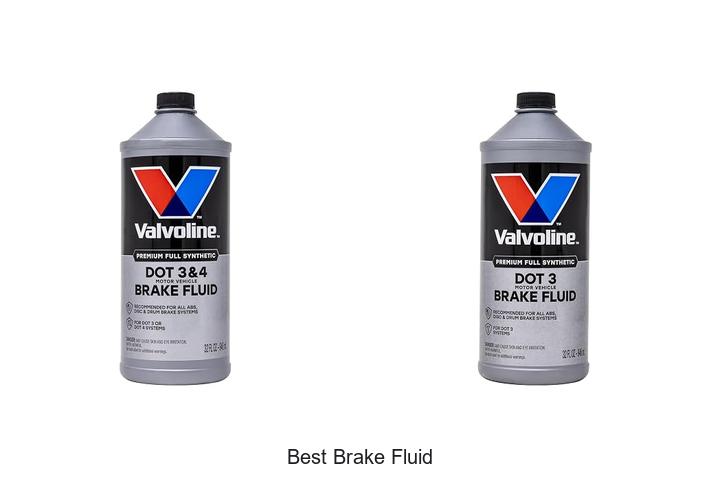
Pick 1  | Valvoline Synthetic Brake Fluid DOT 3 & 4 | Check Price On Amazon |
Pick 2  | Valvoline Synthetic Brake Fluid DOT 3 | Check Price On Amazon |
Pick 3  | Lucas Oil Brake Fluid | Check Price On Amazon |
1. Valvoline Synthetic Brake Fluid DOT 3 & 4
Valvoline Synthetic Brake Fluid DOT 3 & 4 stands out as a reliable solution designed to maintain brake system performance. Its synthetic formula enhances fluid stability, offering superior protection against moisture and vapor lock.
This brake fluid caters to both standard and advanced braking systems, ensuring consistent braking response on every drive.
Combining compatibility and high boiling points, it suits various vehicle requirements while safeguarding hydraulic and disc brakes. Trusted by many vehicle owners, this fluid helps in sustaining brake system efficiency under demanding conditions.
Valvoline offers a synthetic brake fluid that works seamlessly with conventional fluids to provide smooth brake operation. The low-moisture formula reduces the risk of vapor lock, a common problem caused by overheating brake fluid in heavy braking situations.
This feature helps maintain reliable braking performance when it matters most.
Engineered for hydraulic and disc brake systems, it meets the demands of modern vehicles. The fluid’s viscosity is optimized for stable flow, helping to preserve braking responsiveness across a broad temperature range.
The product comes in a convenient bottle, ensuring easy handling and storage. Its blend supports effective water resistance, minimizing corrosion and prolonging brake component life.
Pros
- Mixes easily with conventional brake fluids
- Low-moisture formula prevents vapor lock effectively
- Compatible with hydraulic and disc brake systems
Cons
- Available in limited container size options
Offering a practical balance of performance and compatibility, Valvoline Synthetic Brake Fluid DOT 3 & 4 helps maintain brake efficiency under various conditions. Its protective qualities and easy mixing with other fluids make it a smart choice for vehicle owners seeking dependable brake maintenance.
| Specification | Details |
|---|---|
| Container Type | Bottle |
| Viscosity | 5w-30 |
| Compatible Material | Brake Fluid Systems |
2. Valvoline Synthetic Brake Fluid DOT 3
Valvoline Synthetic Brake Fluid DOT 3 offers consistent and reliable stopping power for your vehicle. Crafted to surpass standard DOT 3 regulations, this fluid maintains brake performance under various driving conditions.
Its advanced synthetic formula protects brake system components by resisting moisture absorption and corrosion. This brake fluid is ideal for maintaining safety and efficiency on the road.
Designed with a premium high boiling point, the fluid reduces the risk of vapor lock and brake fade, even during intense braking. This capability ensures dependable braking in extreme temperatures and demanding situations, making it a solid choice for drivers seeking confidence in their stopping power.
The full synthetic blend enhances resistance to moisture, which can degrade brake performance over time. Additionally, it helps protect discs, drums, and ABS systems, providing long-lasting component durability.
Compatibility with SAE J1703, FMVSS 116, and ISO 4925 DOT 3 specifications allows easy use in a wide range of vehicles. The product’s 10W viscosity grade ensures smooth operation and effective fluid flow in various climates.
This brake fluid suits drivers who prioritize safety and want reliable brake performance without frequent maintenance. Its balanced formulation combines quality and performance, making it a dependable option among standard DOT 3 fluids.
Pros
- High boiling point prevents vapor lock and brake fade.
- Synthetic formula resists moisture and corrosion for extended brake life.
- Compatible with ABS, disc, and drum brake systems meeting multiple standards.
Cons
- Limited to DOT 3 applications; not suitable for vehicles requiring DOT 4 or higher.
Valvoline Synthetic Brake Fluid DOT 3 combines durability and performance to support safe, efficient braking. This choice stands out by providing enhanced protection against common brake fluid issues. Its compliance with key industry standards assures quality and compatibility for most passenger vehicles.
Its compliance with key industry standards assures quality and compatibility for most passenger vehicles.
| Specification | Details |
|---|---|
| Container Type | Bottle |
| Viscosity | 10W |
| Compatible Material | Brake System Components |
| SAE J300 Viscosity Grade | 10W |
3. Lucas Oil Brake Fluid
Lucas Oil Brake Fluid is engineered for drivers demanding high performance and reliability in their brake systems. Designed with a superior blend of polyethylene glycol ethers and additives, it maintains peak braking efficiency.
Its compatibility with all brake system rubber parts ensures seamless integration without compromising safety.
Maintaining brake component integrity and preventing corrosion are vital for vehicle safety. This brake fluid effectively safeguards seals against hardening or softening, while offering excellent lubricity to reduce wear and friction within the braking mechanism. Suitable for a wide range of vehicles, it answers the call for enhanced durability and consistent braking response.
Formulated to withstand temperatures up to 401 °F, it resists vapor lock under intense driving conditions. The fluid’s compatibility with rubber brake components and other brake fluids allows for easy topping off or complete system flushes without adverse reactions. Such flexibility provides convenience and peace of mind during maintenance.
The bottle packaging simplifies pouring, minimizing spills and contamination risks. Regular use of this fluid promotes rust and corrosion protection inside the brake system, extending the lifespan of critical components. Coupled with its excellent lubricity, this fluid minimizes friction, enhancing the smooth operation of moving parts inside the brakes.
Coupled with its excellent lubricity, this fluid minimizes friction, enhancing the smooth operation of moving parts inside the brakes.
This brake fluid suits everyday drivers who want reliable stopping power as well as those who demand consistent performance in demanding environments. Comparatively, it offers a more stable composition than many counterparts, delivering prolonged effectiveness between fluid changes.
Pros
- High thermal resistance with a 401 °F upper temperature rating
- Prevents seal hardening or softening for longer durability
- Compatible with all rubber brake parts and other brake fluids
Cons
- Available only in a bottle, which may limit volume options for larger needs
Lucas Oil Brake Fluid blends effective protection with reliable compatibility, improving braking system reliability. It stands out for durability and ease of use, making it a solid selection for maintaining secure and efficient brakes.
| Attribute | Details |
|---|---|
| Container Type | Bottle |
| Upper Temperature Rating | 401 °F |
| Compatible Materials | Rubber brake components |
4. Motul RBF 600 DOT 4 Brake Fluid

Experience superior braking control with Motul RBF 600 DOT 4 Brake Fluid. Engineered to meet the demands of hydraulic brake and clutch systems, it offers reliable performance even under extreme conditions. This synthetic formula enhances brake response and reduces the risk of failure during intense driving.
This synthetic formula enhances brake response and reduces the risk of failure during intense driving.
Designed for durability and efficiency, Motul’s advanced fluid helps maintain consistent braking power. It performs exceptionally well in high-temperature scenarios, ensuring safety and peace of mind on every ride or drive.
Motul RBF 600 DOT 4 delivers excellent thermal resistance, supporting a wet boiling point of 399°F (204°C) that significantly lowers the chance of vapor lock. The non-silicone synthetic base ensures compatibility with most metal components in brake systems.
This fluid improves overall braking performance by preventing brake fade during heavy use.
The formula guarantees stability that keeps brake feel firm and consistent. Easy to handle and store in its practical bottle, it fits well into any maintenance routine. It suits those seeking reliable brake fluid for motorcycles, cars, or racing vehicles demanding higher temperature thresholds.
It suits those seeking reliable brake fluid for motorcycles, cars, or racing vehicles demanding higher temperature thresholds.
Compared to standard brake fluids, Motul’s RBF 600 demonstrates enhanced longevity and protection properties. Users find it achieves stable pressure delivery without softening under heat, contributing to safer braking. The quality and reliability it offers make it a worthy upgrade for everyday and performance braking requirements.
The quality and reliability it offers make it a worthy upgrade for everyday and performance braking requirements.
Pros
- High wet boiling point of 399°F (204°C) prevents vapor lock
- Non-silicone synthetic fluid compatible with metal brake components
- Improves brake response and reduces fade under heavy loads
Cons
- May require careful handling due to its synthetic composition
The Motul RBF 600 DOT 4 Brake Fluid stands out as a dependable choice for those in need of stable and efficient brake fluid. Its thermal resistance and synthetic formulation provide consistent performance in demanding environments, making it a smart selection for quality-conscious users.
| Specification | Details |
|---|---|
| Container Type | Bottle |
| Lower Temperature Rating | 399 °F |
| Upper Temperature Rating | 399 °F |
| Flash Point | 327 °C |
| Compatible Material | Metal |
5. Prestone Synthetic Brake Fluid DOT 3

Experience reliable and consistent braking with Prestone Synthetic Brake Fluid DOT Designed to enhance your vehicle’s safety, it operates efficiently under demanding conditions. Its advanced formula supports both ABS and traditional brake systems, ensuring smooth performance when it matters most.
Withstanding high temperatures and preventing vapor lock, this brake fluid delivers dependable stopping power. Whether tackling steep descents or sudden stops, it helps maintain a firm brake pedal feel. Prestone’s blend of polyglycol ethers ensures long-lasting, stable operation across varied driving scenarios.
Prestone’s blend of polyglycol ethers ensures long-lasting, stable operation across varied driving scenarios.
Prestone Synthetic Brake Fluid is formulated to provide an extra safety margin during extreme braking. Both dry and wet boiling points surpass government standards, reducing the risk of brake fade in intense situations. The fluid is compatible with ABS, disc, and drum brake systems, broadening its usability for most vehicles.
Its design avoids the formation of dangerous vapors, which helps maintain consistent pedal feel and reliable braking response. The product comes in a convenient bottle for easy handling and refills.
Its flash point of 93 °C and upper temperature rating of 238 °C indicate strong thermal resistance. The blend is particularly beneficial for drivers who demand steady brake performance regardless of weather or driving style.
Prestone delivers value through dependable quality and ease of use, standing out among other brake fluids available.
Pros
- High boiling points reduce brake fade during intense use
- Compatible with ABS, disc, and drum brake systems
- Prevents spongy pedal feel by avoiding vapor formation
Cons
- Packaging may vary depending on the seller
Reliable and easy to use, Prestone Synthetic Brake Fluid DOT 3 offers safe braking performance under varying conditions. It provides strong thermal stability and broad compatibility, making it a solid choice for routine brake maintenance.
Specification Details Container Type Bottle Upper Temperature Rating 238 °C Flash Point 93 °C Compatible Material Brake System Components
6. STP Synthetic Brake Fluid DOT 4

STP Synthetic Brake Fluid DOT 4 delivers consistent and reliable braking performance across diverse driving situations. Engineered to maintain efficiency under extreme temperatures, it offers drivers peace of mind with every stop.
Designed for compatibility with various brake systems, this fluid focuses on protecting the integrity and longevity of your vehicle’s braking components. It’s an essential addition to routine brake maintenance.
Offering a synthetic formula tailored to DOT 4 specifications, STP’s brake fluid ensures effective operation with ABS, disc, and drum brake systems. It also works as a suitable replacement when DOT 3 is required, making it versatile for different vehicle models. The fluid combats vapor lock, reducing the risk of brake failure in high-heat environments.
Additionally, it protects brake components against corrosion and wear, supporting system durability. The controlled viscosity allows smooth flow and optimum braking response.
Ideal for both passenger cars and trucks, it meets a range of brake fluid demands. Reliable performance and ease of use make it a practical choice for anyone concerned about brake safety and system health.
Pros
- High-temperature resistance prevents brake failure due to vapor lock
- Compatible with ABS, disc, and drum brake systems
- Protects against corrosion and wear to extend brake system life
Cons
- Single container size may not suit large scale or heavy-duty applications
STP Synthetic Brake Fluid DOT 4 stands as a dependable choice that supports brake performance and system longevity. Its readiness to use and wide compatibility further enhance its practical appeal for daily vehicle maintenance.
| Specification | Details |
|---|---|
| Container Type | Bottle |
| Viscosity | Controlled, Optimum Viscosity for DOT 4 Brake Fluid |
| Upper Temperature Rating | 155 °C |
| SAE J300 Viscosity Grade | 0W |
7. Castrol SRF Racing Brake Fluid

Castrol SRF Racing Brake Fluid delivers exceptional performance for high-pressure braking situations. Designed with a specialized European formula, it handles intense racing and rally conditions with ease. Offering superior heat resistance, it maintains reliable brake function even under extreme stress.
This brake fluid minimizes vapor lock and enhances pedal feel for safer, more consistent stopping power. Its high wet boiling point ensures durability during demanding drives, providing confidence when precision braking matters most.
Engineered to meet rigorous racing standards, Castrol SRF stands out due to its outstanding thermal stability. The fluid’s boiling point of 270°C minimizes the risk of brake fade caused by overheating. This allows for confident braking performance in competitive and strenuous environments.
The fluid comes in a convenient bottle designed for mess-free application. It’s compatible with most brake systems and maintains integrity under repeated heavy use.
Its advanced anti-vapor lock properties reduce the chance of brake failure during sudden, intense stops.
Performance-focused drivers benefit from the consistent pedal response and excellent heat dissipation characteristics. Easy to handle during servicing, it delivers professional-grade results for race teams and serious daily drivers alike.
The Castrol SRF formula offers strong value through enhanced safety and reliability without frequent replacements.
Pros
- Exceptionally high boiling point of 270°C prevents brake fade
- Superior anti-vapor lock properties for consistent braking
- European formula designed specifically for racing and rally use
Cons
- Price may be higher than standard brake fluids due to specialized formula
Castrol SRF Racing Brake Fluid is a reliable choice for demanding brake applications. Its high thermal resistance and vapor lock prevention provide safe and consistent stopping power under pressure. Drivers seeking improved brake response during intense driving conditions will find it highly dependable.
Drivers seeking improved brake response during intense driving conditions will find it highly dependable.
| Specification | Details |
|---|---|
| Container Type | Bottle |
| Wet Boiling Point | 270 °C |
| Flash Point | 210 °C |
8. BOSCH Low Viscosity Extended Life Brake Fluid

Experience enhanced braking performance with the BOSCH Low Viscosity Extended Life Brake Fluid, engineered to meet the demands of modern vehicle systems. Its unique formula balances a low viscosity with a high wet boiling point to deliver consistent and reliable stopping power under extreme conditions.
Designed for durability, this brake fluid extends replacement intervals significantly beyond traditional options. It offers a smooth fit for most vehicles, combining advanced protection with long-lasting service.
The BOSCH brake fluid stands out with its innovative blend created for contemporary braking technologies. Offering a wet boiling point of 365°F, it maintains integrity during intense braking, reducing the risk of vapor lock. Lower viscosity facilitates faster fluid movement, which supports responsive braking and better ABS function.
Its longevity surpasses traditional DOT 3, 4, and 1 fluids by a substantial margin, supporting extended maintenance intervals. This reduces the frequency of fluid changes, saving time and effort for vehicle owners.
Compatible with DOT 3, DOT 4, and DOT 1 brake systems, it offers flexibility as a direct replacement in a wide range of vehicles from 1990 onward. However, it is important to note that it should not be used in DOT 5 systems, which require silicone-based fluid.
Installation is straightforward, making it suitable for both professional service shops and experienced DIY mechanics searching for reliable brake fluid that delivers consistent results.
Pros
- High wet boiling point of 365°F ensures superior performance under heat.
- Extended service life reduces the need for frequent fluid changes.
- Excellent compatibility with DOT 3, DOT 4, and DOT 5.1 brake systems.
Cons
- Not compatible with DOT 5 (silicone-based) brake fluid systems.
This brake fluid provides excellent value through enhanced protection, durability, and compatibility. It suits drivers who demand reliable brake system performance with less frequent maintenance.
Choosing BOSCH ensures your braking system is supported by a fluid designed to handle modern vehicle requirements while helping reduce component wear.
| Specification | Details |
|---|---|
| Product Name | BOSCH Low Viscosity Extended Life Brake Fluid |
| Viscosity Grade | 5W (SAE J300) |
| Wet Boiling Point | 365°F |
| Compatibility | DOT 3, DOT 4, DOT 5.1 |
| Container Size | 1 Quart (32 ounces) |
9. Valvoline Brake Fluid DOT 4

Valvoline Brake Fluid DOT 4 offers dependable braking performance for a wide range of vehicles. Its high boiling point and full synthetic formula make it a reliable choice in extreme driving conditions.
Designed to exceed DOT 4 regulations, it ensures consistent stopping power while protecting critical braking system components. This brake fluid delivers safety and efficiency without compromise.
The advanced composition of Valvoline Brake Fluid DOT 4 helps resist moisture absorption, reducing the risk of corrosion in your brake lines and master cylinders. This feature extends the lifespan of braking components and ensures smooth operation over time.
Its premium high boiling point prevents vapor lock and brake fade, maintaining effective braking even during heavy use or high temperature situations.
Engineered as a fully synthetic product, it offers solid protection against environmental factors affecting brake performance. Suitable for ABS, disc, and drum brake systems, Valvoline Brake Fluid meets and surpasses key industry standards like SAE J1703 and FMVSS
Applying this fluid is straightforward, allowing for hassle-free maintenance and timely fluid replacement. It provides excellent value by combining advanced protection and reliable braking effectiveness. This product suits vehicle owners aiming to maintain brake safety and performance without frequent service requirements.
Pros
- High boiling point prevents vapor lock and brake fade under heat
- Full synthetic formula resists moisture and corrosion effectively
- Compatible with ABS, disc, and drum brake systems meeting stringent standards
Cons
- The container design may require careful handling to avoid spills
Valvoline Brake Fluid DOT 4 combines advanced properties with broad compatibility to keep your braking system reliable and secure. Its robust formulation supports safe stopping power in demanding situations and offers excellent system protection. This brake fluid stands out for drivers seeking lasting, trustworthy performance without frequent maintenance.
| Specification | Details |
|---|---|
| Item Form | Liquid |
| Scent | Unscented |
| Specific Uses For Product | Engine |
| Surface Recommendation | Metal |
| Regulations Met | DOT 4, SAE J1703, FMVSS 116, ISO 4925 |
10. Johnsens Premium Brake Fluid DOT 3

Experience reliable braking performance with Johnsens Premium Brake Fluid DOT Designed to meet high safety standards, it offers durability and consistent results for various vehicles. The fluid’s high boiling point supports safe operation even under demanding driving conditions.
Engineered for compatibility with disc, drum, and ABS brake systems, this brake fluid adapts seamlessly, mixing well with other DOT 3 fluids. Its formulation meets and surpasses federal and SAE specifications, providing confidence with every stop.
Whether for daily drives or intense road scenarios, safety and efficiency come together in this strong, dependable fluid.
Johnsens Premium Brake Fluid DOT 3 stands out with a minimum boiling point of 450°F, reducing the risk of vapor lock during heavy braking. This feature enhances braking consistency and vehicle control. The fluid is available in a convenient jug container, making storage and pouring straightforward and mess-free.
The fluid is available in a convenient jug container, making storage and pouring straightforward and mess-free.
Designed to meet rigorous Federal and SAE standards, the brake fluid supports various brake systems including ABS, ensuring broad vehicle compatibility. Mixing with all DOT 3 approved fluids allows for easy top-ups without compatibility issues.
Easy to use and maintain, this fluid is a reliable choice for drivers prioritizing safety and performance. The jug packaging secures the fluid effectively, preserving its quality over time. Ideal for those wanting dependable performance in daily and intense driving scenarios, it offers lasting value compared to many alternatives in the market.
Pros
- High boiling point (450°F) prevents brake fade under stress
- Meets and exceeds DOT 3 and Federal motor vehicle standards
- Compatible with disc, drum, and ABS brake systems
Cons
- Available only as DOT 3, less suitable for vehicles requiring DOT 4 or DOT 5 fluids
Johnsens Premium Brake Fluid DOT 3 delivers consistent, safe brake performance backed by recognized standards. Its blend of high heat resistance and fluid compatibility makes it a reliable choice for maintaining effective braking.
| Specification | Details |
|---|---|
| Boiling Point (Minimum) | 450°F |
| Flash Point | 232°C |
| Container Type | Jug |
| Brake Fluid Type | DOT 3 |
Top Picks and Expert Tips for Choosing the Best Brake Fluid
Brake fluid types
Understanding the differences between brake fluid types is essential for optimal vehicle performance and safety. DOT 3 and DOT 4 fluids are glycol-based, offering good moisture absorption and a higher boiling point in DOT 4, making it suitable for vehicles with more demanding braking systems. In contrast, DOT 5 is silicone-based, non-hygroscopic, and doesn’t absorb moisture, which prevents corrosion but is generally incompatible with systems designed for glycol fluids.
| Aspect | DOT 3 | DOT 4 | DOT 5 |
|---|---|---|---|
| Base Type | Glycol | Glycol | Silicone |
| Boiling Point (Dry/Wet) | 205°C / 140°C | 230°C / 155°C | 260°C / Not applicable |
| Moisture Absorption | High | High | None |
| Compatibility | Most vehicles requiring glycol fluids | Vehicles needing higher performance glycol fluids | Not compatible with glycol-based systems |
Ensuring the brake fluid aligns with your vehicle’s specifications is critical because mismatched fluids can lead to damage in seals and braking components or reduce system efficiency. Fluids must be compatible with the materials in the braking system, and attention to the chemical base helps avoid costly repairs. Additionally, awareness of the fluid’s ability to handle temperature fluctuations and moisture exposure directly impacts braking reliability, particularly under strenuous driving conditions.
Additionally, awareness of the fluid’s ability to handle temperature fluctuations and moisture exposure directly impacts braking reliability, particularly under strenuous driving conditions.
Boiling point and performance
Understanding the difference between dry boiling point and wet boiling point is crucial for maintaining reliable braking performance. The dry boiling point refers to the temperature at which fresh brake fluid vaporizes, while the wet boiling point indicates the boiling temperature after the fluid has absorbed moisture over time.
Heat resistance plays a vital role in preventing brake fade, especially in situations involving steep descents or frequent stopping. Fluids with higher boiling points help ensure consistent pressure in the braking system, reducing the risk of failure caused by overheating.
| Boiling Point Type | Definition | Impact on Performance |
|---|---|---|
| Dry Boiling Point | Temperature at which new, uncontaminated fluid vaporizes | Indicates initial heat tolerance of fluid |
| Wet Boiling Point | Temperature at which fluid with moisture content vaporizes | Reflects fluid’s long-term reliability and safety |
Compatibility and vehicle specifications
Brake fluid must align with manufacturer guidelines to ensure optimal performance and safety. Different vehicles use brake fluids formulated to work with specific materials found in brake systems, such as rubber seals and metal components. Using a fluid incompatible with these materials can lead to leaks, corrosion, or premature wear.
Furthermore, modern vehicles often feature advanced systems like ABS and electronic brake controls that rely on the fluid’s precise chemical properties. Fluids that do not meet these specifications may cause malfunctions or decrease responsiveness, compromising overall braking efficiency.
- Manufacturer Recommendations: Following the vehicle maker’s specified fluid type preserves warranty and system integrity.
- Material Compatibility: Suitable fluids prevent damage to seals and other brake system parts.
- Effect on Advanced Systems: Proper fluid chemistry ensures ABS and electronic controls function correctly.
Fluid longevity and maintenance
Brake fluid typically requires replacement every 1 to 2 years to ensure optimal performance and safety. Over time, the fluid can absorb moisture, leading to a lower boiling point and reduced effectiveness. Signs that the fluid has degraded include a spongy brake pedal, reduced responsiveness, or a dark, cloudy appearance in the reservoir. It’s also important to store brake fluid properly in a sealed container, away from moisture and extreme temperatures, since exposure can shorten its shelf life and compromise its quality.
Failing to maintain the fluid at recommended intervals not only affects braking efficiency but can also cause corrosion within the braking system components. Regular inspection and timely fluid changes help maintain consistent hydraulic pressure and vehicle safety.
Safety and quality certifications
Brake fluid must meet strict industry standards such as SAE J1703 and FMVSS 116 to ensure reliable performance and safety under various driving conditions. These standards regulate key properties like boiling point and chemical stability, which directly impact braking efficiency. Look for certification labels on the packaging that confirm compliance with these benchmarks—these labels are a sign that the fluid has undergone rigorous testing and quality control.
Look for certification labels on the packaging that confirm compliance with these benchmarks—these labels are a sign that the fluid has undergone rigorous testing and quality control.
- It guarantees the fluid’s compatibility with a wide range of vehicle systems.
- It helps prevent failure caused by moisture contamination or degradation over time.
- It promotes longer-term braking system health by maintaining consistent hydraulic pressure.
Choosing a fluid that carries recognized certifications not only boosts confidence in its reliability but also supports optimal vehicle safety and performance.
Price and packaging options
Understanding how a brake fluid interacts with your vehicle’s system is crucial because compatibility affects both safety and performance. Fluids that seamlessly integrate with a range of braking systems help maintain optimal pressure and prevent leaks, ensuring reliable stopping power.
Additionally, the ability of the fluid to handle changes in volume and temperature within the braking system influences its effectiveness during different driving conditions, especially under heavy use or extreme weather.
Considering these factors not only helps in maintaining brake function but also extends the longevity of brake components by reducing wear caused by improper fluid behavior. Opting for a fluid that matches your vehicle’s specifications allows for smoother maintenance and reduces the risk of costly repairs down the road.
FAQ’s
What Are The Different Types Of Brake Fluid And Their Specifications?
The main types of brake fluid are DOT 3, DOT 4, DOT 5, and DOT 5.1, each differing in their chemical composition, boiling points, and compatibility with brake systems. DOT 3 and DOT 4 are glycol-based fluids with moderate to high boiling points, DOT 5 is silicone-based and non-hygroscopic, while DOT 5.1 combines high performance with glycol chemistry.
How Do I Choose The Best Brake Fluid For My Vehicle?
To choose the best brake fluid for your vehicle, refer to your owner’s manual for the recommended type and specifications. Additionally, select a high-quality fluid that meets or exceeds those standards, such as DOT 3, DOT 4, or DOT 5.1, to ensure optimal performance and safety.
What Are The Signs That Indicate I Need To Change My Brake Fluid?
Signs that indicate you need to change your brake fluid include a spongy or soft brake pedal, reduced braking performance, and visible dark or dirty fluid in the reservoir. Additionally, if your vehicle’s manufacturer recommends a specific interval, it’s important to follow that schedule to maintain safe braking.
How Does Brake Fluid Affect The Overall Performance Of My Braking System?
Brake fluid transfers the force from your brake pedal to the brake components, enabling effective stopping power. If the fluid is old or contaminated, it can lead to reduced braking efficiency and potential brake failure.
Can I Mix Different Brands Or Types Of Brake Fluid Safely?
It is generally not recommended to mix different brands or types of brake fluid, as they may have different chemical compositions that can reduce braking performance or cause damage. Always use the brake fluid type specified by your vehicle manufacturer and ensure it’s compatible before mixing.
Conclusion
In summary, selecting the best brake fluid is essential for ensuring optimal vehicle performance and safety. While high-quality brake fluids offer excellent heat resistance, corrosion protection, and consistent braking response, some may come at a higher cost or require more frequent changes depending on your vehicle’s demands.
If you’re concerned about compatibility or maintenance intervals, checking your vehicle’s specifications can ease those worries. Overall, investing in the best brake fluid tailored to your needs helps maintain braking efficiency and prolongs system life.
With careful consideration, you can confidently choose a product that balances performance, durability, and value.